Big Oilโ€™s Carbon Reality: Shellโ€™s 1.1 Billion-Ton Footprint Shows the Scale of the Energy Transition

Energy giant Shell reported around 1.1 billion metric tons of carbon dioxide equivalent (COโ‚‚e) emissions in 2025. Most of these emissions come from the use of the fuels the company sells, known as Scope 3 emissions.

Scope 3 emissions occur when customers burn oil, gas, and other fuels produced by energy companies. For Shell, these emissions dominate its carbon footprint.

The companyโ€™s operational emissions are much smaller. Shell recently reported about 50 million tons of Scope 1 emissions from its operations. It also noted around 8 million tons of Scope 2 emissions from purchased electricity.

Together, these numbers show the scale of emissions linked to global fossil fuel use. In comparison, the United Kingdomโ€™s total emissions were about 480 million tons in 2024, less than half of Shellโ€™s overall carbon footprint. This comparison highlights how emissions linked to energy supply chains can exceed those of entire countries.

Why Scope 3 Emissions Dominate Oil and Gas

Most emissions linked to oil and gas companies come from the fuels consumers burn. This explains why Scope 3 emissions are the largest part of Shellโ€™s carbon footprint.

  • Shellโ€™s reporting shows Scope 3 emissions of over 1 billion tons of COโ‚‚ equivalent, far higher than emissions from its direct operations. As seen below, the oil major’s GHG emissions have been declining since 2018.
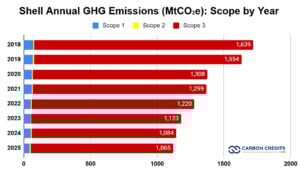
Shell Annual Greenhouse Gas Emissions, Scope by Year, 2025

Scope 1 and Scope 2 emissions come from Shellโ€™s operations and purchased energy, based on the company’s sustainability reports. Scope 3 emissions represent the use of fuels sold by Shell. Scope 3 accounts for the vast majority, around 95% of the companyโ€™s carbon footprint.

About 78% of these emissions occur downstream, mainly when customers use gasoline, diesel, or natural gas. The rest come from upstream activities such as equipment manufacturing and fuel transport.

This pattern is common across the oil and gas industry. Energy companies produce fuels, but most emissions occur when the fuels are burned.

Because of this structure, reducing emissions in the energy sector requires changes across the whole system. These include cleaner fuels, new technologies, and changes in how energy is used.

Shellโ€™s Net-Zero Targets and Climate Strategy

Shell says it aims to become a net-zero emissions energy company by 2050. To move toward this goal, the company has set several climate targets.
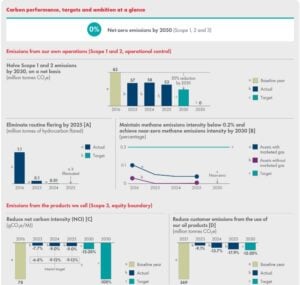
Shell net zero an 2025 progress
Source: Shell

The oil giant has already made some progress on this goal. By 2024, the company had reduced operational emissions by about 30% compared with 2016.

Another metric Shell uses is Net Carbon Intensity (NCI). This measures emissions per unit of energy sold. In recent reporting, Shellโ€™s NCI stood at 71 grams of COโ‚‚ equivalent per megajoule, unchanged from the previous year.

The company plans to reduce this measure to net zero by 2050 as part of its transition strategy. However, intensity targets measure emissions relative to energy production. This means total emissions can remain stable if energy demand continues to grow.

Shellโ€™s Offset Strategy: Retiring Millions with Certified Credits

In 2025, Shell retired 5.8 million carbon credits. Of these, 5.5 million were tied to its Net Carbon Intensity (NCI) efforts. This included 2.0 million linked to energy product sales. The company emphasizes careful sourcing and screening of credits.

shell carbon credit retirements 2025
Source: Shell

Of the total retired, 59% were certified by Verraโ€™s Verified Carbon Standard (VCS), 22% by Gold Standard, 10% by the ACR program, and 9% via Climate Action Reserve.

Rising Energy Demand Keeps Fossil Fuels in Play

Global energy demand continues to rise. This affects emissions across the energy sector. According to the International Energy Agency, energy-related carbon dioxide emissions grew in many regions due to rising industrial activity and energy demand.

  • Emissions from natural gas increased by 2.5% in 2024, while coal emissions rose almost 1% in recent global energy data, per the IEA report.
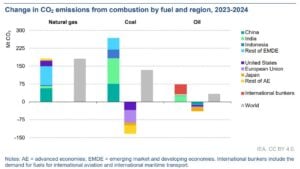
natural gas and coal emissions 2024 IEA

Oil emissions also increased slightly as countries continued to rely on fossil fuels to meet economic growth and energy access needs. This demand helps explain why oil and gas companies still play a large role in global energy supply.

At the same time, the energy transition is accelerating. Governments and companies are investing in renewable power, electric vehicles, and cleaner fuels. These trends are reshaping the global energy system.

LNG and Carbon Capture in Shellโ€™s Transition Plan

Shell continues to expand its liquefied natural gas business. The company expects global LNG demand to grow about 60% by 2040, driven by economic growth and industrial energy needs.

Natural gas produces fewer emissions than coal when burned. Because of this, some countries view LNG as a transitional fuel during the shift to cleaner energy systems.

Shell is also investing in carbon capture and storage (CCS). One major project is the Northern Lights carbon storage project in Norway, developed with industry partners. The facility aims to store at least 5 million tons of COโ‚‚ per year once expanded.

Carbon capture technology can help reduce emissions from industries that are difficult to electrify, such as heavy manufacturing and shipping. However, CCS projects remain limited in number compared with the scale of global emissions.

The Enormous Scale of the Global Energy Transition

The worldโ€™s energy system is changing quickly. But the scale of fossil fuel use remains large.

Energy companies like Shell supply fuels used across transportation, power generation, and heavy industry. This explains why emissions linked to these companies are so high.

At the same time, new technologies are reshaping the energy landscape. Renewable power, electric vehicles, hydrogen fuels, and carbon capture are expanding rapidly.

Shell itself notes that new technologies could cut the carbon intensity of the global energy system by half by 2050 if current trends continue. Still, hitting global climate targets will require faster progress.

What Shellโ€™s Emissions Reveal About the Energy Systemย 

Shellโ€™s reported 1.1 billion tons of COโ‚‚ emissions in 2025 show the scale of the global energy challenge. The majority of these emissions come not from company operations, but from the fuels used by millions of consumers and industries worldwide.

Reducing emissions across this system will require major changes in energy production, infrastructure, and technology. Oil and gas companies remain central players in this transition. Their investments, technologies, and energy supply decisions will influence how quickly the global economy moves toward lower-carbon energy.

The next decades will determine whether the energy system can meet rising demand while also reducing emissions at the scale required to reach global climate goals.
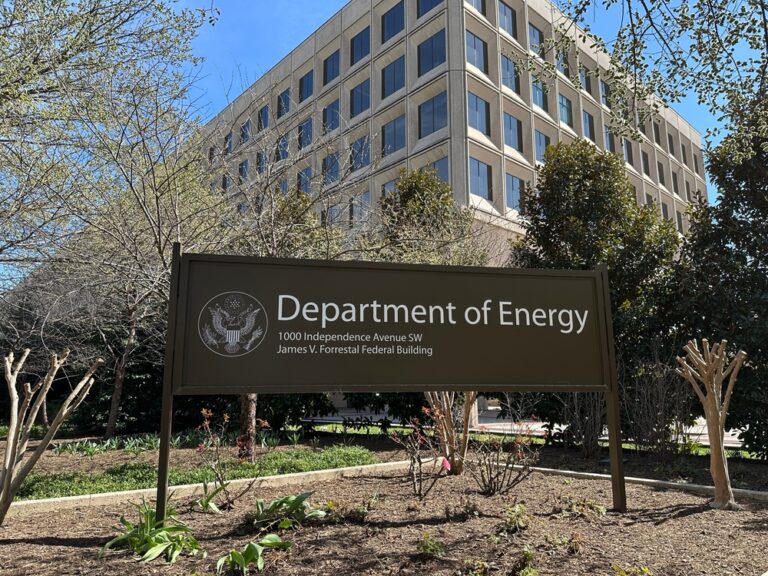
DOE Launches $500M Funding Drive to Strengthen U.S. Battery Supply Chains and Critical Minerals Processing

The U.S. Department of Energy (DOE) has announced a major funding initiative aimed at strengthening domestic battery supply chains and reducing reliance on foreign sources of critical minerals. The department introduced a Notice of Funding Opportunity (NOFO) worth up to $500 million to expand U.S. capabilities in mineral processing, battery materials manufacturing, and recycling.

Significantly, these investments target industries such as grid storage, transportation, manufacturing, and national defense. At the same time, the initiative reflects growing concerns about supply chain vulnerabilities for minerals that power modern energy technologies.

According to Chris Wright, the United States has relied for too long on foreign suppliers to provide and process key materials used in battery manufacturing. Strengthening domestic supply chains, he explained, will help the country meet rising energy demand while maintaining economic and technological leadership.

Strengthening the Domestic Battery Supply Chain

The DOEโ€™s new funding program focuses on boosting the United Statesโ€™ ability to process, recycle, and manufacture battery materials domestically. Currently, many minerals used in advanced batteries are mined globally but processed overseas before reaching U.S. manufacturers.

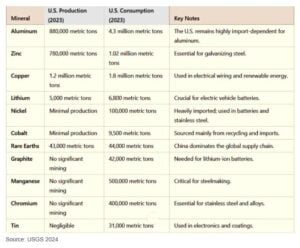
america critical mineral

This dependency creates supply risks and exposes the economy to geopolitical disruptions. As a result, the new funding program aims to build a more resilient supply chain across several stages of battery production. Explained in detail below:

Critical Mineral Processing

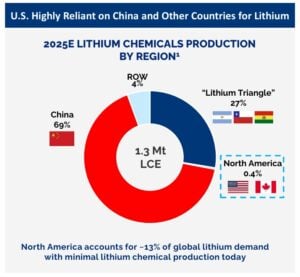
First, the program seeks to expand domestic processing of critical minerals. Many essential battery materialsโ€”including lithium, nickel, graphite, copper, and aluminumโ€”require complex refining processes before they can be used in batteries. By investing in new processing facilities, the United States hopes to reduce reliance on foreign refining capacity and ensure a stable supply of materials for domestic industries.

Battery Recycling Technologies

Second, the initiative emphasizes recycling technologies. Recovering valuable metals from used batteries and manufacturing scrap can significantly reduce the need for new mining while improving supply security. Recycling also lowers environmental impacts by reducing waste and conserving natural resources.

global critical mineral processing

Battery Manufacturing Capacity

Finally, the program aims to expand manufacturing capacity for battery materials and components within the United States. Increasing domestic production of battery precursors, cathode materials, and other key components will help support the entire North American battery supply chain.

The funding is supported by the Infrastructure Investment and Jobs Act, which allocated billions of dollars to strengthen energy infrastructure and domestic manufacturing across the country.

Battery Storage Becomes a Major U.S. Energy Technology

The urgency behind these investments reflects the rapid growth of battery storage across the United States. In recent years, battery systems have emerged as a critical technology for managing modern power grids.

In fact, batteries became the largest form of energy storage in the country in 2024, surpassing traditional pumped hydro storage for the first time. This shift marks a significant milestone in the evolution of the U.S. electricity system.

At the same time, the number of battery projects expanded rapidly. Nearly 1,000 storage projects were either operating or under development across the country. Many of these projects are located in California and Texas, where large-scale renewable energy installations require flexible storage solutions to stabilize the electricity supply.

One notable example is the Moss Landing Energy Storage Facility, one of the largest battery installations in the United States. Located in California, the facility pairs a natural gas power plant with massive battery storage systems that can deliver electricity when demand peaks.

As renewable energy capacity continues to grow, battery storage will play an increasingly important role in maintaining grid reliability and balancing intermittent energy sources such as solar and wind.

EV Battery Manufacturing Market Continues to Grow

The electric vehicle industry is another major driver behind rising battery demand. As EV adoption accelerates globally, automakers and battery companies are investing heavily in new manufacturing facilities.

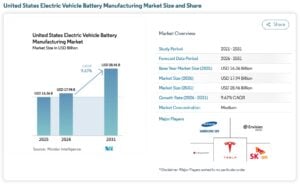
In the United States, the electric vehicle battery manufacturing market is projected to grow steadily over the coming years. Industry estimates suggest the market will reach approximately $17.94 billion in 2026, increasing from $16.36 billion in 2025.

Looking further ahead, the sector is expected to expand significantly. By 2031, the market could reach around $28.46 billion, reflecting a compound annual growth rate of nearly 9.7 percent.

battery storage US

Multiple factors fuel this growth. Federal incentives for clean energy technologies, rising consumer demand for electric vehicles, and large-scale investments in domestic manufacturing are all contributing to the expansion of the U.S. battery industry.

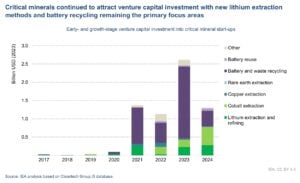
However, sustaining this growth will require reliable access to the minerals that power advanced batteries.

America’s Critical Mineral Supply Remains a Concernย 

To address supply risks, the U.S. Geological Survey expanded its official list of critical minerals in 2025. The updated list now includes 60 minerals, up from 50 identified in 2022.

Several new minerals were added due to their growing importance for the economy and national security. These additions include boron, copper, lead, metallurgical coal, phosphate, potash, rhenium, silicon, silver, and uranium.

Despite these efforts, the United States remains heavily dependent on imports for many critical minerals. As of 2024, the country relied entirely on foreign suppliers for twelve critical minerals. Meanwhile, more than half of the domestic demand for twenty-nine minerals came from imports.

Rare earth elements represent one of the most significant vulnerabilities because global supply chains remain highly concentrated. China continues to dominate the production and processing of these materials, raising concerns about potential supply disruptions.

As a result, U.S. policymakers are increasingly focused on strengthening domestic mining, processing, and recycling capabilities.

Global Demand for Energy Minerals Is Rising Fast

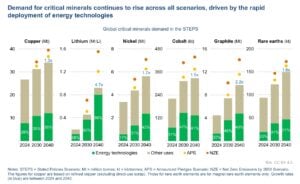
The push to secure mineral supply chains also reflects rapidly growing global demand for energy materials. According to the IEA, demand for key minerals used in clean energy technologies is expected to increase dramatically in the coming decades.

Lithium demand, for example, could grow fivefold by 2040 under current policy scenarios. Copper will likely remain the largest mineral market by value, while other materials such as nickel, cobalt, graphite, and rare earth elements will also see strong growth.

iea global demand critical minerals

Overall, the combined market value for six key energy mineralsโ€”copper, lithium, nickel, cobalt, graphite, and rare earth elementsโ€”could reach approximately $500 billion by 2040. This surge reflects the rapid expansion of electric vehicles, renewable power systems, battery storage, and other clean energy technologies.

Consequently, governments around the world are competing to secure reliable access to these strategic resources.

Against this backdrop, the DOEโ€™s $500 million funding initiative represents an important step toward strengthening Americaโ€™s position in the global battery economy. By expanding domestic processing, recycling, and manufacturing capacity, the United States aims to reduce supply risks while supporting the technologies that will power the future energy system.

CATL’s Profit Surges 42% With Global Battery Demand and the Shift to a Zero-Carbon Future

Contemporary Amperex Technology Co. Limited (CATL) released its 2025 Annual Report on March 10, 2026. The report highlights strong financial growth, rapid global expansion, and continued innovation in battery technology. The company reinforced its position as the worldโ€™s largest battery manufacturer while advancing its vision of becoming a leading zero-carbon technology company.

The report explains how CATL is expanding beyond traditional battery markets. The company is applying its technology across electric vehicles, energy storage, aviation, shipping, and AI infrastructure. CATL refers to this strategy as โ€œall-domain growth,โ€ meaning the electrification of multiple industries through advanced battery systems.

CATL’s Strong Financial Performance Reflects Rising Battery Demand

In 2025, the company reported strong revenue growth, record battery shipments, and higher profits. At the same time, it expanded its manufacturing capacity, increased research spending, and advanced sustainability efforts to build a circular energy ecosystem.

  • Revenue reached RMB 423.7 billion, a 17% increase from the previous year.
  • Net profit rose to RMB 72.2 billion, growing 42% year on year

The company also generated strong operating cash flow. Net cash flow from operating activities reached RMB 133.2 billion, showing steady demand for its products and solid business performance.

Much of this growth came from the rapid expansion of electric vehicles and energy storage systems worldwide. Governments and companies continue to invest heavily in clean energy, which has increased demand for reliable battery technology.

Battery shipments played a key role in this growth. CATL sold 661 gigawatt-hours of lithium-ion batteries during the year, a 39% increase from 2024. This shows the companyโ€™s ability to scale production as global demand for batteries continues to rise.

CATL
Data Source: CATL

Maintains Its Global Battery Leadership

According to data from SNE Research, the company held a 39.2% share of the global power battery market in the last year. Thereby, solidifying its leadership in the global battery market.

The company also expanded its international presence. Overseas market share reached 30%, and CATL batteries have now been installed in more than 24 million vehicles globally.

Energy storage has also become a major growth area for the company. Some notable milestones include:

  • Accounted for 30.4% of global energy storage battery shipments in 2025. This allowed the company to maintain the top global position in energy storage batteries for the fifth consecutive year.
  • Supported around 2,300 energy storage projects worldwide. At the same time, shipments from its energy storage system integration business grew by more than 160% compared with the previous year.

This growth reflects the increasing role of battery systems in balancing renewable energy grids and improving electricity reliability.

  • Furthermore, to meet growing global demand, the company expanded its manufacturing capacity to 772 GWh by the end of 2025, with 321 GWh under construction.

It operates advanced Lighthouse factories that use digital technology and automation to boost efficiency and reduce environmental impact.

Global battery demand

New Battery Technologies Expand Product Portfolio

The company introduced several new battery technologies during 2025, reflecting its focus on innovation and product diversification. These include the second-generation batteries, such as:

  • Shenxing superfast charging
  • Shenxing Pro
  • Freevoy dual-power
  • Naxtra
  • Super Hybrid

These technologies aim to improve charging speed, increase reliability in extreme environments, and reduce dependence on critical raw materials.

Advancement of Sodium-ion Batteries

One important development is the advancement of sodium-ion batteries. These batteries offer an alternative to lithium-based technologies and can reduce reliance on limited mineral resources.

CATL expects sodium-ion batteries to see broader adoption beginning in 2026 across applications such as battery swapping systems, passenger vehicles, commercial vehicles, and energy storage.

Sodium ion

Batteries Supporting AI Data Centers and Digital Infrastructure

Another emerging opportunity for CATL is energy infrastructure for artificial intelligence. Modern AI data centers require large and stable electricity supplies. Energy storage systems can help manage power consumption while improving efficiency.

CATL already provides storage solutions for SenseTimeโ€™s AI data center in Shanghai. The system helps optimize electricity usage and reduce operational costs.

  • According to the company, the storage system saves more than 10 million kilowatt-hours of electricity every year. It also lowers electricity costs by around 7% and prevents roughly 3,000 tonnes of carbon dioxide emissions annually.

This example shows how battery technology can play an important role in supporting the growing digital economy while also reducing emissions.

Expanding Electrification Into Aviation and Shipping

The company is expanding into aviation, maritime transport, and logistics as part of its broader electrification strategy.

In aviation, subsidiary AutoFlight completed the first public flight of the worldโ€™s largest five-ton electric vertical take-off and landing (eVTOL) aircraft. This shows the potential of electric aircraft for city transport and logistics.

In shipping, its battery systems have been approved by major international maritime authorities, making them safe for use in commercial ships.

CATL batteries are already powering nearly 1,000 electric vessels worldwide. The company also launched a โ€œShipโ€“Shoreโ€“Cloudโ€ system that connects electric ships, port charging, and digital energy management to reduce emissions and improve efficiency.

Research and Innovation Strengthen Technology Leadership

Research and development are a key part of CATLโ€™s strategy. In 2025, the company spent RMB 22.1 billion on R&D, and over the past ten years, total investment exceeded RMB 90 billion.

CATL has six research centers and about 23,000 engineers and scientists, helping it create new battery technologies and improve existing ones. By the end of 2025, it held over 54,000 patents and ranked second among Chinese companies in international patent applications.

Moreover, the company uses artificial intelligence in research and manufacturing. For example, its next-generation lithium-ion battery project won the World Economic Forumโ€™s MINDS award, showing how AI speeds up innovation.

Building a Zero-Carbon Energy Ecosystem

CATLโ€™s strategy goes beyond producing batteries. The company is working to create a complete zero-carbon energy ecosystem that integrates clean electricity, storage, and transportation.

CATL ZERO CARBON
Source: CATL
  • Battery swapping is an important part of this strategy. CATL has built more than 1,000 Choco-Swap stations for passenger vehicles across 45 cities in China. These stations allow drivers to replace depleted batteries with fully charged ones in minutes.

The company also operates battery swapping infrastructure for heavy-duty trucks through its QIJI Energy network. This network includes more than 300 stations across 26 provinces and supports tens of thousands of kilometers of green logistics routes. In 2025, the combined network provided more than 1.15 million battery-swapping services.

  • CATL is also developing zero-carbon industrial parks and integrated renewable energy systems that combine power generation, storage, and electricity management.

One major project is located in Shandong province, where the company is building what it describes as the worldโ€™s first off-grid zero-carbon industrial park powered entirely by renewable electricity. The facility will supply green power to a lithium-ion battery plant with an annual capacity of 40 gigawatt-hours.

Advancing Circular Energy and Sustainability

Alongside business expansion, CATL continues to strengthen its sustainability commitments. In 2025, the company achieved an MSCI ESG rating of AA and was included in the S&P Global Sustainability Yearbook as well as the FTSE Emerging Index.

The company reported that its core operations reached carbon neutrality in 2025. At the same time, it is working to reduce emissions across its supply chain.

Battery recycling plays a key role in this effort. CATL recovered and processed 210,000 tonnes of used batteries during the year. From this recycling process, the company regenerated 24,000 tonnes of lithium salts, helping reduce the need for newly mined materials.

To support the development of a global circular battery economy, CATL also launched the Global Energy Circularity Commitment initiative.

Looking ahead, CATL plans to continue expanding its technology leadership and global partnerships. Growth is expected across electric vehicles, renewable energy storage, electrified transport, and digital infrastructure.

Through continued innovation, manufacturing expansion, and sustainability initiatives, CATL aims to strengthen its role in the global transition toward a zero-carbon energy system. The 2025 annual report shows that the company is not only leading the battery market but also shaping the future of clean energy worldwide.

NASCARโ€™s Biofuel Revolution: How Americaโ€™s Biggest Motorsport Is Hitting Full Throttle on Net Zero

For decades, the National Association for Stock Car Auto Racing, aka NASCAR, stood for roaring engines, speed, and fierce competition. The sport, headquartered in Daytona Beach, Florida, built its reputation on powerful combustion engines and high-energy racing events across the United States.

However, the organization has recently shifted gears. Today, NASCAR is embracing sustainability and cleaner technology while still protecting the thrill of racing. The sport is working toward a bold target: net-zero operating emissions by 2035.

This goal forms the backbone of the NASCAR IMPACT strategy. The plan looks at emissions across the sportโ€™s core activitiesโ€”from race cars and racetrack facilities to large racing events. Instead of relying on a single solution, NASCAR is using multiple approaches, such as renewable energy, cleaner fuels, and improved waste management.

In short, the future of stock-car racing is becoming cleaner without losing its competitive edge.

NASCARโ€™s Net-Zero Mission

Back in 2023, NASCAR announced its commitment to reach net-zero carbon emissions from its operations by 2035. In simple terms, the goal focuses on the fuel and electricity used at NASCAR-owned racetracks and offices.

To make this happen, the organization plans to reduce overall energy consumption while increasing the share of renewable power used across its operations.

The strategy focuses on three main areas:

  • Race cars
  • Racing events
  • Facilities and offices

Each of these areas produces emissions in different ways. For example, race cars consume fuel, while events require power generators and logistics fleets. Meanwhile, offices and racetracks use electricity, heating, and cooling systems. Therefore, NASCARโ€™s climate strategy combines efficiency improvements with cleaner energy solutions.

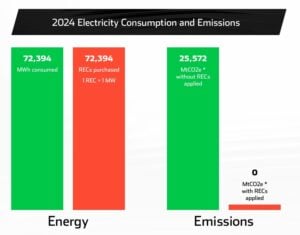
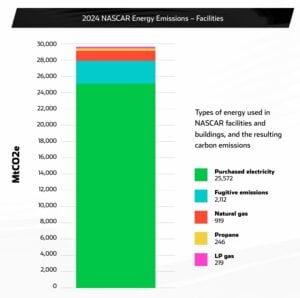
Here’s a snapshot of the motosport company’s 2024 electricity consumption and emisions profile:ย 

nascar
Source: NASCAR

Electric Innovation Hits the Track

One of the biggest steps toward cleaner racing arrived in July 2024. Through the ABB NASCAR Electrification Partnership, the sport introduced its first electric race car prototype.

The ABB NASCAR EV Prototype represents a new chapter in motorsports technology. Engineers from NASCAR built the vehicle with support from three major automakers, i.e., Chevrolet, Ford Motor Company, and Toyota.

The project shows how the racing world can experiment with emerging technologies. NASCAR does not plan to replace traditional engines overnight. Instead, the electric prototype works as a testing ground for future performance innovations.

Motorsports has always pushed automotive technology forward. Now, sustainability is becoming part of that engineering race.

A Major Biofuel Partnership with POET Changes the Game

Another major development came through NASCARโ€™s partnership with POET LLC, the worldโ€™s largest biofuel producer. The agreement named POET as the Official Bioethanol Partner of NASCAR. More importantly, the collaboration introduces zero-carbon bioethanol into the sportโ€™s fuel mix.

NASCAR will blend this bioethanol with fuel supplied by its long-time partner Sunoco. As a result, the racing series will become the first major motorsport to use zero-carbon bioethanol fuel.

  • This change highlights a key idea behind NASCARโ€™s sustainability strategy: improving performance while cutting emissions.
nascar
Source: NASCAR

Bioethanol already offers several advantages. It burns cleaner than conventional gasoline and produces lower carbon intensity. At the same time, it maintains the high-octane performance required for competitive racing.

For drivers and teams, fuel keeps engines running at full power. For the environment, it reduces pollution.

The partnership also brings strong visibility for the biofuel industry. Beginning this season, POET sponsors the โ€œPOET Restart Zoneโ€ at NASCAR-owned tracksโ€”one of the most intense moments during races when cars restart after caution periods.

In addition, POET branding now appears on all NASCAR fuel cans alongside Sunoco. This move reinforces the growing role of renewable fuels in motorsports.

Cleaner Fuels for the Next Generation of Race Cars

NASCARโ€™s national racing series already uses Sunoco Green E15, a high-performance unleaded fuel blend. The fuel contains 15% bioethanol and 85% gasoline.

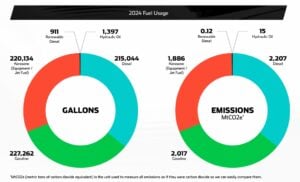
During the 2024 racing season, NASCAR consumed over 261,000 gallons of Sunoco Green E15 across its three national racing series.

While combustion engines will remain part of NASCARโ€™s identity, the organization plans to keep improving fuel technology over the next decade. And cleaner fuels are a practical step. They allow the sport to reduce emissions without requiring major changes to vehicle design.

nascar biofuel
Source: NASCAR

Renewable Diesel in NASCARโ€™s Hauler Fleet

Behind every NASCAR race lies a massive logistics operation. The sportโ€™s equipment travels thousands of miles each season in heavy transport trucks.

In 2024, NASCARโ€™s fleet of 17 Mack diesel haulers traveled more than 805,000 milesโ€”roughly the distance of going to the moon and back.

Significantly, the company started testing renewable diesel fuel from wood residues, agricultural waste, and used cooking oil to reduce emissions from transportation

The fuel works in existing engines without modifications. That makes it a convenient way to cut emissions immediately while longer-term solutions develop. It also burns cleaner than traditional diesel, which helps lower the environmental footprint of NASCARโ€™s logistics operations.

Powering Racetracks with Renewable Energy Credits

Beyond vehicles and events, NASCAR is also transforming the energy used at its facilities.

  • In 2023, the organization committed to powering all of its facilities with 100% renewable electricity for the next five years. To achieve this, NASCAR partnered with NextEra Energy.
  • The company purchased Green-e Certified Renewable Energy Credits (RECs) from wind farms across the United States. These credits ensure that an equivalent amount of renewable electricity enters the national power grid. By buying these credits, NASCAR offsets the electricity used at its racetracks and offices.

However, the organization does not plan to rely on credits forever. In the long run, NASCAR hopes to install solar panels directly at its facilities, producing clean electricity on site and strengthening local renewable energy supply.

Reducing Energy Demand at Facilities

Using renewable power is important. But reducing overall energy demand matters just as much.

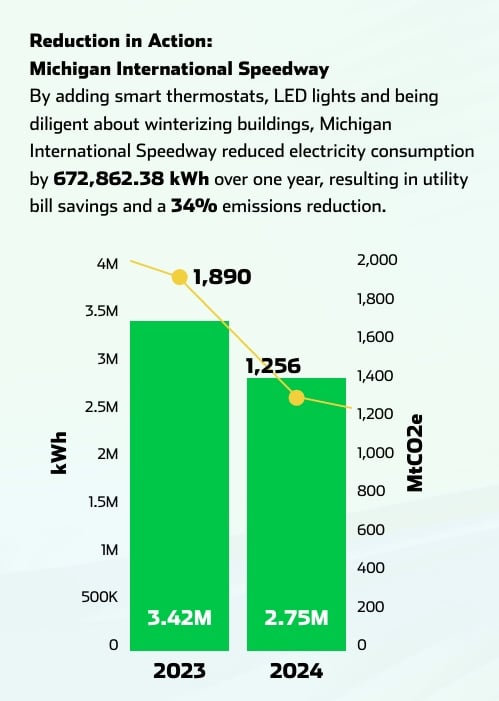
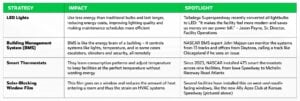
NASCAR has begun implementing energy-efficiency programs across its buildings and racetracks. These measures focus on cutting electricity consumption while lowering operating costs.

nascar
Source: NASCAR

Another key area involves fugitive emissions. These are small gas leaks from equipment such as air conditioners and refrigeration systems. Although they may seem minor, some of these gases can be powerful greenhouse pollutants.

Therefore, NASCAR closely monitors these systems and works to prevent leaks whenever possible.

Cutting Emissions at Racing Events

Large racing events require significant energy. Power generators, logistics fleets, and track equipment all contribute to emissions.

Therefore, NASCAR has started analyzing energy use across its race operations. Data collection helps the organization understand where emissions are highest and where improvements can deliver the biggest impact.

One example involves track dryers. After heavy rain, NASCAR uses specialized machines to dry racetracks quickly so races can continue. Previously, these machines used jet fuel. However, NASCAR recently introduced the first propane-powered track dryer with help from partner Suburban Propane.

  • The change is expected to reduce emissions from these dryers by about 58%. It may seem like a small improvement, but these incremental changes add up over time.

Another example comes from the Chicago Street Race. By redesigning the layout of temporary power units, the event operations team managed to run multiple areas using a single hybrid generator.

  • As a result, the race reduced fuel consumption by more than 27% compared with the previous year.

nascar energy efficiency

Recycling and Waste Reduction Across the Sport

Sustainability efforts at NASCAR extend beyond energy and fuel. Waste management has become another major focus.

The organization now operates expanded recycling programs across its tracks and offices. These programs target a wide range of materials, including aluminum cans, plastic bottles, used racing tires, and motor oil.

NASCAR also partners with waste-management companies to divert materials from landfills and promote circular economy practices.

Even fans play a role. During race weekends, it encourages spectators to recycle and dispose of waste responsibly. These engagement campaigns help reduce the environmental footprint of large racing events.

The Future of Sustainable Motorsports

NASCAR remains one of the most recognizable motorsports organizations in the world. Traditionally, the sport has focused on stock-car racing events across the Southeast and Midwest United States.

Yet today, NASCAR is also becoming a testing ground for sustainability innovation. From electric prototypes and renewable fuels to cleaner logistics and renewable energy systems, the organization is experimenting with multiple solutions at once.

Importantly, these efforts prove that high performance and environmental responsibility can coexist. Motorsports has always pushed the limits of engineering. Now, the industry is beginning to push the limits of sustainability as well.

South Korea Mandates ISSB-Aligned Climate Reporting by 2028 for Corporate Giants

South Korea plans to require large companies to publish mandatory sustainability reports starting in 2028. The rule will apply first to major firms listed on the countryโ€™s main stock exchange.

Starting in 2028, KOSPI (the largest South Korean stocks) companies with at least 30 trillion won (around $22 billion) in assets will need to reveal their environmental, social, and governance (ESG) practices.

South Koreaโ€™s Sustainability Reporting Era Begins

The reporting requirement will expand in 2029 to companies with 10 trillion won or more in assets. The first phase will focus on about 58 of South Korea‘s largest listed companies. This is based on estimates from the Financial Services Commission (FSC).

Companies must publish clear details on climate risks, emissions, governance, and sustainability strategies. These disclosures will cover greenhouse gas emissions, climate financial risks, and plans to achieve climate goals.

The government says the policy will improve transparency for investors and strengthen confidence in Koreaโ€™s financial markets. It will also help the country align with global ESG reporting standards that investors increasingly expect.

South Korea has big industrial companies operating in electronics, cars, steel, and shipbuilding. These industries play a major role in global supply chains. Clear sustainability reporting could help these companies maintain access to international capital and markets.

A Gradual Rollout to Ease Corporate Burden

In 2026, South Koreaโ€™s Financial Services Commission released a roadmap for ESG disclosure. The policy forms part of the governmentโ€™s broader strategy to support the countryโ€™s green transition.

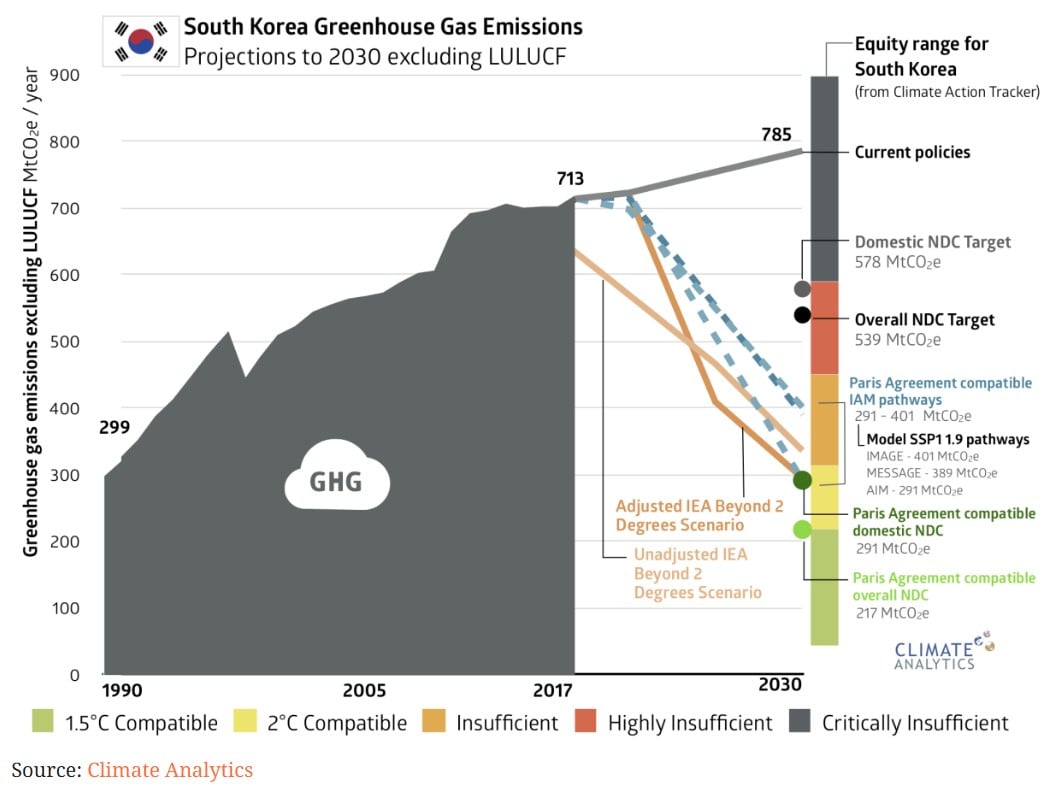
south korea 2030 emissions projection

Officials decided on a phased rollout to give companies enough time to prepare. Key elements of the plan include:

  • Mandatory ESG reporting for large KOSPI companies starting in 2028.
  • Expansion to additional companies in 2029.
  • Full adoption of supply-chain emissions reporting by 2031.

Companies will receive a three-year grace period before they must disclose Scope 3 emissions. Theseย emissions include indirect emissions across a companyโ€™s value chain. These can come from suppliers, transportation, product use, and waste.

For many firms, Scope 3 emissions represent the largest share of total emissions. The Carbon Disclosure Project (CDP) states that Scope 3 emissions can be over 11 times greater than direct operational emissions for many companies.

Regulators gave companies more time to create systems for measuring these emissions due to the complexity involved.

Initially, the rules will operate through stock exchange disclosure requirements. Over time, the government plans to convert them into formal legal reporting obligations.

How Climate Finance Powers Koreaโ€™s Green Shift

The new reporting framework supports South Koreaโ€™s broader climate policy and energy transition. The government aims to raise about 790 trillion won (around $590 billion) by 2032.

The funding will support climate-related investments and help industries modernize and reduce emissions. Priority sectors include renewable energy, hydrogen technologies, green infrastructure, low-carbon manufacturing, and energy efficiency upgrades.

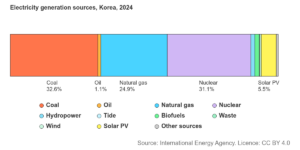
Heavy industries are a key focus of these efforts. South Korea is a top producer of steel, petrochemicals, and semiconductors, which need a lot of energy. The country generates 33% of its electricity from coal, per International Energy Agency data.ย 

International Energy Agency - Electricity generation sources, Korea, 2024

The IEA says South Korea was one of the top ten energy consumers in 2024. Industry made up a large part of the electricity demand. The government will introduce transition finance frameworks. These will help high-emission industries get funding for cleaner technologies.

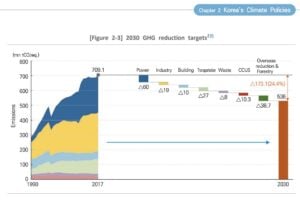
Korea 2030 ghg reduction targets

South Korea has pledged to reach carbon neutrality by 2050. The country also aims to reduce greenhouse gas emissions 40% below 2018 levels by 2030 under its updated climate plan. Stronger ESG reporting will help investors measure corporate progress toward these goals.
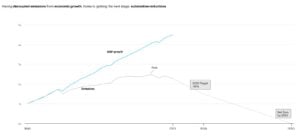
South Korea net zero goal
Source: IEA

Why Mandatory ESG Reporting Is Going Global

South Koreaโ€™s policy reflects a global shift toward mandatory sustainability reporting. Governments and regulators increasingly require companies to disclose climate risks and emissions data. These rules show how climate change and energy policies can impact businesses.

The EUโ€™s Corporate Sustainability Reporting Directive (CSRD) is a major reporting framework. The rule will eventually apply to around 50,000 companies operating in Europe, according to the European Commission.

Global standards are also emerging. The International Sustainability Standards Board (ISSB) released two key disclosure standards in 2023:

  • IFRS S1, covering general sustainability disclosures
  • IFRS S2, covering climate-related disclosures

More than 20 jurisdictions representing over half of global GDP have announced plans to adopt or align with ISSB standards. South Koreaโ€™s reporting framework follows these international guidelines.

The country set up the Korea Sustainability Standards Board (KSSB). Its job is to create national reporting standards that match the ISSB framework.

Companies will be required to disclose:

  • climate risks and opportunities,
  • governance structures for sustainability oversight,
  • emissions data and reduction targets, and
  • strategy and risk management practices.

This alignment helps investors compare companies across different markets using similar data.

Korean Corporations Step Up Sustainability Disclosures

Corporate sustainability reporting has already expanded in South Korea. By 2024, about 203 Korean companies will publish voluntary sustainability reports. This comes from ESG research groups that track disclosure trends.

Large Korean firms have increasingly adopted global reporting frameworks such as:

  • Task Force on Climate-related Financial Disclosures (TCFD)
  • Global Reporting Initiative (GRI)
  • Sustainability Accounting Standards Board (SASB)

However, many companies asked regulators to delay mandatory reporting requirements. Businesses said they need more time to create reliable emissions measurement systems and reporting processes.

The government responded by pushing the start date to 2028. The extra time helps companies create internal ESG management systems and enhance data collection. Financial institutions strongly support stronger sustainability disclosure.

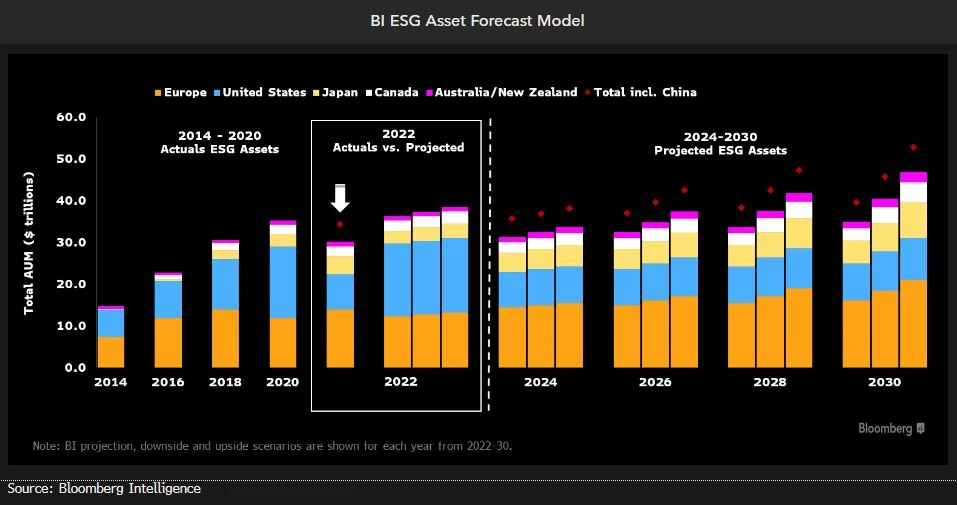
Investors increasingly use ESG data when evaluating risk and long-term performance. According to the Global Sustainable Investment Alliance, sustainable investment assets reached over $30 trillion globally in recent years. Analysts forecast it to reach $40 trillion by 2030.

ESG asset forecast 2030 Bloomberg

Transparent ESG reporting helps companies attract capital from these investors. It also helps banks and asset managers assess climate risks across their portfolios.

The Future of ESG Disclosure in Asia

South Koreaโ€™s new rules could influence ESG reporting across Asia. Several financial centers in the region are strengthening climate reporting policies.

For instance, Japan plans to expand sustainability disclosure rules for major companies beginning around 2027. The country now requires climate risk disclosures for companies on its Prime Market. These disclosures must follow the TCFD framework.

Singapore and Hong Kong are both starting mandatory climate reporting that will follow ISSB standards. China is also expanding its climate disclosure rules to other major sectors.ย 

These developments reflect growing pressure from global investors. Many asset managers now need detailed climate data from companies. They use this information before deciding on investments.

Consistent reporting frameworks also help multinational companies operate across multiple markets. Large corporations often face different disclosure rules in different countries. Aligning with global standards can reduce compliance costs and improve transparency.

As more countries adopt ESG reporting rules, sustainability reporting may become as common as financial reporting.

Transparency as the New Standard in Global Markets

South Koreaโ€™s plan to introduce mandatory sustainability reporting in 2028 marks a major step in the countryโ€™s climate and financial policy. The phased rollout will start with the largest listed companies and later expand to more firms. Companies will need to disclose detailed data on emissions, climate risks, and sustainability strategies.

The policy aims to improve transparency for investors and align South Korea with global ESG reporting standards. As sustainability disclosure becomes more common worldwide, companies with strong climate strategies and clear reporting systems may gain an advantage in global capital markets.

Nvidiaโ€™s $2B Bet in AI: Powering Innovation with Nebius and Palantir While Tackling Energy Impact

Artificial intelligence (AI) is changing many industries. NVIDIA, the company that designs the chips and systems that power large AI models and data centers, leads in AI technology and hardware.

The big tech company made headlines with major news about its AI investments and partnerships with Nebius and Palantir Technologies. These moves have implications for environmental sustainability, energy use, and greenhouse gas emissions.

NVIDIAโ€™s $2B Nebius Investment Fuels AI Cloud Expansion

NVIDIA announced it will invest $2 billion in Nebius, a cloud infrastructure company. This investment aims to support AI cloud expansion and data center capacity.ย 

NVIDIA will take an 8.3% stake in Nebius through this investment. The cloud provider plans to build AI data centers with more than 5 gigawatts of capacity by 2030. This capacity is roughly enough power for over 4 million U.S. homes.

The partnership includes early access to NVIDIA’s compute hardware and software. The companies will work together on largeโ€‘scale AI computing clusters. Nebius also received approval to build a 1.2 gigawatt data center campus in Missouri, U.S.

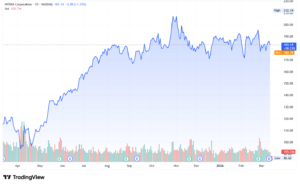
Nvidia (NVDA) stock saw a modest increase, while Nebius Group (NBIS) shares soared over 16% following the announcement of the investment. The deal drove significant investor confidence in Nebius.

Nvidia NVDA stock price
Nebius NBIS stock price

What This Means for Energy and Emissions

AI data centers use a lot of electricity. They power powerful chips and run complex models. Building larger infrastructure without considering energy efficiency can raise carbon emissions.

But NVIDIA’s hardware and software often aim to improve performance per watt. Improved efficiency means less energy per unit of computation. Better energy use can reduce running costs and overall emissions at scale.

At CES 2026, NVIDIA unveiled its Rubin architecture for data center GPUs, claiming 40% higher energy efficiency per watt over the prior generation. Unlike single chips, Rubin unites six specialized chips into a rack-level system, slashing power for massive AI workloads while boosting speed. This advances NVIDIA’s “Green AI” for sustainable data centers.

Nvidia Rubin platform
Source: NVIDIA

Still, expanding data center capacity will add to total energy demand. For this reason, it is important that such expansions use lowโ€‘carbon electricity sources such as wind, solar, and hydropower.

Operational AI with Palantir: Smarter Workflows, Lower Emissions

NVIDIA and Palantir Technologies announced a collaboration to build an integrated operational AI technology stack. This stack combines the chipmakerโ€™s accelerated computing and AI software with Palantirโ€™s data intelligence platform.ย 

Justin Boitano, vice president, Enterprise AI Platforms, NVIDIA, said:

โ€œAI is redefining the infrastructure stack โ€” demanding, latency-sensitive and data-sovereign environments require a full-stack architecture โ€” built from silicon to systems to software. By combining Palantirโ€™s sovereign AI OS reference architecture with NVIDIA AI infrastructure, industries and nations can turn data into intelligence with speed, efficiency, and trust.โ€โ€จโ€จ

NVIDIA CEO Jensen Huang also noted that ‘Palantir and NVIDIA share a vision: to put AI into action, turning enterprise data into decision intelligence.’ The partnership was highlighted at NVIDIA’s GTC Washington, D.C. event.

This technology helps businesses and governments use AI to manage data and decision intelligence. It allows complex data from supply chains, logistics, and operations to feed into AI systems, which can make realโ€‘time decisions and improve efficiency.

For example, systems built on this stack can automate workflows, optimize routes, and predict supply needs. Logistics and supply processes often involve fuel use and emissions. AI tools that help optimize these processes can help companies reduce waste and energy use.

This partnership also includes integration of NVIDIAโ€™s AI models and tools into the Palantir platform. The combined stack supports automation and digital decision making for complex operations.

AIโ€™s Role in Netโ€‘Zero and Emission Reductions

AI technology has potential benefits for climate and environmental goals. AI can help sectors in many ways, such as:
  • Energy systems planning: AI can optimize grid load, match supply and demand, and reduce waste.
  • Industrial operations: AI can monitor and adjust machinery to cut fuel use and emissions.
  • Transportation and logistics: AI routing tools can lower fuel consumption and emissions.
  • Building efficiency: Smart systems can reduce energy use in heating or cooling.

These applications show that AI can support netโ€‘zero goals across industries.

In particular, using operational AI to improve logistics and supply chains can help companies reduce emissions. AI tools can analyze traffic, weather, and delivery patterns in real time. They can recommend routes that use less fuel and avoid delays. AI can also reduce idle time for trucks, ships, and warehouse equipment.

Logistics is a major source of emissions. According to the International Energy Agency, transport accounted for about 23% of global energy-related COโ‚‚ emissions in recent years. Freight transport alone produces roughly 40% of transport emissions.

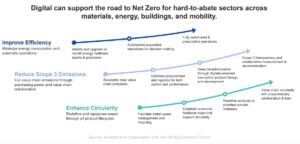
digital technology for net zero
Source: WEF

AI optimization can lower these emissions. Research from the World Economic Forum shows that digital technologies such as AI, data platforms, and automation could cut logistics emissions by up to 10โ€“15% by 2030. These tools improve route planning, fleet efficiency, and cargo utilization.

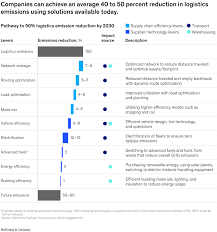
Industry studies show similar results. McKinsey & Company estimates that AI-based route optimization can reduce fuel use in logistics fleets by about 5โ€“10%. Even small gains can matter at scale. For example, a large delivery fleet that burns 100 million liters of fuel per year could save 5โ€“10 million liters annually using smarter routing systems.

Ai based route decarbonization reduce emissions
Source: McKinsey & Company

These estimates help explain why companies are investing in operational AI platforms. When applied across supply chains, AI can help businesses lower fuel use, reduce emissions, and improve efficiency at the same time.

NVIDIAโ€™s technology, including highโ€‘performance GPUs, optimized software, and AI models, can be part of these solutions. By improving performance per watt and enabling energyโ€‘aware workflows, the tech giant contributes to both the growth of AI and the efficiency of systems that use it.

AI for Efficiency and Sustainability

Artificial intelligence has a dual climate role:

  • AI systems can be energyโ€‘intensive and add to electricity demand.
  • AI tools can also help optimize energy use in other sectors.

AI computing infrastructure continues to expand. More powerful chips and larger data centers mean higher energy use. Research shows that data center energy demand could nearly double by 2030 due to AI workloads alone. AI servers and cooling systems are energyโ€‘intensive, and they also use significant water resources.

AI data center energy GW 2030

However, efficiency improvements and smarter energy use can reduce emissions. New hardware designs, better cooling technologies, and renewable power integration can lower the environmental footprint of AI computing.

Major cloud providers and AI infrastructure firms, including NVIDIA partners, are investing in energyโ€‘efficient systems. This includes technologies that cut power demand and reduce heat waste.

NVIDIAโ€™s push for nextโ€‘generation hardware, such as chips designed to improve energy efficiency per computation, helps support these goals. GPUs and AI accelerators that do more work with less energy can have a positive impact on total energy use over time.
Conclusion: Balancing Growth and Sustainability

NVIDIAโ€™s recent news shows the companyโ€™s strategy at the center of AI growth. Its $2 billion investment in Nebius will help expand AI cloud infrastructure. The collaboration with Palantir aims to bring AI tools into complex enterprise operations.ย 

At the same time, AI infrastructure carries environmental challenges. Data centers and highโ€‘performance computing need vast energy. But the deployment of more efficient hardware, smarter software, and renewable energy integration can reduce this impact.

NVIDIAโ€™s technologies, when used to improve energy use and emissions management, can help companies work toward netโ€‘zero targets. As AI continues to grow, balancing innovation with sustainability will remain essential.

Trafigura to Buy 80,000 Tonnes Over 10 Years from U.S. Smackover Project

Trafigura has signed a long-term offtake agreement to purchase lithium carbonate from the South West Arkansas (SWA) Project. Smackover Lithium is a joint venture between Standard Lithium Ltd. and Equinor ASA.

The deal supports the development of domestic lithium production in the United States. At the same time, it shows how partnerships between commodity traders and lithium developers are shaping the future battery supply chain.

Trafigura Secures Long-Term Lithium Supply

Trafigura will purchase 8,000 metric tonnes of battery-grade lithium carbonate each year from the SWA Project. The agreement runs for ten years, bringing the total contracted supply to about 80,000 tonnes.

The contract follows a take-or-pay structure. This means Trafigura must purchase the agreed volume every year or pay for it regardless. Agreements like this are common in mining and energy because they provide financial certainty for new projects.

Deliveries will begin once the project enters commercial production. The partners expect production to start in 2028, while the final investment decision is planned for 2026. Notably, for developers, long-term supply contracts often play a key role. They signal market confidence and make it easier to secure project financing.

Gonzalo De Olazaval, Head of Metals and Minerals at Trafigura, commented:ย 

โ€œWe are pleased to have signed this offtake agreement with Smackover Lithium, further strengthening our North American critical minerals footprint. The SWA Project is expected to provide a reliable source of battery-grade lithium carbonate produced in the United States, enhancing domestic supply chains. We look forward to collaborating with Smackover Lithium on this strategic project and to delivering this material to customers across North America and globally.โ€

Unlocking The South West Arkansas Lithium Project

The SWA Project sits in southern Arkansas near the borders of Texas and Louisiana. It lies within the Smackover Formation, a geological region known for lithium-rich brine deposits.

  • Smackover Lithium operates the project as a joint venture. Standard Lithium owns 55%, while Equinor holds 45%, and Standard Lithium serves as the operator.

The project covers roughly 30,000 acres of brine leases. The first phase of development focuses on the Reynolds Brine Unit, which spans more than 20,800 acres. Regulators approved the unit without objections from local stakeholders. And this approval marked an important milestone for the projectโ€™s development.

The first stage of the project aims to produce about 22,500 tonnes of battery-grade lithium carbonate each year. Nearby leases offer additional space for future expansion if production increases.

Direct Lithium Extraction at the Core

The project will rely on direct lithium extraction (DLE) technology to recover lithium from underground brine.

Traditional lithium operations often use evaporation ponds that take months or even years to produce lithium chemicals. In contrast, DLE removes lithium directly from brine using specialized materials and chemical processes.

After extraction, the remaining brine is usually pumped back underground. This process helps maintain reservoir pressure and reduces surface water use.

Because of these advantages, DLE has attracted strong attention across the lithium industry. It can shorten production times and reduce the land footprint of operations. The company has spent several years testing and refining this technology. The SWA Project aims to apply it on a commercial scale.

Smackover Formation: A Rising Center for U.S. Lithium Production

The Smackover Formation stretches from central Texas to the Florida Panhandle. It is widely considered one of the most promising lithium brine regions in North America. Lithium concentrations in the formation are comparable to those found in major production areas in Argentina and Chile.

Arkansas sits at the center of this resource. The region already has a long industrial history. Oil and gas production began there in the early twentieth century. Later, the region became a key hub for bromine extraction from brine.

smackover formation lithium
Source: Standard Lithium

This industrial background created several advantages for lithium development. Infrastructure such as wells, pipelines, and processing facilities already exists. In addition, the local workforce has decades of experience handling brine extraction.

Because of this foundation, lithium production can build on existing systems rather than starting from scratch. Furthermore, the region also faces fewer water stress challenges than some lithium-rich areas in South America or the western United States. This improves the long-term feasibility of brine-based lithium projects.

Strong Resources Support the Project

The company revealed that resource estimates suggest the SWA Project holds significant lithium potential. Current studies project about 447,000 tonnes of proven lithium carbonate equivalent reserves.

This represents roughly 38 percent of the projectโ€™s measured and indicated resource base, which totals about 1.17 million tonnes of lithium carbonate equivalent.

The operation will begin production with lithium concentrations of around 549 milligrams per liter in the brine. Over its estimated 20-year operating life, the project is expected to process about 0.20 cubic kilometers of brine. The average lithium concentration during that period is expected to remain around 481 milligrams per liter.

Higher lithium grades play a major role in project economics. Strong concentrations allow producers to recover more lithium from each unit of brine. As a result, processing costs fall, and efficiency improves.

Because of this, projects with both strong grades and large resources tend to attract greater interest from investors and long-term buyers.

us lithium
Source: Standard Lithium

U.S. Lithium Potential in a Global Context

Lithium resources in the United States come from several geological sources.

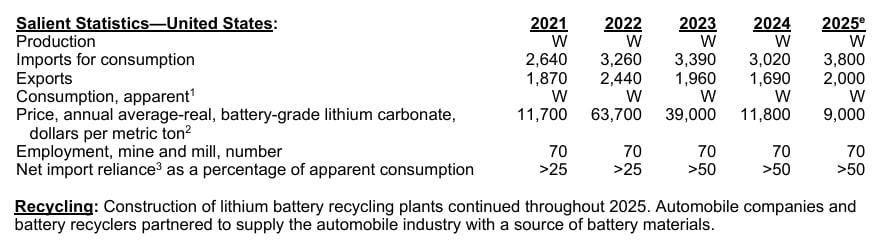
  • According to the latest data from the U.S. Geological Survey, measured and indicated lithium resources in the country are estimated at around 30 million tons.

These resources occur in different types of deposits, including continental brines, oilfield brines, geothermal brines, claystone deposits, hectorite, and hard-rock pegmatites.

Global exploration continues to expand the lithium resource base. And worldwide, measured and indicated lithium resources are estimated at 150 million tons. As exploration advances and new extraction technologies emerge, more regions are becoming viable sources of lithium supply.

US lithium
Source: USGS

Rising Demand from EVs, Energy Storage, and AI

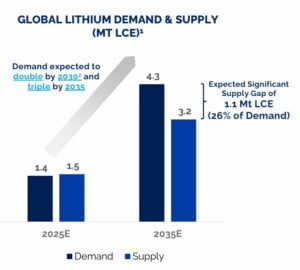
Lithium demand continues to increase across several sectors. The largest driver remains the electric vehicle market.

In the United States, lithium demand for EV batteries is expected to grow by aboutย 25% per year over the next decade. This growth rate exceeds the projected global EV demand growth of about 13 percent annually.

lithium demand
Source: Standard Lithium

Energy storage is another rapidly expanding market. Large battery systems help store electricity from renewable sources such as solar and wind power and release it when demand rises.

At the same time, digital infrastructure is creating new pressure on electricity systems. Data centers that support artificial intelligence require massive amounts of energy. This trend is pushing utilities to expand battery storage capacity.

Because of these factors, the U.S. energy storage market could grow by roughly 29 percent per year, further increasing the need for lithium-based batteries.

A Practical Shift in the U.S. Lithium Story

For many years, the United States relied heavily on imported lithium materials. However, that approach is slowly changing.

Projects like the SWA development show how companies are trying to rebuild parts of the battery supply chain domestically. Instead of shipping raw materials across several continents, producers are exploring ways to supply lithium closer to battery and vehicle manufacturing centers.

The Smackover region fits naturally into this transition. Its geology, infrastructure, and long history of brine extraction already support industrial operations.

The agreement with Trafigura adds another layer of confidence. Commodity traders usually commit to long-term supply deals only when they believe a project has strong potential.

If development moves forward as planned, the SWA Project could turn southern Arkansas into a new center for lithium production. Over time, the region may shift from its long history of oil, gas, and bromine toward a growing role in supplying the battery metals needed for modern energy systems.

Boeing Locks In 40,000 Tons of Carbon Removal Credits in Major Biochar Climate Deal

Aerospace giant Boeing has signed a multi-year agreement with carbon removal platform Carbonfuture to purchase at least 40,000 tonnes of durable carbon dioxide removal (CDR) credits. The deal ranks among the largest carbon removal procurements in the aviation sector so far.

The carbon credits will come from a portfolio of biochar carbon removal projects, mainly located across the Global South. Biochar is created by heating plant material in a low-oxygen environment. The process converts biomass into a stable form of carbon that can be stored in soil for long periods.

Carbonfuture will track each credit using its digital monitoring system. The platform records the entire carbon removal processโ€”from biochar production to soil application. It also verifies ownership of the credits.

The agreement helps Boeing tackle emissions that technology or fuel changes can’t eliminate yet. The company plans to apply these credits to Scope 3 emissions linked to business travel.

Allison Melia, VP Global Enterprise Sustainability, Boeing, said:

“To support long-term global demand for air travel, the aviation industry has set goals to reduce emissions. Weโ€™re excited to team up with Carbonfuture to support technological innovation in carbon removals to help meet these needs.”

This partnership reflects a broader shift in corporate climate strategies. Many industries now combine emissions reductions with carbon removal to manage their climate impact.

Why Aviation Is Turning to Carbon Removal

Decarbonizing aviation is difficult. Aircraft can last for decades, and alternatives like hydrogen planes or fully electric aircraft are still years away from wide use.

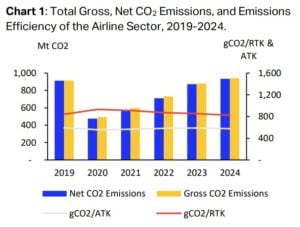
The aviation sector produces around 2โ€“3% of global carbon dioxide emissions, based on research from energy and industry studies. When scientists look at the warming effects of contrails and other non-COโ‚‚ emissions, aviation’s climate impact gets bigger.

Airline aviation sector ghg emissions 2024 IATA
Source: IATA

Demand for flights also continues to grow. Rising global travel has offset many efficiency improvements in aircraft design and operations.

Sustainable aviation fuel (SAF) is one promising solution. However, SAF still accounts for less than 1% of global jet fuel supply and often costs two to ten times more than conventional jet fuel.

SAF supply forecast 2030

Because of these limits, aviation companies are turning to carbon removal technologies. These systems physically remove carbon dioxide from the atmosphere rather than simply avoiding emissions.

Boeingโ€™s deal with Carbonfuture shows how carbon removal can complement other decarbonization strategies.

Biochar Carbon Removal: Turning Biomass Into Long-Term Carbon Storage

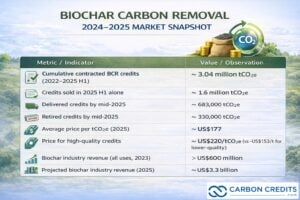
The credits in Boeingโ€™s deal come from biochar-based carbon removal projects. Biochar forms through a process called pyrolysis. Organic waste, such as crop residues or forestry by-products, is heated in a low-oxygen environment. This converts the biomass into a carbon-rich charcoal.

biochar carbon market snapshot 2025

When biochar is added to soil, it can store carbon for hundreds of years while improving soil health and water retention.

The projects in Boeingโ€™s agreement also provide environmental benefits beyond carbon storage. Biochar can increase soil fertility, improve crop yields, and support agricultural resilience in regions facing land degradation.

Carbonfutureโ€™s digital platform tracks every stage of the carbon removal process. This monitoring system aims to increase transparency and trust in carbon credit markets.

High-quality verification matters. Voluntary carbon markets have faced criticism for weak oversight and questionable offset projects.

Inside Boeingโ€™s Emissions Footprint and Net-Zero Strategy

The carbon removal agreement is part of Boeingโ€™s broader sustainability strategy. Like many aerospace companies, the aerospace giant faces large emissions from its value chain. Most of its climate impact comes from Scope 3 emissions. These include airline aircraft operations and other indirect activities.

Boeingโ€™s total carbon footprint is estimated at around 374 million metric tons of COโ‚‚ equivalent for 2024. Of this, about 373 million tons are from Scope 3 sources.

Direct emissions from Boeing operations are much smaller. The company reported about 517,000 tons of Scope 1 emissions and 464,000 tons of Scope 2 emissions from purchased electricity.

Because Scope 3 emissions dominate aviationโ€™s footprint, companies must work across the entire ecosystem. That includes airlines, fuel suppliers, airports, and aircraft manufacturers.

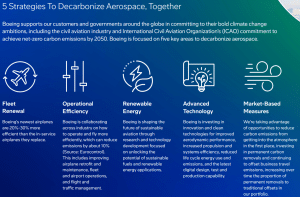
Boeing plan to decarbonize aerospace

The ariplane maker says its strategy focuses on four main areas:

  • improving aircraft fuel efficiency,
  • supporting sustainable aviation fuel development,
  • advancing new propulsion technologies, and
  • using carbon removal for residual emissions.

Carbon removal purchases help address emissions that cannot yet be eliminated through technological change.

Corporate Demand Is Fueling the Carbon Removal Market

Boeingโ€™s deal also reflects rapid growth in the carbon removal market. Corporate demand for carbon dioxide removal has expanded in recent years. Many companies now view durable removals as a key tool for meeting net-zero climate targets.

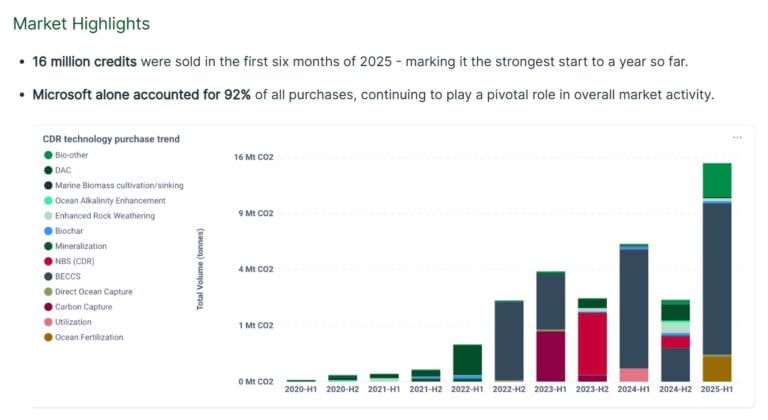
Recent data shows that high-durability carbon removal credits hit nearly 8 million metric tons in 2024. This is up from about 2.4 million tons in 2023. That’s a jump of around 233% in just one year, according to CDR.fyi.

Analysts expect carbon removal demand to rise sharply over the next decade as climate targets tighten. BCG estimates that annual demand for carbon removal might hit 40โ€“200 million tons of COโ‚‚ by 2030. It could grow further to 80โ€“900 million tons by 2040 as more companies commit to net-zero goals.

New technologies such as biochar, direct air capture, and mineralization are gaining attention from investors and large corporate buyers.

Early demand will likely come from voluntary corporate buyers. These buyers could make up about 90% of carbon removal purchases soon as companies are looking for high-quality solutions to tackle hard-to-eliminate emissions.

Large technology companies such as Alphabet, Stripe, and Microsoft currently dominate the market. Microsoft alone purchased about 5.1 million tons of durable carbon removal credits in 2024, representing around 63% of total market demand.

Earlier, Boeing signed another major removal agreement with carbon removal firm Charm Industrial. That deal targeted up to 100,000 tons of COโ‚‚ removal, showing the companyโ€™s growing interest in durable climate solutions.

Aviationโ€™s Net-Zero Path: Fuel Innovation Meets Carbon Removal

The Boeingโ€“Carbonfuture agreement highlights a growing trend in hard-to-abate industries. Aviation, steel, shipping, and cement all face similar challenges. These sectors depend on energy-dense fuels and long-lived infrastructure.

Because of this, companies are exploring multiple climate strategies at once. These include:

  • new aircraft designs,
  • sustainable aviation fuels,
  • operational efficiency improvements, and
  • carbon removal technologies.

Durable carbon removal is increasingly viewed as a bridge solution. It can help manage emissions while new technologies mature.

As global air travel grows, airlines and aircraft makers will face more pressure. They need to show clear paths for decarbonization.

Scaling Climate Solutions for Hard-to-Abate Sectors

Boeingโ€™s carbon removal partnership with Carbonfuture marks an important step in aviationโ€™s evolving climate strategy. The agreement will secure at least 40,000 tonnes of durable carbon removal credits, making it one of the largest such deals in the aerospace sector.

Carbon removal won’t solve aviation’s emissions issue by itself. However, it can support fuel innovation, improve efficiency, and help with cleaner energy systems.

As industries move toward net-zero targets, carbon removal markets are likely to grow rapidly. For companies across transportation, the path to a low-carbon future will rely on a mix of technological breakthroughs and credible climate solutions.

Apple Beats โ€˜Carbon Neutralโ€™ Lawsuit, But Greenwashing Scrutiny Is Heating Up

A U.S. federal judge has dismissed a proposed class-action lawsuit accusing Apple of misleading consumers with โ€œcarbon neutralโ€ marketing for several Apple Watch models. The case targeted the Apple Watch Series 9, Apple Watch SE, and Apple Watch Ultra 2. Plaintiffs said the company exaggerated the environmental benefits of the watches. They claimed Apple relied on carbon offset projects that did not truly cancel the productsโ€™ emissions.

Seven buyers filed the lawsuit in February 2025 in federal court in California. They argued they would not have bought the watches, or would have paid less, if they knew the details of Appleโ€™s carbon accounting.

In February 2026, U.S. District Judge Noรซl Wise dismissed the case. The court ruled the complaint lacked strong evidence showing Appleโ€™s carbon-neutral claims were false or misleading. Wise said:

“At this juncture, the court has a narrow question to consider: have plaintiffs plausibly alleged that Appleโ€™s claims of carbon neutrality are false? Because the court finds that the answer to that question is no, Appleโ€™s motion to dismiss is granted.โ€

The ruling gives Apple an early legal win. But it also highlights growing scrutiny of corporate climate marketing.

How Apple Calculates a โ€œZero-Emissionโ€ Watch

Apple launched its first carbon-neutral devices in September 2023. The company said the Apple Watch models achieved neutrality through a mix of emissions reductions and carbon offsets.

For example, Apple estimates the lifecycle carbon footprint of a carbon-neutral watch model at about 8.1 kg of COโ‚‚-equivalent emissions per device before offsets. After applying carbon credits, Apple says the net footprint becomes 0 kg COโ‚‚e.

The tech giant says it lowers emissions by:

  • using recycled materials,
  • increasing renewable electricity in manufacturing,
  • improving product efficiency, and
  • reducing shipping emissions.

Any remaining emissions are offset through environmental projects.

The lawsuit challenged two offset projects tied to Appleโ€™s claims. One project protects forests in Kenyaโ€™s Chyulu Hills, while another supports reforestation efforts in China. Critics argued such projects may not always deliver additional carbon reductions.

The court did not rule on the scientific debate over offsets. Instead, it said the plaintiffs failed to show Appleโ€™s claims were clearly deceptive.

The Tech Giantโ€™s 2030 Net-Zero Roadmap

Appleโ€™s carbon-neutral watches are part of a larger climate plan known as โ€œApple 2030.โ€ The company aims to make its entire business, supply chain, and product lifecycle carbon neutral by 2030.

Apple carbon neutral to 2030 pathway
Source: Apple

The iPhone maker has made progress toward that goal. The company says its global greenhouse gas emissions have fallen by more than 60% compared with 2015 levels.

In 2024, Apple reported a total carbon footprint of about 16.5 million metric tons of COโ‚‚-equivalent emissions across its operations and supply chain. That figure represented a decline from the previous year.

apple carbon emissions 2024
Source: Apple

Most of Appleโ€™s emissions come from Scope 3 sources, including manufacturing and product use. To address that, it works closely with suppliers. The company reports that 17.8 gigawatts of renewable electricity are now operating in its global supply chain. Those projects helped avoid about 21.8 million metric tons of greenhouse gas emissions in 2024 alone.

Apple has also increased recycled materials in its products. About 24% of the materials used in Apple devices in 2024 came from recycled or renewable sources. These efforts are central to the companyโ€™s climate strategy.

Greenwashing on Trial: Climate Claims Face Legal Tests

Even though Apple won the U.S. case, climate lawsuits are rising worldwide. Greenwashing claims typically challenge marketing statements such as:

  • โ€œcarbon neutralโ€
  • โ€œnet zeroโ€
  • โ€œclimate friendlyโ€

These terms can involve complex carbon accounting that consumers may not fully understand.

Apple has faced legal pressure outside the United States as well. A court in Frankfurt, Germany ruled in 2025 that Apple could not advertise the Apple Watch as โ€œCOโ‚‚-neutralโ€ in Germany. The court said the claim could mislead consumers under local competition law.

European regulators are also tightening rules on environmental claims. New EU consumer protection rules will restrict vague labels like โ€œcarbon neutralโ€ in advertising beginning in 2026. These legal developments could reshape how companies communicate climate progress.

Big Tech Emissions: Clean Energy vs. Rising Power Demand

The Apple case reflects a larger trend in the technology sector. Tech companies are under growing pressure to cut emissions as demand for digital services rises.

Data centers, cloud computing, and artificial intelligence require massive amounts of electricity. As a result, technology firms are investing heavily in renewable energy and carbon removal projects.

Appleโ€™s progress contrasts with some peers whose emissions have risen due to expanding AI infrastructure. Apple still emitted about 15.3 million metric tons of COโ‚‚ in 2024, but that figure is far below its 2015 baseline of 38.4 million tons.

At the same time, clean energy adoption is growing globally. The rapid expansion of renewable power also supports other low-carbon industries, including electric vehicles.

Appleโ€™s Clean Energy Capacity by Year

Companies such as Tesla rely heavily on the decarbonization of electricity systems. The climate benefit of electric cars increases when power grids shift toward renewable energy.

Global electric vehicle adoption is rising quickly. According to the International Energy Agency, EVs represented about 20% of global car sales in 2024, compared with 18% in 2023 and just 4% in 2020.ย That growth is expected to continue as governments strengthen climate policies and consumers adopt cleaner transportation.

Technology companies and automakers both depend on credible climate strategies to maintain investor confidence.

The Role of Carbon Credits in Corporate Climate Plans

Carbon credits remain a key tool for many companies pursuing net-zero goals. Apple increased its use of carbon credits in 2024, retiring about 737,100 tons of COโ‚‚-equivalent offsetsโ€”its highest level to date.
Carbon offsets support several projects such as:

  • forest protection,
  • reforestation,
  • methane capture, and
  • renewable energy development.

However, the quality of carbon credits has become a major issue in climate policy.

Some researchers argue that certain nature-based credits may overestimate their climate impact. Others say these projects are essential for protecting ecosystems and funding conservation. The debate is likely to intensify as more corporations adopt net-zero targets.
A Legal Win, but Climate Claims Under the Microscope

Appleโ€™s victory in the U.S. greenwashing lawsuit marks an important moment in the evolving field of climate litigation. The court ruled that the plaintiffs did not present enough evidence to prove the tech giantโ€™s carbon-neutral claims were misleading.
However, the case also shows how closely corporate climate messaging is now examined. Companies across technology, energy, and transportation sectors face growing pressure to show real emissions reductions and transparent reporting.

As the clean-energy transition accelerates, and industries from consumer electronics to electric vehicles expand, clear standards for climate claims will become increasingly important.

For Apple and other global companies, the challenge is not only reducing emissions but also proving those reductions in ways that stand up to scientific, legal, and public scrutiny.

Chinaโ€™s New 2030 Climate Playbook and What It Means for the EV Market

China has released updated climate goals for the period leading to 2030, framed as part of its 15th Fiveโ€‘Year Plan (2026โ€“2030). These goals focus mainly on improving carbon efficiency, that is, lowering emissions relative to economic output, rather than capping total emissions.ย 

Under the new plan, China aims to reduce carbon dioxide (COโ‚‚) emissions per unit of gross domestic product (GDP) by 17% between 2026 and 2030. The immediate 2026 target is to cut carbon intensity by about 3.8% from the prior year.ย 

The world’s largest emitter has not announced a new absolute cap on total COโ‚‚ emissions for 2030. This means emissions could still rise in total even as the economy becomes more efficient. That cautious tone has drawn attention from analysts.

Norah Zhang, China country lead for Climate Action Tracker, remarked:

“In 2025, renewable electricity generation in China grew faster than overall electricity demand, which helped reduce coal-fired power generation and lowered COโ‚‚ emissions in the power sector. However, the new five-year plan does not update the 2030 target for newly-installed solar and wind capacity, which China already achieved in 2024. By not updating these targets, the new plan misses an opportunity to create additional momentum through more ambitious goal setting for 2030 and beyond.”

What the New Targets Mean in Practice

China has long said it will peak carbon emissions before 2030 and achieve carbon neutrality by 2060 โ€” often called its โ€œdualโ€‘carbonโ€ goals under the Paris Agreement. However, the new 2030 plan places greater emphasis on intensity improvements rather than absolute reductions.

IEAโ€™s suggested path towards carbon neutrality for China

Chinaโ€™s updated climate strategy reflects a balance between economic growth and emissions control. The plan includes a GDP growth target of 4.5โ€“5% for 2026, suggesting the government expects continued industrial expansion. But this raises the possibility that total COโ‚‚ emissions could climb even as carbon intensity improves.

The new plan also prioritizes energy transition actions, such as:

However, the absence of an absolute emissions cap means Chinaโ€™s total carbon output may still grow if economic expansion is strong.

Chinaโ€™s Global Emissions Weight: Why It Matters

China is the worldโ€™s largest emitter of greenhouse gases, accounting for roughly 30% of global COโ‚‚ emissions. Most studies suggest that the countryโ€™s emissions will peak between 2027 and 2030 with a peak between 11.6 and 13.2 gigatonnes of COโ‚‚ equivalent (GtCOโ‚‚e) under current policy trajectories.

Chinaโ€™s transition has been supported by rapid renewable energy growth. China accounts for more than half of global solar panel production and is a global leader in wind and solar deployment.ย 

china leading solar pv deployment statista

Growth in clean energy helped fossil fuel use fall by an estimated 2% in 2025, and renewable sources met about 84% of electricity demand growth, according to independent analysis. This trend is expected to make global fossil fuel demand begin to decline by 2030 if current energy shifts hold.

Monthly solar PV and wind capacity additions in China

EV Market Spotlight: Cleaner Power, Bigger Demand

China is also the worldโ€™s largest electric vehicle (EV) market. The country plays a major role in EV adoption, and its policies can shape global trends, including demand for vehicles from companies like Tesla.

The Asian nationโ€™s 2030 goals indirectly influence EV demand. Strong efficiency and clean energy targets can make EVs more attractive versus traditional combustion cars by lowering emissions from electricity generation. EVs reduce local pollution and align with both national and global climate ambitions.

Tesla has been expanding in China, including with the Gigafactory Shanghai that supplies vehicles domestically and for export. Chinaโ€™s EV market is projected to grow further, supported by urban electrification policies and consumer incentives.

China passenger new EV sales

However, policies that rely mainly on carbon intensity reductions โ€” as opposed to absolute emissions limits โ€” may slow the pace of structural changes needed to fully decarbonize transport and power sectors. Still, Chinaโ€™s rising clean electricity share helps strengthen the climate case for EV adoption by lowering the lifecycle emissions of electric vehicles.

Broader Market Trends, Forecasts, and Investment Signals

Chinaโ€™s cautious climate plan comes amid shifting global policy dynamics. While many countries are enhancing climate targets, some have pulled back from earlier commitments. For example, changes to U.S. federal climate policy have created uncertainty in longโ€‘term emissions strategies.ย 

As of late 2025, around 145 countries had announced or were considering netโ€‘zero targets, covering about 77% of global greenhouse gas emissions. China remains a key driver in this global push.ย 

NET ZERO emissions country targets
Source: Climate Action Tracker

In carbon markets, China has also taken steps to expand its emissions trading system (ETS). Recent policy outlines suggest broader coverage of sectors and possibly higher stringency in future phases. This could help drive cleaner investments and offer market signals to investors and companies.

Renewable energy and clean tech markets may benefit from Chinaโ€™s cautious but steady approach. The countryโ€™s demand for solar panels, batteries, and wind equipment can sustain supply chains and keep manufacturing costs down globally โ€” benefiting EV makers and green tech firms alike.

Ambition vs. Reality: Tracking Chinaโ€™s Climate Trajectory

Despite progress in clean energy, challenges remain. China has not set a firm limit on total emissions through 2030, and coal consumption continues to play a major role in power generation. The reliance on carbon intensity targets means that total emissions may grow if GDP expands faster than emissions decline per unit of output.

To stay aligned with Paris Agreement goals, many analysts believe stronger absolute cuts are needed. Independent research suggests that China could reduce emissions by up to 30% by 2035 relative to current levels with more ambitious policy action.

However, the current 2030 plan keeps a cautious balance between economic growth and climate policy. The country aims to improve carbon efficiency and expand clean energy, but stops short of committing to cuts in total emissions. These targets are part of its longโ€‘term plan to peak emissions before 2030 and achieve carbon neutrality by 2060.

For markets and companies like Tesla, Chinaโ€™s climate strategy will continue to matter. As the largest EV market and a leader in clean energy production, Chinaโ€™s demand trends and policy frameworks shape global investment and manufacturing patterns.

The cautious tone of Chinaโ€™s new climate goals shows a complex tradeโ€‘off between growth and climate action. Whether China will accelerate its ambition before 2030 remains a key question for global decarbonization and the broader energy transition.