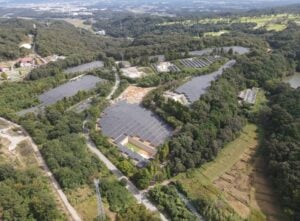
In October 2023, Shizen Energy Inc. signed a 20-year virtual power purchase agreement (VPPA) with Microsoft (MSFT stock) to provide renewable energy from a 25 MWac solar farm in Inuyama City, Aichi Prefecture. As with other global deals, this VPPA helped Shizen Energy secure funding for the Inuyama project.
Now the company has recently announced an expanded partnership with Microsoft. It currently has 100 MW in Renewable Energy Purchase Agreements across four solar projects in Japan.
Building on this success, Microsoft signed three additional 20-year agreements for solar plants in Kyushu and Chugoku, further advancing both companies’ renewable energy goals.
Rei Ushikubo, Executive Officer of Shizen Energy, said,
“Following the Inuyama Project, we are honored to have signed long-term agreements with Microsoft for several new projects. We believe that securing financing from domestic and international financial institutions for these projects is proof of the growing presence of Renewable Power Purchase Agreements in the Japanese market. We will continue to prioritize our power purchase agreement business to support our customers’ decarbonization efforts.”
Shizen Energy Delivers Efficiency Across Four Solar Plants
Shizen Energy has already started operations at one Kyushu plant. The remaining projects are under construction, including its site and wholly-owned EPC subsidiary, Shizen Engineering Inc. All four projects will operate under Shizen Operations Inc., which manages asset operations and maintenance.
The company is also handling project coordination, financing, and asset management, while its subsidiaries manage EPC and O&M. This integrated approach allows the company to deliver large-scale projects efficiently and reliably.
Earlier, it was revealed that the Inuyama Solar Power Plant stands as the largest single-asset solar project in Japan to reach financial close under a VPPA. The project had received ¥10.9 billion in non-recourse financing from Societe Generale, marking the first international funding for a Japanese VPPA-linked renewable project.
Inuyama City Solar Project
Source: Shizen Energy
Global Expansion and Innovation
Shizen Energy aims to accelerate the global shift to renewable energy under the motto “We take action for the blue planet.” The company has expanded projects to Southeast Asia and Brazil and introduced advanced energy technologies, including microgrids, virtual power plants (VPPs), and smart EV charging systems through its proprietary EMS.
It has generated more than 1 GW of renewable energy worldwide and earned recognition as Forbes Japan’s top startup in 2024. With these milestones, the company continues to lead both domestic and international corporate renewable markets.
Boost to Microsoft’s 100% Renewable Energy Goal
This deal is Microsoft’s first renewable energy purchase in Japan. And these REPAs help Microsoft move toward 100% renewable energy for its operations by 2025.
By adding clean energy to Japan’s electricity grid, the tech giant is contributing to both corporate sustainability and grid decarbonization.
Adrian Anderson, General Manager, Renewable and Carbon Free Energy at Microsoft, had said,
“Shizen Energy’s expertise and presence in the Japanese market is enabling our first renewable energy purchase in Japan and it’s great to see near-term supply for our 100% renewable energy goal. A commercial structure like this is important to promoting grid decarbonization in the country.”
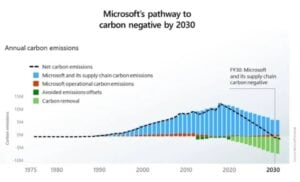
Globally, to date, Microsoft has contracted over 34 GW of renewable capacity across 24 countries, up from 1.8 GW in 2020, as highlighted in its 2025 sustainability report.
Last year, it further diversified its portfolio and added 19 GW of new renewable energy across 16 countries. Key expansions included:
Brookfield Renewable Energy Framework – Delivering over 10.5 GW in the U.S. and Europe over the next five years.
Wisconsin PPA with National Grid Renewables – A 250 MW agreement supporting a growing datacenter region, paired with a $15 million community fund for environmental resilience.
Some other global projects included a 415 MW solar facility in Germany, a 48.8 MW wind project in Ireland, and a 36 MW solar plant in Poland. These projects showcase our commitment to expanding clean energy capacity across diverse markets.
These investments allow Microsoft to expand renewable markets worldwide and support grid decarbonization in all regions where it operates.
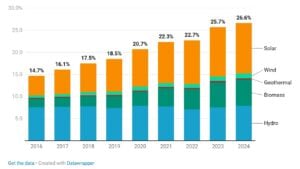
Data shows that Japan aims for 36–38% renewables in its electricity mix by 2030, but slower project development and rising electricity demand keep the share below 30%. Nuclear restarts and decommissioning of old thermal plants have helped reduce emissions by nearly 5% from 2023, reaching the lowest levels since 2015.
Most significantly, agri-solar projects, combining solar generation with farmland, are emerging as a key growth area. Japan has solar potential of 1,465–2,380 GW, far above the current installed capacity of 74 GW. Interestingly, local developers are aggregating small projects and securing financing, creating scalable, sustainable solutions for corporate PPAs.
Shizen Energy’s REPAs with Microsoft show the growing impact of corporate renewable procurement. The agreements attract international financing, provide long-term revenue certainty, and accelerate renewable deployment. Corporate PPAs help companies meet energy goals while supporting broader grid decarbonization.
Shizen Energy continues to expand solar, wind, biomass, and innovative energy solutions. Its integrated development, construction, and operations model ensures projects are delivered efficiently and effectively.
Together, Microsoft and Shizen Energy are shaping Japan’s corporate renewable energy market and proving that sustainable, commercially viable solutions are achievable.
Mercedes-Benz has partnered with Norwegian aluminium producer Norsk Hydro to reduce emissions in the manufacturing of its electric vehicles (EVs). The collaboration centers on using Hydro’s low-carbon aluminum, which is produced with renewable energy and recycled materials.
The deal is part of Mercedes’s plan to make production greener. It aims to reduce the carbon footprint of future EVs. This includes the new electric CLA model, which will be the first vehicle to feature Hydro’s aluminum.
This partnership shows how carmakers are changing materials and energy use. They aim to meet rising climate goals and consumer demand for cleaner cars.
The Partnership: How Green Aluminium Is Recasting Mercedes’ EV Blueprint
Norsk Hydro will supply Mercedes with aluminum that emits far less carbon than standard production. Hydro’s smelting sites in Norway run mostly on hydropower, which helps avoid fossil-fuel emissions.
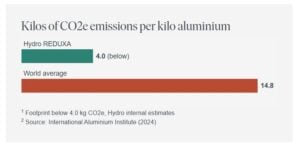
Hydro says its low-carbon aluminum generates just 3 kilograms of CO₂ for every kilogram of metal. In contrast, the global average is 16.7 kilograms. That makes it one of the lowest-carbon aluminum products available today.
Source: Hydro
For Mercedes, this has a direct effect. The company thinks using Hydro’s aluminum in the new CLA will reduce CO₂ emissions by about 40% compared to the old petrol version. This includes emissions from raw materials, manufacturing, and assembly.
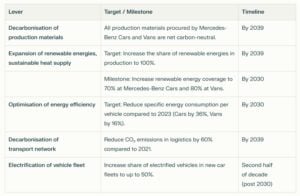
This step supports Mercedes’s long-term goal to make all its passenger cars net carbon neutral by 2039. The target covers the full life cycle — from raw materials and production to driving and recycling.
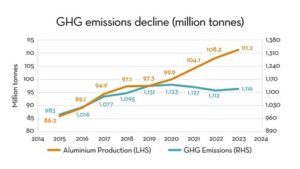
Aluminum production makes up around 2% of global CO₂ emissions, says the International Energy Agency (IEA). Switching to cleaner aluminum can reduce CO₂ emissions by millions of tonnes annually in global supply chains.
Why Aluminium Defines the EV Climate Race
Aluminum is central to the EV transition because it is light, durable, and improves range by reducing vehicle weight. However, it is also energy-intensive to produce, especially when powered by coal or gas.
Embedded emissions from materials like aluminum — those released before the vehicle is driven — are now a big concern for automakers.
Source: International Aluminium Institute
To address this, companies are switching to low-carbon aluminium, which combines renewable electricity and recycled scrap. Recycling is key because it uses only 5% of the energy required for new aluminum production.
In Europe, recycling rates for post-consumer aluminum are about 36%. However, they are expected to double by 2030, based on industry forecasts. If achieved, this could reduce 39 million tonnes of CO₂ emissions per year by 2050 across the region.
Globally, aluminum recycling — including beverage cans — could save 60 million tonnes of CO₂ per year by 2030.
These savings matter. The IEA says that a 10% rise in aluminum recycling around the world could reduce emissions. This is like taking 7 million cars off the road each year.
As global demand for EVs grows, the carbon footprint of materials has become a major focus. Reducing aluminium’s emissions share can make a big difference in the total climate impact of electric mobility.
How Green Materials Are Reshaping Auto Supply Lines
The Mercedes-Hydro deal is part of a wider shift across the automotive sector. Companies feel pressure to decarbonize their supply chains. This helps them meet national and international goals.
In the EU, new rules from the Green Deal and CSRD require automakers to track and report Scope 3 emissions. These are the indirect emissions from materials, suppliers, and logistics. These often make up more than 80% of a car’s total carbon footprint.
Several of Mercedes’s competitors have already joined this transition:
Volvo is partnering with SSAB to develop fossil-free steel.
Tesla sources aluminum from hydro-powered smelters in Canada.
BMW uses recycled aluminum in its i-series vehicles to lower emissions from manufacturing.
Mercedes teams up with Hydro to boost its European supply chain for low-carbon materials. This move also cuts down on high-emission imports from Asia.
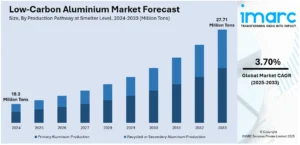
The global low-carbon aluminum market hit 19 million tonnes in 2024. Analysts predict it will grow by 3.7% each year and will reach nearly 28 million tonnes by 2033. Demand for cleaner metals in the automotive, construction, and packaging sectors could rise by more than 30% by 2030.
Source: IMARC Group
Moreover, market data shows that low-carbon aluminum carries a price premium ranging from $20 to $150 per tonne, depending on supply and demand. Mercedes executives say these extra costs are acceptable, as they align sustainability with product quality and customer expectations.
Mercedes also faces challenges in logistics and engineering. It must ensure a steady, traceable flow of low-carbon aluminum to all production sites. Engineers also have to test how these new materials affect vehicle structure and performance.
Still, both companies see the partnership as a long-term investment. Governments are tightening emission limits and adding carbon border taxes. So, using cleaner materials can be both good for the environment and beneficial for the economy.
Hydro already uses renewable power for 70% of its smelting. It plans to reach net-zero emissions by 2050, and it aims to cut its operational footprint by 30% by 2030.
Turning ESG Goals Into Action
This collaboration strengthens both companies’ ESG performance — environmental, social, and governance.
Environmental: The deal tackles manufacturing emissions — one of the hardest areas to decarbonize. It promotes renewable energy, recycling, and a circular materials model.
Social: It supports clean industry jobs and responsible sourcing. Norway’s hydropower-based smelting has lower community and ecological risks compared to coal-based plants in Asia.
Governance: Mercedes and Hydro have committed to transparent emissions reporting and third-party audits. These steps support compliance with international ESG standards and investor expectations.
These actions make sustainability goals real. They change policy talk into actual results.
How Low-Carbon Manufacturing Is Steering the Auto Industry’s Future
The Mercedes-Hydro partnership could become a model for others. As EV adoption grows, automakers are looking beyond tailpipe emissions to the entire vehicle life cycle, from raw materials to end-of-life recycling.
Experts see global demand for low-carbon aluminum increasing by over 30% by 2030. This growth is fueled by EV manufacturing and the expansion of renewable energy.
For Mercedes, the deal supports its Ambition 2039 plan — to make its entire value chain carbon-neutral. The company aims to cut supply chain emissions by 50% by 2030, compared with 2020 levels.
Hydro’s low-carbon aluminum could play a big part in achieving this target. If the low-carbon CLA rollout succeeds, similar materials will likely be used in Mercedes’s future EVs, including SUVs and compact cars.
The impact extends beyond one company. If more car makers join in, the auto industry could reduce CO₂ emissions by millions of tonnes each year. This would help meet global climate goals from the Paris Agreement.
For Hydro, this confirms the value of its years of investment in clean energy and recycling innovation. For the global automotive sector, it sets a new benchmark: sustainability starts with every component.
“Carbon markets can unlock billions in finance for the continent”
“How is it possible that in 2025, when we are able to send people to the moon, when we are able to create driverless vehicles, we’ve not been able to solve the problem of cooking energy in Africa’s rural areas?” asks Maxwell Gomera, Resident Representative of UNDP South Africa and Director of the Africa Sustainable Finance Hub.
He continues: “This is something that is within our means. And as the United Nations Development Programme (UNDP) Africa Sustainable Finance Hub, we are now working with governments across Africa on how to solve such problems. High-integrity carbon markets can offer Africa a powerful tool to mobilise finance required to advance climate action and ensure fair benefits while driving sustainable and inclusive development.”
Carbon markets unlocking billions
“Africa no longer waits for promises to be kept—we act,” Mr Gomera adds. “Carbon markets can unlock billions in finance, strengthen our institutions, and accelerate both Agenda 2063 and the Paris Agreement’s 1.5°C goal. At UNDP’s Africa Sustainable Finance Hub, we believe in a unified continent ready to harness this opportunity, own its solutions, and lead the global transformation towards resilience and prosperity.”
The UNDP is the official host partner of the upcoming Carbon Markets Africa Summit (CMAS), taking place in Johannesburg from 22 to 23 October, gathering the continent’s entire carbon markets value chain, from successful early carbon market movers, climate-finance-ready projects, and regulatory bodies to global institutional development organisations and investors.
“We cannot continue talking about Africa’s potential. We must make that potential a reality,” says UNDP’s Maxwell Gomera. “The Carbon Markets Africa Summit matters because we bring together like-minded people to strengthen the ecosystem around a problem that we all share and provide solutions. Our message is: Tomorrow is worth fighting for.”
The UNDP is making important contributions to the Carbon Markets Africa Summit programme:
CARBON 101
As part of theCARBON 101 pre-summit masterclass on 21 October, UNDP Carbon Market Programme Specialist Bernardin Uzayisaba will facilitate a session on “Why carbon markets matter – and why Africa’s timing is critical.” There is already a lot of interest in this masterclass by delegates who will gain a foundational understanding of global carbon markets—both voluntary and compliance—and their evolving mechanisms: what they are and how they work. In addition, he will explore the global architecture shaped by Article 6 of the Paris Agreement and Africa’s emerging role in a system that’s rapidly evolving. Day 1: Keynote session
– Maxwell Gomera, Resident Representative of UNDP South Africa and Director of the Africa Sustainable Finance Hub, will deliver a keynote address in the CMAS opening session on 22 October.
– Sandra Lindström, Head of International Climate Cooperation, Swedish Energy Agency, a UNDP partner, is another keynote speaker in this session, as she explains: “Sweden has been active in carbon markets for over two decades, and we believe that Article 6 of the Paris Agreement has an important role to play in enabling increased global climate ambition. Our long-standing partnerships in Africa are being ramped up to include cooperation on emissions trading with strong sustainable development contributions”.
Turning policy into action
As African countries transition from climate ambition to implementation, regulatory clarity is emerging as the cornerstone of carbon market development. UNDP Carbon Market Programme Specialist Bernardin will moderate the discussion on “Africa’s carbon market frameworks: Turning policy into action”inthis session, which will explore how national frameworks are evolving post-COP29, what integration of Article 6 looks like on the ground, and how public-private collaboration can drive effective execution.
NBS & AFOLU discussion
In the sector-focused dialogue on nature-based solutions and AFOLU, Mr Uzayisaba will also join the expert panel discussion to explore carbon methodologies, investment models, policy frameworks, and the role of communities in delivering high-integrity, land-based carbon outcomes. African companies entering carbon markets
On Day 2, Tomas Sales, Special Advisor for UNDP Africa Sustainable Finance Hub, will co-lead the workshop on “How African companies can enter the carbon market.” This workshop is designed for African corporates and SMEs looking to understand the business case for engaging in carbon markets.
VUKA Group Carbon Markets Africa Summit is organised by VUKA Group, which has more than 20 years’ experience in serving the business community across Africa. The United Nations Development Programme (UNDP) is the official host organisation.
Other partners and sponsors for this inaugural event include the following: Strategic institutional partners: AUDA NEPAD and UNEP. Diamond sponsor: TASC Gold sponsors: FSD Africa, SGS and Trees for the Future Event dates and location: Dates: 21 October: Pre-summit day 22–23 October: Summit Location: Johannesburg, South Africa Contact details for Carbon Markets Africa Summit: Project Lead: Emmanuelle Nicholls Cell: +27 83 447 8410 Email: emmanuelle.nicholls@wearevuka.com
QuantumScape Corporation (NYSE: QS), a leader in solid-state lithium-metal batteries, has partnered with Corning Incorporated (NYSE: GLW), a company specializing in glass and ceramics.
This partnership aims to improve the production of ceramic separators. These separators are crucial for bringing QuantumScape’s advanced battery technology to market.
Ceramics Meet Innovation: A New Era for EV Batteries
Traditional lithium-ion batteries are hitting their energy density limits while global demand for better storage continues to rise.
QuantumScape’s solid-state design uses a solid ceramic separator instead of a flammable liquid electrolyte.
The ceramic separator is crucial for QuantumScape’s solid-state battery design. It offers higher energy density, faster charging, and improved safety. And these advantages could transform the electric vehicle (EV) and energy storage markets.
Dr. Siva Sivaram, CEO and President of QS, said,
“Corning’s world-class capabilities in ceramics manufacturing makes it an ideal addition to the QS technology ecosystem. Together with our ecosystem partners, we’re building the foundation for scalable production of our high-performance solid-state batteries and furthering our mission to revolutionize energy storage.”
Unlocking Corning’s Materials Mastery
Corning has leveraged its unmatched expertise in glass, ceramics, and optical sciences. Its strong manufacturing and engineering capabilities help to create groundbreaking innovations and life-changing products.
Thus, by combining QuantumScape’s innovation with Corning’s materials science, they plan to speed up mass production and deployment of the EV batteries.
Notably, QuantumScape’s technology can adjust to various cathode types, including Nickel Manganese Cobalt (NMC) and Lithium Iron Phosphate (LFP). This flexibility may also boost energy density and lower costs for various uses. All these factors align with its goal to create scalable, high-performance batteries for a low-carbon future.
Ron Verkleeren, Senior Vice President of Corning’s Emerging Innovations Group, noted that both companies share “a spirit of innovation.” He expressed excitement about working with QuantumScape to advance battery technology.
QS Stock Soars on Partnerships and U.S. Policy Boost
QuantumScape’s stock rallied in 2025, driven significantly by strategic partnerships and renewed U.S. government focus on domestic lithium production.
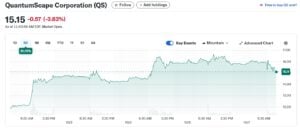
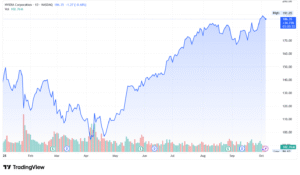
The Corning deal played a key role in boosting QS stock. Shares hit a 52-week high of $16.49 before closing at $15.92, an 11.3% daily gain. Year-to-date, the stock has risen 181%, outperforming the S&P 500’s 14.1% return.
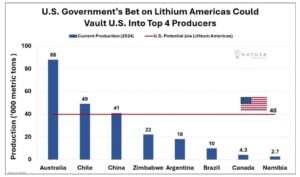
As read before, the U.S. government recently invested in Lithium Americas and its Thacker Pass project with General Motors. This move aims to secure critical mineral supply chains. and will have a direct positive impact on battery developers like QuantumScape.
QuantumScape’s progress has also been boosted by Volkswagen. Last year July, Volkswagen’s battery unit, PowerCo, secured a license to mass-produce QuantumScape’s solid-state cells, shifting from a joint venture to a licensing model with royalty payments tied to performance.
Volkswagen, which owns a 17% stake in QuantumScape valued at around $459 million, plans to produce up to 40 gigawatt-hours (GWh) of battery cells annually, with potential expansion to 80 GWh—enough to power roughly one million vehicles.
Although QuantumScape remains a pre-revenue company, its financial position and stock have strengthened after these deals. And Volkswagen’s commitment underscores its confidence in the company’s technology and its impact on the EV market.
However, the analysts say that the longer-term outlook for QS stock is mixed. While partnerships with Corning and Volkswagen boost its prospects, challenges remain. This is because scaling solid-state batteries from prototype to production is a complex process. And consistency, cost control, and long-term reliability are still unproven at an industrial scale.
Government Support Boosts Battery Sector Confidence
This shows that federal backing has boosted investor confidence in the battery sector. As the government invests in key mining projects, companies like QuantumScape will benefit from a more secure supply chain.
Solid-state batteries rely on lithium as a key component. As domestic supply grows, QuantumScape may lower risks from resource shortages and geopolitical issues. These changes fit with the Trump administration’s plan to invest in essential industries.
The Thacker Pass project fits perfectly in this timeline. It will produce 40,000 metric tons of lithium carbonate each year. This amount is enough for about 800,000 EVs.
QuantumScape’s rise shows that investors are increasingly confident in solid-state battery technology. They see it as a key solution for future energy storage.
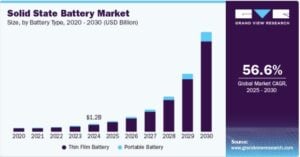
As per FortuneBusinessInsights, the global solid-state battery market is projected to experience rapid growth over the coming years.
In 2024, the market size was valued at around $98.96 million, and it is forecasted to reach $119 million by 2025.
By 2032, the market could surge to $1.36 billion, growing at a compound annual growth rate of 41.61% between 2025 and 2032.
The partnership with Corning has strengthened QuantumScape’s path from lab research to large-scale production. At the same time, Volkswagen’s backing ensures that once the technology is ready, there’s already a market waiting for it.
Furthermore, with the current government policies, the company is now in a stronger position than ever. However, its future success will depend on how effectively it can scale production and turn its groundbreaking technology into a market-ready product.
And if it succeeds, QuantumScape could play a pivotal role in the EV revolution—reshaping the battery landscape and speeding up the world’s transition to cleaner energy
OpenAI, ChatGPT maker, and AMD have signed a multi-year deal for AMD to supply chips that will power OpenAI’s future AI systems. As part of the deal, OpenAI will get warrants that allow it to buy up to 10% of AMD’s shares — about 160 million shares — at a very low price. These shares will only be available if OpenAI meets certain goals in performance and deployment.
OpenAI plans to start using 1 gigawatt of computing power with AMD’s new Instinct MI450 chips by the second half of 2026. Over time, this could grow to as much as 6 gigawatts of AI computing power.
The move shows OpenAI’s plan to reduce its heavy dependence on Nvidia. Nvidia remains an important partner, as it has already agreed to provide up to 10 gigawatts of computing power under its own deal with OpenAI. The AMD agreement is not exclusive, which means OpenAI can still work with other chip makers in the future.
AMD CEO, Lisa Su, noted in an interview that:
“You need partnerships like this that really bring the ecosystem together to ensure that, you know, we can really get the best technologies, you know, out there…So we’re super excited about the opportunities here.”
Numbers That Matter: The $100B Power Play Behind OpenAI’s AI Engine
Experts believe the AMD–OpenAI deal could bring AMD tens of billions of dollars in new yearly revenue. It could also generate over 100 billion dollars in new income for OpenAI and its clients over four years.
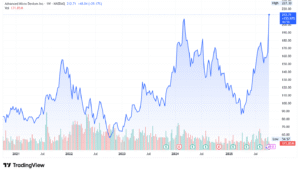
After the announcement, AMD’s stock rose sharply by over 30% trading. On the other hand, Nvidia’s shares dropped slightly, as investors worried about new competition in the AI chip market.
AMD currently has about 1.62 billion shares in total. The warrants given to OpenAI will only be valid if AMD meets specific stock price and performance goals — including reaching $600 per share for the final stage. These financial terms show how large this partnership could become and how much confidence investors now have in AMD’s growing role in AI hardware.
Chip Chess: AMD, Nvidia, and OpenAI’s Strategic Power Moves
Nvidia’s earlier deal with ChatGPT’s owner included up to 10 gigawatts of computing systems. The new AMD partnership doesn’t replace Nvidia — it expands OpenAI’s supply options. The rollout is expected over several years, with the first systems planned for 2026.
However, there are risks. AMD must prove that its chips can perform as well as Nvidia’s in speed, power efficiency, and reliability. There are also challenges in scaling up production, securing parts, and meeting OpenAI’s demanding timelines.
The warrants are split into parts (“tranches”) tied to both AMD’s stock performance and the rollout of AI systems. That means OpenAI’s potential ownership depends on how well AMD performs.
This deal impacts each of the companies involved:
OpenAI gains a second major chip supplier, reducing its risk of relying on one company. It also strengthens ties with AMD through possible ownership, helping it expand its AI computing capacity over time.
AMD earns a major boost in reputation and a long-term client in OpenAI. The deal supports AMD’s AI growth strategy and could help it compete with Nvidia. But it also adds pressure to meet production goals, manage costs, and hit strict performance targets.
Nvidia faces stronger competition in the AI chip space. This could affect its prices and profit margins over time. To stay ahead, Nvidia will likely focus on improving chip efficiency, system integration, and value-added services while monitoring demand shifts between itself and AMD.
The Carbon Cost of Intelligence: AI’s Growing Energy Appetite
While this deal is a big step in business and technology, it also raises environmental, social, and governance (ESG) concerns — especially around power use and emissions.
Wired for Power: How 6 Gigawatts Could Change AI’s Footprint
AI data centers use huge amounts of electricity. The International Energy Agency (IEA) says power demand from global data centers could more than double by 2030, reaching around 945 terawatt-hours — about the same as Japan’s total power use today. In developed countries, data centers could drive over 20% of all electricity demand growth.
Source: IEA
Deloitte estimates that in 2025, data centers will use around 536 terawatt-hours of power — about 2% of the world’s total. By 2030, this could exceed 1,000 terawatt-hours.
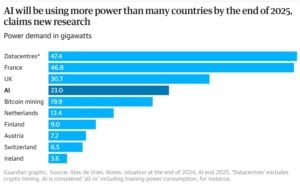
Some studies suggest AI systems alone might take up nearly 50% of all data center energy use by late 2025, using about 23 gigawatts of power — roughly equal to the total electricity demand of small countries.
Source: The Guardian
If global AI hardware demand hits between 5.3 and 9.4 gigawatts in 2025, total energy use could reach 46 to 82 terawatt-hours — similar to what Switzerland or Finland uses each year. That means OpenAI’s 6-gigawatt deployment with AMD could consume a major share of global power, depending on how efficiently it runs.
A single high-end training node with eight GPUs can draw up to 8.4 kilowatts of power when training AI models like ChatGPT. Scaled across thousands of nodes, total power use becomes massive.
Silicon and Sustainability: The Hidden Cost of Making AI Chips
AI chips also affect the environment during manufacturing. Producing GPUs requires mining rare minerals, refining metals, and making semiconductors — all of which use a lot of energy and create waste.
Studies show that while power use has the largest climate impact, making the chips themselves also causes issues like mineral depletion, water pollution, and toxic waste. Some estimates say training advanced AI models can use up to 4,600 times more energy than older machine-learning systems.
If AI adoption continues to grow quickly, its total electricity use could increase 24 times by 2030. Because of this, researchers and companies are exploring ways to make AI more energy-efficient.
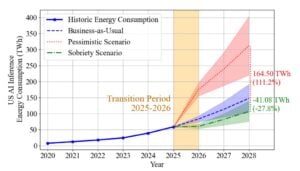
Smaller and optimized models can cut energy use by nearly 28% without much loss in accuracy. Streamlining data and removing extra model layers can lower energy needs by more than 90% in some cases.
The researchers noted that in the U.S., using more efficient AI models could save about 16.25 terawatt-hours of power in 2025 — the same amount as two nuclear plants produce in a year. By 2028, the savings could reach 41.8 terawatt-hours, equal to seven nuclear plants. These cuts show how choosing better models can greatly reduce the energy use of data centers and make AI more sustainable.
Source: https://doi.org/10.48550/arXiv.2510.01889
Greening the Grid: Can AMD, Nvidia, and OpenAI Align AI with ESG?
From an ESG standpoint, the AMD–OpenAI deal puts pressure on all three companies — OpenAI, AMD, and Nvidia — to act responsibly as AI expands. They are expected to:
Disclose how much energy and emissions come from their AI systems.
Use renewable energy or carbon offsets to power their data centers.
Build strong governance rules to ensure fairness, privacy, and transparency in AI use.
Be accountable to investors, regulators, and the public about their environmental and social impacts.
Some experts recommend that companies fully integrate ESG principles into AI projects — assessing environmental and social risks early, applying strong oversight, and aligning goals with long-term sustainability.
The AMD–OpenAI deal marks a new chapter in the AI hardware race. It could reshape how computing power is built, supplied, and shared between tech leaders. But as AI infrastructure grows, so will its energy demands. Balancing performance with sustainability will be one of the biggest challenges for the big tech in the years ahead.
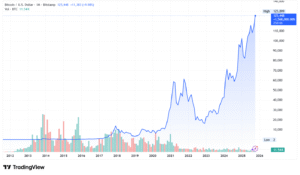
Bitcoin price has broken another record, rising above $126,279 USD on the Coinbase BTC/USD pair on October 6, 2025. The price jump came as strong inflows poured into Bitcoin exchange-traded funds (ETFs) and as the U.S. government faced a partial shutdown.
The rally shows how much investor confidence has grown in digital assets. Even in uncertain economic conditions, Bitcoin continues to attract both institutional and retail investors. Analysts say that hundreds of millions of dollars entered Bitcoin ETFs in just a single day, helping push prices to new highs.
This rise also reflects a wider shift in financial markets. Investors are using Bitcoin not just as a speculative asset but also as a hedge against inflation and government instability. As one analyst put it, “Bitcoin’s resilience during macroeconomic stress strengthens its case as digital gold.”
The $126K Question: What’s Driving Bitcoin’s Meteoric Rise?
There are a few main reasons behind Bitcoin’s latest surge, and it’s hitting over $126,000.
First, institutional demand is back in full force. Spot Bitcoin ETFs are now approved and active in the U.S., making it easier for big investors to buy Bitcoin without dealing with the complexity of wallets and exchanges.
In recent trading sessions, U.S. spot Bitcoin ETFs saw total inflows of around $307 million in a single day. BlackRock’s iShares Bitcoin Trust (IBIT) alone accounted for $177 million of that amount. These are large numbers that reflect strong confidence from big players like asset managers, pension funds, and hedge funds.
Second, the U.S. government shutdown caused some investors to move money into alternative assets. When government operations slow or economic uncertainty grows, investors often turn to decentralized assets like Bitcoin as a form of protection.
Finally, market momentum itself plays a big role. As prices climb, new buyers enter, creating a feedback loop that drives Bitcoin even higher.
Despite this, analysts warn that volatility remains high. Sharp corrections are still possible as traders take profits or respond to changing policies.
The Environmental Side of Bitcoin
While the price surge excites investors, it also renews focus on Bitcoin’s environmental impact. Mining Bitcoin uses a lot of energy. That energy demand produces a significant amount of carbon emissions.
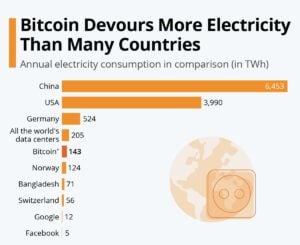
Estimates show that the Bitcoin network consumes around 175 to 180 terawatt-hours (TWh) of electricity each year. This is similar to the yearly power use of countries such as the Netherlands or Argentina, and even more than Norway.
20210505_Bitcoin_Energy_EN
That level of energy use leads to about 98 million tonnes of CO₂ emissions every year. To put that in perspective, that’s roughly the same as the total annual emissions of some smaller developed countries.
Each Bitcoin transaction can generate hundreds of kilograms of CO₂ (672 kg of CO₂), roughly the same as driving a gasoline car for more than 1,000 miles.
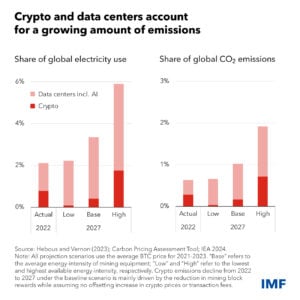
Globally, data centers and crypto mining together now use around 2% of the world’s electricity. Their combined emissions account for nearly 1% of global carbon output. If mining continues to grow, this share could rise further, raising questions about whether such growth is sustainable in a net-zero world.
The environmental footprint of Bitcoin doesn’t stop at electricity. Mining requires powerful machines called ASICs (Application-Specific Integrated Circuits). Producing these machines consumes a lot of materials and energy.
Mining hardware becomes outdated quickly, often within one to two years. Newer models are more efficient, forcing miners to replace old machines. This creates a steady stream of electronic waste (e-waste).
A study from the United Nations University found that global e-waste could exceed 75 million tonnes per year by 2030, and crypto mining adds to this problem.
Building the machines also requires rare minerals like lithium, nickel, and copper. Extracting and refining these resources can harm local ecosystems and produce toxic waste. Manufacturing contributes up to 80% of the total lifecycle impact of some mining systems.
These factors mean that even before a Bitcoin is mined, environmental costs are already being paid.
Some miners have built facilities near renewable energy plants, using excess energy that would otherwise go to waste. Others buy carbon credits or join programs to offset their emissions.
For example, miners in Iceland and Norway already rely almost entirely on geothermal and hydropower, giving them some of the cleanest operations in the world. In Texas, where many U.S. miners operate, some companies now run flexible systems that shut down during peak electricity demand, helping stabilize the power grid.
However, not all mining is clean. Many sites in countries like Kazakhstan or regions in the U.S. still depend on coal or natural gas. These differences make it harder to calculate the true carbon footprint of the entire Bitcoin network.
Regulators Step In: Can Bitcoin Go Green Under Pressure?
As Bitcoin grows, so does pressure from regulators and ESG-focused investors. They want more transparency about how Bitcoin is mined and how much carbon it emits.
Some governments have discussed banning or limiting mining in areas with high emissions. However, bans can push miners to relocate to countries with dirtier energy, which increases global emissions instead of reducing them — a problem known as carbon leakage.
A more balanced solution could be a carbon tax on mining energy use. A report from the International Monetary Fund (IMF) suggested that a small tax — around $0.05 per kilowatt-hour — could both reduce emissions and generate government revenue.
Meanwhile, new frameworks for carbon intensity labeling are being discussed. These would give each cryptocurrency a score showing how clean or dirty its energy use is. Such tools could help investors choose more sustainable digital assets.
Institutional investors are also demanding better disclosure. They want mining companies to report their power sources, total energy use, and steps taken to reduce emissions. Without clear data, Bitcoin may find it difficult to fit into portfolios that follow ESG principles.
A Turning Point for Bitcoin’s Future
Bitcoin’s climb past $126,000 marks a major moment for the digital asset. It confirms that investor appetite remains strong and that Bitcoin has matured into a key part of the global financial system.
But the environmental costs are also becoming clearer. To remain part of a sustainable economy, the Bitcoin industry will need to:
Use cleaner energy sources.
Improve mining efficiency and reduce power per transaction.
Extend hardware lifespan and recycle old machines.
If these steps are in place, Bitcoin could continue to grow while shrinking its environmental footprint.
In the long run, balancing profit and planet will define Bitcoin’s role in the new financial era. Its future success will depend not only on market prices but also on how responsibly the network manages its impact on climate and energy systems.
Sungrow, a leader in PV inverters and energy storage, has connected 400 MWh of ENGIE’s 200 MW/800 MWh battery project in Vilvoorde, Belgium, to the grid. This marks the start of mainland Europe’s largest battery project, featuring 320 units of Sungrow’s PowerTitan liquid-cooled technology.
The company highlights that the second phase will be connected by late 2025. It will provide reliable, clean power to nearly 96,000 Belgian households. Located just north of Brussels, this project is a major step toward green energy and energy security for Belgium.
From Gas to Gigawatts: ENGIE’s Bold Battery Investment
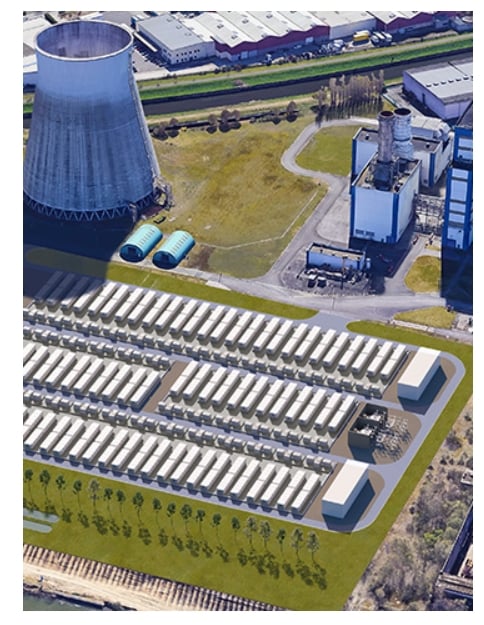
Vilvoorde has been linked to electricity generation since the 1960s, mainly using fossil fuels. But ENGIE is transforming the 30-hectare site by adding a three-hectare battery park next to its gas plant.
Belgium’s Capacity Remuneration Mechanism (CRM) auctions began in 2021. They ensure enough supply to prevent shortages, especially in winter. ENGIE won the project through this mechanism. Construction started after Elia, the national grid operator, approved the plan in late 2023.
Moving on, the Vilvoorde battery park will launch in two phases, each with 100 MW, spaced three months apart. Phase one is already operational. Phase two should be completed by late 2025. ENGIE is investing €230–290 million. This project is the first of its size in continental Europe, outside the UK.
Vilvoorde Battery Park
Source: Engie
Scaling Energy Storage
Belgium’s experience with energy storage has been limited to pilot projects, like the smaller Battery Park in Drogenbos. With Vilvoorde, ENGIE is moving from testing to large-scale deployment.
“This project shows One ENGIE in action,” said Quentin Renoy, ENGIE Belgium’s BESS Business Developer. “It’s about flexible generation and teamwork across market analysis, legal, and public relations.”
The battery park has a 15-year contract with Elia. This ensures a steady income while supporting Belgium’s renewable grid.
A Reliable Backup
While storage offers clean energy, Belgium still faces gaps between demand and renewable capacity. In October 2023, authorities confirmed that ENGIE’s former gas power plant in Vilvoorde will serve as a backup unit for three years, with options to extend.
This dual approach—using flexible storage and legacy plants—ensures Belgium can transition without supply shortages.
ENGIE also plans similar projects in Kallo (near Antwerp) and Drogenbos, expected to start in 2024.
Europe’s Modern Infrastructure for a Net-Zero Future
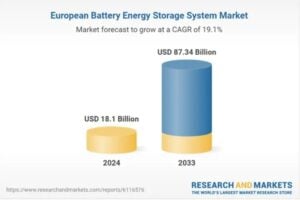
Data shows that the European Battery Energy Storage System (BESS) market is expected to jump from US$18.1 billion in 2024 to US$87.34 billion by 2033, growing at a 19.11% CAGR.
This rise is attributed to increased renewable energy use, government support, and lower battery costs. BESS boosts energy efficiency by storing extra renewable power, helping grids stay stable.
Countries such as France, Germany, the UK, and Spain are rapidly expanding BESS to enhance grid resilience with innovative battery technologies.
The Vilvoorde project does more than provide electricity for households. It modernizes Europe’s energy infrastructure. By absorbing excess renewable power during high-production times and releasing it during peak demand, the system tackles clean energy’s biggest challenge: intermittency.
Large-scale Battery Energy Storage Systems (BESS) like this ensure stability, prevent grid congestion, and create a model for integrating renewables into existing grids across Europe.
Safe, Smart, and Scalable Technology
Both phases of the Vilvoorde project use Sungrow’s PowerTitan liquid-cooled storage units. These units have compact, modular designs that optimize land use and allow quick deployment.
They include intelligent cooling to maintain temperature stability, extend battery life, and reduce costs. This setup ensures safety, efficiency, and reliability.
Vincent Verbeke, CEO of ENGIE Belgium, said,
“With the first series of batteries now operational in Vilvoorde, ENGIE is delivering part of the additional flexibility the electricity grid requires to balance supply and demand. The efficient construction of this battery park is only possible thanks to strong partnerships. By working hand in hand with trusted and innovative partners such as Sungrow, we can continue to accelerate the integration of renewables into the grid, and help deliver a more reliable, sustainable and affordable energy system.”
Sungrow’s Growing Footprint in Europe
Sungrow has a solid presence in the BeNeLux region, providing technical support, sales, and after-sales services from local offices and its R&D center in Amsterdam. The company engages with the market through industry events like Intersolution and Laadinfra Congress, while hosting its own summits, such as the EV Charging Summit in Amsterdam.
This local presence ensures Sungrow delivers effective solutions to partners, reinforcing its commitment to Europe’s clean energy transition.
Globally, Sungrow has over 28 years of experience in renewable power solutions, having installed 870 GW of power electronic converters worldwide by June 2025. BloombergNEF consistently ranks Sungrow as the world’s most bankable PV inverter and energy storage provider.
Carbon Neutral Goals
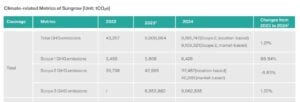
The company has pledged to achieve operational carbon neutrality by 2028 (Scope 1 and 2 emissions) while managing Scope 3 emissions across its supply chain.
Source: Sungrow
Its strategy includes:
Phasing out fuel-powered vehicles and forklifts for electric alternatives.
Electrifying all new canteens and eliminating gas use in operations.
Removing SF6-based equipment from distribution systems.
Expanding renewable electricity use across facilities.
Improving energy efficiency in production and manufacturing.
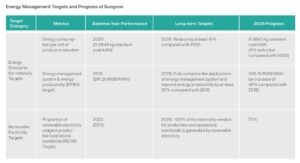
Sungrow is committed to staying on track. It has joined initiatives like RE100, which focuses on 100% renewable electricity, and EP100, which aims for better energy productivity.
It has set measurable performance targets, including energy consumption per production unit. Annual monitoring ensures transparency and accountability.
Source: Sungrow
Vilvoorde Battery Park: A Blueprint for Europe
The Vilvoorde battery park is a model for Europe’s energy transition. It shows how large-scale storage can stabilize grids, support renewables, and cut fossil fuel use.
By combining ENGIE’s expertise in energy management with Sungrow’s technology, Belgium is positioning itself at the forefront of Europe’s clean energy transformation.
As the continent works toward its 2050 net-zero goals, projects like Vilvoorde show us the future of energy. They rely on flexibility, innovation, and strong partnerships. This battery project marks a key step in Europe’s clean energy journey.
It proves that large-scale storage can power homes and balance renewable supply. With ENGIE’s investment and Sungrow’s technology, Belgium leads the way to a greener, stronger power grid. As phase two nears, the project shows that energy storage is crucial for Europe’s net-zero goals.
High-quality carbon credits are becoming more valuable than ever, with prices reaching record levels in late 2025, according to Sylvera. This finding reflects a deeper change in the voluntary carbon market. Companies are no longer buying credits only to meet pledges. They are looking for projects that prove real impact and deliver measurable results.
This shift matters because it shows how trust is shaping the carbon market. Buyers are signaling that only carbon credits backed by evidence and durability will support their net-zero goals.
Data Doesn’t Lie: Sylvera’s Market Snapshot
Sylvera’s Q3 2025 Carbon Data Snapshot gives a clear view of where the market is heading. Prices for afforestation, reforestation, and revegetation (ARR) credits reached $24 per tonne in September. At the start of the year, the average was closer to $14, as seen in the chart below. This jump shows how much buyers are willing to pay for quality.
Quoting Allister Furey, CEO at Sylvera:
“The growing premium for high-quality credits demonstrates that integrity is now a key driver of value. Buyers are becoming more selective and project developers are responding by meeting higher standards.”
Retirements also stayed strong. In Q3, about 31.86 million tonnes of credits were retired, almost unchanged from the 31.49 million in Q3 2024. Year-to-date retirements reached 128.15 million credits, one of the highest totals ever recorded.
Supply, however, has slowed. Issuances fell to 63.2 million credits in Q3, down from 76.9 million in Q2. This creates a tighter market where demand outpaces new supply.
Another important trend is the shift toward higher-rated credits. In the first half of 2025, 57% of retired credits reviewed by Sylvera were BB grade or higher. In 2024, that figure was 52%. Buyers are clearly moving away from lower-quality offsets and investing in verified projects that prove long-term climate value.
Behind these numbers are real-world examples that show how the market is evolving. Forestry projects remain central, but the focus has shifted toward ones that demonstrate permanence and co-benefits:
Pachama works with reforestation and forest conservation across Latin America. Their credits are tied to satellite monitoring and AI verification, which improves transparency.
Verra-certified projects in Africa and Asia have begun linking biodiversity protection with carbon storage, attracting buyers willing to pay premiums.
On the technology side, Climeworks in Iceland is scaling direct air capture plants that store CO₂ underground. These credits cost far more than forestry but offer permanence, making them appealing to firms with strict climate goals.
These examples show why high-quality credits command higher value: they combine measurable climate impact with added social or environmental benefits.
Billions in Play: Carbon Market Expansion
Sylvera’s numbers fit into a much larger trend. The voluntary carbon market was valued at $4.04 billion in 2024, per Grand View Research data. Estimates suggest it could grow to between $50-$100 billion by 2030.
Nature-based and renewable energy credits remain central to this growth. In 2024, they made up a significant share of total revenues. Meanwhile, carbon removal credits are expected to expand even faster. MSCI projects removal could reach $4 to $11 billion by 2030, making it a key driver of future growth.
Prices are also spreading across a wide range. Nature-based credits typically trade between $7 and $24 per tonne. Technology-based removals, such as direct air capture, are much higher—between $170 and $500 per tonne. These differences reflect the varying durability and permanence of different credit types.
Why High-Quality Credits Cost More
The surge in premium prices for carbon credits comes from several forces working together. Companies with net-zero targets want credits they can defend publicly. That means verified, durable credits with strong evidence of climate benefit.
Supply is another issue. Many projects take years to produce verified credits, and issuances have slowed. Buyers are competing for fewer top-tier credits, which pushes prices higher.
Rating systems like Sylvera’s add more transparency. Buyers now have a clearer way to separate weak projects from strong ones. This transparency builds confidence and influences purchasing decisions.
Policy also plays a role. In Europe and elsewhere, regulators are exploring how voluntary credits may fit into compliance markets. Credits with higher integrity are more likely to qualify, which increases their value.
Finally, projects with added co-benefits—such as biodiversity protection or community development—attract more buyers. Sylvera has reported that credits offering four or more strong co-benefits command higher prices.
All of these drivers show how the market is evolving from a quantity focus to a quality-first approach.
The Great Divide: Carbon Removal vs. Avoided Emissions
A big divide exists between avoided emissions and carbon removal. Avoided emissions come from projects like preventing deforestation. Carbon removal means pulling carbon dioxide directly out of the air and storing it.
Market forecasts suggest removals will grow faster than reductions. But they are also far more expensive. Engineered removals currently trade at hundreds of dollars per tonne, while nature-based projects remain in the lower range.
As technology improves, costs for engineered removal may fall. Still, removal will likely hold a premium because of its permanence. Buyers see value in removal. For example, Microsoft has signed long-term contracts with Climeworks and other carbon removal firms. This reflects a growing recognition that permanent removal is necessary for reaching long-term climate goals.
Integrity Under Pressure: Barriers to Growth
Despite progress, several challenges remain:
Verification: Forestry credits face risks from fires, disease, or illegal logging, making permanence hard to guarantee.
Scaling technology: Engineered removals are still in pilot phases and remain costly.
Liquidity: Fewer high-quality credits means market swings are sharp when demand spikes.
Fragmentation: Multiple registries and standards create confusion, slowing investment.
These challenges underline the importance of building a system of integrity. If standards weaken, the market risks losing trust.
Future Value: Where Carbon Markets Go Next
Sylvera’s latest report makes the trend clear. Prices for high-quality credits are rising fast, and the market is demanding better integrity. Other industry data supports this, showing billions in future growth and a shift toward removal.
Challenges remain, from verifying permanence to scaling new technology. But one theme stands out: credibility now drives value. The voluntary carbon market is entering a new phase where only proven results matter.
For companies, this means buying credits is no longer just about cost. It is about quality, durability, and trust. For the market, it signals a move toward maturity. High-quality carbon credits are not just commanding record prices—they are setting the new standard for climate action.
As Furey further stated:
“This alignment between quality expectations and market demand is critical for scaling carbon markets to deliver genuine climate impact at lower economic cost.”
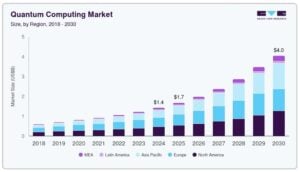
Governments and private investors are investing heavily in quantum computing. This is pushing the technology toward real-world applications. Experts predict the market will hit about $4.24 billion by 2030. It is expected to grow roughly 20.5% each year from 2025 to 2030.
Artificial intelligence has changed investing. When paired with quantum computing, it may create big wealth-building chances in the coming decades.
Investing in Top Pure-Play Quantum Stocks: The Next Tech and Climate Revolution
Recent breakthroughs in qubit stability and new partnerships for larger quantum networks are driving growth. Leading pure-play quantum stocks have risen as investors bet on widespread commercial use.
These companies are at the forefront, turning advanced research into real solutions. They could reshape industries like pharmaceuticals and energy.
Investors can now position themselves in top pure-play quantum stocks. This lets them capitalize on rapid innovation and a growing market.
Quantum computing is ushering in a new era of technological innovation—and nowhere is this impact more pronounced than in climate solutions. The leading pure-play quantum stocks – IonQ (IONQ), D-Wave Quantum (QBTS), Quantum Computing Inc. (QUBT), and Rigetti Computing (RGTI) – are actively driving advances in clean energy, carbon reduction, and climate science. Here’s how each company plays a vital role:
1. IonQ (IONQ): Betting Big on Quantum’s Future
In just the past six months, IonQ’s stock has surged to around $70, delivering a gain of more than 170%, confirming its lead in quantum computing. Its ion-trap systems outperform competitors like IBM and Google with better fidelity and scalability. The company aims to achieve 80,000 logical qubits by 2030, which could drive advances in AI, pharmaceuticals, and cybersecurity.
Strong Cash Position Fuels Growth
As of July 2025, IonQ had $1.6 billion in cash and raised a record $1 billion in equity from a single institutional investor—the largest in the industry. This fund allows IonQ to grow rapidly. Additionally, the company’s market cap stands at $16.5 billion.
Tempo Hits AQ-64, Expanding Quantum Horizons
IonQ recently revealed that its Tempo system achieved a record AQ-64 ahead of schedule. This achievement doubles the useful computational space with each step. Now, the system can address real-world challenges like energy optimization, drug discovery, and supply chain modeling. At #AQ 64, IonQ is 36 quadrillion times more powerful than IBM’s current systems.
Investor Outlook
Recent acquisitions in networking, sensing, and space, including Oxford Ionics and Capella Space, enhance IonQ’s ecosystem. Significantly, it has been broadening its cloud presence through integrations with Amazon Web Services, Microsoft Azure Quantum, and Google Cloud Marketplace.
Yahoo Finance
Thus, analysts are optimistic, setting targets as high as $100. Although still unprofitable, IonQ presents long-term potential as a leading quantum player.
Making Energy Cleaner and Models Smarter
IonQ is helping make energy cleaner using quantum computers. In 2025, IonQ’s technology made power grid simulations up to 50 times faster than before. This helps cities use wind and solar power without losing energy. When energy managers used IonQ’s computers, they found ways to reduce pollution by as much as 15%.
IonQ is also working with scientists to design better batteries and materials that can capture pollution out of the air. Their computers solved problems that regular computers could not, making new discoveries up to 70% quicker. That means new green tech, like battery storage and pollution capture, could become available sooner and help fight climate change.
By speeding up climate models and helping companies plan their energy use, IonQ is playing a big role in lowering emissions and helping the world become greener.
2. D-Wave (QBTS) Poised for Growth with Quantum Advantage
D-Wave (NYSE: QBTS) is charting its own path. Rather than developing general-purpose quantum computers, it specializes in quantum annealing. This method excels in optimization tasks like logistics and statistical modeling. This focused strategy helps D-Wave capture valuable use cases without trying to cover the whole quantum market.
Notably, it stands out as the only company offering both annealing and gate-model systems. Over 100 clients, including government and enterprise customers, are using its solutions.
Additionally, the company announced in March that Ford Otosan has used D-Wave’s technology to improve production sequencing for its Ford Transit line.
Revenue and Cash Boost
The company reported a record Q1 fiscal 2025 revenue of $15 million. This is a 509% increase from $2.5 million last year. Its cash balance climbed to $304.3 million, bolstered by $146.2 million raised through its ATM program.
Advantage2 Expands Commercial Reach
D-Wave launched its sixth-generation Advantage2 system. It has over 4,400 qubits, making it the most powerful quantum computer they’ve created so far. This system addresses real-world issues that classical computers struggle with. Commercial adoption is accelerating, with bookings in APAC rising 83% in 2025.
Investor Outlook
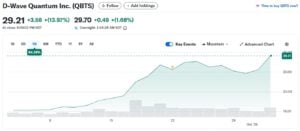
Wall Street is optimistic. We also see that Piper Sandler raised its target to $22, Stifel set a $26 target, and Benchmark maintained its $20 Buy rating. Strong demand, solid funding, and growing commercial applications make QBTS a leader in the quantum field. Most significantly, analysts see the revenue jump as a solid path to profitability.
Source: Yahoo Finance
Quantum Solutions for Cleaner Cities
D-Wave’s technology and quantum computers help save energy and cut down pollution. D-Wave worked with a utility company in Europe to manage solar and wind power, making those clean energy sources more reliable and efficient. Their computers help balance the flow of energy so that less is wasted, meaning fewer fossil fuels are needed.
In Tokyo, D-Wave helped set up smart trash collection. Their computers figured out how trucks could use shorter routes and fewer vehicles. This cut down driving by 57% and saved a lot of fuel. In other tests, D-Wave’s technology helped reduce traffic jams by 17% and cut emissions in supply chains by 20%.
D-Wave’s newest computers use much less energy than big data centers. Their systems let companies manage energy and deliveries in ways that were never possible before, helping cities get cleaner and businesses save money.
3. Quantum Computing Inc. (QUBT): A High-Risk, High-Reward Quantum Play
Quantum Computing Inc. (Nasdaq: QUBT) focuses on photonic chip integration. It also launches Quantum AI and cybersecurity products. Currently, its early revenues are low. The company relies on government and industry partnerships. This dependence brings execution and adoption risks.
The company recently disclosed that it has $850 million cash position, strengthened by a $500 million private placement in September 2025. These funds support fab scaling, hiring, strategic acquisitions, and commercialization efforts.
Some commendable product developments include delivering a quantum photonic vibrometer to Delft University of Technology. It also shipped its first entangled photon source to a lab in South Korea. Meanwhile, a top-five U.S. bank adopted the Quantum Cybersecurity Solution. These wins show that QUBT’s products solve real-world challenges.
Foundry Powers Scale and Performance
The company’s thin-film lithium niobate (TFLN) foundry in Tempe, AZ, is now fully operational. It integrates nano-photonic chips into quantum systems. This improves size, weight, power, cost, and performance. External services also boost revenue in datacom, telecom, sensing, and quantum computing.
Source: Yahoo Finance
However, QUBT faces strong competition from IonQ and D-Wave. High risks in execution and adoption make this suitable for risk-tolerant investors. They seek asymmetric upside in early-stage quantum photonics.
Tracking Pollution and Saving Energy
QUBT builds quantum computers that help track pollution and save energy every day. Their machines are easier and cheaper to run than the biggest supercomputers. In 2024, QUBT invested millions to help forecast climate changes and make electric grids better. Their computers measure carbon pollution in the air almost twice as accurately as older methods, which means cities and governments can know what’s happening and act faster.
By working with power companies, QUBT found ways to cut energy waste by 37%. They believe their technology will help make big improvements – up to 52% – in just a few years. QUBT computers are also making it easier for countries and companies to test how well climate laws work and fix problems quickly.
With better data and faster answers, QUBT is helping people support a cleaner future through smarter science and technology.
4. Rigetti Computing (RGTI): The Future of Quantum Hardware
Rigetti Computing (NASDAQ: RGTI) is a top quantum computing stock drawing strong investor interest. The company is pushing forward with superconducting qubit technology and bold innovations. However, its revenue is small compared to its high valuation.
Leading in Quantum Hardware
Rigetti employs a chiplet-based approach to scale its quantum processors, distinguishing it from IBM and Google. Its Cepheus™-1-36Q system is live on Rigetti’s Quantum Cloud Services and will soon be on Microsoft Azure.
In September 2025, the company launched a 36-qubit processor that cut two-qubit errors in half and achieved 99.5% gate fidelity. This progress shows it can scale to over 100 qubits.
Market Momentum and Funding
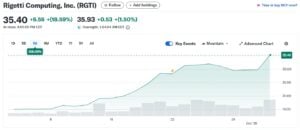
Revenue for Q2 2025 is $1.8 million, which is modest. Shares are trading around $32, up over 4,000% in the past year. Rigetti has about $571 million in cash and no debt. This provides a strong runway for research, partnerships, and production.
Key collaborations include Quanta Computer’s $35 million investment, contracts with the U.S. Air Force, and ties with India’s C-DAC for hybrid quantum systems.
Risks and Outlook
Source: Yahoo Finance
Most analysts rate RGTI stock a “Buy,” but its stock price exceeds many targets. The price-to-sales ratio is around 900x. This means Rigetti offers high-risk, high-reward exposure to next-generation quantum computing. It suits investors willing to bet on long-term breakthroughs and tolerate short-term volatility.
Building Better Batteries and Clean Tech
Rigetti is building quantum computers that help scientists create new batteries, solar panels, and even machines to capture pollution. Their computer chips work with very few mistakes, so testing new clean tech designs is quicker and cheaper. In 2025, Rigetti joined with governments and technology companies to set up projects using quantum computers in clean energy labs.
Rigetti’s computers helped make battery and solar designs three times as fast as before. A recent U.S. Air Force project spent $5.8 million to test Rigetti’s computers for national security and energy grid science. With international orders for their systems, Rigetti’s technology is helping researchers all over the world find the fastest ways to cut pollution and improve clean energy.
Rigetti is proving that new quantum computers can help jumpstart the next wave of green inventions.
Power Needs and Efficiency of Quantum Computing
Quantum computers demand significant energy to operate, especially superconducting qubit systems that must stay near absolute zero—about 0.015 Kelvin. And cooling consumes a significant 70% of the total power.
As qubit numbers grow, larger systems may need hundreds of kilowatts continuously. Researchers are testing energy-efficient cooling methods and developing qubits that can work at higher temperatures, which could significantly lower energy demand.
However, even with these requirements, quantum computers still use far less electricity than traditional supercomputers. Companies are also adopting sustainability measures, using renewable energy, modular hardware designs, and recycling rare materials to reduce their carbon footprint.
Accelerating Clean Tech and Materials Innovation
Quantum computing is changing how we approach materials and clean energy. A McKinsey report highlighted the following:
It is helping develop sustainable batteries, high-efficiency solar panels, and improved catalysts for carbon capture.
Researchers are creating battery chemistries that rely less on lithium and cobalt and designing solar materials that are safer and more effective.
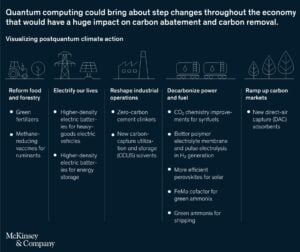
Quantum simulations can also uncover compounds that make CO₂ capture and storage cheaper and more energy-efficient.
In energy systems, quantum machine learning and annealing help forecast supply and demand, optimize production, and integrate renewables into the grid.
These advances boost reliability, cut emissions, and make clean energy solutions more affordable, moving the world closer to sustainability goals.
As these companies advance their technology and scale operations, these pure-play quantum stocks may unlock massive growth. This makes it one of the most exciting sectors to watch.
Quantum computing is more than just a high-tech idea – it’s becoming a real-world tool for solving tough climate problems. Companies like IonQ, D-Wave, QUBT, and Rigetti are leading the way. Their computers let us model and fix energy systems, track pollution, and invent new green technologies faster than ever. This means not just a smarter future – but a cleaner, healthier planet for everyone.
The voluntary carbon market (VCM) has taken a major step forward. The Integrity Council for the Voluntary Carbon Market (ICVCM) has approved six new carbon removal methodologies under its Core Carbon Principles (CCPs). These methods come from two programs: Isometric and Gold Standard. Both are known for meeting the council’s strict requirements.
This approval signals a shift toward stronger credibility in carbon removal credits. For years, the voluntary carbon market faced doubts about quality, transparency, and permanence.
Many companies hesitated to use credits due to fears of overstated benefits. The ICVCM names specific methods that meet high integrity standards. This helps businesses, investors, and governments have a clearer framework to trust. In the words of Annette Nazareth, ICVCM Chair:
“We are pleased to announce these new approvals for methodologies in a variety of emissions reductions and removals categories. The science is clear that both reductions and removals are critical to effective climate action. These latest approvals will open up new options for integrity-focused buyers to broaden their portfolios of carbon credits across a range of high-impact categories.”
In addition, the ICVCM confirmed two nature-based methodologies under other programs: CAR Mexico Forest Protocol v3 for improved forest management and VM0047 v1.1 for afforestation and reforestation.
These approvals matter because they are linked to very specific versions of methodologies. Not all projects under Isometric or Gold Standard automatically qualify. Only those that follow these approved versions can carry the CCP label.
From Doubts to Trust: Raising the Bar on Carbon Credits
So far, projects under these new removal methods have issued around 30,000 credits. While this number is small, the pipeline is much larger. ICVCM data show that:
24 projects under the Isometric methods are expected to issue over 3.2 million credits annually in the coming years.
15 projects under the Gold Standard method could issue over 9,000 credits annually.
In forestry, the CAR Mexico Forest Protocol v3 already has more than 8.1 million credits issued. However, not all will automatically qualify under the CCP label because of new permanence and leakage rules. For example, the protocol now requires a 40-year permanence commitment and allows leakage rates of up to 40%.
This level of detail adds clarity and accountability. It helps ensure that CCP-approved credits represent real, measurable, and durable climate outcomes.
From Billions to Trillions: The Future of Carbon Removal
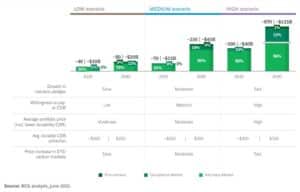
The carbon removal market is still small compared to the scale of global emissions. Today, VCMs are valued at about $2 billion annually. Forecasts suggest they could reach up to $100 billion by 2030. Carbon removal will be central to that growth.
Source: McKinsey & Company
Currently, removals make up less than 1% of all credits sold. Most credits still come from avoided emissions, such as preventing deforestation. But future sales are shifting toward removals.
Buyers are showing stronger interest in forward contracts for engineered removals, like direct air capture, bio-oil storage, and biomass geological storage.
Analysts project that DAC capacity could reach 60–100 million tons per year by 2035, up from near zero today. Meanwhile, biochar, enhanced weathering, and subsurface storage are also scaling. These new CCP approvals provide the quality assurance needed to attract investment at this level.
Carbon market growth rates are projected at 25–30% annually through the next decade. By 2050, the sector could generate more than $1 trillion annually, reflecting the scale of removals needed to reach climate goals.
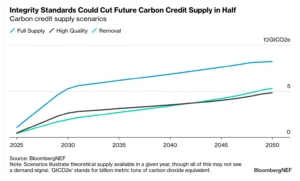
BloombergNEF projects that carbon credit supply will expand 20- to 35-fold by 2050, with engineered removals gaining share. Current supply sits near 243 million tons in 2024, rising to 2.6 billion tons by 2030 and 4.8 billion by 2050.
Source: BNEF
DAC is forecasted to deliver about 21% of credits by 2050. Prices for credits may increase to $60 per ton by 2030 and $104 by 2050, reflecting greater demand and higher quality standards.
Several forces are pushing removals into the mainstream.
Corporate Net-Zero Goals – More than 5,000 companies worldwide have pledged to reach net zero. Many will rely on removals to balance emissions they cannot fully cut.
Government Policy – U.S. and European policies, such as the Inflation Reduction Act and the EU Green Deal, provide tax credits and funding for carbon capture.
Investor Confidence – Clear CCP standards make investors more willing to finance high-quality projects.
Technology Scaling – Costs for engineered removals like DAC and bio-oil storage are expected to fall as projects scale up.
These trends show why carbon removal is becoming not just a side option but a pillar of climate strategy.
Even with new approvals, challenges remain. Engineered removals are expensive. Current costs for direct air capture range from $300 to $600 per ton. Experts say this needs to fall below $100 per ton for widespread adoption.
Nature-based removals, while cheaper, raise other questions. Land use, biodiversity impacts, and long-term monitoring must be managed carefully. For example, requiring 40-year permanence adds credibility but also creates financial and operational hurdles for project developers.
The Integrity Council will need to enforce ongoing monitoring, verification, and auditing. Without strong oversight, credibility could erode again.
Why This Matters for Business and Capital
For companies, the approval of Isometric and Gold Standard removals offers more reliable ways to meet net-zero targets. Purchasing CCP-approved carbon credits reduces reputational risks and demonstrates a commitment to real climate action.
For investors, these standards provide a clearer signal about which projects are worth funding. Capital can flow toward technologies and practices that deliver measurable and permanent removals.
Carbon Markets 2030 and Beyond
The ICVCM decision is a foundation for growth. By 2030, analysts expect carbon removal to represent a much larger share of the voluntary market.
Government integration will be another milestone. Both the UK and EU are exploring whether to allow carbon removals in their compliance systems within the next five years. If CCP-approved removals are included, demand could rise sharply.
The Integrity Council’s approval of six new methodologies from Isometric and Gold Standard represents a turning point for carbon markets. These decisions provide greater transparency, stronger safeguards, and a clearer path for scaling carbon removal.
While challenges remain in cost, permanence, and oversight, the foundation for trust is stronger than before. With new standards in place, the carbon removal market can grow from thousands to millions—and eventually billions—of tons of CO₂ removed. This shift is critical to balancing global emissions and moving closer to a net-zero future.
To provide the best experiences, we use technologies like cookies to store and/or access device information. Consenting to these technologies will allow us to process data such as browsing behavior or unique IDs on this site. Not consenting or withdrawing consent, may adversely affect certain features and functions.
Functional
Always active
The technical storage or access is strictly necessary for the legitimate purpose of enabling the use of a specific service explicitly requested by the subscriber or user, or for the sole purpose of carrying out the transmission of a communication over an electronic communications network.
Preferences
The technical storage or access is necessary for the legitimate purpose of storing preferences that are not requested by the subscriber or user.
Statistics
The technical storage or access that is used exclusively for statistical purposes.The technical storage or access that is used exclusively for anonymous statistical purposes. Without a subpoena, voluntary compliance on the part of your Internet Service Provider, or additional records from a third party, information stored or retrieved for this purpose alone cannot usually be used to identify you.
Marketing
The technical storage or access is required to create user profiles to send advertising, or to track the user on a website or across several websites for similar marketing purposes.