

Verra, the world’s largest carbon crediting program, has launched a next-generation digital registry in partnership with S&P Global Commodity Insights. The new platform aims to speed up carbon credit transactions and also makes them clearer and easier to manage. This is important as demand for high-quality credits continues to increase.
The upgrade is more than a software refresh. It reflects a broader shift across the voluntary carbon market (VCM), where stronger digital infrastructure is becoming just as important as higher-quality carbon credits.
Governments are tightening climate rules. Companies now face more scrutiny over their net-zero claims. And thus, registries are evolving into a digital backbone. They support trust, transparency, and market growth.
A New, Smarter Platform for a Growing Carbon Market
Every carbon credit has a digital record. Registries track where credits come from, who owns them, when they are traded, and when they are retired to prevent double counting. Without reliable registries, carbon markets cannot function.
Verra’s new registry replaces a platform that has supported the voluntary carbon market for more than a decade. Built with S&P Global Commodity Insights, the upgraded system introduces a modern cloud-based architecture, stronger cybersecurity, and improved data management.
It also provides application programming interfaces (APIs). This lets companies, exchanges, registries, and other market players connect directly. They don’t have to rely on manual processes.
According to Verra, users will benefit from:
- Faster account and project management,
- Improved transaction processing,
- Better data quality and security,
- Easier integration with third-party platforms, and
- Greater flexibility for future market growth.
Verra President Mandy Rambharos said the registry aims to boost efficiency. It also helps project developers, investors, governments, and businesses join carbon markets more easily. She stated:
“We built this registry with S&P Global Energy as a foundation that we can keep expanding on. Over the next several phases, we will see things like transaction-ready API connectivity and deeper integration with exchanges, brokers, and marketplaces, so credits can move with the same speed and reliability the rest of this market now expects.”
The video below shows the Verra Registry in transition and how one can search for and access project information.
The upgrade comes at a time when carbon markets are becoming larger and more complex. More projects, buyers, brokers, and exchanges are entering the market, increasing the need for secure and reliable digital infrastructure.
The World’s Largest Carbon Registry Gets a Major Upgrade
The registry matters because of Verra’s scale.
According to Verra, its Verified Carbon Standard (VCS) Program has issued more than 1.3 billion verified carbon credits (VCUs) since it was launched. It has issued more than 75.6 million units and retired over 91.3 million VCUs in 2025.
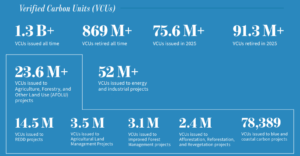
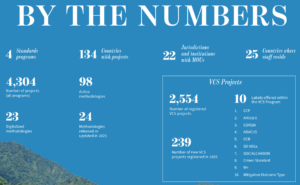
The program backs thousands of registered projects in over 130 countries. It covers activities like forest conservation, renewable energy, methane capture, blue carbon, biochar, and engineered carbon removal.
That makes VCS the world’s largest voluntary greenhouse gas crediting program.
Each transaction recorded on the registry represents verified climate action. Credits are issued only after projects complete independent validation and verification. Once a company uses a credit to offset emissions, the registry permanently retires it so it cannot be used again.
As the market grows, those records become increasingly valuable.
The Integrity Council for the Voluntary Carbon Market (ICVCM) believes demand for high-quality carbon credits will rise sharply in the coming decades. This growth is driven by companies aiming for net-zero targets.
Buyers now want more transparency and better safeguards. This demand comes after years of doubts about credit quality. Registries have become central to meeting these expectations.
Why Digital Registries Are Becoming the New Competitive Edge
Carbon credits are no longer traded only through private contracts. Today’s market includes exchanges, brokers, institutional investors, compliance buyers, and corporate sustainability teams. They all depend on accurate, real-time information.
Modern registries help make that possible.
Digital platforms automate transactions, improve recordkeeping, and cut down on admin tasks. This means no more manual updates or separate databases. They also make it easier for market participants to verify ownership and confirm that credits have not been counted twice.
These improvements are becoming increasingly important as carbon markets continue to mature.
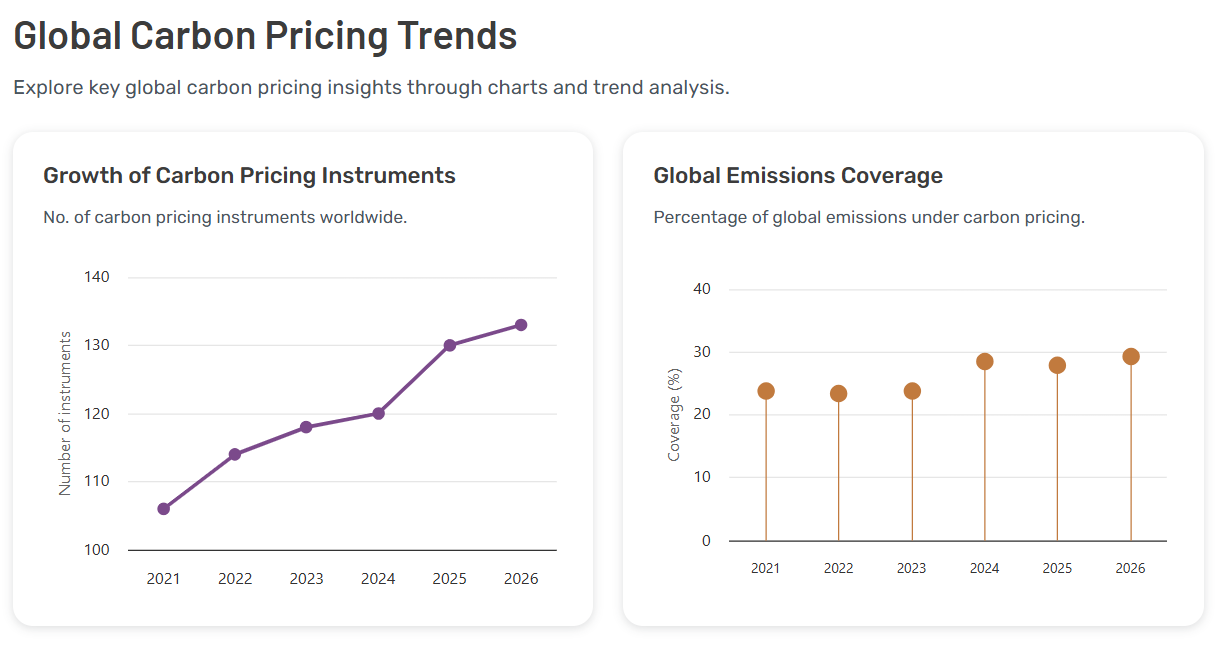
The World Bank’s 2026 report on carbon pricing reveals that there are 87 active carbon pricing tools globally. This total includes emissions trading systems and carbon taxes. Together, they cover about 29% of global greenhouse gas emissions and generated around $107 billion in government revenue in 2025.
While Verra operates in the voluntary market rather than compliance markets, both sectors are moving in the same direction. Buyers now want carbon markets to match the transparency, security, and efficiency of other financial markets.
That shift is turning digital infrastructure into one of the industry’s most important competitive advantages.
Carbon Markets Are Going Digital—and Fast
Verra’s registry upgrade reflects a bigger change happening across the carbon market.
Companies no longer want only high-quality carbon credits; they also want a market that is easy to use, transparent, and secure. That is becoming more important as carbon markets attract more businesses, investors, and governments.
The market itself is also changing.
The ICVCM continues to roll out its Core Carbon Principles (CCPs), which set global standards for high-quality carbon credits. Recent market data show that 13% to 15% of new carbon credit issuances now carry the CCP label.
Since mid-2024, those credits have traded at a 19% price premium over the broader voluntary market, based on the MSCI Global CCP Carbon Credit Price Index.
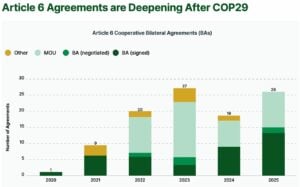
Governments are also creating new opportunities. Article 6 of the Paris Agreement lets countries trade carbon credits worldwide. Meanwhile, many businesses are getting ready for tougher climate disclosure rules. Together, these changes are bringing more participants into carbon markets and increasing the need for reliable digital systems.
Other registries are also modernizing their platforms. Gold Standard, American Carbon Registry (ACR), and Climate Action Reserve (CAR) are working to enhance their digital services and make data more transparent.
Competition is no longer only about developing better carbon credit methodologies, but is also about building better market infrastructure.
Technology Will Help Unlock More Climate Finance
A modern registry can do more than speed up transactions. It can lower costs, reduce paperwork, and make carbon markets easier to access. That is important because the world needs much more private investment to meet climate goals.
MSCI estimates the global voluntary carbon market, worth about $1.4 billion in 2024, could expand between $7 billion and $35 billion by 2030. The actual value depends on policy support and demand for high-integrity credits. The total market size, both voluntary and compliance, could grow even more.
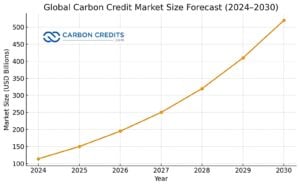
As trading volumes grow, digital registries and trading platforms will be very important to support faster settlement, transparent ownership records, and secure transactions.
Verra’s new registry is part of that effort.
As carbon markets continue to mature, technology will play a bigger role in building trust and attracting investment. High-quality credits will remain essential, but strong digital infrastructure will also matter. Verra and S&P Global are betting that better technology will help build a larger, more transparent, and more trusted carbon market for the years ahead.