

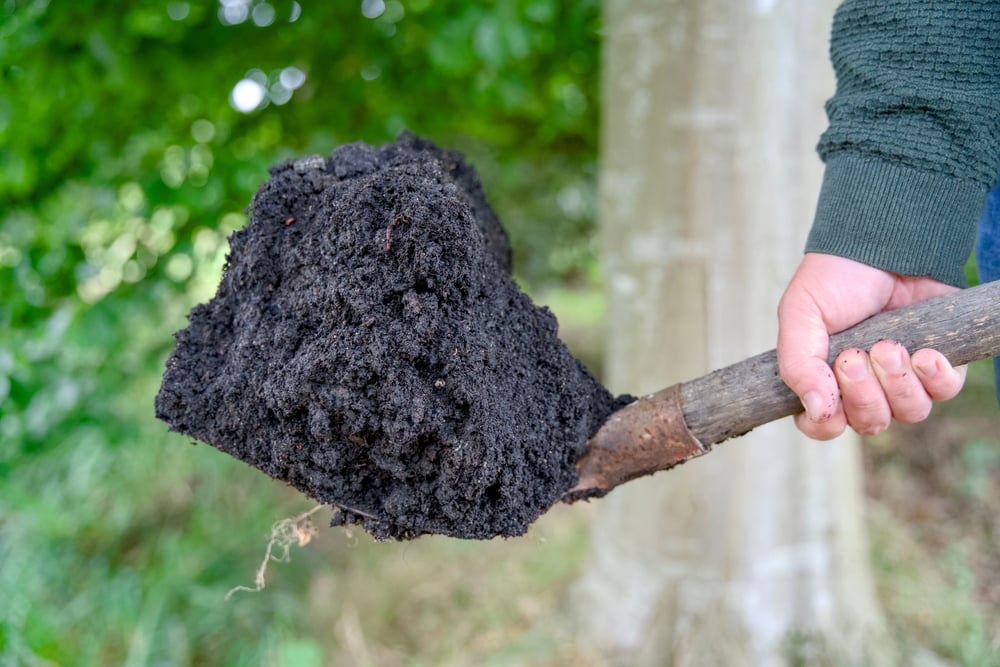
Agricultural waste-to-biochar developer Terraton has received its first carbon removal credits from Isometric for its EcoFix Kenya facility, marking a milestone in its plans to expand biochar production across emerging markets. The company has also secured purchase agreements covering up to 97,240 tonnes of carbon removal and $1.5 million in debt financing from HSBC Ventures to develop additional facilities.
The first issuance provides independent verification of carbon removed and stored through the Kenyan project. Terraton aims to replicate its standardized facility model across agricultural supply chains, turning crop residues into biochar while creating a new revenue stream for agribusiness operators.
Its latest agreements include purchases, reserved volumes and marketing rights involving Climeworks Solutions, Climate Impact Partners, Carbonfuture, CUR8 and nonprofit climate fund Terraset. These arrangements provide potential routes to market as the company develops more production capacity.
Terraton Turns Nut Waste Into Carbon Removal Credits
Terraton made its final investment decision on EcoFix Kenya in August 2025 and began producing biochar in May 2026. Isometric issued the facility’s first credits in October, completing the process in roughly 14 months from the investment decision.
Based in Nanyuki, Kenya, EcoFix processes croton nut husks collected through existing agricultural operations. The biochar facility uses this waste stream without requiring major changes to the company’s core business.
The project converts the husks into biochar through thermochemical carbonization, a process that heats biomass under controlled conditions. The resulting material stores carbon in a stable form and can improve agricultural soils when used in compost.
- Biochar can also help raise soil pH, making it relevant to farming regions affected by soil acidification. Its agricultural applications create a potential dual benefit: durable carbon removal and improved soil conditions.
Terraton designed and financed the facility, installed its equipment and sensors, and supplied its smart facility management software. The software sends production data to Offstream’s digital monitoring, reporting and verification (dMRV) platform, which performs accounting and quality checks before submitting production records to Isometric.
David Armstrong, Partnerships Manager at Isometric, said:
“This is a major milestone for the Terraton and EcoFix Kenya teams: their first certificates backed by independent verification. It’s a testament to the work that goes into developing a high-quality carbon removal project, and marks the start of regular issuances. We’re looking forward to working with Terraton on their second project, Tupande.”
Biochar Carbon Removal Market Attracts More Buyers
Terraton’s first issuance comes as companies increase purchases of durable carbon removal credits. Biochar has established itself as a major pathway because producers can convert available biomass into carbon-storing material using commercially deployable technology.
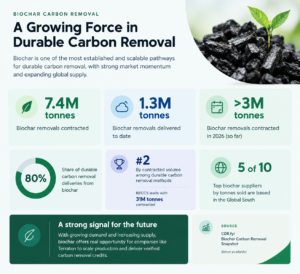
According to CDR.fyi. The market has recorded 7.4 million tonnes of contracted removals and 1.3 million tonnes delivered to date.
Key market figures include:
- 7.4 million tonnes: Total biochar removals contracted.
- 1.3 million tonnes: Biochar removals delivered to date.
- More than 3 million tonnes: Biochar removals contracted in 2026 as of the report’s publication.
- 80%: Approximate share of durable carbon removal deliveries attributed to biochar.
- Five of the top 10 suppliers: Based in the Global South, highlighting the role of emerging markets in expanding production.
Biochar ranks second in contracted volume behind bioenergy with carbon capture and storage (BECCS), which has 31 million tonnes contracted. This growth creates opportunities for Terraton to expand its facilities and supply verified carbon removal credits.
More recent market activity points to continued demand for carbon removal.
- ClimeFi reported that corporate buyers committed to 2.1 million tonnes of carbon removal across all pathways in the second quarter of 2026, up 136% year over year.
-
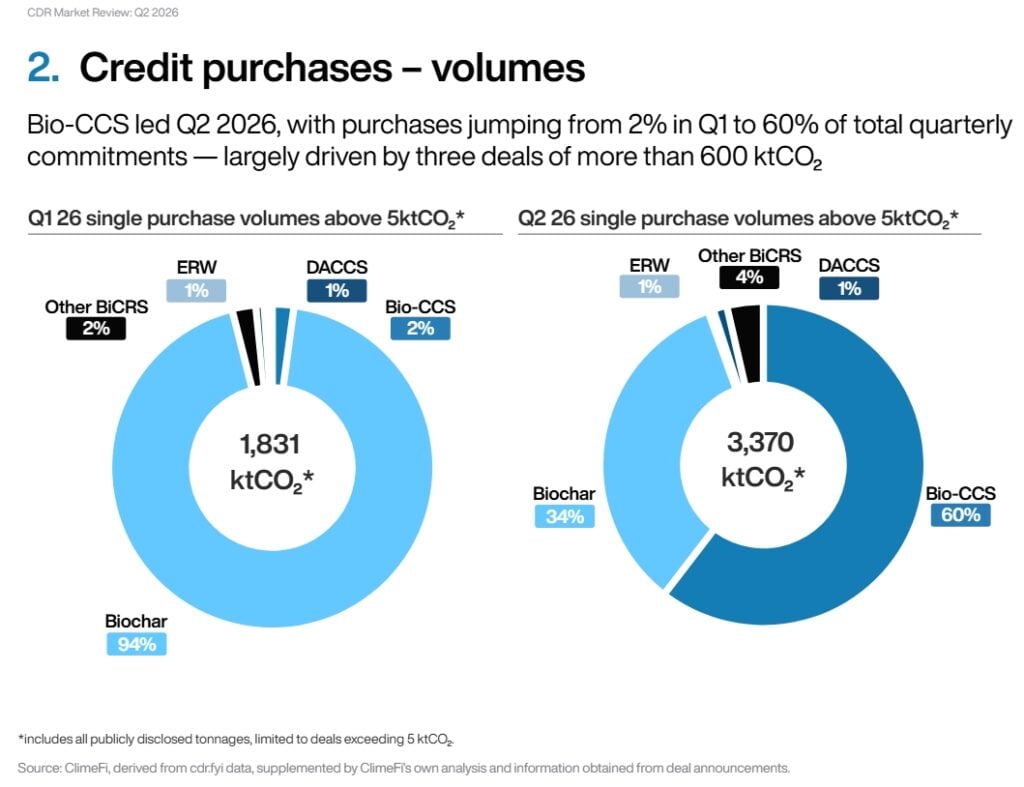
Biochar remains a major pathway for durable carbon removal, although other technologies are gaining ground. ClimeFi’s Q1 2026 review found that biochar accounted for approximately 94% of new carbon removal purchase volumes that quarter, supported by three large deals totaling 1.505 million tonnes.
However, biochar no longer led all pathways by purchase volume in Q2 2026 as the market diversified. This highlighted increasing competition among removal technologies.
Fourteen deals were recorded, including seven from companies making their first major carbon removal commitments. Biochar did not lead purchase volumes in that quarter.
For developers such as Terraton, the opportunity depends on converting demand into verified deliveries. Buyers increasingly use forward offtake agreements to secure future supply, while developers need financing to build facilities before issuing credits.
- FURTHER READING: Biochar Demand Hits 2.99 Million Tonnes: Can Corporate Buyers Trigger a Supply Crunch?
Offtake Agreements Support Terraton’s Expansion
Terraton’s commercial agreements cover several stages of its planned production:
- Climeworks Solutions committed to purchasing 2,000 tonnes from EcoFix and reserved a further 14,000 tonnes from future Terraton facilities.
- Climate Impact Partners agreed to purchase credits from EcoFix, the upcoming Tupande project and facilities still in development.
- Terraset signed a seven-year offtake agreement covering up to 14,000 tonnes from future facilities, with annual purchase volumes confirmed in advance.
- Carbonfuture will bring up to 32,500 tonnes of carbon removal to market through 2031 using its trust infrastructure.
- CUR8 secured a purchase of 240 tonnes, extending Terraton’s customer base to a leading global consumer brand.
These figures describe different types of arrangements and should not be treated as equivalent to credits already issued or delivered. The overall potential volume also includes future production that depends on facility development and performance.
Chris Walters, Sourcing Manager at Climate Impact Partners, said:
“We see growing demand from corporate buyers for tech-based carbon removals, but scaling supply remains a major challenge. Terraton’s approach combines project development, financing, operations and carbon markets to deliver new biochar projects efficiently and at scale, which presents a valuable addition to our portfolio of carbon removal projects.”
HSBC Financing Targets More Biochar Facilities
HSBC Ventures’ $1.5 million debt financing will support facility development over the next two years. Terraton is also developing a $25 million pooled financing vehicle intended to fund approximately 20 additional biochar facilities.
The company plans to standardize equipment, facility design, operating procedures, and reporting across projects. This approach could make it easier to assess and finance multiple facilities as a portfolio rather than evaluating each site independently.
Terraton expects its next facilities to reach credit issuance faster than EcoFix, as the company can reuse the technical systems and operating experience developed at its first site. Its next project, built with Tupande, One Acre Fund’s Kenyan brand, is already being commissioned in Sagana, Kenya.
- It has also signed 28 additional memorandums of understanding and identified more than 30 other sites in its development pipeline across Africa, South America, South Asia and Southeast Asia.
Kevin Gibbs, CEO of Terraton, noted:
“The facility at EcoFix went from investment decision to issued credits in fourteen months, all while we were still building our software, structuring our credits, and learning the ins and outs of our equipment. Our next sites start with all of that experience in place, positioning us to deliver facilities and credits faster.”
Terraton’s growth will depend on how quickly it can replicate its model. Standardized facilities could lower costs and attract financing, but future credit issuance will depend on reliable operations and independent verification. The company was also one of 10 winners of the World Economic Forum’s UpLink Scaling Carbon Dioxide Removal Challenge for its approach to scaling biochar projects.