


The global energy transition is gaining momentum, but oil and natural gas are not disappearing from the energy mix anytime soon. The International Energy Agency’s (IEA) World Energy Outlook 2026 highlights how fossil-fuel demand could remain resilient even as countries expand renewable energy, electrification and low-carbon technologies.
The report presents several possible energy pathways, reflecting differences in government policies, energy security priorities and climate commitments. Its findings suggest that the pace of the transition will depend heavily on how quickly countries can replace conventional fuels while meeting rising energy needs.
For investors in energy and carbon markets, this creates an important opportunity. Continued oil and gas production could sustain demand for methane reduction technologies, carbon capture and storage (CCS), and emissions-reduction projects across the fossil fuel supply chain.
Oil Demand Could Remain Strong Through 2035
The IEA’s projections show that oil demand will follow different trajectories depending on how quickly governments implement climate and energy policies.
Under the Current Policies Scenario (CPS), global oil demand continues to grow, reaching approximately 106 million barrels per day (mb/d) by 2035. This would be around 3% higher than 2025 levels.
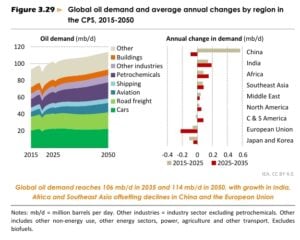
The Stated Policies Scenario (STEPS) presents a different outlook. Here, oil demand levels off at approximately 103 mb/d by 2030 before gradually declining. Faster electrification, improved energy efficiency and the growing use of alternative fuels help slow consumption.
However, rising demand from petrochemicals, aviation and heavy-duty transportation continues to support oil use. The IEA estimates that these three sectors together add around 5 mb/d to oil demand by 2035, more than offsetting reductions in passenger-car fuel consumption.
The Additional Response Case (ARC), which assumes stronger government action to reduce dependence on energy imports, brings an earlier decline in oil demand. By 2035, consumption is more than 4 mb/d below the STEPS level.
These differences show why forecasting peak oil demand remains complicated. Electric vehicles and renewable energy are changing consumption patterns, but industrial activity, aviation, and expanding economies continue to support demand.
LNG Becomes a Bigger Part of Energy Security
Natural gas also has an important role in the IEA’s outlook, particularly as countries look for reliable energy supplies.
The report highlights a major wave of new liquefied natural gas (LNG) export capacity. If planned projects move forward, global LNG supply could expand by more than 50%.
In the CPS, around 350 billion cubic metres (bcm) of new LNG supply is expected to enter the market between 2025 and 2035. Growing demand, particularly across emerging economies, is absorbing the additional volumes.
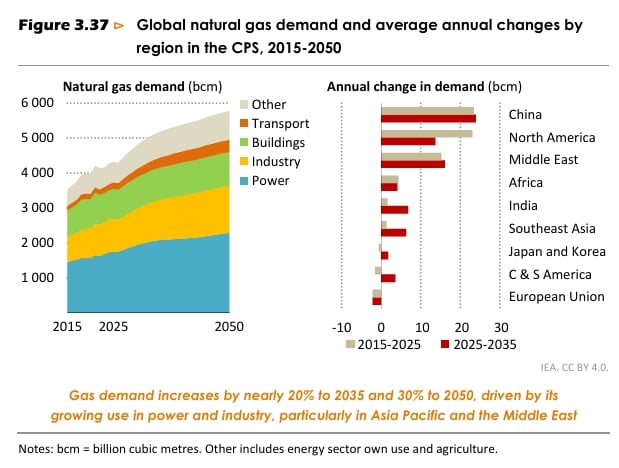
China, India and Southeast Asia are important drivers. Under the CPS, India’s natural gas consumption doubles between 2025 and 2035, while demand in Southeast Asia increases by around 35%.
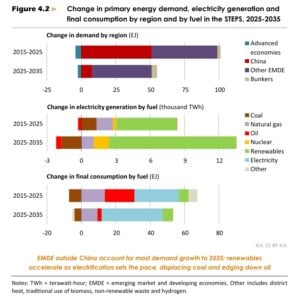
The STEPS expects slower growth as electrification and renewable energy reduce some gas consumption. The ARC goes further, with countries accelerating domestic energy development and reducing dependence on imported fuels.
Recent disruptions to energy shipments have also highlighted the importance of supply diversification. The Strait of Hormuz remains a critical shipping route for global energy markets, while the expansion of LNG exports from the United States and other producers could provide alternative supplies.
However, more LNG production also means greater attention to emissions throughout the supply chain. Methane leaks, flaring, liquefaction, and transportation can increase the climate footprint of natural gas.
Methane Abatement Could Create New Carbon Market Opportunities
Continued oil and gas production makes methane management increasingly important.
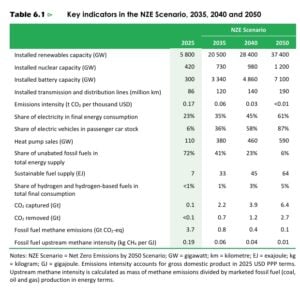
- Methane is a powerful greenhouse gas, and fossil fuel operations remain a major source of emissions. The IEA’s 2026 outlook estimates that global energy-related methane emissions under the STEPS decline from approximately 150 million tonnes today to 120 million tonnes by 2035.
Although this represents progress, the remaining emissions highlight the need for stronger monitoring and mitigation across oil and gas operations.
Companies can reduce methane emissions through leak detection and repair (LDAR), improved equipment, better pipeline maintenance, and the recovery of gas that would otherwise be vented or flared.
These activities could also support carbon market development. Verified methane reduction projects can generate carbon credits under eligible methodologies, creating an additional revenue stream for project developers and operators.
However, credit generation depends on robust measurement, reporting, and verification, credible baselines and proof of additional emissions reductions. Not every methane reduction automatically qualifies for carbon credits.
The investment case extends beyond voluntary carbon markets. Reducing methane leakage can help producers recover and sell additional natural gas, improving operational efficiency while lowering emissions.
For LNG exporters, demonstrating lower methane intensity could also become a competitive advantage as importing markets introduce stricter emissions requirements.
CCS Investment Remains Important for Hard-to-Abate Emissions
Methane reduction is only one part of the emissions challenge. Carbon dioxide from industrial processes and fossil fuel combustion also requires attention.
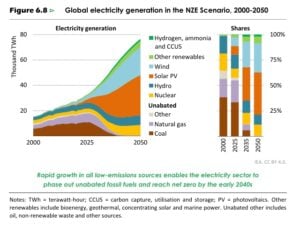
The IEA includes carbon capture, utilisation and storage (CCUS) among the important technologies in its Net Zero Emissions by 2050 (NZE) Scenario.
- CCS can capture CO₂ from industrial facilities and certain energy-related operations before it enters the atmosphere. The captured carbon is then transported and stored in suitable geological formations.
For oil and gas companies, this creates opportunities to invest in capture equipment, pipelines, storage facilities and carbon management services.
However, CCS is not a substitute for reducing fossil fuel consumption or expanding clean energy. Its role is particularly relevant for emissions that are difficult to eliminate through electrification and efficiency improvements.
The investment outlook will depend on government incentives, carbon pricing, infrastructure availability and long-term demand for low-emissions industrial products.
What This Means for Energy and Carbon Investors
The IEA’s 2026 outlook presents a more complicated energy transition than a simple shift from fossil fuels to renewables.
Oil and gas demand could remain significant for decades under less ambitious policy pathways. At the same time, stronger climate policies could accelerate electrification and reduce fossil fuel consumption.
For investors, this creates opportunities across several areas.
Methane detection and abatement technologies could benefit from continued upstream production and stricter emissions monitoring. CCS developers may find opportunities in industrial hubs and energy infrastructure. Carbon credit developers could also benefit from demand for independently verified methane reductions, provided projects meet recognized quality standards.
The broader message is that the energy transition will require more than replacing fossil fuels. It will also require reducing emissions from the energy systems that remain in operation.
Oil and gas may continue to matter, but their environmental footprint will increasingly influence investment decisions, operating costs, and market competitiveness.