

Indonesia and Norway have signed a new carbon deal that could support the country’s shift to clean energy. Under the agreement, Norway may buy up to 12 million tonnes of carbon credits from Indonesian solar power projects by 2038.
The deal was signed during the COP31 climate conference in Antalya, Türkiye. It is Indonesia’s first agreement of this kind under Article 6.2 of the Paris Agreement.
The partnership could bring new funding for solar power, including floating solar projects with battery storage. However, the full 12 million tonnes of emissions cuts have not yet been achieved. The projects must first deliver verified emissions reductions before Norway can pay for them.
Deputy Minister of Environment and Deputy Head of the Environmental Control Agency (BPLH) Diaz Hendrapriyono remarked:
Indonesia and Norway Agree on Up to 12M Tons of Carbon Reductions
The agreement, known as a Mitigation Outcome Purchase Agreement (MOPA), was signed by Indonesia’s state-owned electricity company, PT PLN (Persero), and the Global Green Growth Institute (GGGI).
GGGI manages Norway’s Article 6 Climate Action Fund. Through the agreement, Norway can buy up to 12 million tonnes of eligible emissions reductions from Indonesian solar power projects. The program is expected to run through 2038.
The projects may include floating solar power plants combined with battery storage. These systems can produce clean electricity and store extra power for later use.
The reported carbon price is between $20 and $40 per tonne of carbon dioxide equivalent (tCO2e). At that range, 12 million tonnes could be worth $240 million to $480 million.
However, this is only an estimate. The final price and total payments have not been confirmed. Indonesia will also need to deliver the promised emissions cuts before it can receive payment.
The deal uses a Generation-Based Incentive (GBI) model. This means payments will depend on actual electricity generation and verified emissions reductions, not just planned power capacity. Norway has said it will pay only for emissions cuts that are achieved, verified, delivered, and shown to be additional.
Floating Solar and Batteries Could Help Cut Coal Emissions
The deal could help Indonesia expand solar power and reduce its reliance on coal. Coal still supplies more than 70% of Indonesia’s electricity. Solar and wind together account for less than 1% of power generation, according to the Norwegian government.
This leaves significant room for renewable energy to grow. Floating solar projects could help by using space on reservoirs and other bodies of water. They can also reduce the need to use land for large solar farms.
Adding battery storage can make these projects more useful. Batteries store electricity when solar production is high and release it when sunlight is limited or demand rises. This can help provide a more stable power supply and reduce the need for coal-fired plants to meet demand.
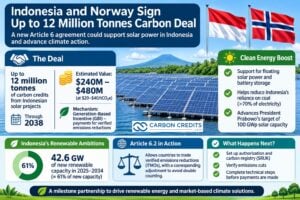
The projects could also support Indonesia’s wider solar ambitions. President Prabowo Subianto has promoted a target of 100 gigawatts peak (GWp) of solar power capacity. Still, the actual climate benefits will depend on how much clean electricity the projects produce and how much coal-fired generation they replace.
Indonesia Targets 42.6 GW of New Renewable Energy Capacity
The Norway agreement comes as Indonesia works to increase renewable energy across its power system. Under its 2025–2034 electricity supply plan, known as the RUPTL, Indonesia aims to add 42.6 gigawatts (GW) of new and renewable energy capacity. This represents about 61% of the new power capacity planned during the period.
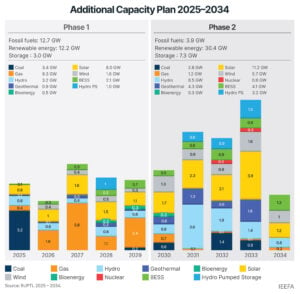
The plan shows a stronger role for renewable energy in the country’s future electricity supply. However, turning these plans into operating projects will require investment, reliable infrastructure, and faster project development.
PLN has also mobilized $2.94 billion in energy transition financing. This includes $1.1 billion from the Just Energy Transition Partnership (JETP). That funding is separate from the Norway carbon deal.
During COP31, PLN also signed six power purchase agreements (PPAs) and two letters of intent (LOIs) for renewable energy projects with a planned capacity of 330 megawatts (MW). These agreements are also separate from the MOPA with Norway.
Together, these efforts show Indonesia’s push to attract more funding and build new clean power projects. The challenge will be to move from announcements and plans to actual electricity generation.
Article 6.2 Opens a New Carbon Finance Channel
The agreement uses Article 6.2 of the Paris Agreement. This rule allows countries to work together to reduce emissions and transfer verified carbon savings between them. These transferred reductions are known as internationally transferred mitigation outcomes (ITMOs). Here are some of the major examples of Article 6.2 deals made by other countries.
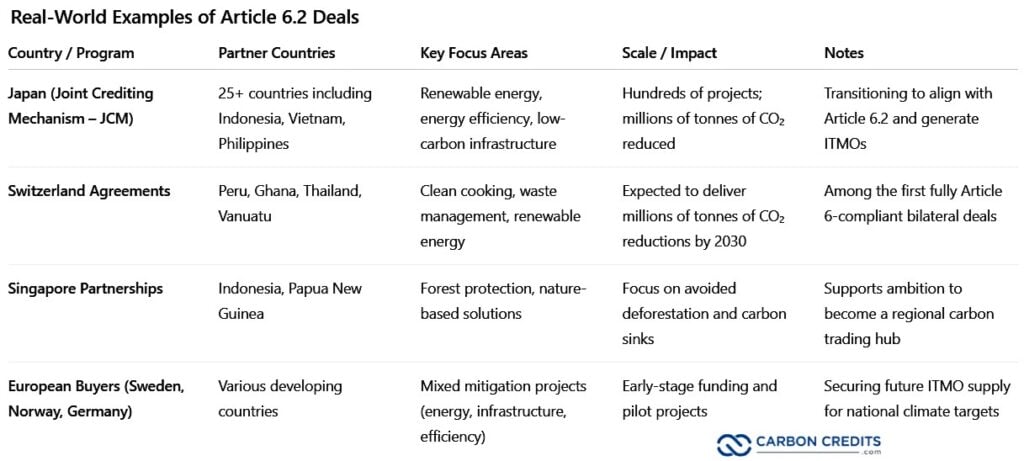
In this deal, Indonesia is the host country, while Norway is the potential buyer. Indonesia can authorize eligible emissions reductions for transfer to Norway. The two countries must also follow the Paris Agreement’s accounting rules.
- One important rule is the corresponding adjustment. This prevents both countries from counting the same emissions reduction toward their climate targets.
For example, if Indonesia transfers an emissions reduction to Norway, it must adjust its own carbon accounting. Norway can then count the transferred reduction toward its climate target under the agreed rules.
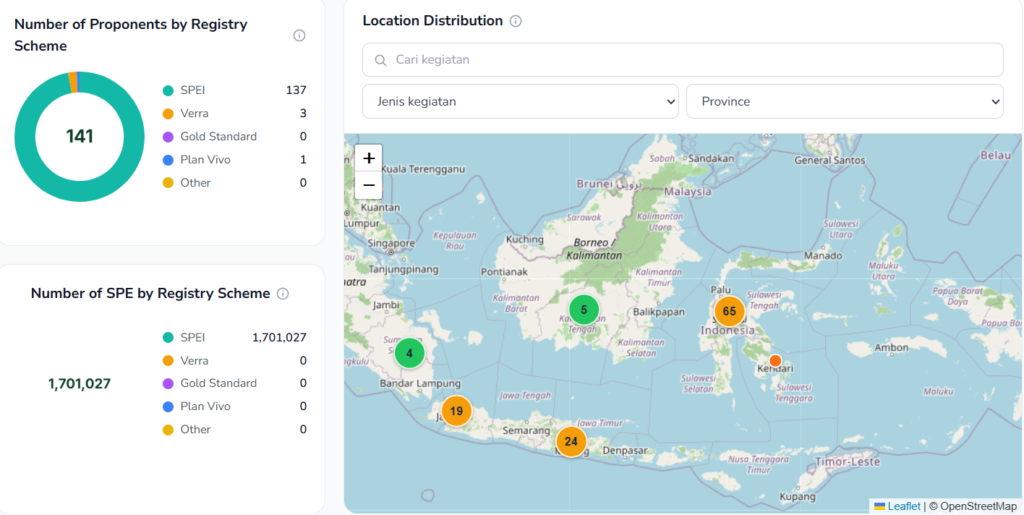
Indonesia has also introduced new rules for its domestic carbon market. Presidential Regulation No. 110 of 2025 provides a framework for carbon pricing and trading. The country also uses its national carbon registry, known as SRUK.
The registry was launched on July 9, 2026. International carbon transfers must follow Indonesia’s authorization and accounting requirements. These systems are important because they help track carbon credits and prevent double counting. They also support transparency as Indonesia enters more international carbon deals.
Verified Emissions Cuts Will Determine Final Payments
Although the MOPA has been signed, several steps remain before the full deal can move forward. Indonesia’s Environment Ministry has said more technical work is needed. This includes:
- setting up the authorization process,
- recording ITMOs, and
- completing the rules for the Generation-Based Incentive program.
The projects must also prove that their emissions reductions are real and measurable. They must meet the required standards before the reductions can be verified and transferred.
This is important because the 12 million tonnes represent the maximum amount that Norway may purchase under the agreement. They are not 12 million tonnes of emissions cuts already delivered.
The same applies to the possible $240 million to $480 million value. It is an estimate based on the reported carbon price range, not confirmed revenue for Indonesia or PLN.
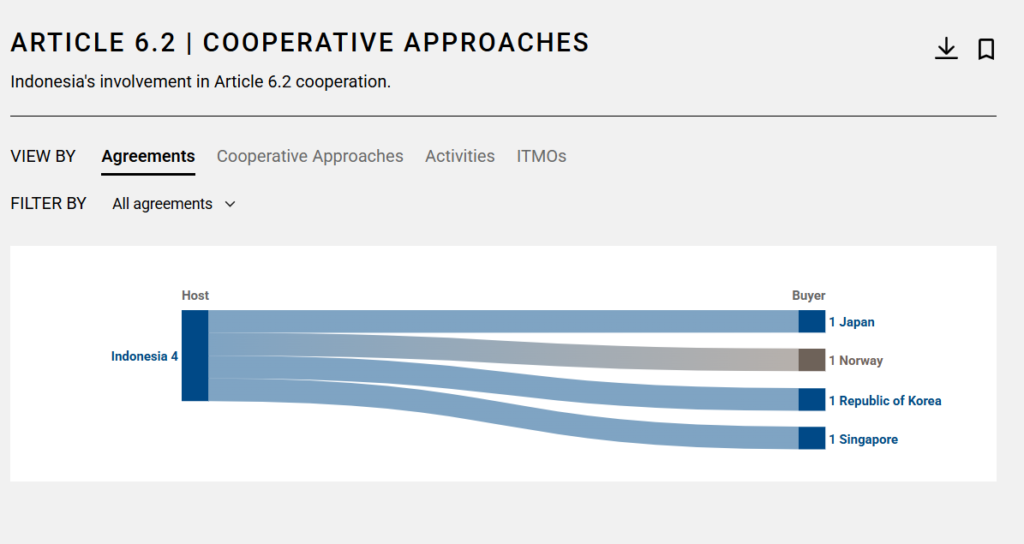
Data from the United Nations Environment Programme’s Article 6 Pipeline showed that Indonesia had four bilateral agreements and 40 activities under Article 6.2. At that time, the country had not yet transferred or received any ITMOs.
Indonesia Uses COP31 to Build More Carbon Market Partnerships
The Norway agreement was one part of Indonesia’s wider carbon market push at COP31. From November 10 to 19, Indonesia held the Indonesia Carbon Connection Session. The program brought together 17 national project developers and presented 30 projects across forestry, energy, agriculture, and waste.
The country also highlighted six blue carbon projects, including four presented by the Ministry of Marine Affairs and Fisheries.
On November 10, Indonesia launched the Indonesia Climate and Carbon Partnership. The initiative includes eight Priority Support Packages aimed at helping develop the country’s climate and carbon market activities.
Other partnerships announced during the conference focused on nature protection and cleaner energy. Pertamina and Inhutani agreed to work together on forest conservation.
Meanwhile, PGN and Unilever announced plans to develop biomethane using waste from palm oil mills and rice straw. These announcements show that Indonesia is seeking more international partners and funding for its climate goals.
The deal with Norway adds a new source of potential carbon finance for solar power. Yet, its success will depend on whether the projects are built, generate clean electricity, and deliver verified emissions cuts.
If those steps are completed, the agreement could help Indonesia expand renewable energy while giving Norway access to eligible carbon reductions under the Paris Agreement.