Disseminated on behalf of Alaska Energy Metals Corporation
Nickel’s importance stems from its role in enhancing battery energy density, improving EV range, and enabling a shift away from fossil fuels. To support this energy transition there has been a meteoric rise of nickel as a key material, particularly for batteries. But Nickel’s high demand has consequently sparked a supply strain.
Let’s study the demand and supply dynamics of nickel and its impact on this metal’s future.
Why Nickel is Indispensable?
Nickel’s role in enhancing battery energy density makes it indispensable for long-range EVs and larger vehicles like trucks. For instance, in this nickel revolution, high-nickel cathodes, such as those in NMC 811 batteries are taking the lead. These batteries offer higher energy density, reduced weight, and extended driving ranges which are vital consumer needs.
Thus, as global EV adoption surges, the demand for nickel is set to increase, requiring simultaneous expansion in supply to prevent shortages that might stall the energy transition.
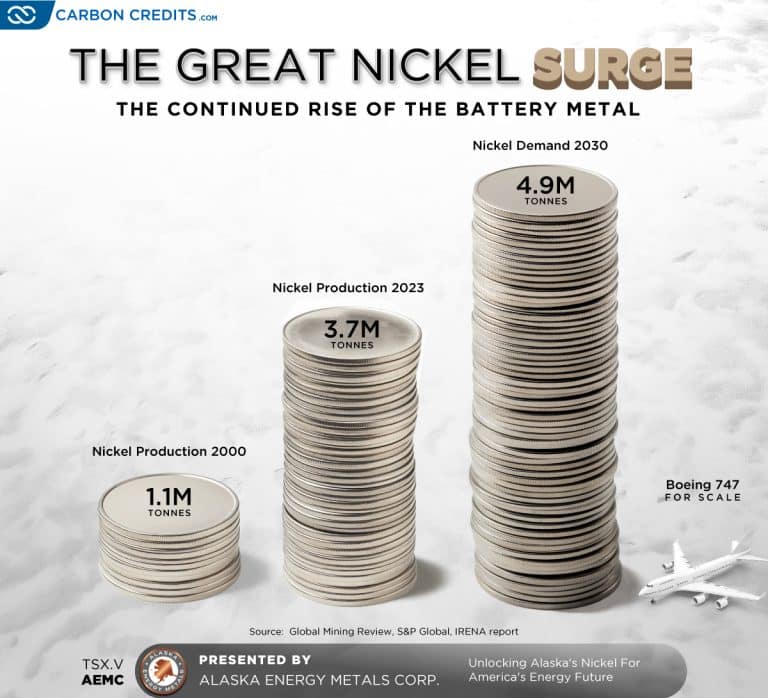
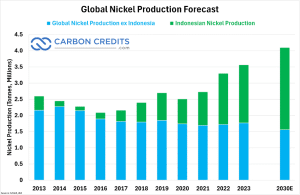
As you can see in the infographic, global nickel production has surged over the past two decades, increasing from 1.1 million tons in 2000 to 3.7 million tons in 2023. However, this growth may not be enough to meet future demand.
By 2030, nickel demand will reach 4.9 million tonnes, driven by the electric vehicle (EV) market and renewable energy storage needs.
Navigating the Nickel Supply Chain
IRENA projects a positive outlook for nickel supply, but challenges remain in meeting the rising demand. However, the demand surge is expected to face fewer supply shortages compared to other critical materials.
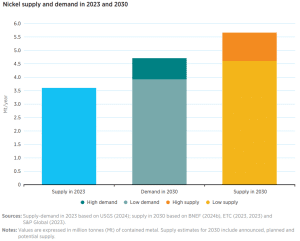
By 2030, nickel production is projected to range between 4.6 and 5.6 million tonnes, reflecting a relatively stable outlook for this essential resource.
Nonetheless, the potential for supply-demand imbalances persists due to the wide variation in production forecasts. For instance, the gap between the highest and lowest projections is nearly 60% of the current supply, underscoring uncertainties in meeting future needs.
Now achieving this supply level will require significant investments in sustainable nickel mining and refining infrastructure across various regions. This means nickel miners must ramp up exploration efforts to bridge the supply-demand gap.
Additionally, factors such as market dynamics, regulatory policies, mining advancements, and processing technology will be crucial for meeting supply targets.
Notably, Alaska Energy Metals Corp. is one of the nickel juniors playing a significant role in shaping nickel’s future by tapping into Alaska’s rich nickel resources. The company is putting serious efforts into bolstering the nickel supply and building a reliable, low-carbon supply chain essential for the growing EV and renewable energy markets.
Disclosure: Owners, members, directors, and employees of carboncredits.com have/may have stock or option positions in any of the companies mentioned: AEMC.
Carboncredits.com receives compensation for this publication and has a business relationship with any company whose stock(s) is/are mentioned in this article.
Additional disclosure: This communication serves the sole purpose of adding value to the research process and is for information only. Please do your own due diligence. Every investment in securities mentioned in publications of carboncredits.com involves risks that could lead to a total loss of the invested capital.
California Resources Corporation (CRC) and its carbon management arm, Carbon TerraVault (CTV), announced the launching of California’s first carbon capture and storage (CCS) project at CRC’s Elk Hills cryogenic gas plant in Kern County. This is a huge milestone for reducing carbon emissions in the state.
Francisco Leon, CRC’s President and Chief Executive Officer, said,
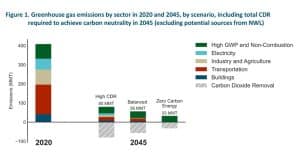
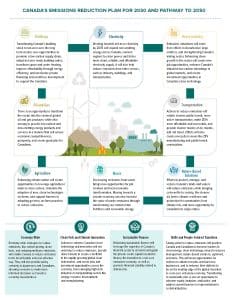
“We are pleased to advance California’s first CCS project to the next stage of its development highlighting our ability to deliver carbon management solutions while reducing our own emissions. This project strengthens Carbon TerraVault’s economic opportunities and positions us to create lasting value for our shareholders and partners. Carbon TerraVault remains at the forefront of providing innovative decarbonization solutions that support a cleaner, affordable, and reliable energy future for California.”Source: California Air Resources Board
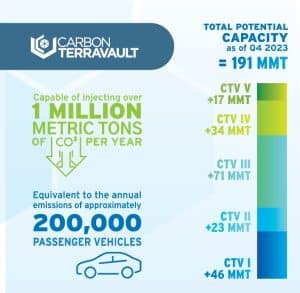
CTV is focused on capturing, transporting, and permanently storing carbon dioxide (CO2) emissions. It’s working on several CCS projects to sequester CO2 from industrial sources deep underground, permanently.
Moving on, the Carbon TerraVault Joint Venture (CTV JV) is a partnership between CTV LLC and Brookfield Corporation. CRC holds a 51% stake in the joint venture, with Brookfield owning the remaining 49%. Together, they are advancing CCS solutions for both CRC and other emitters in California. One such project is the 26R reservoir, a depleted formation within CRC’s Elk Hills Field.
Natalie Adomait, Managing Partner at Brookfield said,
“This announcement underscores California’s leadership in carbon capture and sequestration in the United States and reaffirms our commitment to collaborating with the right partners on impactful and economically viable energy solutions that advance the transition to net zero. Together with CRC, we are deploying our clean energy expertise to accelerate decarbonization and drive capital deployment across California’s critical industries.”
The press release highlighted CRC’s plans to begin permanently storing CO2 emissions at the Elk Hills oilfield near Bakersfield by the end of this year. The EPA approved its request to drill four Class VI injection wells, each over a mile deep on December 31, 2024.
The storage site can hold approximately 38 million metric tons of CO2, with an annual capacity of 1.46 million metric tons.
The EPA also confirmed that the site meets safety standards and will not pose a risk to local drinking water supplies. This approval underscores the 26R reservoir’s importance in Kern County which is a prime hub for both agriculture and oil production.
Efficiency, Incentives, and Emissions Reduction in One Project
The project can capture and permanently sequester up to 100,000 metric tons (KMTPA) of CO2 annually. The captured carbon will be stored in the nearby 26R reservoir.
CRC anticipates several financial and environmental gains from this project:
The project qualifies for 45Q tax credits, offering $85 per metric ton of CO2 stored. It may also benefit from Low Carbon Fuel Standard (LCFS) credits and reduced Cap-and-Trade (C&T) liabilities, depending on California Air Resources Board (CARB) rule updates.
The proximity of the 26R reservoir minimizes transportation costs, ensuring cost-effective sequestration.
Decarbonized gas processing will boost propane recovery by up to 100 barrels of natural gas liquids per day.
The initiative can cut Scope 1 and 2 emissions from the Elk Hills Power Plant by up to 7%.
Investment and Profitability
Additionally, the capital investment for the capture infrastructure is estimated to be between $14–$18 million, ensuring cost-effective execution and long-term profitability.
The project is expected to deliver strong financial returns, with the joint venture anticipating sequestration revenue of $50–$60 per metric ton through fees paid by CRC. CRC forecasts a high internal rate of return, positioning it at the upper end of its 10%–30% range. This reflects the project’s economic viability.
CRC’s Net Zero Commitment Aligns with California’s Emission Reduction Goals
CRC believes climate change requires action from both government and the private sector. This is why it supports market-based solutions like CCS and direct air capture with storage (DAC+S), which benefit communities and society.
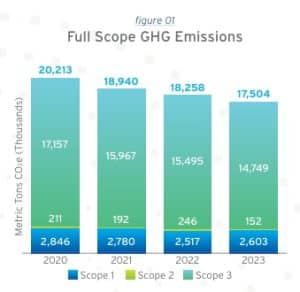
Its sustainability report reveals the commitment to the energy sector’s transition with a 2045 Full-Scope Net Zero goal, covering Scope 1, 2, and 3 emissions. The goal further aligns with California’s 2045 net zero ambition.
“This project represents another step forward in California’s world-leading pathway to combat climate change and achieve carbon neutrality over the next two decades. While slashing carbon pollution is the main thrust of our climate programs, capturing and removing carbon from our atmosphere is also essential to meeting our carbon targets. This project, which repurposes fossil fuel extraction infrastructure and expertise to sequester carbon, is a forward-looking way to remove emissions while creating jobs in an emerging sector. Simply put, getting projects like this operating in a safe and effective way is critical for our climate progress.”
source: CRC
Additionally, combating methane emissions is a vital element of its net zero strategy. It aims to reduce methane emissions by 30% from the 2020 baseline by 2030.
CRC also plans to reduce freshwater use by 30% by 2025 which exceeds California’s 15% target. Moreover, it supplies more treated water to California districts than it uses. This is one of the ways the company is helping address the state’s water challenges.
source: CRC
Carbon capture technologies safely capture carbon from industrial processes or the air, then transport and store it permanently underground. Thus, CRC’s role in decarbonizing California is huge with this project in their priority.
Prime Minister Justin Trudeau’s announcement to step down has created a vacuum that will shape the future of Canada’s leadership. This decision has ignited a fierce race for leadership within the Liberal Party, with former Bank of Canada Governor Mark Carney emerging as a key contender. On the other side, Conservative Party Leader Pierre Poilievre stands in stark opposition, ready to challenge the current climate policies.
With the ideological divide between Carney’s progressive climate agenda and Poilievre’s economic-focused stance, Canada’s climate future hangs in the balance. Let’s take a closer look at each of the potential replacements’ climate and net zero stance.
Mark Carney: A Champion of Climate Finance and Global Leadership
Mark Carney’s entry into the political race marks a significant moment for Canada and the global climate movement. Carney’s extensive experience as the Governor of the Bank of Canada, along with his tenure as the UN Special Envoy on Climate Action and Finance, positions him as a leading figure on the international stage.
For years, Carney has been a vocal proponent of transitioning to a net-zero economy. He has been emphasizing the potential for economic growth through climate action.
“…And what we have seen increasingly, spurred initially by the Sustainable Development Goals, accelerated by Paris, and then by social movements and governments, is societies putting tremendous value on achieving net zero. Companies, and those who invest in them and lend to them, and who are part of the solution, will be rewarded. Those who are lagging behind and are still part of the problem will be punished.”
He sees it as a way to unlock investment in renewable energy, clean technologies, and sustainable infrastructure.
A recent report by the International Renewable Energy Agency (IRENA) estimates that the global renewable energy market could generate up to $98 trillion in investment by 2050. This presents a significant economic opportunity for countries, like Canada, that choose to embrace green policies.
Carney’s vision for the country aligns with global trends, calling for a balanced approach to climate policy that integrates both environmental and economic goals. His leadership would likely usher in policies focused on scaling up investments in clean energy, carbon capture technologies, and creating more sustainable industries.
Under Carney, Canadians could see the implementation of mandatory carbon disclosure for corporations, helping drive transparency and accountability in the private sector. The UN climate envoy also advocates for leveraging private sector finance to accelerate the transition to a net-zero economy.
Pierre Poilievre: Opposing Carbon Taxes and Prioritizing Affordability
Pierre Poilievre, the current leader of Canada’s Conservative Party, has built his political identity on opposing carbon taxes. He is also questioning the effectiveness of environmental regulations.
With his populist messaging and a strong emphasis on affordability, Poilievre has become a leading figure for those disillusioned by rising costs of living. His “Axe the Tax” campaign resonates with voters who view the carbon tax as an economic burden rather than a solution to climate change. The campaign aimed at eliminating Trudeau’s carbon pricing system.
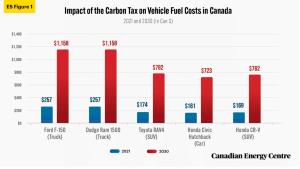
Per the Canada Taxpayers Federation, the carbon tax under the current system costs an average family of four $1,200 annually. The chart below from the Canadian Energy Centre shows how much it will affect vehicle fuel costs by 2030.
Poilievre’s criticism of the carbon tax is largely driven by concerns over this financial impact. This becomes more paramount as inflationary pressures and cost-of-living concerns continue to grow.
Poilievre’s anti-carbon tax stance has been consistent. He argues that it disproportionately affects working Canadians, driving up the cost of goods and services, particularly in northern communities.
While Poilievre has voiced concern about the economic impact of such policies, he has yet to present a clear and actionable alternative to address climate change. His positions on climate policy, therefore, raise questions about Canada’s ability to meet its emissions reduction targets without strong regulatory frameworks.
Under Poilievre’s leadership, Canada might see a rollback of several key climate policies, including the following:
carbon tax,
emissions caps for oil and gas, and
investments in clean energy technologies.
Analysts think that this would likely distance Canada from international climate commitments, potentially putting the nation at odds with global efforts to mitigate climate change.
A Deepening Divide: What’s at Stake for The Future of Canada’s Climate Policy?
Trudeau’s resignation sets the stage for a new political era. The next leadership race will be pivotal in determining Canada’s climate future.
According to Environment and Climate Change Canada, the country must reduce emissions by at least 40-45% by 2030 compared to 2005 levels to meet its international commitments.
Carney’s policies would likely drive the investments and regulatory changes necessary to achieve these ambitious goals. On the other hand, Pierre Poilievre’s rise to power could shift Canada’s climate trajectory in a different direction. Prioritizing deregulation and affordability over bold climate action could lead to a retreat from critical environmental commitments.
Moreover, Carney’s proposed policies on climate finance, carbon pricing, and clean energy investments align with global efforts on sustainability. These measures reflect a commitment to both tackling climate change and positioning Canada as a leader in climate finance.
A report from Canada’s Clean Growth Hub reveals that Canada’s renewable energy sector has seen significant growth. It contributes nearly $4.5 billion to the national economy in 2020 alone. Carney’s platform would likely continue to build on this momentum as he noted in his speeches, further bolstering the sector.
In contrast, Poilievre’s carbon pricing opposition prioritizes short-term economic relief for Canadians. While Poilievre’s stance might appeal to those frustrated with rising costs, it lacks a clear strategy for long-term climate solutions.
As the leadership race heats up, Canadians will have to decide which path they want to take: Will the nation take the opportunity to lead in global climate action, or will it retreat from its environmental commitments? The outcome will not only shape Canada’s domestic climate policy but also its role in the global fight against climate change.
Donald Trump’s return to the White House in 2025 is already shaking up industries across the globe, particularly those reliant on stable trade and environmental policies. From sweeping tariffs to anticipated rollbacks of key climate initiatives, the impact of these changes could redefine global markets and state-led sustainability efforts.
Copper, the backbone of global infrastructure and clean energy transitions, faces unprecedented challenges. Trump’s proposed tariffs, which could range from 10% to 100%, are poised to disrupt the market’s fundamentals.
Targeting major U.S. trading partners, including China, Canada, and Mexico, these tariffs are expected to inflate prices and dampen demand.
David Davidson, an analyst at Paradigm Capital, warns that these trade policies could lead to a tit-for-tat scenario, specifically noting:
“If we get a tit-for-tat trade war, then kiss global economic growth expectation goodbye.”
A strong U.S. dollar and sustained high interest rates, as the Federal Reserve grapples with likely inflation, could further compound these issues by making copper imports prohibitively expensive.
China, which consumes nearly half of the world’s copper, is especially critical in this equation. Economic slowdowns or retaliatory tariffs from China could reverberate across global markets, suppressing demand for the metal.
The country’s faltering property market, which has historically driven copper demand, remains a weak point. Analysts speculate that a substantial stimulus package from China might offset some of these challenges, but its timing and scale remain uncertain.
Tight Supply Chains
Despite a projected surplus in refined copper, the concentrate deficit could severely impact smelters, particularly in Asia, which rely on steady supplies. Prices will reflect this tension, with the London Metal Exchange forecasting an average copper price of $9,734 per metric ton in 2025.
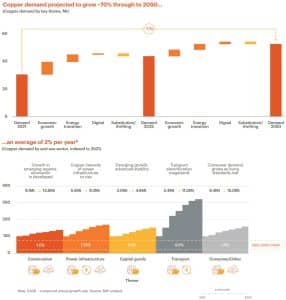
Last year, there was also a recorded deficit but with an anticipated electric vehicle (EV) boom, where copper is a key component, the demand for this metal will grow. BHP projects a 70% surge in global copper demand, exceeding 50 million tonnes annually by 2050. The traded metal is anticipated to grow at an average annual rate of 2%.
Blue States vs. Trump: The Battle for Climate Progress
While federal climate policy may see significant rollbacks under Trump, blue states (which lean Democratic) are gearing up for a fight. State leaders in progressive regions are determined to protect climate initiatives, even as federal support wanes.
California, a leader in climate action, faces the dual challenge of maintaining its ambitious emissions reduction targets while fending off federal interference.
A key battleground is the state’s waiver to set stricter vehicle emissions standards than those enforced federally. This waiver, which allows other states to adopt California’s rules, is critical to the state’s goal of reducing greenhouse gas emissions 40% below 1990 levels by 2030.
Revoking this waiver, as Trump is widely expected to attempt, could disrupt these efforts and ignite legal battles. Noel Perry, founder of the California think tank Next 10, emphasized the importance of the waiver. Perry noted that:
“California will fight tooth and nail if the Trump administration is going to again attempt to take that waiver away.”
Fiscal Challenges and Climate Goals
Complicating matters further are fiscal challenges in many blue states. California, New York, and Maryland, among others, face significant budget deficits that threaten to undermine their climate initiatives.
California has already reduced its climate-related spending by 21% for the next 8 years, though voters approved a $10 billion climate bond in November 2024 to fund drought mitigation and renewable energy infrastructure.
In New York, a $13.9 billion budget gap between 2025 and 2029 is putting pressure on the state’s ambitious climate goals. The state’s 2019 Climate Leadership and Community Protection Act mandates 70% renewable energy by 2030 and full decarbonization by 2050. However, achieving these targets amid fiscal constraints and uncertain federal policies will be a steep uphill battle.
2025: A Year of High Stakes for Sustainability and Global Markets
Despite the obstacles, blue states are not backing down. Washington Governor Jay Inslee, speaking at the COP29 climate summit, declared that state-led initiatives remain unstoppable. He remarked that Trump won’t be able to stop any of the states from moving forward, citing Washington’s cap-and-invest program and low-carbon fuel standards as examples.
California has allocated $25 million for litigation costs to defend its climate policies. Legal battles could intensify as the Trump administration targets state-level initiatives.
Trump’s trade and climate policies have far-reaching implications. For the copper market, they risk destabilizing supply chains and inflating prices, which could hinder the global clean energy transition.
Meanwhile, his administration’s deregulatory agenda poses challenges to state-led climate progress, even as blue states demonstrate resilience and determination.
With 2025 shaping up as a year of uncertainty, the stakes are higher than ever. Stakeholders, especially industries and governments, must balance economic growth with the urgent need to address climate change. How these competing priorities unfold will define the next chapter in the global effort to achieve sustainability.
In 2024, hydrogen emerged as a climate-friendly alternative to fuel as well as electricity. Promising projects sparked to life on both the production and consumption fronts. Despite Trump’s pro-oil stance, analysts are optimistic about hydrogen’s future in this new year- 2025.
According to BNEF, clean H2 supply is projected to increase 30X and could reach 16.4 million metric tons annually by 2030. This surge ismostly attributed to supportive policies and a flourishing project pipeline.
As we step into 2025, several crucial moments await the low-carbon, clean hydrogen sector. They could be a mix of challenges and opportunities. Analysts also predict an increase in the fructification of significant projects and financial investment decisions this year.
Wood Mackenzie recently released a report identifying some crucial developments in the hydrogen sector for 2025 that one needs to scrutinize. Let’s study it here.
Blue Hydrogen to Dominate the U.S. Market in 2025
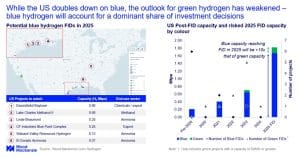
In 2025, the U.S. hydrogen market will focus heavily on blue hydrogen, with over 1.5 million tons per annum (Mtpa) of capacity reaching the final investment decision (FID).
This marks a 10X increase compared to green hydrogen. The report revealed that at least three large-scale blue hydrogen projects are expected to mature this year. With this output, theU.S. has all the potential to become the world’s leading blue hydrogen producer.
Green Hydrogen to Face Strong Headwinds in 2025?
Conversely, green hydrogen projects are likely to face major challenges in 2025. FIDs for these projects are expected to fall short of expectations. This could be due to reduced government focus on clean energy under the Trump administration.
Green hydrogen could also face stiff competition for electricity resources from data centers. On top of that, lengthy delays in connecting projects to the grid can slow down the progress.
While some demand will come from companies working toward sustainability goals, short-term growth opportunities are expected to shrink. Many green hydrogen projects, especially those targeting transportation, andheavy industries like steel, and e-fuels, may be delayed or canceled altogether.
If not in the U.S. green hydrogen will have its niche in emerging economies like South America, the Middle East, India, and China. Eventually, these economies can launch giga-scale projects in 2025. So how can these nations properly green hydrogen progress globally?
Well, these projects leverage cheap solar and wind power and government incentives that reduce costs and ensure financial viability. For instance, India’s Kakinada project utilizes existing ammonia infrastructure and enjoys government subsidies.
Meanwhile, Saudi Arabia’s Neom Helios project benefits from state-led support and a 30-year offtake agreement with Air Products. These factors add a bonus point to green hydrogen.
Emergence of Chinese Electrolyzers
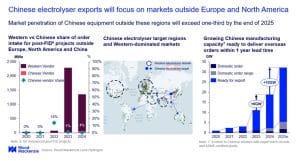
Most importantly regions like Southeast Asia, the Middle East, and North Africa will benefit abundantly from low-cost renewable energy and affordable electrolyzers from Chinese manufacturers.
By 2025, China can supply at least one-third of orders outside North America and Europe. Competitive pricing, shorter delivery times, and strong manufacturing capacity give Chinese electrolyzers an edge. Moreover, China is also expanding its domestic manufacturing capacity and is most likely to add over 10 GW of capacity this year. This will further strengthen their global presence, especially in areas with fewer trade barriers.
However, entering Europe and North America is more challenging. Trade restrictions and regulatory hurdles, such as the European Union’s 25% content limit for Chinese-made electrolyzers, limit their opportunities. To overcome these challenges, some Chinese companies are localizing production through partnerships and technology licensing.
Green Hydrogen’s Stance in Europe and North America
While blue hydrogen dominates the U.S., green hydrogen is making headway in Europe and North America. The European Commission (EC) also launched a nearly €2 billion hydrogen auction as part of its broader €4.6 billion initiative to accelerate net-zero technologies. This marked a significant step in the EU’s push for renewable hydrogen.
In Germany, HydrogenPro partnered with J. Heinr. Kramer Group to develop green hydrogen projects ranging from 5 MW to 50 MW. They aim to advance green hydrogen projects in Germany, Austria, and the Benelux region. These projects will power industries and the grid, and fuel hydrogen-powered vehicles.
On October 30, 2024, Avina Clean Hydrogen announced its major green hydrogen project in Vernon, California, near the Port of Long Beach. The facility with a capacity of 4 metric tons of compressed green hydrogen daily can decarbonize heavy-duty transport and advance California’s clean energy goals.
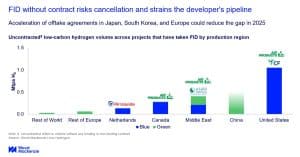
The Woodmack report emphasized another interesting scenario that would prevail in this year’s hydrogen economy. It says uncontracted low-carbon hydrogen capacity will remain a challenge due to difficulties in securing offtake agreements. This means out of the 5.5 Mtpa of low-carbon hydrogen projects that have reached FID, ~ 2.5 million tons of hydrogen remains without contracts.
This issue is most common in the U.S. blue hydrogen sector and, to a lesser extent, outside China, where securing agreements is tougher. The Chinese green hydrogen market lacks transparency in offtake contracts. So, the real value of uncontracted investment is not clear.
Moving on European policies like the Emission Trading Scheme (ETS) and the Carbon Border Adjustment Mechanism (CBAM), make it a key market for blue hydrogen and its derivatives. So, developers may keep production uncontracted to benefit from higher prices in Europe.
Overall, uncontracted hydrogen volumes may shrink for some projects, but overall, they are expected to grow as more blue hydrogen projects reach FID this year.
The U.S. Treasury Simplifies Clean Hydrogen Tax Credit Rules
The U.S. Department of the Treasury and IRS released final rules for the section 45V Clean Hydrogen Production Tax Credit under the Inflation Reduction Act on January 3. These rules encourage clean hydrogen production from some nuclear power plants that are nearing retirement. The hydrogen will be used in fuel cells.
The new rules included someimportant changes and added flexibility for the clean hydrogen industry. These updates will propel projects ahead and ensure they comply with the emissions requirement laws to qualify for clean hydrogen.
Notably, they will also provide much-needed clarity, investment stability, and adaptability, especially for participants in the Department of Energy’s Regional Clean Hydrogen Hubs program.
The final rules clarify how hydrogen producers,using electricity from diverse sources, natural gas with carbon capture, renewable natural gas (RNG), or coal mine methane, can qualify for the tax credit.
Nuclear for Clean Hydrogen
As the fresh rules enable at-risk nuclear to produce clean hydrogen, it will subsequently boost nuclear energy demand in sectors like AI. Market research reports highlighted optimism surged following the announcement, and energy companies saw significant gains.
For instance, Constellation Energy’s shares rose by 3.8%, closing at $251.74, while Vistra experienced a 7% jump, reaching $160.33. NextEra Energy and its renewable energy unit also saw increases of 1.2% and 3%, respectively. Plug Power recorded a 2.6% rise, closing at $2.39. These positive market movements were witnessed after Constellation announced a $1 billion contract to supply nuclear energy to 13 government agencies.
John Podesta, Senior Advisor to President Biden for International Climate Policy mentioned something very significant that sums up all for the U.S. green hydrogen future. He said,
“The extensive revisions we’ve made in this final rule provide the certainty that hydrogen producers need to keep their projects moving forward and make the United States a global leader in truly green hydrogen.”
As the new year ushered, Microsoft revealed its boldest plan of investing $80 billion in artificial intelligence. This funding will be used to develop cutting-edge data centers worldwide to power AI models and cloud-based applications. The company further revealed that more than 50% of this investment will take place in the United States. This huge decision bolsters its confidence in the American economy and dedication to technological leadership.
Brad Smith, Microsoft’s president and vice chairman, outlined this bold vision in the blog post noting,
“The country has a unique opportunity to pursue this vision and build on the foundational ideas set for AI policy during President Trump’s first term. Achieving this vision will require a partnership that unites leaders from government, the private sector, and the country’s educational and non-profit institutions. At Microsoft, we are excited to take part in this journey.”
This Year, Microsoft Takes the AI Lead
AI relies heavily on advanced computing power that requires specialized data centers equipped with thousands of interconnected chips. Microsoft’s substantial investment will enable the expansion of these facilities and expand AI innovation on a global scale. Smith highlighted that this effort would not only support AI model training but also drive the deployment of AI-enabled applications worldwide.
The initiative further strengthens Microsoft’s partnership with OpenAI. Since ChatGPT’s launch in 2022, the demand for AI integration has surged across industries and corporate sectors. These AI endeavors also got some fresh boost when Sam Altman recently penned down in his blog,
“We are now confident we know how to build AGI as we have traditionally understood it. We believe that, in 2025, we may see the first AI agents “join the workforce” and materially change the output of companies. We continue to believe that iteratively putting great tools in the hands of people leads to great, broadly-distributed outcomes.”
Now coming to AI’s impact in general, Smith added,
“Each of these eras was marked by what economists call a General-Purpose Technology, or GPT. In contrast to single-purpose products, GPTs boost innovation and productivity across the economy. Ironworking, electricity, machine tooling, computer chips, and software all rank among history’s most impactful GPTs.”
Thus, the $80 billion investment plan can in every way push the tech giant ahead in the AI race and challenge its competitors like Google, Meta, and xAI directly.
Education, Innovation, Collaboration: America’s AI Advantages
However, the efforts will not be confined solely to Microsoft. The tech giant is envisioning to work closely across the private sector, government, educational institutions, and non-profits to achieve these goals. The approach will be that – the private sector’s innovation, supported by government policies can drive AI advancements to the next level. Basic research at universities and funding for private enterprises will also be vital to this effort.
Moreover, America has a strong educational system that will spread AI skills across diverse sectors. Technology platforms and non-profits can also provide tools for individuals to integrate AI into their careers.
Smith also added more clarity to the company’s plans noting,
“Our success, however, depends on a broad and competitive technology ecosystem, much of which is based on open-source development. This includes our longstanding competitors, chip suppliers, applications companies, systems integrators, service providers, and the millions of software developers who use our products to create customized solutions working for our customers.”
Fortunately, the U.S. has several other advantages apart from its robust educational system. American companies lead in advanced technology- from chips and AI models to software applications. They are also building AI systems that prioritize trust, security, and responsible use.
Microsoft, for instance, designs AI that protects privacy, cybersecurity, and digital safety. These technologies are deployed globally through highly secure data centers that meet stringent U.S. standards.
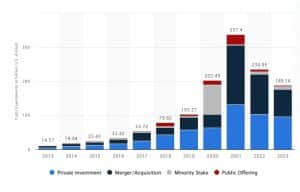
Global corporate investment in artificial intelligence (AI) worldwide from 2013 to 2023, by investment activity (in billion U.S. dollars)Source: Statista
Promoting Domestic AI Exports: A Key Priority for 2025
One of the top priorities for 2025 and the key motive behind this massive investment is promoting American AI exports. The post highlighted President Trump’s executive order in 2019 stressing the need to open global markets for American AI while safeguarding critical technologies from competitors.
Since then, generative AI has spread its wings. Yet again the rapid growth of China’s AI industry has intensified competition as both nations vie to be international leaders. The blog post revealed another scenario of Chinese dominance exemplifying the telecom industry.
Lessons from the Telecom Industry
The past two decades of telecommunications exports provide valuable insights. Initially, companies like Lucent, Alcatel, Ericsson, and Nokia set standards for innovative products. However, Huawei, backed by subsidies from the Chinese government, quickly gained ground.
By offering affordable products to developing countries, Huawei’s technology became the backbone of many nations’ telecom networks. This dominance later raised concerns about cybersecurity, which became a major issue for the U.S. in 2020.
Today, China appears to be replicating this strategy with AI. The Chinese government is offering subsidized access to scarce chips and building local AI data centers in developing nations. Their goal is clear: countries that adopt China’s AI platforms early will likely remain reliant on them not just now but also in the future.
A Winning Strategy for the U.S.
While the U.S. government has concentrated on securing sensitive AI components through export controls, a bigger challenge lies ahead. The real competition will be about which country can spread its AI technology globally the fastest. And Smith believes America can inevitably win this race by developing a smart, international strategy to promote its AI solutions worldwide.
Elaborating further, the U.S. will need to swiftly position American AI as the preferred choice. This will require collaboration with allies and a unified effort to promote U.S. technology globally. In this perspective, the U.S. is supported by growing international regulatory cooperation among North America, Europe, and the Asia-Pacific. Thus, by continuing to lead initiatives like G7 AI diplomacy, the U.S. can showcase its AI leadership globally.
Additionally, Google, Amazon, and many more private companies are also investing heavily to power up America’s AI, computing, and data center space. This commitment and sincere efforts are also fuelling America’s dream to win the AI race.
Microsoft’s Investment Plans Fuel America’s AI Future
On an optimistic note, Smith once again voiced himself confidently that the United States is well-positioned to outpace China in the global AI competition. Well, American products are more trusted than Chinese counterparts, globally. Moreover, exceptional private-sector investment and balanced export control policies further give the U.S. an international edge.
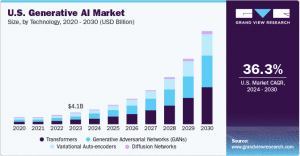
According to Grand View Research Market Insights,
The U.S. generative AI market size was estimated at USD 4.06 billion in 2023 and is expected to grow at a compound annual growth rate (CAGR) of 36.3% from 2024 to 2030.
Microsoft’s investments in the past and plans for the future are the right kind of testament to American optimism for the AI race. Last year, the company announced plans to invest over $35 billion in 14 countries within three years to build secure and reliable AI and cloud data center infrastructure. This plan will broadly span across 40 countries, including some regions of the Global South, where China has heavily invested.
Secondly, Microsoft is partnering with the UAE’s sovereign AI company, G42, to develop AI infrastructure in Kenya. Additionally, the company is teaming up with BlackRock and MGX to create a global investment fund to raise a whopping $100 billion. This fund will support AI infrastructure projects to boost the global AI supply chain.
In conclusion, we can envision that Microsoft’s $80 billion investment is a huge leap for the U.S. AI industry. By focusing on infrastructure, workforce empowerment, and global partnerships, the company is helping the nation stay at the forefront of AI technology.
Several major U.S. banks, including Morgan Stanley, Citigroup, and Bank of America, have recently announced their departure from the Net-Zero Banking Alliance (NZBA). This global coalition was established to help financial institutions align their lending and investment portfolios with the Paris Agreement’s climate goals.
However, this wave of exits highlights the growing tension between climate commitments and political pressures, particularly in the U.S.
A Retreat from Climate Commitments: U.S. Banks’ Bold Move
The NZBA, launched in 2021 under the umbrella of the Glasgow Financial Alliance for Net Zero (GFANZ), committed its members to achieving net-zero greenhouse gas emissions by 2050.
The alliance required banks to set interim targets, reduce emissions associated with their portfolios, and report progress transparently. It also encouraged funding for projects like renewable energy and reforestation to offset emissions.
By 2023, the NZBA had gained significant traction, with over 100 member banks collectively representing 40% of global banking assets. This made it a key player in mobilizing financial resources for the transition to a low-carbon economy. Yet, political and market dynamics have increasingly complicated these ambitions.
Political Backlash and Legal Challenges
In the U.S., political opposition has intensified against net-zero initiatives. Republican-led states have accused financial institutions of prioritizing climate goals over economic interests.
In November, Texas and 10 other states sued major asset managers like BlackRock, Vanguard, and State Street, alleging antitrust violations tied to climate activism. These lawsuits argued that such actions limited fossil fuel financing, reduced coal production, and raised energy prices.
This political climate has pressured banks to distance themselves from alliances perceived as restrictive or politically charged. Morgan Stanley, Citigroup, and Bank of America’s decisions to exit NZBA follow earlier withdrawals by Goldman Sachs, Wells Fargo, and others, citing similar concerns.
So, What Now After the Exit?
Despite leaving the NZBA, these banks remain committed to their sustainability goals. Morgan Stanley reiterated its pledge to report on interim financed emissions targets for 2030, emphasizing its continued support for clients transitioning to greener practices.
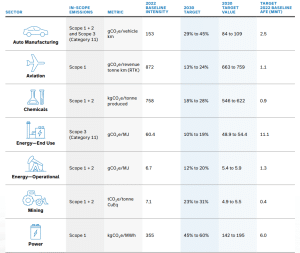
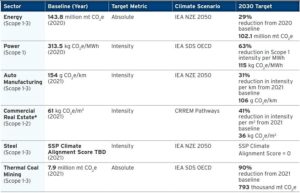
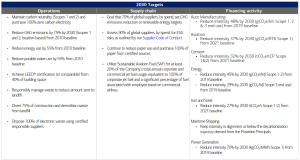
The bank has committed to achieving net-zero financed emissions by 2050. To support this long-term objective, Morgan Stanley has set the following 2030 targets for major emitting sectors:
The firm plans to collaborate with clients to develop and implement strategies that facilitate the transition to a low-carbon economy. Additionally, Morgan Stanley emphasizes the importance of transparent reporting and has committed to disclosing its progress toward these goals regularly.
Citigroup also noted its progress on independent net-zero goals, while Bank of America stated it would continue working with clients to meet their sustainability needs.
Citigroup has pledged to achieve net-zero greenhouse gas (GHG) emissions by 2050, including both its operations and the emissions associated with its financing activities. As part of this commitment, Citi aims to decarbonize its own operations by 2030.
setting emissions reduction targets for 2030 and beyond, and
implementing strategies through client engagement.
Similarly, Bank of America remains committed to achieving net-zero GHG emissions across its financing activities, operations, and supply chain before 2050. To support this goal, the bank has set interim targets for 2030, focusing on reducing emissions in key sectors such as auto manufacturing, energy, and power generation.
Their strategy includes mobilizing $1 trillion by 2030 through their Environmental Business Initiative to accelerate the transition to a low-carbon, sustainable economy.
Additionally, Bank of America achieved carbon neutrality in its operations in 2019 and continues to work towards making its operations more sustainable.
These approaches reflect a strategic balancing act among major bankers. On the one hand, these institutions seek to maintain credibility as leaders in sustainable finance. On the other, they aim to avoid political and financial risks that could arise from their association with climate-focused alliances.
Broader Challenges Facing NZBA
The challenges confronting NZBA extend beyond political opposition. Questions about the availability and quality of carbon credits, critical for offsetting emissions, have raised concerns about the alliance’s effectiveness. Ensuring that credits meet stringent environmental and social standards is essential to maintaining the credibility of net-zero commitments.
Operational complexities also pose difficulties. For instance, NZBA requires members to harmonize emissions reporting and reduction efforts across diverse portfolios and jurisdictions. This has led to administrative bottlenecks and slowed progress in achieving interim goals.
Another challenge is the perception of double regulation. Flights between the UK and the European Economic Area (EEA), for example, face overlapping compliance requirements under both CORSIA and local emissions trading schemes.
Similarly, banks must navigate overlapping climate regulations across multiple frameworks, further complicating their compliance efforts.
GFANZ’s Evolving Role
The Glasgow Financial Alliance for Net Zero (GFANZ), which oversees NZBA and other sectoral alliances, has adapted its strategy in response to these challenges.
GFANZ announced it would no longer require financial institutions to join specific alliances to benefit from its guidance. Instead, it will focus on addressing critical gaps in data, investment, and public policy to accelerate the transition to net zero. The Alliance stated in a statement that it has:
“achieved its initial goal of developing the building blocks of a financial system capable of financing the transition to net zero.”
This shift aims to unlock over $5 trillion annually to modernize energy systems and decarbonize economies globally. By prioritizing actionable investments and public-private partnerships, GFANZ hopes to sustain momentum despite recent defections.
But What Does it Mean for Sustainable Finance?
The exits from NZBA signal broader uncertainties in the sustainable finance sector. While financial institutions recognize the importance of addressing climate risks, they face competing pressures from stakeholders with differing priorities.
Investors demand accountability on climate goals, yet political forces challenge these commitments, particularly when viewed as detrimental to traditional industries like fossil fuels.
Moreover, the scaling back of collective initiatives like NZBA could slow progress in mobilizing the trillions of dollars needed for the low-carbon transition. Without unified frameworks, banks may pursue fragmented approaches, reducing the overall effectiveness of global climate action.
Opportunities And the Road Ahead for Net Zero Banking
Despite these setbacks, opportunities remain for financial institutions to lead in sustainable finance. By leveraging innovative tools like sustainable bonds and green loans, banks can support decarbonization while mitigating political and financial risks.
Moreover, investing in renewable energy, sustainable agriculture, and emerging carbon capture technologies offers pathways to align profitability with climate goals.
The exits of major U.S. banks from NZBA highlight the delicate interplay between climate ambition and political realities. While these developments may slow collective action, they also underscore the need for adaptable strategies to sustain progress. By addressing challenges proactively, the financial sector can continue to play a pivotal role in the global transition to a sustainable future.
Constellation, the largest producer of clean, emissions-free energy in the United States, has secured over $1 billion in contracts from the U.S. General Services Administration (GSA). Under this agreement, Constellation will deliver clean energy to more than 13 federal agencies and implement energy efficiency measures in five GSA-owned facilities in the National Capital Region.
Joe Dominguez, Constellation President and CEO revealed some crucial aspects of this deal. He said,
“For many decades, Constellation’s nuclear fleet has provided carbon-free, reliable, American-made energy to millions of families and institutions. Frustratingly, however, nuclear energy was excluded from many corporate and government sustainable energy procurements. Not anymore. This agreement is another powerful example of how things have changed. Under this agreement, the United States government joins Microsoft and other entities to support continued investment in reliable nuclear energy that will allow Constellation to relicense and extend the lives of these critical assets. In combination with the Crane restart announced previously, Constellation and its partners will add approximately 1,100 MWs of 24/7 clean energy by 2028, enough energy to power over one million homes.”
Constellation’s New Energy Upgrades to Cut Emissions at Federal Facilities
The company announced that it has signed a 10-year, $840 million contract which is the largest in GSA’s history. Starting in 2025, it will supply over 1 million megawatt hours of power annually. Notably, part of this power will come from the company’s planned investments to enhance plant output.
Additionally, the company also secured a $172 million Energy Savings Performance Contract to improve energy efficiency at five GSA-owned facilities in the National Capital Region. It includes the Elijah Barrett Prettyman U.S. Courthouse, the William B. Bryant Annex, the Orville Wright Federal Building, and the Wilbur Wright Federal Building, all located in Washington, DC. The fifth building, the Harvey W. Wiley Federal Building is in College Park, Maryland.
GSA Administrator Robin Carnahan shared more details on this agreement,
“This historic procurement locks in a cost-competitive, reliable supply of nuclear energy over a 10-year period, accelerating progress toward a carbon-free energy future while protecting taxpayers against future price hikes. We’re demonstrating how the federal government can join major corporate clean energy buyers in spurring new nuclear energy capacity and ensuring a reliable, affordable supply of clean energy for everyone.”
Under the contract, Constellation will implement various energy-saving measures to enhance efficiency and lower emissions. These upgrades will include installing advanced LED lighting systems, improving building weatherization, and replacing or enhancing windows. Additionally, new and upgraded heating, ventilation, and air conditioning (HVAC) systems will be installed alongside modernized building control equipment.
These facilities are crucial for federal operations and their energy upgrades are vital for a sustainable infrastructure. Most importantly all these upgrades substantially reduce greenhouse gas emissions and cost for federal buildings.
Construction will start this month and will last about 42 months. During this time, Constellation will manage installations,upgrades, and maintenance. Moreover, it will train GSA staff to ensure they can run and maintain the new systems. This training is vital for long-term energy savings and efficiency.
Constellation’s Nuclear Vision: Shaping the U.S. Clean Energy Future
In the U.S., nuclear energy provides about 20% of the country’s total power and 50% of its carbon-free energy. It offers steady, clean power, which keeps the electric grid stable and reliable even in extreme weather. This, in turn, boosts American energy security and independence. Moreover, it creates good jobs that strengthen communities.
Constellation Energy is America’s largest nuclear energy producer. In 2023, its nuclear plants achieved an impressive 94.4% capacity factor. Together with its hydro, wind, and solar facilities, the company powers 16 million homes, supplying 10% of the nation’s clean energy.
On December 17, 2024, the company launched a pilot project in Washington D.C. to allow consumers to power their homes with 100% clean nuclear energy. The program offers nuclear power at 11.99 cents per kilowatt-hour, which is cheaper than the current supply rate from the local utility. By choosing carbon-free nuclear energy, D.C. residents can cut their energy bills while conserving the environment.
Each year, Constellation’s clean energy operations prevent 125 million metric tons of carbon emissions. That’s the same as removing 29 million gas-powered cars from the road.
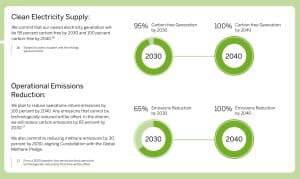
All these initiatives point toward a carbon-free future and reducing Scope 1 and 2 GHG emissions. The company’s climate goals are further explained in the image below:
Source: Constellation
We can conclude by saying that Constellation’s commitment to advancing clean nuclear energy for federal buildings marks a new era for the U.S. energy landscape.
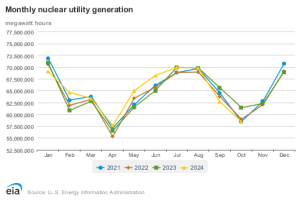
More Power per Punch: Nuclear Energy Outshines Fossil Fuels
Disseminated on behalf of Alaska Energy Metals Corporation
Philippine President Ferdinand Marcos Jr. is set to revitalize the country’s mining sector, particularly its nickel industry, through a proposed reform to the Philippine Mining Act of 1995. The legislation aims to streamline taxation, incorporate environmental considerations, and foster greater stakeholder involvement. These moves could position the country as a leader in the global nickel market.
Revamping Mining Laws to Boost Nickel Industry
The reform bill introduces a four-tier, margin-based royalty system, ranging from 1.5% to 5%, based on mine location. Additionally, environmental factors will play a central role in the approval process for new mines. This approach replaces the current system, which varies based on specific mining agreements and applies royalties only to mines in designated mineral reservations.
The bill is currently awaiting Senate approval. Yet, it has received strong endorsements from government officials and industry stakeholders. Michael Toledo, chairman of the Chamber of Mines of the Philippines, expressed optimism:
“The president himself mentioned to me that he is fully aware of mining’s importance to our country’s socioeconomic growth and of the issues that hinder the industry from attaining its full potential.”
Sustainability and Innovation at the Core of New Policies
President Marcos has been a vocal advocate for responsible and sustainable mining practices since taking office in mid-2022. During the 2023 Presidential Mineral Industry Environmental Award ceremony, he emphasized the importance of clean and efficient extraction processes that restore mined lands, noting that:
“We must also foster innovation by driving research into new methods of mineral processing—methods that reduce waste and energy consumption.”
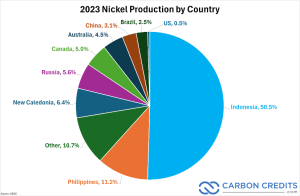
Marcos reiterated his commitment to refining mining policies to align with these priorities. The Philippines is the second-largest producer of mined nickel in 2023 as seen in the chart.
It maintained its position last year, boasting 13.4 million metric tons of reserves and resources.
However, the government and industry leaders are eager to boost production further and expand the value chain by processing nickel domestically.
Toledo highlighted the need for collaboration with international partners, such as South Korea, Japan, and the European Union, to access alternative smelting technologies. He further noted that mineral extraction and processing are the foundation of the clean energy supply chain. Currently, there isn’t enough ore being mined to meet the demands of facilities still in development.
Digital Transformation in Mining Permits
The Philippine government is taking steps to improve regulatory processes in the nickel and other metals industry, too. In October 2024, a digital application system for mining permits was launched in three regions, with plans for nationwide expansion. This initiative aims to reduce permitting times to two years, significantly faster than the current timeline.
Additionally, the Department of Environment and Natural Resources (DENR) is drafting an executive order to clarify conflicting interpretations of existing mining royalty laws. In the first quarter of 2024, the Philippines approved 785 mining-related permits, including the following:
mineral production sharing agreements,
financial or technical assistance agreements, and
exploration permits.
Despite these approvals, 1,509 applications remain under review.
Prices and Prospects for the Nickel Market
Globally, nickel prices experienced significant volatility in late 2024. It was driven by macroeconomic and political developments following Donald Trump’s U.S. presidential election victory.
The LME three-month nickel price fell to a 4-year low, influenced by various concerns like Trump’s economic policies and rising LME inventories. Investor sentiment was further impacted by China’s fiscal stimulus package, which failed to meet expectations.
Although prices temporarily rose after Trump’s victory, they quickly declined as market concerns about higher tariffs on Chinese imports and prolonged high interest rates intensified. By late November, nickel prices rebounded due to Indonesia’s tighter mining policies and a 50-fold surge in nickel ore imports.
Amid all these, an emerging nickel player is making a huge wave in the United States – Alaska Energy Metals Corporation (AEMC). The company is advancing U.S. nickel independence. Its flagship Nikolai project in Alaska boasts substantial resources of nickel, copper, cobalt, and platinum group metals critical for renewable energy and electric vehicles (EVs).
The Canadian nickel junior prioritizes sustainability and critical mineral supply, reducing U.S. reliance on imports.
Yet, the price volatility highlights the market’s sensitivity to global economic and geopolitical events. However, despite the price challenges in 2024, the Philippine Chamber of Mines remains optimistic about nickel’s long-term prospects.
Global nickel production is estimated to grow to more than 4 million metric tonnes in 2030.
Demand for the metal, driven by the global energy transition, is expected to remain robust. Nickel is a key component in batteries for EVs and renewable energy storage, making it indispensable for achieving net-zero emissions targets.
One factor of uncertainty is the geopolitical impact of U.S. President Donald Trump’s return to office. Trump has threatened to disrupt existing trade relationships, potentially affecting global metals trade flows.
On this note, Toledo said that while Trump’s re-election could slow the push for net zero, it won’t stop it entirely. With rich nickel reserves and strategic reforms on the horizon, the Philippines is well-positioned to strengthen its role in the global mining landscape.
The proposed legislation’s emphasis on sustainability, innovation, and efficiency could unlock new opportunities, attract international investments, and elevate the country’s status as a key supplier in the clean energy transition.
If the bill passes, the nickel mining industry could become a cornerstone of the Philippines’ economic growth in the years ahead.
Disclosure: Owners, members, directors, and employees of carboncredits.com have/may have stock or option positions in any of the companies mentioned: AEMC.
Carboncredits.com receives compensation for this publication and has a business relationship with any company whose stock(s) is/are mentioned in this article.
Additional disclosure: This communication serves the sole purpose of adding value to the research process and is for information only. Please do your own due diligence. Every investment in securities mentioned in publications of carboncredits.com involves risks that could lead to a total loss of the invested capital.
Top research agencies and industrialists are expecting a steady uranium production in 2025. They think demand will grow due to the increasing global need for nuclear energy as a zero-carbon power source.
In 2024, the market saw an activity uptick, with producers reopening mines and planning expansions to meet the needs of nations like the US, Canada, and the EU. Additionally, adoption and investment in small modular reactors significantly increased uranium demand.
So, what’s in store for uranium in 2025? Can supply keep pace with soaring demand, or will it crumble under the pressure? And what’s the price forecast looking like? Let’s study the report to find out the answers…
2024’s Most Significant Uranium Deals
The demand for nuclear energy has risen leaps and bounds as countries seek low-carbon power to meet their energy demands. Electrification, big data centers, and artificial intelligence (AI) are fueling the push for more reliable and clean energy sources.
We have seen many retired power plants being reactivated, and new nuclear construction projects are happening worldwide. This is because, in this new dawn, governments and companies are prioritizing nuclear power as the pillar of the energy transition. And this scenario directly connects with the global uranium supply chain.
Significantly, the global uranium market is responding to this increased demand for nuclear energy. Uranium mining stocks surged in 2024 after top tech companies like Meta, Google, Microsoft, and Oracle announced their entry into nuclear to satiate the energy demand of their data centers. This further shows demand for uranium is going to rise.
One of the most notable deals of last year was Paladin Energy’s acquisition of Canadian company Fission Uranium for CA$1.14 billion. This deal was delayed but recently got clearance from Canadian authorities under the Investment Canada Act. Now Paladin will own Fission’s advanced PLS project in Saskatchewan- Canada’s premium uranium province.
Apart from this, several other uranium deals progressed smoothly:
Uranium Energy Corp. resumed operations at Willow Creek in Wyoming, marking a key milestone in the company’s production efforts.
Paladin Energy Ltd. successfully restarted its Langer Heinrich mine in Namibia, achieving commercial production.
Boss Energy began its first drum of uranium produced at its Honeymoon project in Australia in April 2024.
IsoEnergy’s acquisition of Anfield Energy expanded its uranium resources significantly. The company’s measured and indicated uranium resources increased to 17 million pounds, with inferred resources now at 10.6 million pounds. This positions IsoEnergy as a potential key player in the U.S. uranium market.
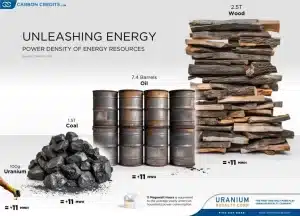
More Power per Punch: Nuclear Energy Outshines Fossil Fuels
Global Rise in Uranium Activity
Russia’s state-owned Rosatom has been offloading its stakes in Kazakhstan’s uranium mines, with Chinese companies stepping in as key buyers. Notable deals include selling 49.979% of Rosatom’s share in the Zarechnoye mine and transferring a 30% stake in the Khorasan-U joint venture to Chinese firms. These moves reflect a shift toward regional and China’s emergence in the uranium market.
Moving on, in Canada, Cameco Corp. has ambitious plans to increase annual output at its McArthur River mine from 18 million to 25 million pounds, alongside extending the operational life of its Cigar Lake mine. Recently, the US Nuclear Regulatory Commission has also approved Urenco USA’s request to amend its license, allowing for uranium enrichment levels of up to 10% at its New Mexico facility.
France has injected €300m ($330m) into uranium major Orano to revamp the country’s uranium industry. Additionally, Brazil is partnering with mining firms to revive uranium production which is stagnant since Indústrias Nucleares do Brasil SA began operating its sole mine in 1982.
Thus, globally, several countries and companies are stepping up initiatives to expand uranium production.
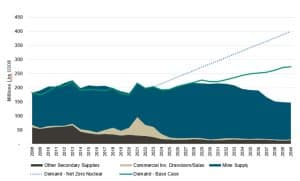
Uranium Supply and Demand Estimates (2008-2040E)
Source: Sprott (UxC and Cameco Corp. Data as of 9/30/2024)
Tax and Trade Tensions: Can Uranium Rise Above the Challenges?
Analysts highlighted several challenges for uranium production, ranging from timeline to geopolitical tensions, tax policies, and technical challenges faced by some uranium mining giants. We have explained these challenges below:
To begin with the U.S., Trump’s statement about imposing a 25% tariff on all products from Mexico and Canada has given rise to some serious concerns. In 2023, Canada supplied 27% of the uranium to U.S. nuclear plants, making it the largest supplier.
However, the U.S. faces challenges in boosting domestic production. According to the US Energy Information Administration, the U.S. purchased 40.5 million pounds of U3O8 in 2022.
Industry experts predict that utilities will push to ensure uranium imports from Canada remain unaffected by potential tariffs, as Canada is a critical and reliable partner.
Geopolitical tensions have further complicated the uranium trade. In May, the U.S. banned imports of Russian uranium, which accounted for 11.8% of its 2022 uranium supply. In response, Russia restricted enriched uranium exports to the U.S. which escalated trade tensions.
Even leading uranium producers faced substantial setbacks. Kazakhstan’s NAC Kazatomprom, the world’s largest producer, reduced its 2025 output target due to difficulties in securing sulfuric acid, a key material for extraction. Similarly, Orano suspended mining activities at its Somair project as it faced financial strains and permit issues.
Uranium’s Future: Predictions for 2025
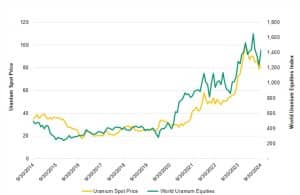
Uranium prices had a rollercoaster year in 2024.
In November 2024, Uranium spot price retraced to $77.08, according to the Sprott Uranium Report. Despite the dip, prices remain higher compared to historical levels, with the Sprott Physical Uranium Trust helping to stabilize around $80.
Image: Uranium Miners vs. Spot Uranium (2014-2024)
Source: Sprott (Bloomberg and TradeTech LLC. Data from 9/30/2014 to 9/30/2024)
Looking ahead, several factors are driving optimism for uranium’s 2025 future. A persistent supply crunch, growing focus on nuclear energy, global energy policies, and geopolitical shifts will drive demand in the future.
While short-term volatility may persist, experts predict uranium prices will rebound to $90–$100 per pound by mid-2025.
However, significant investments in new mines, conversion plants, and enrichment facilities will be needed to ramp up uranium production. Moreover, overcoming the challenges we have explained before would also play a significant role in uranium’s bright future.
To provide the best experiences, we use technologies like cookies to store and/or access device information. Consenting to these technologies will allow us to process data such as browsing behavior or unique IDs on this site. Not consenting or withdrawing consent, may adversely affect certain features and functions.
Functional
Always active
The technical storage or access is strictly necessary for the legitimate purpose of enabling the use of a specific service explicitly requested by the subscriber or user, or for the sole purpose of carrying out the transmission of a communication over an electronic communications network.
Preferences
The technical storage or access is necessary for the legitimate purpose of storing preferences that are not requested by the subscriber or user.
Statistics
The technical storage or access that is used exclusively for statistical purposes.The technical storage or access that is used exclusively for anonymous statistical purposes. Without a subpoena, voluntary compliance on the part of your Internet Service Provider, or additional records from a third party, information stored or retrieved for this purpose alone cannot usually be used to identify you.
Marketing
The technical storage or access is required to create user profiles to send advertising, or to track the user on a website or across several websites for similar marketing purposes.



 Source: California Air Resources Board
 source: CRC
 source: CRC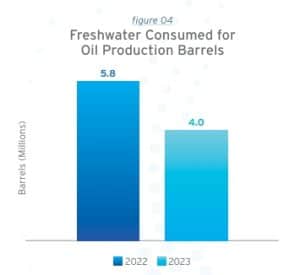



 Source: Statista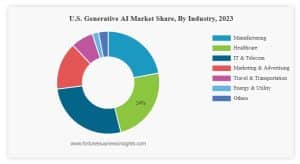


 Source: Sprott (Bloomberg and TradeTech LLC. Data from 9/30/2014 to 9/30/2024)