New York to Cap-and-Invest $1B Carbon Credits from Big Polluters

New York State Gov. Kathy Hochul revealed a first-in-the-nation carbon credits program that put an economy-wide price on pollution to ditch fossil fuels and reduce GHG emissions. 

New York has been taking one of the most ambitious efforts in the United States to address the climate crisis. The state aims to achieve its mandate of 40% emissions reduction by 2030, and at least 85% by 2050 from 1990 levels. 

Hochul’s new Cap-and-Invest Program would put New York on the path to meet those climate goals.

It will allow the state to make more critical investments in the clean energy transition. It will also support vulnerable and disadvantaged communities amid the rising energy prices. 

Gov. Hochul said:

“Our ambitious Cap-and-Invest Program sets a cap on greenhouse gas emissions and shares the revenues with New Yorkers from disadvantaged communities to help cover utility bills, transportation costs and decarbonization efforts. Through our innovative efforts, we will create a cleaner, greener future while helping New Yorkers with the costs of the transition.”

The program, if adopted, can be one of the most sweeping climate plans in the country. 

New York And Its New Carbon Credit Program

New York wouldn’t be the first to adopt this carbon credits program. California has its own cap-and-trade program while Washington and Oregon have their own approaches in place, too. 

But the design of the country’s 3rd largest economy will be the most rigorous, if adopted. 

The “Cap-and-Invest” program will require businesses to buy allowances, also known as carbon credits, to pollute. The number of credits – or the cap – is reducing gradually in line with the state’s climate goals. 

The government will then invest the revenues earned from the cap in various efforts that slash carbon emissions. These include the following initiatives:

  • Installing electric vehicle chargers
  • Replacing fossil fuel appliances with electric ones
  • Weatherizing buildings
  • Making energy or power affordable

The proposed plan calls for no on-site fossil fuel combustion for constructing smaller buildings by 2025 and bigger buildings by 2028. It also prohibits the sale of new fossil fuel heating equipment by the end of this decade.

Gov. Hochul also said that an existing program, EmPower Plus, will expand to reach 20,000+ low-income households this year by giving them dwellings with no-cost energy efficiency solutions.

She further added that the state will allocate $200 million to 800,000 customers making below $75,000 to pay electric bills via a relief credit.

Large-scale GHG emitters and distributors of heating and transportation fuels will be required to buy carbon credits associated with their polluting activities. 

  • By putting a price for each metric ton of carbon emissions, the Cap-and-Invest program will incentivize consumers, companies, and other entities to transition to a lower-carbon economy. 
This climate proposal first emerged from the state’s Climate Action Council Scoping Plan. It recommended cap-and-invest in December last year as part of its climate roadmap.

Cap-and-Invest Program Principles

The Department of Environmental Conservation (DEC) and the New York State Energy Research and Development Authority (NYSERDA) will run and oversee the program. Under Gov. Hochul’s direction, the program design will prioritize 5 core principles.

Affordability: 

A crucial part of the cap-and-invest program is the creation of a universal Climate Action Rebate. The goal is to drive ~$1 billion in cap-and-invest revenues to New Yorkers each year. This is meant to help mitigate costs to consumers and preserve funds for consumer-led decarbonization efforts. 

Climate Leadership: 

New York’s new carbon credits program will not only help meet the state’s mandated climate targets; it will further drive a nationwide approach to carbon pricing. Thus, Gov. Hochul plans to design it in a way that it aligns with other programs that lower the cost of transitioning to a greener future. 

Job Creation:

The new climate program will also create new investment opportunities that create a lot of jobs. The proceeds will go into just transition initiatives ensuring no worker is left behind. The state industries will also be put in a competitive advantage while stimulating the clean energy movement. 

Prioritizing Disadvantaged Communities:

The proposal ensures that the burden of carbon emissions are reduced in frontline, disadvantaged communities. It will slate at least 35% of investments under the plan to them. Hochul highlighted that they’ve suffered injustice already and deserved no more burden, saying:

“As we work to drive down polluting emissions across the board, we must make sure that those who have already suffered from environmental injustice no longer bear an unfair share of the burden.” 

Funding a Sustainable Future:

New York’s cap-and-invest will provide funds crucial in achieving the state’s climate goals. The proceeds will support projects that reduce energy bills, electrify business operations, and increase energy efficiency, among others. 

The innovative program will get inspiration from the experience of similar programs that resulted in significant emissions reductions. The state’s electricity system is already part of a regional cap-and-invest style program, the Regional Greenhouse Gas Initiative (RGGI)

Since its establishment in 2005, the RCGI has helped cut emissions from power plants by over 50%. It has also raised about $6 billion to support cleaner energy solutions among the participating states.

NASA Provides A New View of Carbon From Space

0

A recent study shows that space-based carbon observations by NASA can help track carbon emissions at the source. 

Two major NASA space missions, OCO-2 and OCO-3, allowed researchers to detect and track changes in CO2 emissions from a single facility by using Europe’s largest coal-fired power plant. 

Quantifying Carbon in Space 

In the study, analysts use the space-based measurements produced by NASA’s Orbiting Carbon Observatory or OCO missions, 2 and 3.

They calculate the CO2 emitted by the world’s 5th largest coal-fired power plant – Bełchatów Power Station in Poland. They then analyzed the plant’s CO2 emissions using OCO’s 2 and 3 mapping observations between 2017 and 2022.

The image below shows the mapping results. 

NASA space-based carbon observations of Belchatow power plant

The researchers discovered that changes in CO2 levels during that period were consistent with changes in electricity generation. They also detected that plant shutdowns cut its overall emissions. 

The next image illustrates the OCO-2 satellite launched in 2014. It maps carbon footprint, both natural and man-made, as it orbits the Earth on various scales from regions to continents. Light-analyzing spectrometers in the spacecraft detect CO2’s signature hundreds of miles below it. 

NASA OCO-2 satellite

The scientists, thus, concluded that space-based observations are useful in tracking carbon emissions at the source. 

A succeeding satellite, OCO-3, was created from the spare parts of OCO-2 mission. OCO-3 hung on the underside of the International Space Station since 2019. 

NASA OCO-3 satellite

The space instrument can make several sweeping carbon observations as the spacecraft passes over an area. In return, scientists can use those observations to make detailed mini-maps of an area of interest at a local scale. 

These findings were a surprise for the researchers as neither OCO instrument was meant to detect CO2 footprint from individual facilities like Bełchatów.  

Abhishek Chatterjee, project scientist for the OCO-3 mission at NASA’s Jet Propulsion Laboratory (JPL) in Southern California noted:

“As a community we are refining the tools and techniques to be able to extract more information from the data than what we had originally planned. We are learning that we can actually understand a lot more about anthropogenic emissions than what we had previously expected.”

Tracking Carbon at the Source

Large emitters such as power plants are responsible for emitting about 50% of global CO2 footprint from fossil fuels

In the case of Bełchatów, it emits more CO2 per megawatt than other plants. That’s because it is a brown coal or lignite-fired plant. The government plans to close the power plant in 2036.

Most carbon emissions measurements are using estimates only or data available at the land surface. They represent calculations from fossil fuel consumptions and their expected emissions. 

Hence, in general, they don’t represent the actual atmospheric CO2 measurements. 

Ray Nassar, the study’s lead author and researcher at Environment and Climate Change Canada said the “finer details about exactly when and where emissions occur are often not available.” He further added that:

“Providing a more detailed picture of carbon dioxide emissions could help to track the effectiveness of policies to reduce emissions. Our approach with OCO-2 and OCO-3 can be applied to more power plants or modified for carbon dioxide emissions from cities or countries.”

With the help of OCO-3 mapping mode observations, the data generated can be used more specifically in tracking carbon emissions at the point source in the future. 

NASA said that this kind of space mission operation will extend for more years, 5 to 6 years. OCO-3 will work alongside another GHG observer aboard NASA’s space station. JPL manages OCO-2 and OCO-3 projects for NASA.

Making carbon measurements at the right time and at the right scale is critical. Space-based carbon observations hold huge promise in future efforts to monitor and provide information to help reduce CO2 emissions. 

Despite some limitations, this emerging Monitoring Verification and Support (MVS) system can play a key role in supporting carbon emission reductions to mitigate climate change and achieve goals set out in the Paris Agreement.

How Does Carbon Capture and Utilization Work?

Carbon capture and utilization technology is not only useful, but a necessary strategy to reduce atmospheric CO2 levels, and stall an increase in global temperatures in the near future. It works to remove atmospheric carbon dioxide, and either reuse it or permanently store it.

There are a myriad of technologies and methods to achieve this, ranging from direct air capture to forestry.

Carbon Sequestration Definition

Carbon capture, or carbon sequestration is the process which captures atmospheric carbon dioxide that is often released by emissions-heavy industries such as energy, construction, manufacturing and transport. 

What happens after carbon dioxide is removed and then captured is called carbon utilization. It could be recycled and resold as an economically valuable product to industries. They would then convert this into end products to be sold, such as new materials or fuels.

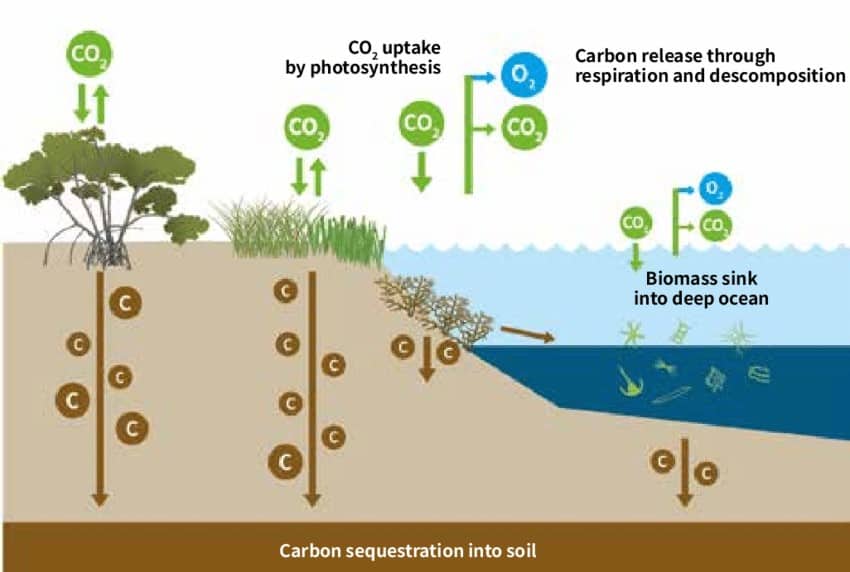
Carbon fixation refers to the process in which the captured carbon dioxide is stored permanently in the earth, away from the atmosphere. The most common example of this in nature is the way plants convert atmospheric carbon dioxide into organic compounds (e.g. starch). 

However, there are also emerging artificial carbon fixation technologies, such as the Orca carbon capture project. The plant pumps water and the captured carbon dioxide deep underground, where it will be permanently stored in rocks.

Collectively, all these processes are known as Carbon Capture, Utilization and Storage (CCUS)

Why is Carbon Capture, Utilization and Storage Critical Right Now?

Carbon capture, utilization and storage technology has been around for a really long time. However, interest in this area has increased exponentially in the past few years, due to the urgent climate targets that need to be met in coming years.

During the Paris Agreement and COP27, the consensus was that time is running out to tackle climate change without drastic changes in the coming years. The agreement was to limit the increase in average global temperatures to 2C and ideally, to 1.5C with respect to pre-industrial levels. An increase above these values would lead to irreversible damage to the planet. 

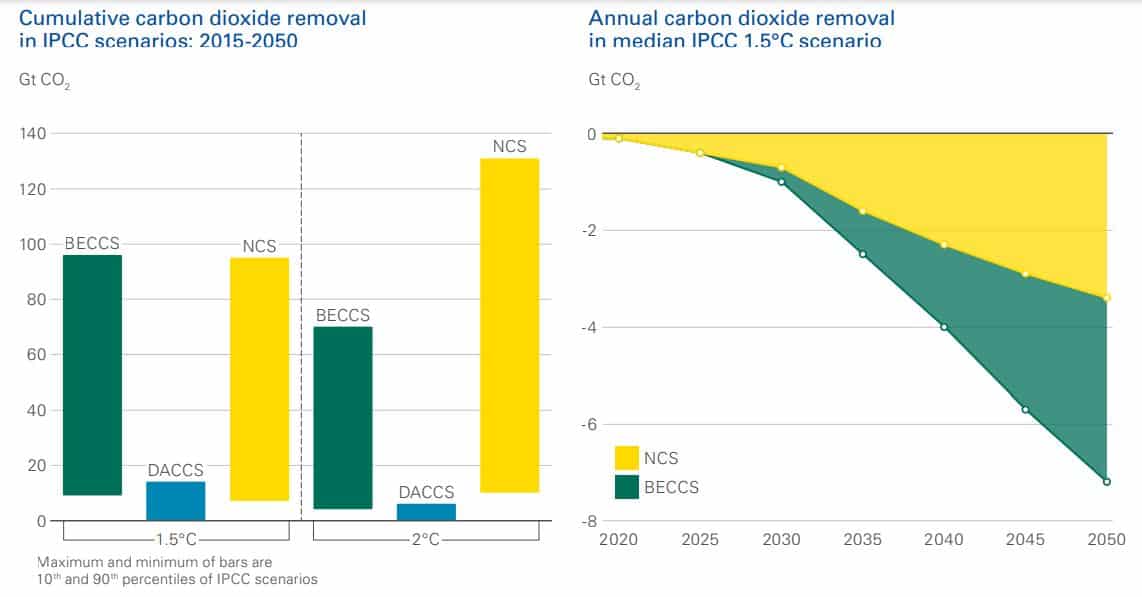
In order to achieve this, the world would need to remove 1 billion tons of CO2 by 2025. While carbon negative renewable energy sources and planting trees can remove CO2 from the atmosphere, they are not sufficient to meet these climate targets. This is where the significant need for carbon capture and storage technology lies. 

The Basic Steps of Carbon Capture, Utilization and Storage

In CCUS, there are four main steps involved:

carbon capture, utilization and storage

  1. Sequestering CO2 at stationary sources such as power plants and industrial sites.
  2. Transporting the captured CO2 to storage sites (this involves compressing or liquefying the gas)
  3. Utilizing the captured carbon in various applications (e.g. carbonated beverages, gas injection for enhanced oil recovery)
  4. Permanently storing the CO2

In this article, we are mainly focusing on the first step, which is carbon capture or carbon sequestration. 

Carbon Capture Methods

There are four main categories to which carbon capture methods belong to:

  • Pre-combustion carbon capture methods

This process removes carbon dioxide before the fossil fuels are burned. In this process, the fossil fuel undergoes a gasification process which turns it into a mixture of hydrogen and CO2. The hydrogen can be burned as a ‘clean’ fuel which does not produce CO2 as a waste product. 

The CO2 captured can then be compressed, transported and stored for other industrial uses. This method is one of the ways of producing ‘blue’ hydrogen fuel.

Since the CO2 produced in pre-combustion carbon capture methods is higher in concentration, CO2 removal is easier and more efficient compared to post-combustion carbon capture. However, the capital costs related to gasification are quite expensive, especially if it is retrofitted into existing facilities instead of new ones.

  • Post-combustion carbon capture methods

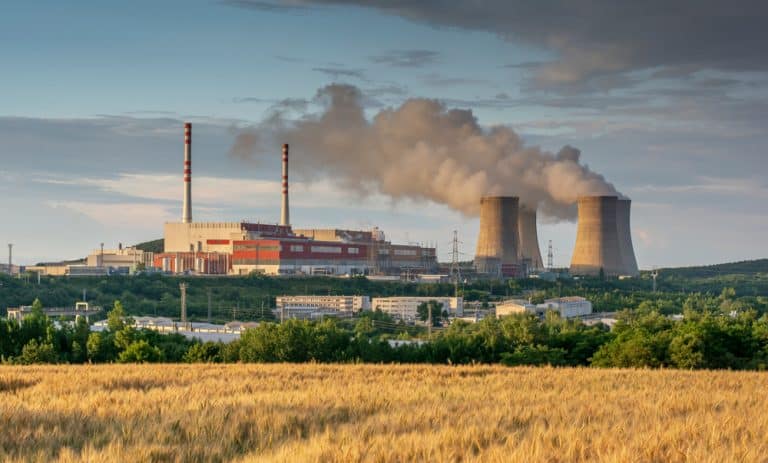
Post-combustion carbon capture and utilization methods remove carbon dioxide gas after the fuel undergoes combustion. It is the most widely used across industries for carbon capture. This is typically done at the exhaust where CO2 is emitted.  It uses specially designed filters or liquid solvents to separate the CO2 from the exhaust stream. 

The first stage will be the absorption phase, where the solvent absorbs the CO2. The second phase will be the ‘desorption’ phase, where a change in temperature will cause the CO2 to be released from the solvent, and thereby separating the CO2.

Another example of a post-combustion carbon capture technology in development is using lime to remove CO2. The byproduct will be limestone, which can be heated to separate the CO2.

  • Oxyfuel combustion methods

Oxyfuel combustion processes use pure oxygen instead of air to burn fuel. This will eliminate other impurities such as sulfur dioxide. The byproduct in this case would then only be water vapor and CO2 gas, which can easily be separated. 

  • Direct Air Capture

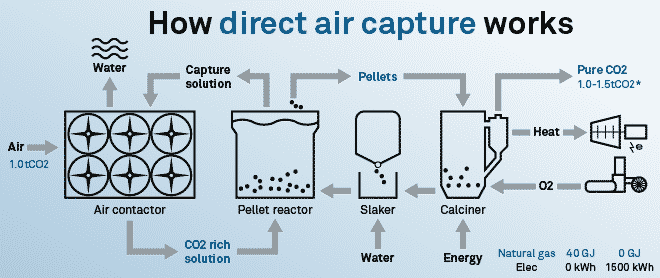
Direct Air Capture (DAC) is another novel carbon capture method. It removes CO2 from ambient air instead of only at stationary points of CO2 emission such as power plants. 

The difference here is that with DAC, even CO2 emitted in the past can be removed. This would allow more CO2 to be removed from the atmosphere, reducing the overall CO2 levels in the air.

With post-combustion carbon capture, you are only removing the CO2 that is being emitted at that time. Hence, it prevents a further increase in CO2 levels.

Due to the urgency of climate action that needs to be taken, DAC is increasingly gaining interest. One of the leading carbon sequestration companies in this area is Swiss-based Climeworks. It has launched the world’s largest direct air carbon capture facility in Iceland, called the Orca carbon capture project. 

The carbon capture plant would have an annual capacity to capture 4,000 tons of CO2. 

The Future of Carbon Capture

With more development of such carbon capture plants, the goal is to lower the cost of carbon capture and sequestration. One of the biggest hurdles in the large-scale implementation of carbon capture and storage technology is the cost.

Since emitting carbon is cheap, there is little economic incentive to employ carbon capture technology on an industrial scale. However, things are improving, with more interest from investors, governments and scientists in recent years.

First NFL Team to Buy Carbon Credits

One of the National Football League (NFL) teams, the Houston Texans, will buy carbon credits from Occidental Petroleum subsidiary, 1PointFive, to offset the footprint of their flights to other cities. 

From soccer or football to basketball, sports are fun and recreational but some of them can be worse for the environment. But simply throwing a ball around is not the problem; it’s the professional part of big-arena sports, especially the logistics behind the event that poses a concern. 

American football, for instance, is one of the most popular and profitable sports in the world. Fans are so passionate that many are willing to travel anywhere to see the game and their favorite team play live. 

  • 85% of GHG emissions by major sports events come from the travel and accommodation of fans. 

Add to this the separate carbon emissions of each football team for their air travel like NFL.

Some teams have a large entourage of nearly two hundred people traveling for each game. This includes players, coaches, front office staff, equipment staff, and all the equipment.

Carbon Footprint of NFL 

Together, the four major North American sports leagues – NBA, NHL, MLB, and NFL – emitted around 122,000 metric tons of CO2 from air travel alone.

And among them, it’s the football league that has the least carbon emissions as it has the fewest games. But the NFL also has the most carbon footprint per game. 

  • In fact, the carbon footprint of the NFL during a one-day event in the 2005 Super Bowl reached 1 million tons. That’s equal to ~900,000 metric tons of carbon footprint. 

In an estimate, here’s a comparison of the four professional leagues’ travel emissions. The NFL has the highest carbon footprint for 2018 and 2020, despite the decrease due to the pandemic. 

NFL carbon footprint - air travel
Source: Seth Wynes

But the football league has been working hard to address the carbon emissions of its major game events. The league created an environmental program called “NFL Green”. 

Leaving a Green Legacy

NFL Green projects ensure that the league’s big game or event makes a lasting impact in each host community. Since 1993, the program has earned recognition for the Super Bowl as the greenest professional sports event in America.

An example projects is a coral reef restoration along the South Florida coast. Others include recycling and tree planting in a local city park – Eagles Forest. 

In 2019, the NFL joined the Green Sports Alliance — an environmental effort that includes 600+ teams, leagues, and venues. They’re committed to reducing waste, conserving energy and water, and other measures to slash footprint while increasing the sustainability of professional sports. 

The NFL Green’s director once said in an interview: 

“One thing is how do we mitigate the environmental impacts? How do we lighten the footprint? And the second thing is how do we create an enduring green legacy that we can leave behind in each community?”

NFL Green also works closely with the stadiums and facilities hosting events to enhance recycling waste rates. A more climate-friendly initiative is the NFL stadiums using renewable energy certificates or RECs to power its major events.

Doing so not only provides funding but also allows the team to mitigate the GHG impact of its energy use. 

But more interestingly, one of the NFL’s teams, the Houston Texans opted to buy carbon credits to offset their travel emissions.  

NFL Team to Purchase Carbon Credits 

The Houston Texans is currently the worst-ranked team in the NFL. 10 of the team’s 21 pre- and regular-season games will be played in other cities this season.

That means the team’s players will be flying, as well as their fans, to the venue. To offset the football team’s carbon emissions, they’ll buy carbon credits from Occidental’s 1PointFive.  

The amount of credits isn’t disclosed, but it will be enough to cover three seasons of flights, said the team.

They’ll be generated by Occidental’s direct air capture project in the Permian Basin oilfield of West Texas. The DAC project will remove 500,000 tons of CO2 each year, storing it deep underground. 

DAC is a technology that captures and removes CO2 directly from the atmosphere, which is then safely stored underground in geologic formations. It offers a practical solution for hard-to-abate activities, such as air travel, to help achieve climate goals.

Through their carbon credits deal, the oil giant will become the football team’s Preferred Carbon Removal Partner. It will also work with the Texans to educate fans on the importance of carbon removal.

President of 1PointFive, Michael Avery noted:

“We are excited to work with the Houston Texans and for their purchase of carbon removal credits enabled by Direct Air Capture. We believe Direct Air Capture is an efficient way to help reduce an organization’s carbon footprint and provides a solution that is particularly well-suited to addressing carbon emissions associated with air travel.”

The Houston Texans are the first NFL team to buy carbon credits to offset their air travel footprint. The NFL football team will pay Occidental for the credits linked to a share of the carbon captured. 

The partners said the CO2 will be captured in “saline reservoirs not associated with oil and gas production”.

The DAC plant is under construction and is expected to be done in 2024. 

Alberta Prepares For Surplus of Carbon Credits

The Canadian province of Alberta made major changes to its carbon credits system in preparation for a future surplus of carbon credits that may flood the market. Alberta expects many carbon capture and storage (CCS) projects to come online from 2024 until 2030.

The amendments are made under Alberta’s Technology Innovation and Emissions Reduction (TIER) Regulation (AR 133/2019). They include creating two new types of carbon credits – the “sequestration credit” and the “capture recognition tonne.”

The changes bring the TIER system in line with the minimum federal standards while ensuring that the carbon credits system continues to work in Alberta. 

What is Alberta’s TIER? 

TIER implements Alberta’s industrial carbon pricing and emissions trading system. It imposes an emissions benchmark on Alberta’s large emitters (emitting 100,000 tonnes or more of greenhouse gas) and opt-in facilities (smaller emitters that voluntarily opt in). 

Facilities subject to TIER must meet their emissions benchmark by reducing their year-over-year operating efficiencies. In case they can’t meet the benchmark, they may choose to do any of these options:

  • Buy a “fund credit” from the TIER for each tonne of excess emissions
  • Submit Emission Performance Credits (EPCs) showing reduced emissions to below the benchmark in the previous or current compliance year
  • Submit emission offsets generated under an approved protocol

EPCs are tradable to other emitters to meet their compliance obligations. TIER-regulated emitters are exempt from carbon pricing under the federal Greenhouse Gas Pollution Pricing Act.

CCS and Carbon Credits in Alberta

The carbon capture and storage industry, popularly known as CCS, is on the rise and Alberta is keeping up with the trend. The province agreed with 25 major CCS projects to explore potential project areas.  

If all the projects go as planned, about 50-60 million tonnes of CO2 or its equivalent can be sequestered yearly. This can potentially create 50-60 million carbon credits. And that’s way more than expected of credits from projects under the TIER system. 

Carbon offset credits issued to date are registered with the Alberta Carbon Registries (ACR). The body also publishes each offset project’s plan and verification of registered offsets. Each project’s plan estimates the annual emissions reductions the developer expects the project to yield. 

Some think the flood of potential credits from CCS projects will cause their price to fall relative to the carbon price. This may restrict the deployment of CCS and the decarbonization of heavy emitters. These include Alberta’s power, oilsands, oil and gas, and other industries. 

But estimates show otherwise as seen in the chart below (CCUS also means CCS). 

Alberta TIER Carbon Credit Scenario (2021-2030)

Alberta carbon credits market scenario 2021-2030

Currently, a CCS project developer can create carbon credits for 20 years if it follows the Quantification Protocol for CO2 Capture and Permanent Storage in Deep Saline Aquifers

A facility can retire the credits as part of its compliance obligations under the TIER. The credit holder can also sell them to another facility or a company looking for offsets. 

Changes to Alberta’s Carbon Credit System

The major change to Alberta’s TIER regime is the creation of two new carbon credits.

  1. Sequestration credits: 

Sequestration credits are also applicable under the Clean Fuel Standard. An offset can be converted into a sequestration credit if it meets certain criteria, which include:

  • produced in 2022 or later year
  • the CO2 sequestered must have been captured at a large emitter or opted-in facility (e.g. oilsands facility or fossil fuel power plant)

Sequestration credits may only be used for compliance for 5 years after generation.

Their creation may tell that some companies prefer to buy carbon credits from projects that permanently remove CO2 rather than projects that offset emissions. It will also be interesting to see if the new credit will trade at a premium price.

  1. Capture recognition tonnes:

Capture recognition tonnes allow emitters to deduct sequestered emissions from their total regulated emissions at carbon capture sites. A sequestration credit can be converted into a capture recognition tonne if: 

  • the CO2 sequestered for the emission offset was captured at the facility applying for the conversion, and
  • the sequestration happened in 2023 or later.

The emitter can then retire the capture recognition tonnes and use them in calculating its net emissions from its facility. This will reduce its compliance emission obligations. 

Other amendments:

The scope of “large emitters” now includes a facility that imports ~10,000 tonnes of hydrogen in 2023 or later.

They also lower the minimum emissions threshold for opt-in facilities in emissions-intensive trade-exposed industries from 10,000 CO2e tonnes/year to 2,000 CO2e tonnes/year. This enables smaller emitters to opt into the program and increase demand for offset credits. 

Moreover, the current 8-year period for using EPCs will go down to only 5 years with a vintage year of 2023 or later. The amendments also expand the limit of using carbon credits in Alberta under TIER as a compliance method.

  • For 2023, a facility can still meet its regulated emissions by up to 60% through retiring carbon credits. But this will go up to 70% in 2024, 80% in 2025, 90% in 2026, and any year thereafter. 

The emissions intensity baseline will also be higher. A 2% annual tightening rate, from 1%, will apply to facility-specific and high-performance baselines. But for oilsands operations, this rate will go up to 4% in 2029 and 2030. 

Lastly, the carbon tax under TIER for 2023 through 2030 will increase along with the federal carbon price from $65 to $170 in $15 annual increments.

Abu Dhabi National Oil Invests $15B in Decarbonization Projects

Abu Dhabi National Oil Company (ADNOC) committed a $15 billion investment in low-carbon projects to curb operations emissions and meet decarbonization goals.

The United Arab Emirates oil and gas giant has unveiled its multi-year action plan, allocating $15 billion for various low-carbon projects across its diversified value chain by the end of the decade.

The UAE has committed over $165 billion to transition to clean energy. It’s the first Persian Gulf state to aim for 2050 net zero emissions.

Dr. Sultan Ahmed Al Jaber, UAE Minister of Industry and Advanced Technology and ADNOC Group CEO, said:

“Cementing our strong track record of responsible and reliable energy production, ADNOC will fast-track significant investments into landmark clean energy, low-carbon and decarbonization technology projects. As we continue to future-proof our business, we invite technology and industry leaders to partner with us, to collectively drive real and meaningful action that embraces the energy transition.”

ADNOC Decarbonization Goals

As part of its sustainability goals, ADNOC plans to cut its carbon emissions intensity by 25% by 2030. This will strengthen its position as one of the least carbon-intensive oil and gas companies in the world.

  • ADNOC ranks in the top 5 lowest emitters in the oil and gas industry. It also has one of the lowest methane intensities (0.01%).

The UAE giant highlighted that its decarbonization goals build on its “strong track record as a leading lower-carbon intensity energy producer”. And that record includes these actions:

  • use of zero-carbon grid power,
  • committed to zero flaring as part of routine operations, and
  • deployed the UAE’s first carbon capture project at scale – Al Reyadah.

ADNOC Al Reyadah CCS project

Middle East oil and gas firms are investing billions of dollars to scale up their hydrocarbon production capacities. But they’re also preparing to invest heavily in energy transition initiatives such as hydrogen and carbon capture and storage (CCS) projects.

The $15 Billion Projects

ADNOC said that throughout 2023, it will reveal a suite of new projects and initiatives to decarbonize operations. The company’s $15 billion investment includes:

  • A first-of-its-kind CCS project
  • Innovative carbon removal technologies
  • New, cleaner energy solutions (hydrogen and renewables)
  • Further electrification of operations
  • Measures to build on its policy of zero routine gas flaring
  • Strengthening international partnerships

The energy firm also said that it will apply “a rigorous commercial and sustainability assessment to ensure that each project delivers lasting, tangible impact”.

In December last year, ADNOC set up a new business called “Low Carbon Solutions & International Growth“. It’s in line with its goal to reach Scope 1 and 2 net zero emissions by 2050.

The new business will focus on CCS, renewables, and clean hydrogen. It will also help the company expand internationally in gas, liquefied natural gas, and chemicals.

UAE’s CCS Expansion Plan

Building on its Al Reyadah facility, which can capture up to 800,000 tonnes of CO2 annually, ADNOC also plans to deploy technologies to capture, store, and absorb CO2.

The company is also working on its next major decarbonization investment to curb emissions from its Habshan gas processing facility.

With ADNOC’s planned expansion of its CCS capacity to 5 million tonnes per annum by 2030, the UAE will be “firmly established as a worldwide hub for carbon capture expertise and innovation,” the firm stated.

  • Such CCS expansion represents an over 500% increase in the company’s carbon capture capacity.

ADNOC added that this plan seeks to support the scale-up of hydrogen and lower-carbon ammonia production in Abu Dhabi. They even plan to scale blue ammonia production capacity to 1 million tonnes per year at its Taziz facility.

UAE’s major energy player also confirmed that it has already delivered test cargoes of low-carbon ammonia to Europe and Asia.

The company’s expansion of its new energy portfolio will be possible via its stake in Masdar, the region’s clean energy powerhouse. ADNOC said Masdar is leading the UAE to develop a global position in green hydrogen.

British Airways Gives Flyers Option to Buy Carbon Credits

British Airways introduced an option to all passengers who want to offset their flight emissions by buying carbon credits from a 3rd-party company.

British Airways added CO2 removal to its menu of carbon offsetting options via its upgraded climate platform, CO2llaborate. It allows passengers to tackle their carbon emissions when flying.

Cutting Carbon Emissions

The major UK airline already offsets the carbon footprint on all its flights within the country. The new initiative is part of the airline’s plan to reduce carbon emissions by 50% by 2050.

Not only does this give flyers a chance to calculate and address their flight emissions, but they can now buy carbon removal credits directly from their onboard aircraft seat.

Director of sustainability, Carrie Harris said:

“In 2019, when we committed to achieving net zero carbon emissions by 2050, we identified that a vital way to meet this goal would be by using carbon removals and we currently expect that these could contribute up to a third of our total action.”

The airline has already made the removal credits available to customers through its website and onboard flights.

British Airways’ move came days after it revealed its plans to buy 10 more aircraft from Boeing and Airbus. But some critics say that taking more flights can only worsen climate change.

Still, the airline company maintains that it’s taking actions to reduce its carbon emissions and cut its reliance on fossil fuels. These include improving operational efficiency, investing in more fuel-efficient aircraft, and scaling up the availability of sustainable aviation fuel (SAF).

Now the airline seeks to help hasten the scale-up of carbon removals solutions. And so, it now allows passengers to choose between a combination of SAF and either carbon offsets or carbon removals as a means of slashing their CO2 footprint.

CO2llaborate: Carbon Offsets & SAF vs. Carbon Removals & SAF

Carbon offsets come from projects that remove, avoid, or reduce emissions. On the other hand, carbon removals refer to projects that remove carbon.

In other words, when flyers choose carbon removals, they’re supporting projects (e.g., nature-based solutions or technologies) that withdraw carbon from the air and then store the carbon for the medium to long term. But if they pick carbon offsetting by buying carbon credits, they may be supporting a project that removes or reduces or avoids carbon.

British Airways’ flight emission calculation tool uses a slider that selects the amount of SAF and carbon removals, or SAF and carbon offsets. Flyers are also given a direct link where to buy carbon credits.

british airways co2llaborate platform

Here’s a quick overview of the airline’s process to show the difference between these two options, with an example of a flight. It’s a round trip between London and India.

A flyer can choose the most common ratio of 10% SAF and 90% carbon removals.

london to india CO2 removal 90%

By comparison, going for more SAF results in a higher price.

london to india CO2 removal 50%

Likewise, flyers can set any desired ratio of SAF to carbon offsets. Again, more SAF ratio will bring the total price higher. But overall, carbon offsets remain cheaper than carbon removals.

carbon offsets 90%

carbon offsets 50%

British Airways’ new carbon removal program will initially be available for flights from London Heathrow Airport to New York, Los Angeles, San Francisco, Chicago, Miami, Hong Kong and Mumbai.

British Airways and Carbon Removal

Flyers can opt for a blend of two independently certified carbon removal projects on the CO2llaborate platform:

  1. The Blue Carbon Mangrove Project – reforestation and revegetation of about 225,000 hectares of degraded tidal wetlands in Pakistan’s Indus Delta.
  2. The Freres Biochar Project – based in Oregon, ensuring that the company’s biomass power production plant produce biochar (charcoal-like material that locks away carbon)

More CO2 removal projects will be added. The carbon offsetting option allows passengers to offset personal emissions by planting trees on their behalf in Brazil’s rainforests.

The new carbon removal program is available to all British Airways customers who fly on a long-haul route. It can be from any airport in Europe to any airport outside the continent.

2023 is the Year for Green Hydrogen, Here’s How

Government subsidy programs in 2023 will help ensure that the global green hydrogen industry will transform from a hot table topic to a large-scale renewable power source.

Hydrogen is leading the debate on clean energy transitions, offering many uses but more so in providing renewable power. Green hydrogen, in particular, gets a lot of traction and is hailed as the energy of the future.

Meeting such a prediction needs trillions of dollars by 2050 – about $15 trillion or $800 billion of investments a year.

Major oil and power firms aim to bring huge investments to make green H2 a reality. Some of them are Shell, Adani, TotalEnergies, and ACWA Power.

While the private sector has a big role in making green H2 the future energy, the public sector also shares the same footing. A wave of government subsidies, some are already underway while others are still plans, will support the development of green hydrogen projects.

The most significant support program is most likely the U.S. hydrogen tax credits. But similar other programs are also available in the EU, UK, Germany, Canada, and India.

Several large-scale green H2 projects will reach their final investment decisions in 2023 or begin construction by the year’s end. Yet, to date, only 270 MW of green hydrogen projects are operating.

So how do all the green hydrogen subsidy programs stand this 2023?

Biggest Support for Green H2

The Inflation Reduction Act, signed into law in August 2022, offers tax credits of up to $3/kg to clean hydrogen producers for the first 10 years of a project’s lifetime. The amount of credit depends on the carbon emissions lifecycle of the project.

  • The tax credit can make green H2 cheaper to produce than grey hydrogen from unabated fossil fuels.

Though the US government is still revising the final details of the subsidy scheme, they’ll be up for release in the coming months. But complaints against the Act – for alleged violations of international trade rules – from affected nations may cause a bit of delay.

For instance, the EU, Norway, and Australia objected to the Act’s preferential treatment to US-made products.

Still, the US remains to be the biggest market for green hydrogen production in 2023. The tax credits are one reason for that. Plus, the $9.5 billion federal cash subsidy provided in the Infrastructure Investment and Jobs Act for clean H2 development.

The program includes $8 billion to fund at least 4 regional clean hydrogen hubs. The law defines the hubs as:

“networks of clean hydrogen producers, potential clean hydrogen consumers, and connective infrastructure located in close proximity”.

The goal is for those hubs to form a national clean hydrogen economy. It also pushes to cut the cost of green hydrogen to less than $2/kg by 2026 (from more than $5/kg today).

Estimates show that the cost of green H2 made through water electrolysis will decrease by 2050 to even less than blue H2.

Cost of Green Hydrogen by 2050

green hydrogen cost 2050

Global Subsidies for Green Hydrogen

EU’s CCfD

The European Commission revealed its Carbon Contracts for Difference (CCfD) subsidies for green hydrogen through its Innovation Fund. The program supports a complete switch from natural gas to renewables in producing H2.

Under the CCfD scheme, the EU governments will pay end users, not the producers, a certain amount for not emitting carbon. And that includes the money saved from not paying a carbon price and a top-up subsidy to hit the strike price (cost of producing H2) as detailed in the CCfD.

The program aims to help the bloc achieve its goal of producing 10 million tonnes of green H2 by 2030 and importing another 10 MT by the same period.

The final details of this EU’s green hydrogen subsidy were due last year, but disagreement from the EP delayed it. A new draft proposal needs final agreement by all member states and the EP.

UK’s CfD

Same with the EU, the UK has also devised its own Contracts for Difference (CfD) subsidy scheme for clean hydrogen by the end of 2022. It will support up to 1 GW of green hydrogen projects with two rounds in 2023 and 2024. They have to be under construction or operational by 2025.

UK’s CfD also needs finalization, but it will help lower the price of making green H2 and scale it up. The government will shortlist green hydrogen developers showing interest in its subsidy program in early 2023.

Meanwhile, the Scottish government announced in December last year its $112 million Green Hydrogen Fund, calling for H2 project proposals early this year. The goal is to install 5GW of clean H2 by 2030 and 25GW by 2045.

Germany, Canada, and India

Germany’s H2Global green hydrogen subsidy program (for H2 imported into the EU only) is, by far, the most advanced scheme. It is a double-auction scheme: one for green ammonia and the other for green methanol and H2-based sustainable aviation fuels. It’s supported by an initial €900m ($959m) funding.

A special firm owned by the German government, the Hydrogen Intermediary Network Company (HintCo), will buy green hydrogen or its derivatives from international producers. Then HintCo can sell it to European customers.

  • And any cost difference between the purchase agreements and supply contracts will be made up from the government subsidy.

Germany aims to complete the auctions by mid-2023 but won’t launch the supply auctions until 2024-25.

For Canada, the scheme works differently from European models.

The Canadian government will introduce in the Spring a new tax credit of as much as 40% for H2 production. This program mirrors the US H2 tax credit system in which the credit depends on various factors. It will run until 2030 but is up for public consultation to finalize details.

While for the Indian government, it plans to mandate the use of green H2 in industrial sectors such as steel, oil refining, fertilizer, and cement production.

Part of that goal is a $2 billion incentive program that will most likely be officially revealed in April. This will make the country another major green hydrogen player in 2023.

USPS Unveils Plans for Electric Delivery Truck Fleet

0

The U.S. Postal Service (USPS) recently announced that it will invest $10 billion for new electric delivery trucks.

USPS is set to buy around 66,000 electric trucks for its mail delivery by 2028. Depending on the success of this deal, the postal agency could potentially make all their delivery trucks electric. This number makes up roughly 25% of its current number of delivery trucks.

At present, USPS has 217,000 vehicles in its fleet. A lot of these are over decades old and contain outdated features. As most of these vehicles will soon need replacement, this would be the ideal time to switch to electric delivery trucks. 

The majority of the electric vehicles it will buy will come from Oshkosh Corp. Oshkosh is a company that specializes in manufacturing access equipment and specialty trucks.

USPS will buy 60,000 vehicles from Oshkosh. 45,000 of that number would be electric trucks. Upon the news of this contract, shares of Oshkosh went up by 2.7%. 

USPS will also buy 46,000 more vehicles from other mainstream companies. 21,000 of that number will be electric. 

The current fleet of trucks is around 30 years old and lack basic features such as air bags and air conditioning. The new mix of electric trucks are set to almost exclusively replace these older trucks.

Postmaster General Louis DeJoy also revealed plans to modify facilities to accept the new electric trucks.

Although it has plans to go all electric in the future, USPS still has to buy some trucks with internal combustion engines at the moment. This is because almost half of its current fleet are on long distance routes, delivering mail between different states. 

  • USPS will spend $9.6 billion on the vehicles and associated infrastructure. This includes $3 billion from the Inflation Reduction Act.

The Biden administration is keen to invest in electrification for state sectors. Earlier this year, the US Senate introduced a new bill to electrify non-tactical vehicles in the US military. 

Global Trend for Electric Delivery Trucks

Other logistics and delivery service companies have also revealed plans to turn delivery vehicles electric.

FedEx, for example, expects to be fully carbon neutral by 2040. It will only buy electric delivery vehicles from 2030 onwards. Its competitor, UPS, has plans to be carbon neutral by 2050. By 2025, it plans for 40% of its fuel consumption to come from alternative fuels. 

Similar net-zero commitments have been made by the UK government for its postal services. Earlier this year, it unveiled its net zero strategy for the Royal Mail to reduce its carbon emissions. Royal Mail plans to be net zero by 2040. 

Royal Mail has plans to increase its fleet of electric vans to 5,500 by the spring of 2023 and invest $15 million for charging infrastructure across the country.

Top 5 Carbon Crypto Companies to Watch in 2024

Right now, climate change has become one of the most critical issues the world is facing. It affects everybody living on this planet and could have serious lasting consequences for all of humanity if not addressed. That’s why carbon credits have been on the radar in all sectors – not just the obvious ones like energy, agriculture, and forestry.
And one of those industries is blockchain technology.

The strengths of blockchain technology, such as its transparency, secure record-keeping, and decentralization are advantages for carbon credits.

That’s why many carbon crypto companies are already in the works. There’s a massive opportunity here for two of the biggest current investment trends to develop their synergies.

With that said, let’s take a look at what some of the most promising carbon crypto companies for 2024 are.

1. KlimaDAO

Topping our list is one of the first big movers in the crypto carbon space: KlimaDAO, also known by their coin KLIMA. Its goal is to accelerate the speed at which the price of emitting carbon is going up. And that’s by buying and retiring carbon offsets.

How are they doing this?

First, carbon offset credits are purchased from Verra’s Verified Carbon Standard registry, which ensures their quality. These credits are retired, and then minted as tokens via the Toucan Protocol (more on this later). These tokens are known as Base Carbon Tonnes (BCTs).

  • Each BCT represents one tonne of carbon removed from the atmosphere.

Each KLIMA coin is backed by at least one Base Carbon Tonnes. Owners of KLIMA coins are incentivized to grow their share of the coin through bonding more BCT or staking their holdings for yield.

There’s a lot to unpack when it comes to KlimaDAO, but the impact it’s had so far is undeniable. Last year, KlimaDAO bought up 2% of the entire voluntary carbon market. And as of the time of writing, KlimaDAO has retired 17.3 million tonnes of carbon offsets:

Klimadao carbon removed

That’s as much as a small country like Croatia emits each year.

While KlimaDAO provides a price floor for the voluntary carbon markets, its success will not be decided by how well the voluntary carbon markets do. As with all crypto projects, the most important factor is whether or not people actually want to adopt it.

KlimaDAO is still in a growth phase, so to speak, as it seeks to expand its treasury and provide a more robust supply. The coin’s developers don’t expect a stable price to be reached until mid-century.

Still, KLIMA has been deployed for over a year now and has already made a big splash on the carbon markets. Many other carbon crypto projects are still stuck in the development phase. KlimaDAO may have an ambitious goal, but they’ve shown that their business model has legs to stand on.

2. Toucan Protocol

As mentioned in our discussion about KlimaDAO earlier, the Toucan Protocol isn’t a coin in and of itself. What it is, instead, is the infrastructure that helps crypto carbon projects like KlimaDAO exist.

Simply put, Toucan is a bridging protocol that turns real-life carbon credits into tokens that can actually be used on a blockchain. These tokens, referred to as Tokenized CO2 or TCO2, represent retired but yet unclaimed carbon offsets.

They’re retired from their source registry to prevent double counting, but haven’t actually been claimed against any emissions yet. And so still represent a specific amount of verified carbon offsets.

  • TCO2s are semi-fungible – they’re not all identical, as information about each credit’s origin is directly encoded on-chain. Still, similar credits can be fractionalized and grouped into carbon pools, where they can be traded.

toucan in numbers

The largest and most well-known carbon pool utilizing the Toucan Protocol would be the Base Carbon Tonne (BCT) used by KlimaDAO.

The bulk of carbon credits bridged by Toucan has gone to the BCT pool comprised of Ethereum Request for Comment 20 (ERC-20) tokens.

These ERC-20 tokens can be directly integrated into other DeFi applications.

Toucan was the first platform to allow for the tokenization of carbon credits, and they have several partners besides just KlimaDAO. They have a first-mover advantage in this space and have created their own in-house token, the Nature Carbon Tonne (NCT) for carbon credit buyers.

With a number of other top carbon crypto companies choosing to build on Toucan’s infrastructure instead of developing their own, there’s much potential for future growth here.

3. Moss

Similar to Toucan, Moss is all about the tokenization of carbon related real life assets.

A Brazilian company, Moss has their own token, the MCO2 token, which is created by tokenizing verified carbon credits from sources like Verra. Each MCO2 token represents one tonne of carbon offset, with a particular focus on credits generated from forest preservation projects in the Amazon rainforest.

With its token, Moss is focused on providing a platform for companies and individuals interested in offsetting their carbon emissions to purchase high-quality, fully transparent carbon credits.

Moss impact

  • Moss also has a secondary Amazon Forest NFT project.

Moss first bought up several parcels of land in the Amazon rainforest, split them into 1-hectare lots, and then sold them as NFTs.

The funds from each NFT sale have gone towards a 30-year preservation fund that will cover the costs of activities like patrolling and satellite imagery to protect the area.

The end goal of this project would be to create a “green wall” around part of the Amazon rainforest to block deforestation efforts. Moss has sold out three sets of these NFTs, and more releases are on the way.

With several Brazilian carbon credit contracts locked in for MCO2 token supply in addition to their sold-out NFT series, Moss is another one of the few carbon related cryptos firms that’s actually deployed a successful solution to the markets.

4. Nori

A carbon removal marketplace that focuses on coordinating transactions between small farm-based suppliers and carbon credit buyers, Nori hasn’t actually launched their token yet. Instead, Nori understandably chose to begin by ensuring that their business model was sound and started with a pilot program.

By partnering with U.S. farmers practicing regenerative agriculture, Nori has secured a number of domestic suppliers of high-quality carbon credits. Some of these suppliers are shown below:

Nori carbon credit suppliers

The top layer of soil is actually one of mother nature’s largest natural carbon sinks, containing three times as much carbon as the entire atmosphere.

However, human farming has been causing carbon to be released from the soil much faster than the rate at which it’s being replaced.

This soil carbon loss is what Nori targets, with their focus on regenerative farming projects. The end goal of each project is a form of carbon sequestration known as soil carbon storage, which produces carbon credits.

  • These carbon credits make up Nori’s primary asset, the Nori Carbon Removal Tonne (NRT).

Each NRT represents one tonne of removed CO2, stored for a minimum of ten years and is independently verified and audited to ensure each NRT truly represents one tonne of carbon sequestered properly.

Moving forward, Nori plans not only to expand their supply partnerships to international farms, but also intends to tokenize their NRTs into NORI tokens.

These NORI tokens will be deployed on the sustainable Polygon network. This creates an accessible secondary market for Nori’s NRTs with all the associated benefits of being on a blockchain.

Polygon is a leading Layer 2 Ethereum solution and is currently the 10th largest cryptocurrency by market capitalization.

Polygon partnered with KlimaDAO early last year to go carbon negative by purchasing – these names might be familiar – BCT and MCO2 tokens.

With their business model proven by their pilot program, Nori has partnered with Bayer AG. It’s one of the largest pharmaceutical and agricultural companies in the world, to scale up their NRT supply.

  • The initial tranche of their agreement, valued at $14.4 million, covers 400,000 acres of farmland.

Nori plans to deploy their token later this year. This launch, coupled with their Bayer partnership, made 2023 a very exciting year for Nori.

5. DevvStream

Rounding out our list of crypto carbon companies to watch is one that’s a bit less strongly focused on crypto.

DevvStream, at first glance, is a carbon streaming company that provides capital for carbon credit projects in exchange for a share of production down the road.

DevvStream carbon streaming process

Where the crypto comes in, however, is thanks to DevvStream’s relationship with its parent company, Devvio.

Devvio has a proprietary blockchain-based ESG platform that DevvStream uses to put the carbon credits it gets from its streaming agreements on-chain.

  • Once on the platform, DevvStream’s carbon credits gain many of the benefits that other carbon token projects enjoy.

In addition to this, DevvStream gets priority access to Devvio’s commercial clientele who are already using the latter’s ESG platform. If any of these customers happen to be looking for carbon credits, DevvStream’s will be the first they check.

On top of this, DevvStream has also partnered with the largest voluntary carbon exchange in the world, Xpansiv. The goal is to provide additional liquidity for its carbon credits.

With its access to Devvio’s blockchain ESG platform and clients, as well as Xpansiv’s carbon credit exchange, DevvStream is uniquely positioned among the top carbon crypto companies to make the most of the carbon credits it’s putting on the blockchain.