World’s largest mining company, BHP Group, revealed that its carbon emissions will grow in the short term and needed rapid technological solutions, as well as carbon credits to achieve its 2050 net zero goal.
The Australia-based mining giant said that it’s on track to reach its 2030 emissions reduction target. But achieving its 2050 net zero goal would be very challenging.
It aims to achieve a 30% reduction in 2020 levels in operational or Scope 1 and 2 emissions by 2030. This goal doesn’t cover Scope 3 emissions, however, which include its customers’ like the steelmakers’ emissions.
BHP’s $4 Billion 2030 Climate Targets
Its 2030 decarbonization goal requires $4 billion, according to Patrick Collins, BHP’s head of decision evaluation, transformation portfolio and performance.
Majority of the $4 bln investment will be for the most diesel-intensive assets, electricity, and gas emissions. 75% of that funds is for replacing diesel use in haul trucks, in particular. About 50% of the company’s pollution comes from diesel.
The company also allotted a small portion of that $4 bln to methane, which accounts for over 14% of its operational GHG emissions.
BHP’s Western Australian iron ore unit will receive most of the funds, and by its Escondida copper mine in Chile.
This decarbonization plan will allow the mining company to reduce its carbon emissions until the end of this decade. But it’s also crucial that BHP becomes ready for rapid technological advances to ramp up its reductions in the next decades towards 2050.
Apart from carbon reduction technologies advancing quickly, the largest miner also needs to collaborate with its vendors and the industry. This is crucial in addressing Scope 3 or value chain emissions.
BHP’s path to net zero will be “non-linear” or bumpy, the company admits. They expect a near-term rise in carbon footprint from production growth from current levels. The mining giant’s carbon emissions will rise before falling again by the end of 2030.
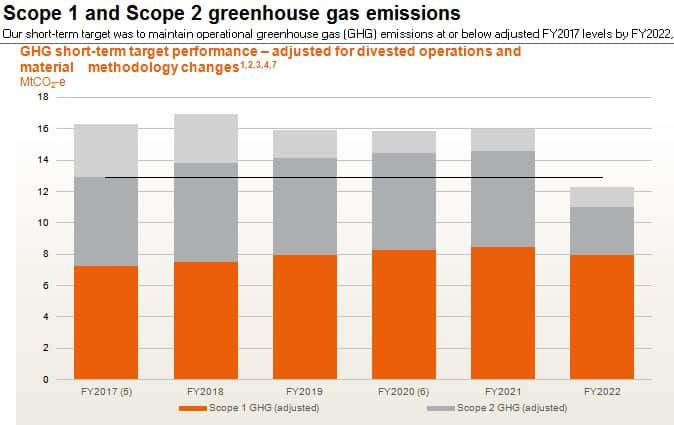
BHP Carbon Emissions for 5 Years (2017-2022)
Source: BHP Sustainability and ESG Navigators and Databook 2022
As shown in the chart above, BHP’s operational carbon emissions were 11 million tonnes of CO2 equivalent (CO2e). That’s a big decrease, 26%, from previous year level (2021 at almost 15 million tonnes).
That achievement was largely due to renewable electricity used by the mining company at its different sites. The head of BHP’s carbon management division, Graham Winkelman, asserted the role of renewable energy in its decarbonization efforts.
He said that to counter that growth in emissions, they plan to have “additional deployment of renewable energy before 2030, and further effort to deliver abatement across other emissions sources, including diesel, fugitive methane and natural gas.”
Another means to further cut emissions that BHP is currently exploring is ‘dynamic charging’, which it will try at its Western Australia and Chile mines. This will allow its haul trucks to be charged even when actively operating.
Haul trucks are the biggest consumer of diesel in Australia and the mining giant opted to switch to electrified fleet.
Switching to electric haul trucks will cause power demand to go up. The company will meet that rising demand by building 500 MW of renewable power and storage. It will also help reduce the miner’s energy use emissions.
In 2022, more than 11% of BHP’s energy use came from renewable power.
When it comes to emission sources, the mining company’s coal mines in Queensland are the single largest polluter in its Australian operations. It emits about 50% of its carbon footprint, with a third coming from methane leaks.
To fix this issue, BHP plans to capture 50% of that leaking methane and use it to produce electricity. The company then added that it’s seeking other solutions to meet its long-term net zero goal by 2050.
And one of them is using carbon offsets, or carbon credits.
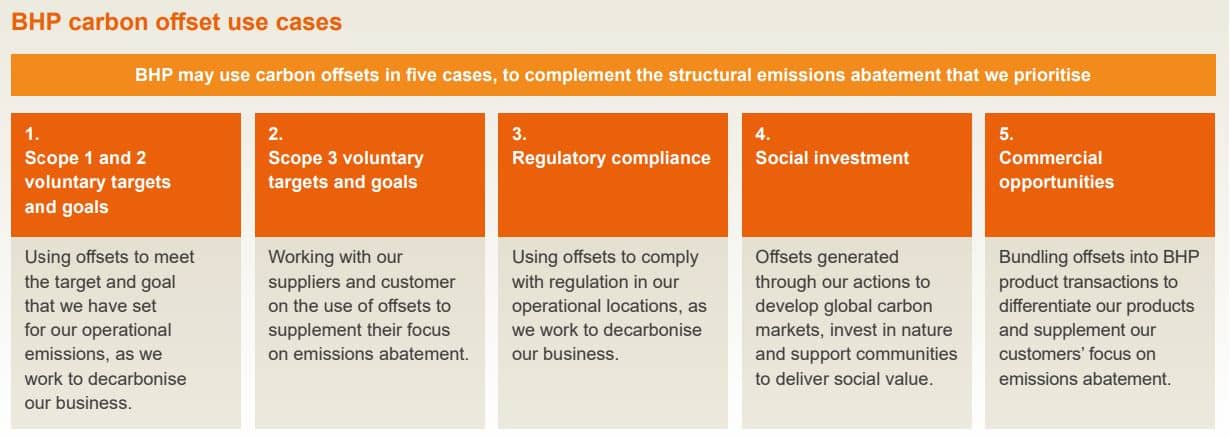
BHP’s Use Cases for High-integrity Carbon Credits
Winkelman pointed out the role of carbon credits in its net zero pathway. He said that:
“We maintain the option to use high-integrity carbon credits for GHG emissions that cannot reasonably be entirely avoided. And while unlikely to be necessary for our 2030 target, we can anticipate the need for some carbon credits to deliver on our net zero goal.”
He further added that they may need carbon credits as part of compliance requirements under Australia’s safeguard mechanism.
In 2021, BHP retired 300,000 carbon credits that offset the increase in its operational emissions for that year. The credits were from forest projects like the Cordillera Azul National Park REDD+ Project and the Kasigau Corridor REDD Project.
The mining company gets its carbon credits from various sources such as project origination and spot markets. BHP considers offsets both from projects that remove and avoid carbon emissions. While they prioritize carbon credits from nature-based solutions, they’re not closing doors for offsets from engineered or technological solutions.
BHP’s revelation of short-term spikes in its carbon emissions still comes despite having less ambitious net zero targets than other large Australian miners.
For instance, Rio Tinto Group, world’s second largest mining firm, has a bigger reduction target of 50% by 2030. Meanwhile, Fortescue Metals Group, fourth-largest iron ore producer in the world, aims to hit net zero emissions by 2030.
Reaching BHP’s 2050 net zero emissions goal will be “neither linear nor easy, but it’s achievable,” says Winkelman.
The U.S. Commodity Futures Trading Commission (CFTC) is actively seeking tipsters. Recently, the CFTC’s Whistleblower Office issued a Whistleblower Alert explaining that individuals can qualify for both financial rewards and certain protections if they identify potential Commodity Exchange Act (CEA) violations linked to fraud or manipulation in the carbon markets.
The CFTC’s Whistleblower Office is urgently inviting the public to stay vigilant for any signs of manipulation in the carbon markets. The Whistleblower Program initiative offers protection and financial compensation to those who uncover possible violations of the Commodity Exchange Act (CEA). These violations concern carbon markets, which are crucial in transitioning towards a low-carbon economy.
In carbon markets, individuals trade carbon credits or offsets. Buyers and sellers can trade these credits either directly with the holder or through a spot exchange.
Carbon credits feature as the primary commodity of futures contracts listed on CFTC-regulated contract markets. The CFTC oversees trading, enforces regulations, and guards against fraud in carbon credits spot markets.
CFTC’s 5 Carbon Misconducts:
Deceptive Practices in Carbon Markets Futures Contracts: These deceptive practices include “wash trading,” a method where identical financial instruments are traded to create artificial market activity. Other violations may involve price manipulation, false reporting, or fraudulent solicitation.
Ghost Credits Fraud: This type of fraud occurs in spot markets where immediate sales and purchases of carbon credits happen. Ghost credits or illusory credits do not represent actual carbon reductions. Market registries may list them as fake increased market activity or carbon reduction.
Double-Counting Fraud: This form of fraud happens when the same carbon reduction gets counted twice. A company could double-count a carbon reduction by selling its credit after counting it towards its own goals.
Misrepresentation in Carbon Credit Terms: This refers to fraudulent statements about a carbon credit’s specifications. These statements may contain false claims about a credit’s various attributes like quality, quantity, project type, calculation method, benefits, duration, or buffer size.
Manipulation of Tokenized Carbon Markets: Deceptive practices can occur in markets that tokenize carbon credits on a blockchain. can also witness deceptive practices. Each token symbolizes a certain amount of carbon reduction or offset.
The Whistleblower Program rewards those who voluntarily provide original information about potential violations of the CEA.
If your tip leads to a CFTC enforcement action with over $1 million in sanctions, you could earn a reward. The program also ensures confidentiality and protection against retaliation. Whistleblowers are eligible to receive between 10%- 30% of the monetary sanctions collected.
Since the program’s establishment in 2010, whistleblowers have enabled the CFTC Whistleblower Program to recover more than $1 billion from fraudulent activities.
The CFTC has awarded these whistleblowers over $330 million for their vital contributions.
The CFTC advises anyone suspecting wrongdoing to complete a Form TCR (Tip, Complaint, Referral) as thoroughly as they can.
The more specific, credible, and timely your details are, the more useful your tip becomes. Providing as much evidence of the misconduct as you can assist the CFTC in its enforcement action.
A new study led by the University of Michigan shows that Caribbean seagrasses provide several ecosystem services worth $255 billion a year, including $88 billion in carbon storage.
The U of M research team is the first to put a dollar value on the various services that Caribbean seagrasses provide, including fish nurseries, storm protection, and huge carbon storage abilities.
A marine ecologist and the senior author of the study, Jacob Allgeier, highlighted the potential of seagrass carbon capture and storage for the blue carbon market, saying:
“Because seagrass ecosystems are both highly important for carbon storage and sequestration, and are highly degraded globally, they represent an important burgeoning market for blue carbon.”
But seagrasses are also under significant threat of degradation due to global warming, pollution, shipping, and coastal development. Protecting them is crucial as they are our great allies in fighting the climate crisis. Blue carbon credits are a potential solution to protect seagrasses, the authors noted.
How Seagrasses Capture Carbon Dioxide
Talks about threatened ocean ecosystems mostly center on coastal mangroves or coral reefs while seagrass beds receive less traction. But the recent study reveals the equally important role of seagrasses across the Caribbean in capturing planet-warming carbon.
Seagrass beds take less than 2% of the total surface area of the oceans, providing a home to about 18% of marine species. These marine plants were previously land plants that colonized the seas a hundred million years ago. Most of them thrive in shallow coastal waters worldwide.
Like other plants, seagrasses use photosynthesis to pull CO2 from the air and store it in their tissues. But because sediments are flooding seagrasses, the decomposition process is getting slow. Hence, over 90% of the CO2 captured in seagrass beds is found in the sediment’s upper layer.
Seagrasses in the Caribbean store about 1.3 billion metric tons of CO2, as per the study estimates.
That amount of sequestered carbon is huge but the study noted that it represents only 1.09% of the carbon stored in the Amazon’s woody biomass. It is also equivalent to only 1.12% of the carbon captured by the world’s temperate forests.
What Did the Study Find?
The researchers used newly available satellite data collected by the PlanetScope. They estimated the amount of carbon stored in plants and sediments in the Caribbean seagrass ecosystems. They also use data from the most dominant seagrass species found in the region – Turtle Grass (Thalassia testudinum).
The Caribbean contributes very little to global emissions, but the region is among the world’s most vulnerable to climate change.
The study estimated that the Caribbean region is home to about 50% of the world’s seagrass meadows by surface area. It also stores around a third of the carbon captured by seagrasses around the world.
The Posidonia seagrass meadow, a key Mediterranean habitat, can store as much as 700 tonnes of carbon per hectare.
The authors used previous estimates for the value of ecosystem services quantified to calculate their conservative economic value.
Using those data, the researchers found that Caribbean seagrasses provide $255 billion in services each year. The meadows’ carbon capture and storage is worth over $88 billion.
Here’s the breakdown of their calculation per country:
Bahamas: has the biggest seagrass coverage at 61%, with total services worth $156 billion per year. Carbon sequestration value is worth $54 billion. The total value is more than 15x the nation’s 2020 GDP.
Cuba: comes second with 33% of the total Caribbean seagrass area, providing a total service value of $84.6 billion. CO2 storage capacity value in dollars is $29.3 billion a year. That’s equal to 27% of Cuba’s 2020 GDP.
These findings emphasize the importance of protecting and conserving these valuable but threatened marine ecosystems. The authors noted that increased seagrass bed degradation results in the release of carbon stored in sediments. With that, they wrote:
“Blue carbon finance thus represents a potential mechanism by which the global community can invest in conserving and protecting these vital ecosystems.”
Protecting Seagrass with Blue Carbon Credits
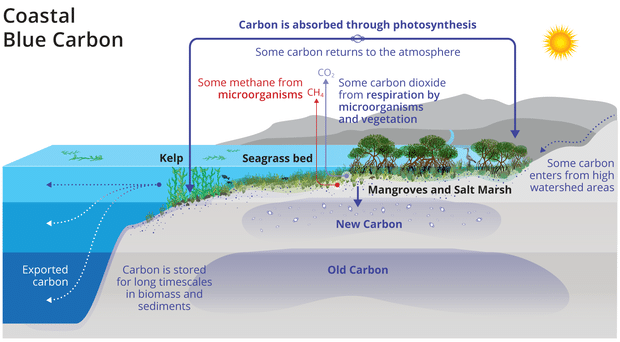
Blue carbon refers to carbon stored in marine ecosystems, including seagrass beds, mangroves, and salt marshes. The concept gains more attention as a potential source of carbon credits as marine ecosystems like seagrasses can capture and store huge amounts of carbon.
In fact, another research found that coastal wetlands and seagrass beds capture carbon up to 40x faster than tropical rainforests. This makes them a valuable natural resource in mitigating climate change.
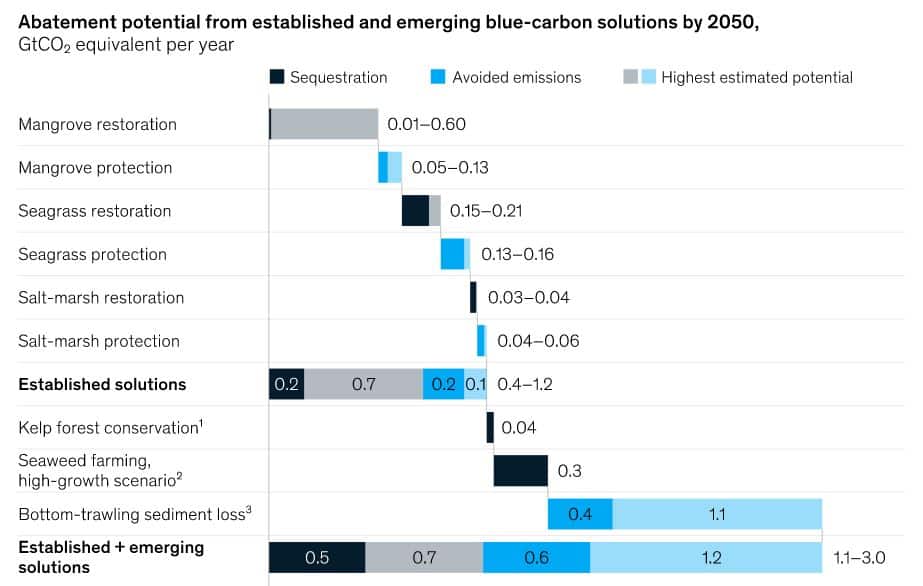
In McKinsey & Company analysis, established and emerging blue carbon solutions can reduce carbon emissions by up to 3 gigatons of CO2 (GtCO2) annually. Seagrass restoration and protection offer abatement potential of up to 0.37 GtCO2 – 370 million metric tons – a year as shown in the chart.
Source: McKinsey & Company
When a seagrass bed is protected or restored, it can capture more CO2. Once this carbon capture is quantified and verified, it generates blue carbon credits. One credit represents one metric ton of carbon captured or removed from the atmosphere.
These credits are tradable on carbon markets for those looking to offset their carbon emissions. The revenue from selling blue carbon credits can then help fund the conservation and restoration of seagrasses.
The researchers noted that the blue carbon credits can be a means for rich countries to compensate for their emissions. By buying the credits from island nations like the Bahamas, wealthy nations are helping conserve vulnerable coastal ecosystems.
To quantify the dollar value of carbon storage in Caribbean seagrasses, the authors referred to California’s cap-and-trade program cost at $18/metric ton of CO2.
A climate tech startup Pachama launched its updated version Evaluation Criteria 2.1, marking the official implementation of its Dynamic Control Area Baseline technology.
Pachama is using AI and satellite data to help improve the integrity of carbon markets. Over the past three years, the carbon credit company has evaluated 150+ projects certified by the world’s biggest carbon registries.
Pachama’s Updated Evaluation Criteria 2.1
Pachama’s updated version of its project evaluation criteria is the first ever AI-based tool for evaluating forest projects. It was first launched last year with the goal to improve the quality of forest carbon credits.
Though there are different tools for measuring dynamic baselines available right now, Pachama’s technology is the first in the industry that actually will be put in use. This is a significant milestone in various efforts to bring more transparency and integrity in the voluntary carbon market.
The launch of the 2.1 version is important in helping companies decide on their carbon credit investments. The criteria cover quality checks that each project must meet. Project developers must be able to address these four questions:
Is the climate benefit net additional?
Is the climate benefit based on conservative claims?
Is the climate benefit durable?
Are there impacts beyond carbon?
Additional:
A project’s net additional climate benefit refers to the emissions avoided through deforestation or removed by reforestation. Pachama calculates it using this equation:
As represented in the formula, projects must have baseline emissions that are conservative and not too much so as not to overstate their climate impact. The same goes for project emissions; they must not be underreported. Otherwise, the additional climate benefit would be more than what really happened.
Conservative:
This is where Pachama’s new technology particularly applies to ensure conservative baseline claims. The company is using these concepts to ensure projects have conservative baseline emissions accounting.
Accounting for baseline is critical because carbon credits are issued based on the difference between baseline and project emissions.
A baseline is a business-as-usual scenario used to determine expected emissions without the project.
Dynamic Control Area Baseline Results
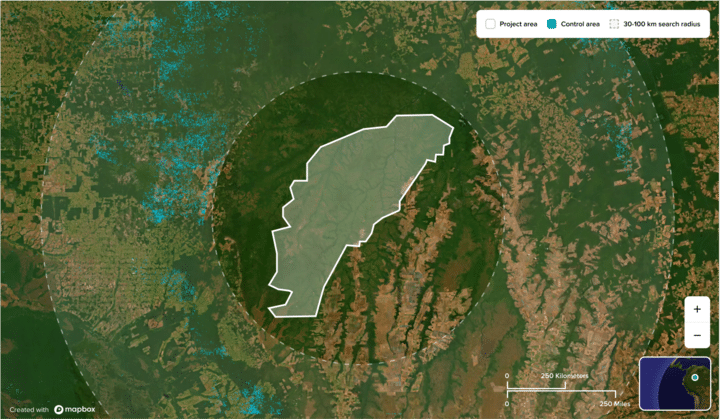
The image below shows the project area in white and the control area in blue. Pachama observes forest loss in the control area using remote sensing data. They then compare it with what they’ve observed with the project reported.
In other words, Pachama calculates project carbon emissions with this formula:
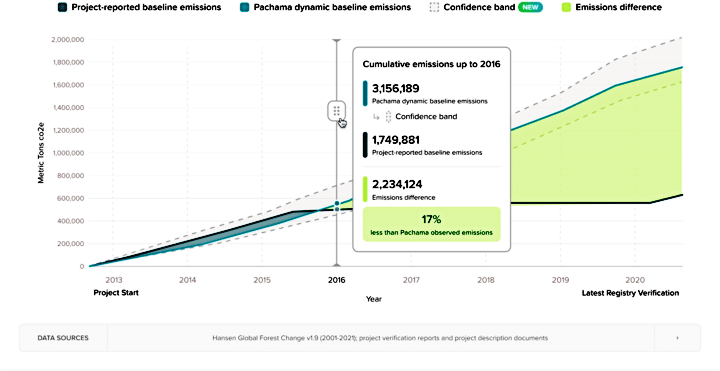
The chart below shows the company’s dynamic baseline emissions and the associated confidence band relative to project-reported baseline emissions.
Source: Pachama
Also, crucial to ensuring the quality of carbon credits is considering the issue of leakage. Applying this to forest projects, “carbon credits must represent real emissions reductions and not just a shift of deforestation.” Pachama uses leakage calculations from registry-verified project documents.
Durability:
Durability, also known as permanence, refers to a project’s lasting climate impact.
Carbon credits are considered durable if their climate benefits last for at least 100 years. Pachama continues to monitor this by checking the project even after the crediting period through its monitoring technology.
Beyond Carbon:
Forest carbon projects are sought-after climate solutions because of the other benefits they provide apart from reducing carbon emissions. These include job creation, wildlife species protection, and benefits to local communities. Others refer to them as co-benefits.
Pachama employs a series of checks to see to it that a project delivers those societal and environmental benefits.
Launching the Dynamic Control Area Baseline offers great significance over the status quo for four major reasons, says Pachama.
The determination of baseline doesn’t depend on human assumptions and calculations but uses the power of algorithms.
Carbon emissions aren’t projected using historical trends but are produced using satellite data.
It doesn’t assume that baseline perfectly represents the project; rather it factors in uncertainties in baseline scenario selection.
Interactive tools are available that communicate those variables in simple terms to companies for them to easily understand project performance.
The improved criteria will ensure that Pachama continues to promote high-impact projects while enabling companies access data to inform their carbon credit investment decisions.
The Integrity Council for the Voluntary Carbon Market (ICVCM) and the Voluntary Carbon Markets Integrity Initiative (VCMI) are synergistically joining forces. Their collaborative mission? To meticulously craft an innovative, unified market integrity framework.
This robust system is designed to build confidence among investors in the Voluntary Carbon Market (VCM), assuring them of the superior quality and high integrity of their carbon credits.
Their goal is to enable a high-integrity VCM that the private sector can invest in to complement their efforts in decarbonizing company operations and value chains.
Setting an Integrated Market Integrity Framework
The collaboration between VCMI and ICVCM is one of the many initiatives that set an integrated market integrity framework. Four crucial things are at stake: quality, credibility, transparency, and accountability across value chains.
Their joint commitment will define best practices and credibility in using and sourcing high-integrity carbon credits. VCMI’s Co-chair Rachel Kyte asserted the importance of this by saying:
“It is essential that companies have clarity and consistency in how they can credibly use high-quality carbon credits and how this fits into their broader decarbonization strategies.”
The two key stakeholders in the VCM target to release new standards and guidance in 2023 and beyond. These include the upcoming launch of VCMI’s Claims Code of Practice, which Kyte said is a big part of their collaboration. It is due to launch on June 28.
The CCPs and Claims Code of Practice is global standards that create real, verifiable climate impacts in the VCM.
As the organizations operate these standards, they’ll continue to emphasize that investing in the VCM should supplement established best practices when it comes to creating climate strategies, accounting, and setting targets.
These standards and approaches include, in particular, the Greenhouse Gas Protocol, Science Based Targets Initiative (SBTi), and CDP’s reporting platform.
By combining their resources and expertise, the VCMI and ICVCM set the stage for a credible VCM with integrity framework. This is critical to build trust and confidence among market players and stakeholders namely, companies, governments, investors, and local communities.
How Can the Framework Help Companies in their Net Zero?
Science shows that investing in carbon credits can help ramp up efforts to prevent global warming from going above 1.5°C. But as long as companies use them as a supplement to their science-based internal decarbonization and net zero strategies.
More importantly, carbon credits can also unlock critical funds for climate solutions that wouldn’t otherwise be feasible.
ICVCM Board Chair, Annette Nazareth, commented on the partnership:
“We are joining forces to create a high-integrity VCM that delivers real impact at speed and scale. By building an effective, trusted market, we can unlock investment and exponentially increase the positive impact it creates.”
Giant tech companies like Microsoft, Meta, and Apple have been pouring millions of dollars in the VCM as one means to abate their emissions. They fund projects that either reduce or remove carbon dioxide from the atmosphere.
The integrated market integrity framework will help companies do their part in bringing the world to net zero emissions by highlighting these important aspects:
Asserting that companies must give priority to their internal decarbonization efforts such as investing in clean energy technologies and processes.
Defining the complementary role of high-integrity credits in a corporate climate strategy through guidelines that will continuously be improved.
Enhancing commitment to quantified and verified carbon emissions reduction targets that align with the Paris Agreement goals.
Promoting adherence to enhanced reporting requirements, disclosure mechanisms, and guidelines on the use of high-quality carbon credits toward net zero.
The announcement came ahead of the “Summit for a New Global Financial Pact” in Paris on June 22 and 23.
The United Nations (UN) has achieved a significant milestone by unanimously approving the Biodiversity Beyond National Jurisdiction Treaty (BBNJ), commonly known as the High Seas Treaty.
About 2/3 of the planet’s oceans lie beyond national boundaries in an area called the high seas. But only about 1% of this unexplored expanse has been protected. And so, the BBNJ came about.
The groundbreaking international agreement marks the first-ever legally binding framework governing activities on the high seas. The ultimate goal is to protect the environment and prevent disputes over natural resources and shipping.
Here are 7 key takeaways from the High Seas Treaty announcement:
High Seas Treaty: The UN member states have adopted the BBNJ Treaty. It establishes rules to safeguard the environment and address critical issues in areas beyond national jurisdiction.
Protection of Biodiversity: The treaty promotes the establishment of Marine Protected Areas (MPAs) in the high seas to counteract biodiversity loss caused by climate change impacts, overfishing, pollution, and other harmful activities.
Regulation of High Seas Activities: The treaty sets standards and guidelines to assess the environmental impact of high seas activities. These particularly include deep-sea mining, ensuring the preservation of marine life and ecosystems.
Compliance and Enforcement: The treaty creates a Conference of Parties (COP) responsible for monitoring and enforcing compliance with its terms. Additionally, a scientific advisory board will provide guidance based on scientific research.
Technology Transfer and Resource Sharing: The treaty incorporates a mechanism to facilitate the transfer of marine technology to developing countries. This is to ensure equitable sharing of benefits and resources from the high seas. This includes groundbreaking advancements in medical and nutrition science.
Implications for Climate Change: The high seas play a crucial role in regulating the climate by absorbing carbon dioxide and excess heat from the atmosphere, as well as driving global weather patterns. Protecting the high seas contributes to mitigating climate change impacts.
Ratification Process: The treaty requires individual ratification by at least 60 UN member nations before it can enter into force. The aim is to achieve this by the next UN Ocean Conference in June 2025 in Nice, France.
The UN’s adoption of the High Seas Treaty represents a significant step towards protecting the environment and ensuring sustainable management of the high seas.
The groundbreaking agreement establishes guidelines for the preservation of biodiversity, regulation of high seas activities, and equitable sharing of resources.
As the world continues to experience out-of-this-world disasters, polluters are under more fire to help clean up the planet-warming carbon they dump into the air. As they do that, more people are asking what carbon credits are, how they work, and what role they’ve got in fighting the climate crisis.
Many believe that they are instrumental in promoting both corporate sustainability and global sustainable development.
Others think that carbon credits can help companies meet their climate goals by reducing emissions and advancing sustainable business practices.
Yet, some consider them as a greenwashing tool for some reason…
…But many more find them an essential market mechanism to help reverse the effects of climate change.
Regardless of the different views on carbon credits, getting them explained in this article will help clarify things and answer your most pertinent questions about them.
What are Carbon Credits?
The idea behind carbon credits is to put a price on carbon emissions. The goal? To incentivize emitters to pollute less, ideally.
In essence, carbon credits serve as permits to emit a certain amount of carbon. These permits are tradable in carbon markets. These markets turn CO2 emissions into a commodity by giving them a price.
International carbon trading markets have been around since the 1997 Kyoto Protocols. But the new regional markets have prompted a surge of investment.
The world has seen billions of metric tons (Mt) of CO2 pumped into the air every year. In 2022, around 41 billion Mt of greenhouse gasses were emitted, up from 36 billion Mt in 2016. These gasses are the ones to blame for the earth’s rising temperatures.
So, if we want to stop the planet from heating up more, we need some solutions up our sleeves. And yes, carbon credits are one of them. But how do they work in fighting climate change?
How Do Carbon Credits Work?
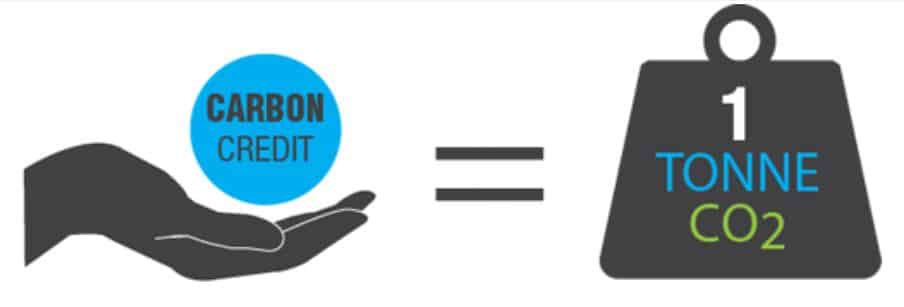
One carbon credit represents one tonne of CO2 or its equivalent (CO2e) gas that an organization can emit.
It’s important at this point to say that carbon credits are often referred to as carbon offsets. While they’re very similar, they’re not the same.
Carbon credits, also known as carbon allowances, work like permission slips for emissions. You can think of them as a unit of measurement for CO2e emissions that have a tradable element.
The number of credits issued to a company corresponds to its emissions limit or “cap” set by a regulatory body. So, they’re also called a “cap and trade” system.
If that company doesn’t go above its cap, then it will have excess carbon credits which they can sell in the compliance carbon market regulated by the government. But if the company goes beyond the limit, it can turn to the carbon market to buy the required carbon credits.
In short, the governing organization creates carbon credits and allocates them to individual companies within that jurisdiction. Over-emitters buy carbon credits from under-emitters.
On the other hand, carbon offsets (also called carbon offset credits) are from projects or initiatives that reduce or remove carbon emissions.
Carbon reduction projects generally fall into two types: nature-based and technology-based.
Nature-based solutions usually include reforestation and wetland restoration projects. They naturally sequester carbon in the environment.
Technology-based projects often involve investments in new technologies that increase efficiencies or reduce emissions like renewable energy projects.
Once an offset is generated, the organization that develops or completes the project can retain the offsets or trade them on a voluntary carbon market (VCM).
Other companies can then buy the offsets to compensate for their own carbon footprint.
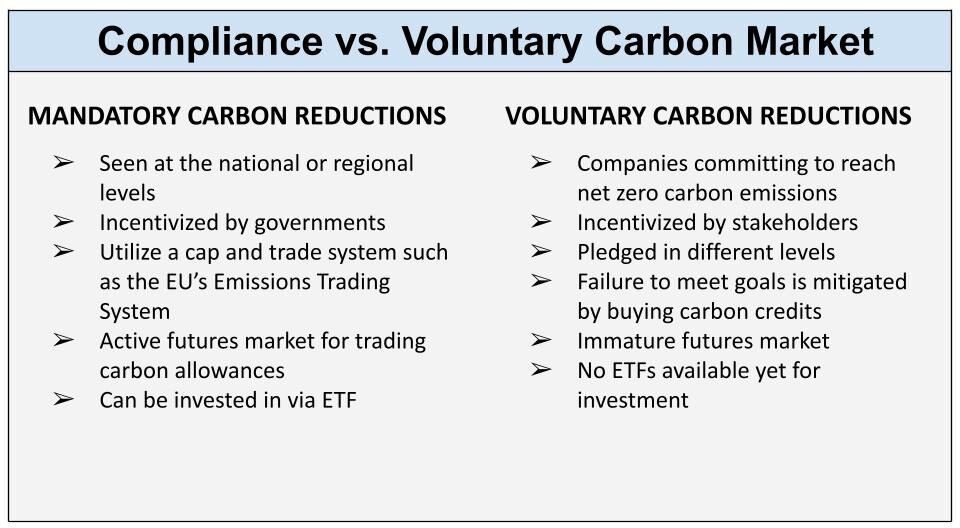
To fully distinguish the two terms, keep these keywords in mind – compliance for carbon credits and voluntary for carbon offsets.
In a compliance market, companies regulated by the government must abide by their limits or cap. Within the voluntary market, the idea is just the same. It’s just that companies do the offsetting voluntarily, either as part of their ESG goals or because of shareholders’ pressure
Who Are The Biggest Buyers Of Carbon Credits?
Carbon-intensive sectors such as energy face a harder quest to net zero emissions than others. That’s no surprise because companies in this sector simply can’t just instantly reduce their reliance on fossil fuels.
This is why the biggest buyers of carbon credits were from the energy sector, as well as from the finance, technology and consumer goods sectors. The Ecosystem Marketplace (EM) keeps track of these companies and how much credits they’re buying.
In another analysis, researchers found that at least 36% of large companies buy carbon credits voluntarily to offset their footprint. The analyzed companies include the world’s biggest and top S&P 500 businesses.
The findings revealed that Microsoft, Salesforce, Goldman Sachs, Disney, and Nike, among others are the top buyers.
The projects that those companies bought credits mainly generated in the global south. These projects often involved:
Forestry projects,
Renewable energy,
Household and community projects
In a broader analysis by EM, which included carbon project developers and investors, they found that the most popular projects producing carbon offsets are forest and renewable energy initiatives.
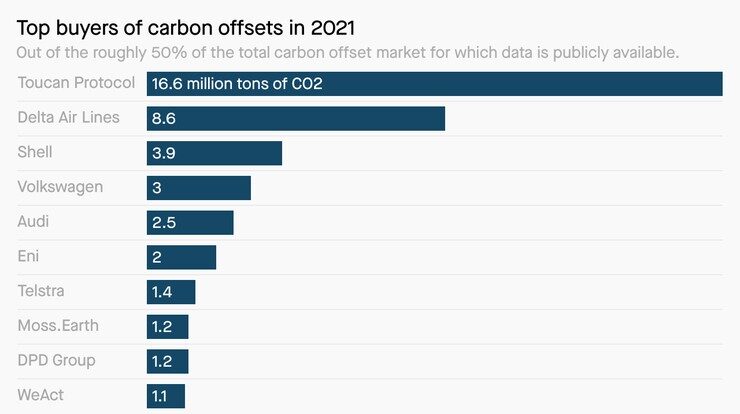
In separate Bloomberg analysis of data from Verra, the largest buyers of voluntary carbon credits are cryptos, airlines, and carmakers. The analysis covers only about 50% of the global carbon market in 2021 as data is voluntarily disclosed.
On the sellers’ side, in case you don’t know it yet, Tesla is the largest seller of carbon credits under the California cap-and-trade system. The company had earned billions of dollars from it.
Last year, Tesla’s total carbon credit sales reached a record $1.78 billion. All thanks to the carmaker’s hundreds of thousands of sold EVs.
Same with other commodities, there’s no single price for a carbon credit.
The cost varies. A lot. Even so in the VCM.
The cost of carbon offsets depends on various things, including project quality, issuance year, verifiability, additional benefits created and so on. For live VCM carbon pricing, please go here.
Let’s consider the project type. Common carbon offsetting projects are forestry and nature conservation, waste-to-energy, and renewable energy. Some of these projects can be worth below $1 per tonne of carbon offset, while others can cost over $40.
For a clearer explanation, take for example you opt to have a forest tree planting initiative.
If a tree can store about 5 tonnes of carbon and each tonne of carbon removed is valued at $15, you’ll generate $75/tree. Assuming the cost of carbon increases, then your revenue goes up, too.
Sounds pretty good in theory, right? But in real life, that could even be better, especially the figures.
Several farmers have been receiving over $100,000 in yearly income by letting their lands sequester over 7,000 tonnes of CO2. Boston-based Indigo Ag has been paying their partner farmers that amount and more, depending on how much carbon their farms remove.
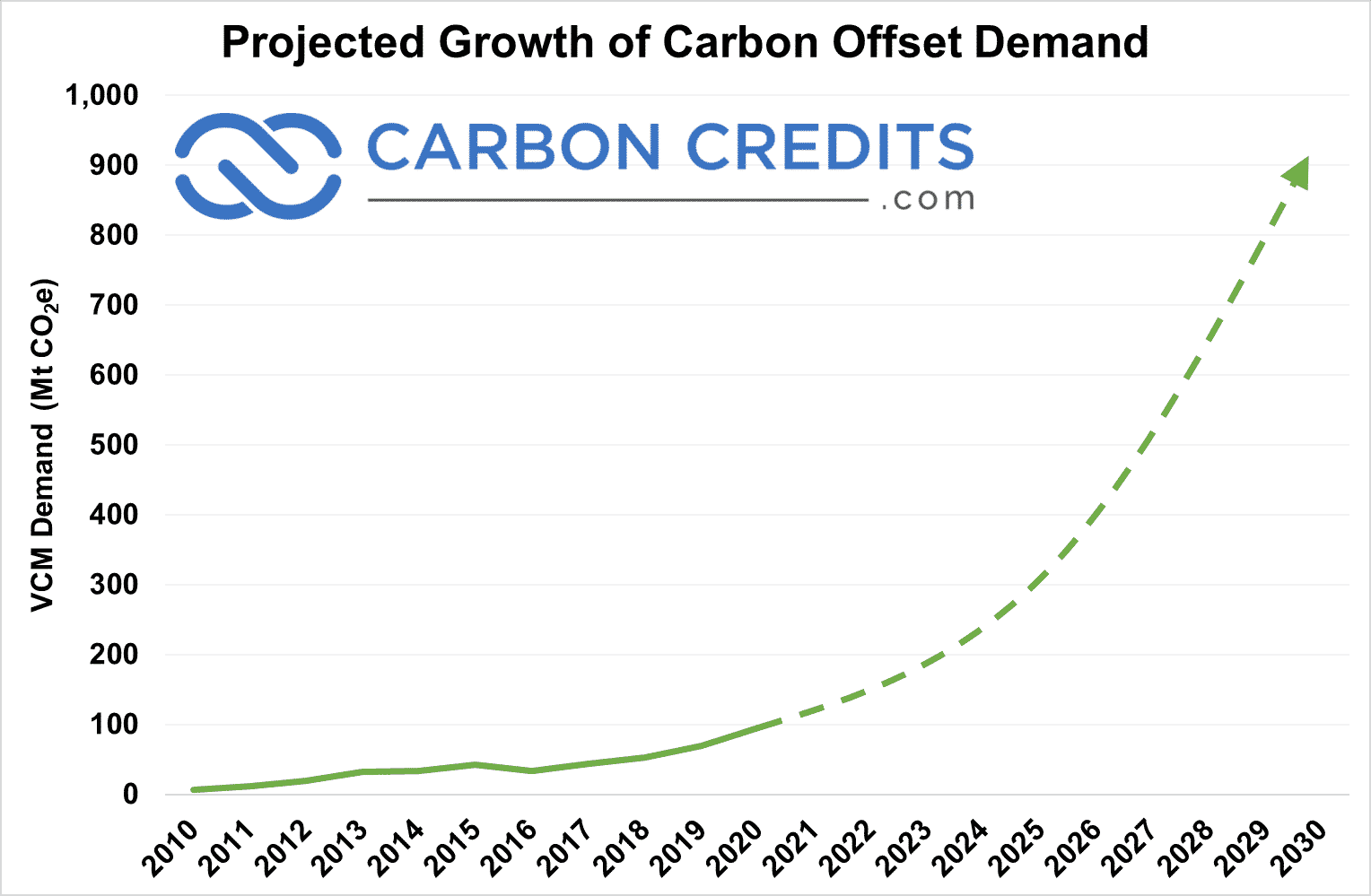
Looking at the entire market, the VCM was valued at $2 billion in 2022 alone. It may be quite huge for some market outsiders, but for insiders that’s rather not surprising.
That’s because more and more companies and organizations are expected to reveal their net zero pledges. And as mentioned earlier, over a third of the large businesses are using carbon credits as offsets.
For a better picture of how huge the market could get, take a look at the projection below.
That estimation is conventional and other market analysts predict even higher demand growth.
So how could you leverage this exponential carbon market growth? You might be asking how you can invest in carbon credits, earn profits, or simply help in the climate change fight.
We’ll explain the steps involved in the next sections. Let’s first help you out on how to buy carbon credits step-by-step.
How To Buy Carbon Credits
Buying carbon credits may not be as simple as selling them. But after you’ve known the criteria for a successful purchase, the following steps won’t be hard.
#1. Buy directly from project developers
This is the most direct way to get the credits you need – at the source. That’s from the project developers themselves. Here are the top five options that have the highest ranks.
You can either directly invest in the project as it’s being developed (lowest cost but longest time to wait until delivery) or you can contract for delivery (lower than market price but still have to wait for some time).
#2. Buy from a broker
If you want to skip all the work needed when contracting with the developer, look for a broker. Yes, carbon credits have brokers, too.
They make it easier for you and other buyers to find the credits you need. Plus, the best ones can give you an analysis of the project where those credits are from.
This is perhaps the most practical way to buy carbon credits, more so if you need a lot of them. The purchasing process doesn’t include long contracts but, of course, you guess it right – it comes with a price. So, you may have to pay more for the broker’s services.
#3. Purchase from a retailer
If you’re still wondering how to buy carbon credits if you only need a smaller volume, then going for a retailer might help. In fact, this option may also be the fastest way to get the credits.
Most often, retailers have an account on a carbon registry, allowing them to retire the credits on your behalf. But ensure that after paying the retailer, you get the rights to the credits.
#4. Purchase from an exchange
Finally, you can buy carbon offset credits from a carbon exchange. Doing so will also allow you to earn profits from trading them.
Sourcing the credits from an exchange can be quick and easy. But it may also be more difficult to access enough information about the credits’ quality.
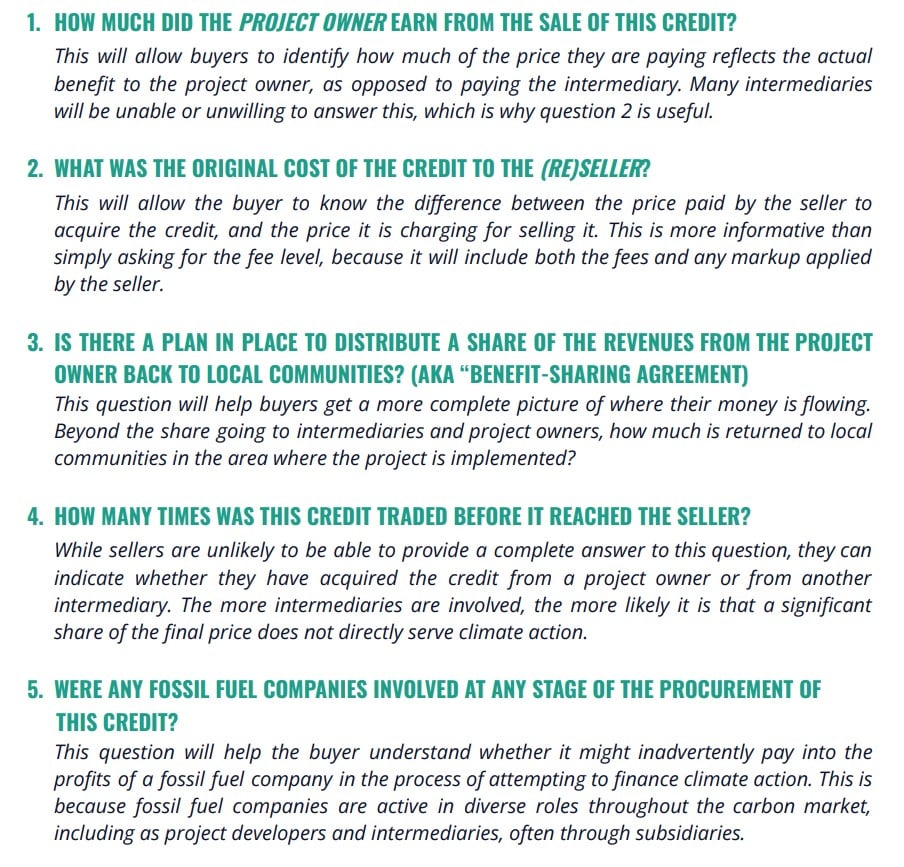
So, there you have it. You’ve got four ways on how to buy carbon credits. Here’s a much more comprehensive guide on how to do that. And here’s the checklist you should keep in mind as a buyer.
Now, if you’re more into selling the credits or planning to sell them and get paid, here are the ways to do that.
How To Sell and Get Paid for Carbon Credits
The fastest way to sell these credits is through an online carbon exchange. There are many within the U.S. and globally that allow sellers to get paid for their offsets.
Carbon exchanges are pretty much similar as to how various regular stock exchanges operate. Selling or trading through them follows this general rule: buy low, sell high.
One quick tip though – quality carbon credits sell higher. So, it’s best if the offset credits you sell follow the standards set by the top carbon registries.
Next, if you’re a land owner or farmer, you need to secure the documents showing that you own the land, along with all the details describing your land. You must also have the papers documenting the land management practices you perform. This is crucial for the buyers and as proof that your land captures the amount of carbon you declare.
But before you sign any contract with the buyer or look for one, do your research first. Knowledge will help you be confident that the amount you’ve sold or get paid for is enough and not too low than you deserve.
As mentioned earlier, you may also opt to enlist the help of a broker. But be prepared to share the payment with one.
But if you want to take home all the money, then by all means, just find the right buyer yourself.
How To Earn Carbon Credits?
Before you can sell the credits, you have to earn them first. How do you do that?
If your business activity or project reduces, avoids, or removes CO2 from the atmosphere.
For every metric ton of reduction or removal, you earn one carbon credit for it.
So if you have a huge project or a couple of them, you can earn even more credits to sell. But what are the major factors you need to consider to earn high-quality credits? Remember, quality credits sell higher.
Let’s give a specific example for a better understanding – a farmer or rancher.
Here are the things farmers should be aware of to earn more through carbon credits.
Right carbon program.
The right carbon credit program prompts farmers to apply sustainable practices designed to improve soil health, reduce carbon emissions, and enhance soil carbon sequestration. The approach should take into consideration that each farm is unique and so needs a customized guideline.
Right carbon farming plan.
Having a custom carbon farming practice plan means basing it on your baseline assessment and goals. The experts will guide you on how to implement carbon farming practices to generate the credits. Common examples are reduced tillage, improved residue management, cover corps, to name a few.
Right implementation.
This stage requires proper data-keeping and monitoring. Remember your goal is to generate credits by implementing the changes in your farming methods. Availability of data will help you guide what to improve in your practices.
Verification.
Verifying your data and results can be done by the carbon program you partner with or an independent body. Verification means determining if the amount of carbon removals or reductions your farm delivers is correct.
Only with all those things in place that you can be issued with carbon credits and earn them.
Carbon Credits Explained: Key Takeaway
To wrap it all up, can you make money from carbon credits? Yes, you can. Either by selling them or trading them as an asset.
Either way, you are not only earning cash but you are also contributing to winning over the climate change fight.
After all, carbon credits were designed to encourage us to reduce our planet-damaging footprint before it’s too late.
Lithium is the new oil, at least for electric vehicles (EVs), and the global race is on to secure this valuable resource.
The rising demand for lithium-ion batteries in the United States reached a record high in the first quarter this year, showing powerful interests on EVs and the clean energy transition.
This data highlights the urgent need to ramp up domestic production capabilities to meet the soaring demand.
Unfortunately, the U.S. doesn’t produce enough of the silvery metal it will need as it only has one source of domestic lithium production. For Tesla and other EV manufacturers, this can be a problem down the road.
More importantly, the country won’t be able to reach its Net Zero goal without increasing its own lithium capabilities.
This is where American Lithium Corp. (AMLI) comes to the rescue, playing a major role in filling the supply gap. The company manages two of the biggest lithium deposits in the Americas.
Tesla Needs $374B to Invest in Lithium
In 2021, Tesla said that it would use lithium-based cathodes for its batteries, which the company had already been doing at its Shanghai factory at that time.
Two months ago, the carmaker revealed that it will use the same for its short-range heavy electric trucks (semi-light). The leading EV company is also planning to use lithium-ion batteries for its mid-sized vehicles.
The carmaker’s goal is to produce 20 million EVs each year by 2030. It delivered just above one million units in 2022 but used around 42,000 tons of lithium in 2021. That’s more than 5x the combined lithium consumed by Ford and GM, according to BNEF data calculations.
To meet its ambitious goal, Tesla would need a huge volume of lithium to make the required batteries. Earlier this year, it broke ground in Texas for its lithium refinery plant worth $1 billion.
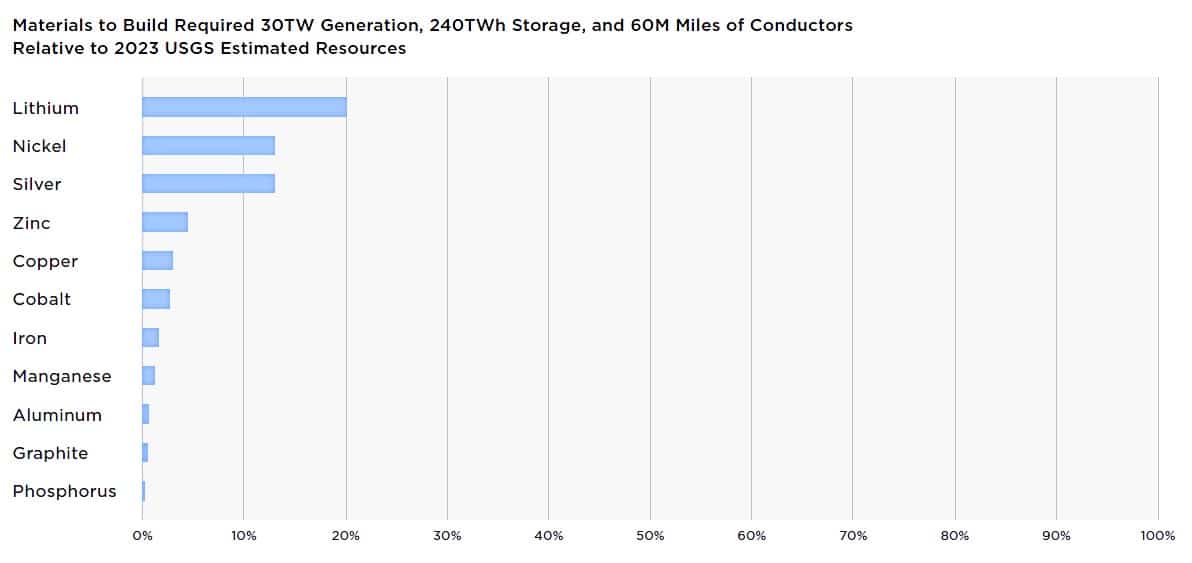
In its recent Master Plan report, Tesla analyzed that lithium is responsible for about 20% of the materials needed to deliver the energy storage in batteries for EVs relative to 2023 USGS data.
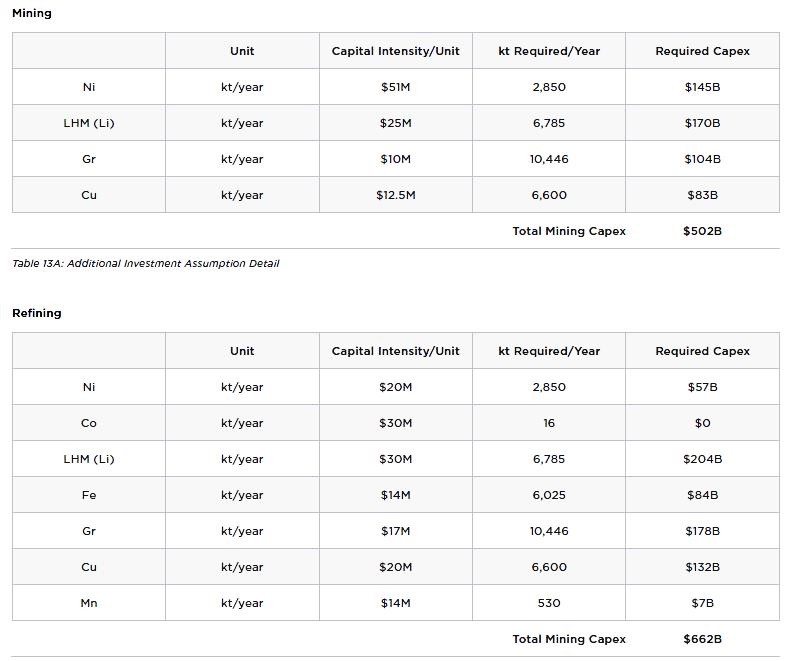
With that data, the giant EV maker estimated that it needed a total of $374 billion to invest in mining ($170B) and refining ($204B) lithium (Li).
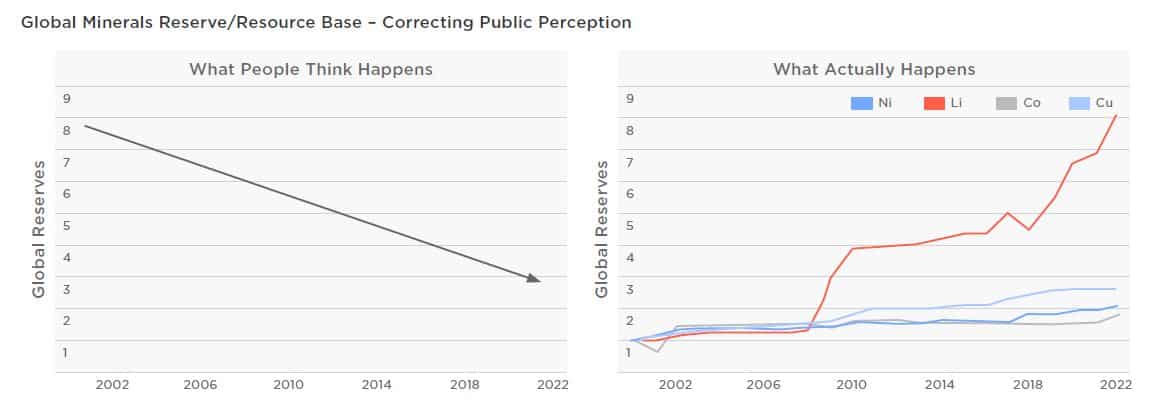
What’s more interesting is Tesla’s analysis of the actual global mineral reserves, including lithium (in red). It’s far way different from what people think. Lithium reserves started to skyrocket in 2008, meaning more lithium deposits were being discovered. And it continues to soar higher…
Global lithium production was at 100,000 tons or 90+ million kg in 2022. The International Energy Agency said that the world needs up to 6x more of that by 2030.
That’s a big opportunity for companies like American Lithium to serve with their large lithium reserves in highly attractive jurisdictions.
The Silicon Valley of Lithium
Nevada is home to the only lithium mine in the US – the Silver Peak mine. The operation is run by Albemarle Corp base in California. But more projects are in the pipeline, alongside American Lithium’s TLC.
Nevada is also dubbed as the “Silver State” whose silvery metal reserves are vital for both the state’s and the country’s economy. Strong government support had made undergoing projects possible, attracting massive investments.
For instance, Ford Motor inked a deal last year to source 7,000 metric tons of lithium from an Australian-owned Rhyolite project. General Motors also invested $650 million in the state’s largest claystone deposit near the TLC project of American Lithium.
Similar deals also abound, with major battery manufacturers signing supply deals with proposed lithium projects in Nevada.
And at Reno’s event last March, the Department of Energy announced a conditional $2 billion loan guarantee for a Nevada-based battery recycling firm. Energy Secretary Jennifer Granholm pointed out that the state is flush with more projects that are all part of a rising lithium battery supply chain.
The entire process, from mining to recycling of the critical mineral – otherwise known as lithium “loop”, is possible within state lines, which is unheard of domestically.
Industry estimates say the lithium-ion battery market will reach over $100 billion by 2030. And Nevada is the only state that allows for each phase of the lithium lifecycle.
Disclosure: Owners, members, directors, and employees of carboncredits.com have/may have stock or option positions in any of the companies mentioned: .
Carboncredits.com receives compensation for this publication and has a business relationship with any company whose stock(s) is/are mentioned in this article.
Additional disclosure: This communication serves the sole purpose of adding value to the research process and is for information only. Please do your own due diligence. Every investment in securities mentioned in publications of carboncredits.com involves risks that could lead to a total loss of the invested capital.
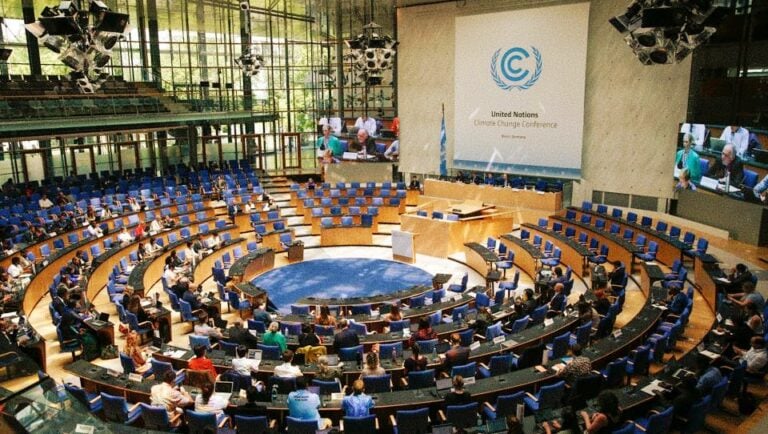
Climate talks in Bonn, Germany kicked off this month where diplomats around the globe meet to agree on a common agenda for the next big UN climate summit, COP28, taking place in Dubai in November.
However, negotiators parted ways with some decarbonization issues left hanging. These particularly include climate finance and how quick emissions cuts must be done formally known as the Global Stocktake.
Global Stocktake provides a picture of where the world is in addressing climate change, where it needs to go, and how to get there.
The Bonn delegates have the huge task to lay the groundwork for the Global Stocktake before its finalization at COP28. But early in the two-long-week talks, tensions were high as negotiators couldn’t agree on the agenda.
This prompted the climate conference’s co-chair Nabeel Munir to call the diplomats “a class of primary school”.
Here are the key issues that caused agenda woes and disputes among delegates.
Where Are We Right Now in Cutting Emissions?
The Global Stocktake is a key element of the Paris Agreement that will inform the next round of climate pledges by countries. It’s a critical turning point when it comes to national efforts in reducing carbon emissions to tackle climate change.
In other words, it’s a defining moment to take a deeper look at the state of the Earth and chart a better course ahead. It will help nations bolster their ambition as necessary to avoid more global warming.
The first talks on Global Stocktake also happened in Bonn in June last year. The second one took place at COP27 in Egypt, while this is the third one it’s discussed for COP28.
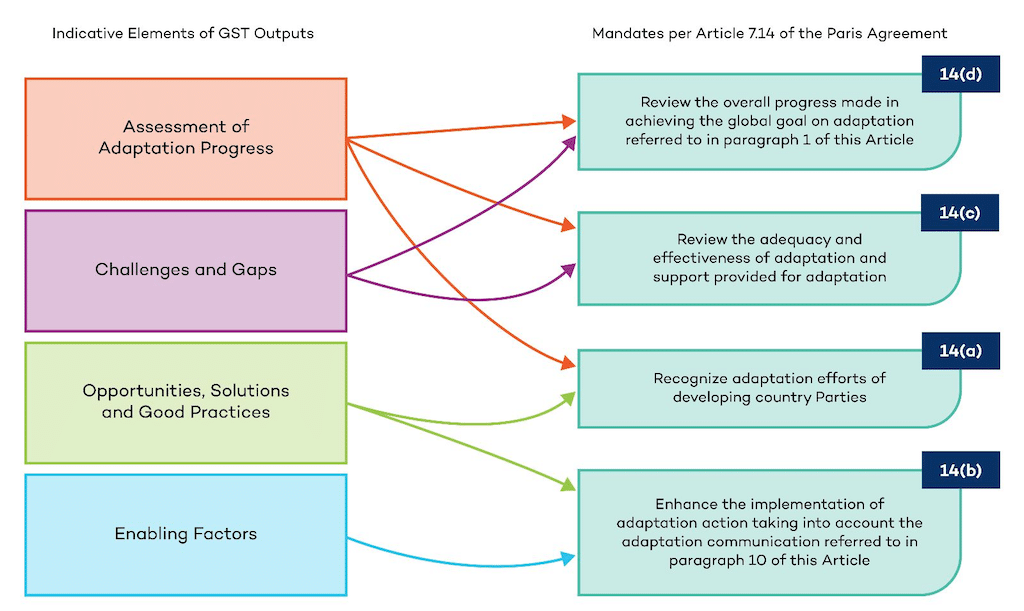
To have the final output of the Global Stocktake (GST), here’s how it will go for the participating parties:
Mapping of the indicative elements of Global Stocktake (GST) outputs with Paris Agreement Article 7.14 mandates (Source: NAP Global Network)
There’s a common understanding that countries aren’t on track to achieve their climate goals. These targets even fall short to meet the 1.5°C warming threshold. And so, the Global Stocktake was designed to bring countries back on the right course in addressing the climate crisis.
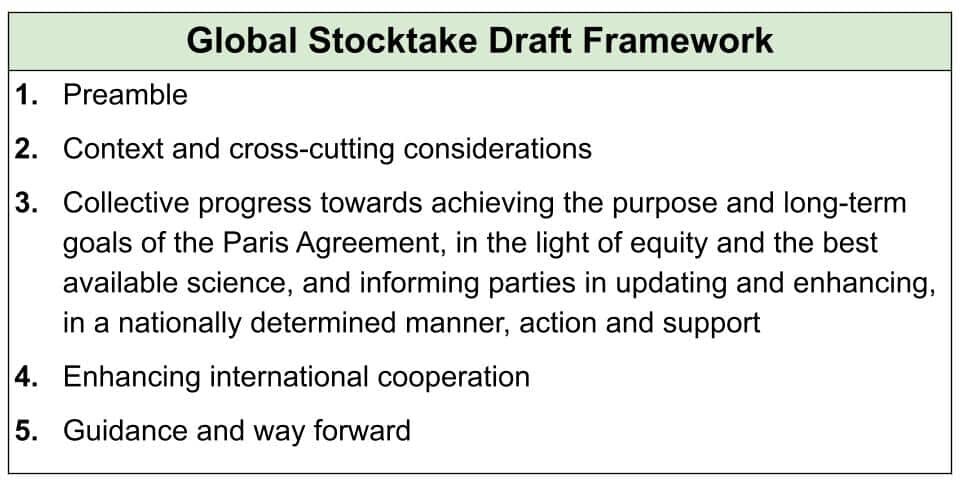
But there were significant disagreements on some points discussed within Global Stocktake (third section) among delegates. And one of them is on climate finance.
Climate Finance: The Most Disputed Agenda
Since the Paris Accord in 2015, the Dubai COP28 will see the UN publish the Global Stocktake for the first time. But disputes arise on how to incorporate finance and support.
In the words of a delegate from a global nonprofit organization, “Progress was underwhelming on nearly every front, with one main culprit: money.”
While climate finance isn’t directly part of the agenda, it casts a shadow over the talks.
During the conference, low-income nations expressed frustrations on the funds promised by rich countries that didn’t come. The $100 billion 2020 pledge by wealthy developed nations to finance developing countries’ climate actions remains unmet.
Meanwhile, there’s a new post-2025 climate finance target to help developing nations cut their carbon emissions and improve climate resilience. They call it the “new collective quantified goal” (NCQG) that’s the agenda for COP29 in 2024.
Yet, discussions for this new climate finance goal in Bonn were so technical.
The general sense is that rich nations, particularly the U.S. and the EU, are trying to avoid specific talks on climate finance.
For instance, the US wants to make developing nations also rely on private financing and suggest including wealthy developing nations in the list of climate finance donors. These include China and the Gulf states, in particular.
For Tom Evans of E3G, developed countries are using that as a shield to block talks on climate finance at Bonn. He remarked that they’re bothered that “the more we talk about financial flows, we’re literally talking about ending fossil fuel investment.”
Commenting on this issue, Harjeet Singh from Climate Action Network tweeted that wealthy nations showed indifference toward developing countries. She further asserted that:
“Let’s be clear: without honouring their financial pledges—directly tied to their historical role in driving the climate crisis—these affluent nations lack the moral authority to exert pressure on poorer countries.”
That climate money is not only due to developing nations; it’s also critical to ensure a transition to a renewable energy system for all.
The COP for Global Stocktake
Looking forward to COP28, many believe it would be a big fight between the rich and the poor countries over climate finance.
Others dub this year’s climate summit as “Global Stocktake COP”.
After Bonn climate talks, there will be a summary report on the 3rd meeting of the Global Stocktake’s technical dialogue by August. Then a synthesis report ensues by September that brings together all the assessments of the entire 3rd Global Stocktake dialogue. All these in preparation for COP28 final talk.
In his closing speech, the UN Climate Change secretary Simon Stiell noted that pledges and implementation are far from enough. Thus, “the response to the Global Stocktake will determine the success of COP28 and, far more importantly, success in stabilizing our climate”, he adds.
A study by scientists at Lawrence Berkeley National Laboratory (Berkeley Lab) and the University of Zurich found that the decomposition of organic matters responsible for carbon sequestration in deep soil is significantly accelerated by global warming.
The alarming results have serious impacts on carbon projects that rely on forests and soil as nature-based solutions to mitigate climate change.
What is Soil Carbon Sequestration?
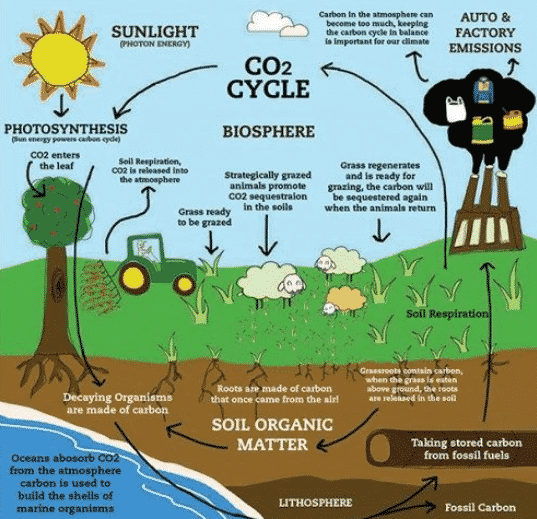
Soils are the largest natural sink for carbon. Soil carbon is a key component of the planet’s carbon cycle that maintains soil health and productivity. It comes in many forms such as decomposing organic matters.
Soil carbon sequestration is a process by which carbon dioxide is removed from the atmosphere and stored in the soil. It involves the conversion of CO2 into organic matter that stays in the soil for decades or even centuries, which is crucial to mitigate climate change.
During photosynthesis, plants store carbon in their cell walls and the soil, notably contributing to carbon sequestration. About 25% of the global carbon emissions are captured by forests, grasslands, and pasture land.
This natural carbon sequestration has been going around for decades. So the amount of carbon in the soil may now have doubled. 50% of this soil carbon content resides at the deeper layer in subsoils – over 8 inches or 20 cm deep.
But because of human activities such as deforestation and agriculture, global temperatures are heating up. CO2 emissions from these activities are increasing and account for about a fifth of global GHG emissions.
In effect, even the deeper layers of soil are now warming up, too. The researchers confirmed this. Their finding shows that climate change will impact all areas of soil carbon and nutrient cycling.
Margaret Torn, the study’s senior author and a senior scientist in Berkeley Lab pointed out that:
“It also shows that in terms of carbon sequestration, there’s no silver bullet. If we want soil to sustain carbon sequestration in a warming world, we will need better soil management practices, which can mean minimal disturbance of soils during forest management and agriculture.”
The Alarming Finding: Major Loss of Carbon Sinks
In a previous study in 2021, Torn and her team discovered that warmer temperatures result in a huge drop in carbon stocks stored in deep soils. Their results show a 33% loss over 5 years.
In this present study, researchers provided more evidence that higher temperatures cause a major drop in the soil organic carbon compounds produced by photosynthesis in plants.
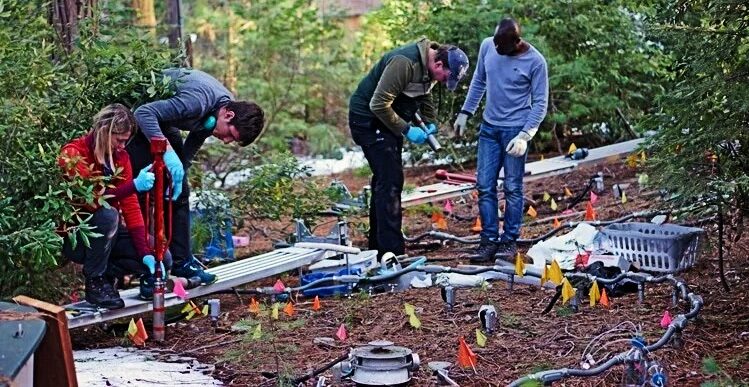
The team at the University of California’s Blodgett Forest Research Station did an experiment in Sierra Nevada mountains. They used vertical heating rods to warm one-meter-deep plots of soil by 4°C (7°F). This is the projected warming level by year 2100 under a high GHG emissions scenario.
The scientists found that only 4.5 years of warming at this temperature resulted in major changes in carbon stocks at over 30 cm depth (12 inches) below the ground.
The researchers also did a spectroscopic analysis at the University of Zurich to know which organic compounds are affected. Here are their shocking findings:
17% loss in lignin – a compound that gives plants their rigid structure
About 30% loss in cutin and suberin – waxy compounds in leaves, stems, and roots of the plants
Lastly, the team surprisingly found that there’s also a significant change in the amount of “pyrogenic carbon” in soil samples. This is one type of soil carbon from charred vegetation and other organic matters left by wildfires.
Pyrogenic carbon is the most stable form of sequestered carbon in soils. It can remain in the soil for up to centuries. And the researchers found much less of it in the artificially heated deep soils.
More remarkably, their results suggested that pyrogenic carbon can decompose as fast as other materials because of warming soil. This means that “when you put material deep into soil where it’s in contact with minerals and microbes, those natural systems will decompose the material over time,” Torn highlighted.
What All These Mean for Soil Carbon and Nature-Based Climate Solutions?
While further research is necessary to solidify the findings of the study, they do have significant implications in using soil carbon sequestration to tackle climate change.
Large companies and governments are investing heavily in this kind of natural carbon sequestration projects.
Given the findings, initiatives involving forests and soil carbon capture may have to reconsider how they approach these mitigation efforts. More sustainable farming and soil management practices like cover cropping would be critical.
Even the UN group tasked to finalize the international carbon trading systems may find the results relevant. They tend to consider nature-based solutions more reliable than technology in capturing CO2.
The researchers plan to resample the studied soil to know how nine years of heating affect the soil. They’ll be having a grassland warming experiment in Northern California and the whole-soil or deep-soil warming experiments for more knowledge.
To provide the best experiences, we use technologies like cookies to store and/or access device information. Consenting to these technologies will allow us to process data such as browsing behavior or unique IDs on this site. Not consenting or withdrawing consent, may adversely affect certain features and functions.
Functional
Always active
The technical storage or access is strictly necessary for the legitimate purpose of enabling the use of a specific service explicitly requested by the subscriber or user, or for the sole purpose of carrying out the transmission of a communication over an electronic communications network.
Preferences
The technical storage or access is necessary for the legitimate purpose of storing preferences that are not requested by the subscriber or user.
Statistics
The technical storage or access that is used exclusively for statistical purposes.The technical storage or access that is used exclusively for anonymous statistical purposes. Without a subpoena, voluntary compliance on the part of your Internet Service Provider, or additional records from a third party, information stored or retrieved for this purpose alone cannot usually be used to identify you.
Marketing
The technical storage or access is required to create user profiles to send advertising, or to track the user on a website or across several websites for similar marketing purposes.