LanzaTech (LNZA) Stock Soars 18%: Can Carbon Recycling Power Its Next Breakout?

LanzaTech Global (NASDAQ: LNZA) saw its shares jump nearly 18% in a single day, making it one of the top market gainers. The rally comes after weeks of steep declines, with the stock falling from $58 on July 25 to just $23. This sudden surge grabbed investors’ attention. It showed a renewed interest in the company’s role in clean energy and carbon recycling.

LanzaTech stock
Source: Yahoo Finance

The movement shows how the market feels about climate technology. It also highlights companies that offer scalable solutions to cut emissions. Investors seem to believe that LanzaTech’s technology can help with the clean energy shift. However, financial pressures still pose a challenge.

Microbes at Work: Turning Pollution Into Products

LanzaTech specializes in carbon capture and reuse technology. The company’s microbes convert harmful emissions, such as carbon monoxide and carbon dioxide, into useful products. The useful products include fuels, plastics, and chemicals that typically need fossil inputs. This unique process also helps stop air pollution.

The process is a form of carbon recycling, where pollution is captured and transformed into something valuable. LanzaTech has already partnered with steel plants, refineries, and airlines to show how its system can work at scale.

For example, its jet fuel made from captured carbon has already flown in commercial flights. This shows that industrial waste gases can fit into a circular economy.

This focus on turning emissions into resources has made LanzaTech a key player in the growing circular carbon economy, where waste is reused instead of released.
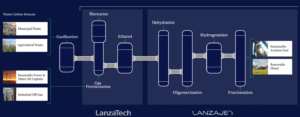
Lanzatech carbon recycling technology
Source: LanzaTech

ESG Profile and Net-Zero Role: Why Carbon Recycling Matters

LanzaTech’s business model is directly tied to climate and ESG (environmental, social, governance) goals. By helping industries lower emissions, it supports broader efforts to reach net-zero. According to company disclosures, its technology has already helped reduce millions of tons of carbon emissions from entering the atmosphere.

Its model also aligns with global decarbonization policies. Governments and investors increasingly support technologies that can cut emissions in hard-to-abate industries such as steel and cement. LanzaTech helps these sectors recycle their emissions. This approach provides a practical path to net-zero instead of complete elimination.

The company’s sustainability update showed that its projects have prevented over 500,000 metric tons of CO₂ emissions so far. It also mentioned that scaling its technology could recycle billions of tons globally. This would happen if it’s used at large industrial sites around the world.

The Cost of Clean: Financial Hurdles and Opportunities

Despite its technological progress, LanzaTech faces financial headwinds. The stock’s decline from late July shows how investor confidence has been tested. Revenue growth has been uneven, and profitability remains a long-term target rather than a near-term reality.

Its Q2 2025 earnings revealed a net loss of $25.5 million on $10.2 million in revenue, reflecting substantial investments in research and infrastructure.

Analysts point out that climate technology firms often face this challenge:

  • Scaling complex infrastructure projects requires heavy upfront investment before profits can be realized.

Partnerships with industrial players and government-backed funding are therefore critical for LanzaTech’s path forward.

The company has sought to strengthen its balance sheet through collaborations, licensing agreements, and government grants. Still, market volatility underscores the risks for early investors in climate technology stocks.

Semiconductors & Steel: Tackling Hard-to-Abate Emissions

Industries like chipmaking and heavy manufacturing show how complex emissions reduction can be. The semiconductor industry is responsible for about 0.5% of global greenhouse gas emissions, says the International Energy Agency. These processes require energy-intensive fabrication, chemicals, and logistics, which are hard to decarbonize.

LanzaTech’s technology sits at this intersection. It offers recycling options for industrial emissions. This tool helps boost renewable energy growth.

Instead of just focusing on cutting new emissions, it also ensures existing pollution is put back into the production cycle. This dual approach strengthens its position in global decarbonization strategies.

Carbon-to-Value: The Market That Could Hit Billions

The carbon recycling industry is growing quickly as countries and companies search for new ways to cut emissions. Experts say the global market for carbon capture, use, and storage (CCUS) could rise from about $3 billion in 2023 to over $15 billion by 2030. A large part of this growth will come from recycling carbon into fuels, chemicals, and consumer products.
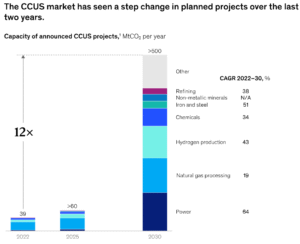
CCUS by 2030 McKinsey.jpg
Source: McKinsey & Company

Several trends are driving the market. Stricter climate rules in the U.S., Europe, and Asia are forcing industries to lower pollution.

At the same time, new technologies like LanzaTech’s gas fermentation are making it easier to turn waste carbon into useful goods. Many big companies also want to buy recycled carbon products to reach their net-zero targets.

Airlines and shipping companies are trying out low-carbon fuels. Likewise, consumer brands are exploring packaging made from recycled carbon.

Reports suggest the “carbon-to-value” market—where waste carbon becomes new products—could be worth tens of billions of dollars by the 2030s. But there are still challenges:

  • Building plants is expensive,
  • Policies are not always clear, and
  • Production needs to scale up.

If these hurdles are solved, carbon recycling could play a big role in creating a circular carbon economy. This would give companies like LanzaTech a strong position in a growing industry.

Balancing Promise and Pressure: What’s Next for LanzaTech?

LanzaTech’s sharp daily gain highlights how investor interest in climate technology can shift quickly. While the stock remains far below its July peak, its clean technology narrative continues to drive attention.

Going forward, much will depend on LanzaTech’s ability to secure large-scale projects and prove consistent revenue growth. Its partnerships with airlines, consumer goods companies, and industrial sites look good. But the way to profit is still unclear.

Notably, rising pressure on industries to cut emissions ensures that solutions like LanzaTech’s will remain relevant. Governments are setting stricter climate policies, and companies are adopting net-zero pledges. LanzaTech fits into this landscape as both an enabler of emission reductions and a driver of the circular carbon economy.

Its sustainability profile aligns with ESG and net-zero goals, giving it strategic importance as industries search for scalable solutions. However, the stock’s volatility shows the financial hurdles that climate technology firms still face. LanzaTech’s future will depend on balancing technological breakthroughs with consistent financial performance.


Xiaomi Targets Europe’s EV Market by 2027, Turning Up the Heat on Tesla

As per reports, Chinese tech giant Xiaomi is gearing up to launch its first electric vehicles (EVs) in Europe by 2027. The announcement came during the company’s second-quarter 2025 earnings call, where President Lu Weibing revealed the milestone. The move marks Xiaomi’s first international expansion for its automotive division and reflects the brand’s rising ambitions fueled by explosive EV sales in China.

Xiaomi’s Strong Q2 2025 Fuels European Ambitions

Xiaomi’s car unit has quickly turned into a powerhouse. In the second quarter of 2025, the company delivered 81,302 EVs, raking in 20.6 billion yuan ($2.87 billion) in revenue. That’s a staggering 232% year-over-year jump, proving the brand’s rapid rise in the world’s largest electric vehicle market.

The company’s total revenue climbed 30.5% year-over-year to 116 billion yuan ($16.1 billion), beating analyst expectations. Much of this success was driven by the overwhelming demand for the Xiaomi YU7 SUV, launched in June 2025.

Notably, Xiaomi stock has strong trading volumes and a current price of around 52.55 HKD per share.

XIAOMI EV
Source: Xiaomi

Boosts Green Power and Cuts Emissions

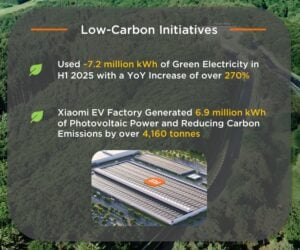
In the first half of 2025, Xiaomi used around 7.2 million kWh of renewable electricity, more than 270% higher than the year before.

  • Its EV factory also produced 6.9 million kWh of solar power, cutting over 4,160 tonnes of carbon emissions.

In short, Xiaomi is running its factories on much more clean energy, especially solar, and reducing thousands of tonnes of carbon pollution.

Xiaomi EV
Source: Xiaomi

Analysts Say Xiaomi Could Be Tesla’s Biggest Global Threat

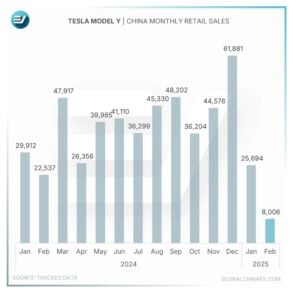
Tesla’s dominance in China, its largest international market, has been fading. Data shows shipments plunged 49% year-over-year in February 2025, dropping to just 30,688 units—its lowest monthly sales since July 2022.

By April, Tesla’s China-made EV sales had declined for the seventh consecutive month, down 6% year-over-year.

tesla china
Source: Global China EV.com

YU7 Sparks Frenzy with Record Orders

The YU7 SUV stormed into the Chinese market with unprecedented demand. Within the first 18 hours, Xiaomi received 240,000 locked-in orders, a record-breaking performance that stunned industry watchers.

The Standard trim of the YU7 boasts an estimated range of up to 519 miles, outshining Tesla’s comparable offering. With its 800V charging platform, the vehicle can add 620 km (385 miles) of range in just 15 minutes of charging. By contrast, Tesla’s Model Y takes about 27 minutes to charge from 10% to 80%.

Furthermore, the YU7 SUV starts at 253,500 yuan ($35,300), making it a direct competitor to Tesla’s Model Y but priced nearly 10,000 yuan cheaper.

Thus, this combination of affordability, superior specs, and advanced charging infrastructure has made the YU7 one of the hottest EVs in China.

Felipe Muñoz, global analyst at JATO Dynamics, explained,

“Persistently high prices, geopolitical tensions, and competition from BYD and Volkswagen are making it harder for Tesla to maintain its leadership.”

He further added,

“The new Xiaomi is probably Tesla’s largest threat so far, not only in China but globally.”

Significantly, Xiaomi’s first model, the SU7 sedan, was also a hit. Since its debut in spring 2024. S&P Global says, in total, Xiaomi has delivered more than 258,000 vehicles since entering the EV market.

Chinese EVs Capture and Compete in Europe

Xiaomi’s European push comes at a time when Chinese automakers are rapidly expanding their presence across the continent.

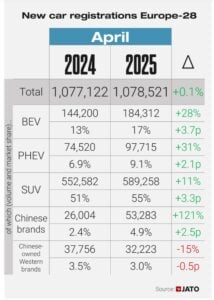
  • Bloomberg reported, in June 2025, Chinese manufacturers captured 10.6% of all EV registrations in Europe, rebounding from EU tariffs imposed a year earlier.
  • In April 2025, BYD even overtook Tesla in Europe for the first time, selling 7,230 battery-electric vehicles compared to Tesla’s 7,165.

Tesla (TSLA stock) is trading near $324, down about 18% in 2025. Global sales dropped 13% in the first half; Europe was hit the hardest. The only thing investors are optimistic about is Tesla’s self-driving tech and robotaxi plans. They are now seeing them as drivers of long-term growth.

Coming back to the competition, it is intense! Traditional automakers, led by Volkswagen Group, are defending their turf, while Chinese companies like BYD, Xpeng, and now Xiaomi are pushing hard to capture market share.

According to Reuters,

  • Chinese brands nearly doubled their European market share to 5.1% in the first half of 2025, closing in on Mercedes-Benz’s 5.2% share.
  • Registrations of Chinese EVs surged 91% year-to-date, with BYD leading the pack after registering 70,500 units, a 311% jump from a year earlier.

Meanwhile, European giants like Stellantis saw declines. Stellantis’ market share fell to 15.3% from 16.7%, while Tesla dropped to 1.6% from 2.4% during the same period.

Chinese EV Europe
Source: Jato

Big Ambitions, Long Wait Times: Can Xiaomi Win Over Europe?

Xiaomi chose Europe as its first stop despite tough competition and strict regulations. Reports reveal that it set up an R&D center in Munich, led by ex-BMW exec Rudolf Dittrich, and hired five senior BMW executives to adapt vehicles for local preferences.

The SU7 Ultra has already been test-driven in Munich, marking Xiaomi’s first registered European vehicle. However, limited production means delivery waits exceed 52 weeks, and CEO Lei Jun suggested buyers consider alternatives like Tesla’s Model Y.

Scaling manufacturing and supply chains will be key for Xiaomi to reach its goal of becoming a top global automaker. With Tesla losing ground and BYD ahead on sales, Xiaomi’s ecosystem-driven EVs could make it a serious global competitor.

How Australia’s AUD 2.4B Battery Storage Boom Is Replacing Coal

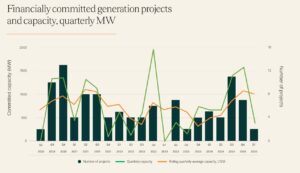
Australia’s power market is changing quickly. In early 2025, over AUD 2.4 billion (USD 1.5 billion) went into large-scale battery energy storage systems (BESS). This was the second-highest quarterly investment ever, just behind the AUD 2.8 billion seen at the end of 2023.

The Clean Energy Council’s Quarterly (Q1 2025) Investment report shows that six major projects got funding this year. They added 1.5 GW of storage and 5 gigawatt-hours (GWh) of energy output in only three months.

As coal plants shut down and renewable energy increases, investors are focusing on battery systems. These systems stabilize the grid and take advantage of price changes.

Arron Wood, Chief Policy & Impact Officer at the Clean Energy Council, explained,

“Energy storage systems, such as big batteries, are a critical part of Australia’s future energy mix and act as a reliable back-up system, allowing us to store renewable energy for when it is needed most and keep the lights on under all conditions. It’s great to see the high levels of investment we’ve seen over the past couple of years continue.”

Australia’s Battery Boom Powers the Grid

Australia faces some of the most unpredictable electricity prices in the world. Solar and wind power vary greatly with weather, and coal plants—once the grid’s main structure are shutting down. These factors create sharp peaks and lows in supply and demand.

Battery storage acts as a buffer. When renewables produce more energy than needed, batteries store the excess. Later, during peak demand or price spikes, that energy is released. This process, called energy arbitrage, allows providers to buy low and sell high.

The benefits extend beyond money. Batteries boost reliability by providing energy when renewables decline. This helps protect homes and businesses from blackouts. With government support and private interest, energy storage is essential for Australia’s evolving electricity system.

Australia battery energy
Source: CEC renewable projects quarterly report

How Fast Is Storage Scaling?

Growth has been impressive. In 2024, Australia doubled its installed battery capacity to about 3,000 megawatts (MW). This expansion helped stabilize renewables, which often fluctuate due to the time of day or weather.

Now, the momentum is building. States like New South Wales and South Australia are leading with major projects, such as:

  • Woreen Battery Energy Storage System (350 MW / 1.4 GWh) in Victoria.

  • Portland Energy Park, which will combine storage with renewable generation.

These investments support Australia’s quick move away from coal. Analysts predict coal will provide less than 30% of electricity by 2026, making storage crucial for a cleaner grid.

The Government’s Role in Driving Growth

Federal and state policies have greatly helped the battery boom. Programs like the Renewable Energy Target and funding for storage have lowered barriers for developers. In 2025, Canberra directed around AUD 200 million toward storage projects.

This public support is also seen at home. More Australians are installing residential battery systems to cut costs and reduce grid reliance. In 2024, over 72,500 homes added batteries, while large-scale projects grew rapidly. Together, these changes are making storage a key part of Australia’s net-zero strategy.

Environmental Benefits: Cutting Emissions and Pollution

Beyond financial gains, batteries are essential for Australia’s climate goals. By storing extra solar or wind energy, BESS decreases the need for fossil fuel “peaking plants” during high demand, cutting carbon emissions and air pollution.

Coal plants, among the dirtiest energy sources, are retiring quickly. Batteries offer the flexibility needed to secure the grid without using gas or coal. This helps Australia boost reliability while reducing its carbon footprint.

The environmental case is getting stronger as technology advances. Next-gen batteries are cheaper, last longer, and have a smaller carbon footprint in production.

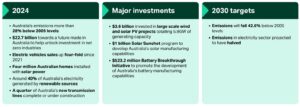
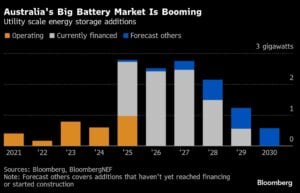
By 2027, Australia expects storage capacity to increase sevenfold, with 12.5 GW of new projects anticipated to be operational.

Australia emissions
Source: Australia Govt

The Bigger Picture: Market Trends and Record Projects

The first quarter of 2025 highlighted strong momentum in storage investment. Key highlights include:

  • Woreen BESS (Victoria): The largest project to secure funding, with 350 MW / 1.4 GWh capacity.

  • South Australia: Leading in committed projects, with 640 MW / 1.8 GWh of capacity.

  • Three additional projects began construction in Q1, adding 840 MW / 2.9 GWh to the pipeline.

In total, Q1’s AUD 2.4 billion investment was 83% higher than recent yearly averages, placing Australia at the forefront of the global BESS market.

Australia’s Battery Pipeline: A Sevenfold Expansion

The National Electricity Market (NEM) is set for rapid growth in battery capacity. As per the 2025 NEM Battery Energy Storage Pipeline report,

  • By the end of 2027, up to 16.8 GW of grid-scale storage could be online—seven times current levels. Nearly 12.5 GW is expected to be operational by 2027.

Looking ahead, some forecasts suggest batteries could meet up to 40% of Australia’s electricity needs by 2030. If this happens, Australia could lead globally in clean energy storage integration.

Australia BESS
Source: Bloomberg

Australia’s fast battery expansion is catching global attention. Investors see opportunities in volatile electricity markets, swift renewable growth, and government incentives. These elements reduce risks and boost deployment. They help Australia become a regional leader and a model for advanced economies moving away from coal.

What Comes Next for Battery Energy Storage in Australia?

The next few years will be key. Utilities, tech companies, and governments will likely accelerate deployment. This will ensure batteries are central to grid security and climate action.

Storage could help Australia manage extreme price swings in the wholesale power market. It may replace coal and gas as the main source of grid reliability. This will boost renewable integration while maintaining stability, supporting the net-zero 2050 target.

Investors spot a clear chance in Australia’s storage market. It has strong policy support, global interest, and high growth potential. This shift also helps the environment by cutting emissions and improving one of the most carbon-heavy power systems in the developed world.

Batteries as the Backbone of the Future

Australia’s energy transition is moving quickly, with batteries emerging as the driving force. With billions in investment and record projects, the stage is set for energy storage to become a key technology.

This is more than a business chance—it’s a climate solution. Battery systems help renewables grow, keeping the lights on for millions of Australians. As prices change, renewables increase and fossil fuels drop. Batteries offer a steady connection to a cleaner, stronger energy system.

BHP Mines 2 Million Tonnes of Copper in FY25, Boosting EV and Renewable Growth

Australian miner, BHP, confirmed its role as a key copper player in FY25. The company hit record production, maintained strong margins, and made strategic investments, even amid economic uncertainty.

CEO Mike Henry highlighted safety as a top priority and credited BHP’s resilience and diverse portfolio for its success. Let’s study how copper drove the mining giant’s success.

BHP’s Copper Production Surpasses 2 Million Tonnes

BHP produced over 2 million tonnes of copper for the first time, a 28% increase over three years. This growth offset lower prices in iron ore and coal, highlighting copper’s importance.

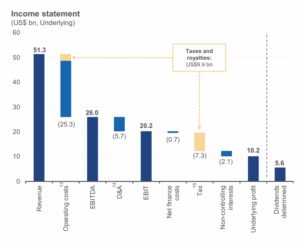
Despite lower iron ore and coal prices, copper helped BHP maintain strong financial outcomes. Revenue hit US$51.3 billion, with underlying EBITDA at US$26 billion and a 53% margin. Profits stood at US$10.2 billion.

Notably, free cash flow totaled US$5.3 billion after US$9.8 billion in capital and exploration, including US$4.5 billion for copper projects.

  • The Copper Division’s EBITDA soared 43.9% to US$12 billion, showcasing copper’s vital role in the company’s earnings.
bhp earnings
Source: BHP

Strategic Copper Investments Strengthen Global Supply

BHP plans to invest US$11 billion annually in copper for FY26 and FY27, stabilizing at around US$10 billion per year from FY28 to FY30.

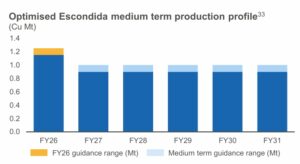
  • A key focus is the Escondida Expansion in Chile, with an additional US$2 billion aimed at boosting output by 22%, targeting nearly 1 million tonnes annually.
  • The project combines advanced technology and sustainable practices while supporting renewable energy and infrastructure.
ESCONDIDA BHP COPPER
Source: BHP

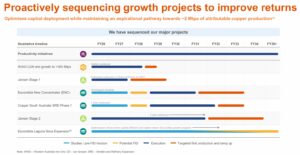
Other important projects include Copper South Australia, which could double production, and the Vicuña Project in Argentina, offering a long-term copper opportunity.

The Jansen project in Canada, focused on potash, complements BHP’s broader growth strategy alongside copper.

Together, these initiatives strengthen the company’s ability to meet rising global copper demand.

Copper mines bhp
Source: BHP

Sustainable Copper Mining 

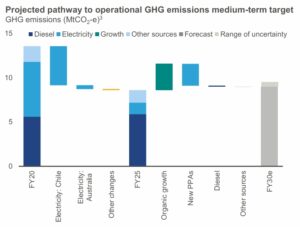
BHP aims to cut its operational greenhouse gas emissions by at least 30% from FY20 levels by FY30, and reach net zero by 2050.

  • Emissions are already 36% below FY20 levels (adjusted).

  • Shipping emissions intensity is 44% lower than the 2008 baseline.

bhp emissions
Source: BHP

The NeoSmelt Electric Smelting Furnace pilot has reached the feasibility stage. The miner is advancing in steel decarbonization, low-carbon shipping with ammonia, wind-assist, and biofuels, and explores diesel alternatives like electric mining equipment.

It plans to invest at least US$4 billion in decarbonization in the 2030s and has already chartered ammonia dual-fuel carriers and partnered with Aurizon in South Australia to cut truck movements.

BHP also launched a 158,000-hectare conservation project in Copper South Australia, and boosted Indigenous procurement by 40%. These actions ensure BHP’s copper is responsibly sourced and supports global decarbonization goals.

BHP Copper: Powering EVs, Renewables, and the Global Energy Transition

BHP’s record copper and iron ore output comes at a critical time for renewable energy growth. The company uses advanced technology to extend the life and efficiency of its copper operations.

Techniques like ore sorting, precision mining, and water management allow more copper to be extracted from lower-grade ores. These innovations boost output, reduce environmental impact, and reinforce BHP’s role as a reliable global supplier.

  • A typical EV uses about 83 kilograms of copper, 4 or 5X more than a conventional vehicle, while renewable energy projects consume roughly 5X more copper than fossil fuel plants.
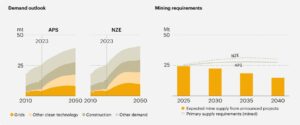
  • The International Energy Agency estimates 5.5 million tonnes of new copper supply will be needed annually by 2030.
copper demand
Source: IEA

Strategic agreements channel BHP’s copper to wind turbines, EV batteries, and other green technologies, supporting the low-carbon transition.

While project delays, cost inflation, and regulatory changes pose risks, its diversified portfolio, technology, and smart investments help ensure an efficient, sustainable copper supply to meet global demand.

BHP’s record copper production and innovation are vital for global needs. Its projects in Chile, Australia, and Argentina, plus new technologies, strengthen its role as a trusted supplier for renewable energy, EVs, and infrastructure. As the world moves to a low-carbon future, BHP’s copper operations support growth.

Meta Taps US-Made Solar to Power Its First South Carolina AI Data Center

Meta Platforms has signed a new renewable energy deal with Silicon Ranch to secure 100 megawatts (MW) of solar power for its first data center in South Carolina. The agreement ensures that the facility, located in the city of Templeton, will run entirely on renewable energy once it begins operations.

The Facebook owner is known for its policy of matching 100% of its global operations with renewable electricity. This latest project continues that commitment.

The solar capacity will come from Silicon Ranch’s U.S.-manufactured solar modules and panels. These parts will come from local sources. This aligns with recent federal and state efforts to boost clean energy supply chains. For Meta, the choice supports both energy sustainability and the American manufacturing sector.

Doubling Down on Net Zero: Meta’s Clean Power Play

Meta has been one of the largest corporate buyers of renewable power in the U.S. and globally. Since 2020, the company has achieved net-zero emissions for its global operations. It did this mainly by offsetting emissions with clean power purchases.

The company aims for net zero across its entire value chain by 2030. This includes emissions from suppliers, construction, and product life cycles. To reach this, Meta continues to:

  • Develop or contract new solar and wind projects close to its data centers.
  • Invest in renewable capacity that exceeds its immediate energy needs to ensure a stable, clean energy supply.
  • Partner with local utilities and developers to add new capacity to regional grids.

By early 2025, Meta has contracts for over 10 gigawatts (GW) of renewable energy globally. This positions it as one of the leading corporate buyers of renewable energy. The map shows the company’s renewable energy projects. 

Meta renewable energy projects map
Source: Meta

The new South Carolina deal builds on this success. It also expands renewable energy in the southeastern U.S. Demand for hyperscale data centers is growing quickly in this region.

MORE ON META’s CLEAN ENERGY DEALS:

Why Solar for Data Centers?

Data centers consume massive amounts of electricity. The International Energy Agency (IEA) reports that global data center energy consumption was about 360 terawatt-hours (TWh) in 2023. This accounts for nearly 2% of the world’s electricity demand.

With the rapid adoption of AI, machine learning, and cloud services, that figure could double by 2030. 

data center electricity demand due AI 2030

Solar energy offers an attractive solution for companies like Meta:

  • Scalability: Utility-scale solar projects can be built quickly to meet rising demand.
  • Cost-Effectiveness: Solar has become one of the cheapest sources of new electricity worldwide.
  • Low Emissions: Solar farms provide near-zero operational emissions, helping firms reduce Scope 2 emissions.

South Carolina provides an especially strong solar opportunity. The state ranks among the top 10 U.S. states for solar power growth, with more than 6,000 MW of installed capacity as of 2024. Favorable policies and abundant sunshine make it a natural location for Meta’s expansion.

AI’s Energy Appetite: The Race for Clean Power

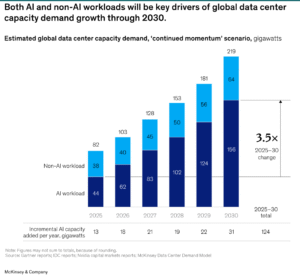
The timing of this deal also reflects the industry’s race to manage AI-driven energy demand. McKinsey & Company estimates that artificial intelligence will need 124 GW of new data center capacity worldwide from 2025 to 2030. This will require trillions in investment and a sharp increase in renewable energy procurement.

global data center capacity 2030 McKinsey

Meta’s peers are already making similar moves:

  • Microsoft plans to use 100% renewable electricity by 2025. They have also signed several power purchase agreements (PPAs) in the U.S. and Europe.
  • Google is working toward a 24/7 carbon-free energy model, aiming to match its power use with renewable generation every hour of the day by 2030.
  • Amazon Web Services (AWS) has signed contracts for over 500 renewable energy projects globally. This makes AWS the largest corporate buyer of renewable energy.

Meta’s South Carolina project signals its intent to stay competitive in both sustainability leadership and AI readiness.

Made in America: Solar Supply Chains Shine

Another important aspect of the Silicon Ranch deal is its reliance on U.S.-made solar components. This reflects a growing effort to localize supply chains for renewable energy equipment.

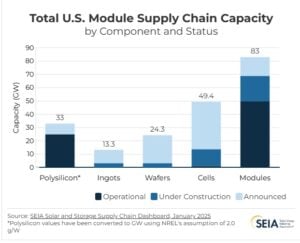
Federal incentives from the Inflation Reduction Act (IRA) have led to billions in solar manufacturing in the U.S. The total planned solar module manufacturing capacity in the U.S. could exceed 50 GW by 2025. This will cover a large part of the new projects.

US solar module supply chain capacity
Source: SEIA

For Meta, sourcing from U.S. suppliers helps reduce shipping emissions, supports domestic jobs, and ensures compliance with clean energy policies that favor domestic content. It also offers protection against supply chain issues that have impacted global solar markets lately.

The Corporate Solar Rush: Who’s Leading the Pack?

Meta’s announcement fits into a broader surge in corporate renewable energy procurement. BloombergNEF reports that companies signed 36 GW of new clean energy contracts in 2024, with the U.S. accounting for nearly half of the total.

Key trends driving growth include:

  • Policy Support: Incentives such as the IRA in the U.S. and similar measures abroad.
  • Investor Pressure: Shareholders increasingly demand climate action and net-zero plans.
  • Customer Expectations: Businesses and consumers prefer brands aligned with sustainability.

The rise of hyperscale data centers, especially those powering AI, is expected to accelerate demand. Analysts forecast that corporate PPAs could exceed 50 GW annually by 2030, creating a major pipeline for renewable developers.

Future-Proofing AI: Meta’s Next Green Moves

The 100 MW solar deal in South Carolina boosts Meta’s renewable energy goals. It also adds credibility as the company expands its AI-powered infrastructure.

Moreover, it shows that renewable procurement is now essential for technology companies working at hyperscale, not just optional.

Looking forward, Meta is expected to expand renewable sourcing in other states and potentially explore 24/7 carbon-free energy solutions, following Google’s lead. Water conservation will likely become important, too. Public interest in the environmental impact of data centers is growing.

For the renewable energy sector, corporate demand from companies like Meta will remain a key driver. Solar developers, utilities, and manufacturers stand to benefit from the race to power the digital economy sustainably.

As data centers expand, agreements like this will be key in shaping the tech industry and the clean energy shift.

Google Reveals the Environmental Cost of Gemini AI Query

Google has released new data showing the energy, carbon, and water use linked to its Gemini AI system. The report is one of the most detailed disclosures from a major tech company about the environmental footprint of artificial intelligence.

The numbers per query seem small, but the rise of AI worldwide makes these findings crucial. They help us grasp the larger sustainability challenge. Let’s examine Google’s report findings
From Queries to Carbon: Measuring AI’s True Cost

Artificial intelligence systems require powerful data centers to process user prompts. These data centers run on large amounts of electricity and water for cooling. To provide more transparency, Google calculated the average environmental cost of a single Gemini AI text query.
The company reported that one prompt:

  • Uses about 0.24 watt-hours of electricity (similar to watching TV for less than nine seconds)
  • Produces about 0.03 grams of CO₂ equivalent (CO₂e)
  • Consumes about 0.26 milliliters of water (roughly five drops)

Google looked at the energy used to run AI and also considered the electricity used when the system is idle. Additionally, it factored in the extra infrastructure that supports data centers. 

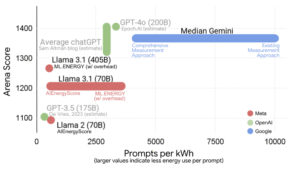
The chart below shows how much energy different AI models use for each prompt. The results come from two types of data: estimates (gray) and direct measurements (black, red, and blue).

Google Gemini AI footprint
Note: Energy per prompt results for large production AI models plotted against LMArena score. Source: Google

It also shows that results can vary a lot depending on how the energy use is measured. For example, the model Llama 3.1 (70B) was found to handle anywhere from about 580 prompts to 3,600 prompts per kilowatt-hour, depending on the method used.

By comparison, Google’s Gemini Apps prompts had a narrower and more consistent range of results. By releasing these figures, the company hopes to create a standard way of reporting AI’s environmental impact.

Smarter, Faster—But Still Energy Hungry

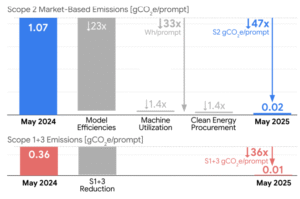
Google reported that Gemini has become much more efficient compared to earlier versions. On a per-query basis, the AI now uses about 33 times less energy than it did a year ago. This improvement comes from advances in hardware, optimized algorithms, and better data center operations.

Google Gemini AI carbon emissions
Source: Google

However, efficiency gains do not necessarily mean lower overall emissions. The demand for AI services is growing rapidly, leading to more total queries. As a result, even though each prompt is cheaper in energy terms, the combined usage continues to increase.

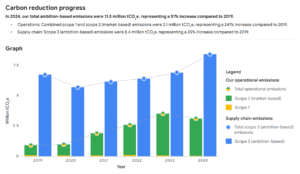
This trend is an example of the “Jevons paradox,” where greater efficiency can lead to higher total consumption when demand rises quickly. Google’s own environmental report shows this effect. The company’s total greenhouse gas emissions have risen 51% since 2019, with AI being a key driver.

Google carbon emissions 2024
Source: Google

Data Centers and Their Rising Power Needs

Google’s data centers are at the heart of AI operations. In 2024, these facilities consumed 30.8 million megawatt-hours of electricity, more than double the amount in 2020. This sharp rise highlights the scale of resources required to support AI growth.

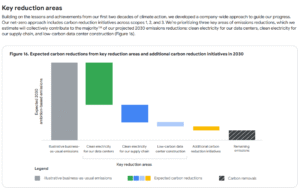
At the same time, Google has made efforts to reduce the climate impact of its facilities. Even as electricity demand increased by 27%, the company cut its direct data center emissions by 12%. This was achieved through clean energy contracts, efficiency upgrades, and improved cooling technologies.

Google carbon reduction levers
Source: Google

Google has made deals with utilities in Indiana and Tennessee. These agreements enable Google to lower data center power use when grid demand is high. This strategy, known as demand response, helps prevent blackouts and lowers stress on local power systems.

Beyond Wind and Solar: Google’s Nuclear Bet

While renewable energy remains central to Google’s strategy, the company is also exploring new approaches to meet the constant power needs of AI. Key actions include:

  • Advanced nuclear power: The company partners with Kairos Power and the Tennessee Valley Authority. This will support molten salt nuclear reactors. They can deliver reliable, low-carbon energy.
  • Demand-response agreements: Reducing electricity use during peak times in states like Indiana and Tennessee to ease grid strain.
  • Expanded clean energy contracts: Securing renewable sources to match rising data center demand.

These steps show that Google is pursuing a mix of solutions beyond traditional renewables. Nuclear power, in particular, is seen as a stable complement to solar and wind for 24/7 operations.

Transparency or Greenwashing? The Debate Over Metrics

Google’s decision to share detailed per-query metrics has been praised as a step toward industry-wide accountability. Few tech companies have provided such clear data. This transparency helps policymakers, researchers, and the public see the real costs of AI.

At the same time, experts have raised concerns about what the report leaves out. Some argue that Google’s calculations do not fully account for indirect emissions or the impact of where electricity is sourced. Others note that per-query figures, while helpful, may downplay the large-scale effects of billions of queries worldwide.

The contrast between small individual costs and large overall emissions illustrates the complexity of the issue. It shows why companies need efficient technology and broad strategies. They have to manage total demand and align with climate targets.

Can AI Innovation Outpace Emissions?

Google’s disclosure highlights the balancing act facing the entire AI industry. On one hand, new technology can drive efficiency, reduce per-query energy use, and open pathways to sustainable power. On the other hand, the sheer scale of AI adoption risks outpacing these improvements.

For AI to grow in a sustainable way, companies will need to combine efficiency gains with renewable energy, nuclear solutions, and smarter grid management. Transparency will also play a central role in building trust and creating common standards across the sector.

As more companies adopt AI and integrate it into daily life, the question of energy and carbon costs will become even more urgent. Google’s report is an early attempt to measure and address this challenge.

Whether the industry can keep total emissions in check while meeting growing demand will shape the future relationship between AI and the environment.

Google’s new data provides a clearer picture of what it takes to run AI systems like Gemini. One prompt uses just a few drops of water and a tiny bit of carbon. But when billions of people interact, the environmental impact grows massively.

By being transparent about these numbers, Google has set a benchmark for the industry. The next challenge will be to turn these insights into broader changes that ensure AI grows without driving emissions sharply higher. The path forward will require innovation, investment, and cooperation across the technology and energy sectors.

Zefiro Methane’s First Carbon Offset Sale: Turning Orphan Wells Into Climate Assets

Zefiro Methane has announced the completion of its first-ever sale of carbon offsets. This is a major milestone in its mission to reduce methane emissions from abandoned oil and gas wells.

The offsets came from the American Carbon Registry’s (ACR) orphan well method. This is the first time such credits have entered the carbon market.

A project in Custer County, Oklahoma, generated the credits when Zefiro successfully sealed a deep abandoned gas well. The remediation took out almost 5,000 feet of casing. It also cut down CO₂ equivalent emissions by 92,956 metric tonnes.

This first batch of ACR-issued carbon credits is sold to Mercuria Energy America. It is the U.S. arm of a major global energy and commodities company.

Methane is a powerful greenhouse gas, trapping heat up to 80 times more effectively than carbon dioxide over a 20-year period. Addressing leaks from orphan wells is one of the fastest ways to cut harmful emissions.

This first sale confirms Zefiro’s ability to turn environmental challenges into tradable climate assets. It also highlights the growing importance of high-quality carbon credits in meeting global emissions reduction goals.

Zefiro’s Chief Executive Officer, Catherine Flax, remarked:

“The successful issuance and delivery of Zefiro’s very first carbon credits is a landmark development not just for us as a company, but also for the voluntary carbon markets as a category in which new standards are being set. With this Methodology that allows carbon offsets to be generated directly from the remediation of orphaned oil/gas wells, there is now a clear and straightforward blueprint in which the voluntary carbon markets can be leveraged as a funding source for leaking wells to be plugged without needing to rely on taxpayer resources…”

The Scale of the Orphan Well Problem

The U.S. is home to an estimated 4 million abandoned or orphaned oil and gas wells, spread across at least 26 states. Many of these wells continue to leak methane into the atmosphere, posing both environmental and health risks. Methane contributes not only to climate change but also to poor air quality that can affect local communities.

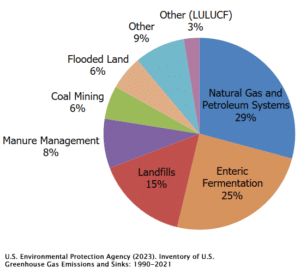
US methane emissions by source

Plugging and sealing wells is expensive and technically complex. Some wells are over a hundred years old. Often, there are missing ownership records. This means no company is legally responsible for cleanup.

The challenge is huge. Thus, the U.S. federal government set aside $4.7 billion through the Bipartisan Infrastructure Law. This money will help states tackle orphan wells. Even so, private sector involvement is needed to scale solutions.

This is where Zefiro Methane comes in. The company creates carbon offset credits from verified well closures. This helps provide extra funding to address the issue. Companies and institutions can now invest in projects that reduce their emissions while also benefiting the community.

Transitioning from the scale of the problem to how Zefiro builds trust, the next section explains the company’s focus on credibility in the carbon markets.

Building Trust and Credibility in Carbon Markets

A key part of Zefiro’s progress has been establishing credibility with recognized registries and independent auditors. In April 2024, Zefiro registered its first project. This was with the American Carbon Registry, a respected carbon offset standard with a long history. This ensured its credits met rigorous criteria for transparency, permanence, and environmental integrity.

The company has also partnered with TÜV SÜD, an international certification body, to provide validation and verification of its projects. This third-party oversight ensures that the credits represent real and measurable emissions reductions.

This credibility matters. In voluntary carbon markets, not all credits are created equal. Buyers increasingly demand proof that projects are scientifically sound and environmentally effective. 

With credibility established, Zefiro has begun to scale its operations, moving from single projects to broader national initiatives.

Scaling Up Methane Solutions

Zefiro has grown rapidly in recent years to support its methane reduction efforts. The company acquired Plants & Goodwin, a well-plugging expert from Pennsylvania. This adds decades of experience and boosts its technical skills.

The company also became a publicly traded company on the Cboe Canada exchange, giving it greater visibility and access to capital.

Beyond remediation, Zefiro has entered the methane monitoring market. In 2025, it got its first contract from the EPA’s Methane Emissions Reduction Program. This program is backed by funding from the Inflation Reduction Act. This expansion allows Zefiro not only to plug wells but also to track and verify emissions reductions in real time.

Together, these moves show Zefiro’s ambition to become a leader in the methane abatement space. The sale of offsets marks the shift from early-stage development to active participation in both remediation and carbon markets.

To understand why these actions matter, it is important to look at the role of methane abatement in the fight against climate change.

Why Cutting Methane Packs a Punch

Methane plays an outsized role in global warming. Here’s why:

  • Methane contributes about 30% of today’s global warming, according to the Intergovernmental Panel on Climate Change (IPCC).

  • It has a much shorter lifespan than CO₂ in the atmosphere—around 12 years—but its heat-trapping power is far stronger.

  • Cutting methane emissions can deliver fast climate benefits compared to CO₂ reductions.

  • The International Energy Agency (IEA) estimates that reducing methane from fossil fuel operations could prevent up to 0.1°C of warming by mid-century. These reductions are considered among the lowest-cost and most effective strategies to slow climate change.

methane emission sources by sector
Source: International Energy Agency (IEA CC BY 4.0)

Zefiro’s work directly targets this opportunity. The company seals wells that would leak methane for years. This helps reduce emissions in a clear and effective way.

The added benefit of generating carbon credits creates financial incentives for investors and buyers to support these projects. As methane abatement gains momentum, carbon offset market trends show why Zefiro Methane’s timing is significant.

Carbon Credit Market Momentum: The New Frontier

Methane abatement offsets are appealing. They tackle a strong greenhouse gas and provide clear benefits. These include land restoration and better public health.

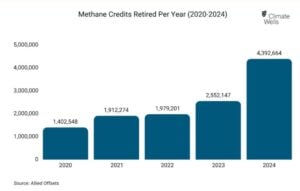
Analysts project that the global carbon market could reach $100 billion by 2030, with methane-related credits playing a growing role. In 2024, over 4 million tons of methane credits were retired, as shown below.

methane credits retired Climate Wells
Source: Climate Wells

For Zefiro, this trend offers a clear growth pathway. The company positions itself as a trusted supplier of verified methane offsets. This helps meet voluntary demand from businesses and prepares for future compliance needs as governments tighten climate rules.

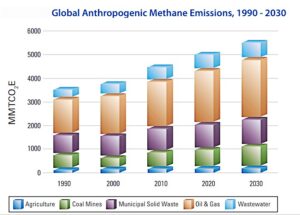
The Global Methane Initiative (GMI) estimates that methane emissions caused by humans will grow by 2030. With the strong demand ahead, the implications of Zefiro’s first sale go beyond one project.

global methane emissions projections 2030
Source: Global Methane Initiative

What This Means for Climate and Markets

Zefiro’s first-ever carbon offset sale is more than a corporate milestone—it signals a new chapter for carbon markets. It shows that orphan well remediation can become a real business. It can be funded by both public money and private capital that wants to make a climate impact.

For communities, these projects reduce methane leaks, improve local air quality, and eliminate safety risks from abandoned wells. For carbon markets, they introduce a new category of offsets backed by rigorous standards and verification. And for investors, they offer an emerging opportunity in the fast-growing carbon economy.

As climate policies advance and the need for credible carbon removals grows, Zefiro’s early success positions it as a key player. The challenge now is scaling from one project in Oklahoma to addressing millions of orphan wells across the U.S.

Vantage’s $25 Billion Texas Data Center Plan Sparks Opportunities—and Water Concerns

Vantage Data Centers is making headlines with a record-breaking $25 billion investment in a data center in Texas. The new project, called Frontier Campus, will bring 1.4 gigawatts of hyperscale power. This will make the state a global center for AI and cloud infrastructure.

The project highlights Texas’ strengths in renewable energy and business-friendly policies. However, it also raises urgent questions about water use and sustainability in a drought-prone region.

Texas’ $25B Bet: The Frontier of AI Power

Vantage Data Centers’ $25 billion hyperscale data center campus is in Shackelford County, Texas. The Frontier Campus project will be one of the largest of its kind in the United States, with a total planned capacity of 1.4 gigawatts (GW).

For comparison, that’s enough power to support millions of servers and data workloads. This underlines the surging demand for cloud computing and artificial intelligence (AI).

Texas is an appealing spot for hyperscale data centers. This is thanks to its cheap electricity, plentiful renewable energy, and friendly business policies. The state tops the nation in wind power. It has quickly increased solar installations, allowing operators to use a cleaner energy mix than other U.S. states.

Dana Adams, president of North America at Vantage Data Centers, remarked:

“Texas has become a critical and strategic market for AI providers. In particular, the launch of our Frontier campus with 1.4GW of GPU compute capacity marks a watershed moment for Vantage as we deliver on our promise to meet the unprecedented requirements of our customers.”

Vantage focuses on sustainability in its designs. It features efficient cooling systems and aims to reduce environmental impacts. The company hasn’t said if it will sign direct renewable energy contracts or power purchase agreements (PPAs). ESG-focused investors and customers often expect this step.

This massive investment underscores the role of Texas as a digital infrastructure powerhouse. But it also reignites debates about water use and resource competition in a state struggling with recurring droughts.

Energy Strength: Why Texas Attracts Data Centers

The Frontier Campus reflects a broader trend of major tech and infrastructure companies flocking to Texas. Several factors make the state appealing:

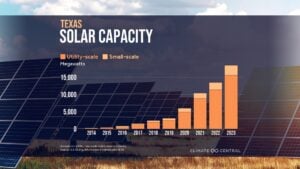
  • Renewable energy scale: Texas produces more wind energy than any other state, and its solar capacity is growing fast. According to the U.S. Energy Information Administration, renewables accounted for over 28% of Texas’ electricity generation in 2024.
Texas solar capacity
Source: Climate Central
  • Competitive electricity prices: Abundant natural gas and renewables keep wholesale power prices relatively low compared to other regions.
  • Supportive policies: Texas offers tax incentives and streamlined permitting for large infrastructure projects.

These factors make Texas a top choice for companies growing hyperscale data centers. It’s cost-effective and sustainable. Vantage’s Frontier Campus aims to use these benefits. It will also boost local jobs and tax revenue during both construction and operations.

Electricity availability seems good, but water scarcity is becoming a major challenge for the industry.

Water Use: A Growing Flashpoint 

Data centers consume large amounts of water, mainly for cooling. Operators are trying to use water more efficiently. However, new projects are putting pressure on local supplies that are already stressed.

water use datac centers
Source: Bloomberg

In Texas, residents in some drought-hit communities face restrictions on showering and lawn watering. At the same time, data centers collectively used 463 million gallons of water in 2023 and 2024 alone.

The Texas Water Development Board forecasts that data centers will use 49 billion gallons in 2025. This amount is expected to rise to about 400 billion gallons each year by 2030. By that point, data centers could account for about 7% of Texas’ total projected water use.

This raises worries about competition. Digital infrastructure and local communities are both vying for limited water resources.

Although data centers consume water amounts comparable to entire cities, most operators keep their usage data confidential. A University of Wisconsin-Milwaukee study revealed that in 2023, Google’s data centers alone used over 6 billion gallons of water for cooling.

In 2024, Google’s facility in Council Bluffs, Iowa, used 1 billion gallons of water. This amount could supply all of Iowa’s residential water needs for five days.

Meta disclosed that its data centers accounted for 95% of the company’s global water use in 2023, totaling 776 million gallons. Meanwhile, Microsoft’s water consumption surged 34% within a year, reaching 1.69 billion gallons across all its operations.

WestWater Research projects that water usage by data centers in the United States will grow by 170% by 2030.

Environmental groups warn that without better oversight, projects like Vantage’s might strain supplies. This could affect households, agriculture, and industry.

Walking the Tightrope: Growth vs. Sustainability

Vantage promises to use efficient cooling systems to cut water use. However, it hasn’t shared specific numbers for expected usage at the Frontier Campus. Alternatives like air cooling, recycled wastewater, and hybrid systems can ease strain. However, they usually have trade-offs in cost and efficiency.

The debate raises a key question:

  • How to grow data infrastructure for AI, cloud services, and digital economies while minimizing environmental impacts?

For Texas, the stakes are high. The state aims to attract investment and stay competitive in clean energy. However, it must also protect resources for its residents.

The Global Data Center Arms Race

The Vantage project is part of a global surge in data center investment. AI workloads, cloud adoption, and streaming are fueling demand for ever-larger campuses. Analysts expect global data center capacity to double by 2030, with the U.S. and Asia leading growth.

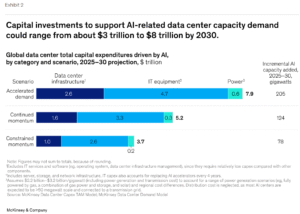
The Frontier Campus is designed to meet the fast-growing demand for computing power fueled by AI. McKinsey estimates that by 2030, AI will drive the need for $5.2 trillion in global data center investments. Between 2025 and 2030, companies will have to add about 125 gigawatts of new capacity just to support AI workloads.

global data center investment 2030.jpg
Source: McKinsey & Company

Texas has emerged as a focal point due to its renewable energy mix and available land. Microsoft, Google, and Amazon already have large footprints in the state, with further expansions planned.

The International Energy Agency (IEA) estimates that data centers used about 300 to 380 terawatt-hours (TWh) in 2023. The central estimate is around 360 TWh. This is down from 460 TWh in 2022. However, some other sources estimate 2023 consumption closer to 415 TWh.

The IEA and other reports predict that data center electricity demand will more than double by 2030. It could reach about 1,050 TWh, surpassing Japan’s current total electricity use. This surge is primarily driven by rapid growth in artificial intelligence (AI) and increased digital services. By 2035, demand could climb further to about 1,300 TWh.

data center electricity use 2035

Looking Ahead: What Stakeholders Want to See

For investors, customers, and regulators, transparency will be key. Stakeholders are likely to push for:

  • Detailed reporting of water and energy use by Vantage and other operators.
  • Commitments to renewable energy contracts to match rising power demand.
  • Adoption of water-saving technologies, such as dry cooling or reclaimed water use.

Without these steps, projects risk backlash at a time when public scrutiny of big tech and environmental impacts is growing.

Vantage’s $25 billion Frontier Campus in Texas represents a bold bet on the state’s role in the global digital economy. The project builds on Texas’ strengths in renewable energy and low-cost power. Yet, it also highlights serious concerns about water scarcity.

Bitcoin Miner TeraWulf (WULF) Stock Rallies as Google Backs $3.2B AI Infrastructure Expansion

TeraWulf Inc. (Nasdaq: WULF) saw its stock surge after Google deepened its investment in the data center operator and bitcoin miner. The company said that the move not only raised Google’s financial backing but also strengthened TeraWulf’s position as a growing force in the booming artificial intelligence (AI) and high-performance computing (HPC) market.

Google Doubles Down on TeraWulf, Sending WULF Stock Soaring

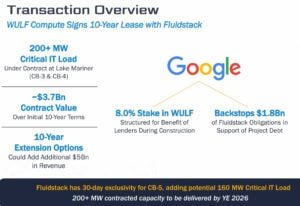
Shares of TeraWulf gained more than 4% after the company announced that Google increased its stake to 14% from 8%, alongside a fresh $1.4 billion backstop commitment. This brings Google’s total support for the company to $3.2 billion.

The deal gives Google warrants to buy an additional 32.5 million shares, further solidifying the partnership between the tech giant and the fast-rising digital infrastructure operator. Earlier in the session, TeraWulf shares had spiked by over 10% before settling higher.

WULF stock terrawulf
Source: TerraWulf

Analysts See a Strong Signal

In Q2 2025, TeraWulf’s revenue jumped 34% year-over-year to $47.6 million, boosted by a stronger bitcoin price and expanded mining capacity.

At the same time, expenses also climbed, with revenue costs (excluding depreciation) rising 59% to $22.1 million, mainly from higher infrastructure use and increased power costs in Upstate New York.

Even with these added expenses, TeraWulf’s growth path and shift toward AI infrastructure have fueled investor optimism. The WULF stock has surged nearly 90% in the past week.

Analysts view Google’s larger stake as a strong show of confidence. By providing financial backing and equity exposure, C reduces risks tied to financing or project delays—giving TeraWulf a clear edge as it scales.

What’s Inside TeraWulf’s $6.7 Billion Locked-In Revenue?

With the expansion, TeraWulf’s contracted revenue now stands at $6.7 billion, with the potential to reach $16 billion if lease extensions are exercised. This represents one of the largest financial commitments in the sector, signaling growing investor confidence in the company’s long-term strategy.

The boost comes at a critical time as demand for AI-ready data center space accelerates. TeraWulf is emerging as one of the few companies capable of delivering large-scale, low-carbon infrastructure tailored for AI workloads.

TeraWulf
Source: TeraWulf

Strategic Expansion at Lake Mariner

The latest investment will fund CB-5, a new data center building at TeraWulf’s Lake Mariner campus in Western New York. The facility will add 160 MW of critical IT load, with operations expected to begin in the second half of 2026.

The expansion builds on TeraWulf’s previously announced agreements with AI cloud provider Fluidstack, under which it is delivering more than 200 MW of AI-optimized capacity at the same campus. With CB-5 included, Fluidstack’s total contracted IT load at Lake Mariner jumps to 360 MW, making it one of the largest HPC campuses in the U.S.

TeraWulf and Fluidstack are also in talks about even more expansions, signaling that Lake Mariner could continue to scale beyond current projections.

TeraWulf CEO Paul Prager said in the press release,

“This expansion underscores the unmatched scale and capabilities of the Lake Mariner campus. By adding CB-5, we are not only increasing our contracted capacity with Fluidstack, but also further deepening our strategic alignment with Google as a critical financial partner in delivering the next generation of AI infrastructure.”

He further added,

“This expansion not only scales our contracted platform but reinforces TeraWulf’s leadership in the AI and HPC infrastructure ecosystem, delivering globally competitive, sustainable, and scalable compute solutions.”

Also, Nazar Khan, Chief Technology Officer of TeraWulf, said,

“Fluidstack’s decision to expand so soon after our initial agreement speaks volumes about the quality, readiness, and scalability of our infrastructure. Like the prior buildings, CB-5 will be purpose-built for high-density, liquid-cooled workloads, leveraging Lake Mariner’s dual 345 kV transmission lines, sustainable water cooling, and ultra-low-latency connectivity. And with the scale, resources, and infrastructure we have in place, there is significant potential for even further expansion with Fluidstack as their compute requirements continue to grow.”

Fluidstack Partnership Fuels Growth

Earlier this month, TeraWulf signed two 10-year deals with Fluidstack, a premier AI cloud platform, to supply more than 200 MW of compute capacity. These contracts are expected to generate $3.7 billion in revenue over the initial term, with potential extensions pushing the total to $8.7 billion.

The first phase of this project will deliver 40 MW by the first half of 2026, with full deployment completed the following year. By aligning with Fluidstack, TeraWulf is repositioning itself as a major player in AI infrastructure while maintaining its strong bitcoin mining roots.

terawulf
Source: TeraWulf

TeraWulf’s Shift: From Bitcoin Mining to AI Infrastructure

The CB-5 project is TeraWulf’s next major step in the fast-growing AI and HPC market. With support from Fluidstack and Google, the expansion helps the company scale quickly while staying true to its zero-carbon energy plan. It also boosts TeraWulf’s role in the AI computing space.

TeraWulf designed CB-5 to deliver both efficiency and reliability. The project moves the company closer to its goal of providing scalable, sustainable, and globally competitive computing power. Each milestone proves its strong execution and leadership in the sector.

As AI demand grows and energy supplies tighten, this model stands out. At the top, the recent stock rally shows rising market confidence in its strategy.

Thus, once known mainly for large-scale bitcoin mining, TeraWulf is now shifting toward AI-focused infrastructure. This showcases a larger industry trend, where miners diversify into AI and HPC data centers to secure steady revenue streams.

TeraWulf

Energy Costs Highlight the Challenge

AI data centers cost far more to build than mining sites. Bitcoin mining averages about $500 per kilowatt hour, while AI and HPC centers range from $5,000 to $8,000 per kilowatt hour.

Unlike bitcoin mining, which can adjust power use, AI and HPC facilities require a steady 400–500 MW of uninterrupted energy. This demands heavy investment not only in computing hardware but also in backup systems to ensure reliability.

Speaking with Cointelegraph, CTO Nazar Khan emphasized that electrical load flexibility is critical for long-term success. Bitcoin miners can shift power usage every 10 minutes to help balance the grid. In contrast, AI centers run nonstop and depend on backup generators to avoid downtime.

Khan also noted that many utility providers struggle to meet such massive energy needs. He added that operators who strategically integrate these large loads will succeed, while those who scale without proper planning may fail to grow as expected.

On the other hand, with soaring demand for AI infrastructure, tech giants are racing to secure carbon-free power. Google, for example, struck a deal with Kairos to build a small modular reactor by 2030.


AI data center energy demand
Source: Deloitte

All in all, this shift underscores the energy challenges of AI data centers and how TeraWulf is well-positioned to leverage low-carbon power. With backing from Google, billion-dollar Fluidstack contracts, and Lake Mariner expansion, TeraWulf is emerging as a frontrunner in the HPC race.

Waymo’s Sixth-Gen Robotaxis Outperform Uber Drivers and Expand into Philadelphia

The race to dominate the autonomous ride-hailing market is heating up. Waymo, Alphabet’s self-driving subsidiary, is not only pushing ahead with new technology but also proving its robotaxis can outperform most human drivers on Uber’s platform. The company has now deployed its sixth-generation vehicles for testing in Philadelphia, marking a key step in its Northeast expansion.

Waymo Robotaxis Outpace 99% of Uber Drivers in Q2 Surge

During Uber’s second-quarter 2025 earnings call, CEO Dara Khosrowshahi shared a striking update: Waymo robotaxis operating on the platform in Austin and Atlanta were more productive than 99% of Uber’s human drivers. These vehicles completed more daily trips on average, highlighting the operational advantage of autonomous technology.

Uber itself reported $12.65 billion in revenue for the quarter, an 18% year-over-year increase that exceeded analyst expectations. Khosrowshahi said the partnership with Waymo had already “exceeded expectations,” with about 100 robotaxis currently in operation and plans to scale to several hundred more in the coming quarters.

This success underscores why Uber is betting big on automation. For the company, AVs represent more than a futuristic experiment—they could reshape the core of its business.

How Robotaxis Outperform Human Drivers

The productivity gap comes down to one simple fact: autonomous vehicles don’t get tired. Unlike human drivers who need rest, robotaxis can work almost nonstop. They can handle back-to-back rides with minimal downtime, pausing only for charging, cleaning, or maintenance.

According to Business Insider, Waymo’s fleet can theoretically operate nearly 24 hours a day, seven days a week. This near-constant utilization is something no human workforce can match.

Waymo’s advantage comes after years of development and testing. The company has logged millions of miles in real-world conditions, fine-tuning its systems to handle complex traffic scenarios. Now, Uber is reaping the benefits as robotaxis help close demand gaps during peak times while maintaining high efficiency.

Self-Driving Cars: Uber’s Biggest Opportunity Yet

Uber has rapidly expanded its self-driving partnerships, growing from 18 to 20 AV collaborations in just a few months. The company also announced a $300 million investment in EV maker Lucid and robotics startup Nuro, aiming to put more than 20,000 autonomous vehicles on the road by 2032.

Significantly, Uber’s largest expense is driver payments. In Q1 2025 alone, the company paid out $18.6 billion to human drivers. While AV partnerships won’t erase these costs, they could significantly reduce them and improve margins. That efficiency could eventually trickle down to consumers through lower fares.

Still, Uber isn’t pushing humans aside just yet. Khosrowshahi said drivers and robotaxis will coexist for at least the next decade as the company gradually integrates more automation into its network of 170 million monthly active users.

Waymo’s Sixth-Gen Robotaxis Arrive in Philadelphia

While Uber works on scaling its platform, Waymo continues advancing its technology. The company recently rolled out its sixth-generation robotaxis in Philadelphia as part of its broader Northeast expansion strategy.

Significantly, Philadelphia is a key stop on Waymo’s broader “road trip” testing initiative across Northeast cities, including New York and Boston. The company began mapping Philadelphia in July 2025, running vehicles with safety drivers through neighborhoods like North Central and University City, and along highways such as I-76 and I-95

According to Waymo spokesperson Ethan Teicher, the testing is focused heavily on winter conditions. Seasonal data is essential before AVs can operate commercially, and Philadelphia provides a perfect proving ground with its varied weather and dense urban traffic.

By gathering this data now, Waymo is preparing its fleet to handle the toughest challenges before scaling operations in the Northeast.

Cutting Complexity While Boosting Performance

The sixth-generation Waymo Driver represents a big leap forward in design. Earlier versions carried 29 cameras and five LiDAR sensors, but the new system has streamlined that to 13 cameras and four LiDAR units. Despite fewer sensors, the vehicles still achieve overlapping 360-degree coverage and can detect objects up to 500 meters away, even in poor lighting or heavy weather.

This reduction in hardware complexity helps lower costs while maintaining safety and reliability. It also makes the system easier to scale. The vehicles are built on the Zeekr RT, a purpose-built electric car developed with Chinese automaker Zeekr. Mass production is expected to start later this year, making Zeekr the first Chinese automaker to enter the U.S. robotaxi market.

See below: The 6th-generation Waymo Driver on the rider-first autonomous vehicle platform designed in partnership with Zeekr RT

waymo robotaxi
Source: Waymo

Waymo Robotaxis Gain Massive Consumer Traction

The Philadelphia rollout comes at a time when robotaxis are gaining traction with riders. In cities like Atlanta, Uber customers have already shown a preference for Waymos over human drivers, choosing the autonomous option when available. This trend highlights the growing acceptance of self-driving technology among U.S. consumers.

Waymo is already running commercial services in Phoenix, San Francisco, Los Angeles, Austin, and Atlanta. New markets like Washington, D.C., and Miami are expected to come online by 2026. Each expansion strengthens Waymo’s lead in the competitive AV race.

The Future of Autonomous Ride-Hailing

Waymo’s sixth-generation robotaxis and Uber’s enthusiasm for scaling AV partnerships point to a rapidly approaching future where autonomous vehicles play a central role in ride-hailing. For Uber, robotaxis could lower costs, boost margins, and reduce reliance on its massive driver payouts. For Waymo, each new city and hardware upgrade brings it closer to proving its technology at scale.

Human drivers aren’t disappearing anytime soon, but the balance is starting to shift. Robotaxis are on the streets today, outperforming human drivers in productivity and gaining trust from riders. And the number is only going to rise in the future.

Goldman Sachs Research projects that autonomous vehicles could bring in around $7 billion in yearly revenue, claiming nearly 8% of the US rideshare market, up sharply from under 1% today.

autonomous ride hailing robotaxi

As Uber and Waymo continue their collaboration, the ride-hailing industry could look very different by the next decade, with machines increasingly steering the future of urban mobility.