Albemarle’s Q4 Loss Reflects Lithium Slump, Yet Net Zero and Sustainability Stay on Track

Albemarle Corporation (NYSE: ALB) the world’s top lithium and specialty chemicals producer posted its financial results for Q4 and the full year of 2024. Despite lower lithium prices, the company reduced costs and improved operations to remain competitive.

Strong efficiency measures helped in profitability but adjusted earnings did not meet analyst expectations. Like many other lithium players, Albemarle also faced a lithium supply glut mainly due to overproduction in China.

Kent Masters, chairman and CEO of Albemarle, expressed himself by saying,

“We are taking decisive actions to reduce costs, optimize our conversion network, and increase efficiencies to preserve our long-term competitive position. As we look ahead, we expect dynamic market conditions to persist but remain confident in our ability to deliver value to stakeholders by increasing our financial flexibility, strengthening our core capabilities, and positioning Albemarle for future growth.”

Albemarle Reports Loss and Challenges for Q4

Albemarle ended Q4 2024 with $1.2 billion in revenue and a net income of $75 million, or $0.29 per diluted share. However, the adjusted diluted loss per share was $1.09.

Albermarle earnings
Source: Albermarle

Energy Storage Hit by Lower Lithium Prices 

Energy Storage, Albemarle’s largest segment, saw Q4 sales of $617 million, a 63% drop from the previous year. This decline came from a sharp 53% drop in lithium prices. Sales volumes also fell by 10%. Plant outages and the timing of spodumene sales played a role in this situation.

However, adjusted EBITDA rose $290 million to $134 million, supported by lower spodumene costs and the absence of a $604 million charge recorded in Q4 2023.

Specialties and Ketjen Disappoint 

Albemarle’s Specialties segment reported sales of $333 million, down 2% from last year. Adjusted EBITDA increased by $43 million to $73 million. This rise came from cost-saving measures and higher market demand. In contrast, the Ketjen business, which makes catalysts, saw a 17% drop in sales to $282 million, mainly due to lower volumes.

Full-Year Performance

For the entire 2024, Albemarle made $5.4 billion in revenue. Energy Storage volumes grew by 26%. However, restructuring costs resulted in a net loss of $1.2 billion, or $11.20 per diluted share.

As the company aimed for efficiency, it achieved $1.1 billion in adjusted EBITDA and generated $702 million in operating cash flow. This success came from strong cost controls and effective working capital management.

2025 Outlook and Strategic Moves

Albemarle is taking proactive steps to manage changes in the lithium market. They are tightening spending and improving efficiency. The energy storage sector relies heavily on lithium prices. Net sales and profits in the sector may be affected when lithium prices fall.

The company adapts to falling lithium prices by cutting spending and boosting efficiency. It has reached over 50% of its $300-400 million cost reduction goal. Additionally, it improved lithium conversion efficiency at La Negra and Meishan. By mid-2025, the Chengdu site will enter care and maintenance. Meanwhile, Qinzhou will shift some production to lithium carbonate.

It also aims for better financial management and cost savings. This will help ensure resilience in a tough market.

Albemarle 2025
Source: Albemarle

Albemarle’s Net Zero Goals: Leading Lithium Innovation for a Sustainable Future

Albemarle’s advanced processing site in Kings Mountain, North Carolina is crucial for lithium development. It uses cutting-edge technology to refine and convert lithium for energy storage. It also has a top-notch research and development center that focuses on improving battery materials.

The company focuses on producing high-quality lithium. This matters because demand is growing for lithium in EVs, renewable energy storage, and digital technology. It’s constantly improving its processes to make energy storage safer and more efficient. This strategy supports the energy transition and emphasizes Albermarle’s commitment to sustainability.

Energy Storage Product Portfolio

Albemarle lithium
Source: Albemarle

Building a Greener Lithium Industry

As a founding member of the International Lithium Association (ILiA), the company sets global standards for carbon footprint measurement. This covers brine, hard rock, and clay sources. Their work promotes responsible resource management and transparency in the lithium supply chain.

By taking the lead in sustainable lithium production, Albemarle is ensuring that the industry grows in an environmentally responsible way, supporting cleaner energy solutions for years to come.

2030 Carbon Neutral Goals:

Albermarle wants to achieve carbon neutrality across its scope emissions by 2030.

The company aimed to collect primary data from suppliers for 75% of its raw material carbon footprint by 2023, increasing to 90% by 2024, to achieve its Scope 3 reduction target.

Albermarle net zero goals
Source: Albermarle

Sustainability Snapshot 

The company’s 2023 sustainability report highlighted the following achievements:

  • Energy Storage: In 2023, Albemarle cut Scope 2 emissions by using renewable electricity at La Negra and Xinyu. Equipment upgrades at Xinyu improved efficiency, reducing Scope 1 emissions. Amsterdam secured 50% renewable electricity for 2024-2026.

  • Specialties & Ketjen: Lower production kept total emissions on track, but intensity rose as plants operated below capacity. Efficiency optimization remains a priority.

  • Bromine Sustainability: Completed ISO-compliant product carbon footprint study for Magnolia, Arkansas, verified by EcovaMed, reinforcing sustainable bromine production efforts.

We hope with a strong strategy in place, Albermarle can rebound and hold its ground in terms of both revenue and sustainability for this year.
Gevo and Axens Boost SAF with Innovative Ethanol-to-Jet Technology

Gevo and Axens are joining forces to speed up the development of Sustainable Aviation Fuel (SAF) using the ethanol-to-jet (ETJ) pathway. This partnership aims to improve efficiency, reduce costs, and lower risks by leveraging Axens’ Jetanol™ technology.

They are also enhancing Gevo’s patented ethanol-to-olefins (ETO) technology. This technology converts ethanol into light olefins, which are key ingredients for fuels and chemicals.

Dr. Pat Gruber, Chief Executive Officer of Gevo

“We believe that continuing to reduce production costs and capital costs for drop-in hydrocarbon fuels and chemicals has the potential to create large numbers of jobs, spur rural economic development, and create clear, market-based incentives for regenerative agriculture. It adds up to a practical approach for increased energy production and better energy security. This is a real way forward: it drives costs lower, uses the same, established fuel infrastructure, has proven and auditable improvements in sustainability, including how land is used, and offers large benefits to our society, and, in particular, strengthens our rural communities. We see this can be done, and we are pursuing it. It’s the right thing to do.”

SAF U.S.

Gevo’s Breakthrough in Ethanol-to-Olefins (ETO)

Last September, the U.S. Patent and Trademark Office granted Gevo a patent (U.S. Patent No. 12,043,587 B2) for its ETO process. This patent boosts Gevo’s role in renewable fuels. It protects their advanced catalyst technology that turns ethanol into olefins efficiently.

Gevo and LG Chem have teamed up to scale this process for chemical use. They aim to optimize the technology for commercial purposes. This will create a sustainable alternative to traditional petrochemical olefins.

How the ETO Process Works

Gevo’s ETO process turns ethanol into light olefins. These are key building blocks for fuels and chemicals. Traditional methods first make ethylene. Then, they need extra steps to produce three- and four-carbon olefins like propylene and butenes.

The purpose is to simplify fuel production by making the larger olefins directly from ethanol in a single step. These olefins can then be converted into transportation fuels using proven refining methods.

This innovation improves efficiency, reduces energy use, and lowers costs. Most importantly, it helps achieve zero or even negative carbon emissions, making biofuels more sustainable.

Paving the Way for a Low-Carbon Future

Gevo is committed to cutting carbon emissions through renewable fuels and chemicals. The company operates one of the largest dairy-based renewable natural gas facilities in the U.S. and an ethanol plant equipped with carbon capture technology. It also owns the first production site for specialty alcohol-to-jet fuels.

                                           Gevo’s SAF Technology

GEVO SAF
Source: Gevo

Through its Verity subsidiary, Gevo ensures transparency in sustainability tracking. As global jet fuel demand continues to rise, SAF offers a major opportunity to cut emissions and build a cleaner future.

                                Gevo’s GHG Emissions (2022)

Gevo carbon emissions
Source: Gevo

Axens Unveils Jetanol™ to Boost SAF Production

Axens has introduced Jetanol™, a cutting-edge Alcohol-to-Jet (ATJ) technology, to accelerate SAF production. With a project pipeline approaching 3 million tons (1 billion gallons) per year, this innovation helps fuel producers transition to cleaner, low-carbon energy.

Quentin Debuisschert, CEO of Axens noted,

“The immense potential for both our companies to lead the future of air-travel decarbonization is an obvious way forward. The combination of Gevo market know-how and capacity of project development with Axens’ best-in-class technology, Jetanol™, is expected to allow a fast acceptance and adoption of the ETJ Pathway. The future ETO technology commercialization will keep Axens and Gevo on the cutting edge of the ETJ pathway by offering end-users and project developers the possibility to select the most attractive technology for their situation.”

                                               Jetanol™Axens Jetanol

Global Partnerships to Scale SAF

Axens has partnered with Gevo since 2021 through the Strategic ETJ Alliance. Together, they are advancing SAF production with Gevo’s net-zero technology to cut emissions and Verity Tracking for accurate carbon accounting

This collaboration strengthens the supply chain for low-carbon aviation fuels, bringing the industry closer to its decarbonization goals.

A Game-Changer for the Aviation Industry

Airlines are under pressure to cut emissions and reduce dependence on fossil fuels. Axens is addressing this with SAF technology that turns diverse biomass feedstocks into jet fuel, including:

  • Renewable oils and fats

  • Agricultural and forestry waste

  • Energy crops and woody biomass

  • First- and second-generation ethanol and bio-olefins

Jetanol™ converts ethanol or iso-butanol into SAF, offering a scalable alternative to fossil-based jet fuel. It is already used in five major projects, producing over 1.4 million tons (460 million gallons) annually.

Axens is expanding Jetanol™ globally through strategic partnerships, backed by expert engineers and advanced manufacturing. This ensures smooth implementation and long-term support.

By making SAF more accessible and cost-effective the company is helping the aviation industry move toward a cleaner future.

2030 Climate Strategy

Axens plans to reduce its Scope 1 and 2 emissions by 30% from 2019 levels by 2030. The goal is to remove 87.4 thousand tons of CO2 equivalent. The company is investing in cleaner technologies and improving operations for a sustainable future.

Check out its long-term climate goals below.

Axens sustainability
Source: Axens

The press release further highlights that Gevo, Axens, and IFPEN are working together to commercialize Gevo’s ETO process. Gevo is leading deployment in North America, bringing economic benefits to rural communities.

Axens will help with global commercialization by offering licensing, catalysts, and engineering services. This support ensures the widespread use of this innovative technology. All in all, this partnership will hugely boost sustainable aviation fuels and decarbonize the aviation sector at large.

Sylvera and BlueLayer Launch World’s First Live Carbon Data to Unlock $2B Investment

Sylvera, a carbon data company in London, has teamed up with BlueLayer, a digital infrastructure provider. Their groundbreaking partnership seeks to change the carbon credit market. The partnership brings the first live carbon project and inventory data set. This aims to improve transparency, efficiency, and market access.

The initiative seeks to close the gap between supply and demand. It will also direct billions to finance essential carbon credit projects.

Bridging the Gap Between Carbon Credit Buyers and Suppliers

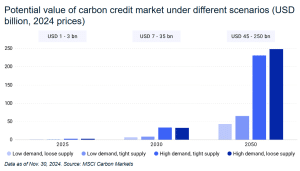
Projections show that the carbon credit market will grow tremendously. By 2030, it could grow to $7–$35 billion, according to MSCI. Several factors are driving this expansion. 

Demand for carbon removal credits is rising. Many view them as more credible, even though they cost more. Companies with ambitious climate goals for 2030 will likely rely on carbon credits to offset emissions. Buyers now focus on high-quality credits. They prefer projects with strong standards and clear transparency.

Looking further ahead, MSCI projects the market could reach $45–$250 billion by 2050. This growth will be driven by urgent corporate demand, as many companies approach their net-zero deadlines. 

carbon credit market value 2050 MSCI

The market will also shift toward removal credits, which could make up two-thirds of its value. These trends highlight the increasing importance of carbon credits in global climate strategies.

However, carbon market have long been hindered by inefficiencies and lack of transparency. Buyers face challenges in finding high-quality credits that align with their sustainability goals. Project developers face slow processes when responding to buyer requests and getting funding. 

Sylvera and BlueLayer’s partnership tackles these problems. It streamlines data exchange and boosts market access for buyers and developers.

This partnership uses BlueLayer’s digital tools and Sylvera’s carbon ratings skills. Project developers can show their carbon projects to buyers. Buyers also get real-time access to inventory, pricing, and project details. This helps them make better procurement decisions.

This is all done in a standard format for verified buyers. Buyers get real-time data with Sylvera’s Connect to Supply solution. This tool helps them easily evaluate and buy quality carbon credits.

Sylvera Connect to Supply
Source: Sylvera Connect to Supply platform

What are the Advantages for Project Developers?

This initiative helps project developers make money while keeping control of their data. By joining BlueLayer, developers connect with a large buyer network looking for quality credits. Some of the core benefits include:

  • Increased Visibility: Developers can connect with a wide range of buyers, boosting carbon credit sales for both pipeline and issuing projects.
  • Simplified Data Management: The platform lets developers manage carbon operations in one spot. This makes it easy to share data with potential buyers.
  • Efficiency in Data Exchange: Using standardized templates and automation speeds up responses to buyer requests. This reduces manual work in sales and due diligence.
  • Data Control: Developers choose what info to share, who to share it with, and when. This keeps their project data private and helps transactions go more smoothly.

How Do Buyers Benefit from It?

Buyers in the carbon credit market struggle to find reliable project information. But with Sylvera and BlueLayer’s partnership, they can now access real-time data. This includes key details from more than 200 developers. They focus on projects that reduce carbon through nature-based and engineering efforts.

The key advantages for buyers include:

  • Real-Time Data Access: Live inventory, pricing, and project details let buyers decide quickly and wisely.
  • Expanded Project Opportunities: Buyers can source credits from pre-issuance and issued projects. This gives them a wider range of investment options.
  • Trusted Due Diligence: Sylvera’s carbon ratings and monitoring tools help buyers check project quality. This way, they can reduce risks before buying.

Unlocking Billions for Real Climate Action

The partnership aims to unlock more than $2 billion for carbon projects. Already, over 80 projects have been introduced to buyers. These projects cover a total demand of 4 million carbon credits.

The collaboration aims to boost market liquidity. It will also drive more investment in climate solutions and speed up progress toward global net-zero targets.

BlueLayer Co-founder and CEO Alexander Argyros provides exclusive insights on this significant market development, highlighting these key points:

Solving Industry Challenges with Innovation

Argyros pointed out that the carbon market has great potential. However, it is held back by slow, manual processes. Developers have a hard time reaching buyers. Buyers, in turn, don’t have the data they need to invest confidently.

In fact, verification delays could cost project developers up to $2.6 billion, per a report by Thallo. These delays may also prevent the deployment of 4.8 gigatonnes of carbon credits by 2030. This shortfall is equivalent to not offsetting the annual emissions of 37 million U.S. citizens by the end of the decade.

Argyros notably commented that:

“This partnership is providing much-needed digital infrastructure, powered by BlueLayer’s API, for both suppliers and buyers, creating a faster, more connected, and more efficient market. Together, we’re leading the way when it comes to data standardisation and technology inoperability, enabling a seamless exchange of information to match buyers with high-quality project developers able to meet their specific investment criteria.”

Driving Market Growth and Investment

With over $2 billion in potential capital mobilization, Argyros emphasized BlueLayer’s role in shaping the future of carbon credit trading. As the first end-to-end operating platform for project developers, BlueLayer provides the necessary tools to scale businesses, maximize revenues, and streamline certification.

BlueLayer end-to-end platform
A snapshot of BlueLayer’s platform

The partnership with Sylvera boosts visibility by connecting developers to a large buyer network. This way, their high-quality projects get the investments they need to grow.

Ensuring Data Security and Transparency

Transparency and trust are critical to the success of carbon markets. According to Argyros, BlueLayer’s platform standardizes data while maintaining security and auditability through an end-to-end ledger system.

With this, developers keep full control of their information. This ensures data integrity and helps buyers make informed and confident decisions. 

Echoing Argyros points, Sylvera’s Co-founder and CEO Allister Furey noted:

“A successful global carbon market demands high-quality data to ensure that every credit traded reflects a real, measurable reduction in emissions. Partnering with Bluelayer enables us to remove barriers, simplify processes, and facilitate stronger connections between buyers and developers – on the foundation of end-to-end carbon data. It’s another big step in driving meaningful climate action and real progress as we continue to mature these markets.”

A New Era for Carbon Markets

The Sylvera-BlueLayer partnership sets a new standard for carbon market efficiency. It aims to speed up the shift to a clearer, larger, and better carbon credit market. A market that supports real climate action while making carbon trading more accessible and reliable for all stakeholders.

Gulf Countries Bet Big: $100B for Renewables to Slash Emissions by 20%

The Gulf Cooperation Council (GCC) nations, also called Gulf countries excluding Iraq, have announced a historic $100 billion investment in renewable energy by 2030. This initiative aims to reduce carbon emissions by up to 20% while transitioning toward sustainable energy sources.

With the region’s heavy dependence on fossil fuels, this bold move signals a major shift in energy priorities. But can the GCC truly lead the charge toward a greener future?

The $100 Billion Bet: Why It Matters

The announcement was made at the 43rd meeting on “Future Climate Change Management and Economic Development in the Gulf States” in Muscat. It marks a big step in the region’s energy change.

The GCC countries account for about 25% of the world’s oil production. They contribute around 1.5 billion tons of CO2 annually—roughly 4% of global emissions.

They also face serious climate risks. These include rising temperatures, water shortages, and higher sea levels. Projections show that Gulf temperatures could rise by as much as 2.5°C by the century’s end. This will make current environmental problems even worse.

Dr. Khalid bin Saeed Al Amri, Chairman of the Omani Economic Association, warned that ignoring climate issues could harm the economy. He noted that

“Global economic losses from climate-related disasters reached nearly $270 billion in 2022. In the Gulf region, failure to adopt effective climate measures could result in losses of up to 5% of GDP by 2050.”

Breaking the Oil Habit: GCC’s Energy Transition Strategy

The $100 billion investment will speed up the use of clean energy. This includes renewables, nuclear energy, and hydrogen. This aligns with global climate commitments such as the Paris Agreement and the objectives discussed at the COP summits.

The initiative marks a shift for the region, which has long depended on oil and gas revenues. GCC nations have a lot of fossil fuels, but they see the need to diversify their energy sources. They also want to improve sustainability urgently.

The Omani Economic Association and the Gulf Development Forum discussed climate strategies, energy policies, and necessary technologies. Experts looked at how behavioral science can aid climate action and the changing global climate framework.

Emissions Hotspots: The GCC’s Carbon Challenge

The six GCC nations – Bahrain, Kuwait, Oman, Qatar, Saudi Arabia, and the UAE – share similar economic structures and environmental challenges.

GCC countries rank among the highest in global CO2 emissions per capita. Qatar currently tops the list, with other GCC nations also among the top emitters, per a study of CO2 emissions of GCC households.

GCC countries carbon emissions per capita 2021
Chart from the study of Ahmed et al., 2024.

Additionally, electricity consumption per capita is extremely high. Four of the top 10 countries for electricity consumption per capita are from the GCC. High living standards, economic growth, and extreme climate conditions drive this. These factors need energy-intensive cooling systems.

Turning Sunlight into Power: GCC’s Renewable Push

The GCC region has a lot of renewable energy potential, particularly in solar and wind. However, only 0.6% of its electricity is generated from renewables. However, there are ambitious plans to expand renewable capacity as shown below:

GCC countries renewable energy targets 2030
Source: Ahmed et al., 2024.

Additionally, green building codes, energy efficiency programs, and conservation policies have been introduced.

In 2014, the UAE banned incandescent light bulbs. This decision saved an estimated $182 million each year. It also cuts carbon emissions, which is like taking 165,000 cars off the road. In contrast, Saudi Arabia still relies on incandescent bulbs, with LED adoption at only 30% in some regions.

Solar and Wind Energy: The GCC’s Untapped Goldmine

The GCC region is well-suited for renewable energy, especially solar power. Oman has the highest annual solar radiation of up to 2,500 kWh/m², followed by the UAE at 2,285 kWh/m². Saudi Arabia and Kuwait both record around 2,200 kWh/m². Additionally, Oman, Saudi Arabia, and Kuwait have promising wind resources, with wind speeds above 7.5 m/s.

Renewable energy has many benefits, but its growth is slow. This is mainly because the government keeps electricity prices low through subsidies. This discourages private investment in solar power for households. However, large-scale government-led projects are expected to change this dynamic.

GCC Nations’ Net Zero Commitments

The push for renewables is crucial for the region’s climate and net zero goals. Here’s what each of the GCC nations aims for:

  • UAE was the first Middle Eastern country to commit to net zero by 2050, aiming to reduce carbon emissions by 23.5% (70 million tonnes) by 2030. Abu Dhabi is investing in solar and nuclear energy projects. Meanwhile, Dubai’s Future Council of Energy has outlined a plan for a carbon-free economy. The Abu Dhabi Fund for Development has pledged $400 million. This funding will support renewable energy projects in developing countries.

  • Saudi Arabia aims for net zero by 2060 and has pledged $1 billion in climate initiatives under the Saudi Green Initiative. Plans include a regional carbon capture and storage center, an early storm warning system, and cloud seeding programs to support sustainability efforts.

  • Qatar has the highest carbon intensity per person. To tackle this, the country has started a climate change action plan. It aims to cut greenhouse gas emissions by 25% by 2030. Qatar also plans to reduce the carbon intensity of its LNG facilities by 25% in that time.

  • Bahrain has committed to net zero emissions by 2060 and aims to reduce emissions by 30% by 2035. The country is putting money into renewable energy. It is also focusing on carbon removal and planting trees to meet its climate goals.

  • Oman is targeting net zero by 2050 and aims for zero routine flaring by 2030, along with a 7% emissions reduction by the same year. The country is boosting investments in renewable energy and efficiency. It aims to produce 20% of its electricity from renewable sources by 2027.

Key Measures for a Sustainable Future

To reduce emissions and enhance energy efficiency, experts have proposed several strategies:

  1. Solar PV and Hybrid Energy Systems: Switching household lighting to solar PV or hybrid systems (solar + wind) can reduce emissions from electricity use by 8% to 30%.

  2. Energy-Efficient Appliances: Encouraging the use of LED lighting and efficient air conditioning systems could significantly lower energy demand.

  3. Consumer Behavior Change: Awareness campaigns and incentives for energy conservation can reduce household energy consumption.

The GCC can shift to cleaner renewable energy and still grow its economy. Their $100 billion pledge is a key step to tackle environmental and economic issues.

The coming years will be critical as these countries implement their energy transition plans. The success of this initiative relies on ongoing investments, solid policies, and teamwork among governments, businesses, and international organizations.

BYD to Partner with European Automakers to Offset Emissions Through Carbon Credit Pooling

Chinese EV giant BYD is in talks with European automakers to create a carbon credit pool. This effort helps traditional carmakers meet strict EU emissions standards. It also helps them avoid large fines starting in 2025.

Reuters reported that BYD’s special adviser for Europe, Alfredo Altavilla, confirmed the talks at an event in Italy. However, he did not provide specific details.

EU Tightening Grip on Light-Duty Vehicle Emissions

The EU aims to cut CO2 emissions from light-duty vehicles. This goal is part of their plan to fight climate change. Automakers are required to cut emissions significantly by 2025 compared to 2021 levels. The ultimate goal is 100% zero-emission vehicle sales by 2035.

  • In March 2023, the EU raised the bar further, mandating a 55% emissions reduction for cars and 50% for vans by 2030.

These tough policies urge automakers to boost EV production. They also force a big cut in emissions from ICE vehicles. This further keeps the industry moving toward a sustainable future. Study the breakdown from the figure here:

Challenges for European Automakers

To meet new regulations, battery electric vehicle (BEV) adoption will have to rise significantly. Automakers have to increase their BEV share from 16% in 2023 to about 28% by 2025. Each manufacturer, however, faces unique challenges. The latest report from ICCT shows:

  • Volkswagen and Ford must reduce emissions by 21%, the highest among automakers.
  • Hyundai, Mercedes-Benz, and Toyota face reductions exceeding the industry average of 12%.
  • BMW, Kia, and Stellantis are closer to their targets, with required cuts ranging from 9% to 11%.

These differences show how ready the industry is for EVs and how advanced the technology is.

EU automobile CO2 target
Source: ICCT
Note: Note: The 2025 targets are adjusted for expected changes in plug-in hybrid CO2 emissions. Data (sorted alphabetically) is shown for the 10 largest, leaving aside Tesla, a manufacturer that solely sells BEVs.

Carbon Credit Pooling: A Lifeline for Automakers?

Carbon credit pooling has emerged as a practical solution for automakers with limited EV sales. Manufacturers can team up with companies like BYD, Tesla, and Polestar. So how do they help automakers avoid the EU’s hefty cut?

  • Helps offset their fleet’s emissions and meet strict EU regulations.
  • Help them sell internal combustion engine (ICE) vehicles. They can do this while still meeting emissions limits.

Pooling agreements are reported to the European Commission by December 31 each year. This strategy gives European automakers a financial safeguard and vehicle manufacturers can avoid hefty penalties by getting closer to compliance.

Boosting Green Mobility with Emission Credits

We have seen and read how important emission credits are for the EU’s sustainability framework. In short, automakers earn these credits by producing vehicles with CO2 emissions below regulated limits. Companies like Tesla and BYD, which consistently outperform these standards, generate surplus credits.

They can sell these extra credits to traditional automakers. This helps others meet regulatory goals and generate revenue for themselves.

Additionally, this system encourages the production of low-emission vehicles. It fosters innovation and speeds up the industry’s move toward greener mobility.

BYD’s Advantage in Carbon Credit Pooling

BYD is a global leader in EVs. This makes it an excellent partner for carbon credit pooling. The wide variety of EVs and cutting-edge battery tech match the EU’s aim for zero-emission cars. By teaming up with BYD, traditional automakers can offset their emissions. This helps them meet regulatory targets and avoid fines.

Partnering with BYD boosts an automaker’s credibility in the EV market and attracts eco-friendly consumers. It also shows a commitment to lowering emissions.

 A Short-Term Fix for a Long-Term Challenge?

The increasing adoption of carbon credit pooling reflects a significant shift in the automotive industry. While EVs gain traction, many automakers continue to depend on internal combustion engine (ICE) vehicles for revenue.

Pooling agreements offer a temporary solution, allowing manufacturers to transition to electrification without immediate financial strain.

However, this strategy comes with challenges. Relying too heavily on pooling could stall critical investments in EV production and infrastructure. Automakers that fail to prioritize innovation risk losing competitiveness as emissions regulations become more stringent.

The EU’s tough climate policies are reshaping the industry. Carbon credit pooling provides short-term relief, but automakers must accelerate battery electric vehicle (BEV) production to remain viable and meet future emissions targets.

BYD’s entry into the European carbon credit market underscores the importance of global partnerships. Collaborating with EV pioneers and traditional carmakers can help drive the industry toward a more sustainable future. Success will depend on how quickly automakers adapt and innovate.

BYD’s Emissions Reduction Vision: Cooling the Earth by 1°C

BYD stated that in the last century, Earth’s temperature increased by 1.1°C. This rise has caused major environmental issues. To address this, BYD Auto and Mega Motor Company launched new green mobility solutions. These solutions focus on reducing carbon emissions and decreasing fossil fuel usage. They aim to lower Earth’s temperature by 1°C and create a healthier planet for future generations.

As of September 2024, the company’s efforts have:

  • Prevented 58 billion kg of carbon emissions, equivalent to planting 967 million trees.
  • Championed eco-friendly initiatives that reduce both operational energy use and pollution.

Driving Sustainability Through Green Operations

BYD’s 2022 CSR report emphasized its dedication to environmental protection through proactive measures. The company audits and verifies its greenhouse gas emissions. This ensures transparency and accountability. It also improves energy efficiency by making energy-saving upgrades throughout its operations.

The company has embraced electrification to make its operations eco-friendly. For example fully electric forklifts, trucks, and cleaning equipment power its production processes.

Its Zero-Carbon Campus uses 100% new energy-powered vehicles and innovative green solutions. The campus has solar panels and energy storage systems. It also offers SkyRail and SkyShuttle for green transport. By 2022, these efforts had successfully reduced 245,681 tons of CO2 emissions.

BYD emission
Source: BYD

BYD’s discussions with European automakers highlight the shifts in the automotive sector, propelling the EV giant’s sustainability goals. However, long-term success needs strong investments in EV technology and infrastructure.

Nickel Prices Plunge in 2025: Can Demand Revive the Market by 2030?

Nickel—a vital component for stainless steel and electric vehicle (EV) batteries—is facing a challenging period in 2025. Supply-demand imbalances, shifting policies, and economic uncertainty are shaping the market, which is further impacting its price.

Notably, Indonesia holds significant influence over prices and supply, being the world’s largest nickel producer. Let’s explore the current state of the nickel market, the forces shaping it, and what lies ahead in the pricing trend.

Key Factors Behind the Ongoing Nickel Price Slump

Nickel prices have been falling steadily for two years. In 2024, the London Metal Exchange (LME) recorded an average price of $15,328 per metric ton, down 7.7% from 2023. By early 2025, prices dipped even further to $15,078 per metric ton—the lowest since 2020.

  • However, analysts predict average prices are expected to be around $15,700 per metric ton—a level insufficient to attract significant new investments.

Several factors are driving the price slump, and some of them are starkly evident.

Strong US Dollar

A stronger US dollar has made nickel more expensive for international buyers, reducing demand. When the dollar strengthens, commodities like nickel become less affordable for those using other currencies.

Robust US labor market data in early 2025 also impacted prices, pushing nickel to its lowest levels in five years.

US-China Tariff War

Additionally, ongoing geopolitical tensions, like US-China trade disputes post-Trump took over the presidency, have created uncertainty.

For instance, in January 2025, the announcement of potential 10% tariffs on Chinese goods added more pressure on base metals, including nickel.

Persisting Oversupply

At the same time, nickel production has consistently outpaced demand. Indonesia’s aggressive output expansion is a significant factor. With the country accounting for nearly half of the world’s nickel supply, its policies directly influence market dynamics.

Market experts predict that Indonesia’s nickel output will continue to grow at a strong pace this year.

  • As a result, the global primary nickel market is expected to remain oversupplied in 2025.

Nickel Prices in 2025: Where Are They Headed?

While nickel prices briefly surged to $16,168 per metric ton in December 2024 due to speculation about output cuts in Indonesia, it was short-lived. Prices quickly fell back to $15,113 per metric ton, highlighting the market’s fragility.

Despite this, Russian producer Norilsk Nickel (Nornickel) expressed confidence, announcing plans to sell all its metal production in 2025. However, market experts believe Indonesia’s policies and global environmental regulations will continue to dictate price movements.

Additionally, environmental concerns will continue to reshape the nickel industry. Stricter regulations could limit production, creating uncertainty for producers and investors.

For instance, companies failing to meet green standards might face production cuts. This has prompted some producers to look for alternative sources of nickel ore.

In the short term, price recoveries seem unlikely. Still, nickel’s role in key industries like EVs and renewable energy keeps it significant. Companies need to innovate, prioritize sustainability, and adjust to new dynamics to thrive in this changing market.

Indonesia’s Nickel Power: A Market Shaper

Indonesia controls almost half of the world’s nickel production. This solidifies its role as a major market influencer. Therefore, its policies and strategies can shape the global nickel landscape.

In late 2024, optimism grew when talks of cutting mining quotas emerged.

Credible media agencies reported that the Indonesian Nickel Miners Association (APNI) shared data in a recent hearing with the House of Representatives. It revealed Indonesia’s nickel production is set at 298.5 million wet metric tons, exceeding 2024’s 272 million tons.

This move shows a strong commitment to high output, keeping the market once again oversupplied.

Indonesia nickel

Despite being the top nickel producer Indonesia faces a tough balancing act. The government wants to boost economic gains from nickel exports. At the same time, it needs to tackle rising environmental issues. Producers failing to meet sustainability standards could face stricter regulations or production cuts.

Some Indonesian companies are looking to import nickel ore from the Philippines. This unusual step shows the tough regulations producers will have to deal with.

China’s Grip on Refining Raises Concerns

China’s dominance in nickel refining further complicates the scenario. Chinese firms control 75% of Indonesia’s refining capacity. This gives them a major hold on this key part of the supply chain. By 2030, Indonesia will likely produce 44% of the world’s refined nickel.

This could increase supply chain risks for EV makers that depend on this resource.

This dependency has raised concerns. Disruptions in Indonesia’s nickel output or China’s refining could impact global EV production. Automakers and battery makers might need to change their supply chains soon.

READ MORE: China and Indonesia Bolster Ties with $10B Deal in Strategic Sectors. How will it Impact Indonesia’s Nickel Industry? 

Nickel Price Forecast 2030 and Beyond

The analysis for the supply vs. demand chart emphasizes that demand is growing at a faster rate than supply. Over the period from 2023 to 2035, the compound annual growth rate (CAGR) for supply is 4.6%, while demand is projected to grow at 5.1%.

nickel supply and demand

Building on the supply and demand forecast, the current nickel oversupply and low-price environment are expected to shift. With a declining market balance and reduced oversupply, nickel prices are forecasted to rise. By 2030 and beyond, demand is projected to exceed supply, leading to a further price increase.

Nickel price 2025 forecast

In conclusion, the nickel market is currently facing persistent challenges of oversupply, slower demand growth, and stricter environmental regulations. These factors consistently drive prices downward. However nickel prices for 2030 and beyond show optimism for industry growth and mining.

Microsoft Leads as Carbon Removal Credits Hit 8 Million Tonnes in 2024

Carbon removal credits are becoming a key tool for tackling climate change. The report from CDR.fyi shows that the carbon dioxide removal (CDR) market grew significantly in 2024. Carbon removal credits rose 78% to 8 million tonnes. This big rise shows more interest in carbon removal solutions for global climate action.

Carbon removal credits are different from regular carbon offsets. Instead of balancing emissions, they help fund projects that take CO₂ out of the air. This article explores the key trends, challenges, and outlook for the CDR market based on the latest findings from CDR.fyi

Big Tech Fuels CDR Market Boom 

Total CDR purchases reached nearly 8 million tonnes in 2024, a 78% increase over 2023, per CDR.fyi analysis. However, the number of unique purchasing companies grew by only 7%, from 202 to 216. 

Durable carbon removal credits CDR purchases 2024
Source: CDR.fyi report

The growth was primarily driven by repeat buyers such as Microsoft, Google, and Stripe. These big tech companies, along with other Frontier buyers accounted for about 80% of 2024 purchases. Their purchases highlight a high concentration of CDR demand. 

These companies lead in carbon removal investments, backing projects that grow new technologies. Their ongoing support is crucial. However, the few new players in the market raise worries about long-term stability.

  • Microsoft led the market with 5.1 million tonnes, making up 63% of the total volume. This is a small drop from its 70% share in 2023.
Top 20 CDR purchasers 2024
Source: CDR.fyi report

Microsoft, Google, Meta, and Salesforce created the Symbiosis Coalition. They promised to purchase 20 million tonnes of nature-based CDR by 2030.

CDR Supply Struggles to Keep Up

While the market is growing, demand remains insufficient to support the increasing number of suppliers. Only 36% of CDR suppliers listed on CDR.fyi registered a sale in 2024. Many suppliers might struggle to get funding without new buyers. This could lead to consolidations and bankruptcies in 2025 and 2026.

A few buyers dominate the market. If their priorities or financial plans change, progress could slow. Getting more industries on board is key for future growth. This includes manufacturing, transportation, and retail.

Microsoft and Frontier accounted for 12 of the top 20 purchases in 2024. Google increased its direct purchases, totaling 500,000 tonnes. Meta pledged to buy $35 million in carbon credits over the next year. The tech giant is still unsure how much to allocate to durable CDR or nature-based solutions.
top 10 CDR buyers 2024
Source: CDR.fyi report

Among suppliers, Stockholm Exergi’s 3.3 million-tonne sale to Microsoft set a new record. Ørsted expanded its relationship with Microsoft with an additional 1 million-tonne sale. Meanwhile, CO280, Terradot, and Gigablue made significant market entries with first-time sales.

top 10 CDR suppliers 2024
Source: CDR.fyi report

Meanwhile, venture investments in the CDR sector dropped 30% year-over-year in 2024 as investors exercised caution. Many are waiting to see which suppliers secure sales before committing additional funding. Suppliers who can’t make enough money might struggle financially. This can slow down innovation and reduce market variety.

Price Wars: Cheap vs. Costly CDR

The price of CDR credits remains a critical factor influencing market growth. The weighted average price per tonne decreased from $490 in 2023 to $320 in 2024

Remarkably, credit prices varied significantly based on removal technology. Biochar-based removal credits were cheaper. In contrast, direct air capture (DAC) credits stayed costly because of high tech and operation expenses.

Biochar, which converts waste into carbon that can be stored in soil, has prices ranging from $50 – $150 per tonne. In contrast, DAC, which extracts CO₂ from the air and stores it underground, remains costly, with prices going beyond $600 per tonne. 

The big cost difference slows down the use of DAC. It’s a great option for permanent carbon removal, but it’s still not widely adopted.

CDR pricing change 2023 to 2024
Source: CDR.fyi report

Biochar and Mineralization saw price increases, while other methods experienced declines. Most notably, mineralization saw a whopping 123% price increase, from $370 to $827 per tonne. 

The cost reductions indicate a narrowing gap between supplier and purchaser expectations. However, high-cost durable CDR methods may struggle to compete without additional buyer incentives.

The high price of high-quality CDR solutions continues to be a barrier to wider corporate adoption. To make CDR more accessible, costs must come down. This can be done through technological advances and economies of scale. This will help a wider range of companies and industries use CDR in their climate goals.

Durable CDR deliveries hit 318.6K tonnes in 2024. This is a 120% rise from 2023. However, the delivery-to-booked volume ratio was just 4.4%. Many companies are still increasing production. Biochar accounted for 86% of total deliveries. As other methods mature, the overall delivery rate is expected to rise.

CDR credits deliveries 2024
Source: CDR.fyi report

Policy Push and Tech Breakthroughs

Government policies and incentives are critical to sustaining growth in the CDR market. Some governments have taken proactive steps to integrate CDR into their climate strategies. The United States has increased funding for CDR projects with initiatives like the US 45Q tax credit. Meanwhile, the European Union is creating a certification framework for carbon removal. 

Denmark and Sweden’s BECCS subsidies have helped build expensive facilities. But, the absence of global standards makes it hard for companies to deal with regulations.

Better policy clarity and uniform regulations may enhance corporate confidence and promote broader adoption. 

Technology is also making carbon removal solutions more efficient and affordable. In 2024, DAC cut costs. Biochar and ocean-based CDR projects also gained traction. 

In addition, ocean-based carbon removal has gained interest due to its potential for large-scale impact. Techniques like ocean alkalinity enhancement boost the ocean’s ability to absorb CO₂. They’re currently being explored. 

However, scalability remains an issue. Deploying these technologies on a large scale needs a big investment. Many companies hesitate to invest without better financial incentives. If costs keep falling because of new technology, more companies may invest in CDR solutions. This could speed up market growth.

What’s Next for CDR? Challenges and Opportunities

Despite strong growth, the CDR market faces key challenges:

  • Dependence on a Few Buyers: The market needs new participants to ensure long-term stability.
  • High Costs: Prices must come down for broader adoption.
  • Regulatory Uncertainty: Standardized policies could provide clearer incentives for companies to invest.
  • Technological Barriers: Further advancements are needed to improve scalability and affordability.

However, there are also opportunities, namely:

  • Government Support: Increased funding and policy incentives could drive growth.
  • Innovation: Technological improvements could lower costs and enhance effectiveness.
  • New Market Entrants: Demand could expand significantly if more companies commit to CDR.

The carbon removal credits market in 2024 saw impressive growth, but it still faces hurdles. More companies should enter the market; costs must fall, and rules must change. With continued investment, innovation, and policy support, CDR could become a key component of global climate action, helping meet net-zero goals more effectively.

Carbon Markets in 2025: A New Era of Accountability, Quality, and Transparency

This year, companies are improving their climate strategies by integrating carbon offsets. The focus is on projects that create real environmental benefits. With public scrutiny increasing, transparency and quality are top priorities. Top market analysts predict that in 2025, the carbon market will shift. It will emphasize credible, high-integrity solutions. This change will create a stronger, more reliable system for achieving climate goals.

Clearer Rules for Offset Use in 2025

As per Wood Mackenzie, in 2024, independent standards updated 15 offset methods to align with best practices. These changes involve new methods for carbon removal and regional programs.

  • For example, the Science-Based Targets initiative (SBTi) requires companies to cut emissions by 90% across their value chains.

In 2025, SBTi will decide if offsets can apply to Scope 3 emissions or if they will encourage early investments in carbon removal. This decision will provide much-needed clarity for corporate climate plans.

As the year progresses, we can expect more advancements in these methods. They will boost the market’s credibility and reliability.

VCMs Embrace the Shift to Higher-Quality Carbon Credits

MSCI’s latest report on sustainability and climate trends shows big improvements in the quality of voluntary carbon market projects over the past year. Based on their carbon project ratings by mid-2024:

  • Nearly 50% of retired credits were rated B or lower, while only 8% were rated A or AA.

  • Although no projects achieved the highest AAA rating, the progress was evident.

Between Q2 2022 and Q2 2024, the share of the lowest-rated credits (CCC) dropped from 29% to 15%. The use of A or AA credits doubled. This shows a clear shift toward higher integrity and quality in carbon credits.

They analyzed 8,844 firms in the MSCI ACWI Investable Market Index (IMI) and found that firms using carbon credits reported their Scope 1, 2, and 3 emissions more transparently. Those firms were also more likely to set and achieve emission reduction targets more efficiently.

This analysis shows that carbon credits are usually part of larger climate strategies. They are not a replacement for cutting emissions.

Carbon Market

Core Carbon Principles Boost Credibility

In 2024, the ICVCM launched Core Carbon Principles (CCPs) to enhance the quality of carbon credits. These principles set strict standards, helping buyers choose reliable offsets. The ICVCM also labeled high-quality projects, guiding businesses toward credible options.

By January 2025, it planned to evaluate 90% of the market, ensuring informed decisions and better-quality credits.

Compliance Markets Go Global

India and Japan have launched hybrid emissions trading systems. Also, ICAO approved six offset standards for aviation under CORSIA. However, a shortage of carbon offsets has pushed prices higher.

Wood Mackenzie revealed,

  • Airlines need over 135 MtCO2e of offsets to keep emissions below 85% of 2019 levels, which highlights more need and demand for solutions.

Clearer guidelines, stricter standards, and rising demand are key for this year’s carbon markets. To achieve carbon reductions, businesses must be proactive and stay focused on their climate goals.

corsia CARBON MARKET

Carbon removal methods are gaining popularity. Two key methods are Direct Air Capture (DACCS) and Bioenergy with Carbon Capture and Storage (BECCS). They are known for their strong impact. These methods can be costly, but better techniques are making them more practical. Still, financing is a major barrier to scaling these technologies.

The graph shows how average prices and the share of carbon offset retirements have changed from 2015 to 2024. Removal offsets saw a sharp rise in prices starting in 2020, reaching about $11 per tCO2e by 2024.

This spike suggests a growing demand for removal offsets, driven by a stronger focus on long-term sustainability and effective carbon reduction solutions.

carbon offset price

Carbon Border Taxes: Expanding Beyond the EU

In 2025, the EU is set to provide updates on expanding its Carbon Border Adjustment Mechanism (CBAM). Key areas to watch include:

  • Coverage of indirect emissions in steel, aluminum, and hydrogen sectors.

  • Inclusion of transportation emissions and other materials like organic chemicals.

  • Timeline for adding other sectors under the EU Emissions Trading System (ETS) by 2030.

Importers will soon face financial obligations under CBAM, making carbon accounting essential. The EU will provide flexibility for emissions data, possibly exempting small and medium enterprises. The CBAM Registry will open for non-EU operators in 2025, encouraging companies to work closely with their suppliers.

Beyond the EU, other nations are also adopting carbon border taxes. The UK and Australia are moving forward with their CBAM plans in 2024. Meanwhile, Chile and Taiwan are adding carbon border mechanisms to their pricing systems.

In the US, support is growing for a carbon levy like the Foreign Pollution Fee Act. This is happening alongside a rise in protectionism.

COP29: A Boost for Global Carbon Markets

Last year’s COP29 is driving major growth in global carbon markets by advancing Article 6. It allows governments to buy offsets to meet their climate targets (NDCs). By February 2025, countries will update their NDCs. This will clarify how carbon offsets fit into their plans.

Article 6.2

Article 6.2 enables nations to trade Internationally Transferred Mitigation Outcomes (ITMOs). While some agreements are already in place, low-quality carbon projects remain a concern.

A better collaboration of governments, UN bodies, and voluntary carbon market (VCM) initiatives will be crucial to set clear standards and enhance transparency in carbon trading.

Paris Agreement Carbon Market (PACM)

The Paris Agreement Carbon Market (PACM) helps developing countries build strong carbon trading systems. At COP29, leaders agreed on high standards for project methodologies and social impacts.

Both MSCI and Wood Mackenzie expect detailed rules by 2025. They predict PACM credits will likely enter the market by late 2025. This will offer businesses new opportunities to align with the Paris Agreement.

Subsequently, companies must choose between adopting Article 6’s stricter standards or improving VCM systems. Investors might also face a similar dilemma—wait for Article 6 rules or utilize the current VCM. As Article 6 is expected to boost market credibility, it will also raise future demand by providing clearer guidelines and higher standards.

Governments to Tighten Reins on Carbon Markets

In 2025 and beyond, governments will play a bigger role in carbon markets. They aim to ensure transparency and accountability. For example, the EU plans to launch a Carbon Removal and Carbon Farming (CRCF) framework in 2025. This will include new methodologies. Meanwhile, the US and UK have introduced guiding principles for voluntary carbon markets.

The EU’s Green Claims Directive also bans offset-only claims. Now, European Sustainability Reporting Standards (ESRS) and International Financial Reporting Standards (IFRS) require detailed carbon offset disclosures. Yet, companies will need to adapt to meet these rising transparency standards.

The Carbon Credit Market Beyond 2025

By 2030, the carbon credit market might grow to between $7 and $35 billion, says MSCI. Looking ahead to 2050, the forecast is even brighter, with estimates of $45 to $250 billion. Key trends fueling this growth include:

  1. Corporate Climate Goals

  2. Rising Demand for Carbon Removal Credits

  3. Higher-Quality Credits

carbon market

As carbon markets continue to evolve, 2025 could be a pivotal year. Companies will likely adopt higher standards and clearer rules. They will also use innovative carbon removal technologies. With stronger government involvement and improved benchmarks, the market is poised for growth. This growth will ensure greater integrity and reliability.
Lithium’s Comeback in 2025: Will Surging EV Demand Fuel the Next Price Boom?

In 2025, the lithium market is showing signs of recovery after a period of uncertainty. Lithium is key for electric vehicle (EV) batteries and consumer electronics. It is vital for the clean energy transition. 

The global lithium market is shaped by factors like EV growth, supply changes, and geopolitical issues. Here’s a closer look at what to expect for lithium this year and the near future.

EV Sales Surge: Can Lithium Keep Up?

A major factor boosting lithium demand is the rise in sales of plug-in electric vehicles (PEVs). This includes both battery electric vehicles (BEVs) and plug-in hybrid electric vehicles (PHEVs). 

In 2024, global PEV sales reached 16.5 million units, a 28.5% increase from the previous year, per S&P Global data. A significant portion of this growth came from China, which accounted for 86% of the global increase in PEV sales. 

The US also played a role, contributing 5.9%, while the European Union experienced a slight decline in sales due to policy changes.

In particular, China’s EV market has been bolstered by competitive pricing, government incentives, and a growing variety of models. As more consumers switch to EVs, the demand for lithium, a key component in EV batteries, continues to rise. 

This shift is crucial for cutting global carbon emissions. Electric vehicles are a cleaner option than traditional internal combustion engine (ICE) vehicles.

Lithium Prices on a Rollercoaster

Lithium prices have been volatile, with a rebound seen in early 2025. The price of lithium carbonate, used in batteries, rose by 4.5% in January 2025. This increase came from higher demand for restocking before the Lunar New Year holidays. Maintenance at many lithium refineries has also added to supply issues.

Despite this, the overall outlook for lithium prices remains cautious. In the face of a growing supply surplus, prices are expected to stabilize between $10,000 and $11,300 per ton through 2029. 

Supply growth may outpace demand for now, but market conditions could change by the decade’s end. A possible supply deficit might drive prices up.

The Lithium Power Struggle: US vs. China

Geopolitics plays a significant role in the lithium market. The US and China are competing for control in EV and battery tech. To protect their industries, both countries are imposing trade restrictions. 

In January 2025, China suggested restricting lithium extraction and refining technologies. This step helps the world’s largest carbon emitter gain more control over the global lithium supply chain. This is important for lithium-iron-phosphate (LFP) batteries.

China’s soaring demand for electric vehicles (EVs) has fueled a sharp increase in its lithium reserves. It is the largest EV market in the world and so it needs a lot of lithium for batteries. This demand is pushing the country to speed up exploration and resource development.

annual raw material demand China
Chart from ICCT

China’s lithium reserves have nearly tripled, making the country the second-largest holder worldwide. Demand is set to increase by 2025. This expansion shows China’s drive for more self-reliance in the electric vehicle supply chain.

The US, in response, is focusing on strengthening its domestic mining and refining capabilities. US President Donald Trump’s “Unleashing American Energy” order seeks to simplify permits for mining. This change may boost lithium production in the country.

However, the process of developing new lithium mines in the US is slow. On average, it takes around 16 years for a mine to go from discovery to production. This long timeline could limit the US’s ability to meet its domestic demand for lithium in the short term.

Surprise Lithium Giants: Who’s Joining the Race?

New lithium producers are joining traditional ones like Australia and Chile. For example, Saudi Arabia is investing heavily in lithium projects. 

In December 2024, Ma’aden, Saudi Arabia’s state-owned mining company, teamed up with the local startup Lithium Infinity. They will extract lithium from brine. This partnership helps Saudi Arabia diversify its economy and boost its role in the EV and battery markets.

This investment signals the growing global interest in securing reliable sources of lithium. Other countries want to boost their lithium production. Several African and European nations are making deals to develop lithium resources.

Challenges Ahead: Economic Uncertainty

The EV market is growing quickly, but the lithium industry faces challenges. Economic issues like inflation and changing government policies may lower consumer spending and demand for lithium. 

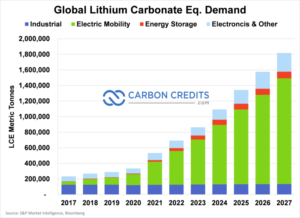
global lithium carbonate equivalent demand 2017-2027

For instance, in the US, President Trump’s policies might slow EV adoption by reversing climate goals. If the federal government cuts the $7,500 tax credit for EV buyers, electric vehicles may become more expensive. This change could hurt lithium demand.

In Europe, the situation is equally uncertain. The upcoming election in Germany could influence the future of the EV market. 

Germany plays a key role in Europe’s car industry. The election results could impact its push for electric mobility. The uncertainty around policy shifts in key markets like the US and Germany could result in fluctuating demand for lithium.

Lithium’s Next Chapter: Boom or Bust?

It is expected that the lithium market will face a surplus in 2025, as supply growth continues to outpace demand. However, the situation could change in the latter part of the decade, with a potential supply deficit driving prices higher. 

In 2025, the lithium market is navigating a period of uncertainty and opportunity. Prices should stabilize soon, but the long-term outlook looks bright. Strong demand from the electric vehicle industry drives this positivity. As companies and countries work to tackle climate-related issues, lithium becomes vital for the clean energy shift.

Amazon’s Q4 Triumph: Revenue Rises, Sustainability Shines

Amazon ended 2024 with strong sales, record-breaking revenue, and impressive profits. However, the stock market reacted cautiously due to a less optimistic forecast for early 2025. However, the retail giant focused on financial performance and made key strides in sustainability and innovation.

Amazon’s Holiday Sales Hit New Highs

The 2024 holiday season proved to be a major win for Amazon. The company reported $187.8 billion in sales for the fourth quarter, up 10% from 2023 and profits doubled to $20 billion or $1.86 per share. It exceeded analysts’ expectations of $1.49 per share.

Andy Jassy, President and CEO of Amazon, also affirmed by saying,

“The holiday shopping season was the most successful yet for Amazon and we appreciate the support of our customers, selling partners, and employees who helped make it so.”

Early Discounts, More Spending

This strategic approach to holiday sales contributed massively to its success. By offering deals as early as October, the company attracted early shoppers. It also helped maintain momentum through key events like Black Friday and Cyber Monday. This strategy made Amazon a top shopping spot for the holidays.

AWS Stands Out

Notably, Amazon Web Services (AWS), the company’s cloud computing arm, was a standout performer. AWS generated $10.6 billion in operating income, a rise from $7.2 billion in 2023. This growth highlighted the increasing demand for cloud and AI technologies.

For the entire year, Amazon recorded $638 billion in revenue, an 11% increase from 2023. Despite challenges like fluctuating exchange rates, the company maintained a consistent growth trajectory.

Andy Jassy further expressed himself by saying,

“When we look back on this quarter several years from now, I suspect what we’ll most remember is the remarkable innovation delivered across all of our businesses, none more so than in AWS where we introduced our new Trainium2 AI chip, our own foundation models in Amazon Nova, a plethora of new models and features in Amazon Bedrock that give customers flexibility and cost savings, liberating transformations in Amazon Q to migrate from old platforms, and the next edition of Amazon SageMaker to pull data, analytics, and AI together more concertedly. These benefits are often realized by customers (and the business) several months down the road, but these are substantial enablers in this emerging technology environment and we’re excited to see what customers build.”

Amazon revenue
Source: Amazon

2025 Forecast

Amazon expects first-quarter sales in 2025 to range from $151 billion to $155.5 billion. This shows a growth rate of 5% to 9% from last year. However, this outlook is below analysts’ expectations of $158.56 billion in revenue.

Amazon’s Commitment to Carbon Neutrality

Amazon is equally focused on sustainability. Its sustainability report revealed that in 2023, the company cut its carbon emissions by 3%. It reduced its carbon footprint to 68.82 MMT CO2e from 70.74 MMT CO2e in 2022. This was driven by an 11% drop in Scope 2 emissions and a 5% decline in Scope 3 emissions. However, Scope 1 emissions rose by 7% due to increased transportation fuel use.

Amazon also slashed its carbon intensity for the fifth year in a row. This means a 13% drop from 2022 levels. This progress shows its dedication to minimizing its environmental impact.

Amazon emissions
Source: Amazon

Renewable Energy Milestone

Additionally, Amazon is growing its renewable energy portfolio. This includes wind, solar, and new tech like small modular reactors. Its AWS is playing a crucial role in meeting growing energy demands.

Energy efficiency is a key focus for AWS data centers. Amazon collects data and designs systems to boost energy efficiency. This helps lower its carbon footprint. The company is also increasing battery storage capacity to stabilize energy grids and speed up the shift to clean energy.

It also invests in green tariffs and utility contracts to launch new renewable projects.

amazon renewable energy
Source: Amazon

Electrifying Transportation

Transportation is a critical area for Amazon’s emissions reduction strategy. The company plans to deploy 100,000 electric delivery vans by 2030. These vans will come from Rivian and other manufacturers. These efforts are transforming Amazon’s logistics network while cutting transportation-related emissions.

Investing in Carbon-Neutral Solutions

Amazon’s commitment to sustainability goes beyond emissions reduction. The company invests in new technologies through its $2 billion Climate Pledge Fund. This fund helps reduce the cost of decarbonization in various industries.

This initiative also supports startups developing solutions for hard-to-transform sectors and unavoidable emissions. Such strategies include:

  • Nature-Based Solutions: The company supports projects to reduce deforestation and restore ecosystems. These initiatives capture carbon, protect biodiversity, and benefit local communities.

  • Carbon Removal Technologies: Amazon is developing scalable solutions. These include direct air capture, bioenergy with carbon capture and storage (BECCS), and mineralization. These technologies remove CO2 from the air and address difficult emissions.

Amazon’s strong performance in 2024 shows its ability to balance growth and sustainability. It sets benchmarks for innovation and environmental responsibility. Despite challenges, its focus on efficiency, renewable energy, and decarbonization makes it a leader in creating a sustainable future.