

The Philippines is moving to turn its forests into a larger source of climate finance as it takes on a tougher emissions target. The country has a 2026–2030 roadmap for the voluntary forest carbon market. It is creating the registry, monitoring systems, and policies to draw in private investment for forests.
The move comes just days after the Philippines submitted its updated 2026 Nationally Determined Contribution (NDC) to the UN climate process.
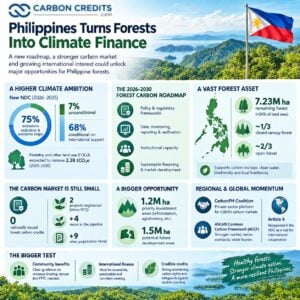
The new NDC keeps the country’s 75% emissions reduction and avoidance target, but changes the structure. The target now covers 2025–2035 and includes forestry and other land use (FOLU).
Of the 75% target, 7% is unconditional, while 68% depends on international support. That makes forest carbon more than a conservation opportunity. It could become one tool for helping the Philippines secure investment needed to deliver its broader climate targets.
Philippines Puts Forests at the Center of Its Climate Strategy
The Philippines’ new NDC gives forests a much larger role in its emissions pathway. The 2026 NDC covers energy, transport, industrial processes, agriculture, waste, and forestry and other land use.
Updated government modelling shows the FOLU sector has been a net carbon sink since 2020. The NDC estimates that FOLU policies could reduce cumulative emissions by about 2.3 billion tonnes of CO₂e between 2025 and 2035 compared with the business-as-usual pathway.
With all identified policies and measures, the country is projected to become a net sink over the 2025–2035 period. That makes protecting and expanding the forest carbon sink important to the country’s overall climate strategy.
The NDC commits the Philippines to fully use this sink. This will happen through forest protection, reforestation, and sustainable land management.
DENR Forest Management Bureau Assistant Director Ray Thomas Kabigting remarked:
“FMB is ready to converse with the business sector in a more scaled-up way wherein we’re talking about financing, we can already understand balance sheets, and we can produce policies that are actually aligned with business concepts and business science rather than just pure forestry science.”
A Five-Year Roadmap for Forest Carbon
The Department of Environment and Natural Resources (DENR) formally adopted its Roadmap to Readiness in the Voluntary Forest Carbon Market 2026–2030 through Administrative Order No. 2026-02.
The roadmap identifies four priorities:
- Policy and regulatory frameworks,
- Data, monitoring, reporting, and verification,
- Institutional capacity, and
- Sustainable financing and market development.
The goal is to make the Philippines more attractive for high-quality forest carbon projects while creating safeguards around carbon ownership, benefit sharing, and environmental integrity.
The roadmap also calls for a DENR Forest Carbon Credit Database that will track forest carbon projects and credits. It is designed to connect with a broader national carbon registry being developed under the country’s Article 6 framework. This infrastructure matters because buyers increasingly want evidence that credits are real, additional, and not counted twice.
7.23 Million Hectares Give the Philippines a Major Carbon Asset
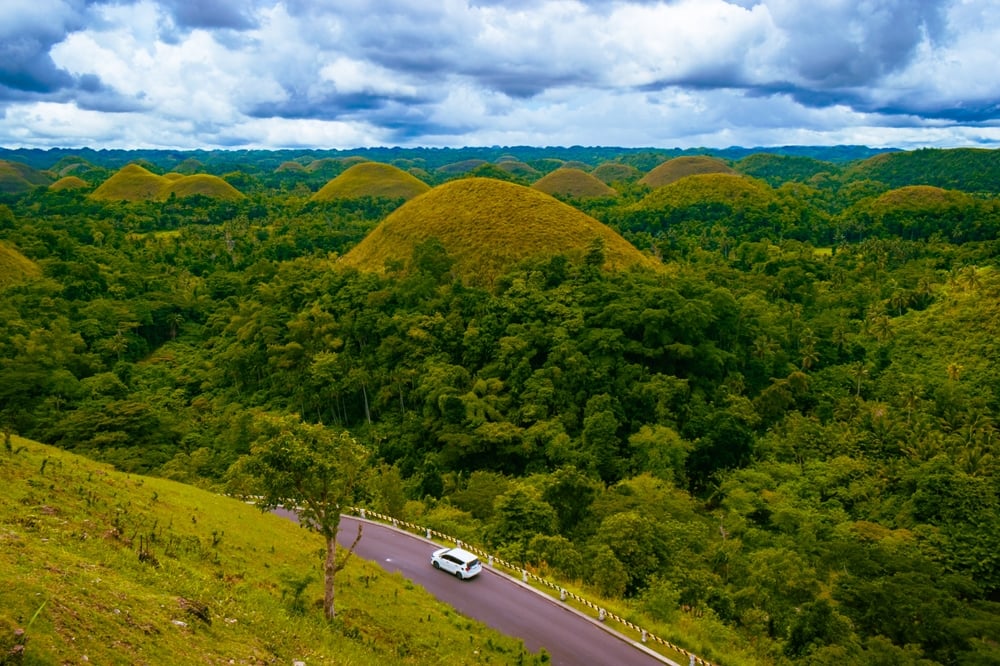
The economic opportunity is significant. The DENR roadmap estimates that the Philippines has about 7.23 million hectares of remaining forest, equal to roughly 24% of the country’s land area.
The document estimates that around one-third is closed-canopy forest and two-thirds is open forest. These forests provide more than carbon storage. They also protect watersheds, reduce soil erosion, support biodiversity, and provide livelihoods for local communities.
However, forest finance remains a major challenge. The roadmap says global investment in forests is about $2.2 billion per year. Still, the world needs over $450 billion annually to reach forest and climate goals.
Carbon finance can help bridge that gap. It creates revenue linked to clear forest protection and restoration efforts. The Philippines is thus trying to move from short-term conservation funding toward longer-term investment models.
The Forest Carbon Market Is Still Small, but the Pipeline Is Growing
Despite the potential, the Philippine forest carbon market remains small. The DENR roadmap says there were no nationally issued carbon credits at the time of its stocktake. Existing credits had been issued through international standards.
The government identified two projects registered under Verra’s Verified Carbon Standard, with four additional projects in the pipeline. At least nine other forest carbon projects were also identified outside the Verra system.
Some projects are in Mindanao. Other opportunities are being looked into in areas with community forest agreements, ancestral domains, and other forest tenure arrangements.
The roadmap highlights 1.2 million hectares of classified forest land as key investment areas. These areas are prioritized for reforestation, agroforestry, and other forest-based development.
Another 1.5 million hectares are being assessed for possible release for future development. That could significantly expand the potential project pipeline. But land tenure, carbon rights, and benefit sharing remain important hurdles.
CarbonPH Pushes the ASEAN Opportunity
This is where the recent CarbonPH Coalition initiative becomes important. At a CarbonPH Coalition Education Series session, DENR officials shared their plans. They aim to strengthen forest carbon project registration. They will also establish carbon baselines and expand monitoring.
The DENR Forest Management Bureau is creating a registry to track projects and credits. They are also using satellite monitoring to enhance verification.
The Philippines is also seeking a stronger position in the ASEAN Common Carbon Framework (ACCF). The country is an observer right now, while the regional initiative is focused on building a stronger carbon market. It aims to improve supply integrity, boost demand, and ensure interoperability.
The United Nations Environment Programme (UNEP) says annual investment in nature-based solutions must nearly triple by 2030, reaching more than $542 billion a year. This funding will be critical to meet global climate, biodiversity, and land restoration goals.
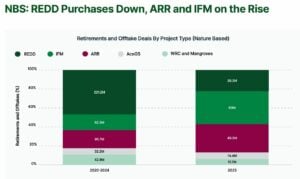
At the same time, demand for high-quality nature-based carbon projects is growing. Forest protection (REDD), reforestation (ARR), and mangrove restoration remain major sources of nature-based carbon credits. Buyers are increasingly looking for projects backed by strong science, reliable monitoring, and clear benefits for local communities.
That could give Philippine forest projects access to a wider pool of regional buyers if standards and systems become more connected.
Regional competition is already growing. Malaysia has a government-supported carbon exchange. Indonesia and Thailand are also building their carbon market systems. For the Philippines, credible forest projects could become a way to compete on quality rather than simply price.
Carbon Finance Must Also Deliver for Communities
Scaling forest carbon will require more than satellites and registries. The DENR roadmap identifies benefit sharing as a major gap.
Developers must submit benefit-sharing plans. However, the roadmap notes that more guidance is needed on revenue distribution. That issue matters a lot. Many potential projects affect communities, forest tenure holders, and Indigenous Peoples.
The roadmap calls for stronger safeguards and recognition of Free, Prior and Informed Consent (FPIC) where projects affect ancestral lands and domains. The credibility of Philippine forest credits depends on two things:
- How much carbon they remove or avoid, and if local communities gain real benefits.
The forest carbon roadmap fits directly into the Philippines’ broader climate finance challenge. The new NDC says implementation depends on access to accessible, predictable, and adequate international support.
That means finance, technology, and capacity building are not secondary issues. They are central to delivering the country’s climate commitment. Carbon markets could become one part of that financing mix.
The new NDC also recognizes Article 6 mechanisms as tools for international cooperation and resource mobilization. Any international transfers, however, will require strong governance, monitoring, and safeguards against double counting.
Forest Carbon Could Link Climate Goals and Investment
The Philippines now has two pieces of a potentially important climate finance strategy. The 2026 NDC places the country’s forest sink directly inside its emissions pathway.
The CarbonPH Coalition is adding a private-sector platform to connect those developments with emerging ASEAN carbon markets. But the opportunity is still at an early stage.
The country needs clearer carbon rights, reliable monitoring, workable tenure rules and transparent benefit sharing before forest carbon can scale. It also needs international finance to help develop projects that may not be commercially viable on carbon revenue alone.
If those pieces come together, Philippine forests could play a larger role in both emissions reduction and climate finance.
The bigger test is whether the country can turn its millions of hectares of remaining forest and its expanding carbon market infrastructure into credible, investable climate assets while ensuring that communities and ecosystems share in the value.