

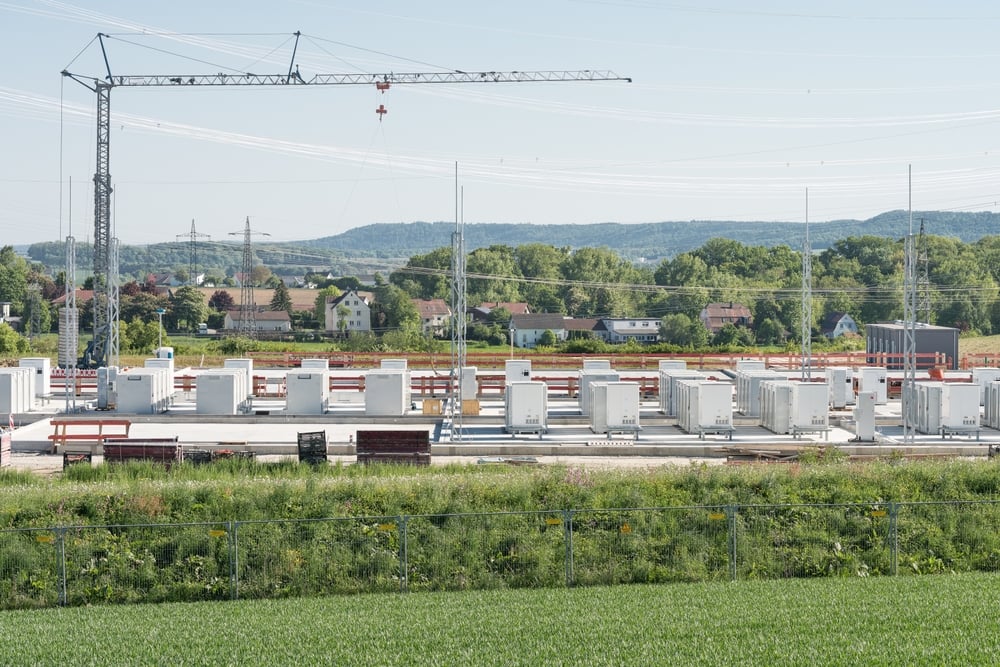
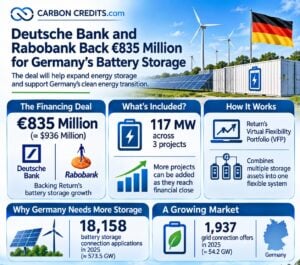
Deutsche Bank and Rabobank are backing an €835 million (about $936 million) financing package to help energy storage company Return expand its battery storage business in Germany. The deal will support new projects as the country works to integrate more wind and solar power into its electricity system.
The portfolio facility initially covers three battery energy storage projects with a combined capacity of 117 megawatts (MW). More eligible projects can be added as they reach financial close.
The financing combines support for physical battery assets with Return’s Virtual Flexibility Portfolio (VFP). This model connects multiple storage facilities into one virtual system. Energy companies can access flexible electricity capacity through a single platform.
The transaction involves several financial and technical advisers. Rabobank acted as financial adviser, while White & Case advised the lenders. Other firms involved included Hogan Lovells Cadwalader, Baker McKenzie, Baringa, DNV, EY, EY-Parthenon, and Marsh.
The deal comes as Germany’s battery storage market grows. It also shows how private finance helps build the infrastructure for a power system with more renewable energy.
A Financing Framework for Germany’s Battery Expansion
The €835 million facility gives Return a way to finance several battery projects under one structure instead of arranging separate financing for every site. This approach could help speed up project development. Eligible facilities can access funding as they progress toward financial close, without having to restart the financing process each time.
The initial portfolio includes three projects in Germany with a combined power capacity of 117 MW. Return stated that, with four-hour batteries running two full cycles each day, the facilities could provide enough electricity yearly to power around 100,000 German households.
The company plans to add more projects to the financing framework through 2027.
Return also has wider growth plans for the German market. It aims to install at least 1 gigawatt (GW) of battery storage capacity each year from 2027. The company estimates that this would require annual investment of €750 million to €1.2 billion, depending on market conditions.
The financing is therefore part of a much larger expansion plan. The company has not said that the full €835 million will be used only for the three projects in the initial portfolio.
Daniel Witvoet, CFO at Return, remarked:
“As demand for energy flexibility grows, we need to scale not just our battery storage capacity, but also the way we finance it. By bringing together physical infrastructure financing and our virtual flexibility model, we can expand more efficiently and respond to our customers’ evolving needs. This is an important step towards our ambition to become a leading independent provider of energy flexibility in Germany.”
Why Germany Needs More Battery Storage
Germany is adding more wind and solar power to its electricity mix. However, these sources do not produce power at a steady rate. Solar generation changes with daylight and weather, while wind output can rise or fall depending on conditions.
Battery storage can help manage these changes. It can store electricity when supply is high and prices are low, then release it when demand rises or renewable generation falls. This can help balance the grid and make better use of clean electricity.
Germany’s Federal Network Agency explains that battery systems can respond to electricity market prices, support grid stability, and improve the use of renewable power. The need for this flexibility is becoming clearer as storage projects move through the development pipeline.
According to data published by Germany’s Federal Network Agency in August 2026, network operators received 18,158 battery storage connection applications in 2025. These requests represented about 573.5 GW of planned power capacity and 1,583 gigawatt-hours (GWh) of energy capacity.
However, these figures do not represent projects that are certain to be built. Developers sometimes submit applications for the same project at several possible locations. The regulator noted that only one location may ultimately be selected.
A more advanced measure is the number of grid connection offers. In 2025, network operators issued 1,937 offers covering 54.2 GW of power capacity and 142.4 GWh of energy capacity. These offers provide a clearer picture of project progress because they are binding proposals for connection agreements.
Even so, projects still need to secure financing, complete construction, and meet other requirements before they can operate.
Germany’s Storage Pipeline Reflects a Growing Market
Germany’s battery storage market has expanded as renewable energy has gained a larger role in power generation. Fraunhofer ISE reported that, in 2025, wind and solar power generated more electricity than any other source in Germany’s public electricity mix. The shift increases the need for storage and other flexible resources that can help match supply with demand.
The International Energy Agency has also identified utility-scale battery storage as an important part of Germany’s energy transition. Large batteries can provide services such as frequency response and reserves, helping the grid remain stable as the electricity mix changes.
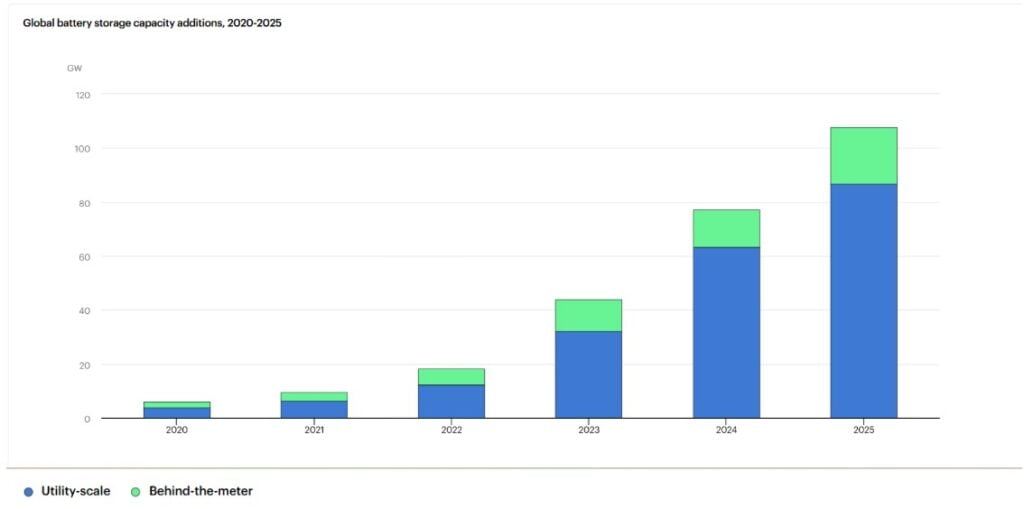
Globally, battery storage is growing quickly as well. The IEA’s Global Energy Review 2026 reported that 108 GW of new battery storage capacity was deployed worldwide in 2025, 40% more than in 2024. Global installed capacity was 11 times higher than in 2021.
These trends are creating opportunities for developers, utilities, and financial institutions. However, the scale of Germany’s connection requests also shows that grid access and project delivery remain important challenges.
Return Builds Its German Energy Flexibility Business
Return is an Amsterdam-based energy storage company that develops, owns, and operates large-scale battery systems. Its Virtual Flexibility Portfolio combines capacity from different storage assets. Customers can access flexible power through one platform.
The company has already secured commercial agreements with energy firms in Germany. ENGIE expanded its contracted battery flexibility partnership with Return to 400 MW, while Centrica Energy signed a separate 100 MW agreement.
- Return also works with companies including Vattenfall, Essent, and Eneco in other European markets.
The new financing supports the physical infrastructure behind these services. It also gives Return a structure that can accommodate additional projects as its German business grows.
Battery Storage Could Help Germany Integrate More Renewables
Battery storage does not generate renewable electricity. Instead, it helps make power from sources such as wind and solar more useful by storing surplus electricity and releasing it when needed. This can reduce the need to rely on fossil-fuel power plants during periods of low renewable output. It can also help limit wasted renewable generation when electricity supply exceeds demand.
However, the climate benefits of battery storage depend on how the systems are charged and used. Batteries charged mainly with fossil-fuel electricity may deliver smaller emissions benefits than those charged with surplus renewable power. Their full environmental impact also depends on battery materials, manufacturing, operating life, and recycling.
So, the €835 million financing is better seen as support for energy infrastructure, not as a direct measure of emissions cuts. Return has not disclosed a specific emissions-saving estimate for the three projects covered by the initial facility.
The deal nevertheless shows how banks can help fund technologies that support a more flexible electricity system. As Germany expands its renewable energy supply, investment in storage will be important to balancing the grid and making better use of clean power.
Return’s planned annual installations of at least 1 GW from 2027 would mark a major step in its German expansion. Whether it reaches that pace will depend on market conditions, project development, and access to grid connections. For now, the new financing gives the company a broader funding structure to support its next stage of growth.