


Companies around the world are spending billions to cut their carbon emissions. But even as they work toward net-zero goals, they continue to release large amounts of greenhouse gases every year.
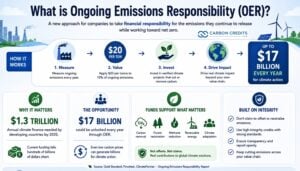
A new report from Gold Standard, Pinwheel, and ClimatePartner says these “ongoing emissions” could become a major source of climate funding. If companies track their yearly emissions, they could invest up to $17 billion each year into projects that cut or remove carbon from the air.
The report introduces Ongoing Emissions Responsibility (OER). OER suggests that companies should contribute yearly to climate projects instead of relying on carbon credits. They should also keep working on reducing emissions in their operations.
Gold Standard says this approach could unlock billions of dollars in private investment at a time when the world faces a growing climate finance gap.
Why Climate Finance Is Still Falling Short
The report comes as governments and businesses struggle to raise enough money to meet global climate goals.
The United Nations estimates that developing countries will need around $1.3 trillion each year by 2035. This funding is vital for cutting emissions and adapting to climate change. Current funding is still far below that level, leaving a gap of hundreds of billions of dollars each year.

Most companies focus their climate spending on reducing emissions from their own operations and supply chains. While this remains essential, Gold Standard says it does little to address the emissions businesses continue to release while working toward net zero.
Many companies do not expect to reach net zero until 2040 or 2050. Until then, billions of tons of carbon dioxide will continue entering the atmosphere. Gold Standard says companies need to take financial responsibility for ongoing emissions now, and not wait for decades.
What Is Ongoing Emissions Responsibility?
OER is meant to work alongside — not replace — corporate decarbonization. The report specifically refers to it as:
“OER is a structured approach through which organisations can take responsibility for emissions that remain unabated each year as they progress toward net zero.”
Under the framework, companies continue cutting emissions across their operations and value chains. At the same time, they invest in verified climate projects based on the amount of emissions they still produce each year.
That funding can support a wide range of climate solutions, including:
- Carbon removal technologies,
- Forest restoration and conservation,
- Methane reduction projects,
- Renewable energy, and
- Climate adaptation programs.
Unlike traditional carbon offsets, companies would not claim these projects cancel out their own emissions. Instead, they would present them as contributions to global climate action.
Gold Standard says this makes climate claims clearer and reduces the risk of greenwashing. OER activities fall under these categories:
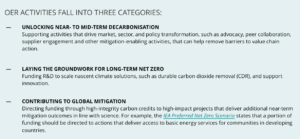
The framework also backs the idea of Beyond Value Chain Mitigation (BVCM). This encourages companies to invest in emissions cuts outside their own operations while they keep decarbonizing internally.
How Companies Could Generate $17 Billion Each Year
Gold Standard believes corporate climate finance could grow rapidly if more businesses adopt OER.
The report models a system in which companies apply an internal carbon price to their ongoing emissions. Even relatively low carbon prices could generate around $17 billion every year for climate action.
- The model assumes businesses contribute $20 per metric ton of CO₂ for 10% of the emissions they continue to produce while working toward net zero.
Many companies already use internal carbon pricing to guide business decisions. According to CDP, more than 1,000 companies worldwide either use an internal carbon price or plan to introduce one. Gold Standard proposes linking those internal carbon fees directly to climate investments.
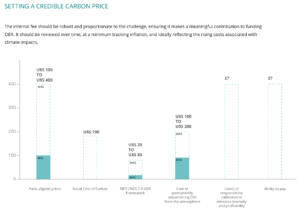
The report also recommends a “money-for-tonne” approach. Under this model, companies contribute funding for every tonne of carbon dioxide they continue to emit. Unlike buying offsets, these payments would provide steady funding for climate projects while companies continue reducing their own emissions.
Gold Standard recommends that businesses make OER part of their long-term climate strategy.
It identifies five priorities:
- Integrate OER into company planning.
- Adopt stable funding methods.
- Build diversified climate portfolios.
- Strengthen transparency.
- Develop internal expertise.
The New Rules for Credible Carbon Credit Use
Gold Standard says carbon credits can still play an important role in corporate climate action—but only if companies use them the right way. The report argues that credits should no longer be used to claim that a company has “offset” or “neutralized” its emissions. It writes:
“Carbon credits are a funding mechanism that quantifies mitigation outcomes from climate projects and are used to fund climate action without implying one-for-one compensation of a buyer’s emissions. This distinction separates the tool from compensation style messaging and aligns its use with contribution-based responsibility for ongoing emissions.”
The report also sets out several conditions for credible carbon credit use. Companies should buy credits from trusted programs with transparent methods, independent verification, and strong environmental and social safeguards. Credits should align with the goals of the Paris Agreement and avoid double-counting.
Gold Standard suggests regular checks, clear public reports, and ongoing monitoring of carbon credit portfolios. Companies should show that carbon credits complement, not replace, direct emissions cuts. They must keep value-chain decarbonization as their top priority.
A Shift Beyond Traditional Carbon Offsetting
Gold Standard’s proposal comes as the voluntary carbon market continues to evolve.
For many years, companies used carbon credits mainly to offset emissions and support net-zero claims. However, concerns about project quality and transparency have increased scrutiny of the market.
Organizations like the Integrity Council for the Voluntary Carbon Market (ICVCM), the Voluntary Carbon Markets Integrity Initiative (VCMI), and the Science Based Targets initiative (SBTi) have launched new standards. These aim to boost market integrity.
The biggest shift is the growing focus on cutting emissions first. Under the SBTi Corporate Net-Zero Standard, companies need to cut at least 90% of their emissions. Only then can they use carbon removals for the small amount left.
Gold Standard’s OER framework supports this approach. Companies should report their emissions openly. Instead of saying carbon credits offset these emissions, they would fund climate action outside their own operations.
This approach could improve transparency and help companies avoid misleading climate claims.
Can OER Help Close the Climate Finance Gap?
OER is still a new idea, and companies are only beginning to test how it will work. Gold Standard says the industry needs more pilot projects, case studies, and collaboration. This step is essential before the framework can be widely adopted.
Even so, the report reflects a broader shift in corporate climate action.
More businesses now recognize that reaching net zero is not only about reducing emissions inside their own operations. It also means helping fund the global transition to a low-carbon economy while those reductions are taking place.
If companies take financial responsibility for their emissions, billions could support projects that restore forests, reduce methane, expand renewable energy, and scale carbon removal technologies. That funding could help narrow the climate finance gap while speeding up global emissions reductions.
Whether OER becomes common practice remains to be seen. But Gold Standard’s proposal suggests the next step in corporate climate action may not be claiming carbon neutrality. It may be taking greater responsibility for the emissions that companies continue to produce today.