Frontier, a carbon removal fund backed by Google, Stripe, and other large companies, has closed one of the biggest carbon removal deals in history worth $53 million with Charm Industrial.
Charm Industrial is a San Francisco-based carbon removal startup that takes waste biomass and transforms it into bio-oil, and then injects it deep underground to store permanently.
Frontier is a coalition backed by the tech giants aiming to spend about $1 billion on advanced buying of carbon removals. Its main goal is to speed up the development of carbon removal technologies and build strong future demand for them.
The $53 million that Charm will receive is in exchange for removing 112,000 tons of CO2 between 2024 and 2030.
Enabling Carbon Removal Startups to Scale
Legally, Frontier is a public benefit LLC wholly owned by Stripe, but is co-founded by other big tech companies including Meta, Shopify, McKinsey, Alphabet, and more.
The coalition represents the growing interests of major corporations to ramp up the growth of the carbon removal industry. Its offtake deal with Charm is a legal agreement to buy future tons of CO2 removals at a set price.
Though the price per metric ton wasn’t disclosed, a rough estimation would make it into $473/t. Three years ago, Stripe paid Charm $600/t by removing and storing 416 mt of carbon.
Up until the Charm agreement, Frontier had committed only half a million dollars in pre-purchase deals with early-stage startups. But despite the small amount, the funding support helps carbon removal companies to speed up technological development.
Frontier head, Nan Ransohoff, pointed out that some of these early companies will deliver tons of removals while others won’t. But that’s fine. Most of the carbon removals will come from Frontier’s offtake funding track, which will see more deals coming.
Ransohoff further said that:
“Over the past three years, Charm has gone from concept to delivering thousands of tons in a relatively short period of time, which is a demonstration of great execution. This team is moving very quickly.”
How Does Charm Remove CO2?
Since it started operating in 2018, Charm managed to remove over 6,000 tons of carbon. The deal with Frontier will prompt Charm to rapidly ramp up its CO2 removal capacity.
The carbon removal startup pioneers a novel way of removing and storing CO2 underground for good. It takes waste biomass like corn stalks, transforms it into boi-oil, and pumps it underground in EPA-regulated wells.
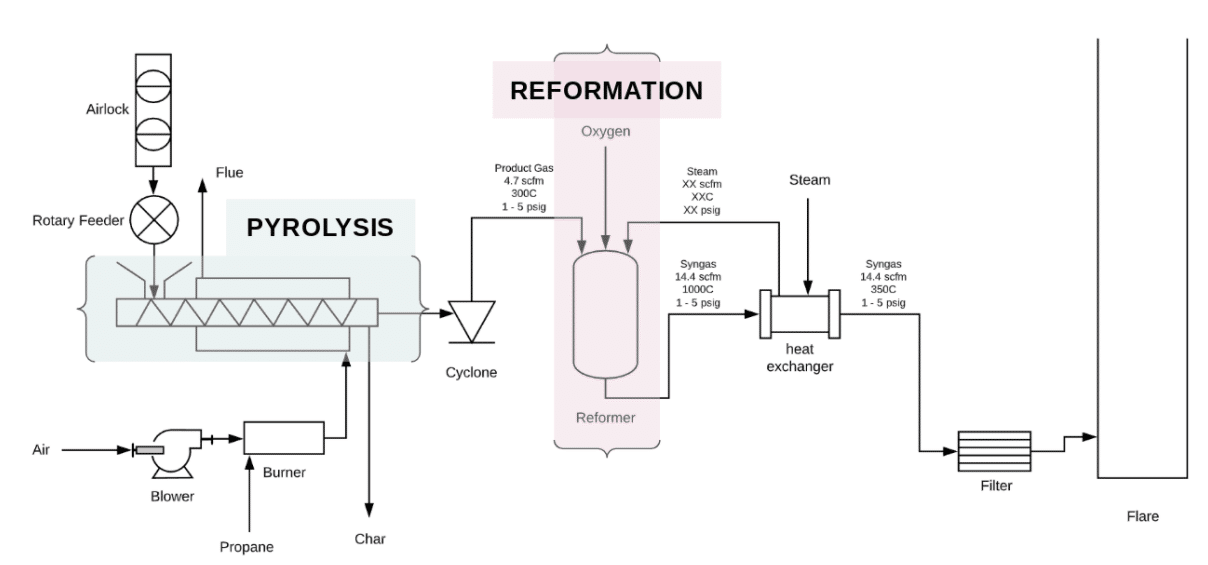
What makes Charm’s process unique is how its removal works shown below. That’s through the process that the company’s CEO, Peter Reinhardt, describes as “half-assed gasification”. The gasification process involves pyrolysis – the heating of an organic material like in the absence of oxygen.
Source: Charm Industrial website
The process produces bio-oil using a pyrolyzer machine that can fit into the back of a semi-trailer. This allows Charm to pull right up to farms and perform the process right at the edge of the fields.
Reinhardt said that most of their sequestered bio-oil so far has been bought and not created by their own technology. But he believes that with the Frontier deal, they can scale up the process and build more pyrolyzers and mobile facilities.
Frontier’s team of scientists and technical people will also help Charm and other carbon removal startups gain more traction. The $53M will cover the costs of Charm’s removal projects and the measuring, reporting and verifying (MRV) to ensure quality.
Commercializing Carbon Removal
The race to net zero requires removing billions of tons of carbon each year by 2050. The carbon removal industry removes only a few thousand tons right now. And this makes offtake deals like Frontier very important to ensure the industry has the runway to take off.
Frontier is not alone in this race of commercializing the industry. A growing number of companies are willing to pay the high cost of removing and storing carbon to balance out their emissions.
Another group formed by Alphabet, Microsoft and Salesforce, called the First Movers Coalition, committed $500 million to removing CO2. The tech coalition aims to decarbonize industry and transport.
Other corporations are also supporting carbon removal initiatives to help the world reach net zero emissions by mid-century.
Their carbon removal purchases are a part of the voluntary carbon market, where each metric ton of carbon removed earns one credit.
Charm Industrial said it expects carbon removal prices to go down to $100/ton by 2040 from $600/ton today. The expected price is what many experts believe the industry needs to reach to commercialize and attract more buyers.
The U.S. Department of Energy (DOE) has opened a $2.25 billion funding program for carbon sequestration or CO2 capture and storage projects to more applicants after selecting the first batch of 9 winners with a $242 million funding round.
The $4.9B Funding from Bipartisan Infrastructure Law
In November 2021, President Joe Biden signed the Bipartisan Infrastructure Law, a once-in-a-generation investment to tackle the climate crisis. The law earmarked about $12 billion to carbon management, specifically to carbon capture, storage, and transportation of CO2.
Under this law, the DOE revealed its $4.9 billion funding for 3 carbon management demonstration and deployment programs. These funding opportunities seek to slash emissions from power generation and sectors that are difficult to decarbonize like steel and cement.
According to the Energy Secretary, Jennifer Granholm, the series of funding initiatives are crucial in meeting Biden’s goal to reach a net zero economy by 2050.
The Department also launched four programs with $3.7 billion funding to help scale up the carbon dioxide removal industry. These include the $115 million prize awards to Direct Air Capture technologies to bolster different approaches to DAC. The program also includes building regional DAC hubs in the country.
DOE’s $2.25B Program for Carbon Capture and Storage
One of the Department’s new funding opportunities is the $2.25 billion for the validation and testing of large-scale, commercial carbon storage projects. Qualifying projects should be capable of storing 50 million tonnes of CO2 and the Department just revealed the winning applicants.
The agency picked 9 commercial carbon storage projects qualified for federal funding. These winning projects are found in the Midwest, West and on the Gulf Coast.
The recipients include 4 higher education institutions, BP PLC subsidiary BP Corporation North America, and the Southern States Energy Board.
Pointing out that the funding wisely focuses on carbon storage projects, an executive from the Carbon Capture Coalition stated:
“The US has abundant, well-characterized carbon storage capacity that can safely and permanently store billions of tons of carbon dioxide emissions, but currently lacks the necessary infrastructure and capture facilities to fully utilize this potential”.
Indeed, the recent funding announcement will help address that infrastructure gap.
Earlier this year, the DOE also rolled out $2.52 billion to fund 2 carbon capture initiatives. These are the “Carbon Capture Large-Scale Pilots” and “Carbon Capture Demonstration Projects Program” seeking to cut emissions from hard-to-abate industries. The main goal is to speed up and boost investment in technologies that capture, transport and store carbon.
All these funds for carbon capture and removal projects are part of the total of $62 billion dedicated by the bipartisan infrastructure law for DOE’s research, development, demonstration, and deployment of clean energy technologies.
Expanding Carbon Capture and Storage
Complementing the Bipartisan Infrastructure Law, the Congress expanded the tax credits for carbon capture in the 2022 Inflation Reduction Act. It awards polluters up to $85 for every metric ton of carbon captured and stored safely underground.
As per DOE’s estimates, actions under the two laws will result in 40% emissions reduction against 2005 levels economy-wide.
The agency further said that the remaining funds for carbon storage are available under a broader scope. The funding program now includes early-stage development projects while expanding the definition of carbon storage to support more offshore projects. Project developers can apply under the program until July 6.
The Department also selected 3 carbon transportation projects in Texas and Wyoming to receive funding from another program. Together, they’ll get a total of $9 million for engineering and design activities.
3M, a leading manufacturer and science company, has partnered with Svante Technologies, a carbon capture and removal firm known for its expertise in carbon capture and removal. Together, they aim to create Direct Air Capture (DAC) products, designed to capture carbon dioxide directly from the air and permanently remove it
The deal reaffirms the companies’ commitment to providing materials science-based solutions to reach net zero emissions and fight global warming.
Scaling Up Supply of Carbon Capture and Removal Materials
3M has 120+ years of expertise in producing and supplying materials science-based solutions at unmatched scale. It manufactures a broad range of products, from building materials and adhesives to medical and cleaning supplies.
The company brings that massive experience and expertise in the carbon dioxide removal (CDR) industry by working with Svante. An executive from 3M, Ray Eby, asserts the company’s commitment to scaling up climate tech solutions, saying that:
“3M is committed to helping build a low-carbon economy… We are driven by a need to solve the world’s most pressing challenges. and our partnership with Svante to create innovative climate solutions is an exciting prospect for us.”
Just like how the company tripled the supply of N95 respirators during the early days of COVID-19, 3M is as eager to scale the production of carbon removal materials over the next decade. Through its 51 tech platforms, 3M innovates and creates new technology capabilities to meet the growing needs of the industry.
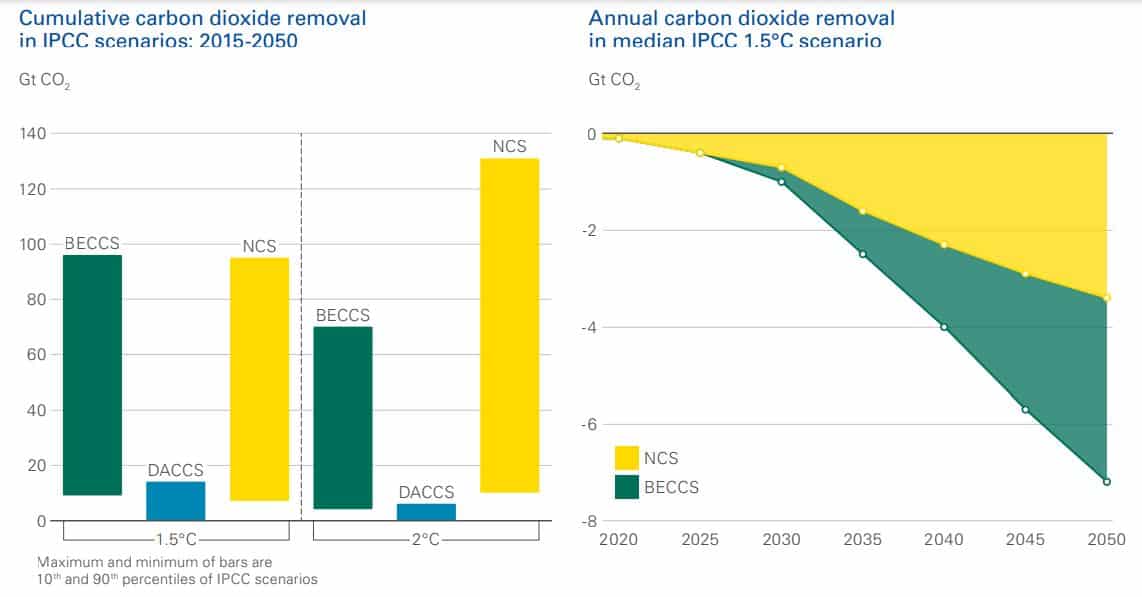
This is important in meeting the demand for CDR, which climate scientists believe critical in achieving the Paris goal. CDR solutions include bioenergy combined with CCUS (BECCS) and direct air carbon capture with storage (DACCS or DAC).
That said, the market for carbon removal is expanding rapidly. Investments came pouring in from large companies wanting to help early-stage CDR tech startups scale up and bring costs down. In fact, the industry has its own dedicated venture capital fund called Counteract, while government support reached billions of dollars.
Joining the CDR supporters and investors, the venture capital arm of 3M, 3M Ventures, participated in Svante’s Series E fundraising. The said round raised $318 million to accelerate the manufacturing of Svante’s carbon capture and removal technology.
Capturing Millions of Tons of CO2
Svante manufactures solid sorbent-based filters and rotary contactor machines that capture large-scale carbon emissions for storage or further industrial use. Its filters are available for point-source capture from hydrogen, cement, steel, aluminum, pulp & paper plants, and refineries, and DAC applications.
Because of the broad range of markets Svante serves, the company’s CEO Claude Letourneau says Svante’s tech is applicable to 85% of the total carbon capture and removal market. By adding 3M into their global partners, it will further help Svante in capturing millions of tons of CO2 worldwide.
In order to help meet that goal, 3M has to scale the production of DAC materials over the next few years. It will be the company’s first CDR products in the U.S. for Svante’s DAC applications.
The joint development agreement between the companies focuses on developing and manufacturing carbon adsorbent technology for the carbon removal industry. This venture is part of 3M’s plans to invest about $1 billion to accelerate new environmental goals and one of them is to be carbon neutral by 2050.
Zefiro Methane Corporation, a private methane offsets originator, acquired a majority ownership stake in Plants & Goodwin (P&G), an oil well plugging company.
Led by executives from the former carbon market team at J.P. Morgan, Zefiro seeks to reduce methane emissions by plugging orphaned and abandoned oil and gas wells. This then enables the company to produce methane emission offsets, also known as carbon offset credits.
P&G is a Pennsylvania-based provider of services to plug orphaned oil and gas wells for over 50 years.
Methane Emissions from Abandoned Wells
Methane (CH4) is the second most abundant greenhouse gas (GHG) after carbon dioxide that’s responsible for about 20% of global emissions. This gas is at least 25x to over 80x more potent as CO2 at trapping heat in the atmosphere.
Methane concentrations in the air have increased alarmingly since 2007. Scientists said that this rising CH4 emissions may be the biggest threat to keep global temperatures below 1.5C.
The increasing methane pollution is largely because of human-related activities. And one such activity is abandoning oil and gas wells that are causing serious problems to the U.S.
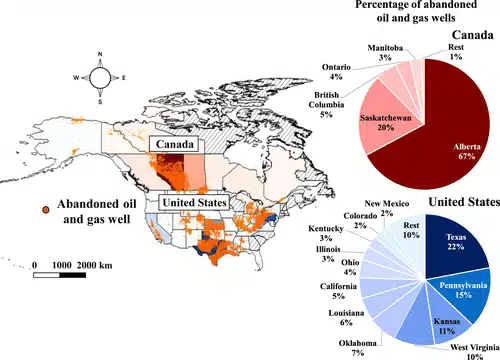
According to recent estimates, there are more than 4 million orphaned oil and gas wells in the U.S., spreading out across 26 states. Here’s the percentage share of orphaned oil and gas wells in Canada and the US, according to a study published in the American Chemical Society.
These abandoned, unplugged wells spew out methane that can greatly pollute the air that people breathe. The leaking methane is equal to burning over 16 million barrels of oil, per government estimates.
As such, the inactive wells pose as one of the country’s most pressing concerns in advancing a sustainable economic growth. In response, the Infrastructure Investment and Jobs Act 2022 specifically set aside almost $5 billion to help states plug abandoned wells. To date, all 26 states have applied for funding.
Zefiro comes to the government’s aid by addressing the methane pollution from unplugged oil and gas wells. Its acquisition of P&G shows that commitment.
In translating that commitment to reality, Zefiro’s Founder & Chairman, Talal Debs, remarked that:
“Zefiro’s strategy is to integrate real (physical process) innovation with new forms of capital, through the ‘environmental’ credit markets; the result will be a new kind of enterprise. By enlisting veteran operators like Plants & Goodwin, we are taking the first big step to making our unique vision a reality.”
Zefiro’s Methane Emission Reductions and Carbon Credits
Acquiring Plants and Goodwin will position Zefiro as the leader in fixing the environmental and health problems left behind by the oil and gas companies that abandoned the wells, allowing them to emit methane for decades.
P&G is a family-owned company that has been plugging wells for more than 5 decades. It is focusing on idle wells in shale and sandstone formations across the Appalachian Basin.
They said that their partnership with Zefiro is “a game-changer for finally bringing about a large-scale, nationwide solution to methane emissions from abandoned wells.”
Luke Plants, assuming the CEO role for P&G, further pointed out that with Zefiro, they’ll be among the first to tackle the problem and be a model for other basins across the U.S.
Zefiro’s methane emission reductions efforts not only align with the industry’s goal of a greener future. The Vancouver-based company is also expanding the supply of carbon credits working as offsets crucial for achieving net zero targets.
The company primarily trades in the voluntary carbon markets, believing that firms that go “above and beyond” mandated emission reductions bring a higher environmental benefit that aligns with their ESG policy.
How Does Zefiro Generate Carbon Credits?
Every project is unique because of the many variables of an abandoned oil well. But Zefiro’s projects generally follow the six major steps below as described in their website.
Project Setup. Zefiro measures pre-plugging emissions and prepares the project document outlining emission baselines, project boundaries and activities.
Engage Third-Party Verifying/Validating Body (VVB). Zefiro enlists a 3rd-party VVB to audit and certify each project, ensuring it meets all criteria for carbon credit issuance. The independent body needs to confirm that the project will indeed achieve the methane emission reductions it claims.
Undertake Well Decommissioning. Zefiro will plug each well, ensuring that no emissions can escape by using advanced technologies and adhering to applicable standards and regulations.
Final Emission Assessment. Once decommissioning is over, Zefiro will do the final assessment to make sure that all project deliverables are met.
Issue Offsets. The applicable standards organization (e.g., Verra, American Carbon Registry, Gold Standard) issues the appropriate number of offsets.
Retire Offsets. Offsets are retired or removed from circulation for GHG reductions claim toward a net zero goal or other use. Retirement happens in accordance with the program’s registry processes. Once retired, offsets are not transferable and can’t be used again for other environmental claims.
Zefiro will roll-out to different states, deploying staff to decommission wells nationwide.
The trading of carbon credits can help entities and the world meet their climate goals by cutting carbon emissions and practicing sustainable business. While some companies have various means to get rid of their footprint, many simply don’t have any at their disposal. And so using carbon credits is a necessity for them.
But how can carbon credits help promote the best practices that ensure the future of sustainable business? How can they be instrumental in advancing both corporate sustainability and global sustainable development?
This article will explain how by looking into best practices that can scale up the voluntary carbon market and help businesses achieve their climate change goals.
Companies Ally in Conquering Climate Change
The number of businesses pledging to help put an end to climate change by slashing their own GHG emissions continues to grow. Yet many of them find that they cannot fully get rid of their emissions, or even reduce them as fast as they may like.
The challenge is particularly tough for entities with net zero emissions targets, meaning removing as much carbon as they emit. For them, it helps to use carbon credits to offset emissions they can’t eliminate by other means.
Voluntary carbon credits, also known as carbon offsets, are bought by companies for reasons other than compliance. These market instruments help direct private financing to climate-related projects and initiatives that won’t otherwise be developed or take off. More importantly, these projects also offer added benefits beyond just carbon reduction like job creation and biodiversity conservation.
Carbon credits also have the potential to bring down the cost of emerging climate technologies by providing startups enough capital. And most importantly, this market tool can help drive investments to places where nature-based emissions reduction projects are most viable.
How Can Carbon Credits Help Companies Reach Their Climate Goals?
Achieving climate goals seems to be the finish line among organizations these days. But what does it really mean?
Collectively, that means limiting the rise in global temperatures to 2.0°C above pre-industrial levels, and ideally 1.5°C. Putting that in context, it means cutting global GHG emissions by 50% of current levels by 2030 and bringing them to net zero by 2050.
More and more businesses are aligning themselves with this global sustainable development agenda. In fact, the number of companies with net zero climate commitments doubled in less than a year – from 500 (2019) to 1,000 (2020).
Among those businesses, reducing carbon emissions to be carbon neutral or net zero has major limitations. For instance, a big part of the pollution of companies operating in the cement industry comes from processes they simply can’t just stop.
So, how can they reduce their emissions without stopping their business operations? By buying carbon credits.
Carbon credits work like permissions allowing holders the right to emit a certain amount of carbon under the compliance market. Within the VCM, carbon credits represent the corresponding quantity of carbon that has been reduced or removed by an initiative.
Remember that each carbon credit is equal to one tonne of carbon removed or prevented from entering the atmosphere.
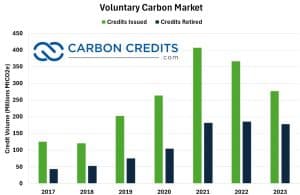
Carbon credits have been in use for years now, but their voluntary use has grown immensely only in recent years. As seen in the chart below, buyers have retired (claimed the impact of the credit) over 250 million credits per year since 2020.
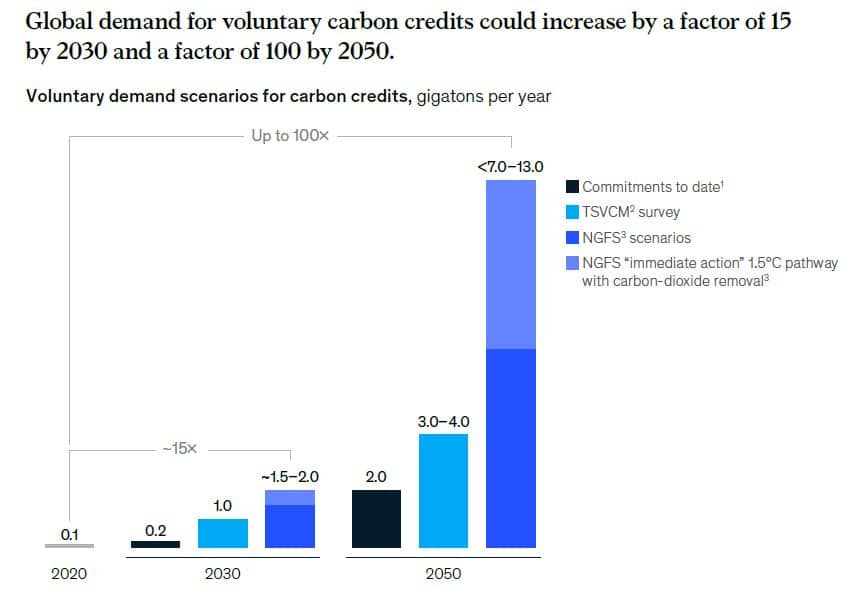
And as global efforts to transition to low-carbon and sustainable practices intensify, demand for carbon credits will also grow. Based on industry estimates, annual global demand for carbon credits can go up to 1.5 to 2.0 gigatons of CO2 by 2030 and up to 7 to 13 GtCO2 by 2050.
That also means the VCM size can be between $30 billion and $50 billion by the end the decade, depending on various factors such as price.
Source: McKinsey & Company
Per McKinsey analysis, the supply of carbon credits to meet such projected demand will come from these categories:
avoided nature loss (including deforestation);
nature-based sequestration, such as reforestation;
avoidance or reduction of emissions such as methane from landfills; and
technology-based removal of carbon dioxide from the atmosphere.
While the future of sustainable business becomes possible through carbon credits, some challenges exist that may prevent VCM’s scale up. If not addressed fully, these roadblocks can bring down supply from 8-12 GtCO2 per year to 1-5 GtCO2.
Key challenges include:
Most nature-based supply of carbon credits is concentrated in few countries
Difficulty in attracting enough financing
Long lag times between capital raising and selling carbon credits
Carbon accounting and verification methods vary, making supply of high-quality carbon credits
Some confusions in the definition of the credits’ co-benefits (benefits beyond carbon reductions)
Long lead times in verifying carbon credits quality, which is crucial to achieve market integrity
Other problems include unpredictable demand, low liquidity and limited data availability
Though these challenges are indeed daunting, they are not invincible. By adopting best practices in using and integrating carbon credits into climate change mitigation measures, the VCM can help secure the future of sustainable business.
Best Practices to Scale Up the VCM
As we have demonstrated, carbon credits can help promote corporate sustainability by helping companies reach their climate goals. And as most of us know, large companies are the most guilty in dumping carbon into the air.
As long as they are making efforts in cutting their carbon footprint and bringing it to net zero, they can still continue doing business sustainably. But what can these big businesses and other market players do to ensure that the market doesn’t wither but grow?
Here are the top four ways that could further develop the VCM and scale it up for more carbon reductions.
Having Uniform Principles for Carbon Credit Definition and Verification
The market for voluntary carbon credits still lacks ample liquidity to transact efficient trading. What causes this is the fact that the credit attributes vary a lot, affected mostly by the project generating it. The carbon credit price depends on the specific project type and/or its location.
Each project also delivers a different set of benefits and added values, which value varies as well. This attribute makes the process of matching the buyer and seller quite difficult and time-consuming.
But with uniform features that define or describe the credits, the match-making process would be easier. One of these features would be the quality of the credit.
The recent release of the International Council for the VCM of its “Core Carbon Principles” is a good starting point for both suppliers and buyers to refer to. The principles provided offer a good reference in verifying the carbon reductions claim of the credits.
This is also important when developing reference contracts of carbon credit deals and their corresponding trading prices on the exchanges. In this case, it would make it more efficient for the market to aggregate smaller supplies to match the larger bids of corporate buyers.
Developing Flexible Trading and After-Trade Infrastructure
A well-functioning VCM requires a flexible trading infrastructure. That function is to facilitate high-volume listing and trading of contracts. In effect, this enables the establishment of structured financing for project developers.
The top carbon exchanges often have this infrastructure in place, enabling them to support and help scape up the market.
The same goes for post-trade infrastructure, such as registries and clearinghouses. They must support the creation of futures markets and provide the necessary counterparty default protection.
Carbon registries, in particular, should be providing necessary services and facilitating the issuance of identification numbers for each project.
These infrastructures can help promote transparency of data and information in the market, and so, increase trust among buyers and sellers alike. This is currently not the case in the VCM as access is limited, making tracking difficult. Issues in transparency are plaguing the market, putting some projects under query and further investigation.
Analytics and reports that put together accessible reference data from various registries, like how APIs do, can help advance transparency. This startup that developed the first API for carbon credits seeks to address this task, aiming to improve transparency.
Building Guidelines for the Correct Use of Credits
Though many companies use carbon credits to offset their emissions, they’re not the automatic option in reducing emissions. Some skeptics said that they deter businesses to offset their footprint instead of reducing them directly. Others argued that they become a tool for greenwashing – claiming to be eco-friendly though the business continue to emit more.
This is why there must be clear and robust principles governing the use of carbon credits to eliminate doubts.
Specifically, offsetting should be an option for emissions that are too difficult to abate. They should not overtake other climate mitigation measures while ensuring more carbon reductions actually happen.
This best practice requires a business to disclose its carbon emissions first and create a baseline for it. From there, carbon reductions targets and strategies will follow. Only by doing so can the company know how much emissions it needs to offset and buy the corresponding credits.
Safeguarding Integrity of the VCM
Same with transparency, the VCM is also facing the issue of integrity. The main culprit is the wide differences in the carbon credits’ nature, making them plausible for fraudulent transactions.
One solution is to have a digital system in place that registers and verifies the credits authenticity before issuance. Verifiers must be able to monitor the project’s impact regularly to confirm their carbon reduction claims.
That won’t just safeguard the integrity of the carbon credits but can also help developers in cutting down associated costs. Digitization translates to standardization that lowers issuance costs while improving offset credibility in corporate climate commitments.
Ultimately, a governing body is critical to enhancing integrity by overseeing market players’ behavior and the overall market functions.
In sum, businesses and other organizations can reduce their carbon footprint by employing clean energy technologies and sources. Still, many need carbon credits to complement their climate change mitigation efforts while aligning them with their corporate sustainability goals.
By following the four best practices identified, a scaled up voluntary carbon credit market can help secure the future of sustainable business.
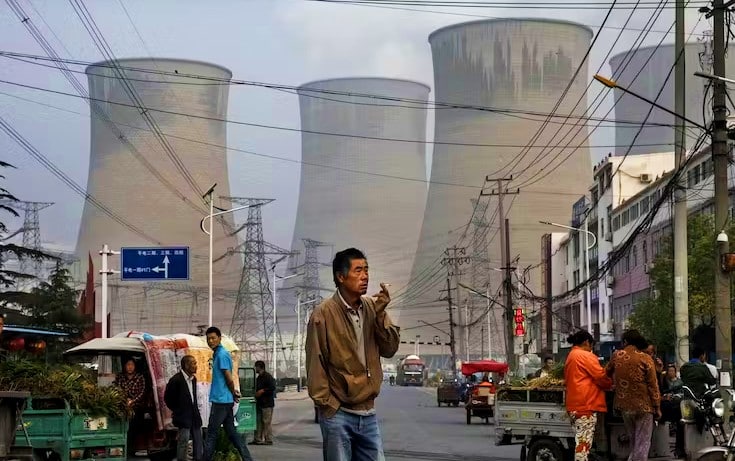
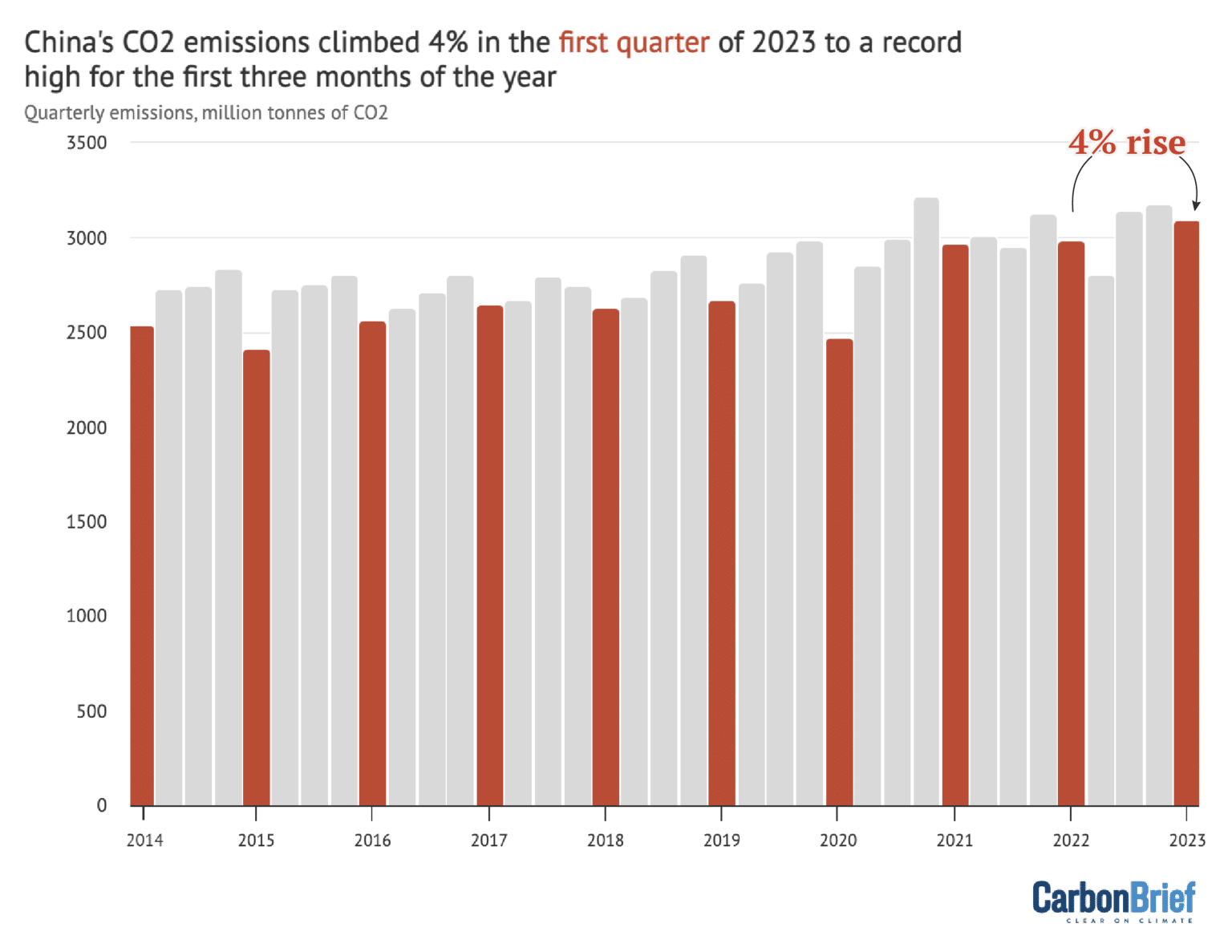
China’s carbon dioxide (CO2) emissions grew 4% in the first quarter of 2023, hitting a record high and is projected to reach an all-time high this year. But the continued expansion of low-carbon energy will bring down the country’s emissions eventually.
The new analysis according to Carbon Brief shows that the rapid expansion in low-carbon energy can make the emissions peak and decline if the post-Covid recovery plan works out.
With China focusing on economic growth, the biggest CO2 emitter in the world’s footprint will likely to hit an all-time high in 2023. The country emitted over 10,000 million tonnes of CO2 in 2020, representing about 30% of the world’s carbon emissions.
China’s Quarterly Carbon Emissions
China’s carbon emissions jump 4% in this year’s 1st quarter. It exceeded the previous peak in emissions in the same quarter in 2021.
Emissions are estimates from China’s National Bureau of Statistics data on production of fossil fuels and cement, China Customs data on imports and exports, and WIND Information data on changes in inventories.
As seen in the chart above, the red bar represents China’s carbon emissions for the first quarter of each year. The rise was due to the growing demand for fossil fuels, with increases in oil consumption (over 5%), coal (more than 3%), gas (over 4%), and cement production (4%).
What Causes China’s Emissions to Rise?
The key reasons for the super-emitter’s increase in carbon emissions are:
Economic rebound post-Covid recovery
Financial stimulus measures
Weak hydropower generation
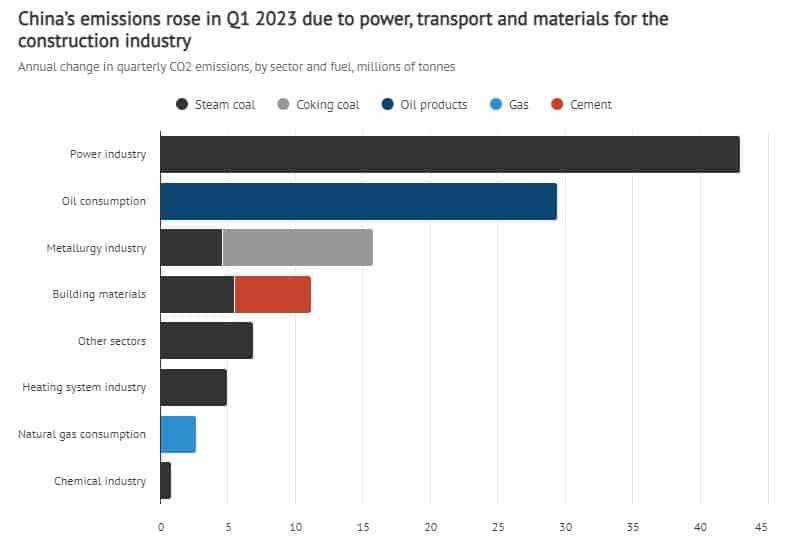
Breaking down the emissions per sector, the biggest contributor to the increase was power generation, where coal-generated electricity grew by 2%. The coal-power output rose by 3.6% relative to the previous year’s quarter.
Source: Carbon Brief
The poor hydropower production in China resulted in increased coal power use. Low rainfall and droughts caused the weak hydro output.
The world’s second largest economy by GDP has been boosting its domestic coal power production since 2021 for energy security. It rose by 11% in 2022 but despite more domestic supply, coal import almost doubled in Q1 2023.
The reason for that is the lower quality of coal produced in the country – each tonne containing less energy.
In terms of electricity, demand grew by over 4% which accounts for about 80% of China’s total carbon emissions increase. This was largely due to the end of the country’s zero-Covid policy, meaning businesses and commercial operations resumed.
For the same reason, transportation activities got back to normal, increasing the consumption of fossil fuels by more than 6%. Air travel rebounded intensely, in particular.
China Achieves Significant Energy Milestone
Despite increases in CO2 emissions, China managed to hit a meaningful milestone in generating power from clean or non-fossil sources. These include renewables and nuclear which exceeded 50% of the country’s installed power capacity in history. They overtook coal production capacity and other dirty sources of power.
In particular, solar and wind power installation increased significantly both hitting a record high.
Solar installations grew by almost 3x the previous high of 13GW in the same quarter of 2022 – 34 GW. New wind power installations – 10.4GW – increased by 32%, another record for Q1 2023. The country beats its new wind and solar capacity 120GW target in 2022, achieving 125GW.
A key element in China’s strategy to ramp up its wind and solar power generation is developing massive clean energy bases in its deserts, abandoned coal mines, and other unused lands.
Those bases are being built in batches, the first two with 97GW and 200GW capacity will be completed by 2025. If installations in 2023 hit the country’s 160GW goal, 240GW annual capacity will be added in the next two years.
China’s nuclear capacity also improved.
Based on its current nuclear capacity (57GW) and ongoing construction (27GW), the super-emitter is on track to achieve its targets. That’s to have 30GW under construction and 70GW in operation by 2025. Two nuclear reactors have already begun construction and one started producing power this year.
Demand for electricity is likely to increase this year in China, which will also push coal power production higher. However, the growing low-carbon supplies or energy from clean sources will try to match the demand growth in coal.
Ultimately, when clean energy surpasses the annual increase in electricity demand, the power sector’s carbon emissions will peak.
What Do China’s Emissions Look Like in 2023?
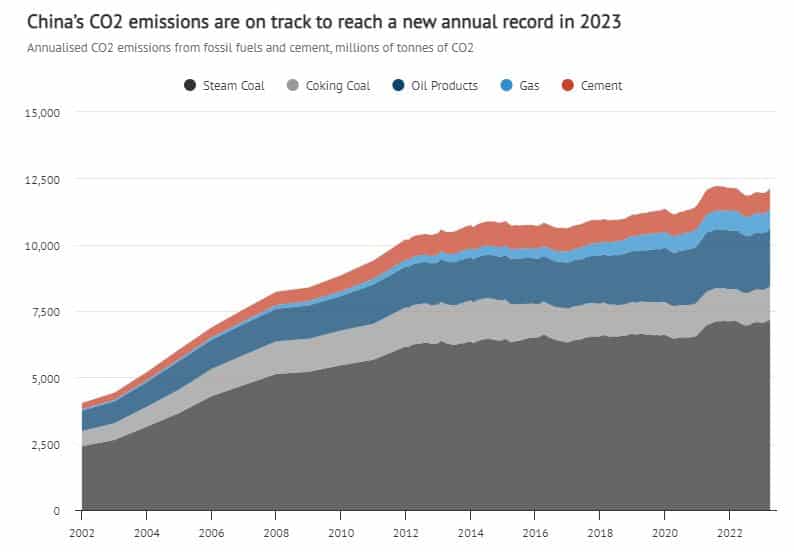
The current trends in the 1st quarter and industry estimates suggest that the largest emitter’s footprint will rise this year. It will likely top the previous peak in 2021 as shown in the chart.
Source: Carbon Brief
The major reason for this outlook is the Chinese government’s pursuit of financial stimulus measures to bolster manufacturing capacity, energy production, and transport infrastructure.
While increases in emissions vary per sector, overall energy demand will be up 3% in 2023. Taking into account the projected increase in low-carbon energy production, a 1% to 4% increase in China’s CO2 emissions will follow as fossil fuels make up the difference.
A report from the World Bank said that China would need $17 trillion in investments to achieve its climate goals. These investments are in the power and transport sectors alone.
The super-emitter had rebooted its carbon scheme, the China Certified Emissions Reduction, early this year to reduce its carbon emissions. If the post-Covid recovery works as planned, a sustained expansion in clean energy production will drive emissions to peak and then eventually decline in the coming years.
A Virginia-based startup, Circ, has developed a unique hydrothermal processing technology for recycling blended textiles, like polyester-cotton blends. With fast fashion’s emissions and environmental impact becoming a significant concern, this innovation could play a crucial role in establishing a circular economy in the textile sector.
Fashion’s Emissions and Environmental Impact
The fashion industry is responsible for about 10% of annual global GHG emissions, and projections show that will increase over 50% by 2030.
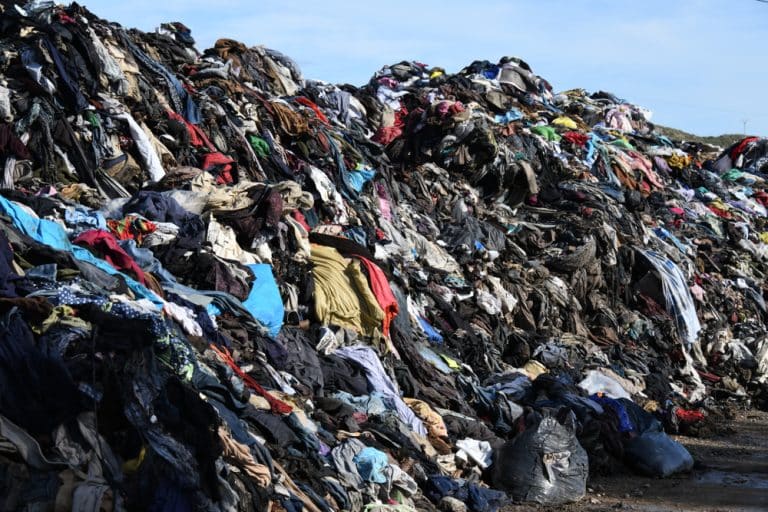
Fashion’s environmental impact has increased considerably due to the rise of so-called “fast fashion”. This refers to the clothes mass produced at low cost with high-speed turnaround times to go with latest fashion trends.
With fast fashion, trending clothes styles and designs are replicable and become available on retail and online stores quickly. This brings the perception that clothes are disposable and drives over consumption, especially by consumers in rich countries.
Fast fashion is growing rapidly as people buy more clothes more often, and production has doubled within two decades. About 50 billion new items were made in 2000 and 20 years later, that number doubled to 100 billion.
On average, a person buys 60% more clothes than they did before and everybody in Europe is throwing 15 kg or 33 lb. of textiles every year.
Unfortunately, less than a fifth of the discarded items get recycled. As a result, waste textiles from disposed garments are filling up landfills. Yet, demand for fast fashion clothes continues to grow, along with the sector’s harmful carbon emissions and water consumption.
Manufacturing clothes uses about 100 billion cubic meters of water every year. That’s equal to 4% of the global total freshwater withdrawal.
These concerns are being addressed with the industry players showing interests in more sustainable practices. The European Union, in particular, is pushing for mandated textile waste collection by 2025.
Circ’s Unique Textile Recycling Technology
More clothes go to recycling facilities; recycled polyester comprises 15% of the textile market in 2020, from 11% in 2010. The biggest challenge of recycling textile waste is the difficulty in doing it with blended fabrics. But Circ’s innovative recycling technology fixes this concern.
The startup’s unique hydrothermal carbonization (HTC) processing technology offers a technical solution. It can separate blended textiles to recover the majority of the raw materials from waste to produce as-good-as-virgin materials that manufacturers can reuse to make new clothes.
This groundbreaking technology attracted €38 million in two funding rounds from large investors such as Bill Gates’s Breakthrough Energy Ventures, Zara’s Indite, and Patagonia’s Tin Shed Ventures.
Recycling Poly-Cotton Blends with Circ’s System
Circ’s HCT process is a repurpose from biofuel production to textiles recycling. The firm is running a pilot recycling facility that can recycle several tonnes of waste textile daily.
Right now, there’s no recycling method available that can recycle poly-cotton blended fabrics at commercial scale. While there’s an established process to break down pure polyester or PET for recycling purposes, working with poly-cotton blends is very difficult.
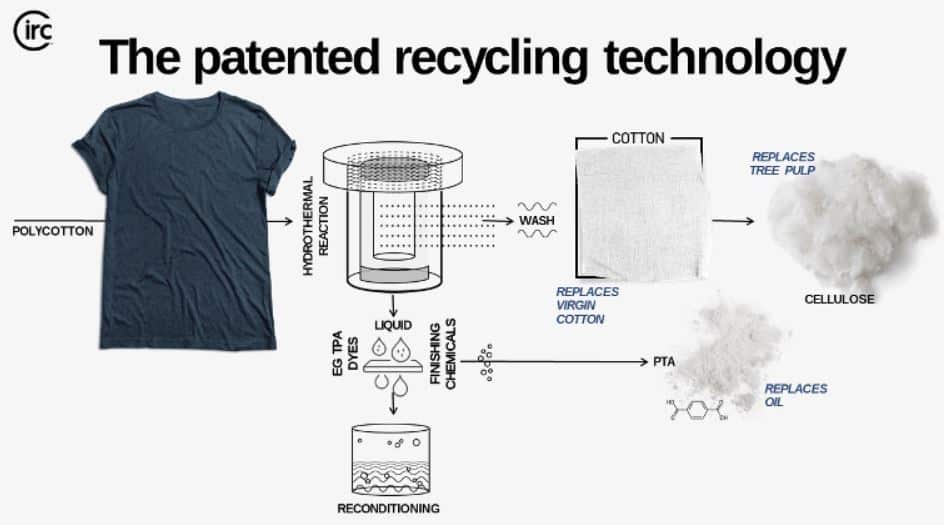
But Circ’s system successfully separates polyester and cotton without damaging the materials, recovering about 90% from the waste textile. It uses hot water, pressure, and chemical solvents to recover both materials – called the hydrothermal process.
By increasing the pH of hot water used in the HTC process, the polyester breaks down into two main monomers – terephthalic acid (PTA) and ethylene glycol (EG). As seen in the picture, cotton separates as a solid stream from the liquified polyester containing the PTA and EG.
Then those monomers recombine to produce new material for making PET plastic. On the other end, Circ uses a solvent to dissolve the cotton and make cotton-like fibers.
The system’s major goal is to recover the cotton fibers without damaging them by depolymerizing the polyester.
Other Uses of HTC Processing
Apart from fashion and textile recycling, the HTC process is also useful in other clean technology applications that further cut emissions.
For instance, Mura Technology, is about to complete its first commercial-scale plastic recycling facility in Teesside, UK. The company is also using a hydrothermal process to recycle all types of plastic wastes to recover reusable monomers.
Research further shows that HTC processes are also applied in converting cotton textile waste into energy sources like clean solid fuel.
Circ’s Next Steps
Circ is set to launch its first full-scale factory in 2025 that can process more than a thousand tonnes of waste textiles a week. The company aims to bring that capability to 10 billion pieces of clothes, representing 10% of the world’s apparel market.
The company faces market-based challenges, such as finding industrial buyers for its recycled materials. Its major investor fashion brands haven’t agreed yet to be the company’s customers.
Circ also needs to form partnerships and collaborations with other players to create a circular economy for textiles. This is critical not just to curb emissions of fast fashion clothes but also the entire industry.
Cloverly, an advanced digital infrastructure that launched the first API for carbon credits, raised $19 million in its Series A funding round led by Grotech Ventures.
With the aim to scale climate action, Cloverly serves 200+ enterprises worldwide across sectors that leverage its platform to manage their carbon credit operations. The Series A financing is for further development of the company’s infrastructure.
Participating in the round were leading investors such as Mission One Capital, New Climate Ventures, and CreativeCo Capital. Existing investors include Tech Square Ventures, Circadian Ventures, Knoll Ventures, SaaS Ventures, and Panoramic Ventures.
Driving Impact at Scale in a Critical Industry
To meet global emissions targets, the world has to remove an additional 10 billion tonnes of CO2 yearly by 2050. Carbon dioxide removal is crucial to address hard-to-abate emissions to reach net zero emissions.
The voluntary carbon market (VCM) provides a critical means to drive urgent action by targeting unavoidable emissions today, along with the required emissions reductions to mitigate climate change.
The urgency to deal with climate change fuels the massive growth of the VCM. Expert industry estimates suggest that the market can reach $50 billion by 2030. Despite this, however, the VCM still lacks enough innovations necessary to drive impact at scale in this critical industry.
Cloverly steps in to address concerns on market access, ease, trust, and transparency by launching the first API (Application Programming Interface) in the world for carbon credits.
Sharing his insights on the role of the VCM in promoting critical climate action, Cloverly CEO Jason Rubottom said:
“We cannot wait – we need to act now. The importance of the voluntary carbon market demonstrates an unprecedented demand for solutions that allow both businesses and consumers to actively contribute to critical climate action. Cloverly is uniquely positioned to facilitate that engagement and this funding round represents that.”
The Atlanta-based startup, founded in 2018, grew to be one of the leading digital infrastructure powering the VCM. Its platform is used by global companies such as Salesforce, Visa, and American Express to power their climate action goals.
Cloverly Carbon Credit API Platform
Both corporate buyers of carbon credits and project suppliers can use Cloverly platform to scale their climate action and businesses.
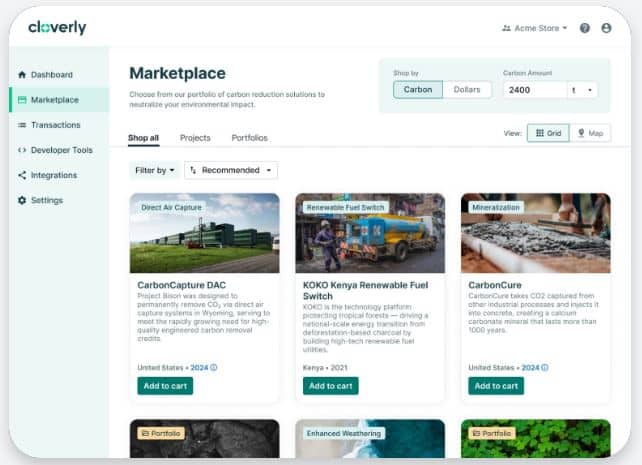
Buyers can directly buy quality carbon removal credits through the platform or embed the Cloverly technology into their own products, services, or supply chains. Purchasing carbon credits in the platform comes in three options:
Purchase offsets towards a specific carbon removal project
Invest in a custom carbon offset portfolio
Flexibility to purchase spot, forward, and offtake credits
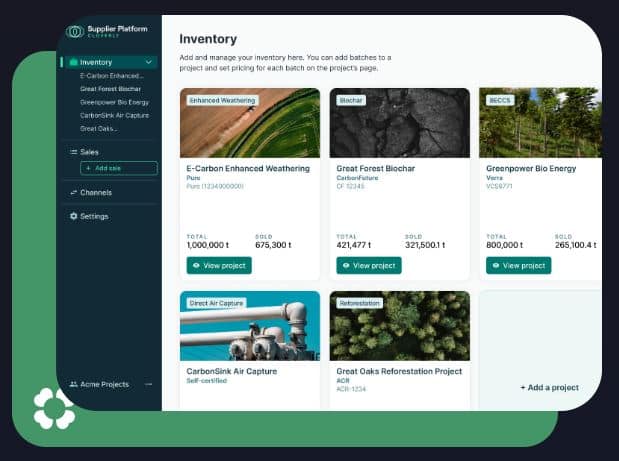
Similarly, project suppliers can also leverage the Cloverly Marketplace™ and the supplier software that enables them to manage commercial operations such as inventory management and tracking of carbon credit sales.
The new supplier platform offers credits from innovative suppliers such as Therm, KOKO Networks, and CarbonCure.
How Cloverly Platform Works in 3 Steps
1. Flexible Integrations
Cloverly offers flexible integration solutions to fit user product experience from fully integrated to plug-and-play options. Users can procure carbon credits as one-time purchases from the marketplace or as fractional credits to match the carbon emissions of any transaction. Full flexibility also means users can make Cloverly’s powerful climate action features feel like an inherent part of their solution.
2. Purchase High-quality Carbon Credits
Cloverly purchases and retires verified carbon removals and offsets in the amount needed to cover user’s carbon emissions. So whether it is one customer’s transaction or the entire business’s footprint, Cloverly can make any activity carbon neutral.
3. Reporting and Visibility
With each purchase, Cloverly produces a unique transaction receipt and certificate with the carbon credits purchased and the impact created. This helps the customer intuitively understand the real-world effects of their climate action.
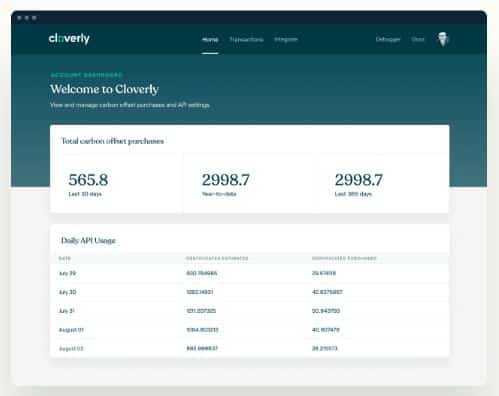
On the Dashboard, Cloverly aggregates transactions and enables custom reporting to help users track their progress toward becoming climate-positive.
Addressing the Growing Market Demand
The $19 million financing brings Cloverly’s total fundraising to $21.1 million.
The Series A financing will fund more development of Cloverly’s digital infrastructure for the voluntary carbon markets. These include the new supplier platform to help buyers, suppliers, and any other company to easily scale their climate impact.
The new funds will also support growing Cloverly’s team and opening another headquarters in London to address global customer demand.
One of the original lead investors in the company remarked that the tech startup’s growth is a “testament to their continued innovation to meet this critical market need.”
Carbon Streaming Corporation signed a project pipeline streaming agreement with Mast Reforestation for up to $15 million, plus another $2 million investment into Mast’s parent company.
The deal seeks to advance Mast’s pipeline of post-wildfire reforestation projects in the Western USA. Each project will have a separate stream agreement with Carbon Streaming.
Carbon Streaming is pioneering the use of streaming transactions to scale high-integrity carbon credit projects to accelerate global climate action. The streaming company now joins Mast’s existing investors, including Social Capital, TIME Ventures, DBL Partners, and Elemental Excelerator.
The carbon removal credits from the projects will be issued by the Climate Action Reserve’s (CAR) Climate Forward program.
Carbon Credits from The Streaming Deal
Carbon Streaming will make an upfront deposit under each agreement. In return, the company will receive up to 100% of the carbon credits produced by Mast Reforestation Projects. It will then make ongoing payments to Mast for every carbon credit sold.
The CAR’s program will issue the credits called Forecasted Mitigation Units which will sell at a premium price to typical ARR – Afforestation, Reforestation and Revegetation – credits. This is because of the conservation and biodiversity benefits the projects also bring and their good location.
Carbon Streaming expects the Mast Reforestation Projects to cover over 9,000 acres of land severely damaged by wildfires. Collectively, they can remove about 1 million tonnes of CO2 and generate a corresponding number of carbon credits – 1 million. Each credit represents one tonne of carbon removed.
The first project under the financing agreement is the Sheep Creek Reforestation Stream that can remove about 225,000 tonnes of CO2 equivalent. Carbon credits from this project are based on two planting phases and will be issued in 2025 and 2026, respectively.
The project covers a 2,700+ acre in Montana that was severely burned during the 2021 Harris Mountain Fire. The supply of seedlings from Mast will restore the area and Carbon Streaming financing will support its reforestation efforts.
Last year, Mast pre-sold all carbon credits from a similar creek project to corporate buyers like Shopify and Time CO2.
Under the terms of this first stream agreement, Carbon Streaming will pay Mast an initial amount of $0.54 million. Then additional stream payments of up to $3 million will follow as the Sheep Creek reaches key milestones such as site preparation and planting.
Carbon Streaming will also make ongoing delivery payments to Mast for each carbon credit sold under the project. The company expects financial payback after first issuance of the credits.
Impact of the Reforestation Projects
The rate and amount of damage of wildfires have been intensifying in recent years, costing billions of dollars and losing thousands of lives. It also takes decades for fauna and flora to recover from the damages of wildfire. Thus, post-wildfire restoration efforts of Mast are an important part of climate change mitigation.
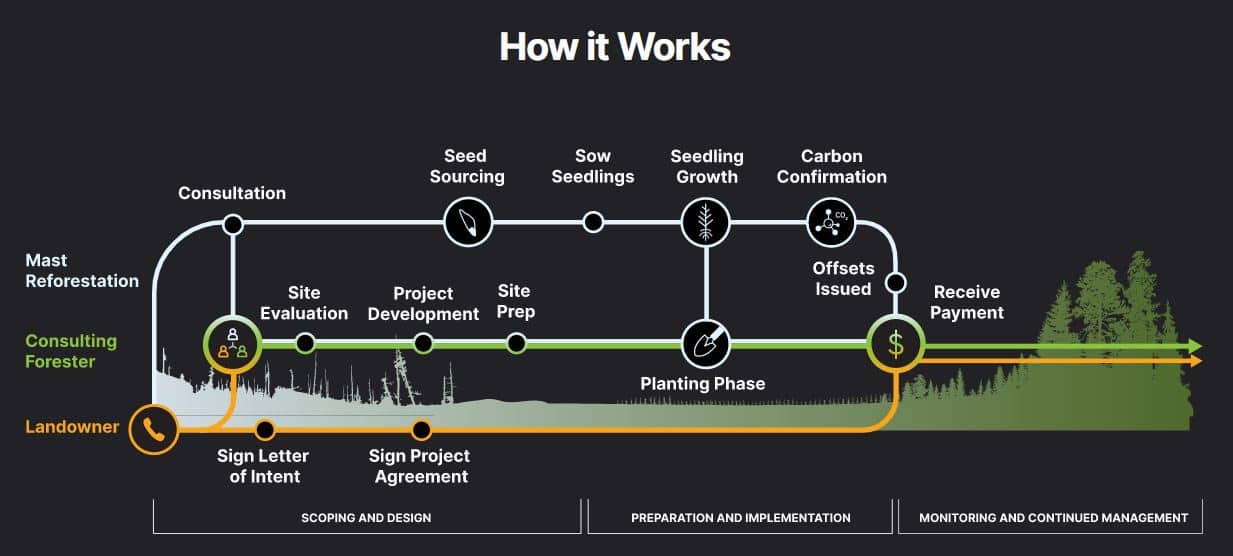
Mast is a leading end-to-end reforestation company, combining proven reforestation practices with new technology to regrow healthy, resilient, climate-adapted forests. Its reforestation projects will bring positive impacts to wildlife and terrestrial as well as aquatic ecosystems.
Here’s how Mast’s reforestation project works:
The company invests heavily in biology, software, and hardware technologies to reduce costs and timelines needed to reforest post-wildfire areas. It is supporting these investments through innovative financing models like that of Carbon Streaming.
One of the major challenges in North American forestry is the source of seeds and the space to grow them. This is where Mast’s business model comes in, positioning itself as the biggest private seedbank in the American West. The company grows most of the seedlings used for reforestation in California.
Mast also provides various services ranging from seed collection and cultivation to traditional hand planting and ongoing site monitoring. Its reforestation projects support rural livelihoods while providing jobs across the project’s activities.
Remarking on the partnership, Mast Founder and CEO Grant Canary said:
“We are excited to collaborate with Carbon Streaming in this new partnership as it shares our unique vision for scaling reforestation and carbon removal solutions. This Pipeline Agreement is a scalable model that will help us get more trees in the ground, accelerating reforestation efforts in areas devastated by the rise in forest fires amplified by climate change.”
Carbon Streaming is also investing another $2 million into Mast’s parent company. It will be for adding key personnel, and continued investment into software, hardware, and field technology.
Mast Reforestation seeks to continue growing its pipeline of projects by looking for more partners that see the value in the high-quality carbon removal credits that its reforestation projects generate.
Disclosure: Owners, members, directors, and employees of carboncredits.com have/may have stock or option positions in any of the companies mentioned: NETZ.
Additional disclosure: This communication serves the sole purpose of adding value to the research process and is for information only. Please do your own due diligence. Every investment in securities mentioned in publications of carboncredits.com involves risks that could lead to a total loss of the invested capital.
Voluntary carbon credits are attracting more attention, both negative and positive, and many believe that they’re playing a crucial role in the fight against climate change.
As businesses pledge more lofty climate goals to help reduce global carbon emissions, the market specially developed to help polluters cut and manage their carbon footprint is also growing. The instrument or unit used in trading within this market is carbon credits.
How essential is this marketing tool really in keeping global warming at bay? This piece will explain how as well as discuss the twin role of carbon credits in abating climate change and the major challenges the market must address.
Taking on the Climate Crisis with Carbon Credits
Carbon credits are also known as carbon offsets in the voluntary carbon market (VCM). Under the compliance or regulated market, they are referred to as carbon allowances or permits that allow the holder a certain amount of carbon emissions.
The regulated carbon market is born out of the laws mandating carbon reductions. It’s managed by emission trading systems (ETS) and is also called the cap and trade system. It dwarfs the size of the VCM ($1 billion), with market value hitting $851 billion.
While carbon emissions trading in the compliance market is equally effective, our focus is on the VCM.
Only heavy emitters are mandated by national governments not to go beyond their allowed or cap emission limits but voluntary carbon reduction initiatives from large corporations are also moving the needle in the haystack. More so today when more and more investors and stakeholders are pushing for ambitious CO2 reductions.
That means companies have to invest in technologies that can massively cut their CO2 footprint. Any emissions they can’t yet avoid or reduce should be offset by buying or investing in projects that generate carbon credits.
Carbon offset credits allow companies to meet their decarbonization targets and reach their net zero emissions goals. As a result, they ramp up global efforts to fight climate change and mitigate their catastrophic effects in two ways.
The Role of Carbon Offsets in the Fight Against Climate Change
Each carbon credit represents one metric ton of CO2 or its equivalent gas that’s avoided from getting released into or removed from the atmosphere.
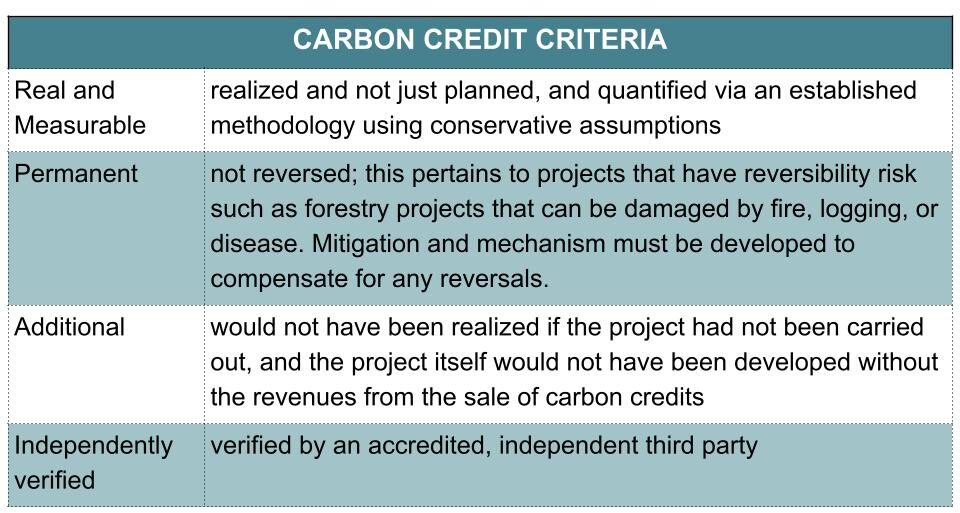
But for a project to produce carbon credits, it has to show that its emission reductions meet a set of criteria. These include being real, additional, measurable, permanent, and verified.
It is also important that appropriate safeguards are in place to ensure projects really address and mitigate any potential environmental and social risks.
Only after meeting those criteria that the project can issue the credits, corresponding to the amount of carbon emissions reduced. And only when the credit is retired, removed from a registry, can it be counted toward the climate goal.
In other words, only upon retirement can the buyer, whose name the credit was registered and retired, claim its impacts. Once retired, that credit should not be circulating anymore or traded again in the carbon market.
The income from the sale of carbon credits will support the development of or, in some cases, the implementation of carbon projects that come under 170+ different types. These include the major categories of the following, among others:
Resource recovery, e.g. methane emissions avoidance
These projects fall under either carbon avoidance/reduction or carbon removal.
Distinguishing between them is important to show the dual role of carbon credits in tackling climate change.
First role takes effect in the short term: carbon credits from emissions avoided or reduced can help ramp up the transition to a decarbonized economy. Common examples of the projects supported by carbon avoidance credits include renewable energy, energy efficiency, and improved forest management. Avoiding emissions is often a cost-efficient means to tackle CO2 emissions.
Second role happens in the medium and long term: carbon credits playing this role are crucial in scaling up carbon removal projects and they’re essential to offset residual or emissions that are unavoidable. To reach net zero emissions by 2050, about 5 gigatons of CO2 emissions must be removed every year.
Examples of CO2 removal projects include reforestation and technology-based carbon capture such as direct air capture (DAC). Carbon credits can help finance the development and scale-up of these solutions.
Use of Carbon Credits in Corporate Climate Targets
Aligning corporate sustainability and climate commitments with the latest science is the best practice in the fight against climate change. If a company doesn’t have any baseline to base its emission reduction targets on, it must create one first.
They particularly include the large multinational corporations and heavy emitters that are implementing various actions to reduce emissions. These include enhancing energy efficiency, shifting to renewable energy, and tackling value chain or Supply 3 emissions.
Different Types of Climate Targets and Actions
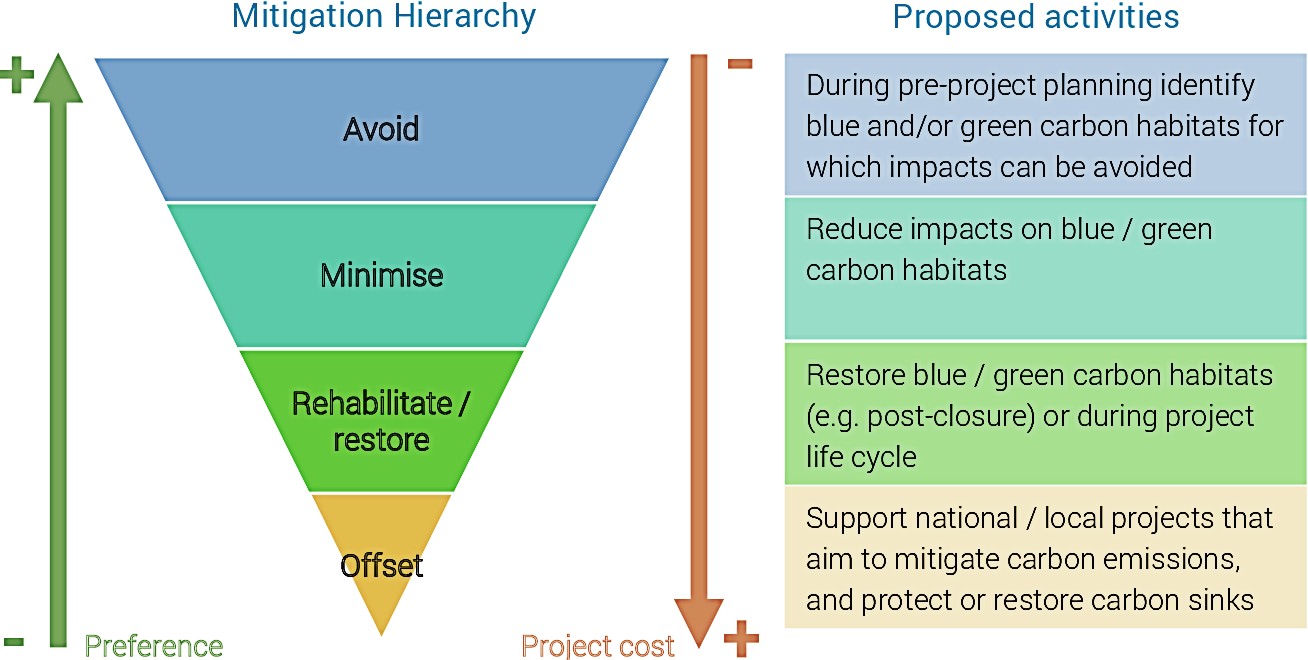
Under the climate mitigation hierarchy, shown above, avoiding emissions directly within the company should be the priority. But for CO2 emissions that can’t be avoided, the next step is to offset them through carbon credits.
Companies can use carbon offset credits in ways they deem suitable for their climate change goals, which come in different types. They can use it to pledge to be carbon neutral, climate positive, and net zero.
Though they vary, they all often involve a company or organization supplementing internal reductions by financing reductions elsewhere through the purchase of carbon credits. Offsetting CO2 footprint allows a company to count the reductions in its residual climate mitigation reports.
Being carbon neutral means compensating for unabated footprint by accounting the carbon credits toward a certain part of its emissions. It can be on a product level or activity level, which is often on a yearly basis.
Aiming for a climate positive target refers to going beyond the targets set to make a net-positive impact. Microsoft, for instance, has gone one step further in its climate action by stretching their targets beyond being neutral to becoming climate positive. The tech giant has been investing millions of dollars in projects that generate carbon credits, advancing CO2 removal initiatives.
Lastly, reaching a net zero emissions goal means reducing carbon emissions and balancing residual emissions by the target year. For some industry actors, a credible net zero target involves cutting footprint in line with science using carbon removal credits.
The largest public climate commitment in American history, the U.S. Inflation Reduction Act, further propels the market for CO2 removal credits. The financial incentives provided by the climate change law encourage groundbreaking projects across sectors from startups innovating carbon removal technologies.
So, how committed are the large corporations in their pledge to either be carbon neutral or net zero?
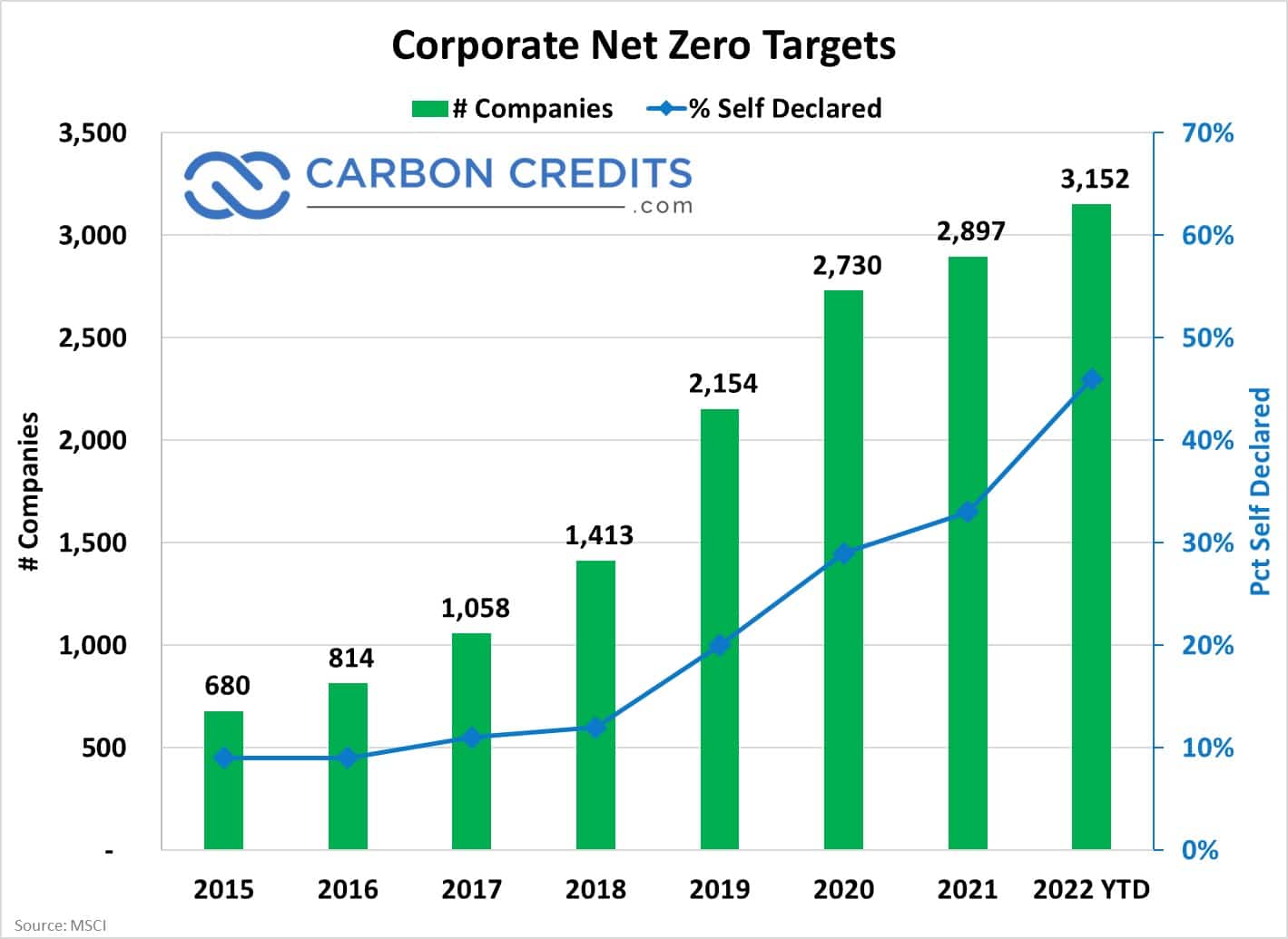
The chart below shows that.
After 3 consecutive years of massive growth, the VCM had seen a record high growth in carbon credit issuances and retirements. This is largely due to the growing and intensifying corporate net zero pledges and other climate commitments.
The number of companies pledging to be net zero increased by almost 400% in 2022 relative to 2015 figure.
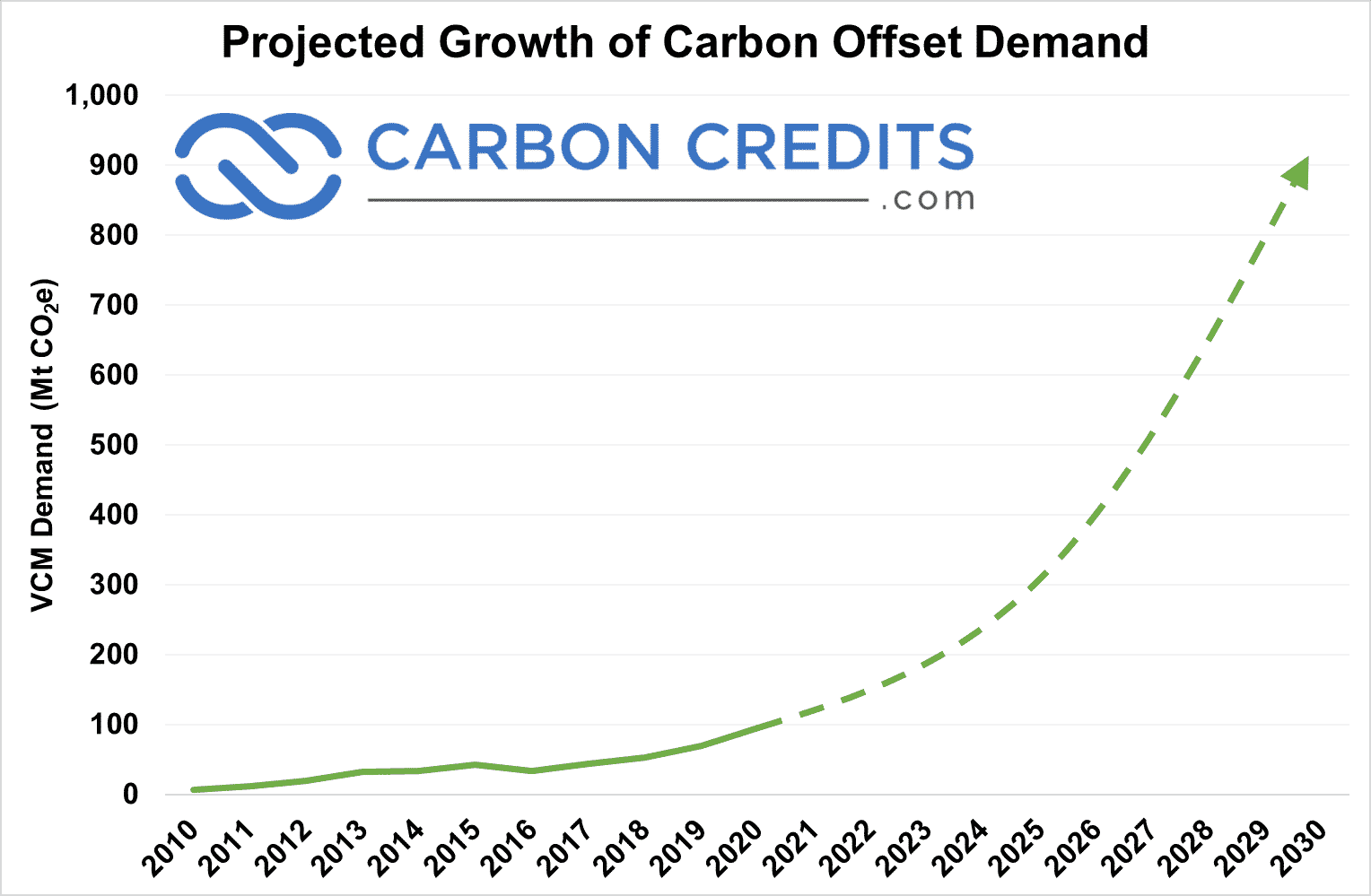
This growth is projected to grow even more as both corporations and individuals are pouring their money into carbon projects. The resulting environmental impact of these projects earn the trust of many that carbon credits are indeed serving their purpose. That’s being an essential market tool that entities can use to help battle the bad effects of climate change.
As a result, though the voluntary carbon credit market is relatively small, it’s experiencing significant momentum and its potential in equipping the world to tackle the climate crisis is attracting more attention.
It is, therefore, understandable that industry estimates show that the VCM will continue to expand.
Key Challenges to Deal With
The upward growth trend of the VCM is not a straight line; there are some major challenges the market has to address to reach its full potential. Let’s identify three of them and why facing them heads on is essential for the carbon market to keep growing.
Providing solutions to these challenges will uncork more potential for carbon credits to serve their role as an important tool in combating climate change. The guideline established by the Integrity Council the “Core Carbon Principles” was designed to help promote integrity, transparency, and market growth.
Guaranteeing Quality and Impact
Though standards do exist that certify projects to ensure they meet certain methodology requirements, investors still don’t have full transparency on how the projects are progressing.
Add to that the concerns stakeholders bring up when it comes to some issues linked to the projects they support. These often involve matters relating to additionality and permanence of the carbon reductions the projects claim to achieve.
For example, what if the trees protected under a reforestation project are burned down due to wildfire? Any carbon they promise to capture releases back into the atmosphere, and thus, loses their permanence. This raises questions about the permanence of the credits linked to the project.
Hence, assuring the quality of the carbon credits and their environmental impact is very important.
Getting Everyone’s Understanding Uniform
It’s clear that carbon credits do have a crucial role in the world’s quest to mitigate climate, not all stakeholders or concerned parties agree on how to use this tool as part and parcel of their climate strategy.
That is because there’s no single standard that guides the market. This causes confusions and differences in the use of the credits in companies’ net zero pathways.
Eliminating the differences is critical so that company leaders know how to align the use of carbon credits in their corporate sustainability plans and climate strategies. Should they invest directly into carbon removal innovations or support other carbon avoidance projects? A clear and uniform standard can help resolve this matter.
Clearing out Ambiguity in Regulations
Article 6 of the Paris Agreement gave birth to the voluntary carbon credits, advancing them as an important market tool or mechanism to drive investments in climate action. However, negotiations about the specific Article 6 guidelines are still ongoing, leaving unclear regulatory obligations for market players.
For instance, should carbon offsets bought by a private company count toward a country’s climate goals? Or that they remain private and voluntary? Should governments stay out of the VCM transactions and let market forces be at play on their own?
Making the lines clear can give both project developers and investors enough drive to continue their work. Confusion about regulatory requirements will deter them from innovating and investing.
Undeniably, carbon credits do play a crucial part in the fight against climate change. They enable corporate investors to support climate actions that are beyond their reach and fund their own carbon removal projects.
But to bring out the market’s full potential, removing the key roadblocks along its way is necessary. This will be beneficial not just in battling the climate crisis but also in providing other benefits to people and the planet.
To provide the best experiences, we use technologies like cookies to store and/or access device information. Consenting to these technologies will allow us to process data such as browsing behavior or unique IDs on this site. Not consenting or withdrawing consent, may adversely affect certain features and functions.
Functional
Always active
The technical storage or access is strictly necessary for the legitimate purpose of enabling the use of a specific service explicitly requested by the subscriber or user, or for the sole purpose of carrying out the transmission of a communication over an electronic communications network.
Preferences
The technical storage or access is necessary for the legitimate purpose of storing preferences that are not requested by the subscriber or user.
Statistics
The technical storage or access that is used exclusively for statistical purposes.The technical storage or access that is used exclusively for anonymous statistical purposes. Without a subpoena, voluntary compliance on the part of your Internet Service Provider, or additional records from a third party, information stored or retrieved for this purpose alone cannot usually be used to identify you.
Marketing
The technical storage or access is required to create user profiles to send advertising, or to track the user on a website or across several websites for similar marketing purposes.