

The carbon market is entering a new phase. Governments are building compliance carbon markets. Companies are demanding better carbon credits. At the same time, international carbon trading under Article 6 of the Paris Agreement is starting to expand.
Verra, the world’s largest carbon credit standard, is responding with a new strategy focused on stronger credit quality, government partnerships, and compliance markets. The organization recently announced three major initiatives that could shape its future role in global carbon markets.
Beyond Voluntary Carbon: Verra Broadens Its Role
First, Verra said it wants to play a bigger role in compliance carbon markets, where governments require companies to cut or offset emissions. Second, it introduced stricter rules for issuing soil carbon credits from sustainable grasslands. Then it signed a cooperation agreement with Misiones Province in Argentina. This will help develop projects that could create carbon credits for international trading under Article 6.
Together, these moves show that Verra is preparing for a carbon market that goes far beyond voluntary corporate purchases.
The shift reflects changes across the industry. The World Bank’s State and Trends of Carbon Pricing 2026 reports 87 carbon pricing tools in use globally. This includes 47 carbon taxes and 40 emissions trading systems.
Together, they cover about 29% of global greenhouse gas emissions and generated a record $107 billion in government revenue in 2024.
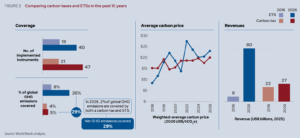
As more countries introduce carbon pricing, demand for high-quality credits that meet government rules could grow.
Carbon Credit Quality Is Now the Top Priority
Verra’s strategy also follows a slower year for carbon credit issuances. The organization said credit issuance declined by around 30% year-on-year. The slowdown reflects a broader market shift rather than weaker climate ambition.
After years of rapid growth, buyers are paying much closer attention to project quality. They want stronger scientific evidence, better monitoring, and clear environmental benefits before purchasing credits.
This change follows increased scrutiny of carbon markets over the past two years. Organizations like the Integrity Council for the Voluntary Carbon Market (ICVCM), the Voluntary Carbon Markets Integrity Initiative (VCMI), and the Science Based Targets initiative (SBTi) have stepped up. They’ve introduced stricter guidelines to boost market integrity.
Even with slower issuance, short-term and even long-term demand remains strong, as shown in the chart below.
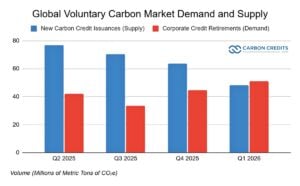
While data reflects the total global market, the steep drop in Q4 2025 and Q1 2026 issuances is primarily driven by structural freezes, project audits, and methodology overhauls at Verra, which commands over 60% of total market activity.
Rather than issuing more credits, Verra says its priority is to improve quality and prepare for the next stage of market growth.
Verra Tightens Standards for Soil Carbon Credits
Verra is also tightening the rules for soil carbon projects. Its updated method includes sustainably managed grasslands. These grasslands take in carbon dioxide from the air and store it in the soil.
Healthy grasslands boost biodiversity, cut soil erosion, and help hold water in droughts.
However, measuring soil carbon is difficult. Carbon levels vary due to weather, soil conditions, and how land is managed. Verra’s new rules need better monitoring, improved data collection, and stricter verification. This will help boost confidence in the credits.
The move comes as nature-based carbon credits receive growing attention from buyers. MSCI reports that nature-based projects made up around 36% of voluntary carbon credit retirements in 2025. This makes them the biggest project category in the market.
Argentina Partnership Supports Article 6 Carbon Trading
Lastly, Verra’s latest agreement with Misiones Province in Argentina shows where the carbon market is heading.
Instead of working only with private project developers, Verra is now helping governments prepare for Article 6 carbon trading. The agreement will help Misiones build technical skills. It will also aid in developing carbon projects, measuring emissions reductions, and meeting international reporting standards.
These projects could eventually generate Internationally Transferred Mitigation Outcomes (ITMOs) under Article 6. ITMOs are verified emissions reductions that one country can transfer to another to help meet climate targets.
Pamela Kruszelnicki, director of financial management at the Ministry of Treasury, Finance, Public Works, and Public Services of Misiones, remarked:
“The recent certification of our Jurisdictional REDD+ Program under Verra’s JNR Framework—a first-of-its-kind milestone globally—demonstrates that it is possible to combine development, conservation, and climate finance under high standards of integrity and transparency.”
Interest in Article 6 is growing quickly. According to the UNFCCC, more than 100 countries have expressed interest in using Article 6 to help achieve their climate goals. Several bilateral agreements have already been signed, including deals involving Singapore, Japan, Switzerland, South Korea, and Sweden.
- SEE MORE: Singapore and Indonesia Seal Landmark Carbon Credit Deal to Boost Southeast Asia’s Green Economy
As countries implement these agreements, they are likely to increase the demand for trusted carbon accounting and independent verification. That creates new opportunities for standards organizations like Verra.
Trust Is Replacing Volume as the Market’s Currency
The carbon market is no longer focused on issuing as many credits as possible.
Instead, buyers are asking tougher questions. They want to know whether a project delivers real emissions reductions, protects biodiversity, and benefits local communities. They also expect stronger monitoring and independent verification.
These changes are reshaping the market. Higher-quality credits may take longer to develop, but they are expected to attract stronger long-term credit demand and higher buyer confidence.
Verra Is Positioning for a New Era of Carbon Trading
Verra’s recent announcements are part of a broader strategy, not a series of separate updates.
The organization is strengthening project methodologies, expanding its work with governments, and preparing for the growth of compliance carbon markets under Article 6. These efforts reflect how the carbon market is evolving from a voluntary system into a more connected global framework.
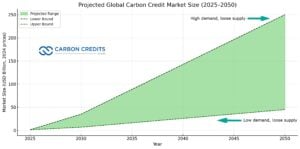
Analysts expect this trend to continue. McKinsey & Company estimates that demand for carbon credits could reach 1.5 billion to 2 billion metric tons per year by 2030. At the same time, the World Bank expects more countries to introduce carbon pricing as they work toward their net-zero goals.
For Verra, success will depend less on the number of credits it issues and more on the trust those credits earn. As governments tighten climate policies and buyers demand greater integrity, organizations that can deliver transparent, science-based carbon credits are likely to play a larger role in the next generation of global carbon markets.