

Nvidia is preparing to invest up to $3 billion in Lancium, a Texas-based power infrastructure developer tied to the Stargate AI data center project. The investment would give the big tech a direct stake in the infrastructure needed to power the next wave of artificial intelligence (AI) computing. It also shows how the AI boom is shifting from a race for chips to a race for electricity, land, and grid connections.
According to Reuters, Nvidia would invest $2 billion initially for about a 20% stake in Lancium. The company could add $1 billion if Lancium meets specific conditions. This includes securing more grid connections. The deal would value Lancium and its land and power assets at about $10 billion.
The move comes as data center developers face growing pressure to secure reliable power for increasingly energy-intensive AI systems.
Nvidia Moves Deeper Into AI Power Infrastructure
Nvidia has built its business around the processors that power AI systems. Its latest Lancium investment takes that strategy further by moving into the infrastructure needed to run those processors.
Lancium develops large data center campuses and power infrastructure. Its flagship site is the Lancium Clean Campus in Abilene, Texas, which serves as the first operational site of the Stargate initiative. Reuters says the campus covers about 1,000 acres.
Lancium says the Abilene campus has a 1.2-gigawatt grid interconnection that has been approved by ERCOT. The company is also developing other gigawatt-scale AI campuses, including a 1.0 GW campus in Childress, Texas, announced in July.
The scale matters because modern AI data centers can require enormous amounts of electricity. Securing a site with power capacity already available can reduce one of the biggest barriers to expanding AI infrastructure. The investment, therefore, gives Nvidia exposure to a part of the AI supply chain that sits behind the GPUs themselves.
How NVDA Stock Reacts?
Nvidia shares fell about 3% in the trading session following reports of the potential Lancium investment. The decline came as investors weighed the scale of Nvidia’s growing commitments to AI infrastructure, even as the company continues to benefit from strong demand for its AI chips.

The market reaction highlights a key concern around the AI buildout: Nvidia is increasingly investing not only in the hardware that powers AI, but also in the infrastructure needed to support its customers’ massive computing expansion.
AI Is Creating a New Electricity Demand Surge
The timing reflects a major change in global electricity demand.
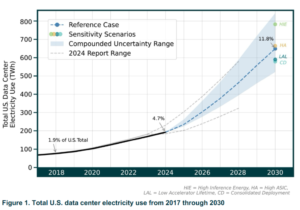
The International Energy Agency estimates that data center electricity use will more than double. By 2030, it will reach about 945 terawatt-hours (TWh), up from around 415 TWh in 2024. That would represent almost 3% of global electricity consumption by the end of the decade.
AI is the main driver of this growth. The agency also expects electricity use from accelerated servers, which are mainly used for AI workloads, to grow by about 30% per year through 2030. The United States is set for strong growth. Data centers will make up almost half of the rise in U.S. electricity demand by 2030.
This creates a new challenge for technology companies.
Building more GPUs does not help if data centers cannot obtain enough electricity to operate them. As a result, power availability, grid connections, and the speed of new infrastructure construction are becoming strategic issues for the AI industry.
Why Texas Is Becoming AI’s Power Capital
Texas is emerging as one of the most important locations for this infrastructure build-out.
Lancium’s Abilene campus already has a 1.2 GW interconnection, while the company’s broader portfolio includes multiple gigawatt-scale sites. The Abilene campus is also connected to the Stargate project backed by OpenAI, Oracle and SoftBank.
Crusoe, a clean energy and AI infrastructure innovator, is expanding the site. The second construction phase adds six more buildings. This brings the total to eight buildings, covering about 4 million square feet and providing 1.2 GW of power capacity.
Lancium’s strategy is built around combining large-scale data centers with power infrastructure and grid management.
Its website says the company is developing campuses that can integrate renewable energy and use power-management systems to support grid reliability. That approach could become increasingly important as large AI loads are added to electricity systems.
The broader U.S. power market is already responding. The U.S. Energy Information Administration forecasts electricity use will hit a record 4,268 billion kilowatt-hours in 2026. It will rise to 4,391 billion kWh in 2027. AI and data centers are key drivers of this growth in industrial and commercial demand.
Nvidia Has the Financial Firepower to Chase AI’s Next Bottleneck
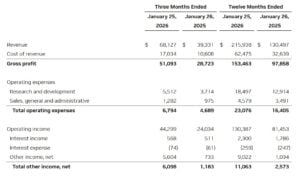
Nvidia has strong financial capacity to make investments of this size. The company reported $81.6 billion in revenue in the first quarter of fiscal 2027, up 85% from a year earlier. Data Center revenue reached $75.2 billion, up 92% year over year.
That growth explains why securing power has become strategically important.
Nvidia’s fiscal 2026 revenue reached $215.9 billion, up 65% from the previous year. Data Center revenue in the fourth quarter alone reached $62.3 billion, up 75% year over year.
The company is thus selling increasingly powerful AI systems into a market that requires increasingly large amounts of electricity.
Investing in Lancium could help Nvidia strengthen its position across that growing infrastructure chain. It also fits with Nvidia’s broader push to make AI data centers more efficient and responsive to power constraints.
Nvidia’s Climate Goals Face a Bigger Test
The investment also creates an important environmental question. Nvidia says it matched 100% of its global electricity use with clean electricity in FY2026 for sites under its operational control. Its clean electricity sourcing includes on-site solar, power purchase agreements, renewable utility tariffs and energy attribute certificates.
The company has also adopted science-based emissions targets validated by the Science Based Targets initiative.
Nvidia aims to reduce absolute Scope 1 and Scope 2 market-based emissions by 50% by FY2030, using FY2023 as the base year. It also aims to reduce the emissions intensity of Scope 3 emissions from the use of its sold GPUs by 75% per PFLOP by FY2030.
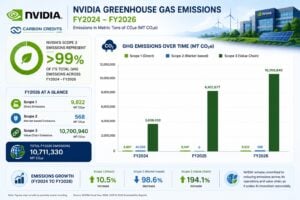
However, the company’s broader emissions challenge is becoming larger as its AI business expands. It reported 10.7 million metric tons of Scope 3 emissions in FY2026, according to its sustainability disclosures. That was almost three times its FY2024 Scope 3 figure of 3.64 million tons.
This makes the power infrastructure behind AI increasingly important to Nvidia’s environmental story.
Matching its own electricity use with clean electricity addresses operational emissions, but much of Nvidia’s footprint sits in its wider value chain. The company’s FY2026 report says it is improving its Scope 3 methodology by using more supplier-specific data to identify emissions-reduction opportunities.
Clean Power Will Be Critical to AI Growth
The Lancium investment comes at a time when the energy mix supporting AI data centers is also changing.
The IEA expects renewables to meet about half of the growth in global data center electricity demand through 2035. Natural gas will also play a major role, while nuclear power is expected to become more important later in the decade. That creates both an opportunity and a challenge.
AI companies need electricity that is available around the clock. Renewable power can provide a large share of that supply, but data centers may also need storage, grid connections and dispatchable generation to maintain reliability.
Lancium’s model is built around this broader power challenge. Its Abilene campus combines a large grid connection with power-management systems and plans for integrated renewable energy.
For Nvidia, that could help address one of the biggest constraints facing future AI deployment. Its investment gives it a deeper connection to that infrastructure.
Ultimately, the Nvidia-Lancium deal suggests the tech giant wants to secure a position on both sides of the equation: building the machines that power AI and helping secure the electricity infrastructure needed to run them.