Saudi Aramco published its first sustainability report that outlines ways how it can reduce its emissions, including 16 million carbon offsets.
The world’s biggest oil company detailed its plan and strategies on how to abate its carbon emissions in its first-ever sustainability report.
The report also reveals the company’s interim climate targets to achieve by 2035. And a big part of that goal is to use 16 million carbon credit offsets or metric tons of CO2e each year.
Before releasing the report, the oil firm announced its ambition to reach net zero Scope 1 and 2 emissions by 2050.
At a glance, here are Aramco’s primary climate goals:
Produce 11 million mt/year of blue ammonia by 2030
Reduce more than 50 million mt of CO2 equivalent annually by 2035
Reach net zero Scope 1 and Scope 2 emissions from its assets by 2050
Aramco’s Upstream Carbon Intensity (Scope 1 and 2 Emissions)
Saudi Arabia, the biggest oil exporter, made a pledge to have net zero emissions by 2060, 10 years later than Aramco’s goal.
Aramco is now rapidly reducing its GHG emissions. At the same time, ramping up its most sustainable capacity for crude oil (from 12 million b/d now to 13 million b/d by 2027).
The firm’s chairman Yasir al-Rumayyan stated in the report:
“Reducing emissions from energy production and use, while at the same time satisfying the world’s growing energy requirements, is the biggest dual challenge facing our industry.”
Saudi officials believe that demand for the country’s crude will remain strong. That’s because the country enjoys low cost and low carbon production.
Aramco aims to reduce its net Scope 1 and Scope 2 emissions by 52 million mtCO2e annually by 2035.
Right now, here’s the oil major’s Scope 1 and 2 GHG emissions.
To cut down these upstream emissions, Aramco is making use of the Circular Carbon Economy framework. It focuses on reducing, reusing, recycling, and removing GHG emissions. Under this model, the firm aims to achieve emissions reduction by 2035 with these interim targets:
Renewables investment: 14 million Mt of CO2e reduction/year
Carbon Capture, Utilization, and Storage (CCUS) investment: 11 million Mt of CO2e reduction/year
Energy efficiency improvements: 11 million Mt of CO2e reduction/year
Methane and flaring reduction — 1 million Mt of CO2e reduction/year
Carbon credit offsets — 16 million Mt of CO2e mitigation/year
The company also plans to further reduce its upstream carbon intensity despite being the lowest in the industry.
It seeks to cut it by 15%, from 10.2kg CO2 equivalent per barrel of oil equivalent (boe) to 8.7kg of CO2e/boe by 2035.
When it comes to Scope 3 emissions (supply chain and customers’ use of products), Aramco has not reported it yet. But the firm is investing in hydrogen and renewable energy sources that support customers to access lower carbon products.
The report also outlines the oil giant’s focus on developing its blue ammonia and hydrogen business. In particular, it seeks to produce up to 11 million metric tons of blue ammonia per year by 2030.
The goal is to support emissions reductions in hard-to-abate sectors like heavy-duty transport, heating, and industrial applications.
Aramco’s Carbon Credits and Offsets
Aramco will further cut its emissions by 14% in 2035 by investing in projects that produce up to 16 million carbon offsets annually.
The use of offsets is an important part of Aramco’s net zero goal as they enable the mitigation of hard-to-abate emissions.
By buying carbon credits in the carbon market, the firm can offset its emissions in reduction elsewhere. In effect, the carbon credit offsets allow Aramco to speed up its reduction efforts.
In 2021, Aramco’s Scope 1 emissions jump by 4% after the start-up of its Fadhili Gas plant. Meanwhile, the company saw a 14% drop in Scope 2 emissions due to a shift in consumption of electricity from third-party to company-owned power generation.
Aramco is now exploring the use of natural climate solutions to generate carbon credits. In fact, it partners with Public Investment Fund (Saudi Arabia’s wealth fund) to be the first member of the Riyadh Voluntary Exchange Platform.
The platform is where trading of carbon credits and offsets will happen in the Middle East and North Africa. This MENA voluntary carbon market (VCM) which Aramco is part will take off next year.
The initiative is timely as it can tap the growing demand for carbon credits (offsets) in the VCM.
Aramco said in its report that carbon credits are vital in their journey to reach net zero emissions by 2050. Their use will help the company reduce emissions and be more sustainable.
The U.S.’s largest utility, Pacific Gas and Electric (PG&E), revealed its multi-decade pledge that aims to rapidly reduce its GHG emissions and reach net zero by 2040 while still using natural gas to produce power.
PG&E net zero pledge is five years earlier than the goal of its home state of California.
The utility’s climate strategy also calls for more ambitious interim 2030 goals and long-term targets. At a glance, here’s how the company commits itself to heal the planet:
A climate- and nature-positive energy system by 2050
A net zero energy system in 2040
A series of 2030 climate goals to reduce PG&E’s operational carbon footprint and enable customers and communities to reduce their carbon footprints:
Reduce Scope 1 and 2 emissions by 50% from 2015 levels
Reduce Scope 3 emissions by 25% from 2015 levels
Achieve “Scope 4” goals to enable customer emission reductions
PG&E Net Zero Pledge: 2030 Climate Goals
With 16 million customers across California, PG&E supplies more people than any other utility in the country. Its climate goals are among the most ambitious laid out by major investor-owned utilities.
And that’s partly because the state already has set bold clean energy laws. It requires utilities to get 100% of electric power from non-carbon sources by 2045, for instance.
PG&E is deploying various strategies to reduce its Scope 1 and 2 emissions by 50% from 2015 levels. Its strategy is to reduce emissions from the energy delivered through its wires and pipelines while increasing electrification technologies and value for its customers.
The following table enumerates the climate strategies that the firm is doing.
Scope 1 represents direct emissions from PG&E’s operations. While Scope 2 refers to indirect emissions from facility electricity use and electric line losses.
PG&E expects its output of natural gas will go down by 40% by 2030 compared to 2015 levels. Still, the utility will keep its three gas-fired power plants in operation.
When it comes to its Scope 3 and 4 emissions, the firm is taking a strategic, collaborative approach to reduce them both.
“Scope 4” emissions is an emerging term for categorizing emission reduction enabled by the company.
PG&E Scope 4 goal to enable further emission reductions and support the state’s climate goals is through:
Offering energy efficiency and electrification programs
Unleashing the full potential of electric vehicles and
Converting industrial and large customers from high carbon-intensity fuels to natural gas
The utility firm sets the following targets for its Scopes 3 and 4 interim net zero pledge.
PG&E Climate Strategy and Carbon Credits
PG&E supports and takes part in the California Climate Credit. It’s from a state government program that requires power plants and natural gas providers that emit GHG to buy carbon permits from auctions managed by the California Air Resources Board (CARB).
The program is part of California’s cap-and-trade program. It encourages major utility providers like PG&E to shift toward clean sources of energy. These include solar, wind, geothermal, hydro, and other renewable resources.
When the utility firm sells electricity and natural gas to customers, it pays the pollution permits (credits) associated with customer burning of its fuels and passes the costs on through customers’ bills.
This permit to pollute says that when firms went over their allowed (cap) emissions, they’ll pay a fee for every metric ton of carbon above what they’re allowed to emit.
The pollution costs appear in all customers’ utility bills, more so in the part of electricity bills that represents the costs to generate electricity.
The climate credit program is expected to continue through 2030, the same period when PG&E seeks to achieve its interim climate targets.
PG&E net zero pledge involves Scope 4 efforts that associate with the climate credit program. The company can make a significant contribution by enabling Scope 4 emission reductions. This is through customer energy efficiency and electrification measures.
2040 and 2050: Net Zero Emissions and Climate-Positive Energy Future
Building upon its 2030 climate goals, PG&E will work to achieve net zero emissions by 2040 by eliminating or reducing emissions and then removing the remaining carbon from the air. By 2050, the utility firm plans to remove more GHG than it emits.
PG&E is uniquely positioned to lead the energy transition with customers at the center as being a dual commodity utility provider. To make this happen, the company will use a diverse mix of resources:
Broad electrification
Cleaner fuels ex. renewable natural gas and hydrogen
Nature-based solutions
Carbon capture, storage, and utilization
With this, PG&E aims to evolve the gas system to be an affordable, safe, and reliable net zero energy delivery platform.
Last year the utility got about 50% of its electricity from renewable sources like solar and wind. Another 39% came from the Diablo Canyon Nuclear Power Plant, which is set to shut down in 2025.
To make up for that lost power, the utility is investing in more battery storage so it can save excess solar power produced during the day for use at night.
PG&E CEO, Patti Poppe said about the utility’s net zero pledge in its climate strategy report:
“At first glance, meeting these milestones may look to be an extraordinary challenge. But extraordinary times call for extraordinary measures… We need to put the climate machine into reverse and begin undoing the damage. This [climate] report represents PG&E’s bold plan to do just.”
U.S. Democratic senators introduced a new bill that will force the military to speed up its efforts to use electric non-tactical vehicles.
Sens. Elizabeth Warren and Mazie Hirono plan to introduce the Military Vehicle Fleet Electrification Act.
Their proposed legislation requires that 75% of the Pentagon’s non-tactical vehicle purchases in 2023 be electric or zero-emissions.
The Military’s GHG Emissions
According to research, the US military is a major polluter, and since 2001 has produced more than 1.2 billion metric tons of GHG.
That means the military emits more than what the entire countries like Denmark and Portugal do.
Also, the Pentagon accounts for 56% of the government’s GHG emissions, according to the White House.
The bulk of military emissions come from its operations – moving people and things around. Plus, it also owns a lot of property and has many buildings to heat and power.
The US Army’s climate plan, unveiled earlier this year, seeks to achieve a 50% reduction in Army net GHG emissions by 2030, compared to 2005 levels. And it aims to hit net zero GHG emissions by 2050.
In particular, it seeks a fully-electric non-tactical fleet by 2035. It’s also planning for an all-electric, light-duty, non-tactical vehicle fleet by 2027. While it aims to have fully-electric tactical vehicles by 2050.
The Department of Defense is exploring hybrid and fully-electric technology to be used on the battlefield.
Right now, the military is researching the potential of hybrid-electric drive for its tactical vehicles.
In fact, the DoD plans to test the performance of its first hybrid Bradley Fighting Vehicle in Arizona later this year.
It also has electrification works underway for Humvees and Joint Light Tactical Vehicles.
According to Sen. Warren:
“Transitioning the military’s non-tactical fleet of vehicles to electric or other zero-emission vehicles would have a significant impact on the U.S. government’s greenhouse gas emissions… This is an effective solution that helps us tackle the climate crisis and keeps the military ready for the future.”
The Bill for Military Electric Non-tactical Vehicles
The Senate bill will be a companion to a House bill introduced in April by Rep. John Garamendi, the House Armed Service Committee’s Readiness subcommittee chair.
It is co-sponsored by Sen. Dick Durbin, Sen. Sheldon Whitehouse, Sen. Ed Markey, and Sen. Angus King.
The DoD’s interest in hybrid and fully-electric vehicles for all its non-tactical and tactical fleet is obvious.
And that’s not only because of their environmental benefits but also of their operational advantages. This includes the ability to move more silently, for instance.
The proposed climate law covers cars, vans, and light-duty trucks (non-tactical) that the department buys or leases itself. It also applies to leases from the General Services Administration.
At the present, the DoD has an inventory of over 174,000 non-tactical vehicles. While its tactical fleet has over 250,000 units.
One of the biggest challenges the department faces with electrifying its tactical fleet is having its tactical recharging capabilities on the battlefield.
But its climate strategy claims that the military service desires to devise a tactical recharging solution by 2050.
And so, the proposed law will allow the DoD to build electric charging stations at its installations. Also, it will require the Pentagon to use only non-proprietary, interoperable charging ports and connectors.
Interestingly, the bill demands that the sources for electric batteries would be from the US or its allies. It prohibits sourcing from what the bill called “hostile nations” (ex. China or Russia).
Garamendi said when introducing the bill:
“Transitioning the military’s enormous fleet of passenger cars, light-duty trucks, and vans with internal combustion engines to American-made electric and zero-emission vehicles is a common-sense way to reduce emissions.”
The bill for military electric vehicles is endorsed by these environmental groups.
Securing America’s Future Energy (SAFE)
National Electrical Contractors Association
Natural Resources Defense Council
National Mining Association
International Brotherhood of Electrical Workers
E2 (Environmental Entrepreneurs)
The target date for the ambitious bill to take effect is at the start of fiscal 2023, or October 1, 2022.
The legislation follows other recent actions by lawmakers to abate the military’s impact on the environment.
Verra, the biggest carbon registry, is set to release a new methodology for biochar projects, quantifying their climate benefits and creating nature-based carbon removal credits.
Biochar is a solid material that has high levels of carbon. It’s made from feedstock biomass that offers compelling climate benefits.
Biochar is commonly used in agricultural applications as it can improve soil nutrients to increase crop yield. In general, biochar applications can increase soil CO2 emissions.
But biochar can also boost soil carbon sequestration and reduce GHG emissions.
As per IPCC 6th Assessment Report, soil carbon management in agriculture like biochar projects can reduce about 1.8 to 4.1 gigaton/year of CO2.
Verra’s New Biochar Methodology
Verra helps scale up climate action outcomes by driving large-scale investment in projects that reduce emissions.
It plans to release its biochar GHG accounting methodology in July. It will help biochar project developers in generating carbon credits to attract investments.
The international registry started devising the framework in 2020. The certifier noted that “biochar can contribute significantly to climate change mitigation when deployed at a massive global scale.”
Biochar is a stable source of carbon because microbes find it very tough to break down. When incorporated into soils, it is 10x to 100x more stable than the feedstock from which it’s made of.
That means the carbon contained in biochar is not likely to degrade to CO2 to the same extent as other organic materials.
In fact, biochar incorporated into soils can store carbon for decades to millennia.
In particular, a study estimates that biochar can sequester as much as 2 GtCO2 per year by 2050 at a cost of $30–$120 per ton of CO2.
Biochar also offers agricultural benefits such as increased aeration and water holding capacity.
Yet, there hasn’t been enough market incentive to scale its application to the levels that can help tackle climate change.
Accordion to Liz Guinessey, a manager at Verra:
“Generally, the process of going through and producing biochar doesn’t really provide enough incentive… However, the carbon sequestration potential certainly does incentivize that.”
One of them is the CORCCHAR – or the CORC Biochar Price Index for biochar. CORC refers to the tradable digital asset representing a ton of carbon removed from the air.
Biochar carbon credits are typically priced in the range of $3 to $20+ per MtCO2e. But some biochar projects have sold credits for $110/tCO2e.
Biochar credits are also one of the components of Platts Nature-Based Removal price assessments along with other nature-based projects. These include reforestation, afforestation, and mangrove projects.
Improved waste handling practices that result in the production of biochar from feedstock biomass;
The use of biochar in soils; and
Certain non-soil material applications such as cement or asphalt.
The framework comes after a consensus that surrounds biochar and its ability to sequester carbon for a very long period of time. And Verra was prompted into developing it after getting persistent requests from potential biochar project developers.
The approval process for publishing the biochar methodology is rigorous. It involves multiple stages with participation from various groups.
When released, it will enable both soil and non-soil biochar projects to make nature-based carbon credits.
It will also allow for a diverse range of biomass products as sources of feedstock. That’s as long as biochar projects can verify that the biomass would otherwise be wasted.
Verra’s biochar methodology and its accounting framework will reveal carbon impacts up and down the biochar value chain. That’s from feedstock sourcing to the final biochar application stage.
Other monitoring mechanisms will also be in place to protect against risks of carbon sequestration reversal.
As per Verra:
“We do expect to have a pretty robust pipeline of projects as soon as the methodology is approved.”
The biochar methodology was put together by Verra with Forliance, South Pole, and Biochar Works.
A US version of the Carbon Border Adjustment Mechanism (CBAM) was introduced in Congress by Senator Whitehouse and colleagues to boost domestic manufacturers and address climate change.
The Clean Competition Act is legislation aimed at making domestic companies in the US more competitive in the global market. The bill is also for tackling the key sources of GHG emissions.
The US CBAM proposal aims to help reduce emissions across carbon-intensive industries at home and abroad.
The legislation is cosponsored by Senators Chris Coons, Brian Schatz, and Martin Heinrich.
Why Introduce US CBAM Bill?
A CBAM is an environmental trade policy that sets fees on imports from high-polluting sectors.
The Clean Competition Act is a form of CBAM that aims to promote decarbonization in the US. It’s similar to the EU CBAM in that they both will give the revenues to developing countries, for example. They also introduce charges for CO2 emissions for imported goods coming into each country.
But the US CBAM is unique in that it levies a fee for emissions not only for importers but for domestic manufacturers, too.
Also, instead of an economy-wide fee, domestic companies will pay the carbon price only on emissions that go beyond the industry average.
The bill’s key author, Sen. Whitehouse, said that it’s also to comply with the World Trade Organization protectionism rules. He stated that:
“This is an effort at carbon pricing, having there be a cost for polluting, but it’s probably a considerably easier lift than a full-on carbon price.”
He further commented that American manufacturers doing the right things on climate are often at a disadvantage compared to foreign competitors.
And so the bill is to make them become competitive while helping steer the planet to climate safety.
American manufacturers are on average less carbon-intensive than most of their foreign competitors. In particular, the U.S. economy is almost 50% less carbon-intensive than its trading partners like China (3x more) and India (4x more).
Sen. Coons on the US CBAM bill:
“I’ve been a longtime advocate of border carbon adjustments because they will lower carbon emissions around the world. This and providing a competitive advantage to American companies doing their part to address climate change.”
Coons also said that aligning US climate and trade policies with its allies will help the nation reduce both its emissions and reliance on foreign fuels.
The starting price of carbon will be $55/t and will be up by 5% above inflation each year. Domestic producers of raw materials covered by the proposed US CBAM will receive export discounts. While covered imports from least developed countries would be exempt from any tax charges.
Starting in 2024, the adjustment would apply to carbon-intensive products of domestic producers and importers. These include the following:
fossil fuels
refined petroleum products
petrochemicals
fertilizer
hydrogen
adipic acid
cement
iron and steel
aluminum
glass
pulp and paper
ethanol
On the other hand, the EU CBAM applies to the import of electricity and 5 major goods only. These are steel, iron, cement, fertilizer, and aluminum sectors.
In 2026, US CBAM would be extended to include imported finished goods containing at least 500 pounds (226kg) of covered energy-intensive primary goods.
In 2028, the minimum amount of raw materials for coverage would be down to 100 pounds.
Calculating how much the taxpayer would pay depends on various factors.
Here’s how the calculation is done:
Importers would only pay the levy based on the fraction of emissions that exceed the comparable U.S. carbon intensity baseline.
To get the baseline, the subjected producers must submit data to the US Treasury. However, that’s not a replacement but an addition to the annual GHGRP (EPA’s Greenhouse Gas Reporting Program) CO2 emissions report. The data for submission include:
CO2 emissions,
annual electricity consumption and
annual primary output.
Based on the reported information, the Treasury computes the average carbon capacity under Scopes 1 and 2 for each carbon-intensive industry.
At the same time, the baseline indicators will decline by 2.5% annually from 2025 to 2028. Periods after that will see a 5% decrease in US CBAM price annually.
Lastly, 75% of revenues raised each year by the tax would fund a competitive grant program for each of the covered industries. This will further stimulate investment in the new technologies necessary to reduce carbon footprint.
The remaining 25% of revenues will be for helping developing countries to decarbonize and reach net zero emissions.
Here’s the full copy of the introduced US CBAM, the Clean Competition Act.
Voluntary Carbon Markets Integrity Initiative (VCMI) launched a draft code called Claims Code of Practice for using carbon credits, supported by the UK government.
The Claims Code aimed at standardizing definitions and reducing greenwashing in the VCM.
The code also seeks to help investors prove whether claims made by companies using carbon offsets are credible. It aims to bring transparency to an unregulated market.
Voluntary carbon credits enable companies to fund various projects to offset their emissions. For instance, nature-based solutions like forest preservation/restoration, renewable energy projects, or carbon capture and storage are commonly available.
Industry reports suggest that the VCM hit a record high of over $1 billion in 2021 and is on track to reach $50 billion in 2030.
Many believe that the use of offsets is necessary for companies to neutralize their hard-to-abate emissions. This is particularly crucial for carbon-intensive industries.
But there have been serious concerns about transparency and oversight in the VCM. And so, the code comes in to address these concerns.
The VCMI’s Claims Code for Carbon Credits
Many large companies such as Shell, Apple, Microsoft, Stellantis, Disney, and more have set net zero emission targets. They all said that they need to buy or generate carbon credits to offset residual GHG.
But some climate activists are questioning carbon offsets, saying they lack actions to achieve actual emissions cuts.
Hence, the VCMI developed a provisional Claims Code of Practice (or Claims Code) on credible use of carbon credits by companies and other market players.
The Code builds on the previous VCMI consultations. It further expands on the requirements of leading climate change initiatives.
During the code’s launch, VCMI’s director Mark Kenber said:
“Companies should follow the accepted mitigation hierarchy, which is to say they should reduce or remove all the emissions they possibly can within their value chains… Only once they’ve exhausted the possibilities to reduce those emissions, can they turn to the use of carbon credits to cover any remaining emissions…”
VCMI set three tiers for corporate offset claims: Gold, Silver, and Bronze.
VCMI Gold
This is the most ambitious category of ranking for a company to chase. Under this rank, companies must be on track to achieve their interim net zero targets for Scopes 1, 2, and 3 via emissions reductions within their value chain.
Here’s an example of how a company can achieve VCMI Gold status.
VCMI Silver
Hitting this ranking means companies are on track to meeting their interim targets for Scopes 1, 2, and 3. They must also have offset at least 20% of their residual emissions by using carbon credits.
Here’s how a company can achieve VCMI Silver rank.
VCMI Bronze
Under this VCMI’s code ranking, companies must be on track to meeting their Scopes 1 and 2 emissions. They also need to offset up to 50% of their Scope 3 emissions required by their net zero interim targets.
VCMI Bronze companies also have to offset at least 20% of their remaining emissions. The carbon credits they bought will be retired in 2030 when they can now become VCMI Silver.
The diagram below shows how this ranking works.
VCMI Code Four Components/Steps
VCMI’s Code for using carbon credits in making claims is made up of four steps. Companies must adhere to all four components to make credible claims about their voluntary use of carbon credits.
Step #1. Meeting the prerequisites
The VCMI code requires that companies only use carbon credits in addition to (not as a substitute for) science-aligned decarbonization across value chains. The VCMI Prerequisites are in place to ensure that this is the case.
At this first step, firms must do the following before they can make any voluntary use of carbon credits to offset emissions.
Step #2. Identifying claims to make
VCMI Claims Code involves two different types of claims for recognizing achievements before companies meet their long-term net zero commitment. These are:
Enterprise-Wide Claims: representing achievement at the enterprise level as companies progress toward their net zero pledges.
Brand-, Product-, and Service-Level Claims: representing achievement across the full value chain of a specific brand (line of products or services), product, or service.
The claims are organized as a progression, following the widely accepted mitigation hierarchy. Priority must be given to decarbonization within company value chains over the use of carbon credits to cover excess emissions.
VCMI Gold is the highest-level claim.
Step #3. Purchasing high-quality carbon credits
All credits used as the basis for credible claims must be high quality and meet basic criteria. To meet the basic criteria for high-quality credits to any claim, the credits must be:
Associated with a recognized and credibly governed standard-setting body
High environmental quality
From activities that, where relevant, are compatible with human rights
From activities that, where relevant, promote equity, apply social safeguards, and demonstrate positive socioeconomic impacts,
From activities that, where relevant, contribute to the protection and enhancement of environmental quality
Overall, carbon credit purchases and the activities they support should result in positive outcomes for local communities and adhere to social safeguards.
Step #4. Reporting transparently on the use of carbon credits
To substantiate a claim, transparent reporting of the following information is vital:
Number of credits purchased and retired to make a claim; proportion used to cover emissions beyond a company’s targets; and proportion used to cover Scope 3 emissions in order to meet the target (for VCMI Bronze claim)
Certification standard name, project name, ID, and issuing registry for each credit used
Host country
Credit vintage
Methodology/project type
Beta Testing of VCMI’s Code for Carbon Credits
A VCMI spokesperson suggests that investors can use the code to “scrutinize and benchmark claims made by the companies”.
VCMI is now seeking companies to beta test the code. Unilever, Google, and Hitachi are the first companies that commit to pilot the code.
Stakeholders can provide feedback about the code by 12 August. The final version of the carbon credits use standard for ranking companies in meeting climate goals is due in early 2023.
Between talk of carbon credits, carbon offsets, and, of course, carbon emissions, it can feel like carbon is everywhere. But unless you understand carbon pricing, you’ll never understand how – and why – carbon markets work the way they do.
Carbon pricing has become one of the world’s fastest-growing climate policy tools. According to the World Bank’s State and Trends of Carbon Pricing 2025 report, governments now operate 80 carbon pricing instruments—including carbon taxes and emissions trading systems (ETSs)—covering about 28% of global greenhouse gas emissions. These programs generated more than US$100 billion in public revenue in 2024, much of which has been invested in climate action, infrastructure, and sustainable development.
As more countries and companies adopt carbon pricing, understanding how these mechanisms work is becoming increasingly important for investors, businesses, policymakers, and consumers alike.
Carbon Pricing Basics
There’s a real-world cost to carbon emissions. The various carbon pricing mechanisms exist to identify that price and (in some cases) to create a carbon market.
The problem lies in measuring carbon pollution and identifying the resulting environmental damage. Much of this links only indirectly to carbon dioxide emissions.
Different carbon pricing instruments estimate the cost of carbon in slightly different ways. Most of the major carbon pricing tools also handle carbon revenues differently.
Estimating the Cost of Carbon Emissions
Every ton of greenhouse gases released into the atmosphere comes with a cost. But that cost is not usually paid by the company or person creating the emissions. Instead, it is often shared by society through higher healthcare costs, crop losses, damaged infrastructure, and more frequent extreme weather events.
Economists call this the social cost of carbon (SCC). It estimates the financial damage caused by releasing one additional metric ton of carbon dioxide (CO2) into the atmosphere. While different organizations calculate the SCC differently, the idea is simple: carbon pollution has real economic costs.
Climate change is already affecting communities and businesses around the world. According to the latest assessment by the Intergovernmental Panel on Climate Change (IPCC), global temperatures have risen by about 1.1°C above pre-industrial levels due to human activities. The effects include:
More frequent heatwaves
Stronger storms and floods
Longer droughts
Rising sea levels
Lower crop yields in some regions
Higher costs for disaster recovery and healthcare
These impacts create costs that are not included in the price of fossil fuels or many carbon-intensive products.
Carbon pricing aims to change that. It puts a price on greenhouse gas emissions so that businesses and consumers are encouraged to pollute less and invest in cleaner alternatives.
The idea follows a simple economic rule known as the “polluter pays” principle. Instead of society carrying the cost of climate damage, those responsible for the emissions pay a larger share of the cost. This encourages innovation, improves energy efficiency, and helps reduce emissions over time.
The Key Methods of Carbon Pricing
The goal of pricing carbon is to force entities to produce less CO2 and other greenhouse gas emissions (GHG). Most people agree on that point; the disagreement comes over which method of carbon pricing achieves that goal the best.
There are two primary carbon pricing instruments, along with several other secondary ones.
Primary Carbon Pricing Mechanisms
Carbon Tax
Governments love taxes. They bring in revenue, they’re easy to understand, and at least in theory, they’re easy to administer. Taxes are also a great control mechanism.
Increase the taxes on something, and you increase the price. Increase the price, and fewer people will be able to purchase that item or use that service.
This idea isn’t new; it’s the same principle behind the so-called “sin tax.” Increase the tax on alcohol and cigarettes and you can, in theory, reduce the number of people who use them.
The “sin” idea came to be applied more generally to practices that have a negative social cost. For cigarettes, that’s an increased burden on the healthcare system. While for alcohol, there’s disorderly conduct, healthcare costs, and even drunk-driving incidents.
Applying the same concept to carbon pricing initiatives makes sense. Carbon emission, for all the reasons listed earlier, has similar social costs.
By taxing the institutions that emit CO2, governments can reduce those negative impacts while also providing a revenue stream.
A carbon tax isn’t perfect. As a pricing mechanism, it’s fixed; adjusting a tax rate is a laborious and time-consuming process. And there’s no real way to respond to market demand.
Emissions Trading System
Building a system for trading CO2 emissions establishes a rudimentary carbon market. The market can set the price, at least within certain constraints.
At the same time, an ETS allows regulatory bodies to create a baseline price that increases over time – incentivizing decarbonization.
There are at least two basic approaches to an ETS. A cap-and-trade program sets an upper emissions limit and assigns carbon credits for emissions within those limits.
Companies that don’t use up all their emissions credits can trade their excess credits to other companies that would otherwise exceed the limit.
Baseline credit systems use a similar process in reverse. Carbon credits are dispersed only to companies that keep their emissions below a set baseline. Those credits can then be traded with companies that are above the baseline.
Other Carbon Pricing Mechanisms
Apart from carbon tax and an emissions trading system, there are other carbon pricing mechanisms that tend to gather a bit less attention.
Internal Carbon Pricing
When companies calculate their own price for carbon emissions and build that into their planning, that’s an internal pricing mechanism. Internal carbon pricing provides the greatest flexibility for companies, but can also be the hardest to clarify or define.
Some recent initiatives, such as the Science-Based Targets initiative (SBTi) seek to provide some third-party guidance on this process.
In setting an internal carbon price, there’s a range of points to consider. It includes reviewing external risks and looking into the carbon tax risks in operating countries, where there can be variations.
The most important starting point if you’re considering internal carbon pricing is to understand your own business drivers for setting it.
Results-Based Climate Funding (RBCF)
Typically funded by various regulatory agencies or even non-governmental organizations, RCBF offers payments when certain emissions reductions have been reached.
By focusing on results that create incentives to take action – from planting trees to improving access to clean energy, RCBF can help cut emissions.
But for all its utility, this mechanism has been a complicated tool to use, putting off many would-be users.
There’s a final method of carbon pricing that’s worth mentioning, having quickly become a multi-million-dollar market globally: offsetting.
Carbon Offsetting as a Pricing Mechanism
Carbon offsetting embraces a free-market approach to the carbon pricing problem. CO2 emissions are calculated by a tonne of C02, but offsets are given for preventing or removing CO2 emissions.
For example, planting a forest allows trees to absorb CO2 into their trunks; building a Carbon Capture and Storage (CCS) facility can pull CO2 straight from a factory’s exhaust and lock it away before it has a chance to enter the atmosphere.
Projects calculate the value of these offsets and then sell them on the open market to other companies who want to cover some of their own emissions.
If every tonne of CO2 produced by an entity is covered by an offset, then in theory the net result would be zero emissions – what is commonly referred to as a “net zero” position.
Carbon offsetting lacks the regulatory oversight and control of some of the other approaches to carbon pricing, such as government-run carbon policies.
But in exchange, it provides a wide range of flexibility. Carbon offset projects can be highly technical CCS programs or focused on natural approaches. Example is restoring natural carbon sinks like forests and peat bogs.
Keys to a Successful Pricing Mechanism
Setting carbon prices that work requires a few key ingredients. Carbon pricing policies need to achieve the primary goal of reducing emissions.
And to do that, they often require the following elements:
Justice– This is the “polluter pays” principle. The guilty party bears a monetary cost for the negative social cost of their practices.
Transparency– Any attempt to price carbon fairly needs to be open and transparent, making clear how the carbon price is calculated.
Alignment– Carbon pricing works best as part of a broader approach to the climate challenge. Enacting an internal price on carbon, then doing little or nothing to prevent water pollution, for example, casts doubt on the entire process.
Efficiency– Effective carbon pricing systems include ways to ensure compliance, pushing entities to reduce CO2 emissions over time.
Challenges for Carbon Pricing Systems
Each of the carbon price mechanisms mentioned above brings its own unique problems. But there are at least three broader issues to consider.
Leakage– Imposing a high price on carbon helps reduce CO2 emissions, but a poorly-designed program can lead to leakage when industries move production to other, less-regulated locations and end up producing more CO2 down the line.
This is the phenomenon known as “carbon leakage.” To avoid leakage, planners need to consider CO2 emissions at the meta-level, looking beyond a particular company or region.
Inefficiency– The implementation of a carbon price makes all the difference to long-term success. Great but poorly executed plans result in leakage, missed reductions, and a host of related issues regardless of the types of carbon pricing used.
Mismanagement– A good carbon pricing scheme generates revenue – but if that revenue isn’t used to reduce future emissions, then the entire program misses the point.
Examples of Successful Carbon Pricing Mechanisms
A number of successful carbon pricing mechanisms are in use around the world already; here are three of the most notable.
EU ETS
The European Union’s Emissions Trading Scheme is a variation on a cap-and-trade program. It’s currently the largest carbon market, and a key part of the EU’s plan to tackle greenhouse gas emissions.
The EU ETS applies the same principle as most regulatory carbon markets, using a slowly reducing cap on emissions to force companies to gradually reduce carbon output. The market covered over 1.2 billion tonnes of CO2e in 2021.
California’s Cap-and-Trade
Regulated by California’s Air Resources Board (CARB), California’s cap-and-trade program is one of the only ones of its kind in the United States. It’s also one of the largest in the world, applying to several industrial sectors in California’s booming economy.
Power generation and fuel supply both come under the cap-and-trade program. The program began in 2013 and has already achieved noteworthy goals such as the reduction of GHG emissions to 1990 levels.
Voluntary Carbon Market
The voluntary carbon market (VCM) takes a different approach, employing a carbon offsetting mechanism. This expands the VCM beyond national jurisdictions, opening the door for a booming trade in carbon offsets from various sources.
In particular, renewable energy, clean technology, carbon capture, and nature-based carbon sequestration are just some of the methods for creating carbon offsets.
There’s no internal carbon price in the VCM; instead, trade creates a market price that varies from location to location and sector to sector.
The VCM: Setting the Standard for Carbon Pricing Programs
A good carbon pricing system makes the external costs of CO2 emissions clear and easy to see for businesses.
The VCM takes that idea one step further, opening the door for private individuals to participate directly in a global carbon market.
Individuals can purchase carbon offsets directly, creating a sort of personalized internal carbon price. They can also tailor their approach to the market depending on what they see as the most important impacts of climate change.
Even billionaires themselves have pumped millions of dollars of their personal money into the VCM. Their valuable investments helped fuel more market growth and inspire CO2 removal startups to scale up.
The greatest advantage of the VCM is the ability for companies and individuals to see the impact of carbon pricing directly.
For instance, offsets purchased on the VCM can regrow forests, push cutting-edge CCS technologies, and even support local rewilding efforts.
It’s for that reason and others that the VCM continues to grow at a breath-taking pace.
Disclosure: Owners, members, directors, and employees of carboncredits.com have/may have stock or option positions in any of the companies mentioned: .
Additional disclosure: This communication serves the sole purpose of adding value to the research process and is for information only. Please do your own due diligence. Every investment in securities mentioned in publications of carboncredits.com involves risks that could lead to a total loss of the invested capital.
The European Parliament voted down the biggest reform bill of the European Union Emissions Trading System (EU ETS) after a surprising series of votes that blocked its passage.
The “Fit for 55”, part of the European Commission’s Green Deal, aims to bring EU legislation in line with the new goal of reducing GHG emissions by at least 55% by 2030.
It’s a set of proposals to revise and update the current EU legislation. It will also put in place new initiatives to ensure that EU policies are aligned with the EC’s climate goals.
The reform of the EU ETS was first revealed in July last year. It’s meant for aligning the EU’s cap-and-trade system with the “Fit for 55” program.
MEPs believe that the ETS is at the core of the European climate policy and initiated significant emissions reductions. Specifically, the reform will include:
New ETS II for buildings and road transport (individuals not to be included before 2029)
Phase-out of free EU allowances from 2026 and be fully gone by 2030
EU ETS revenues will be used for climate actions in the EU and its member states.
Why EU ETS Reform Bill Was Rejected
The EU ETS is a system that puts a price on GHG emissions by energy-intensive industries. It’s also thought of as a key tool for cutting emissions cost-effectively. Plus, the fact that it’s also the world’s first major carbon market and is the most liquid carbon futures exchange globally.
In the last 5 years, the EU carbon allowance (credit) futures are up over 1,400% and up ~270% in the last 3 years alone. As such, it’s one of the top-performing asset classes worldwide.
The ETS covers over 11,000 industrial sites, as well as aviation. Together they account for 45% of the EU’s GHG emissions which is equal to about 2 billion tonnes of CO2.
But the European Parliament rejected the bill to reform the ETS with 340 votes against and 265 votes in favor.
The initial proposal is to increase the cap or allowed emissions for the covered sectors to 67% (up from 43%) by 2030. But the conservative lawmakers pushed it back down to 61% in the final reform bill.
According to the Greens and Social Democrats, the “watered down” target wasn’t good enough. It won’t help ensure that heavy-emitting industries will be forced to reduce their emissions in line with the EC’s 55% reduction by 2030.
A spokesperson from the Progressive Alliance of Socialists and Democrats said:
“It wasn’t ambitious enough… We need a solution that will achieve our climate goals and, at the same time, is fit for the industry, for workers, and for European citizens.”
Likewise, Greens MEP Rasmus Andresen noted that the weakened draft law signaled a “black day” for climate protection.
The weakening claim implies a slower reduction of carbon credits, removing 70 million from the market in 2024 instead of the EC’s aim of 117 million in 2024.
On the other side, the right-wing parliamentarians from the European Conservatives and Reformists argued that 67% was far too ambitious. That’s in light of the increasing inflation and surging energy costs.
The rejection of the EU ETS reform bill also postponed votes on two other linked climate proposals. This includes the EU’s Carbon Border Adjustment Mechanism (CBAM), a carbon border levy. It’s an ambitious plan to tax the carbon content of imported goods coming to the EU.
Another climate law that was postponed is a climate fund called the Social Climate Fund. It will be for supporting measures and investments in increased energy efficiency and decarbonization of heating and cooling of buildings.
The Fund particularly includes the integration of energy from renewable sources, and granting improved access to zero- and low-emission mobility and transport.
The Approved Proposals
The EU Parliament did agree on one major legislation that’s part of the Fit for 55. The lawmakers passed the revised CO2 emissions standards for new passenger cars and light commercial vehicles.
The agreement was to completely ban the sale of new diesel or petrol vehicles from 2035. The aim is to speed Europe’s shift to electric vehicles and force carmakers to invest in full electrification.
As per Green Party EU lawmakers:
“15% of the EU’s total greenhouse gas emissions come from road transport. Cutting these emissions is vital if we’re going to reach our climate goals.”
As for the EU ETS and aviation, the passed legislation proposes that the ETS will apply to all flights departing from an airport in the European Economic Area (EEA). It also stated that free allocations to the aviation sector will phase out by 2025.
The legislation also proposes that 75% of the ETS revenues“generated from the auctioning of allowances for aviation are used to support innovation and new technologies.”
“The climate crisis is here, and no EU citizen needs to be convinced of this. We need to put in place measures to uphold our climate targets.”
The proposals in the Fit for 55 package need approval by both the parliament and member states in the EU Council to take effect. The next EU Parliament meeting is this June or July.
“Bottom trawling” produces as much carbon dioxide emissions as all air traffic, according to a study.
Bottom trawling is a method of fishing that involves dragging heavy nets across the sea floor to catch fish. This fishing practice is very damaging to the ocean.
It destroys sea habitats and catches any species trapped in the nets. And the trawls dragged along the sea floor releases large amounts of carbon.
So bottom trawling contributes to global warming while making the sea more acidic at the same time. Not to mention that it also threatens biodiversity in the oceans.
Bottom Trawling’s Carbon Emission
The ocean seabed is the world’s biggest carbon sink. When fishing vessels trawl the bottom of the sea, coal kept in the sediments is torn up and starts to decompose. And that’s how CO2 finds its way into the waters and then finally into the air above.
Globally, trawling releases between 600 and 1,500 Mt of CO2 each year. This translates into about 900 Mt of CO2 in aviation as per the study by marine biologists, climate experts, and economists.
The study created a way to identify the potential places needing marine protection to help reduce carbon emissions. According to one author,
“…if [they’re] strongly protected – will boost food production and safeguard marine life, all while reducing carbon emissions. It’s clear that humanity and the economy will benefit from a healthier ocean. And we can realize those benefits quickly if countries work together to protect at least 30% of the ocean by 2030.”
The research group further stated that only 7% of the oceans have some form of protection and even less have sufficiently effective protection (2.7%).
They also determined that ending 90% of the risk of disturbing CO2 caused by bottom trawling needs protecting only around 4% of the ocean.
Here are the top 10 countries with the most carbon emissions from bottom trawling:
China
Russia
Italy
the UK
Denmark
France
the Netherlands
Norway
Croatia
Spain
The UK Bans Bottom Trawling
TheUK, in particular, intends to ban bottom trawling in its four Marine Protected Areas (MPAs). This will take effect on June 13 this year.
The British government further plans to extend the ban to 13 more MPAs. At the same time, major green groups call to apply the ban to all of the 40 English offshore MPAs.
As per the CEO of Wildlife and Countryside Link:
“One hundred years of industrial fishing have been hugely harmful to our marine environment, thinning out fisheries and leaving great scars in the seabed… The Government has made an important promise to protect 30% of the sea for wildlife… And we welcome the first four bans on bottom trawling, but the vast majority of the sea remains exposed to further damage.”
He also added that the survey findings revealed during World Oceans Day show there’s strong public support to end bottom trawling and cut its carbon emission.
More than half of the British public (55%) are pro-bottom trawling ban in all MPAs while 19% are against it.
Sandy Luk of the Marine Conservation Society said:
“As we face both climate and nature crises, it’s of the utmost importance that our ocean – home to incredible biodiversity, and a vital carbon store – is protected. This latest survey shows that we’re not alone in this call for urgent action! Almost three-quarters of people surveyed said that ocean wildlife needs more protection.”
The groups’ analysis revealed sites that need urgent protection. They also urge the UK government to prioritize them as well as the remaining others if it is to meet its 2024 goals for climate and nature protection.
Otherwise, the country will miss the last window it has to stop the damage to the seas by bottom trawling. As such, trawling will continue to lower the ocean’s ability to store carbon and fight the climate crisis.
For instance, the Dogger Bank MPA can store the equivalent of 2.5 million return trips from London to Sydney. It has the highest carbon storage capacity of any English MPAs.
While the Government shows progress on banning bottom trawling, the pace is too slow to meet 2030 climate targets.
A complete and rapid ban across all 40 MPA sites in the UK would allow the protection and recovery of crucial carbon sinks.
With increased protection of the oceans by banning bottom trawling, the loss of species and carbon emissions will be reduced. All the while ensuring good food production, too.
The UK’s Royal Mail revealed an ambitious net zero carbon emissions target by 2040 through its new four-pillar ‘Steps to Zero’ plan.
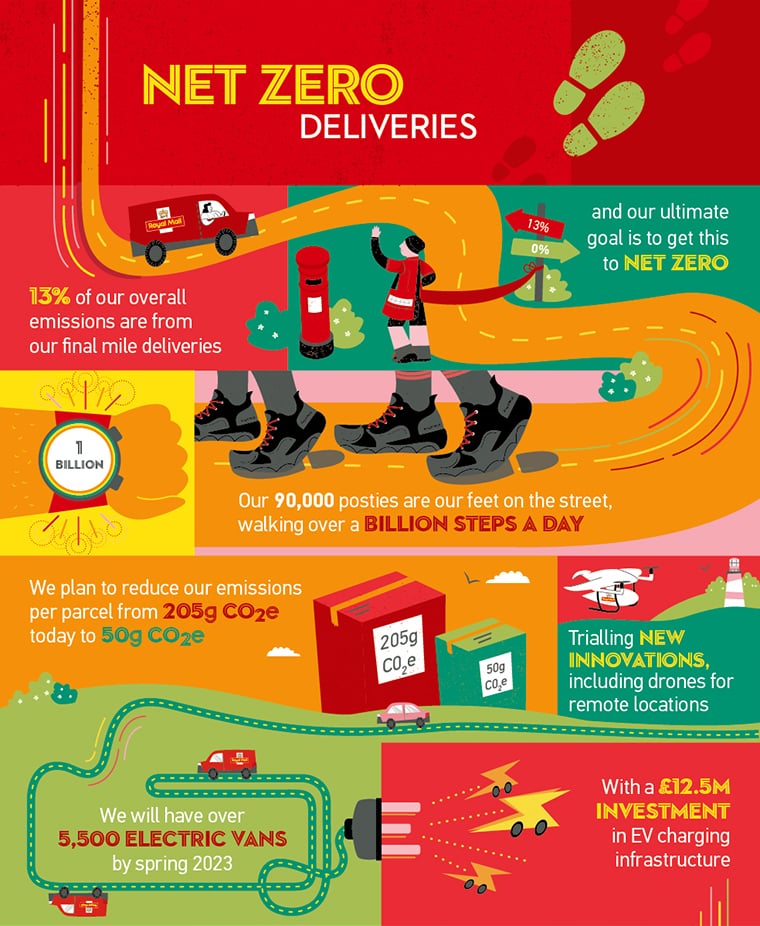
The British postal service and courier company outlined its plans to reduce emissions from deliveries, operations, and the supply chain. In particular, its net zero plan includes a long-term goal to cut down its carbon emissions per parcel it delivers in the UK from 205gCO2e today to 50gCO2e.
The company’s 90,000 posties are walking over a billion steps daily to deliver parcels to 31 million addresses. These ‘feet on the street’ make the company a green option for delivering parcels.
Yet, its 4-pillar Steps to Zero plan goes further, embracing the urgency of tackling climate change.
Per Simon Thompson, Royal Mail’s CEO:
“A seven-day parcel service, to and from the customer’s door, delivered by a postie you trust and with the lowest emissions is the winning proposition.“
He also added that the environment is the next battleground for businesses. And setting an ambitious target to cut parcel emissions to 50 gCO2e shows the firm’s commitment to minimizing its impact on the environment.
Royal Mail’s Net Zero Emissions Plan
For 2020-21, Royal Mail posted a 5.8%increase in its total carbon footprint which is due to an increased volume of parcels. But it also posted a 6.9% reduction in carbon intensity when intensity is measured per £1m of revenues.
The company seeks to reach its net zero targets by 2040, 10 years earlier than the world’s goal by 2050. It pledged to reduce Scope 1 (direct) and 2 (power-related) emissions by 25% by 2025/26.
At the same time, its target for Scope 3 emissions is a 25% reduction between 2020/21 and 2030.
Such targets are in line with 1.5C from the Science Based Targets initiative (SBTi).
The “Steps to Zero”
Royal Mail’s net zero emissions plan is a four-pillar strategy to address the climate crisis; each pillar consists of specific net zero emissions targets.
Here are the four pillars and their corresponding targets and measures.
1. Net Zero deliveries: fleet electrification
13% of Royal Mail’s total emissions are from final mile deliveries. And so the firm seeks to reduce this to zero by:
Growing electric vans (EVs) to 5,500 by Spring 2023
Investing £12.5m in charging infrastructure across the country in 2022/23
Trying new innovations like drones for remote locations
2. Net Zero operations: 100% renewable electricity
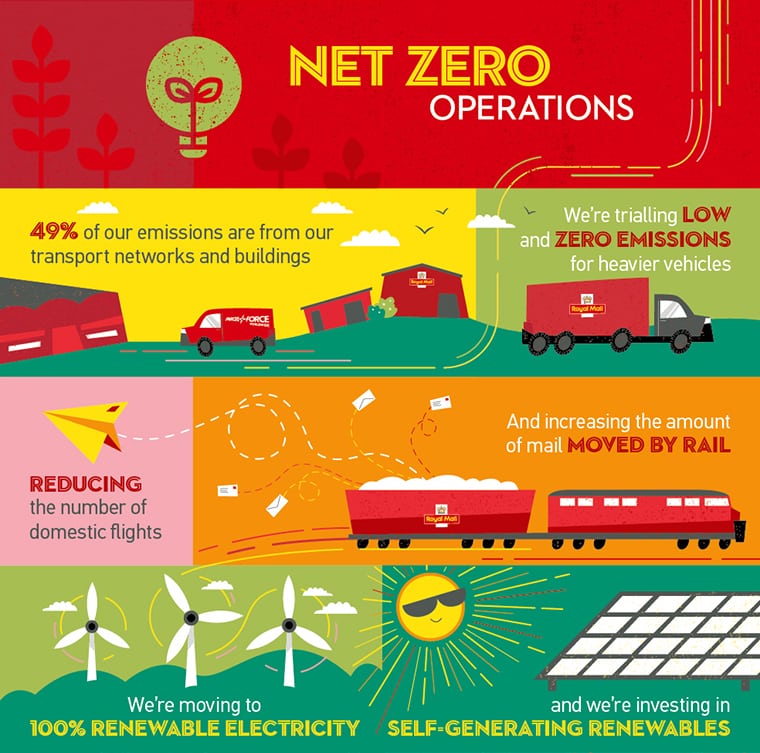
49% of Royal Mail’s emissions are from domestic operations, including transport networks and buildings. Measures to reduce them include:
Moving to 100% renewable electricity across the business from 2022
Royal Mail’s largest solar panel installation will go live at the new Midlands Parcel Hub in 2023.
3. Making circular happen: circularity via reuse and reduce
Royal Mail’s 3rd pillar for net zero emissions involves transforming its operations and behaviors toward circularity.
In particular, it will apply reuse models and reduce single-use items, targeting to achieve:
25% reduction in waste by 2030
Increase recycled content of plastic delivery bags
Elimination of cable ties in mail bags
Help customers embrace their own circular journey via its Parcel Collect service
4. Collaborating for action: drive net zero in the industry
The final pillar of Royal Mail’s ‘Steps to Zero’ plan is all about collaboration with other businesses across the UK’s postal system to standardize reporting on CO2e per parcel. This is to help customers make an informed decision about their delivery/courier needs.
Also under this pillar, Royal Mail emphasized its intention to collaborate with other fleet operators to speed up the decarbonization of transport via rolling out of EVs and low emission vehicles.
The company will also look at all commercial vehicles and new fuel types not just electric.
Royal Mail is a member of The Climate Group’s EV100 initiative. The group sought to make EVs “the new normal” by 2030.
According to Royal Mail’s CEO, pulling forward its net zero emissions target by 10 years to 2040 means the company has to:
“… transform the way we collect, process, and deliver the 10 billion letters and parcels we handle each year.”
The company will report its ‘Steps to Zero’ progress annually and later in June through its ESG report.
To provide the best experiences, we use technologies like cookies to store and/or access device information. Consenting to these technologies will allow us to process data such as browsing behavior or unique IDs on this site. Not consenting or withdrawing consent, may adversely affect certain features and functions.
Functional
Always active
The technical storage or access is strictly necessary for the legitimate purpose of enabling the use of a specific service explicitly requested by the subscriber or user, or for the sole purpose of carrying out the transmission of a communication over an electronic communications network.
Preferences
The technical storage or access is necessary for the legitimate purpose of storing preferences that are not requested by the subscriber or user.
Statistics
The technical storage or access that is used exclusively for statistical purposes.The technical storage or access that is used exclusively for anonymous statistical purposes. Without a subpoena, voluntary compliance on the part of your Internet Service Provider, or additional records from a third party, information stored or retrieved for this purpose alone cannot usually be used to identify you.
Marketing
The technical storage or access is required to create user profiles to send advertising, or to track the user on a website or across several websites for similar marketing purposes.