Howden Introduces First-Ever Carbon Credit Insurance Product

International insurance broker Howden has launched the first-ever voluntary carbon credit insurance. The aim is to limit fraud and negligence and increase confidence in the carbon market.

UK-based Howden Group is the largest European broker managing insurance for $10+ billion. Its key purpose in launching the carbon credit insurance product is to bring more confidence to the voluntary carbon market (VCM).

The product was developed in partnership with:

  1. Respira International, a carbon finance business, and
  2. Nephila Capital, an investment manager for reinsurance risk.

Parhelion, a climate risk finance firm, advised the partnership. While it was through Prince Charles’ initiative, the Insurance Task Force of the Sustainable Markets Initiative, that the product was created.

Added Layer of Security to the VCM

The broker believes that the VCM has a critical role in the world’s transition to a low-carbon economy.

Howden referred to various estimates suggesting that the market for carbon credits will grow from $20 billion to $50 billion by 2030.

  • The buyer of carbon credits (or carbon offsets) can emit a certain amount of carbon dioxide. One credit equals one tonne of CO2 or its equivalent.

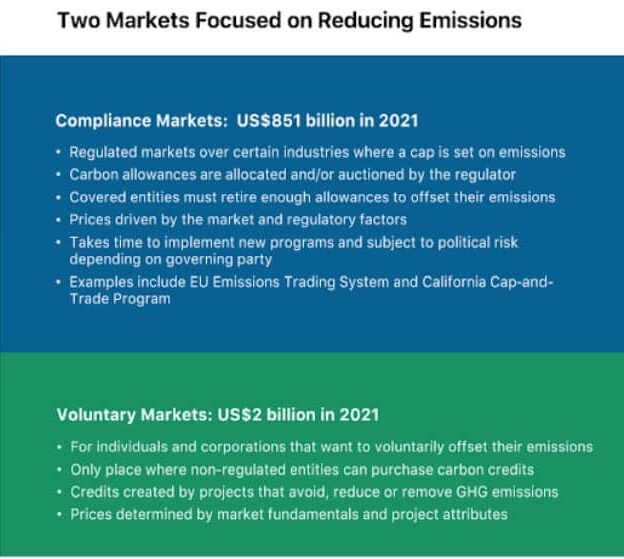
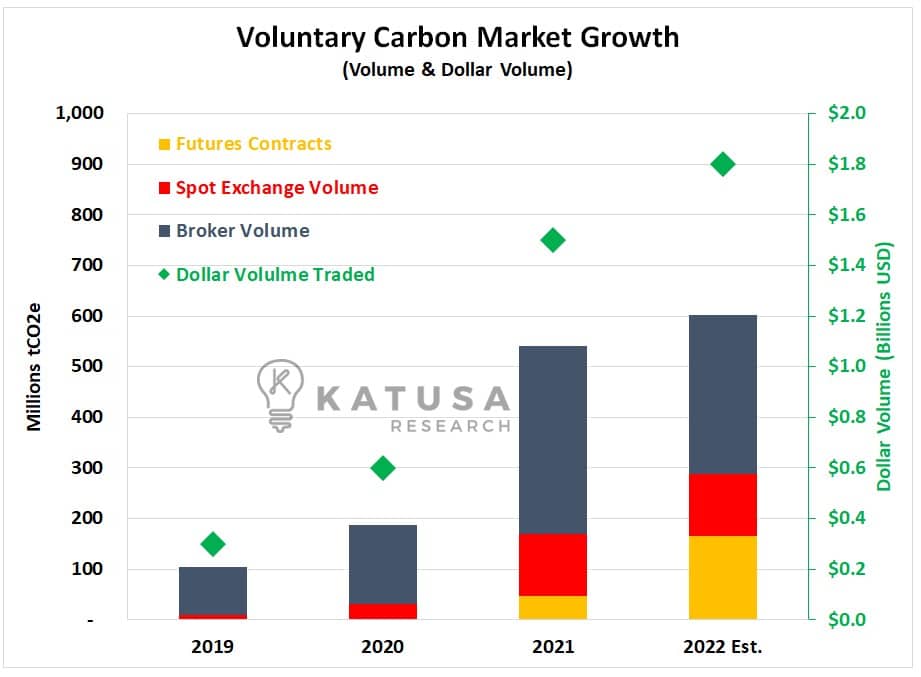
The company also pointed out that the trading turnover of the VCM grew steadily over recent years. Last year, it recorded almost $2 billion in traded offsets.

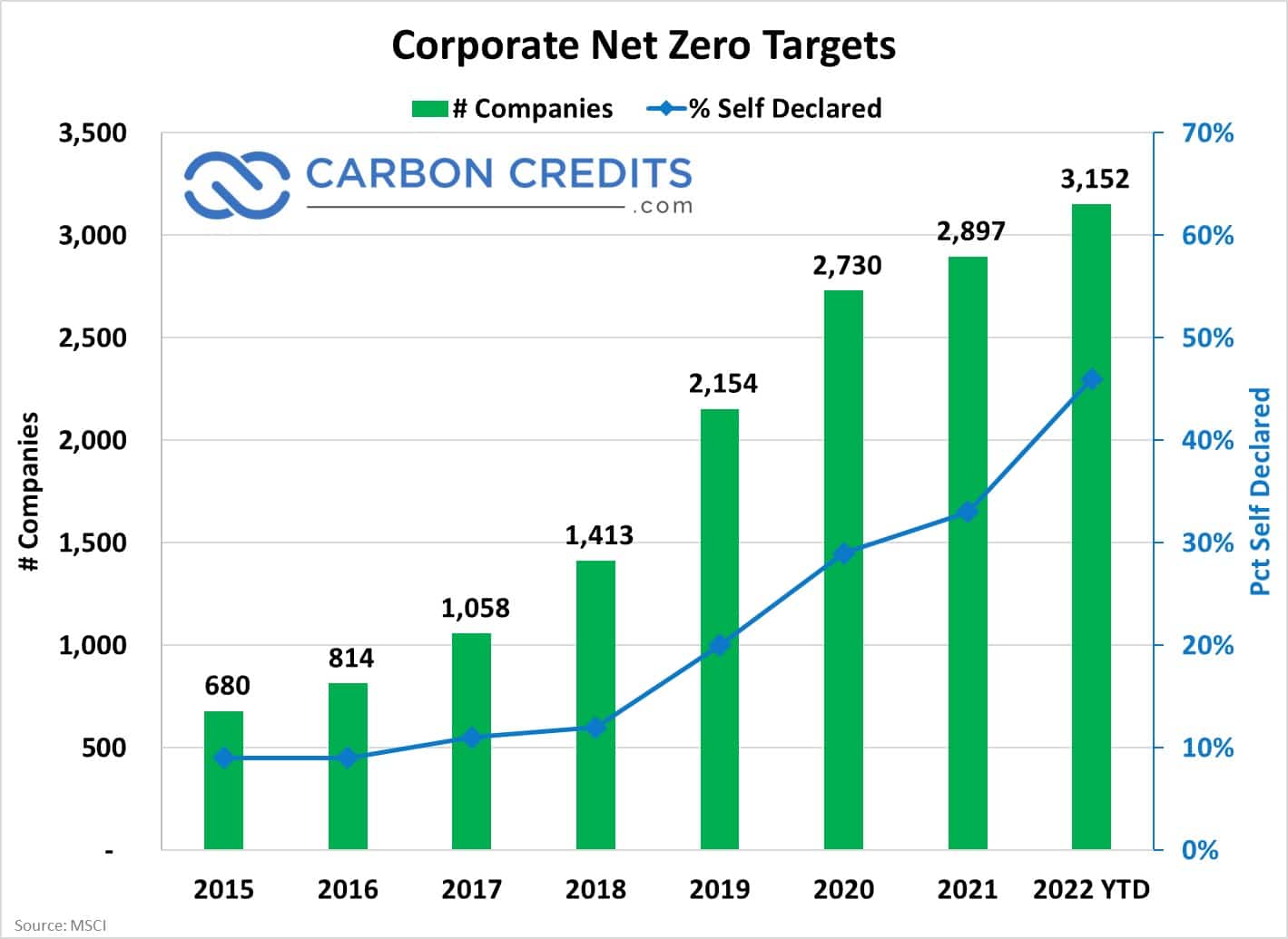
That figure can grow even more as large companies are striving to reach their ambitious climate targets. This will significantly drive demand for carbon credits.

Yet, the VCM remains complex, particularly for new buyers.

Howden also said it doesn’t deliver consistent results of carbon reduction and removals projects on the ground.

In fact, there were a number of carbon credit scams in the market at the beginning of this millennium. In Britain alone, the High Court issued winding-up orders for 19 firms in 2016. They’re part of a fraudulent scheme involving over 5 million carbon credits.

Also recently, a couple in Taiwan were convicted for a carbon credit scam with fines and prison terms.

Plus, the market is still under-regulated. The quality of some of the sold credits remains questionable. This is why some entities are still not willing to invest in carbon credits.

So, Howden stated it’s vital for the VCM to put in place processes that improve the credibility and transparency of carbon credits.

It’s also crucial to have ways to distinguish verified, high-quality credits from unverified ones. This is to give buyers enough confidence in the market.

The first-of-its-kind VCM insurance product of Howden aims to add another layer of security for carbon credit buyers.

Carbon Credit Insurance for Integrity & Transparency

Insurers have been reluctant to offer cover for carbon credits. That’s mainly due to insufficient data on historic losses and weak legal systems for the VCM.

Howden’s carbon credit insurance provides cover for 3rd-party negligence and fraud. The product is from books of independently verified, high-quality carbon credits.

Charlie Langdale, Head of Climate Risk and Resilience at Howden, commented that:

“For the VCM to grow to $50bn by 2030, buyers need to be able to trust that the carbon credits they are buying are removing the promised volume of carbon from the atmosphere… The added layer of security provided by this product, combined with independent verification from established, reputable bodies will help buyers to purchase with confidence and should drive more buyers towards high-quality projects…”

Howden and its partners said they have a portfolio of verified credits and insured them as a bundle to diversify risk for the insurer.

In case of fraud or negligence after credit sale, Respira would be able to claim the insurance and compensate the buyer.

As per Respira’s CEO, Ana Haurie, the VCM is a vital element if the world is to reach net zero. So, the new insurance product will appeal to a lot of businesses that plan to buy carbon credits as part of their net zero pathways.

She also said that insurance backing for carbon credits “underpins the fact these are good quality projects if you can get them insured.”

And that will provide much needed capital for the integrity, transparency, and high quality of carbon projects on the ground.

The plan for the next months is for larger firms with diverse portfolios to secure their own carbon credit insurance.

Accenture Acquires Carbon Consultancy to Support Net Zero Goals

Accenture has acquired Carbon Intelligence, a leading carbon and climate change strategy consultancy, adding 160+ professionals to its growing pool of sustainability experts to help companies achieve net zero.

Accenture is a Fortune 500 company specializing in IT services and consulting. It’s a global professional services firm with leading abilities in digital, cloud, and security catering to over 40 industries.

Acquiring Carbon Intelligence adds more than 160 professionals to the NYSE-listed growing group of data scientists, consultants, and sustainability experts.

Peter Lacy, Accenture’s Sustainability Services lead officer, remarked on this recent acquisition:

“Carbon Intelligence expands our expertise in carbon strategy and delivery, building on the insights of our recently created global carbon intelligence network.”

Supporting Global Companies’ Net Zero Goals

Carbon Intelligence is a carbon and climate change strategy consultancy firm. It focuses on helping large businesses understand their carbon footprints and how to reduce them.

The company is using the Science Based Targets Initiative (SBTi) strategies to rethink clients’ business models and value chains.

As such, Carbon Intelligence has helped many global companies set science-based net zero targets and how to achieve them. It’s a key partner to CDP (formerly the Carbon Disclosure Project).

The company is also popular for its high standards in helping businesses measure and manage emissions. As per the firm’s CEO, Jonathan Sykes:

“The Carbon Intelligence team is made up of amazing, passionate people who are committed to driving real impact on climate change… We are excited to be joining Accenture, which will help us scale our capabilities and fulfill our mission to help businesses make a successful transition to a low-carbon world.”

The deal shows Accenture’s strong commitment to embed sustainability into everything it does and with everyone it works with.

  • With the entire world racing to net zero, the ability to measure, interpret and act on carbon data using the latest analytics, AI and visualization technologies has never been more critical.

So the addition of Carbon Intelligence will help Accenture ramp up true impact in reducing its clients’ total emissions.

The terms of the acquisition were not revealed.

Expanding Sustainability Services across ESG

Carbon Intelligence is Accenture’s 5th acquisition focusing on sustainability and net zero emissions.

The firm continues to highlight sustainability by expanding its capabilities in this area. It does the same in supply chain transformation and data-driven measurement of value and impact.

Earlier this year, Accenture acquired the following four companies. This move is to expand its services and solutions across ESG matters, including reaching net zero emissions.

Greenfish in France, Belgium and the Netherlands – June 2022

Greenfish is an independent engineering and advisory company specializing in sustainability consultancy services.

With a team of over 270 highly skilled professionals, the consulting firm joined Accenture to further enhance the provision of global Sustainability Services. This is to help clients improve their ESG performance and include sustainability in their operations.

akzente in Germany – May 2022

A recognized expert in ESG issues, akzente strengthens Accenture’s sustainability capabilities.

akzente helps companies across a broad range of industries build sustainability into the core of their businesses while creating sustainable values for stakeholders. These include the automotive, financial services, energy and consumer goods sectors.

Its team of 60+ professionals brings extensive knowledge in sustainability strategy, reporting, communication, and stakeholder management to Accenture Sustainability Services.

Avieco in the UK – April 2022

Avieco plays a central role in helping businesses in the U.K. and Ireland to create a sustainable, low-carbon economy.

Accenture’s commitment to sustainability aligns to that of Avieco’s. Being part of Accenture will create new opportunities for its people while helping businesses become truly sustainable.

Avieco’s team of over 60 professionals will bring more knowledge in ESG reporting, net zero strategy, and real-time data analytics to Accenture’s Sustainability Services in the U.K.

Avieco’s expertise in sustainability consulting spans a broad range of industries including retail and consumer goods, financial services, technology and media.

Zestgroup in the Netherlands – December 2021

Zestgroup was acquired by Accenture last year in December. It’s a services firm specializing in energy transitions, net carbon-zero projects, and procurement of renewables.

Zestgroup brings deep industry knowledge, project expertise and market regulation experience into helping entities move to net zero. This will further enhance Accenture’s ability to build more trusted, circular and net zero value chains.

Accenture itself has set its ambitious net zero aim by 2025. It’s committed to reduce emissions across the board, focusing on Scope 2 electricity use and Scope 3 business travels.

To tackle its unavoidable emissions, Accenture invests in its own proprietary nature-based carbon removal projects.

DeepMarkit Announces Up-Listing to OTCQB Venture Market

0

DeepMarkit Corp announces that its common shares have been successfully up-listed from the OTC Pink Sheet Open Market to the OTCQB Venture Market by the OTC Markets Group Inc.

The firm’s common shares will start trading on the OTCQB under the symbol “MKTDF” on September 6, 2022.

The listing to the OTCQB complements DeepMarkit’s previous receipt of DTC Eligibility.

The OTCQB is a premier and established marketplace for entrepreneurial and development-stage companies, including ESG focused, to trade in the US.

It offers companies the opportunity to build their visibility, expand their liquidity and diversify their shareholder base.

DeepMarkit’s common shares will continue to trade under the symbol “MKT” and the Frankfurt Stock Exchange under the symbol “DEP”.

Read the full news release here.

The Top 3 Private Carbon Companies to Watch Right Now

Right now, the carbon space is heating up. Dozens of companies are jumping into what’s fast becoming one of the hottest spaces to invest in. But like in other fledgling industries, many of the top carbon companies are still private.

Most of the publicly listed carbon investments you can find on stock exchanges right now are exchange-traded funds (ETFs) that hold carbon credit futures such as those found on the EU’s Emissions Trading System.

While these products can be fantastic ways to add exposure to the performance of carbon credits to your portfolio, they aren’t the most exciting.

That’s because carbon credits are a commodity, like gold or oil. And junior commodity companies will often see leveraged performance compared to that of their underlying commodity.

What that means is that when a commodity goes up, a junior company based in that commodity sector tends to go up by more.

Of course, the reverse is also true – when a commodity goes down, a junior company based in that commodity sector tends to go down by more as well.

In addition to this, as previously mentioned, many junior carbon companies are still private. This adds an extra layer of risk:

  • For private companies, unlike publicly listed companies, there’s no guarantee that you’ll be able to sell your shares whenever you’d like to do so.

Whether or not the potential for leveraged returns outweighs these risks is something only individual investors can decide for themselves.

Furthermore, opportunities to buy into top private carbon companies aren’t common, and require either good timing or knowing someone with access to the deal like a private broker. For patient investors, waiting for a private company’s go-public transaction, such as an IPO, can be an excellent alternative for buying into the company, provided that the price is right.

With that said, let’s take a look at three of the best private carbon companies in the sector right now.

But before we discuss each one of them, it would help to highlight the importance of investing in carbon credits and its impact on climate change.

The Importance of Investing in Carbon Credits

Betting your money in carbon credits and the companies that trade them is like paying off your (carbon) debts before investing. That’s because your investment will help get rid of “dirty” companies that pump greenhouse gas into the atmosphere.

The top carbon companies, including the private ones, are instead putting funds to projects that promote the transition to a low carbon economy. It means they help avoid or reduce emissions by supporting cleaner energy sources.

Common examples of projects that reduce carbon pollution are reforestation, carbon capture, use and storage, and more.

Your money can also incentivize farmers to not turn grasslands (major carbon sink) into crops.

Either way, you’d be glad to know that your investment will not only give you some monetary return but it will help fight climate change. 

So here are the top private carbon companies you can choose from.

1. Xpansiv

Topping our list is the U.S.-based online commodities marketplace Xpansiv.

Formed from the merger of two different companies in 2019, Xpansiv is currently the market leader among all carbon exchanges for voluntary carbon credits.

  • Currently, around 90% of all global voluntary carbon credit transactions go through Xpansiv’s marketplace.

The carbon firm prices carbon, energy, and water-based transactions. And the company does this in an intuitive, user-friendly environment based on deeper data.

On its platform, users can trade a broad range of carbon credits from major carbon registries around the world. The long list of clients includes big organizations like airlines and financial institutions.

Xpansiv has seen phenomenal growth alongside the voluntary carbon markets, as the chart below shows:

Xpansiv carbon trading volume, value, firm

Their investors certainly like what they’ve been seeing as well. Xpansiv has raised over US$500 million since its merger in 2019, including a $40 million pre-IPO raise completed last January.

Blackstone alone committed $400 million to lead a strategic investment in Xpansiv in July this year.

And within the next month, it acquired two companies, APX and Evolution Markets, to scale environmental commodity market infrastructure and expand global market infrastructure respectively.

Recently, APX has launched ESGclear, an innovative solution that provides transparency for transactions that require ESG reporting, financing, and mitigation across supply chains.

So, for investors looking for exposure to the voluntary carbon markets, as well as other ESG-inclusive commodities, Xpansiv is definitely the top private carbon company to keep a close eye on, particularly as they near a go-public transaction.

2. DevvStream

Next on our list is DevvStream, a carbon credit streaming company with some significant business partnerships in play.

Streaming is an excellent business model, which has been seen in numerous other sectors such as the music and precious metals industries.

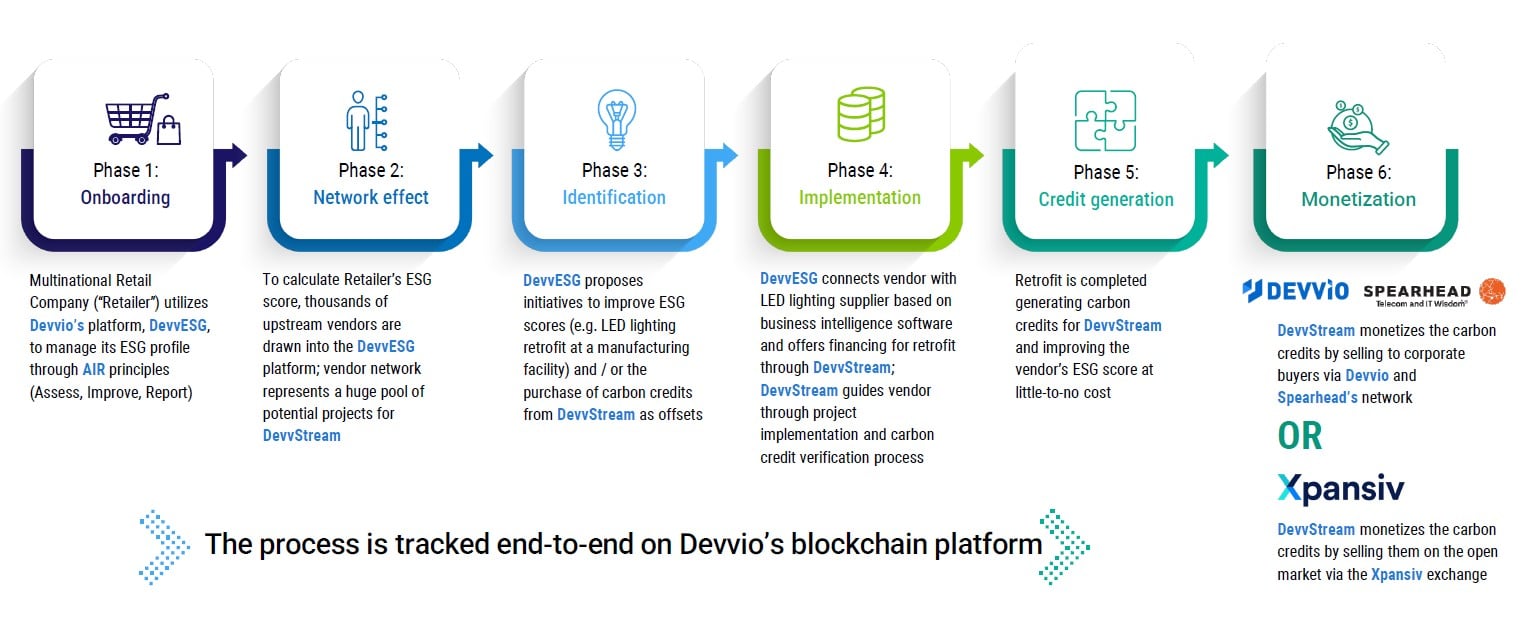
As such, it makes sense that DevvStream isn’t the only carbon streaming company around. What sets them apart, however, are the partnerships. More notably, DevvStream’s parent company, Devvio, runs a proprietary blockchain-based ESG platform with a number of major corporate clients.

DevvStream can use this platform to onboard their carbon credits onto Devvio’s blockchain, where they will get priority access to any of Devvio’s corporate clients looking to reduce their carbon footprint.

Most significantly, DevvStream partners with the United Cities North America. They are an arm of the United Nation’s smart city program that advances the UN’s Sustainable Development Goals across cities around the world.

This strategic partnership will provide sustainable, high-quality projects to DevvStream for their streaming portfolio while giving them access to every project United Cities will be working on.

On top of it all, it will give the carbon streaming company the ability to take any technology partnerships and projects it invests in and bring it to the smart cities program.

These valuable partnerships give DevvStream a competitive edge over its peers and make it number two on our list of top private carbon companies to watch.

While the company has received conditional approval to list on the Canadian NEO exchange, it hasn’t gone public yet, and an IPO financing would potentially make for the perfect entry point into this company.

3. Global Carbon Credit Corp.

Last but not least on our list to keep an eye on is Global Carbon Credit Corp.

Global Carbon has a simple business model: they’re looking to acquire a diverse portfolio of voluntary carbon credits through both direct purchase as well as, potentially, streaming agreements.

By doing this, the company will be able to become a proxy for the price performance of voluntary carbon credits.

While many such ETFs already exist for the compliance carbon markets such as the E.U.’s EUAs and California’s CCAs, Global Carbon would be one of the first companies to do this for the voluntary carbon markets, giving them an early move advantage.

On top of this, Global Carbon’s CEO, Anthony Milewski, previously did the exact same thing with a different ESG-friendly commodity – cobalt, which is used extensively in electric vehicle batteries.

Mr. Milewski was able to sell his previous company, Cobalt 27, for half a billion dollars Canadian – and he’s looking to apply the same business model and experience from his previous success to Global Carbon.

While Global Carbon hasn’t given any indication as to a potential IPO timing yet, the company did mention that it would use its best effort to get a listing on a North American stock exchange when they announced a CAD $35 million financing just earlier this March.

In other words, an IPO could be on the horizon for Global Carbon – giving it the third spot on our list of top private carbon companies to watch.

A Few Tips to Remember

If you’ve decided that investing in carbon credits is the best way for you to grow your money responsibly, the best private carbon companies above are a good place to start.

Whether you’re more interested in growing trees to suck in CO2 from the air or promoting renewable energy use in communities, those companies have it all.

But to make sure that your dollars are making a real difference in the battle against global warming, take note of the following tips when making your final choice.

  • Projects are third-party verified

All projects that produce carbon credits should be verified and certified by internationally recognized carbon standards. This means the projects meet strict criteria ensuring you that their emissions reductions are real and verifiable. The top carbon verifiers are Verra’s Verified Carbon Standards, Gold Standard, American Carbon Registry, and Climate Action Reserve.

  • Projects provide “additionality”

Make sure that the project was only made possible by carbon funding. If it would have happened anyway even without the funding support, your money is probably better invested elsewhere.

  • Transparency is key

Not all top private carbon companies work the same. A reputable one will have all information about their projects, methods, quality standard protocols, etc. readily accessible on their website. See to it that standards and frameworks are transparent so you know the value of your investment.

  • Carbon credit retirement

All projects should be listed on a carbon registry so that carbon companies can use them as reference when retiring carbon credits. This is crucial for you to ensure that the credits you bought are not resold. Otherwise, they’ll be double counted in accounting and reporting emissions reductions.

These are just some of the reminders you need to keep in mind. You may also want to know what are the best carbon credits to buy.

And if you want to take your search further, you can also learn more about the top carbon exchanges that you can add to your investment portfolio.

Disclosure: Carboncredits.com and its employees and officers may own positions in all companies mentioned and have been compensated. The information provided is for informational purposes only and is not an offer to buy or sell securities. This is not financial advice.

Please read our full DISCLOSURE here.


Disclosure: Owners, members, directors, and employees of carboncredits.com have/may have stock or option positions in any of the companies mentioned: .

Carboncredits.com receives compensation for this publication and has a business relationship with any company whose stock(s) is/are mentioned in this article.

Additional disclosure: This communication serves the sole purpose of adding value to the research process and is for information only. Please do your own due diligence. Every investment in securities mentioned in publications of carboncredits.com involves risks that could lead to a total loss of the invested capital.

Please read our Full RISKS and DISCLOSURE here.

Social Cost of Carbon in the US is $185 per ton

0

A recent study argued that the social cost of carbon in the US is 3.6x more than the current price which does not take into account the actual damages of carbon emissions.

As climate change bakes the earth, countries and local governments are putting a price tag on carbon emissions that intensify wildfire flooding, and droughts.

All those catastrophic events are causing big losses to communities, homes, and even lives across the globe.

But what’s the real cost in dollar terms of the emissions that drive drastic changes to climate?

A team of researchers tried to provide an answer by determining the social cost of carbon (SCC). It’s a price representing the total climate change caused to society by carbon emissions.

The Social Cost of Carbon

This carbon price is a less direct approach by President Biden to calculate the future climate damages to justify tougher limits on polluting industries.

The current social cost of carbon in the US is $51. This means each ton of CO2 emitted today will contribute to $51 in damages in coming years.

The state of New York has its own SCC. That’s $125 as updated in 2020 to account for economic trends.

By contrast, emissions were most recently valued at $13.50 per tonne at auction under the Regional Greenhouse Gas Initiative (RGGI).

Canada has a more aggressive carbon pricing approach. It imposes fuel charges on individuals ($40/tonne) and makes big polluters pay for emissions. It’s one of dozens of nations with some kind of carbon tax.

  • The US has a social cost of carbon used in regulatory decisions but not a carbon price that is faced by the market.

The difference between these two approaches to carbon emissions is this: the social cost of carbon guides policy, while carbon pricing represents policy in practice.

Economists say that the two figures ($51) would line up in an efficient world. But the researchers in the journal Nature believe that the current price is 3.6x lower than the true SCC.

They argue that it should be $185 per tonne.

They developed a tool to estimate the true cost of carbon pollution using the latest research on socioeconomic projections, climate modeling, climate impact assessments, and economic discounting.

Their model shows how much the value of future climate damages are discounted due to projected growth.

According to Kevin Rennert, the study author:

“Our results suggest that we are vastly underestimating the harm from each additional ton of carbon dioxide in the atmosphere… And the implication is that the benefits of government policies and other actions that reduce global warming pollution are greater than has been estimated.”

But not all in the industry think that the results of the new study are workable for the government right now.

A senior research economist thought that it’s ($185/tonne) a long way from what the current administration needs.

Underestimated cost

Federal officials in the US have been using the social cost of carbon to new policies over a decade ago. It started when environmentalists sued the government for discounting GHG emissions when setting vehicle mileage standards.

But some legislators were against using the SCC to steer policy. President Biden’s estimation ($51) gets blocked a couple of times. And the White House is still reviewing the best way to come up with the final figure.

  • In fact, officials already have determined that the interim price of $51 per tonne is too low.

In an analysis of the new climate law published by the White House, officials wrote that:

“…the interim social cost of carbon estimates are currently significantly underestimated because they do not account for many important climate damage categories, such as ocean acidification.”

Even the authors of the new study noted that their estimate is conservative. Their model doesn’t account for several costs associated with rising temperatures including:

  • biodiversity loss,
  • reduced labor productivity,
  • increased conflict and violence, and
  • climate-related migration.

Indeed, as potential future climate damages become more costly, the benefits from preventing them with stricter rules will also grow.

But federal officials said that though the SCC has been taken into account in various climate solutions, it hasn’t been a deciding factor so far.

Yet, the present administration will continue to assess how best to account for those social costs of carbon in its regulatory and budgetary contexts.


Green Steel Provider Secures $191M Funding

H2 Green Steel raised €190 (US$191) million in funding from investors in its latest series B round to scale up its hydrogen, iron and steel facilities.

The Swedish low-carbon steel provider was founded in 2020 and seeks to ramp up the decarbonization of the steel industry, which is one of the world’s largest CO2 emitters.

H2 Green Steel plans to produce green steel by replacing coal with green hydrogen. This will reduce CO2 emissions by over 90% compared to traditional steelmaking.

Its recent equity round was co-led by new investors AMF, GIC, and Schaeffler, alongside other investors including:

  • Altor Fund V
  • Swedbank Robur Alternative Equity
  • Vargas,
  • Kingspan,
  • FAM,
  • Marcegaglia,
  • IMAS Foundation,
  • Cristina Stenbeck and
  • Spotify CEO and co-founder Daniel Ek.

H2 Green Steel’s CEO Henrik Henriksson called the multi-million investment a real statement of confidence in the startup. He said that:

“Despite the uncertainty in global markets, a venture like ours, with both a strong business case and a strong sustainable purpose, is clearly attractive to investors… This financing round has allowed us to combine leading industrial companies and global financial institutions creating the investor-base that will set us up for success…”

H2 Green Steel Decarbonization Goals

The startup will use the funding proceeds to help industries that emit significant carbon decarbonize. It will do so starting with the delivery of its planned green hydrogen powered steel plant in Boden, Sweden.

The 5 million tonne steel plant got the permissibility last July. It is now into its construction phase on around 270 hectares of land.

No steel mills have been built in Europe since the ’70s so H2’s green hydrogen plant is historic.

The record pace of receiving the permissibility permit for its operations in Boden was possible via the firm’s series A equity round. This round also enabled H2 Green Steel secure a 14 TWh agreement for renewable electricity and initiating groundworks.

The Stockholm-based green steel provider also added that it has pre-sold about 60% of its initial volumes of steel (1.5 million tonnes).

This shows the significant pent up demand for decarbonized steel.

A major part of that pre-selling involves a deal with auto giant BMW.

What is Green Steel?

H2 Green Steel will provide the carmaker with steel to support its goal to meet 40% of demand at its European plants with low carbon steel by 2030.

The green steel provider pledged to reduce its Scope 1, 2 and upstream Scope 3 emissions. It has a gross embodied carbon emission intensity obligation per tonne of steel as part of its customer contracts.

H2 Green Steel’s effort to reduce emissions will affect BMW Group’s supply chain and upstream Scope 3 emissions.

Part of the deal with BMW is ensuring circularity with recycling scrap. In fact, both companies agreed to have 40% of the pre-consumer steel scrap returned to H2 Green Steel’s electric arc furnaces be for recycling.

This is vital for the company’s definition of green steel where actual CO2 reductions and improving circularity are both crucial.

And so, green steel must be from a combination of a significant amount of green virgin iron and scrap in a production process that uses electricity from renewable energy sources.

Here’s how H2 Green Steel’s production process works:

H2 green steel production

The total CO2 emissions of this process +90% lower than that of traditional steelmaking in a blast furnace process.

Hitachi Energy also joins forces with H2 Green Steel on projects that support the start-up in producing green steel. Apart from being an investor in H2 green steel production, Hitachi will also be its customer.

Henrik Henriksson believes that its green steel production raises the bar for the industry’s decarbonization journey.

GIC’s CEO Choo Yong Cheen considers H2 Green Steel as a “global pioneer in carbon-free steel”.

Another option for low carbon steel production is green pig iron. It refers to an iron ore that has been processed using low emission technologies and inputs.

It also produces steel without using coal but through the renewable input of biomass called biochar. Green pig iron production can reduce emissions by up to 100%.

Celebs LeBron, Cuban and Gates Back Carbon Neutral Foods for $12M

Neutral Foods announced its $12 million first round of Series A funding from Bill Gates and various celebrity investors like Mark Cuban and LeBron James to help dairy farmers cut carbon emissions and earn carbon credits. 

Neutral Foods is a company that tracks and buys carbon credits to neutralize greenhouse gas (GHG) emissions from dairy farms. It’s partnering with farmers to help them cut their own emissions at the source.

The firm is one of the first carbon neutral food company in the United States. It debuted nationally in 2021 and its milk products are found in 2,000 grocery stores. It also plans to expand into butter and meat. 

Carmichael Roberts from Gates’ Breakthrough Energy Ventures said that:

“It’s clear that consumers are hungry for sustainable, climate-forward options and they’re reflecting that in their buying decisions, especially when it comes to buying food and beverages…”

The food company has also got funding from different celebrity investors. They include Mark Cuban, LeBron James, Kevin Love, Tobias Harris, John Legend, and Questlove.

This round of funding will support Neutral to scale up its carbon-neutral foods and technologies that will revolutionize the food industry. 

Neutral Foods and Carbon Credits

Consumers are now looking for ways how they can make more climate-conscious purchases.

So Neutral Foods are measuring the emissions of its products’ entire lifecycle. Then the company is buying carbon credits for those measured emissions.

neutral foods emissions reduction

Carbon credits are permits that firms buy to certify GHG removal from the atmosphere. Neutral Foods are buying offsets verified by carbon certification firm Climate Action Reserve (CAR).

But apart from using offsets, the firm also plans to work with farms to cut their emissions directly.

  • When it comes to efforts to reduce global emissions, the transportation and electricity sectors are in the spotlight. But agriculture is also a huge emissions contributor.

According to Breakthrough Energy Ventures, agriculture is one of the largest emitters at the number 3 spot. It’s accountable for 19% of total GHG emissions. The other major emitters include:

  • Manufacturing (31%)
  • Electricity (27%)
  • Transportation (16%)
  • Buildings (7%)

Currently, Neutral Foods has 8 different projects underway at farms it partners with. And it has 30 projects under development. With these projects, the company aims to achieve two things:

  1. To change the way farmers plant to improve the soil’s ability to absorb carbon
  2. To change what cows eat and how cow manure is managed

Ann Radil, the Head of Carbon Reduction at Neutral Foods, said that separating and composting manure “alone can reduce manure-related GHG emissions like methane and nitrous oxide by 19% to 50%.

Cutting emissions at the farm

The company aids farmers to make those changes happen while also providing them with the fund they need.

Neutral Foods helps the farm learn a farming practice called co-cropping or relay cropping. The process refers to planting two different crops at the same time. This reduces the amount of carbon dioxide emitted by the farm.

The firm’s milk brand is sold at stores under Whole Foods, Sprouts, Target, and many other grocers.

With the positive feedback from customers of Neutral Foods’ products, some grocers are planning to expand into other items.

The company will start selling carbon-neutral pasture-raised butter. And it is also planning to include beef eventually.

  • On this note, Neutral Foods is piloting a project with Carman Ranch. It’s a century farm that raises cows and hogs.

The ranch owner sought the help of the startup on emissions tracking programs for beef. The rancher has learned about cattle feed supplements that reduce the methane that cows belch out during digestion.

The pilot project is on a trial to put a seaweed supplement into the feed for 50 cattle. For this program, the firm will bring researchers, partners, and procedures to measure methane emissions.

  • Neutral Foods will then perform a full lifecycle analysis and produce the verified carbon credits.

It may take some time for this project to take effect. But it inspires investors to continue supporting the company’s decarbonization strategies.

For Gates’ investment fund, this kind of project sends a price signal to farmers that sustainable practices have value. And as the brand grows and expands, the same goes for scaling up outcomes at the farm level.

Other investors like Marc Cuban also think so, commenting that:

“I think consumers are becoming more concerned about the impact of the products they consume on the environment… I think Neutral is well positioned to meet that demand.”

Carbon Insetting: The Target of Scope 3 Carbon Offset Accounting

Carbon offsets are a well-known sustainability concept so you most likely have heard of them. But there’s a relatively new sustainable supply chain term on the block: “carbon insetting”.

Carbon insets are still undergoing their transformation. Yet, have the potential to be a significant element of the global movement of decarbonization.

This article will explain in detail what carbon insetting is and how insets differ from offsets. It will also provide some real-life examples to illustrate its application.

What is Carbon Insetting?

The critical net zero strategy suggests that companies looking to decarbonize should mitigate first then offset their unavoidable emissions. What lies between these two measures is carbon insetting.

Insets may sound or look like offsets but they also work like mitigation.

In broader terms, carbon insetting refers to the actions taken by an organization within its own value chain to fight climate change.

  • In a more specific sense, carbon insetting means the intentional reduction of Scope 3 emissions within a firm’s own supply chain.

So, the rub with insetting is with Scope 3 emissions, both upstream and downstream, that can count across various parties’ supply chains.

Inset emissions are directly avoided, reduced, or sequestered within the company’s value chain. They’re not sold as a credit to offset another firm’s emissions by capturing carbon somewhere else.

Carbon insetting also means investing in sustainable practices that prevent emissions from happening in the first place. They’re often nature-based projects. They don’t avoid or sequester carbon only, they also protect biodiversity and restore ecosystems.

Are carbon insets better than carbon offsets?

Both carbon measures represent ways that can help mitigate emissions. But they’re also different methods of tackling climate matters with varying impacts. So, it’s important to understand their differences.

Carbon Insets Vs. Carbon Offsets

The key difference between carbon insets and offsets is the way an entity invests to reduce its carbon footprint. Carbon insetting involves investing in projects that are related to a company’s products; carbon offsetting involves projects that are not related to a firm’s products.

  • In a sense, carbon insets ensure that firms take direct responsibility for the emissions in their own supply chain. They also aid in improving sustainable management practices directly at the source.

Investing in inset projects can help make a firm’s supply chain more resilient. It can also improve the quality of its raw materials.

However, carbon insets are more limited by their very nature – they only tackle Scope 3 emissions. They don’t address Scope 1 (direct emissions) nor Scope 2 (emissions from the energy that the company buys) emissions.

This means retailers selling other brand’s products or service-based businesses that don’t source raw natural materials can’t take part in carbon insets. It also means even a product-based firm can’t become carbon-neutral only by using carbon insets.

Carbon offsetting, on the other hand, is a way for entities to reduce their carbon footprint by paying money to another entity that works to reduce the total emissions emitted. Common example is planting trees.

  • The focus of carbon offsets is on the tonnes of carbon avoided/removed, while the focus of carbon insets is creating carbon emissions reduction capacity.

Moreover, carbon offsetting provides convenience and economic efficiency for they are from verified offset projects.

But critics claim that carbon offsets give companies “a license to pollute”. It means they allow polluters to buy offsets to pay for their footprint without actually cutting their own emissions.

Here are the other major differences between insets and offsets:

Emissions reduction generated: travels separately from the physical product with carbon offsetting while it travels with the product in carbon insetting.

carbon insets vs offsets

As shown in the image above, farmers deliver the wheat to one party (Cargill) then deliver the quantified emissions reduction to another entity (Microsoft) under carbon offset. But under carbon inset, farmers deliver both the wheat and the emissions reduction to the same party (Cargill).

Methodology and standards: a third party like a registry (Verra, Gold Standard) or rating agency (Sylvera) set the certification standard for carbon offsets. In carbon insets, many parties involved agree on the standard used.

Intended project purpose: carbon offset projects are for the voluntary carbon market. Whereas inset projects are for specific businesses’ supply chains.

Accounting requirements: offsets are a negation of emissions already dumped into the atmosphere so they must meet rigorous standards (fungibility, additionality, durability, etc.).

  • On the contrary, insets don’t face the same accounting requirements as offsets do. That’s because they’re not a fungible credit like an offset.

Plus, there’s no need for addressing leakage or permanence issues as emissions through insets didn’t happen in the first place.

Overall, carbon inset represents indirect but embedded emissions reduction activities within a firm’s supply chain. Insetting activities include upstream (fuel and energy-related activities) and downstream (sold product processing).

Carbon offset represents direct but outsourced emissions reduction efforts. An entity buys an offset and outsources it to another entity that takes the project into effect.

Real-world Examples of Carbon Insetting

Carbon insets are relevant across a wide variety of industries. But they’re most significant in the food and agricultural supply chains due to these agriculture-specific conditions.

Low-carbon fruit:
Ag regenerative practices exist for decarbonizing food supply chains with nature-based, scalable climate solutions. Decarbonization in this sector has a lower cost compared to new carbon removal technologies.

Readily available financial systems:
There are existing financial mechanisms already in place that incentivize farmers to adopt ag regenerative practices. It doesn’t need to put up new payment systems.

Biggest sink:
Agricultural soils are by far the world’s largest carbon sink.

Co-benefits:
Decarbonizing food supply chains also result in other positive impacts like biodiversity, improved water and air quality, and nutritious food.

To show a concrete carbon insetting in a real-world setting, here’s an example scenario.

A farmer delivers regeneratively wheat to a downstream customer contracted by a project developer. The customer then pays a premium for the sustainable wheat and the farmer gets more revenue with an increase in price.

The illustration below shows a carbon inset value chain, from the supplier to Scope 3 reductions.

carbon inset value chain

The inset suppliers are farmers that use regenerative practices to grow crops that reduce emissions and receive payment per metric tonne of carbon.

Project developers are companies that work with and support the farmers while partnering with corporations looking to deliver the insets within their supply chains.

Supplier refers to ag retailers and distributors between the farmers and downstream customers. In the example, that’s Cargill.

Customers are those who buy the raw commodities (wheat) as key ingredients in their products like AB InBev, for instance.

MRV refers to an entity that supplies data to verify carbon outcomes delivered by insetting methodology. While standards are the certification bodies that develop best practices for carbon insets.

  • One particular company that employs carbon insetting in its quest to net zero emissions is Burberry.

Burberry announced two years ago that it has created a “Regeneration Fund”. The aim of the fund is to support the company’s portfolio of insetting projects across its global supply chain.

The luxury fashion house partnered with PUR Project. It will put in place regenerative farming practices with Burberry’s wool producers in Australia.

The insetting project will work at farm level to improve carbon capture in soils, improve watershed and soil health, reduce dryland salinity and promote biodiversity.

Key Takeaways

For sure, insetting is not the same thing as offsetting but insets may be from offsets.

So, where do we draw the line between carbon insetting and offsetting?

Carbon offsets represent the avoidance or removal of CO2 from the atmosphere via verified projects made available on the carbon market.

While carbon insets represent the addition of nature-based projects into a company’s supply chain. Insetting doesn’t need formal verification.

Given our definition and distinction above, we can say that Scope 1 and 2 are to offsets while Scope 3 is to insets.

Without the need for additionality and permanence considerations in insets, it’s up to the producers and consumers to agree to a methodology.

Carbon insets represent indirect emission reductions. They are the execution of practices that reduce a firm’s carbon footprint outside of its direct operations but within its own supply chain.

In short, carbon insetting can be viewed as a piece of the sustainability puzzle for a company. Firms must continue to focus on their carbon emissions reduction initiatives like transitioning to renewable energy.

Lastly, carbon insets do not came into existence to replace carbon offsets. They should be used along with offsets and other emissions reduction strategies to achieve net zero emissions.

Planned Carbon Capture Project Pipeline Almost 1 Billion Tonnes

The Global Carbon Capture, Usage, and Storage (CCUS) project development pipeline is now almost at 1 billion tonnes a year, with over 50 new projects revealed in just Q2 (according to Wood Mackenzie).

CCUS is a term used to describe various methods of capturing the carbon dioxide (CO₂) emitted by burning fossil fuels. A CCUS facility makes the captured carbon available for any intended use.

Woodmac also said that the US Inflation Reduction Act (IRA) will boost CCUS uptake. But more is necessary to meet net zero goals by 2050 – a 7x boost.

The author of the report, Lucy King commented:

“…much more progress is required to meet 2050 greenhouse gas targets. Currently, the CCUS capacity pipeline is close to aligning with Wood Mackenzie’s 1.5-degree pathway to 2030, but it will need to grow seven-fold by 2050 to reach the capacity required for net-zero.”

CCUS Capacity Q2 2022

CCUS capacity refers to the amount of carbon captured by a CCUS facility. The current global CCUS pipeline is 14x the amount currently being captured of 63 million tonnes per year (Mtpa).

The bulk of current CCUS capacity resides in the U.S. and Canada as shown in the chart. But by 2030, capacity in Asia and Europe will be higher as reported by Woodmac.

CCUS capacity Q2 2022

Currently, North America accounts for over ⅔ (67%) of global CCUS capacity. Much of its carbon capture activities are found in Alberta, the U.S. Gulf Coast, and Midwest.

The energy intelligence firm also reported that North America and Europe continue to emerge as hotspots for CCUS activity.

However, North America’s share of global capacity CCUS projects will go down to around 50% by 2030. This is due to the growing projects across Europe and Asia.

CCUS growth by region

Progress during this quarter was mainly in areas such as licensing and permitting for geological CO₂ storage.

Meanwhile, Norway, Russia, and Australia experienced growth in licensing activity. Whereas the UK launched its first CO₂ storage licensing round, consisting of 13 areas across the North Sea.

Going forward into this decade and the next, China and Southeast Asia will see the largest demand for CCUS.

The biggest challenge, however, is the lack of regulatory and policy implementation for CCUS projects as Woodmac said. The author noted that the rate of CCUS pipeline demand and growth is outpacing the government’s ability to regulate.

Yet, the industry can expect 2022 to be a pivotal year for CCUS projects. Many countries are now making strategies and regulations to support its deployment.

In the US, the 45Q tax credit incentive for carbon sequestration supports the CCUS. And two weeks ago, President Biden signed the IRA into law which will further boost the 45Q tax incentive.

The IRA and CCUS

The energy industry has been pushing hard to decarbonize. The CCUS has become a vital emissions reduction technology that industry players can apply.

According to the report, the IRA will:

“further ramp up the U.S.’ planned CCUS capacity pipeline, which is currently at almost 250 mtpa… It will incentivize smaller-scale capture projects, attract more industries, and promote investment into technologies including direct air capture.

Here are some key updates that the IRA provides to the 45Q tax credit:

Increased credit values across the board. Full value realized only if requirements are met:

  • From $50 to $85/tonne for storage in saline geologic formations from carbon capture on industrial and power generation facilities
  • From $35 to $60/tonne for usage from industrial and power generation carbon capture
  • From $50 to $180/tonne for storage in saline geologic formations from DAC
  • From $50 to $130/tonne for usage from DAC

Extended the commence-construction window for qualifying projects. IRA provides a 7 years extension to January 1, 2033. This means that projects must begin physical work by then to qualify for the credit.

Gives a direct payment option for receiving the credit.

Broadens the definition of qualified facilities. Here are the affected facilities.

IRA 45Q enhancements

The IRA marks the largest investment in clean energy in U.S. history. And the Department of Energy believes that it will help position the country to lead the global clean energy market, particularly in the CCUS pipeline.

Convicted for Carbon Credit Scam, Checklist to Avoid Being a Victim

If one falls prey to a carbon credit scam, they’re most likely not able to recoup their investment. So it’s crucial to know what to look for when buying carbon credits and avoid the scammers.

Carbon credits are an innovative and effective tool to help abate climate change but scammers abuse them, leaving an impression that they’re not trustworthy.

Scammers often use uncertainties in carbon markets to deceive investors into handing over their money.

In Taiwan, a couple were convicted and sentenced to prison terms for a carbon credit trading scam. They earned over NT$100 million (US$3.31 million) in profits over 2 years.

According to the filings of prosecutors who investigated the case,

“Although Hsu and Yang knew their company was not dealing in ‘carbon credit trading,’ they set up a trading platform to lure investors by promoting the company as engaging in legitimate international schemes for carbon neutralization and the sale of carbon credits… taking advantage of the worldwide trend for renewable energy sources and reducing greenhouse gas emissions.”

Convicted for Carbon Credit Scam

The Hsinchu District Court ruled that Hsu Chu-tsai (67 yrs. old) and his wife, Yang Liang-liang (60) were guilty of financial fraud in violation of the Banking Act.

The couple were the owners of an investment business called Rich Alliance Good Health Co.

The judges sentenced Hsu to 8 years and Yang to 4 years in prison. The court also confiscated their ~NT$100 million of profits and imposed a NT$25 million (US$0.8 million) fine on their firm.

The couple registered their business in 2016 in Hsinchu City to initially market equipment that generate renewable energy and control pollution.

Three years later they ventured into carbon credit trading. They said that international bodies of carbon trading schemes authorized them to do business in the market.

They then lured 78 people from various countries to invest with false promises of high rates of return from the carbon credit trading scheme.

Investors were told to earn up to 4% monthly profits and 18-48% annual profits.

  • The couple also promised them with carbon credits sold for US$3,000 per 300 tonnes reflected in a carbon credit voucher.

Hsu earned the trust of investors by forging his past and current business ties with a German institution and a Singaporean bank.

He also claimed to be authorized to trade on the “London Carbon Credit Exchange.” Apparently, there’s no such London carbon credit exchange that exists.

In the first year, investors received some returns but they began to suffer shortfalls in the second year.

Hsu blamed the losses to the suspension of carbon credit trading in London due to the death of the exchange’ director. But some investors were keen enough to detect a carbon credit scam. They asked help from authorities to investigate the matter.

The fraud caused many investors to suffer huge financial losses. It also tainted Taiwan’s financial system and its regulation as per the ruling.

What can be learned in this carbon credit scam?

  • Due diligence from the investors – they must do their homework of confirming that the carbon credit scheme is real.

A Checklist to Avoid a Scam

Here are the things to watch out for when investing in or buying carbon credits to avoid a scam.

High rates of return:

Be wary of promised returns that sound too good to be true. Do a quick research on the range of returns available in the market, which can vary a lot.

Price:

There are different types of carbon credits, depending on the kind of project that generates them. This is crucial to know as prices for carbon credits also vary per type.

Credits from nature-based projects often have higher prices, recently traded at $11.25/tonne. But the average price for a credit is below $4.0. The convicted couple sold the credits for $10/tonne.

Carbon Exchange:

The identified carbon credit exchange must be legitimate and a quick Google search can confirm that. The “London Carbon Credit Exchange” doesn’t exist. Here are the top carbon exchanges in the market.

Carbon Registry:

Though not all carbon credits are the same, they must all be registered in an established carbon standard body. If not, then they’re not validated or verified and so, may not be real.

A carbon credit voucher, or any other proof of receipt of investment, should at least name an international carbon registry that certifies the issuance of the credits.

Evaluation Criteria:

If you’re directly buying carbon credits from developers or traders, you should be aware of what to look for to ensure quality and integrity of the credits.

Here’s our guide on the evaluation criteria that carbon credit buyers can use. Each criterion is discussed to help you choose the best carbon credit to buy and avoid a scam.

On top of it all, refrain from trusting a broker right away without checking the above information. Do your homework first so that you won’t be a victim of a carbon credit scam like what the couple did.

After all, investing in carbon credits can be a lucrative venture as long as you are well-informed.