What is CORSIA? All the Important Things You Must Know

Among the human-induced carbon footprint by sector, aviation accounts for the least emissions – 2%, but it still urges the development of what is called CORSIA.

Aviation emissions is less than the shipping sector (3%), cement production (4%), and the iron and steel industry (5%). Energy industries that generate power or electricity have always been the largest emitter.

aviation industry emissions

But as demand for flights grows, so does aviationโ€™s emissions. This is why all segments of the sector, from manufacturers to airports and airline companies, are working hard to reduce their emissions.

Unfortunately, emissions from international flights are not part of the international climate mechanism established by the United Nations Framework Convention on Climate Change or UNFCCC.

Thatโ€™s because such footprint doesnโ€™t fall within the scope of nationally-determined climate actions. Rather, those emissions are the responsibility of the International Civil Aviation Organization (ICAO).

So while domestic aviation falls within the UNFCCC, international aviation does not.

The members of ICAO agreed and decided to have a global market-based mechanism for aviation emissions in 2016. This decision gave birth to what we now know as CORSIA.

What is the Meaning of CORSIA?

Airlines are well aware of their role in climate change and have been working hard toward sustainability agenda. In general, they apply the following strategies to manage their environmental impact.

  • Increased efficiency: examples are more fuel-efficient aircraft and infrastructure improvements
  • Enhanced cooperation with land transport
  • Promoting the use of low carbon fuels like SAF – sustainable aviation fuel
  • Offsetting emissions
  • Use of hydrogen-powered airplanes before 2050

CORSIA falls under No. 4 – offsetting emissions.

Offsetting is an action by a company or individual to compensate for their emissions by funding a reduction project.

Under CORSIA airlines hope to attain carbon neutrality for international emissions by buying carbon credits, but not all of them use carbon offsets while those who do are not all part of CORSIA.

So, what is the acronym of CORSIA stands for? That’s โ€œCarbon Offsetting and Reduction Scheme for International Aviationโ€. It is the first global market-based solution that airlines can use as a major step to reach net zero emissions by 2050. It first ran in 2021 and will be until 2035.

CORSIA was possible through the consensus among governments, industry, and international organizations. It represents an approach that shifts from national regulatory initiatives to implementing a global scheme.

The standards for CORSIA have been adopted as an Annex to the Chicago Convention. Aviation emissions under it are likely to be implemented by the EU and the UK.

What is the Purpose of CORSIA?

CORSIA seeks to neutralize international aviation CO2 emissions from 2021, at 2019 levels, via offsetting programs. Theyโ€™re a crucial component of emissions reduction policies at all levels – national, regional, and global.

Offsets have been around for decades and remain an effective mechanism to spur climate action. A lot of offsetting projects bring extra benefits other than cutting aviation footprint that are relevant to sustainable development.

Examples of projects that yield carbon credits or offsets include clean cookstoves, wind, and solar energy generation, forestry, carbon capture, and more. There are a couple of standards that ensure the integrity of the credits generated by those projects.

Which States/Airlines are Part of CORSIA?

Not all airlines participate in CORSIA, but a few of them do.

  • As of September 2021, 107 states that represent 77% of international aviation activity have done so.

The map below shows which countries volunteered to participate in the initial stages of the offsetting scheme.

Corsia states

By volunteering to join the program, it increases the effectiveness of the scheme by ensuring that more flights are covered. It also enables both airlines and countries to experience carbon trading while the costs are still low.

As more countries join CORSIA, the demand for offsets will grow. This will drive investment in developing countries.

How Does CORSIA Work?

There are three phases involved in this offsetting scheme. Two of them are voluntary, and the third one is mandatory. The voluntary offsetting phase starts in 2021 and lasts until 2026.

At the end of each 3-year compliance period, operators must show that they met the offsetting requirements under the program. They will then start to buy carbon credits from the Aviation Carbon Exchange (ACE).

IATA describes ACE as a โ€œcentralized, real-time marketplace thatโ€™s brought together with the IATA Clearing House for the settlement of funds on trades in carbon offsetsโ€. It gives aviation stakeholders the avenue to offset their emissions by buying credits in certified projects that avoid or remove carbon emissions.

  • The number of offsets isnโ€™t measured based on the airlineโ€™s emissions. Rather, theyโ€™re proportionally calculated on the growth of emissions of the entire industry above the 2019 levels.

Who Does CORSIA Apply to?

The scheme applies only to international flights between states that have volunteered to take part in the first phase. It also applies to airlines that are under CORSIA, requiring them to buy offsets at the end of the 3-year phase.

Corsia phases

From 2027, all international flights will be subject to mandatory offsetting requirements. That would represent over 90% of all international aviation activity.

But take note that there are exceptions also, which are flights to and from:

  • Least Developed Countries (LDCs),
  • Small Island Developing States (SIDS),
  • Landlocked Developing Countries (LLDCs), and
    states which represent less than 0.5% of international RTKs, unless these States participate on a voluntary basis.

CORSIA’s MRV

An MRV – monitoring, reporting, and verification – is in place to help ensure the integrity of carbon credits under CORSIA.

ICAO adopted detailed requirements for the MRV of emissions as part of the Chicago Convention. The rules are important to see to it that states and airline operators comply with the CORSIA terms.

  • Uniformity of the MRV requirements for emissions are vital to ensure that operators follow similar terms and promote the scheme’s integrity.

All airline operators with emissions over 10,000 tonnes of CO2 will need to report their emissions to their national authority each year.

These annual emissions reports are then verified by an independent, 3rd-party body before submission to ICAO. This is critical to make sure that data is accurate and verifiable.

Then states have to work with ICAO to let the airlines know how much credits they need for offsetting.

What is a CORSIA Carbon Credit?

At this point, you may wonder what exactly is a CORSIA carbon credit. Simply put, it refers to the offset credits verified to comply with the schemeโ€™s offsetting requirements.

As mentioned earlier, theyโ€™re from projects that reduce emissions. The credits are for offsetting emissions from international air travel.

And same with other types of carbon credits, the validity of a CORSIA carbon credit is so essential. It has been the subject of vigorous debate, not just for aviation.

So to ensure the integrity of CORSIA credits, the ICAO Council came up with a list of emissions units for compliance. It follows a set of criteria to guarantee that the credits deliver the promised CO2 reductions.

The ICAO Council programs and emissions units eligible for CORSIAโ€™s 2021-2023 pilot phase are:

  • American Carbon Registry
  • Architecture for REDD+ Transactions (ART)
  • China Greenhouse Gas (GHG) Voluntary Emission Reduction Program
  • Clean Development Mechanism (CDM)
  • Climate Action Reserve
  • Global Carbon Council (GCC)
  • The Gold Standard
  • Verified Carbon Standard (Verra)

How Much Will CORSIA Cost the Airlines?

Currently, the price of offsetting a tonne of CO2 depends on the quality of the credit and other factors. On average, prices stand at an average of only $3 – $5 per metric tonne of CO2.

This reflects a well-supplied market. But prices will begin to increase across both regulated and VCMs as demand drivers start to kick in.

The ICAO estimated the costs from CORSIA offsetting. Assuming that carbon prices range from a low of $6 – $12ย to a high of $20 – $40ย per tonne of CO2, the following chart shows how much CORSIA will cost the airline operators.
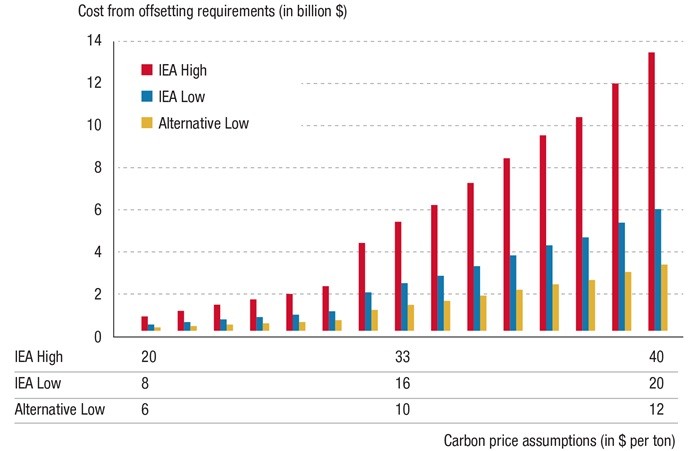
what is CORSIA offsetting cost

The low estimate is based on the CAEPโ€™s โ€œoptimisticโ€ CO2 scenario and IEAโ€™s low carbon price forecast. The high estimate is based on CAEPโ€™s โ€œless optimisticโ€ CO2 scenario and IEAโ€™s high carbon price forecast.

  • The cost analysis shows that the cost can range from about 0.4% – 1.4% of total ICAO forecast revenues from international aviation in 2035.

IATA also estimated what is the cost from CORSIA offsetting, which they found have less impact on the aviation sector than fuel price volatility.

In figures, the cost in 2030 equals a $2.60 increase in jet fuel price per barrel. This means that another $10 per barrel on the price of jet fuel will cost the industry about 4x the estimated cost of offsets in 2030.

While the current price for a carbon offset is low, estimates say this may rise as high as $90 by 2050.

Conclusion

CORSIA is a significant first step in the aviation industryโ€™s effort to tackle climate change. But since carbon credits are not created equal, due diligence is still necessary to ensure the emission permits are high quality.

Amid the issues and criticisms about CORSIA, it remains a key milestone in the industryโ€™s and the airlinesโ€™ race to net zero.

Saudi Arabia’s PIF Holds Largest Carbon Credits Auction to Date

Saudi Arabiaโ€™s Public Investment Fund (PIF) auctioned off 1.4 million tons of CORSIA-compliant carbon credits, the largest-ever in the world, during the 6th edition of the Future Investment Initiative (FII) conference in Riyadh.

A total of 15 Saudi and regional firms took part in what has been considered as the biggest ever carbon credit auction as per a press statement.

Carbon credits allow entities to emit a certain amount of CO2 or other potent gases โ€” with one credit equal one ton of emissions. Theyโ€™re designed as a mechanism to reduce carbon emissions via a market where firms and individuals can trade their emissions permits.

Saudi Aramco Buys the Most Carbon Credits

The FII forum held the auction of 1.4 million tonnes of carbon credits registered under Verra and comply with the CORSIA.

CORSIA means โ€œCarbon Offsetting and Reduction Scheme for International Aviationโ€. It is the first global market-based solution that entities can use as a major step to reach their climate goals. It first ran in 2021 and will be up until 2035.

The sale of the CORSIA-compliant carbon credits support companies from various industries in Saudi as they strive to reach net zero emissions.

Of all the participants in the sale, oil giant Saudi Aramco, mining firm Maโ€™aden, and Olayan Financing Company bought the largest number of carbon credits.

Other winning bidders included ENOWA (NEOM subsidiary), ACWA Power Co., Gulf International Bank, SABIC, Saudi National Bank, Saudi Motorsport Co., and Yanbu Cement Co.

Alongside the carbon credits auction is Aramcoโ€™s announcement of launching a $1.5 billion fund to support an inclusive global energy transition. The fund is under the management of Aramco Ventures.

Saudi officials said that the shift will take decades to happen. It will also need continued investment in conventional resources.

For Aramcoโ€™s CEO Amin Nasser:

“The current transition plan is flawed honestly. It is not really delivering. What we need is an optimal, realistic transition planโ€ฆ We need to realise that today alternatives are not ready to shoulder a heavy load of the growing energy demand and therefore we need to work in parallel until alternatives are ready.”

The Aramco sustainability fund targets global investments in support of energy transition. It will initially focus on areas such as carbon capture and storage, GHG emissions, hydrogen, ammonia, and synthetic fuels.

Saudi Arabia and other Gulf Arab states have been boosting their green credentials.

Saudi Finance Minister Mohammed al-Jadaan told the FII gathering that the outlook for Gulf oil producers was “very good” and will remain so for the next 6 years.

He also added that theyโ€™re investing as much in conventional energy and are also doing the same in climate change initiatives in the region.

PIFโ€™s New Voluntary Carbon Market

The carbon credit sale was part of the Voluntary Carbon Market (VCM) Initiative by the PIF and Saudi Tadawul Group in September 2021, an attempt to back Saudi Arabiaโ€™s green journey.

It also follows the Wealth Fundโ€™s past announcements which include the $3 billion inaugural green bond. These are all part of PIFโ€™s commitment to develop 70% of the Kingdomโ€™s green energy capacity in line with the Vision 2030.

The new VCM company, headquartered in Riyadh, will facilitate the efforts of the auction. It will also offer guidance and resources to help firms and industry in the region as they move towards net zero.

  • PIF will hold 80% stake in the new company, while Saudi Tadawul Group will hold the remaining 20%.ย 

Yazeed A. Al-Humied, head of MENA investments at PIF, noted that the new regional VCM firm is a major milestone for the MENA region. He further said:

โ€œWe are passionate about the potential for voluntary carbon markets to deliver additional carbon reduction benefits throughout the regionโ€ฆ thereby ensuring the MENA region is at the forefront of climate action and that Saudi Arabia is a leading force in solving the climate challenge.

The CEO of Saudi Tadawul Group, Khalid A. Al-Hussan, said that they are working towards encouraging the adoption of ESG disclosures in the Saudi capital market.

While for the VCM Initiative director, the auction represents the first step for the region to have a leading presence in the global VCM ecosystem.

Indeed, with over one million of CORSIA carbon credits to trade in Saudi, it will be the largest auction to date.

The purchase agreements will ensure that the offsetting that carbon credits offer go beyond meaningful emission reductions in companiesโ€™ value chains.

Lloyds Bank Stops Direct Financing of Fossil Fuel Projects

Britain’s largest domestic bank Lloyds Bank will no longer provide direct financing to fossil fuel projects as part of its new climate policy.

The finance giant announced that will not fund any new gas, oil, and coal projects to support the UKโ€™s transition to a sustainable, low-carbon economy.

Doing so allows Britain’s biggest domestic bank to join a small group of lenders pushing back on funding the expansion of the fossil fuel industry.

Lloyds Bankโ€™s New Climate Policy

Hailed as โ€œradical reinventionโ€ Lloyds Bankโ€™s new climate policy will still provide general lending to firms in the sector but bars project financing or reserved-based lending to fossil fuel projects.

A statement from the policy said that:

โ€œAddressing the potential impacts of climate change, how our customers are engaging with the opportunities and challenges created by climate change and the need to transition to a low carbon economy plays a key role in our risk management approach to sustainability.

The British bank also added that it encourages customers to minimize dependence on carbon-intensive sources of revenue to hasten the shift to a low-carbon economy. It further stated that it will stop working with clients who donโ€™t meet their new climate requirements.

Environmental groups welcomed the lenderโ€™s move while calling other British banks to do the same.

For Tony Burdon, the CEO of Make My Money Matter:

“Lloyds’ new policy marks an important turning point in the dangerous relationship that exists between leading UK banks and fossil fuel companies.

The bank is the first of the five largest lenders in the UK to halt direct financing of new fossil fuel projects.

This move comes just weeks following the UK’s pledge to give a go for new exploration in the North Sea over concerns about energy security. The British government announced dozens of new oil and gas licenses in the region to boost domestic production.

Banks and other financial institutions are under growing pressure to end support to companies that worsen the climate crisis.

The Trend to End Fossil Fuel Financing

Fossil fuel financing from the worldโ€™s biggest lenders has totaled $4.6 trillion in the 6 years since the Paris Agreement was signed in 2015.

  • $742 billion of that went to fossil fuel financing for the year 2021 alone, according to estimates.

Lloyds had invested around 1 billion pounds ($1.1 billion) in its commercial oil and gas clients in 2021 as per its climate report. That figure accounted for a very small fraction of its overall lending – only 0.2%.

The bankโ€™s exposure to the dirty industry is relatively small compared to its global competitors. Thatโ€™s because itโ€™s focusing on domestic lending only.

But its decision reflects the increasing trend in pressuring banks to help speed up the transition to a low-carbon economy as the next round of COP climate conferences happens in Egypt next month.

While other banks are tightening their climate lending policies in line with the Paris Agreement, most of the large lenders in the U.S., however, continue to back expansion in the sector.

Earlier this year, three major American banks – Citigroup, Wells Fargo, and Bank of America – rejected shareholdersโ€™ proposals to align lending practices with climate targets.

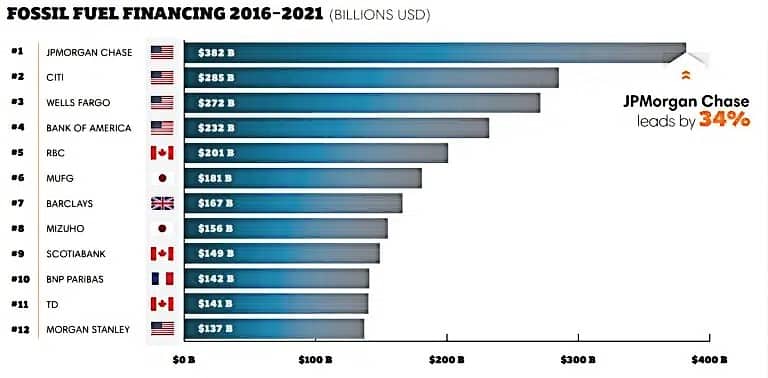
The chart below shows major banks favoring fossil fuel financing from 2016 to 2021. JP Morgan topped the list.

fossil fuel financing

But Lloyds Bank promises to take the climate into account in their credit assessment process. It said it dedicated sustainability training to staff to fulfill its climate pledge.

Taxing Cow Emissions to Reduce the Livestock Industry’s Emissions

Livestock emissions have become a hot topic of climate debates in recent weeks, with some countries placing restrictions on livestock farmers such as New Zealand.

Many countries are looking more closely at livestock emissions, and the industry itself is betting on its climate targets and on how to achieve them.

However, the way livestock emissions are accounted for still brings some concerns among players and stakeholders. And New Zealand seeks to levy farmers for their cows’ emissions.

Livestock Industryโ€™s Emissions

Livestock emissions are currently not priced in the market. It means when we buy beef and other meat, their climate impacts and environmental costs are not included in their price.

Scientific reports show that animal agriculture or livestock production is responsible for at least 16.5% of global greenhouse gas (GHG) emissions. This results in negative environmental impacts such as biodiversity loss and deforestation.

  • Methane, nitrous oxide (N2O) and carbon dioxide compose the industry’s total emissions.

In fact, they account for over 50% of New Zealand’s overall emissions.

Livestock supply chains emit those GHG in 4 ways:

  1. In the digestive process methane is produced as a byproduct
  2. Feed production
  3. manure management
  4. Energy consumption

Methane and nitrous oxide are from animals’ eructation (burps), flatulence (farts), urine, and manure.

These GHGs are 25x and 300x more potent than CO2 at warming the planet.

Expanding feed crops and pastures into natural areas releases CO2 which makes feed production a significant factor. Also, manure and nitrogen fertilizers emit nitrous oxide too.

Here are some important facts about animal agriculture emissions.

livestock emissions facts

The warming potential of those emissions from livestock production attracts the idea of shifting the world’s diet to plant-based food.

Shifting to aย plant-rich dietย provides multiple benefits from health and environmental perspectives.

Moreover, plant-based meat emits 30%โ€“90% less GHG than conventional meat. Another study also revealed that emissions from animal-based foods are 2x those of plant-based foods.

Reporting Livestock Emissions

Some scientists believe that one way to help farmers reduce emissions is to use a proper metric in reporting them.

Methane doesn’t stay in the atmosphere as long as carbon dioxide does; methane can break down into water and carbon dioxide in ~12 years.

The current metric commonly used is the GWP 100 (Global Warming Potential) which calculates the heat absorbed by all gasses on a common scale of โ€œCO2 equivalenceโ€ over a 100-year time horizon.

Using the GWP100 method, methane for example has a global warming potential of ~30x greater than CO2.

There is also a GWP20 method that calculates the heat absorbed over 20 years. Based on this method, methane has a global warming potential of +80x that of CO2.

Some alternative metrics are Radiative Forcing and GWP* (also known as GWP star).

Ways to Reduce Livestock Emissions

There are different emissions reduction strategiesย that farmers can use across the livestock supply chain.

An example is improving reproductive efficiency such as cutting the interval between parties. This might be a good means as more efficient cattle keep more dietary nitrogen protein in their body. That means their manure and urine emit less N2O.

Also, improved fertility in dairy cattle canย cut methane emissions by 10% to 24% and nitrous oxide by up to 17%.

Another way is to reduce emissions from enteric fermentation by changing the livestockโ€™s diet such as including seaweed or barley.

  • And by scraping manure and transporting it to another storage facility for cattle production systems may also reduce emissions by 55% and 41% for methane and N2O, respectively.

With all these options available for livestock producers, the government of New Zealand decided to impose first-of-its-kind carbon pricing with a farm-level levy on farmers for their livestock emissions. New Zealand would be first country to put a carbon price on cow farts.

The aim of the carbon tax levy is to implement a farm-level pricing system by 2025, encouraging farmers to reduce their emissions. The revenue generated will be reinvested into the agriculture sector to fund technologies that further cut emissions.

Greg Keoleian, a director at the University of Michiganโ€™s School for Environment and Sustainability, remarked that:

โ€œThis program is positioning the agriculture industry in New Zealand to become leaders in reducing methane and carbon dioxide emissions from livestock productionโ€ฆ Certifications and labeling could be used to differentiate their farm products in the marketplace for green consumers willing to pay more for lower carbon footprint meat.โ€

While it may sound promising, taxing livestock emissions on farm-level may not be the magic bullet to cutting the sectorโ€™s footprint.

Another director thinks that itโ€™s a bit too early to execute the carbon tax today. He suggested setting a low goal and ramping it up later as emission reduction strategies become more available for farmers.

While the levy may take time to be implemented, itโ€™s crucial to learn how feasible it will be and how it will impact farmers, animals, and food supply.ย 

What Does REDD+ Mean? Everything You Need to Know

In the world of carbon emissions reduction, thereโ€™s one concept that receives a lot of attention when it comes to crediting forest protection – REDD+ – but what exactly does it mean? How does it differ from REDD?

Many are also asking about what are REDD+ strategies and how theyโ€™re being funded. Others are also wondering if they are indeed a better alternative logging or if they’re really sustainable.

If you also have the same questions and more in mind, then this article will give you the answers. Weโ€™ll discuss all about REDD+, what it means, who started it, how itโ€™s funded, the different approaches to it, and more.

What is the Difference Between REDD and REDD+?

Greenhouse gas emissions due to deforestation and forest degradation account for nearly 20% of global GHG emissions. It is for this reason that REDD is seen as a crucial part of any climate change mitigation actions.

REDD stands for โ€œreducing emissions from deforestation and forest degradationโ€. It refers to all activities that do just that.

So what about REDD+, what does it mean, and how does it differ from REDD?

Though theyโ€™re very much similar, they’re different from each other. But the only difference is the โ€œplusโ€ which refers to the โ€œrole of conservation, sustainable management of forests and enhancement of forest carbon stocks in developing countriesโ€.

Who Started REDD+?

The framework is created by the UNFCCC Conference of the Parties (COP) to help guide activities in the forest sector. It was first introduced in 2007 and the Paris Agreement brought it into fruition.

  • The Agreement links individual forestry projects and REDD+ strategies of their host countries.

Article 5 of the Agreement is dedicated to the contribution of forests to mitigating climate change. Under this article, it becomes the duty of all rainforest nations to give REDD+ due importance by supporting its implementation in line with all UNFCCC decisions.

The same article also formalizes the architecture of the REDD+ mechanism and all the details and guidance in adopting it. The implementation of its activities is voluntary and depends on the circumstances and capabilities of each developing country.

Unfortunately, it hasnโ€™t achieved its full potential yet as a large-scale funding mechanism to pay rainforest countries and communities for avoided forest emissions.

To limit global warming increase to 2ยฐC or 1.5ยฐC at the best, emissions from forest loss must be stopped.

Not only does forest loss worsen the climate crisis, it also poses threats to biodiversity. It also impacts the lives of billions of people living on forest resources.

And so protecting forests is an urgent action. But it also calls for large sums of money to do that successfully. In fact, it needs hundreds of billions of dollars of investments to carry out REDD+ strategies.

What are REDD+ Strategies?

REDD+ strategies refer to a set of policies and programs meant to reduce emissions from deforestation and forest degradation. All the while enhancing carbon uptake from other forest protection activities.

The strategies define the following elements of REDD+:

  • Direct and indirect drivers of deforestation
  • Baselines and forest monitoring systems
  • Reference emissions levels
  • Social and environmental safeguards

Those strategies have become a catalyst to help countries analyze and reform wider forestry, land tenure and sustainable development policies.

They have also helped boost the engagement of a wider range of stakeholder groups in forest and land management. They include the indigenous peoples, women and other forest-dependent communities. All these gave those groups more access and rights to forestry and land use decision making.

But thereโ€™s another important question that stakeholders demand an answer – is REDD+ sustainable? Why is it a better alternative to logging?

Sustainability of Forest Protection Programs

Simply put, REDD+ involves some kind of incentive for altering the way forest resources are used and managed. As such, it offers a new way of cutting carbon emissions by incentivizing actions that avoid forest loss or degradation.

These transfer mechanisms often include payments via carbon credits. And these credits are paid not just for keeping the trees standing; theyโ€™re given for lowering the historical amount of emissions emitted.

Forestland owners will be penalized if they cut down trees and so loss the potential income.

On the contrary, some studies showed that outcomes from REDD+ programs are even more competitive than what logging provides.

Thatโ€™s for the reason that the โ€œplusโ€ offers several co-benefits that donโ€™t tackle carbon emissions only but also gives local communities more benefits. These include improved access to forest resources and better quality of living.

REDD+ projects contribute directly to achieving the UN Sustainable Development Goals (SDGs). They addresses SDGs on poverty reduction, health and well-being, hunger alleviation, and improving institutions.

On the other hand, logging provides financial income only and most of the benefits or profits go to company owners, not the local community.

Better yet, technological advancements are changing the game when it comes to monitoring whatโ€™s going on in forests, both below and above ground. Overseers can now produce exact forest carbon stock data, keep track and respond to risks, and show the rate of regenerating the forest.

Best of all, there have been instruments in place that resolve concerns surrounding forestry projects. They act as an insurance mechanism against uncertainties in calculating carbon credits from forestry projects.

And as countries create various kinds of REDD+ strategies to fit their needs, thereโ€™s a common principle underlying all of them. That is:

They must result in real, measurable and long-term benefits related to the mitigation of climate change and align with national development strategies of those countries.

What are REDD+ Countries?

REDD+ countries are developing nations located in a subtropical or tropical area that have signed a Participation Agreement to participate in the Readiness Fund. Together they form the Forest Carbon Partnership Facility or FCPF.

There are 47 developing countries that were initially selected to join the FCPF – 18 are in Africa, 18 in Latin America, and 11 in the Asia-Pacific region.

The FCPF created a framework and processes for REDD+ readiness. It helps countries get ready for future systems of financial incentives for REDD+.

By using the framework, countries develop an understanding of what it means to be ready for REDD+. Theyโ€™re now focusing on operationalizing both their REDD+ strategies and proposals for larger forestry programs.

At the readiness stage, that means formulating national strategies that prioritize key drivers of deforestation and degradation. It also involves proposing realistic means to fix barriers to become a REDD+ country.

  • Their ultimate goal is to build investment packages that will produce emissions reductions and results-based finance.

Carbon markets have been recognized as a good source of finance where REDD+ carbon credits come in.

As of 1st quarter of 2022, more than 398 million REDD+ credits have been issued on the voluntary carbon market (VCM). That amount represents a quarter of total voluntary carbon credits issued.

When it comes to its performance, here’s how REDD+ carbon credits price has grown. It’s part of the nature-based avoidance credits.

REDD+ carbon credits

Given the high potential of REDD+ in avoiding emissions and delivering other impacts, governments and companies become interested in investing in REDD+ strategies. But how can they help fund these projects?

How REDD+ is Funded?

Thereโ€™s a national REDD+ funding mechanism that serves as a fund coordination and distribution platform for those who are willing to financially support the implementation of REDD+ strategies. Via this funding mechanism, donors or contributors can commit resources to the fund.

Financial support for the projects can also be done up front to back different activities. They range from delivering technical assistance to building capacity and executing REDD+ strategies on the ground.

  • While there are many channels for the funds to support forestry projects, carbon credits have been among the top means.

To date, REDD+ credits on the VCMs are from individual projects. This is when REDD+ activities are focused on a specific area of forest where a baseline of deforestation is established. The reference data covers only the nearby forested areas, not the national level.

The number of credits issued depends on how much deforestation has reduced relative to the baseline. So far, individual projects are the successful approach in getting REDD+ carbon credits to the VCM.

In addition, despite criticisms surrounding the project’s MRV – monitoring, reporting, and verification – technological advancements resolve them. These include the high resolution, multi-model satellite imagery, Lidar, and real-time data transmission.

Analysis shows that REDD+ projects yield many credits with verifiable, additional, and long-term carbon emission reductions, as well as measurable co-benefits.

However, there are a couple of challenges to individual project-level REDD+. These include:

  • inflated baselines,
  • underreporting of deforestation,
  • forest loss causing permanence risk, and
  • risks caused by land tenure and rights

It is for these issues that going for a jurisdictional approach can help fix the problem.

This approach follows the same concept of REDD+ but differs from project-based in scale; it covers national forests. Plus, jurisdictional REDD+ have not been used to issue voluntary carbon credits.

Rather, it helps generate the new asset in the carbon market – sovereign carbon credits. Itโ€™s also used as a basis for results-based finance agreements between nations or with multilateral organizations like the World Bank.

What makes it different from project-level is that it considers all the national or subnational forests when establishing a baseline and monitoring progress. And with the advances of artificial intelligence and remote-sensing, it becomes possible to achieve it with high accuracy.

Jurisdictional REDD+ reduces the risk of over-crediting due to inflated baselines. It also allows for more efficient use of the governmentโ€™s resources. This can help hasten access to upfront funding.

Meanwhile, some countries are also considering other approaches in their strategies such as the nested approach.

Nested program align with jurisdictional baselines and serve as an intermediate step between the two different approaches. They may also offer a good solution to overcoming the challenges of project-based deforestation and degradation programs.

How REDD+ countries develop their nesting approaches relates to their carbon ownership rights. Though many of them donโ€™t mind transferring the right to produce carbon credits to private firms, itโ€™s not always the case.

Some countries allow individual projects to become a jurisdictional program without having its own carbon crediting system. But others may also let those projects to have a separate crediting system.

Delivering Emissions Reductions

Yet, regardless of the approach, the carbon credits it generates still have to be of high quality. While jurisdictional and nested types may address systemic risks, itโ€™s still crucial to ensure that the credits deliver on their emissions reduction claims.

No matter the type of REDD+ program, its carbon credits still need to be of quality. And since the factors that determine quality are diverse and can be complex, as a buyer of the credit, you should perform due diligence on any credits you buy.

Is Canada’s Forest Carbon Emissions Accounting Misleading

The forest carbon accounting of Canada is underestimated and misleading, according to a report from the Natural Resources Defense Council.

The Canadian federal government has been reporting direct emissions for almost all sectors of the economy.

But the forestry sectorโ€™s emission is reported differently using the concept of โ€œcombined net fluxโ€ which include emissions from natural processes and industrial activities.

The government accounting for the forestry sectorโ€™s emissions show that logging emissions are almost balanced by removals of forest regrowth.

But according to the report, such calculations are misleading and damaging.

The government doesnโ€™t account for the carbon released by wildfires. But it factors in carbon captured by forest regrowth even if there’s no logging in the area and thereโ€™s no human activities at play.

Michael Polanyi of Nature Canada who co-sponsored the report commented:

“Canada is taking credit for carbon removal from vast forests that have never been logged as a way of masking emissions.”

He further said that the difference in calculation matters because the country canโ€™t meet its climate goals if it doesnโ€™t have a clear picture of the baseline.

Natural Resources Canada, the reportโ€™s sponsor, said its method follows the United Nations guidelines many countries use.

The report explains and shows Canadaโ€™s high-emissions logging sector, how it compares to other sectors, and what the government should do to fix the gaps in forest carbon credit accounting.

Logging Emissions in Canada

Carbon credits produced by forest carbon projects are among the most popular and pricey. Thatโ€™s because they protect trees that store huge amounts of carbon.

But each year, loggers clearcut over 550,000 hectares of forest across Canada, mostly in primary forest areas.

The report states that the government does not report detailed emissions from the sector. And it doesnโ€™t have a clear strategy on how to reduce the GHG emitted by logging (unlike it does for other high-emitting industries).

Doing so compromises Canadaโ€™s climate ambition – cut emissions to 45% below 2005 levels by 2030. And that depends on accurate carbon accounting of emissions from all major sectors, according to the report.

Thus, the authors used a different method of calculating the logging industryโ€™s emissions using the governmentโ€™s data.

  • They show in the chart below that the sector emitted 75 Mt CO2e. Thatย is equal to over 10% of Canadaโ€™s total GHG emissions.

Annual Net Logging Emissions

canada net logging emission

The left column shows emissions and removals associated with logging (emissions are positive, and removals are negative). The right column depicts the net (sum of) emissions and removals.

The analysis takes into account three components to represent net emissions from logging. These are:

  1. Total amount of forest carbon that is taken out of the forest upon logging
  2. Net carbon released to the atmosphere – subtracted – as itโ€™s stored in long-lived wood products
  3. Forest carbon removals – subtracted – due to regrowth after logging

Logging is a large net source of Canadaโ€™s emissions

The figure is a conservative estimate but places the logging sectorโ€™s emissions on par with oil sands production and higher than the electricity sectorโ€™s emissions.

The chart depicts emissions from logging relative to the other two heavy-emitting sectors.

net logging emissions vs. other sectors

Net logging emissions in the country were higher than emissions from oil sands operations every year from 2005 to 2018.

net logging emissions annual

The average net emissions of logging each year were 82 Mt CO2e from 2015 – 2020. While oil sands production has an average of 78 Mt CO2e over that period.

Remarkably, Canada has pledged to phase out coal and cut emissions from oil and gas by at least 75% from 2012 levels by 2030.

But under Prime Minister Trudeauโ€™s climate-oriented government, emissions from oil and gas have expanded. And as seen in the table above, oil sands emissions are consistently increasing.

Hence, correct carbon accounting of emissions from all sectors, including forestry, is even more vital to help Canada achieve its climate commitments.

One of the authors noted that people generally accept that accurate reporting of emissions is critical, and their findings can help defend the argument that emissions from logging should be regulated like how it is in other industries.

The report provides 4 policy recommendations for Canada to consider in its forest carbon accounting.

Policy Recommendations for Forest Carbon Accounting

  1. Transparent reporting of the logging industryโ€™s net annual emissions as it does for other high-emitting sectors
  2. Create a strategy to reduce the sectorโ€™s emissions thatโ€™s in line with Canadaโ€™s wider emissions reduction plans and commitments
  3. Reduce emissions from logging by directly regulating the forestry industry
  4. Address biases and other gaps in forest carbon accounting

Acknowledging and regulating logging emissions will lead to Canadaโ€™s new emissions reduction pathways. It will also help build in the proper incentives for mitigating climate impacts as the report concluded.

Verification Delays Can Cost Carbon Project Developers $2.6B

Project developers could lose $2.6 billion by 2030 while the voluntary carbon market (VCM) may also lose 4.8 GT of carbon credits due to verification delays, according to a report by Thallo.

Climate tech start-up Thallo uses blockchain technology to democratize the carbon markets, making it easier for buyers and sellers of carbon credits to find each other.

The company published a report that combines carbon project developer insights and identifies challenges to scaling the VCM.

Its report called โ€œFast Forward, Challenges to Scaling the Voluntary Carbon Marketโ€ identifies key bottlenecks including:

  • verification delays,
  • limited access to early-stage financing, and
  • inefficiencies in the value chain caused by intermediaries.

The report also presents solutions for scaling the VCM. And that particularly includes improved financing through forward models.

Here are the key findings from Thallo’s report:

The biggest bottlenecks involve the registries and validation & verification bodies (VVBs), as well as the GHG crediting programs.

Verification delays can cost VCM project developers as much as $2.6 billion. This will also cost the planet 4.8 gigatonnes of un-deployed carbon credits by 2030 as shown in the chart below.

  • That corresponds to not offsetting 37 million U.S. citizens by the end of the decade.

carbon credit issuance scenarios

Carbon crediting programs argue that there are too few VVBs vs. the number of projects.

One solution to this problem as stated in the report is to scale up crediting programs by adding a workforce to match the demand. This is what Verra and Gold Standard are doing.

They create a specific team to improve the technical capacities of VVBs and national accreditation entities by:

  • dedicated training,
  • tightening review of projects by pushing back earlier on poor quality projects, and
  • working more collaboratively with accreditation entities.

By resolving and cutting project verification delays in VCM, the speed of carbon credit issuance can double.

Financing is a barrier.

There are three categories of carbon project developers – big & experienced, intermediate, and small & new.

Small to midsize project developers face the greatest financing challenges. Meanwhile, the big and experienced ones like South Pole find fundraising, not a real challenge.

Among the five different financing methods, the most common ways are forward purchase agreements and own funding. But each method has its challenges and benefits as to how developers see it.

  • 90% of project developers agree that forward products will be key to scaling the VCM.

Intermediariesโ€™ and investorsโ€™ profits account for โ…“ of VCM value in 2021.

With 500 million carbon credits traded in 2021, $650 million went to the pockets of investors and brokers – not project developers.

  • That accounts for one-third of the revenues the VCM generated in 2021.

In a best-case scenario, project developers sell directly to end buyers without the need for an intermediary. In this case, up to 60% of revenues goes back to the climate or local communities for long-lasting impact.

But under a worst-case scenario, brokers can take as much as 78% of the revenues of the carbon credit sales.

So, why do project developers still work with brokers? Some believe that they help connect with buyers and itโ€™s convenient for price discovery.

On the other hand, a well-functioning carbon exchange offers good value to developers by:

  • Connecting buyers and sellers without taking large fees
  • Giving clear price signals, and
  • Providing transparency around the quality of credits

Forward Models to Scale VCM

Thallo’s report also explores forward models as one way that can help scale the VCM. In particular, it looks into forward financing used by registries like Verra and Gold Standard.

  • In VCM, forwards are more significant than futures to make project development go faster.

Since carbon projects are different, itโ€™s hard to have standardized futures contracts. Futures contracts are traded on exchanges such as ICE and CBL. Most of them have vintages in the past.

On the contrary, a future contract is an arrangement that is made over-the-counter (OTC) and settles just once at the end of the contract.

Forward contracts can be closed earlier in the life cycle of a carbon project. This enables much-needed financial support to early-stage projects.

  • The volume of forward transactions rose by 65% from 2020 to 2021.

Web3 projects such as Ivy Protocol, Carb0n.fi, and Flowcarbon are developing standardized platforms for forward models.

For the small and midsize project developer, Thallo has the following proposal for a focused forward model:

forward model for VCM project developers

The Fast Forward VCM report includes inputs from over 30 players in the VCM.

BlackRock Creates New Unit Called “Transition Capital”

The world’s largest asset manager BlackRock has created a new unit called Transition Capital. Transition Capital’s goal is to boost investments to shift to a low-carbon economy.

BlackRock announced the new unit in an internal memo, saying that it will work with portfolio managers and the companyโ€™s capital markets team.

Transition Capital is part of BlackRock Alternatives. According to the memo, the key purpose of setting up the new unit is:

โ€œto source and invest in proprietary transition-focused opportunities across asset classes and geographies.โ€

BlackRockโ€™s Transition Capital Unit

BlackRock is one of the world’s leading providers of investment, advisory, and risk management solutions. It manages around $8 trillion in assets.

The new Transition Capital unit will work with the firmโ€™s colleagues to develop new investment strategies and funds. It will also help deepen the companyโ€™s research in the field while working alongside BlackRock Sustainable and Transition Solutions.

Overseers of sustainable investing in BlackRock said that:

“We believe many hundreds of billions, even trillions of dollars per year, will be invested through the transition and we have spent the past several years becoming a global leader in transition investing to ensure our clients have the tools they need to navigate it.”

The memo also said that creating the new unit is part of the asset managerโ€™s major goal. That’s to be the global leader in transitioning portfolios, businesses, industries, and countries to a low carbon economy.

Dickon Pinner, the former head of McKinseyโ€™s sustainability growth platform, will run the Transition Capital unit. With experience as a reservoir engineer, Pinner helped clients benefit from the energy transition at McKinsey.

Pinner will report to BlackRockโ€™s Vice Chairman Philipp Hildebrand and the global head of BlackRock Alternative Investors Edwin Conway. He will also sit on BlackRock Alternatives Executive Committee and senior sustainability committees.

Institutional Demand for Energy Transition

According to a report, 6 out of 10 asset owners in North America say that combating climate change is a strategic goal. And over half of the responders agree that financial institutions like BlackRock are responsible in helping cut carbon from high emitters.

The surveyed individuals include professionals and asset owners as well as adviser firms. They’re part of pension funds, insurers, banks, and sovereign wealth funds.

  • 60% of them said that they consider energy transition finance as a major commercial opportunity. Others said itโ€™s also part of their strategies.

BlackRockโ€™s decision of setting up the Transition Capital comes ahead of the next UN Conference of Parties in Egypt next month (COP27).

It also comes timely for the company as regulators push businesses and investors to speed up their climate efforts.

Also recently, BlackRock has been positioning itself on climate change but received criticism from some politicians that itโ€™s boycotting fossil fuels.

Yet, at the same time, the company is also scrutinized for not using its stance to gain greater effect by cutting back finance to heavy emitters.

With its new Transition Capital unit, BlackRock remains strong in advancing its role in the global energy transition.

Musicians Pledge: Reduce & Offset Concert’s Carbon Footprint

Concerts produce waste and carbon emissions and are generally not good for the planet. Musicians have fought back by going carbon neutral or net zero to balance the scales.

Artists are lowering their carbon footprints and buying carbon credits to make up the unavoidable emissions for as much as $200 per ton.

From Coldplay to Pearl Jam and John Jackson and Billie Eilish, artists are working together with nonprofits to help lower their carbon footprint and make concert tours carbon-neutral.

Carbon Footprint of a Concert Tour

Millions of fans flock to concerts and festivals during summers when the weather is great to enjoy live music. But experts say that these shows can also harm the earth.

Thatโ€™s because both artists and concertgoers travel, either by land or by air which emits a lot of CO2. Also, promoting albums and performing live around the world means musicians and their entourage fly a lot.

Then there are the emissions from tour buses, from moving sets, and from making concert merchandise. Not to mention the energy needed to power the venue, for things like sound and lighting.

A study of the five artistsโ€™ tour via an online carbon-tracking tool revealed that they released over 19 metric tons of CO2 during music festivals.

  • Meanwhile, recent estimates suggest that a live concert emits 405,000 tonnes of GHG emissions in the UK each year.

Hereโ€™s the breakdown of concert tours’ carbon footprint.

Concert Carbon Footprint

A report released in 2021 by the United Kingdom-based Tyndall Centre for Climate Change Research said music industry stakeholders can help significantly slash tour-related emissions by monitoring transportation and energy use.

One of the reportโ€™s authors noted that:

โ€œItโ€™s important for artists to consider sustainability options in show design, tour routes and transportation from the early stages of creating a tour โ€” rather than bringing someone in to โ€˜greenโ€™ what you already planned.โ€

How Musicians are Making a Difference

Fighting climate change is happening across various sectors and it’s no different for top musicians, who are criticized for the carbon footprint of their world concert tours.

But a growing wave of musicians are stepping up and making climate pledges to achieve carbon neutral shows.

Some artists are opting for rail travel versus airplanes, stage designers are going for LEDย displays versus conventional lighting.

Moreover, promoters urge fans to carpool or take public transit to venues. Some music festivals have even tried bundling up entrance tickets with public transit fares.

  • More remarkably, singers and bands are now working with nonprofit organizations and venues where they perform to ensure their shows reduce the music industryโ€™s footprint.

Musicians seek guidance from experts who can organize sustainability initiatives to make their events eco-friendly.

An example is REVERB, a non-profit organization that acts as greening techs for live concert shows.

The group ensures sustainability measures are in place during the event. For instance, they work with venues to secure reusable products used by concertgoers.

The organization works with tours to empower fans, too. At each show they handle, the group sets up โ€œeco-villages” where fans interact with their volunteers to know how they can make a positive impact.

And that includes using the free water refill stations and reducing single-use plastic bottles. These measures lower both plastic waste and carbon emissions.

To date, the organization has eliminated over 4 million single-use bottles at concert tours. They were also able to reduce emissions amounting to 300,000 tons of CO2. Thatโ€™s equivalent to avoiding the footprint of 3 million pounds of burned coal.

That achievement involves the high ranks of musicians and bands making climate pledges.

Reducing and Offsetting Footprint

Jack Johnson has been aiming for a carbon-neutral show through a reusable pint-cup program and water refilling stations in his concerts. Heโ€™s also into carbon offsetting where $2 from each concert ticket goes toward offset projects.

Another pop culture icon Billie Eilish is also taking the same climate action to cut her tourโ€™s carbon footprint. Besides cutting plastic waste and emissions, her tour venues feature plant-based food options with a lower carbon footprint.

For bands, efforts are even grander.

Coldplay, for instance, leverages an app technology that logs fansโ€™ mode of transportation to their concerts. Those who opt for carpooling, using an electric car or taking public transit get a discount on the bandโ€™s merchandise.

Then after shows, the band assesses the logged data from fans and plans to offset their footprint. For example, they plant a tree for each ticket bought by a fan.

Perhaps nothing can beat what Pearl Jam has been doing to tackle its carbon emissions.

The legendary grunge band began offsetting its world toursโ€™ emissions in 2003, and since then, they made investments of over $1 million dollars in carbon credits to offset emissions from touring.

  • In fact, Pearl Jam committed to buy carbon credits for $200 per ton for its Gigaton tour. Globally, the price for carbon offset varies, ranging from $1-15 per ton.

Projects supported by carbon credits run the gamut from sustainable fuels to rainforest protection to renewable energy sources.

By doing all they can to reduce their toursโ€™ carbon footprint, musicians hope to influence their fans even long after their concert ends. That is to continue investing their effort and money in carbon-reducing events.

Even the concert companies Live Nation and Big Concerts, both have sustainability goals. The whole music industry seems to be onboard a net zero path.

In December 2021, three major record labels (Warner, Sony, and Universal) and several independents signed the Music Climate Pact. Their pact aims to reduce greenhouse gas emissions to net zero by 2050, and to achieve a 50 per cent reduction by 2030.

Sovereign Carbon Credits – The New Rival in the Carbon Market

Despite issues faced by carbon credits in the market, Deutsche Bank managed to turn the tide through sovereign carbon credits from rainforest nations.

The main goal of sovereign carbon credits is to limit deforestation, making them into financial assets that empower rainforest nations to protect their forests and gain financial support in doing so.

Markus Mรผller, chief investment officer ESG for Deutsche Bank, said that:

โ€œNature has a value, and we need to express that. One way is through carbon credits, which link to nature that absorbs carbon. Therefore, the sovereign carbon credits are one tool to allow capital to flow to where it is needed to protect countries against the worsening climate and continue reducing emissions.โ€

What are Sovereign Carbon Credits?

The REDD+ mechanism established by United Nations Framework Convention on Climate Change (UNFCCC) produces sovereign credits. The aim is to incentivize developing nations to conserve their forests and reverse deforestation.

Sovereign credits from the REDD+ financing mechanism will push that figure up.

Countries have to meet strict requirements before they can be issued with sovereign credits.

Required data include data on a countryโ€™s forest reference level that are subject to rigorous process of technical review by the UNFCCC. A country must also have a national greenhouse gas inventory in place.

The proceeds from the sales of carbon credits will be used to further cut emissions and build infrastructure. As such, they are an asset class that are tradable on global carbon markets.

With sovereign carbon credits, rainforest nations can now keep their trees standing – vital to tackling climate change.

Sovereign Carbon Credits vs. Voluntary Carbon Credits

Scientists say that the planet has to cut annual carbon emissions by 2.5 Gigatons to limit global warming to 1.5ยฐC. Otherwise damages due to climate change will cost trillions of dollars.

  • The year 2017 has seen the largest cost in economic damages of climate so far – $340 billion. While the world had lost $105 billion last year.

In 2021, voluntary carbon credits accounted for only 200 million tons of emissions reductions. Thatโ€™s a small chunk of the total of 500 billion tons to be cut by 2050.

Currently, the voluntary carbon market gets a significant market share and spotlight.

Carbon credits traded in the VCM involve private deals that are outside the compliance carbon markets. In other words, theyโ€™re not regulated by the government.

Demand for credits in the VCM was estimated to grow exponentially as corporations strive to cut their footprint.

In 2021, the Ecosystem Marketplace reported that the real market value of the VCM is about $2 billion. The credits are generated both from nature-based and technological CO2 removal projects.

They count towards a personโ€™s or an entityโ€™s carbon reduction commitment.

On the other hand, sovereign carbon credits count towards a countryโ€™s Nationally Determined Contributions (NDCs). Theyโ€™re derived from efforts that preserve forests and whose proceeds go back to the communities.

Some are wondering if sovereign and voluntary carbon credits can go hand-in-hand. Though thereโ€™s no clear cut answer, each type of carbon credit serves its own purpose.

Sovereign carbon credits are crucial to mitigating climate at the national and global levels. While voluntary carbon credits can help direct finance to critical carbon reduction projects.

The Gabon Sovereign Credits:

Gabon, second to Suriname as the most forested nation, will be issuing sovereign carbon credits worth 90 million tons.

As noted by Gabonโ€™s environment minister, Lee White:

โ€œIf we cut the forest down, we lose the fight against climate change. We have created carbon credits through sustainable forestry.โ€

The credits will bring more value to the nationโ€™s rainforests and make them worth up to $15 billion. But where will that huge money go?

  • Reinvesting back into the forests (10%)
  • Investing in health, education, and climate infrastructure (25%),
  • Investing in future generations (25%),
  • Debt service (25%), and
  • Rural development (15%)

Papua New Guinea will soon follow Gabonโ€™s footsteps. 80% of its rainforest remains untouched.

Key Issues and Benefits

Just like the VCM, there are also some issues concerning the sovereign credit market.

One of them is ensuring that recipients of the credits – national governments – manage the money earned from the credit sales. How can they ensure that communities benefit from the proceeds?

Another issue is carbon leakage. It refers to the idea that countries save trees in one area but cut them down in other regions.

However, the concept of sovereign carbon credits follows a holistic approach in reducing emissions.

Following the REDD+ financial mechanism, Gabon must account for their forestry and make targets to prevent deforestation. Then the UNFCCC monitors the progress before validating and approving the credit issuance.

There are also advanced technologies such as satellites that make forest management public knowledge.

A REDD+ project developer remarked that:

โ€œ… developing nations are reducing emissions by hundreds of millions of tons. That is the pace and scale that the climate requires. Sovereign credits will spur this further.โ€

Firms in developed nations have voluntarily pledged to reach net zero emissions. But countries themselves also vowed to cut their CO2 footprint via the NDCs.

That means they will buy the credits, which are transferable among nations. Letโ€™s say Gabon goes beyond its emissions targets, it can sell those assets to other countries that have problems meeting their goals.

  • One major benefit of sovereign carbon credits is that its value appreciates over time.

Companies donโ€™t treat them as an expense. But they count toward their carbon accounting.

Also, they can allow countries to lower the cost of achieving their climate goals. Thatโ€™s because emissions reductions happen at a national scale. The payments from carbon credits are then invested back to prevent threats to forests like illegal logging.

So before, rainforest nations have been shut from entering the carbon market. But Deutsche Bankโ€™s decision has the potential to reverse that and Gabonโ€™s upcoming credit issuance will be the first key to that change.