The European Public Prosecutor’s Office (EPPO) is carrying out extensive investigations into allegations of fraudulent reporting of greenhouse gas (GHGs) emissions in Bulgaria, and the discrepancies have resulted in losses of millions of euros.
The EPPO was responsible for verifying emissions from thermal power plants in Bulgaria.
The allegations are that the company submitted false reports of emissions from various power plants. The alleged misreporting has been occurring from as early as 2017. The purpose of the false data was to under-report the emissions from Bulgaria for use in the EU’s Emissions Trading System (ETS).
The ETS is the world’s largest carbon market. It operates as a ‘cap and trade’ scheme which puts GHG emissions limits on certain regions.
For instance, if a certain region exceeds the limit, they have to purchase allowances for the exceeded amount. If they fall within the limit, they can trade the remaining allowance.
This trading of allowances can amount to transactions worth millions of Euros. This is why accurate reporting of ETS data is crucial with regards to the carbon market. Discrepancies can result in substantial costs to the national budgets of countries.
Last year, a reform to the EU’s carbon market was announced, which has increased the target emissions reduction from 55% to 62%. This means that EU countries must reduce their emissions by 62% from 2005 levels.
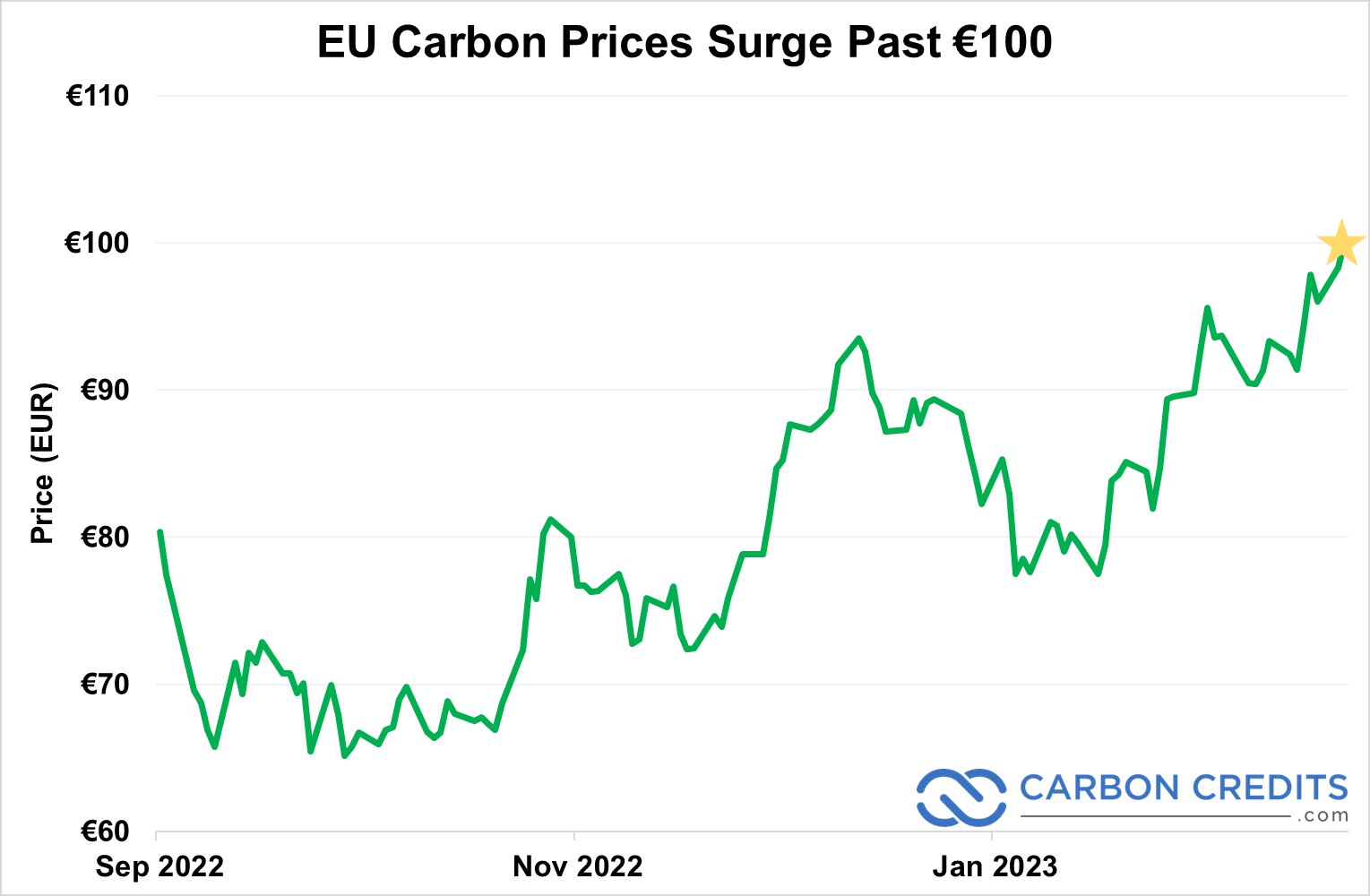
Recently, it was reported that the price of carbon has just hit 100 Euros per metric ton of CO2 in the ETS. Just a decade ago, this price was at 10 Euros. The increase in price means that misreported emissions would incur even more financial losses.
Underreported Bulgarian GHG Emissions
The misreporting of the Bulgarian emissions means that they would now owe for the extra emissions that were not disclosed. In addition to monetary losses, the data affected environmental factors such as air quality in Bulgaria.
The investigations involved more than 150 police officers performing searches across 11 Bulgarian cities. It was also a joint effort between Bulgaria’s General Directorate for Combating Organised Crime (ГДБОП) and Bulgaria’s State Agency for National Security (ДАНС).
The investigators seized a multitude of belongings. These included mobile phones, laptops, and other various documentation. The investigation is still underway with more than 40 searches completed, and interviewing more than 70 witnesses.
According to the data submitted to the EU Prosecutor, Bulgaria appeared to have lowered the carbon emissions intensity of their power sector since 2007.
For example, in 2021, its power sector emissions were reported to be 413 gCO2/kWh. In 2007, that figure was at 608 gCO2/kWh. This represents nearly a 32% reduction from 2007.
However, with the misreported emissions, it is unclear by how much the country’s carbon intensity has actually improved. The ongoing investigation will reveal more data and help provide more clarity on the issue.
This is not the first case of misreported greenhouse gas emissions. One study found that quite a number of companies under-report their emissions. In particular, the study estimated an error rate of 30%-40% in emissions measurements.
Citibank unveiled targets for reducing emissions linked to loans to coal mining, steel, auto, and real estate clients by 2030, while revealing its plan to buy carbon credits for its own operations.
Banks around the world are pledging to reduce carbon emissions for the sectors that emit the most carbon. And last year, Citi announced goals for its energy and power portfolios. The American major bank updated its plan to achieve net zero emissions by 2050.
Citibank said its clients need to use carbon credits while it will buy the credits to offset its own emissions.
Ending Fossil Fuel Financing
Fossil fuel financing from the world’s largest banks has amounted to $4.6 trillion in the 6 years since the 2015 Paris Agreement.
Some lenders are restricting financing for the dirtiest energy projects while others opted to totally end fossil fuel financing.
But environmentalists say they are not acting fast enough to prevent global temperatures from going beyond 1.5 degrees Celsius above pre-industrial times. It’s the level required to avoid the worst effects of climate change.
While other banks are tightening their climate lending policies in line with the Paris Accord, most of the large U.S. lenders continue to back expansion in the sector.
In fact, last year, three large American banks which include Citigroup slammed shareholders’ proposals to align lending with climate goals. The other two banks are Wells Fargo and Bank of America.
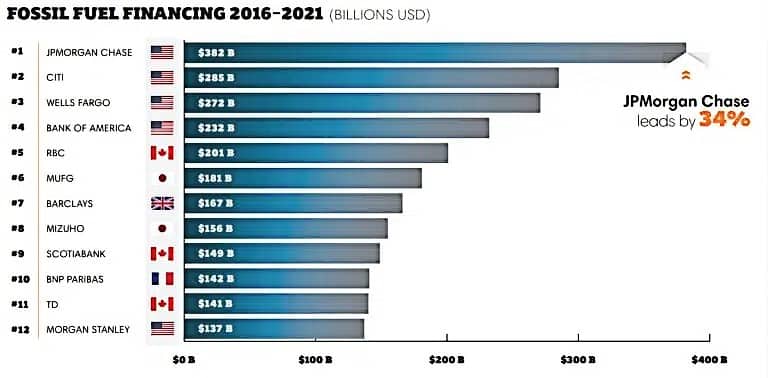
Citibank came second to JPMorgan Chase in fossil fuel funding from 2016 to 2021, with $285 billion worth of investment.
Citibank Carbon Emissions and Targets
Banks have different exposures to industries and their clients’ emissions disclosures are unclear and incomplete. So it’s quite hard to judge the lender’s plans for sectoral emissions reductions.
Add to this that banks are using varying base years for their targets. Some of them include underwriting while others don’t like Citibank.
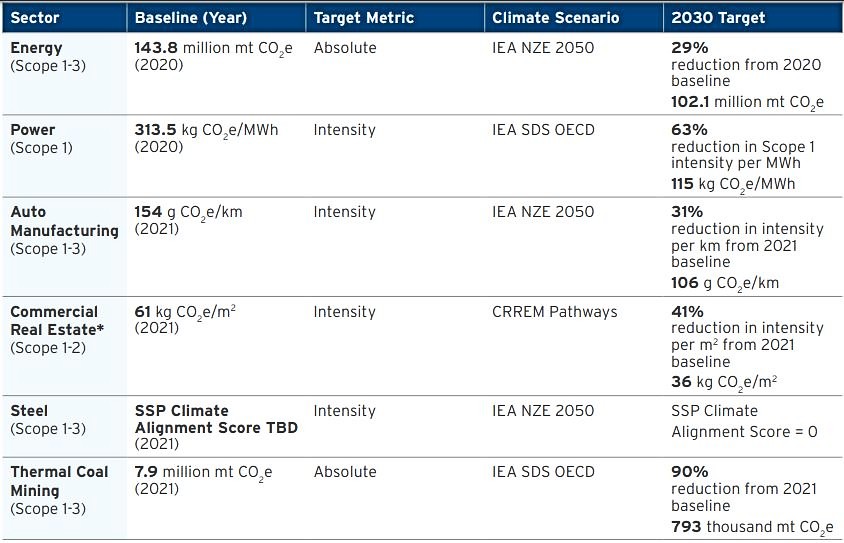
Citi pledges to reach net zero emissions for operations by 2030 and net zero for financing by 2050. For its sectoral targets, the bank aims to cut absolute emissions from lending with these targets:
90% by 2030 from a 2021 baseline in thermal coal mining
31% intensity of emissions for auto manufacturing
41% for North American commercial real estate
Here is Citi’s 2030 emissions targets by sector.
CITI 2030 EMISSIONS REDUCTION TARGETS
The bank said it will reveal more detail on steel emissions and alignment with the Paris Agreement in the future.
Its targets cover direct financing but don’t include the underwriting of stock and bonds – called facilitated emissions. Citi said it will include it if the agreed methodology for all banks is out.
The bank’s emissions in 2021 for energy portfolio significantly declined versus 2020 but were the same for power. Comparison analysis between the sectors is not simple as financed emissions are constantly changing year-on-year.
Moreover, the bank stated in its climate financial disclosure report that:
“Climate-related reporting continues to fall short of the necessary quality, quantity and consistency to permit comparability across clients, industries and sectors, which underscores the necessity of client-level engagement.”
So, the lender’s approach is not to divest but to engage with clients. But for some campaign groups, the bank’s sectoral updates are disappointing when compared to European banks.
For example, Britain’s largest domestic bank Lloyds Bank decided to stop direct financing to fossil fuel projects. The finance giant said that it will not fund any new gas, oil, and coal projects to support the UK’s transition to a sustainable, low-carbon economy.
To reach its net zero emissions, Citibank intends to use carbon credits as one way to tackle unavoidable emissions.
Carbon Credits for Net Zero
Though the bank said it doesn’t plan to buy carbon credits to reach interim targets, it says some activities may not achieve absolute zero emissions by 2050.
So, Citibank looks to buy voluntary carbon credits for its 2030 net zero targets. The bank also said that some sectoral clients will need to use the credits to also achieve their absolute net zero emissions by 2050.
The lender will focus on credits that are additional, certified and restricted to carbon removals. But since removal tech remains costly at the present, the bank goes for nature-based removal credits.
For its operational emissions, Citibank sees the potential of carbon credits to address its Scope 1 emissions for 2022 and beyond. The bank is buying the credits to complement its 100% renewable electricity commitment.
As Citi approaches its 2030 operational target, it will continue to assess carbon removal credits to offset any remaining emissions.
The recent scandals in the carbon markets show that just like other markets with contested reputations, rules are needed that go beyond certification.
There should be several things in place to get the carbon market functioning right and fit for its purpose, particularly a strong international governance framework.
Problems Plaguing the Carbon Market
The reason why carbon credit markets exist is so simple yet compelling. If polluters must pay for their carbon emissions, they’ll have a good reason to pollute less. All the while, more money will go toward activities that avoid, remove, and reduce emissions.
However, if the analysis is true that a large chunk of certified carbon offset credits is of poor quality, the logic behind carbon credits fails.
The scandal shook the market. Yet, it is not surprising because of the current design of the voluntary carbon markets (VCMs). But given the high relevance of carbon credits in corporate net zero targets, the finding, if it’s true, isn’t a good sign of climate actions.
Another problem that is shaking the market is the rise of the so-called “carbon cowboys”. They are the middlemen working in poorly governed carbon markets who are paying offset project developers and communities in the Global South less than what they deserve. They then sell the credits with a big margin to their buyers in developed countries.
As such, intermediaries – brokers, retailers, or carbon cowboy dealers – have been under a watchful eye.
A watchdog group reported that 90% of the intermediaries don’t reveal the exact fees or profits they earned from selling carbon credits on the VCM.
This lack of transparency in the financial transactions in the carbon market is alarming. It doesn’t give the key players true insight if the sector is really successful in financing climate actions.
The Root Cause
The environmentalists or climate activists, or whatever they’re called, argue that a market-based approach is designed to fail. That’s because it allows businesses to strike out carbon from their balance sheets by buying offset credits without actually cutting their own emissions.
The critics, thus, think that companies were able to prevent public and political pressure to change their business-as-usual operations. As such, their decarbonization slows down.
While they think it that way, the real cause of problems confronting the carbon credits scheme is not because it is market-based. It is the lack of robust governance that ensures that carbon markets deliver on their proclaimed purpose.
In fact, other sectors such as finance have strict rules to ensure the accountability of market players. In particular, they don’t only regulate product quality but also have price rules to follow.
On the contrary, the VCM depends solely on private certification programs validating that a certain amount of carbon has been avoided or removed from the atmosphere.
Certification of carbon offset credits is definitely crucial. Without it, issuance of the credits won’t be possible. But it should be supported on top by a broader governance framework.
In other words, carbon emissions should not be left primarily in the governing hands of voluntary, certification-based systems. And that is what the current direction of the VCMs seems to point towards.
There are plenty of efforts being done to strengthen the governance of the VCM, both on the national and international fronts.
For example, the Integrity Council for the Voluntary Carbon Market (ICVCM) is set to finalize the release of its CCP or the Core Carbon Principles for high-quality carbon credits. CCPs are a set of criteria ensuring that carbon credits bought to offset emissions have a real, verifiable climate impact. And that’s based on solid science, not speculations.
Likewise, the Taskforce on Nature Markets is proposing the robust governance of all nature markets, including carbon markets.
Getting both the carbon and biodiversity credit markets to the right path is critical to meeting global climate and development goals. If they remain flawed, those goals won’t be a reality.
What Needs to be Done
Fortunately, it’s possible to make the carbon credit, as well as the biodiversity credit markets effective. It needs progress in several areas.
High-level transparency and accountability
Transparency and accountability should be on the highest levels for everybody to know what is exactly going on in the market. Accreditation for carbon credit traders is desirable while phasing out the carbon cowboys.
Also, visibility for stakeholders is vital, especially for those who are affected by market activities such as the Indigenous Peoples or local communities. Getting their participation and voices heard will help bring out quality signals to the market.
Doing so can also help discourage the flow of poor-quality carbon credits that’s lowering trust in the VCM.
Digital tools such as smart contracts can help speed up progress, especially when it comes to boosting transparency and accountability.
Minimum price floors
Setting carbon price floors is relevant to rule out questionable offset credits and dealers. Plus, it will promote the desirability of high-quality credits that result in more equitable outcomes. This is particularly applicable to local communities, IPs, and the Global South.
International governance framework
Though principles and guidelines help in advancing climate actions, they’re simply not enough.
There must be a robust international governance structure that will root out rogue carbon credit brokers and traders. It’s also critical to regulate markets and deals that don’t follow the minimum standards for carbon trading.
With all these elements in place, creating solutions, carrying out programs, and scaling up climate initiatives won’t be disputable. They should draw on current efforts and platforms in the VCM, bringing together every player for a more transparent, accountable, and credible market-based approach to fighting climate change.
Planetary Technologies has published a measurement, reporting, and verification (MRV) protocol for ocean-based carbon removals, hoping it provides a major boost to the market of marine carbon removals.
Planetary is also inviting experts to review its MRV protocol, available at its GitHub account, and provide their input. The tech firm welcomes comments until April 15, 2023.
MRV Explained
Measurement, Reporting, and Verification (MRV) refers to the process to measure the number of carbon emissions reduced by a certain mitigation activity over a period of time and report the results to an accredited third party. This particularly includes reducing emissions from deforestation and forest degradation.
The third party then verifies the reported findings so they can be certified and the corresponding carbon credits can be issued.
One credit is equivalent to one ton of reduced emissions expressed in tons of CO2 equivalent (tCO2eq). The credits are from the results the World Bank pays for through specific results-based climate financing arrangements such as the Emissions Reduction Payment Agreements (ERPAs).
Carbon credits are also basic units traded in the carbon markets used by countries to meet their Nationally Determined Contributions (NDCs) under the Paris Agreement. Companies and individuals are also using them to offset their own footprint or simply support environmental projects.
MRV serves as the key to showing progress on climate goals and attracting more investments into the sector.
At the very start, the carbon reductions project should have baseline data against which performance is measured periodically. The assumptions upon which baselines are established and accounting methods adopted to measure the reductions vary by sector and scale.
At the end, standard setters set the requirements that those baselines and mitigation activities must meet. This is to ensure that the project follows the highest accounting standards for reliable results.
In gist, MRV seeks to prove that activity actually reduced or removed harmful GHG emissions. The goal is to ensure that mitigation actions can be converted into credits with monetary value.
Planetary Ocean CDR MRV Protocol
Planetary’s MRV is the world’s first Ocean Carbon Dioxide Removal (CDR) protocol designed to ensure accuracy and transparency of Ocean Alkalinity Enhancement (OAE) projects to deliver carbon removals.
Since the summer of 2022, the firm has been testing its technology in the UK, Canada and the US. It says it can remove up to 1 million tonnes of CO2 by 2028 while restoring coastal and marine ecosystems.
Co-founder and CEO of Planetary, Mike Kelland, said:
“To address climate change, we need to be ambitious with our approach. For the safety of our planet and people, we need to remove billions of tonnes of carbon dioxide from the air. At the same time, we want to continue safely so we will continue at low levels and grow as we increase our confidence in the safety and efficacy of our approach.”
Planetary’s open-source protocol provides guidelines for developing ocean CDR projects, including how to calculate carbon removal and estimate lifetime storage. It also includes a standardized methodology used to assess the CDR performance, increasing trust and thus, climate finance.
Just last month, a team of MIT researchers unveiled a new way of capturing CO2 from seawater, not air. Their novel tech uses less energy and cheaper cost than existing direct air capture methods.
What makes Planetary MRV unique is its conservative holdback that allows carbon removal credits sold as the protocol evolves. And to further improve its protocol, the company stated on its website that it’s working on including these key issues:
Proper representation of CDR accomplished through the capture of biological CO2 entrained in wastewater
An iterative approach to refining the holdback factor
Alkalinity loss due to particle dissolution below the (seasonally varying) mixed layer
Alkalinity loss due to subduction of alkalized water from the (seasonally varying) mixed layer
Alkalinity loss by reaction with acids other than carbonic in the wastewater
Alkalinity loss due to particle ingestion at various levels in the ocean food web
Boosting Ocean-based CDR Projects
The company’s goal is to ramp up the development and adoption of ocean-based CDR projects with its OAE tech process.
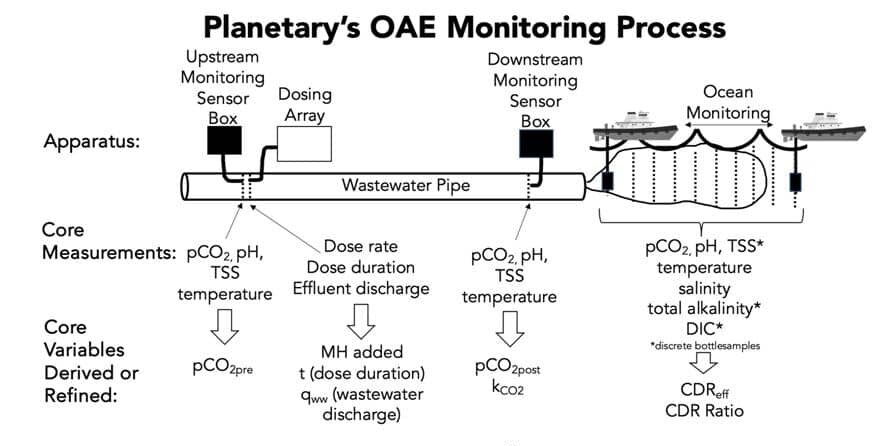
Schematic showing the layout of Planetary’s monitoring program, the measurements made at each location, and the resulting parameters required for calculation of CDRgross. TSS refers to total suspended solids.
Planetary’s method adds an alkaline substance to seawater, lowering its acidity in the surrounding marine environment. This then converts the dissolved CO2 into a mineral salt, which will remain in that state for 100,000 years.
As the Planetary’s tech reduces the CO2 in the oceans, it can suck in more atmospheric CO2, as part of the natural carbon concentration balancing process.
Knowing the exact volume of this process is where the MRV protocol becomes crucial to ensuring that it works. As such, it also makes sure that the issued carbon removal credits are real and verified.
Planetary’s new MRV for ocean carbon removal has been reviewed by Shopify, one of its supporters in testing the tech. The giant e-commerce’s sustainability head said that OAE can remove and capture gigatonnes of CO2 each year at a low cost. She added:
“Planetary is driving the OAE pathway forward, and their decision to open source their MRV framework and request expert feedback further validates the respect and trust we have in their organization.”
The novel MRV protocol will instill Shopify and other carbon credit buyers with the confidence that ocean-based CDR projects are removing emissions as promised.
Many VCM traders became more cautious due to macroeconomic conditions and the Russian invasion of Ukraine. This leads to a 32% decline in CBL trading volume in H2 2022.
VCM-specific metrics also decreased, with issuances down 6% and retirement growth slowing to 2% due to concerns about carbon credit integrity.
Despite these challenges, the VCM proved to be resilient and continued to develop its market structure.
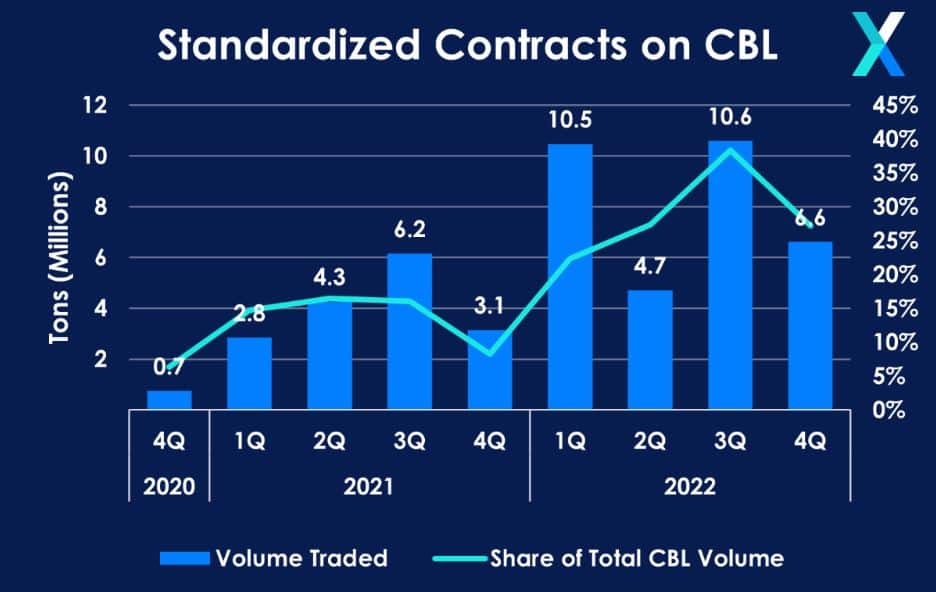
Trading of spot standardized contracts increased by 97% as shown below, providing better price transparency and liquidity.
The volume of CME Group’s CBL emissions futures rose by 345%. This indicates a strong market adoption of these contracts for managing price risk in a regulated market.
This article will examine data from Xpansiv’s spot market, CBL, to provide an overview of how the VCM evolved and matured in 2022.
The article will cover major trends in the VCM. These include changes in trading volume, the emergence of new markets, and the impact of global events on the market.
Short Term Pain for Long Term Gain
Despite slow trading, the voluntary carbon market (VCM) continued to grow in 2022.
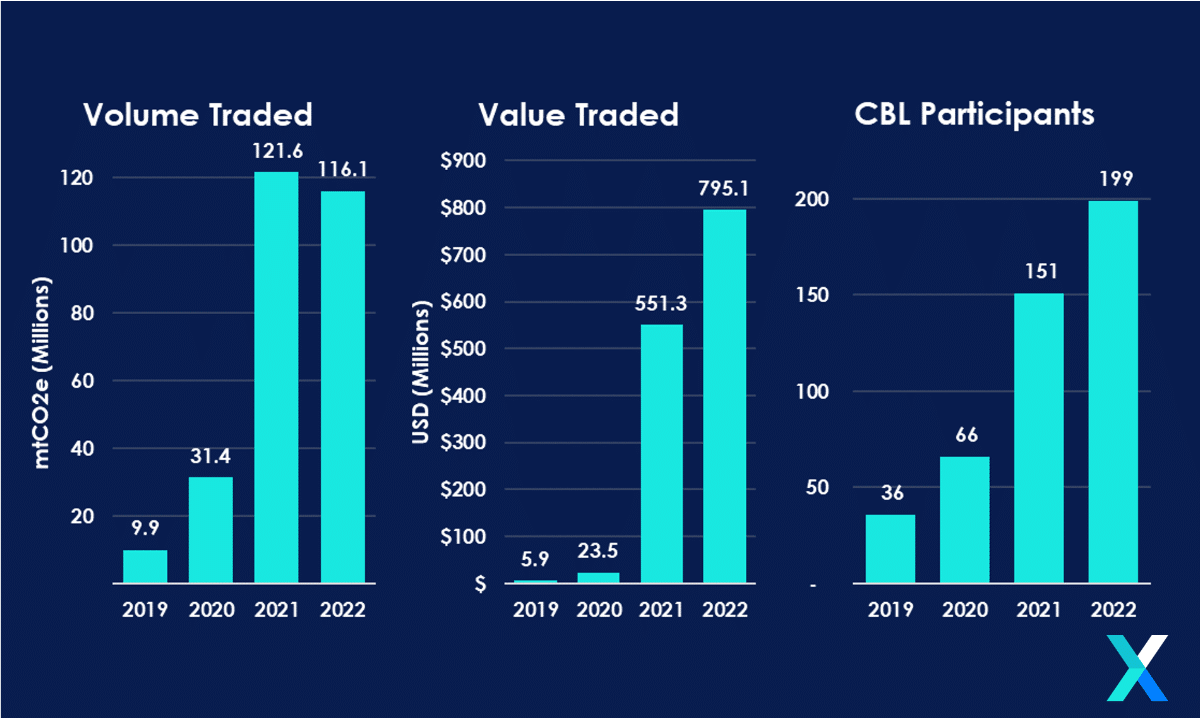
Credits traded on CBL increased by 44% to over $795 million USD, and volume traded totaled 116 million tons, only 6% less than 2021.
The number of firms transacting in CBL’s spot market increased to almost 200 firms, up 32% from 2021.
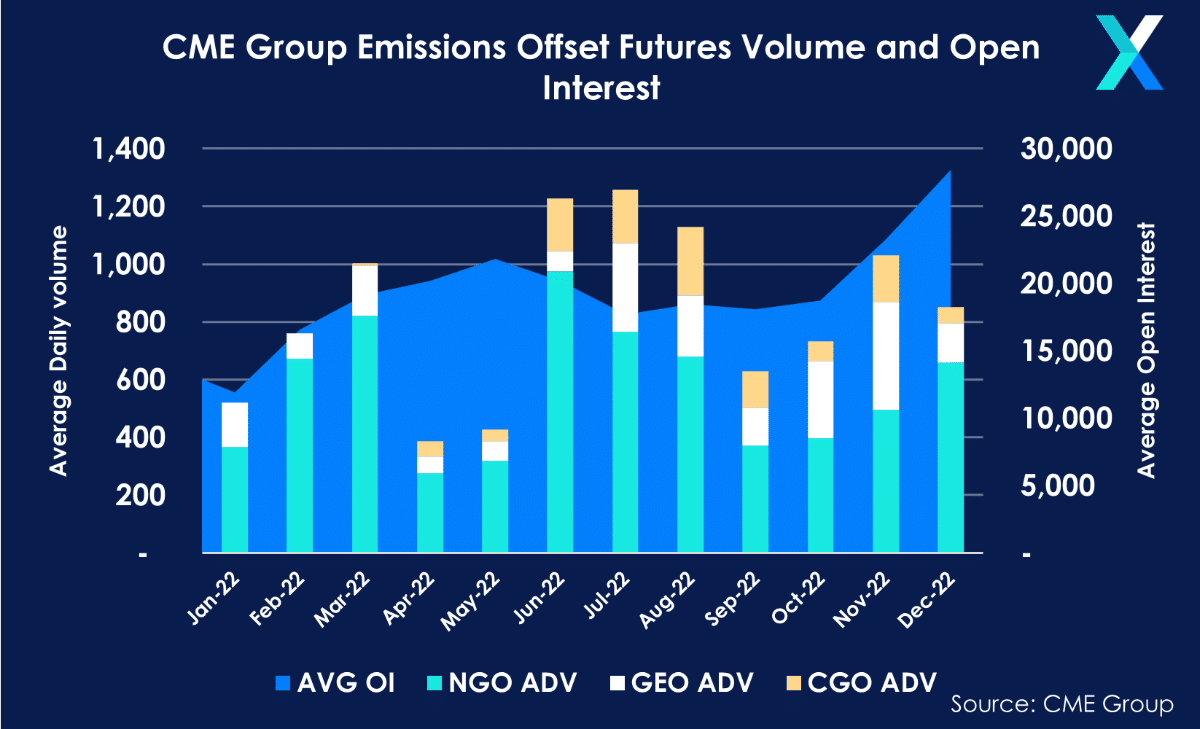
The derivatives markets also grew, with CBL GEO futures contracts traded by CME Group exceeding 209 million credits.
Average daily volume for the contracts rose by 281% to 835 contracts (equivalent to 835,000 credits).
Open interest on the contracts also increased throughout the year. It peaks above 29 million tons in December, indicating strong market participation.
Standardized Carbon Contracts are Growing
Usage of standardized spot market contracts saw significant growth in 2022. Volume traded through spot GEO contracts on CBL increased by 97% from 2021 levels, up to 32.3 million tons.
The portion of total CBL volume traded through standardized contracts increased as well, peaking at 38% of spot volume in Q3 2022. Standardized contracts provided the market with clear price signals throughout the turbulence of 2022. It allows market participants to quickly evaluate specific market segments.
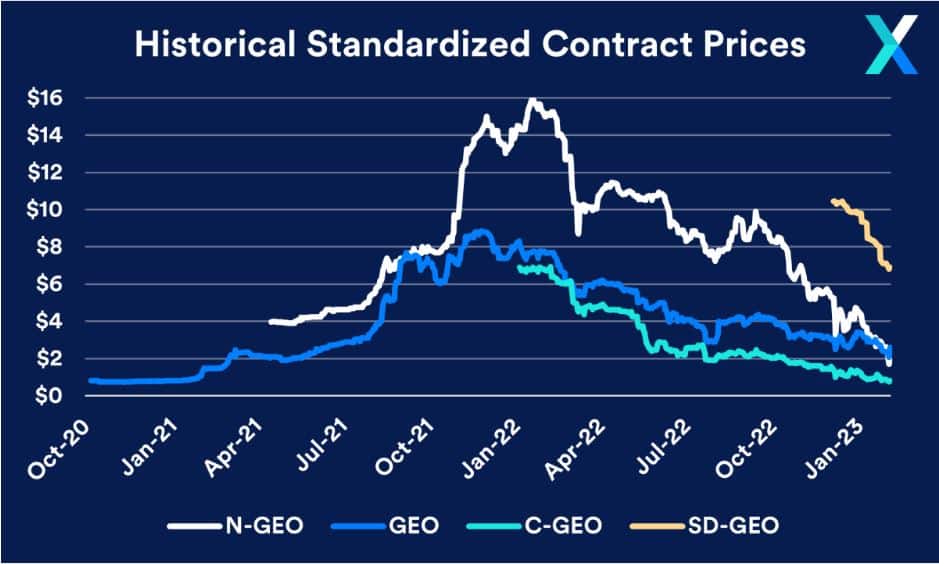
Among the standardized contracts, the N-GEO emerged as the most prominent VCM benchmark. In particular, N-GEO volume accounted for 31.5% of CBL spot contract volume, and over 68% of futures volume.
Basis Carbon
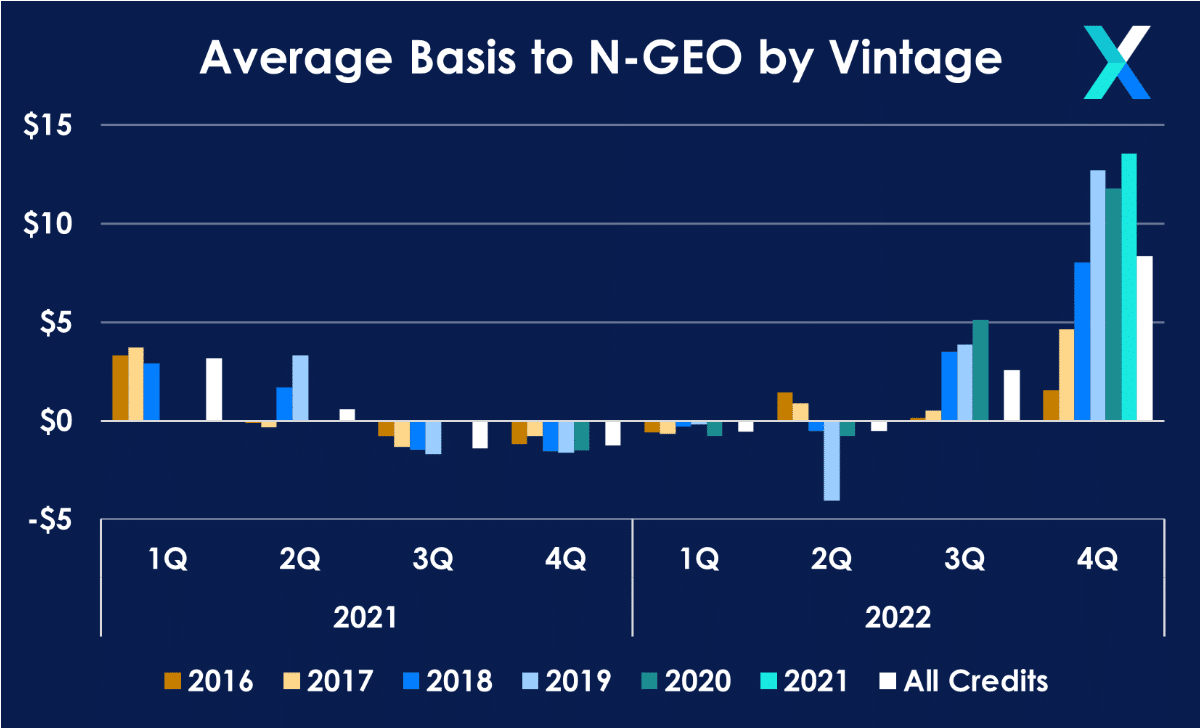
In 2022, a new trend emerged in the VCM called basis trading.
Basis trading involves pricing project-specific credits with additional attributes compared to standardized contracts like N-GEO.
Vintage was the most significant driver of premiums for eligible credits, with more recent credits achieving higher premiums.
Basis trading provides market participants with price transparency and expanded flexibility in project-specific credit transactions.
It also introduces clear and transparent pricing stratification in the VCM, with standardized contracts acting as a price floor for qualifying carbon credits.
As the VCM evolves and market sentiment shifts, standardized contracts will continue to produce price signals for the baseline qualification criteria. New indicators of value may be considered for future standardized contracts.
Growing Demand for High Quality
There was also an increasing demand for high-quality credits in the voluntary carbon market (VCM) in 2022.
Market participants were seeking credits with higher integrity and verifiability due to public attention towards credit integrity.
The SD-GEO contract accepts delivery of credits from clean cookstove projects with five or more verified SDG contributions.
Additionally, market liquidity for removals credits increased as the first blue carbon issuances became available, achieving record high prices above $30 on CBL.
These developments demonstrate the VCM’s evolving focus on quality and verifiability in carbon credits.
2022 VCM by Region and Project
Project-specific credits traded on CBL totaled 74.7 million tons in 2022, revealing additional trends in the VCM.
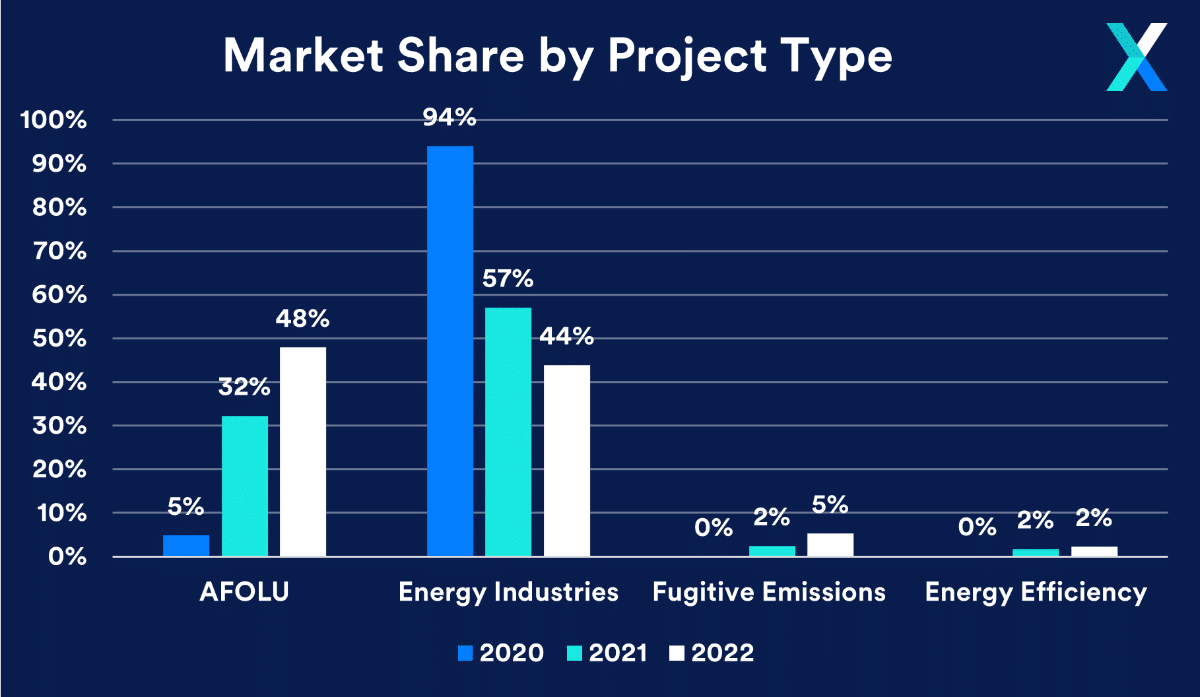
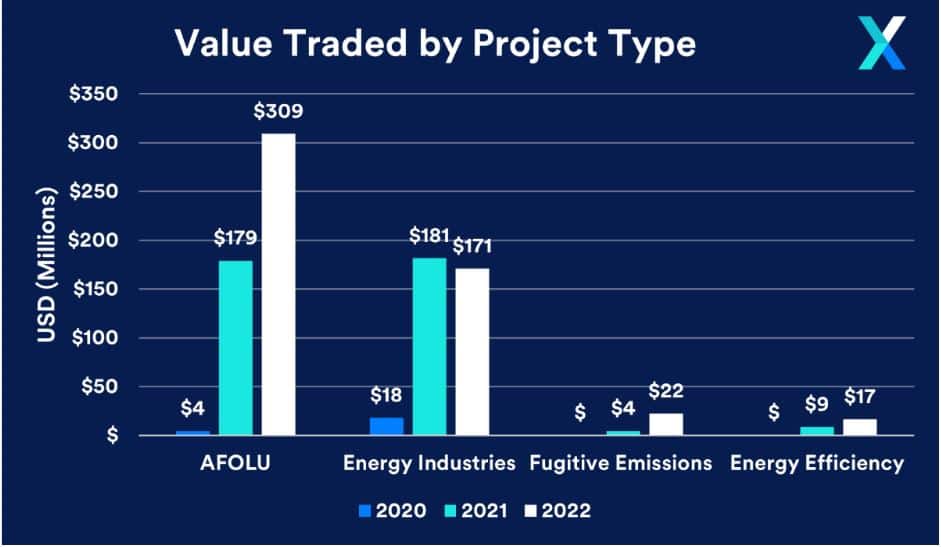
Nature-based credits, including AFOLU credits, became the most popular type of credit traded, surpassing energy industry credits.
The nature-based market share reached 48% of volume, with value traded exceeding $309 million, up 72% from 2021.
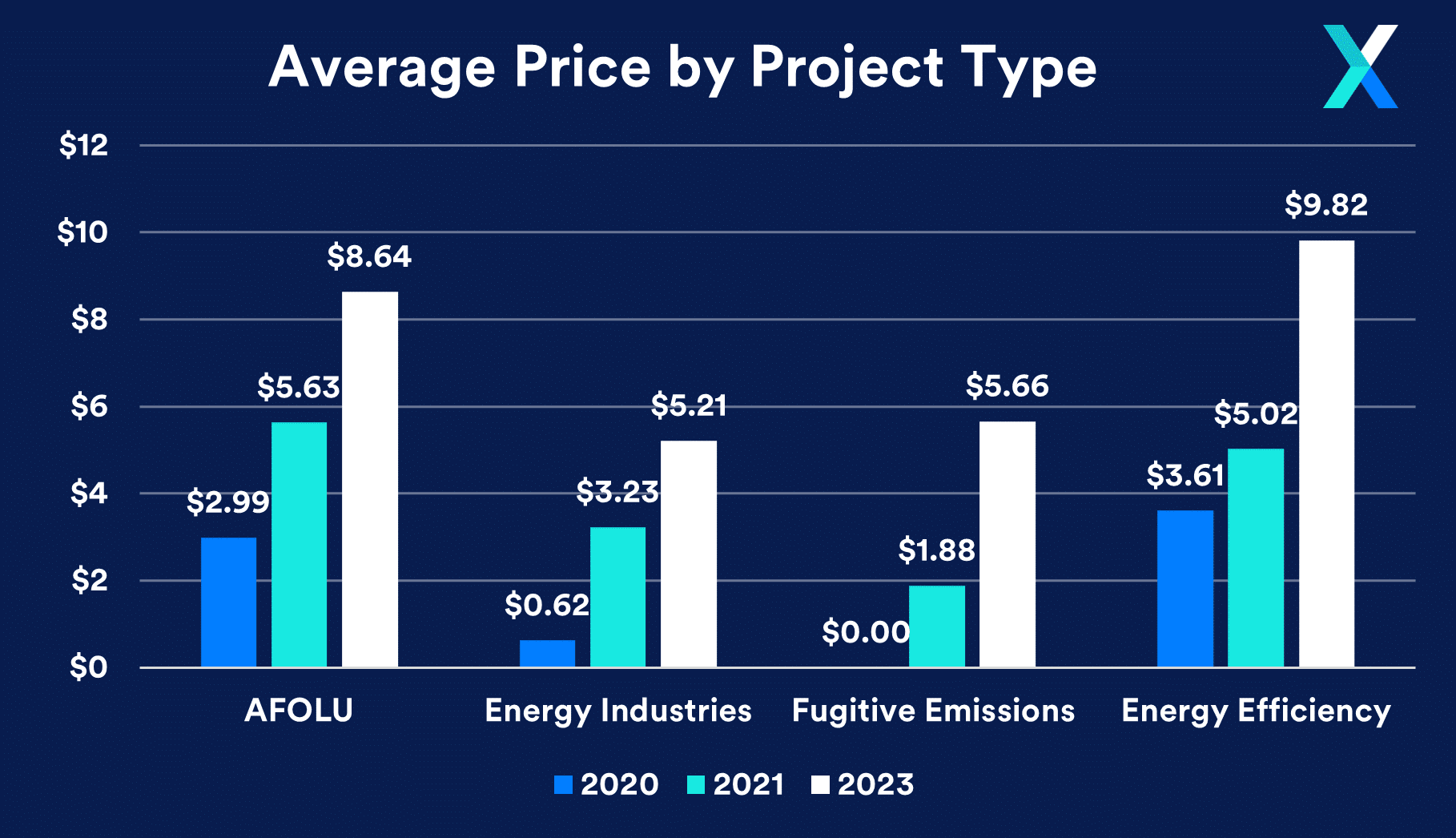
The average price of nature-based credits rose to $8.64 in 2022, making them the highest priced offsets, except for niche energy efficiency credits that averaged $9.82 per credit.
Xpansiv makes granular data generated from these transactions available through a subscription service.
These trends show a growing focus on nature-based solutions in the VCM, and the increasing importance of verifiability and integrity in carbon credits.
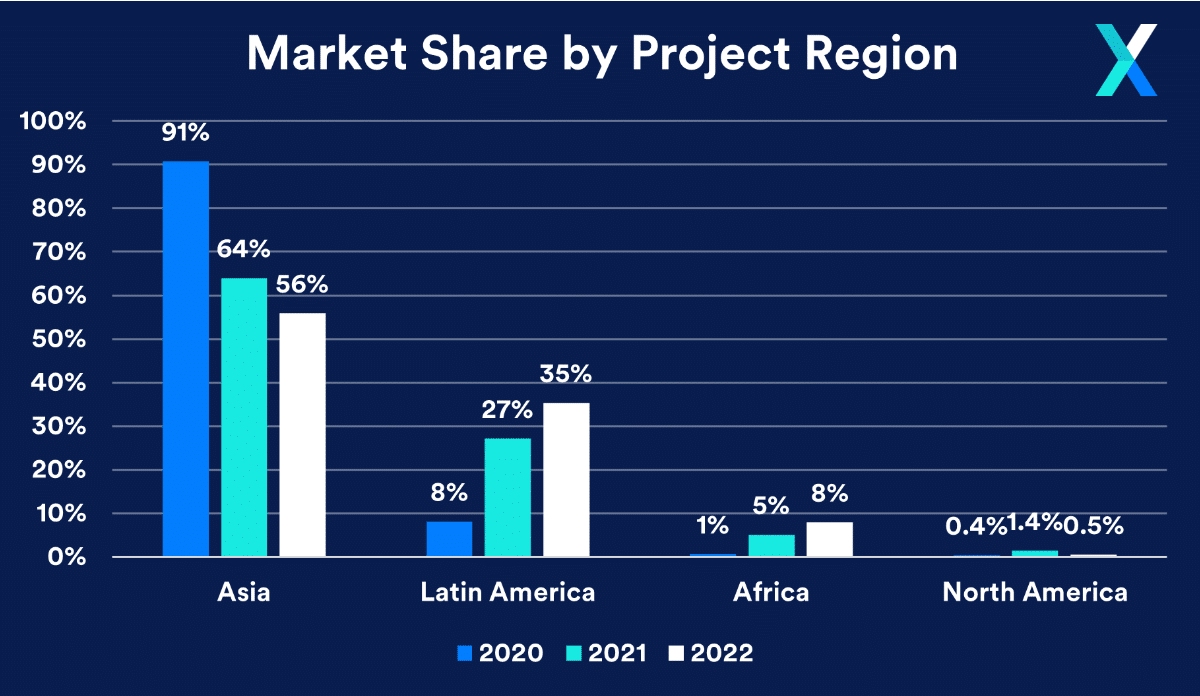
The share of traded credits generated from projects in Asia decreased in 2022, falling to 56% of CBL’s project-specific market.
Asian energy industry credits grew by 42% in 2022, and the rise of Latin American nature-based credits whose market share rose to 32%.
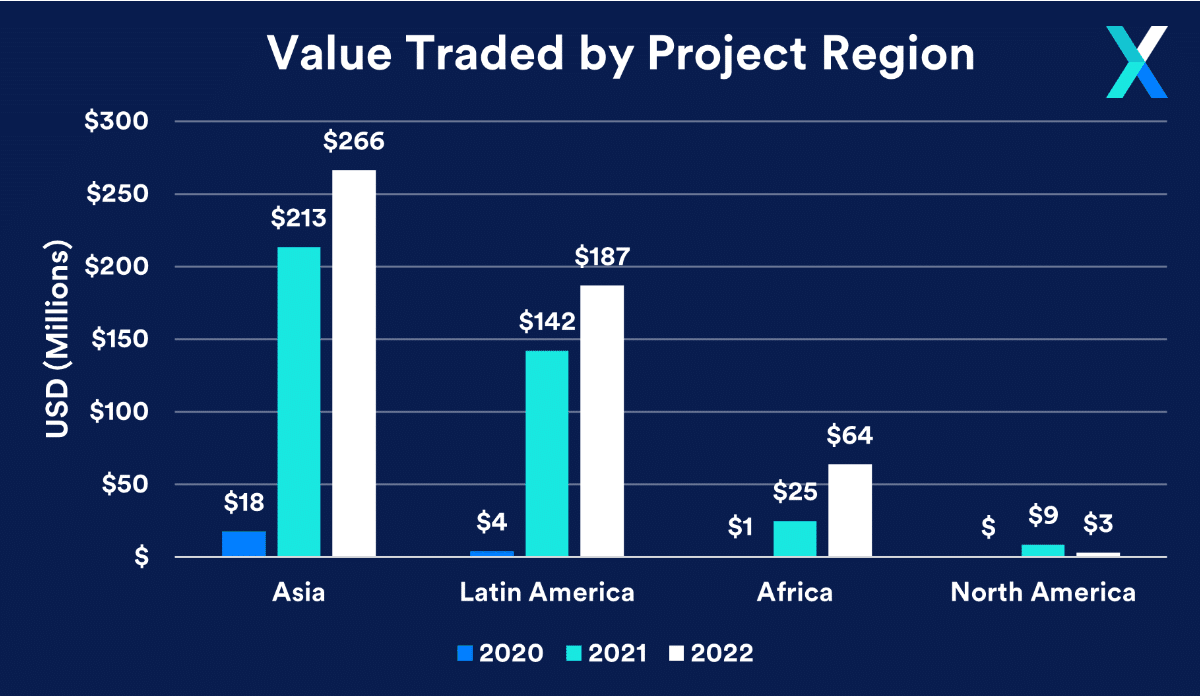
The African segment of the market saw significant growth in 2022, jumping to 8% of the market by volume with over $63.6 million in value traded.
The growth in the African segment was primarily driven by trading of nature-based credits, which rose by 164% to 3.9 million tons.
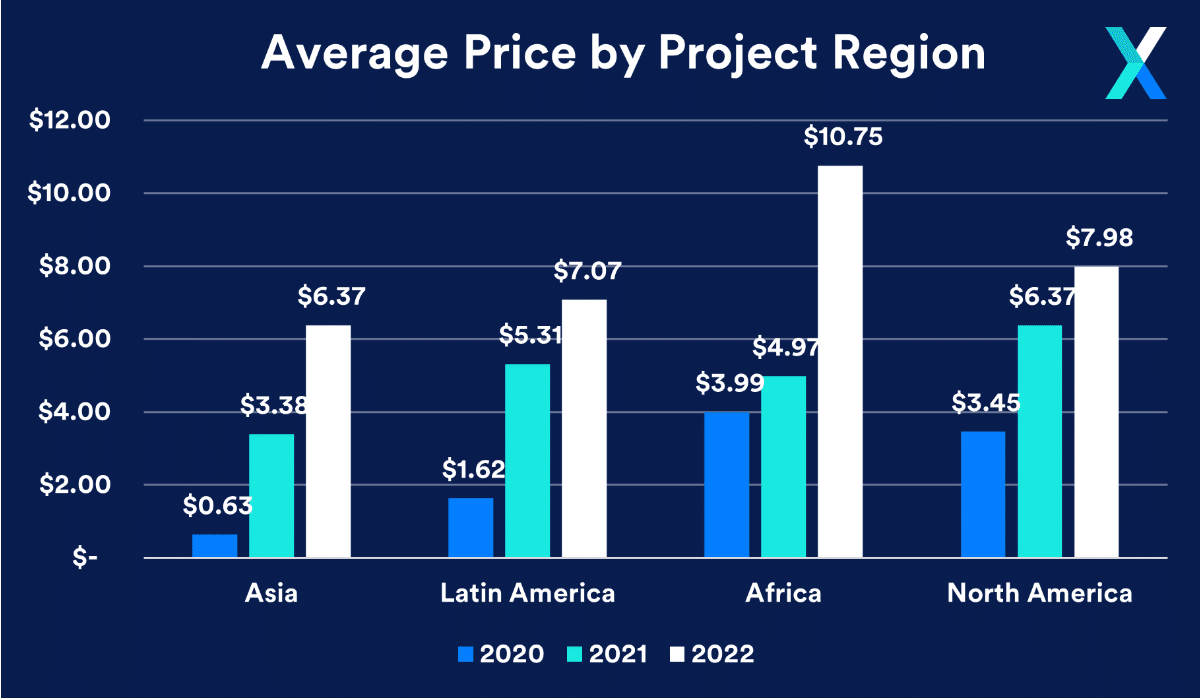
Lastly, the average price of credits from Africa was the highest among all regions at $10.75 per credit.
Stafford Capital Partners announced the initial close of its global carbon offset fund at $242 million with commitments from three UK local government pensions schemes (LGPS).
Stafford is an independent private markets investment and advisory company with US$8.1 billion in assets under management. Founded in 2000, it advises 170+ institutional clients with a team of 80+ professionals investing in:
timberland and agriculture,
infrastructure, and
sustainable private equity and private credit.
Stafford Carbon Offset Opportunity Fund
Stafford Carbon Offset Opportunity Fund raises $242 million in investor commitments from three UK local government pensions schemes (LGPS). These include the LGPS of Essex, Leicestershire and the City and County of Swansea. The latter is the new addition to its investor base.
The Fund was launched in December 2022 with a $1 billion fundraising target. It is classified as an Article 9 impact fund under the European Sustainable Finance Disclosure Regulation (SFDR). It specifically aims to invest in these forestry carbon projects:
afforestation,
natural forest restoration, and
improved forest management projects.
The Fund will invest directly or indirectly into assets that meet the criteria for developing carbon projects.
Stafford CEO Angus Whiteley noted:
“…the product is underpinned by a commercial timberland return, which is expected to be around 5%. The rest of the returns effectively come from the value of carbon credits that are returned to investors.”
Whiteley further said that 65% of the fund’s allocation will be for afforestation. Afforestation activities will include restoration of natural forest as well as plantations managed for commercial use.
The majority of Stafford’s timberland allocations focus on North America, Australia, and New Zealand. But as part of its carbon offset strategy, the investment firm is also looking for opportunities in Europe.
Other companies are also investing in forest conservation projects to end deforestation like the case of Everland. Through its Forest Plan, Everland seeks to protect the world’s most important and vulnerable forests.
Stafford now is looking to begin deployment of its carbon offset fund.
What Investors Can Expect Out of It
Stafford Carbon Offset Opportunity Fund offers an innovative solution to investors who want to offset their own emissions or are looking for an impact investment in the forestry sector.
Here are what investors can particularly expect from the Fund if they put their trust and money into it.
Invest in ~200,000 hectares of sustainably managed timberland. These include ~150,000 hectares on which new commercially managed plantations will be established and natural forest planted;
Generate ~30 million verified carbon offset credits for investors (each equal to 1 tonne of CO2);
Provide a source of sustainable, low-carbon wood raw materials; and
Provide an investment with a substantially negative carbon intensity profile and reporting framework that can support the broader decarbonization of institutional investment portfolios.
Whiteley further commented that when factoring in the carbon credits value, there’s some sort of crystal ball gazing with it. Thus, the company has taken a conservative view of what they see as the future of carbon prices.
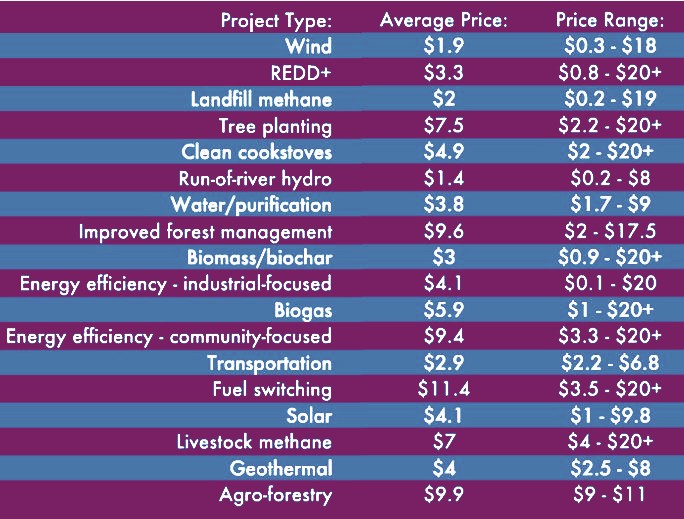
With that, they’ve looked around at market consensus. The table shows various carbon credits price averages and ranges by project type.
Carbon Credit Pricing by Project Type
The firm believes that commercial forestry is attractive with the potential for return significantly above what they’re expecting. The overall return to investors can be at 9% to 11%, depending on how the market plays out.
There’s a potential for LGPS not just to sell the carbon credits they will receive, but also to use them to achieve their decarbonization goals, says Whiteley.
He added that there’s always the potential downstream for the pension schemes to use the carbon credits and retire them to meet their net zero liabilities and targets.
Forest Carbon Credits in Meeting Net Zero
With a 22-year track record of investing in sustainably managed timberland plantations, Stafford has extensive experience in the sector. The company is a leading global timberland investor.
As an investor in global forestry and low carbon solutions in infrastructure and private markets, Stafford has committed to the Net Zero Asset Managers (NZAM) Initiative. The group’s main purpose is to encourage asset managers to support the goal of net zero by 2050.
The firm will continue on providing solutions that can both deliver financial returns and help drive the transition to a net zero emissions economy.
With its experience and expertise in the field, Stafford recognizes the important role that forestry has in battling climate change. As Whiteley stated:
“We believe this [carbon offset] fund will deliver the important combination of potential financial returns and environmental benefit that is so needed today. We are very grateful to the investors who have enabled us to achieve this milestone and look forward to making a meaningful contribution to their decarbonisation agenda.”
Via its Carbon Offset Opportunity Fund, Stafford continues to align its products to help address those environmental and societal needs while delivering the financial returns their clients are seeking.
The Fund will to remain open to institutional investors during 2023.
Stafford aims to complete fundraising by the end of the year, offering investors a good pipeline of opportunities.
United Airlines launched a first-of-its-kind investment vehicle with over $100 million to support startups focusing on cutting air travel’s carbon footprint by ramping up the research, production, and technologies of sustainable aviation fuel (SAF).
“This fund is unique… we’re creating a system that drives investment to build a new industry around sustainable aviation fuel, essentially from scratch. That’s the only way we can actually decarbonize aviation.”
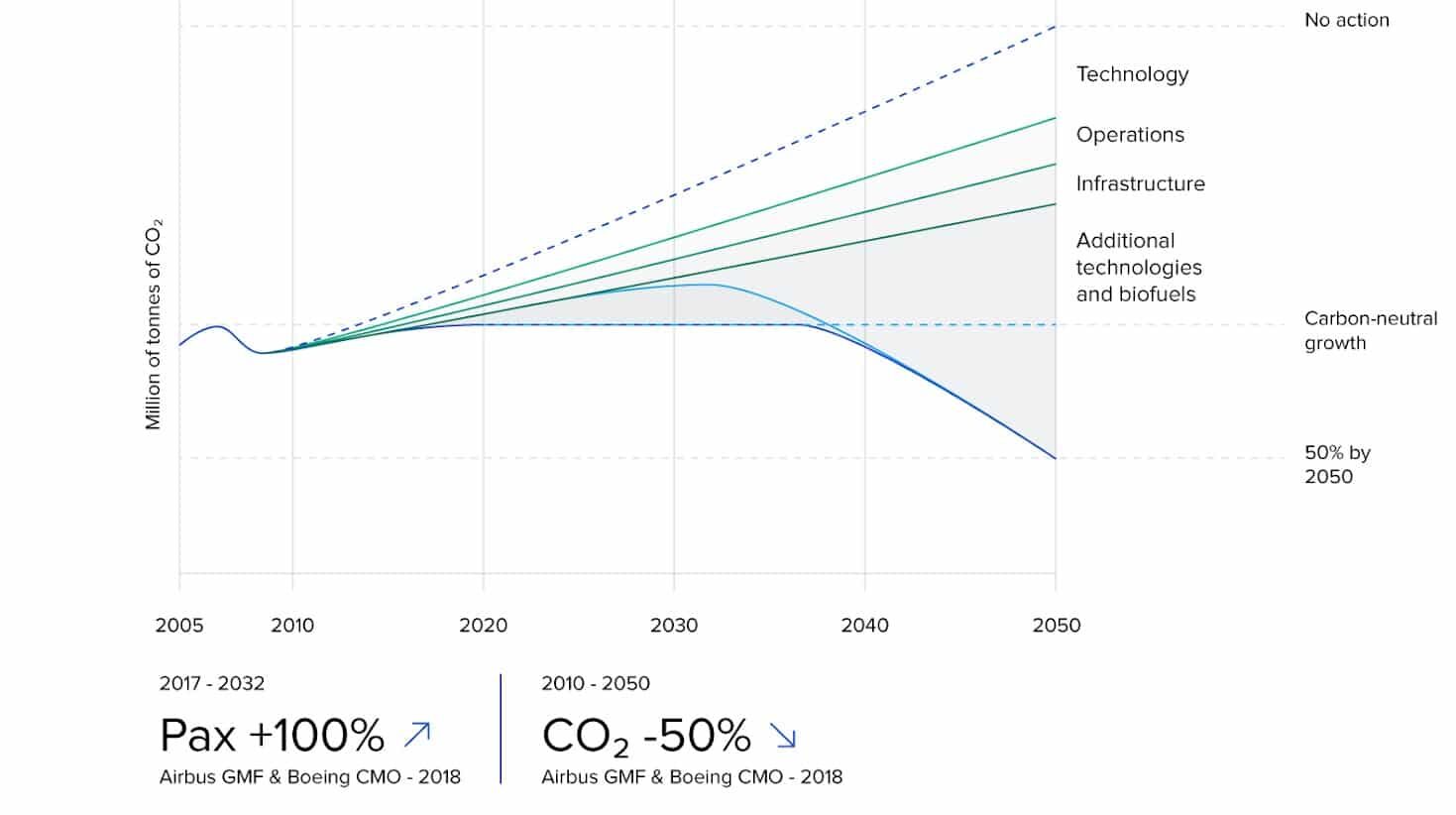
The International Air Transport Association (IATA) projected the following scenario by 2050 for global aviation emissions.
What is SAF?
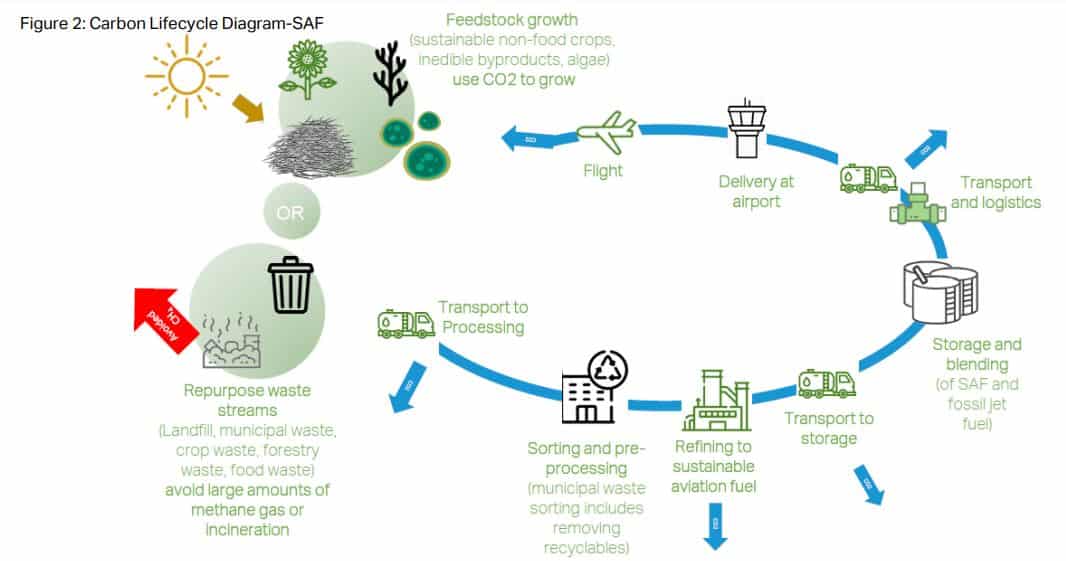
SAF is an alternative to conventional jet fuel that reduces carbon emissions associated with air travel. It’s from used cooking oil and agricultural waste, but can also be made from other materials such as forest waste and household trash.
Implementing SAF can provide a beneficial strategy to process waste, while also reducing CO2 emissions in aviation.
Right now, SAF is blended with conventional fuel to comply with regulatory requirements for use within the aircraft. And to date, United Airlines has invested in the future production of more than 3 billion gallons of SAF. That’s the most among any airlines in the world.
Source: IATA
Other airlines like EasyJet and JetBlue also see SAFas one way to achieving their climate goals. The IATA estimates show that SAF will account for around 65% of mitigation in the aviation industry.
To date, about 500,000 commercial flights were powered by SAF.
Alongside SAF, most airlines consider carbon offset credits for their net zero strategies.
The UAV Sustainable Flight Fund
Via the UAV Sustainable Flight Fund, large companies can invest in SAF technology and production startups that United identifies. UAV has invested in these low carbon tech companies such as ZeroAvia, Dimensional Energy, Heart Aerospace, and NEXT Renewable Fuels.
The Fund makes it possible for the first time for travelers to buy a ticket on the United website or app and supplement the airlines’ investment.
The first 10,000 people who choose to contribute to the fund will each receive 500 MileagePlus Miles as a thank-you.
The Fund is also open to corporate investors across industries. It will prioritize investments in new tech, proven producers, and advanced fuel sources to scale the supply of SAF.
United has already made investments in or inked agreements with companies using various ingredients and tech to make SAF. These include inputs such as ethanol, animal byproducts, forestry and crop waste, and municipal waste. Novel technologies like synthetic biology and power to liquids are also being considered.
These existing SAF investments will form part of the UAV Sustainable Flight Fund portfolio. Fund partners will also get preferential access to environmental attributes associated with United’s supply of SAF.
Increasing Consumer Awareness and Action
By some estimates, air travel accounts for 3% to 4% of all carbon emissions in the US. The industry has its own carbon credit scheme CORSIA to spur carbon reductions.
So, United is raising passengers’ awareness about their flight’s carbon footprint while giving them the option to take action. As they search for their flights, United is also showing them an estimate of their air travel’s emissions.
A green shading in the traveler’s itinerary tells that they chose a lower-carbon option on a per economy seat basis.
A flight’s carbon footprint is measured in kg CO2e (kilograms of CO2 equivalent)
The flyer’s emissions estimates may vary from their flight footprint. Several factors determine the estimation including:
aircraft type,
flying time,
seat capacity, and
number of people and cargo on a given flight.
Those who book a United flight travel within or from the US will see an option to contribute to supplement the airline’s investment in the UAV Sustainable Flight Fund before check-out. They can decide to contribute in various amounts – $1, $3.50 or $7.00. The default contribution option is set at $3.50.
To show the potential impact of customer action at scale, here’s an example:
If 152 million travelers flying on United last year each contributed $3.50 to the Fund, the total amount will be enough to design and build a SAF refinery that can produce up to 40 million gallons each year.
SAF in United Airline’s Net Zero Goal
Like most major airlines racing toward net zero, United also targets to reduce its emissions 100% by 2050, and an important part of that is SAF. So, the company had also launched a SAF purchasing program called the Eco-Skies Alliance alongside establishing UAV.
The goal is to identify and invest in companies and technologies that decarbonize the aviation sector. These investments particularly include carbon capture, electric regional aircraft and air taxis, and hydrogen electric engines.
Fortunately, the government is also showing strong support to SAF.
The 2022 Inflation Reduction Act provides the largest climate change investments in U.S. history. It offers tax credits specifically for carbon capture and clean energy like SAF. It can help boost SAF supply while cutting costs for SAF consumers.
For instance, the US military is using about 5 billion gallons of jet fuel each year. In an effort to slash the military’s footprint, the Department of Defense plans to use a jet fuel blend containing at least 10% SAF by 2028. And that’s mandatory under the 2023 National Defense Authorization Act.
Ultimately, the US Department of Energy said that the nation’s huge resources are enough to meet the estimated SAF demand of the entire aviation sector in the country.
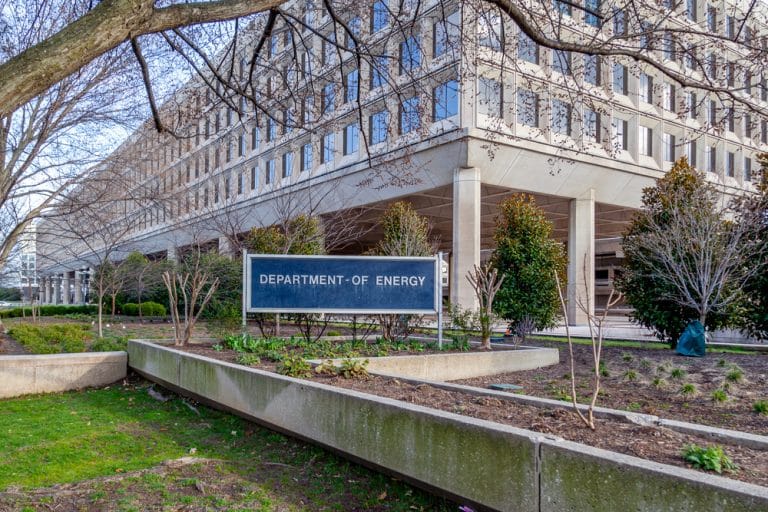
The U.S. Department of Energy (DOE) rolled out $2.52 billion to fund two carbon capture initiatives that aim to speed up and boost investment in technologies that capture, transport and store carbon.
President Biden aims to bring the country to a net zero emissions economy by 2050. And critical to meeting that goal is the President’s Bipartisan Infrastructure Law, which provided the funding of the carbon capture programs.
The “Carbon Capture Large-Scale Pilots” and the “Carbon Capture Demonstration Projects Program” seek to cut carbon emissions from energy and hard-to-abate industries.
Promoting Clean Energy
The Energy Secretary Jennifer M. Granholm commented on the announcement:
“By focusing on some of the most challenging, carbon intensive sectors and heavy industrial processes, today’s investment will ensure America is on a path to reach net-zero emissions by 2050 and at the forefront of the global clean energy revolution.”
The two new carbon capture programs will help ramp up the demonstration and deployment of carbon management technologies. They will also support the current administration’s efforts to:
create good-paying manufacturing jobs,
reduce pollution to deliver healthier communities, and
reinforce America’s global competitiveness in the clean energy technologies of the future.
Together, the energy or power sector and industrial sectors are responsible for a big part of the nation’s carbon footprint. Capturing carbon in the heavy industries like steel and cement is crucial to fighting the climate crisis.
This is why investing in carbon capture technologies is vital. They don’t only reduce emissions but they can also help in providing clean air and other health benefits to communities.
There will be $820 million made available through this funding opportunity. That amount will be divided among 10 projects aimed at de-risking carbon capture technologies.
New carbon capture technologies are emerging from the past 20 years of R&D. The next step is to test them at larger scales to attract more capital needed for their deployment.
Funding for this program will provide the support needed to test new technologies in both the power and industrial sectors.
Carbon Capture Demonstration Projects Program:
This second program offers funding opportunities of up to $1.7 billion. It supports around six projects demonstrating commercial-scale carbon capture technologies linked with CO2 transportation and geologic storage infrastructure.
This program focuses on funding projects that can be readily replicated and deployed at power plants, and the industries of cement, pulp and paper, iron, and steel.
In December last year, DOE also invested $3.7 billion in carbon removal technologies and launched four programs. The funds also came from the Bipartisan Infrastructure Law.
They aim for the same goals. Ramping up private-sector investment and spurring advancements in monitoring and reporting practices for carbon management technologies.
What Project Applicants Should Know
The Office of Clean Energy Demonstrations is managing the programs in collaboration with the Office of Fossil Energy and Carbon Management and the National Energy Technology Laboratory.
Their task is to hasten the deployment of those carbon capture tech by scaling them up and attracting investments from the private sector.
Similar efforts are also underway such as the Carbon Storage Assurance Facility Enterprise and the Carbon Dioxide Transportation Infrastructure Financing and Innovation Act programs. They particularly focus on developing infrastructure and geologic carbon storage sites.
To be eligible for the funding programs, applicants must show meaningful engagement with and tangible benefits to the communities where their projects are found. They are also required to submit Community Benefits Plans as a scored part of their applications.
These plans, now a requirement of most DOE funding opportunities, demand applicants to detail their commitments to these areas:
community and labor engagement,
quality job creation,
diversity, equity, inclusion, and accessibility, and
benefits to disadvantaged communities.
Projects chosen under each of the opportunities have to develop and implement strategies to ensure strong community and worker benefits. They must also report on the corresponding project activities and outcomes.
DOE may issue additional funding opportunities for these carbon capture programs in the future. The Department expects issuing another carbon capture demonstrations funding opportunity for projects that are still performing front-end engineering design studies.
The buying and selling of credits that allow an entity to emit a certain amount of carbon dioxide or other greenhouse gasses is otherwise known as… carbon trading.
The credits are intended to reduce the overall carbon emissions, helping to mitigate climate change.
Carbon trading is based on the concept of cap-and-trade scheme that emerged back in the 1990s. This scheme introduces the market-based incentive to slash pollution.
But instead of mandating certain measures, the policy rewards firms that reduce their carbon footprint while imposing costs on those that cannot.
At that time, the scheme was meant to specifically cut emissions down to just 5% below 1990 levels by 2012. This later became the historic Kyoto Protocol, wherein industrialized nations have to lower the amount of their carbon emissions.
The idea is to incentivize every nation to cut back on their footprint. But as the carbon market continues to grow in size, trading of carbon credits goes beyond just that…
…it produces a market-based financial instrument known as carbon credit futures.
So, if you’re also one of those interested in joining this rapidly growing market, you came to the right place. It pays to know what carbon credit futures are, how to trade them, and what specific instruments are available to bet your money on.
What are Carbon Credit Futures?
Carbon credit futures are an expansion of the carbon market. A carbon credit is a certificate or permit that represents a reduction in carbon emissions, with one credit representing one metric ton of CO2.
By definition, carbon offsetting is a “scheme that allows entities, be it a company or an individual, to invest in environmental projects to balance out their own carbon emissions.”
In other words, if you can’t reduce your carbon footprint directly, then you can pay others to do it somewhere else through those projects. They are the way for the carbon credit mechanism to work by reducing carbon emissions.
Carbon credit futures is a credit instrument where the buyer seeks to slash emissions through carbon offset projects, but without directly investing in any projects at the exact time of investment. Common examples of these projects are reducing or avoiding deforestation, providing fuel efficient household devices, and investing into renewables.
Carbon credit futures contract physically delivers carbon credits. Each futures contract is equal to 1,000 carbon credits generated from projects that protect natural ecosystems.
A futures contract is a kind of derivative wherein two parties agree to trade an underlying asset at a specific date for a specific price. In such a case, the underlying assets are the carbon credits.
With carbon prices fluctuating, the carbon credit futures can serve as mitigating risk when you add it to your investment portfolio. They’re not just a simple positive socio-environmental asset but they bring real benefits to the investors.
In fact, by introducing carbon credit futures into your portfolio, you can reduce the value at risk of investment. But you should be concerned on how to balance what’s the optimal amount of futures contracts to invest in so as not to take positions that will make your entire portfolio less efficient.
At this point, it’s important to note that futures contracts are a more advanced trading strategy.
And to be brutally honest, carbon credit futures are a more complicated way of investing in the assets that underlie an exchange-traded fund, a.k.a. ETF, as it tracks the performance of the futures.
So, how does trading carbon credit futures work? Is it worth betting?
How Carbon Credit Futures Trading Works?
Carbon emissions continue to rise, leading to humanity’s greatest crisis of all time – climate change. The atmospheric concentration of CO2 jumped 48.0% since the pre-industrial era.
Not only is air quality getting poorer, but the higher temperatures are undeniable. We’ve seen the hottest years since 2005.
So what is the world doing to solve this? The birth of the Paris Agreement – and carbon credits – in 2015.
The Paris accord aims to reduce global warming to pre-industrial levels, meaning the world has to emit 8% less CO2 each year. But that’s no easy task.
This is where carbon credit futures trading fills in the gap… by incentivizing emissions reductions. It’s a new trading horizon.
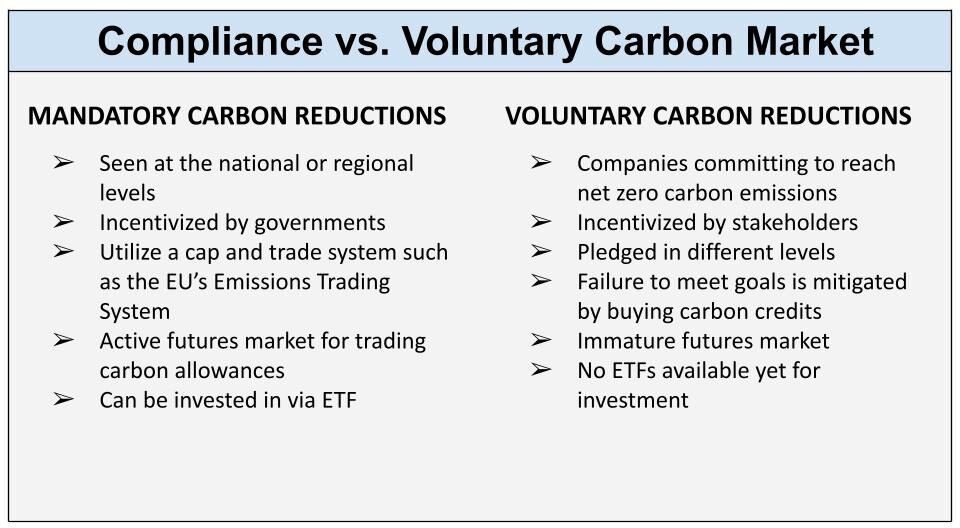
Governments and companies incentivize carbon reductions, mandatorily and voluntarily. How carbon trading works under each of these carbon markets differ. Here are their major differences:
In the voluntary reductions world, it remains a free-for-all, for now, and we’ll see how it develops with more market options and regulation.
The main idea with trading carbon credit futures is that you’ll make money if the credits you buy are worth more than their current price. In other words, that’s what a future was contracted for.
But then again, it’s all speculation as nobody knows what the return would be.
Fortunately, recent developments in this space point to a brighter future for carbon credits… carbon prices continue to surge and break records.
For the most direct exposure to the voluntary carbon markets, trading carbon credit futures, such as the EU allowance futures, is a good option as a retail investor.
EU Carbon Credit Futures (What You Need To Know)
The first ETS grew out of the European Union’s need to address the bloc’s pollution. Their target is to slash GHG emissions to at least 55% below the 1990 levels by 2030 – a lofty goal.
The EU ETS, created in 2005, is the largest carbon market in the world. It inspires other countries and regions to establish similar systems such as California and New England.
EU ETS follows the cap-and-trade principles of carbon trading. The bloc sets a “cap” on the amount of emissions that the industrial sector is allowed to emit. Whoever goes above their allowance will be subject to fines.
Investors who have futures contracts matured at that time were celebrating for sure. But speculators who entered into a contract need to see higher EUA prices.
But it’s a speculation. No one doesn’t know whether the carbon price will go up or down.
After all, they’re called futures…and these futures contracts are what ETFs trade.
Now let’s introduce to you what instruments are currently available and trading as carbon credit ETF.
What Carbon Credit ETF Instruments Are Available?
There are several instruments available right now for you to assess, but here are some of them that you can start considering.
KRBN: KraneShares Global Carbon ETF
The largest product available, KraneShares Global Carbon ETF a.k.a. KRBN provides exposure to mostly the EU ETS carbon credits or EUA, California’s CCA carbon credits, and the RGGI carbon credits of the northeastern United States. Together, EUA and CCA account for over 80% of its holdings, reflecting the IHS Markit’s Global Carbon Index weights.
This carbon credit futures ETF provides great exposure to the growth of the carbon markets with less risk and volatility than others. That risk is due to the fact that more than half of the fund is invested in the EUA, meaning it’s largely exposed to the euro which has been experiencing some significant depreciation in the past year.
Fortunately, the dollar has been appreciating relative to other currencies. This means you might have some hedge. Some key info to know about KRBN include:
created on the 30th July 2020,
expense ratio of 0.78%, and
total net assets as of 31/10/2022: $766,916,721
KSET: KraneShares Global Carbon Offset ETF
KraneShares’ latest addition to its suite of carbon market ETFs is the Global Carbon Offset or KSET. For the record, it’s the first in the U.S. to offer exposure to carbon offset futures, which marks a departure from the existing carbon credit funds.
KSET deducted on the NYSE with an expense ratio of 0.79%. It will allow you to track carbon offset futures contracts while also giving you the access to futures that weren’t available through an ETF before. That being said, this ETF offers broader coverage of the VCM, particularly the largest financial derivatives exchange – the CME Group.
Specifically, KSET will trade these carbon offset futures contracts:
CBL Nature-Based Global Emissions Offset (N-GEOs)
CBL Global Emissions Offset (GEO)
Investors can be confident that credits behind KraneShares KSET are reliable. They’re from emission reduction activities verified by renowned carbon offset registries.
KCCA: KraneShares California Carbon Allowance ETF
Created in 2021, KCCAor KraneShares California Carbon Allowance ETF provides direct exposure to the California Carbon Allowances (CCA) that trade under California’s cap-and-trade program. It tracks most traded CCA futures contracts, closely following the price performance of California’s carbon credits.
As a part of the KraneShares suite of carbon ETFs, KCCA offers investors a new vehicle for participating in the price of carbon and hedging risk. Just like other ETFs of KraneShares, KCCA supports responsible investing and impact investment goals.
KCCA is one of the largest instruments with an expense ratio of 0.78% and net asset $218,944,249. By pairing it with other KraneShares carbon ETFs, you can customize your portfolio allocation to the global carbon credit market:
KEUA: KraneShares European Carbon Allowance ETF
The KraneShares European Carbon Allowance ETF is meant to provide direct exposure to a portfolio of carbon credit futures contracts that trade under the world’s largest carbon market, the EU ETS. Hence, KEUA will track EU carbon credits price performance.
KEUAwill invest at least 80% of its net assets, which is $18.98 million, in instruments that offer exposure to EUA. Unlike other KraneShares carbon ETFs, KEUA is non-diversified.
CARB: Horizons Carbon Credits ETF
Breaking the KraneShares craze is the Horizon’s Carbon Credits ETF or CARB, which trades on the Toronto Stock Exchange. It is Canada’s first ETF that gives exposure to carbon credits through futures contracts or derivative instruments.
CARB is quite recent, created in February 2022 with a net asset of $7,804,530 to date. Remarkably, it has an expense ratio of a whopping 0.92%.
A passive fund based on the Horizons Carbon Credits Rolling Futures Index, CARB is composed solely of EUA futures, with contracts rolled forward as they expire. But this ETS is flexible with the possibility to expand its exposure to other developed market futures as they mature.
GRN: iPath Series B Carbon ETN
The iPath Series B Carbon ETN tracks the Barclays Global Carbon II TR USD Index, which is almost entirely composed of EU ETS carbon credit futures. It means GRN will closely follow the price performance of EU ETS carbon credits, same as KRBN but with greater risk and volatility.
This instrument’s inception was in 2019, with 0.75% expense ratio and .
GRN has the goal of giving exposure to carbon price as measured by the return of futures contracts on carbon credits from two of the world’s major emissions-related mechanisms. They’re the EU ETS and the Clean Development Mechanism (CDM).
The instrument gives exposure to carbon credit futures contracts that trade on the ICE Futures Europe exchange.
Again, just like most of the carbon credit ETFs above, it provides direct exposure to the EUA trading under the EU ETS.
However, unlike most of the other EUA exchange-traded products, CO2.L directly buys and holds EUAs instead of the futures. It means that this ETF tracks the price performance of EUAs even more closely than its peers before it takes expense ratios into account.
You can find some more information about those carbon ETFs with their price performance here.
Carbon Credit Futures Market
If there’s one thing we can say about exploring the carbon credit futures market, it’s exciting. Speculating what the future holds spurs excitement, but also some risks. You can’t really tell what will happen and whether the price will be up or down.
Yet, it is one way to get your feet wet in the carbon markets if you’re an individual investor. Let alone the potential profits you can earn if things go your way.
Data shows that most carbon ETFs have an upward trend in their price performances. That alone is a good point of reference to test the waters of carbon trading.
A global standard-setter on carbon emissions accounting, Greenhouse Gas Protocol, is set to revise its rules on how entities report their Scope 1, 2, and 3 emissions.
There has been a heated debate about the effectiveness of environmental certificates. In effect, the organization plans to change its rules on reporting all three emissions scopes and has been seeking feedback until March 14.
Scope 1 includes emissions sources directly under the control of an entity. Scope 2 covers indirect emissions from bought power or energy while Scope 3involves other value chain emissions.
Greenhouse Gas Protocol Guidance
Almost all companies and organizations that report emissions are using the GHG Protocol’s guidance. The organization’s rules helped create a growing market for environmental certificates used by businesses to boost their green credentials.
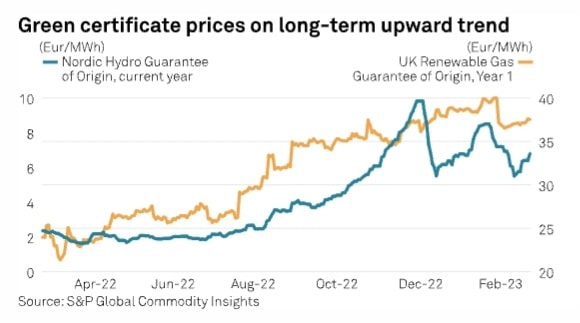
The main debate centers on what is called market-based accounting. It is a system that allows entities to meet emissions targets through contractual agreements or by buying environmental certificates. This system enables the use of renewable energy certificates in Scope 2 reporting.
“There will be some form of additionality requirement for market-based Scope 2, and that will reduce demand for non-additional RECs, and increase interest in RECs with additionality, and power purchase agreements…”
The lecturer further suggested excluding market-based accounting from GHG inventories. Instead, there should be separate reporting of the changes due to company actions, including emissions reductions of buying RECs, if and when RECs do reduce emissions.
But a CEO of a renewable energy software firm counters the suggestion saying that it would be not likely that the Protocol would scrap market-based accounting altogether. He noted that:
“They should implement clear constraints on geographical boundaries. Right now, you can buy certificates from anywhere. In Europe, lots of certificates come from Norway. Electricity has some physical constraints and this needs to be acknowledged…”
Another significant suggestion is to make time-stamped certificates and match supply and demand in close to real time. That means hourly accounting method, which is impossible for all to meet.
Response from the Industry
Certificates organizations fought back against the push not to include RECs and other certificates in reporting carbon reductions. They said tighter rules will restrict support for green technologies.
The RECS energy certificates association stated in a position paper:
“Renewable energy markets based on EACs (Energy Attribute Certificates) clearly support additionality, help to accelerate the energy transition, and cut emissions by displacing fossil fuels. Every purchase of renewable energy attributes provides additionality.”
There is also a strong objection to the proposed changes on the rules on biomethane certificates. Over 50 companies have signed a joint letter of objection, including Shell and TotalEnergies.
They stated in the letter that the changes will undermine the emerging market for biomethane certificates. These certificates fund new anaerobic digestion infrastructure that’s capable of tracking biomethane through a gas grid. Their letter also said that:
“…with effective eligibility criteria, certificates can fund the production of additional green gas — breaking the sector’s current reliance on government support — and drive biogas growth to its full potential.”
The organization seeks suggestions from survey respondents if carbon offsets should apply in calculating Scope 3 emissions.
Industry experts say that if the market-based method extends to cover Scope 3 emissions, or if the guidance on reporting those emissions changes, the VCM would also be affected.
Currently, the VCM is on a significant transition focusing on integrity and quality initiatives.
Quality and transparency standards for carbon credits are critical as the credibility of some forest projects has come under fire in the public’s eyes.
To provide the best experiences, we use technologies like cookies to store and/or access device information. Consenting to these technologies will allow us to process data such as browsing behavior or unique IDs on this site. Not consenting or withdrawing consent, may adversely affect certain features and functions.
Functional
Always active
The technical storage or access is strictly necessary for the legitimate purpose of enabling the use of a specific service explicitly requested by the subscriber or user, or for the sole purpose of carrying out the transmission of a communication over an electronic communications network.
Preferences
The technical storage or access is necessary for the legitimate purpose of storing preferences that are not requested by the subscriber or user.
Statistics
The technical storage or access that is used exclusively for statistical purposes.The technical storage or access that is used exclusively for anonymous statistical purposes. Without a subpoena, voluntary compliance on the part of your Internet Service Provider, or additional records from a third party, information stored or retrieved for this purpose alone cannot usually be used to identify you.
Marketing
The technical storage or access is required to create user profiles to send advertising, or to track the user on a website or across several websites for similar marketing purposes.