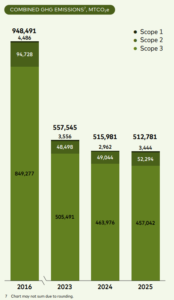
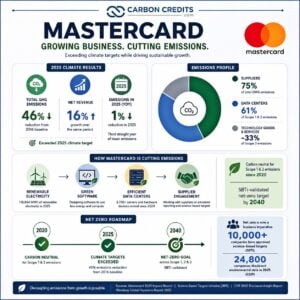
Many companies have set net-zero goals, but fewer have shown that they can grow while cutting emissions. Mastercard is one of them. The company says it exceeded its 2025 climate targets by reducing absolute total GHG emissions by 46% from 2016 levels.
Over the same period, net revenue grew 16%. In 2025 alone, Mastercard cut total emissions by another 1%, marking its third straight year of lower emissions while the business continued to expand.
Mastercard says these results show that companies do not have to choose between growth and climate action.
“Decoupling emissions from growth is possible,” wrote Ellen Jackowski, the company’s Chief Sustainability Officer, and Adam Tenzer, Senior Vice President of Data and Governance. Jackowski also said:
“We certainly recognize that the pathway to net zero is not linear, and — especially as we look at some of the increasing compute power, data centers and AI capabilities that we need to continue to build — we’re watching very carefully and managing how to add the compute capability that we need, while managing to stay very actively on track towards our net-zero goal.”
Net Zero Is Now a Business Issue
Climate targets have become part of mainstream business strategy. The achievement matters because investors are asking tougher questions. They no longer want companies to announce climate goals. They want proof that those goals are producing real results.
The Science Based Targets initiative (SBTi) says more than 10,000 companies now have approved science-based emissions reduction targets or commitments. At the same time, CDP reported that a record 24,800 companies disclosed environmental data in 2025.
Both numbers show that businesses face growing pressure to measure and reduce their climate impact. Mastercard has gone a step further.
Its net-zero target for 2040 has been validated by the SBTi and covers Scope 1, Scope 2, and Scope 3 emissions across its entire value chain. That is important because, for many companies, most emissions come from suppliers rather than their own offices or facilities.
Mastercard’s own emissions profile shows this challenge clearly. According to its latest reporting:
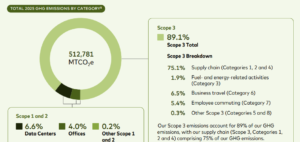
Suppliers account for 75% of total greenhouse gas emissions.
Data centers produce about 61% of Scope 1 and 2 emissions.
Technology goods and services make up about one-third of Scope 3 emissions.
Those numbers show why the company emphasizes technology and supply chains. It’s not just about office buildings or business travel.
Source: Mastercard
Mastercard also continued to make steady progress in 2025. According to its 2025 Report, the company’s total greenhouse gas emissions fell to 512,781 metric tons of CO₂ equivalent (tCO₂e) from 515,981 tCO₂e in 2024, a decline of about 0.6% year over year.
Smarter Technology Is Driving Bigger Emissions Cuts
Mastercard says better technology has become one of its biggest climate tools. The financier developed a patent-pending Sustainability Score that measures the environmental impact of every technology product and infrastructure asset.
The system tracks electricity use, regional carbon intensity, server utilization, and hardware life-cycle data. Engineers use the information to improve efficiency before new systems go live.
The company has also changed how it builds software.
Its Software Engineering Guild, which includes thousands of engineers, now follows guidance from the Green Software Foundation.
The goal is simple: design applications that use less computing power and less electricity. These practices are now part of Mastercard’s internal engineering standards.
The company is also reducing energy use inside its data centers.
Since 2024, it has decommissioned more than 3,700 servers and other hardware devices that were underused.
Hardware retirements in the first quarter of 2026 nearly doubled compared with a year earlier. The company is expanding dynamic power management. This lets servers adjust their electricity use automatically as workloads change.
Renewable electricity remains another key part of the strategy.
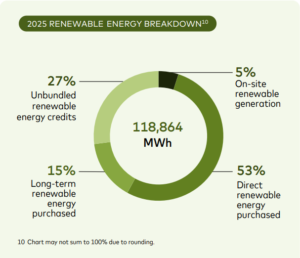
Mastercard has maintained carbon neutrality for Scope 1 and 2 emissions since 2020 through emissions reductions and renewable electricity. In 2025, the company bought or made almost 118,864 megawatt-hours of renewable electricity. This amount was enough to power its global operations and cut back on fossil fuels.
Source: Mastercard
Together, these efforts show how the company is trying to reduce emissions across its operations while keeping its business growing. The next challenge will be cutting the much larger emissions that come from suppliers and the wider technology value chain.
The Hardest Emissions Are Still Ahead
Mastercard has made strong progress, but the company knows its biggest challenge is not inside its own buildings. It is across its supply chain.
According to the company’s latest Impact Report, suppliers produce 75% of Mastercard’s total greenhouse gas emissions. That makes supplier engagement one of the company’s biggest priorities on its path to net zero.
Source: Mastercard
Mastercard now works with suppliers to improve emissions reporting, increase renewable energy use, and set science-based climate targets. The global payments company also partnered with Greenpixie, a specialist in cloud sustainability, to improve carbon reporting across cloud and co-location providers.
The partnership helps Mastercard measure electricity use and emissions more consistently across different vendors. This is becoming increasingly important as businesses move more computing workloads to the cloud.
Why Energy Efficiency Is Becoming the New Climate Advantage
Buying renewable electricity is no longer enough. Companies are now looking for ways to reduce the amount of energy they use in the first place.
Mastercard’s strategy reflects that shift. Instead of focusing only on renewable power, the company is redesigning software, improving server performance, and retiring underused hardware. These steps reduce electricity demand before renewable energy is added.
This approach is gaining support across the technology sector. The Green Software Foundation includes members like Microsoft, Intel, Accenture, and Mastercard. It promotes software design to reduce energy use and carbon emissions.
As AI, cloud computing, and digital payments expand, efficient software is becoming an important part of corporate climate strategies.
Can More Companies Follow Mastercard’s Playbook?
Mastercard’s latest results show that emissions reductions and business growth can happen at the same time.
The company has already exceeded its 2025 climate targets. It has been carbon neutral for Scope 1 and 2 emissions since 2020. It is also on track to meet its Science Based Targets initiative (SBTi) goal of net-zero emissions by 2040.
The outlook for digital payments also remains strong. The Worldpay Global Payments Report 2025 says global spending via digital payments will hit around $33.5 trillion by 2030. This is a rise from $18.7 trillion in 2024.
Digital wallets are expected to account for nearly half of all e-commerce payments and about 40% of in-store transactions by the end of the decade. As cash use drops and online shopping rises, payment networks like Mastercard can grow. It’s crucial to keep cutting emissions while managing more digital transactions.
While the hardest work in cutting emissions still lies ahead, Mastercard offers an important example for other companies.
Its experience shows that climate action is no longer limited to switching to renewable electricity. Better software, smarter engineering, cleaner supply chains, and more efficient data centers are becoming just as important.
As more businesses invest in AI, cloud computing, and digital services, the companies that reduce both emissions and energy use may be best positioned to grow in a low-carbon economy.
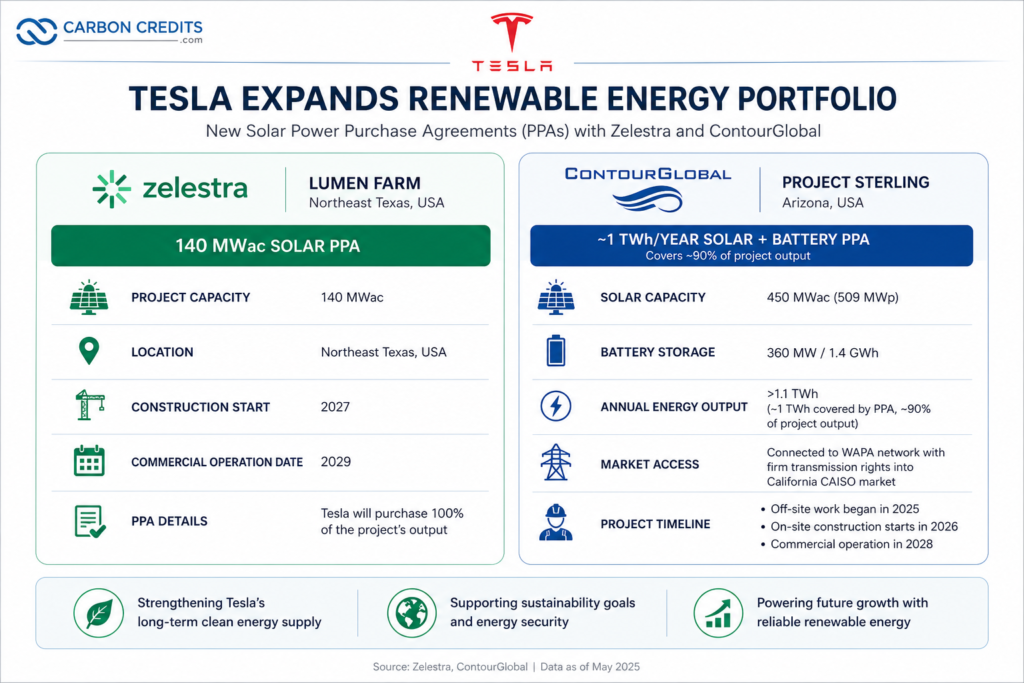
Tesla (TSLA) is strengthening its clean energy strategy with two major power purchase agreements (PPAs) that will secure renewable electricity for years to come. The electric vehicle giant has signed separate deals with renewable energy developers Zelestra and ContourGlobal, adding large-scale solar and battery storage projects to its growing energy portfolio.
Together, the agreements highlight Tesla’s increasing focus on long-term renewable power as electricity demand rises across its manufacturing operations and energy business. The projects also reflect a broader trend as companies lock in clean electricity supplies to support growing demand from AI, battery manufacturing, and data centers.
Data Source: Zelestra and ContourGlobal News Releases
Tesla Expands Partnership With Zelestra
Global renewable energy developer Zelestra has expanded its relationship with Tesla by signing a new power purchase agreement for the entire output of its 140-megawatt alternating current (MWac) Lumen Farm solar project in Texas.
Located in northeast Texas, the project is expected to begin construction in 2027 and reach commercial operation in 2029.
The latest agreement builds on an existing partnership between the two companies. In 2025, Tesla signed a 57 MWac PPA with Zelestra covering electricity from the Brazatortas I, II, and IV solar plants in Spain’s Castilla-La Mancha region.
Phil North, CEO of Zelestra US, said the company is pleased to bring its partnership with Tesla to the United States.
He noted that Zelestra can provide customized renewable energy solutions across multiple countries and aims to bring the Texas project online as quickly as possible to support Tesla’s growing electricity needs.
The agreement also strengthens Zelestra’s expanding presence in the United States, where the company is developing more than 16 gigawatts (GW) of renewable energy projects.
Tesla Signs One of America’s Largest Solar-Plus-Storage PPAs
The companies signed a long-term PPA for Project Sterling, a massive hybrid solar and battery storage facility located in Arizona. The agreement covers approximately 1 terawatt-hour (TWh) of renewable electricity each year, representing about 90% of the project’s annual power output.
According to ContourGlobal, Project Sterling is one of the largest corporate solar-plus-storage PPAs ever signed in the United States from a single project.
The project combines 450 MWac (509 MWp) of solar capacity with a 360 MW/1.4 GWh battery energy storage system.
Once operational, it is expected to generate more than 1.1 TWh of renewable electricity annually.
The battery will store excess daytime solar power and supply electricity during peak demand, improving grid reliability.
Project Sterling is connected to the Western Area Power Administration (WAPA) transmission network and has firm transmission rights into California’s CAISO market, ensuring reliable renewable power for Tesla.
ContourGlobal acquired the project in late 2024 and redesigned it to meet Tesla’s energy needs. Off-site construction and equipment procurement began in 2025, with on-site construction planned for 2026 and commercial operations expected in 2028.
Battery Storage Is Becoming a Bigger Growth Driver
The PPAs also align with Tesla’s rapidly expanding energy business.
While Tesla remains best known for electric vehicles, its energy storage division has become one of its fastest-growing businesses.
During its latest quarter, Tesla deployed a record 13.5 GWh of battery storage systems, driven largely by demand for its Megapack products.
Megapacks allow utilities and businesses to store electricity generated by solar and wind projects. The systems improve grid stability, reduce dependence on fossil fuel generation, and help renewable energy operate around the clock.
As more companies seek reliable clean electricity, battery storage is becoming an essential part of new renewable energy projects.
Why Long-Term Renewable Contracts Matter
Power purchase agreements have become a preferred strategy for large corporations looking to secure stable electricity prices while reducing carbon emissions.
Unlike buying electricity on the open market, long-term PPAs provide predictable energy costs over many years. They also encourage developers to finance and build new renewable energy projects.
For Tesla, these agreements support multiple business priorities.
They provide renewable electricity for manufacturing facilities and energy operations, reduce exposure to fluctuating electricity prices, and strengthen the company’s long-term sustainability strategy.
Can Clean Energy Investments Lift TSLA Stock?
Market analysts also view the deals as a positive development for Tesla’s investment outlook.
Although the agreements are unlikely to have a significant short-term impact on earnings, they reinforce Tesla’s expanding energy business and reduce long-term operational risks. The PPAs also support the company’s environmental commitments while providing reliable electricity for future growth.
Nonetheless, Tesla’s stock has declined nearly 30% year-to-date amid concerns that its significant investments in new technologies could weigh on near-term profitability.
Source: Yahoo Finance
Rising Data Center Demand Is Reshaping the Power Market
Tesla’s latest renewable energy deals come at a time when electricity demand is rising rapidly, especially from AI infrastructure and data centers.
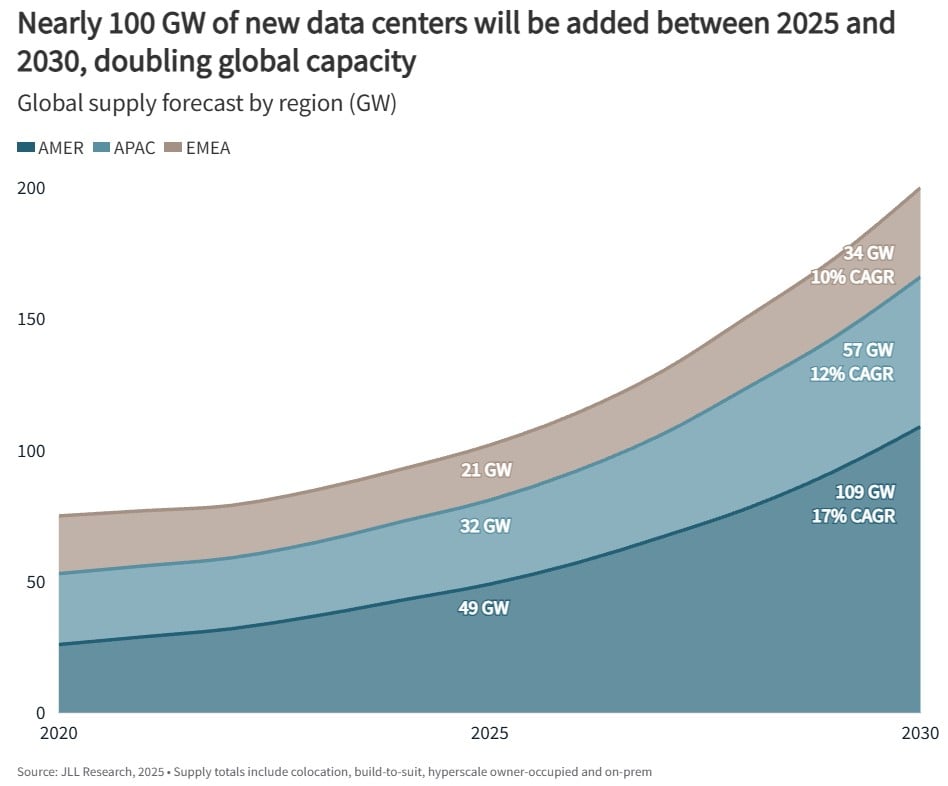
Industry forecasts estimate that global data center electricity demand could require as much as 219 GW of additional generating capacity over the next five years—enough to power roughly 180 million U.S. homes.
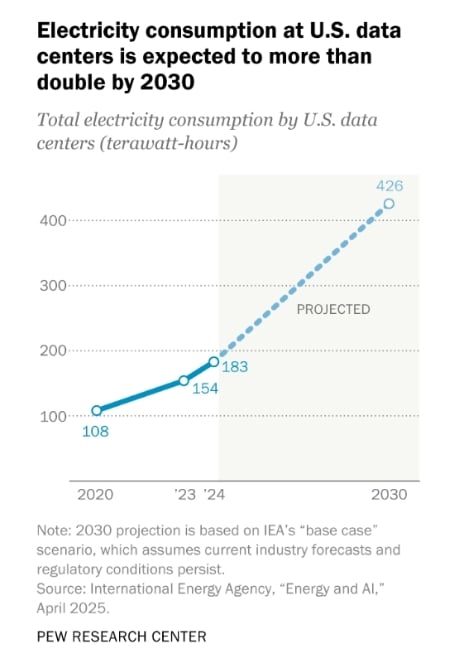
The U.S. Department of Energy projects that data centers could account for 12% of total U.S. electricity consumption by 2030.
In scenarios with strong clean energy policies, renewable sources such as solar and wind could supply 60% to 90% of data center electricity by 2035.
This growing demand has pushed major technology companies, including Meta, Google, and Microsoft, to sign long-term renewable energy agreements that secure clean electricity while protecting against future energy price increases.
Solar Leads America’s Clean Energy Expansion
The broader U.S. renewable energy market continues to grow at record speed.
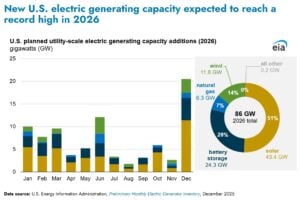
According to the U.S. Energy Information Administration (EIA), developers plan to add 86 GW of new utility-scale generating capacity in 2026—the largest annual increase ever recorded if completed as planned.
Solar will account for 43.4 GW, or 51%, of all planned capacity additions. Battery storage will contribute 28%, while wind projects will make up another 14%.
Texas remains the country’s largest solar market and is expected to account for about 40% of all new utility-scale solar capacity scheduled for completion in 2026. Arizona and California also continue to attract significant renewable energy investment.
One of the largest planned projects is the 837 MW Tehuacana Creek 1 Solar and Battery Energy Storage System in Texas, which will also include 418 MW of battery storage.
Clean Energy Partnerships Continue to Grow
Tesla’s agreements with Zelestra and ContourGlobal demonstrate how corporate renewable energy procurement is evolving beyond standalone solar projects.
Developers are increasingly pairing large-scale solar with battery storage to deliver more reliable electricity throughout the day. At the same time, long-term PPAs are helping companies secure affordable clean power while supporting new renewable energy investment.
As electricity demand accelerates from AI, manufacturing, and electrification, agreements like these are likely to become an even more important part of corporate energy strategies. For Tesla, they strengthen both its expanding energy business and its long-term commitment to operating on renewable power.
Artificial intelligence (AI) is driving one of the biggest investment booms in technology history. However, it is also raising new questions about how that growth is being funded.
According to Bloomberg, Nvidia (NVDA Stock) has become part of an AI investment network worth up to $750 billion. The chipmaker has invested directly or indirectly in companies building AI data centers, cloud computing, and large language models. Many of those companies are also Nvidia’s biggest customers, buying billions of dollars’ worth of AI chips to expand their infrastructure.
The strategy has helped speed up AI development. But some analysts are beginning to ask whether the industry is creating a cycle in which companies finance one another’s growth. If AI demand slows, that model could face new pressure.
The debate comes as Nvidia remains at the center of the global AI boom. Demand for its graphics processing units (GPUs) continues to outpace supply, while governments and technology companies invest hundreds of billions of dollars to build the next generation of AI infrastructure.
Nvidia Is Investing Across the AI Ecosystem
Nvidia is no longer just selling chips. The company has become an active investor in the businesses building AI infrastructure. It has backed companies such as CoreWeave, Crusoe, Nebius, and Applied Digital. These firms build or operate AI data centers that rely heavily on Nvidia’s GPUs.
The company has also supported financing linked to OpenAI, whose rapid growth has fueled demand for advanced AI computing.
This strategy benefits both sides.
Infrastructure companies gain access to funding needed to build expensive AI facilities. Nvidia, in turn, creates more demand for its own hardware. The approach has helped expand AI capacity much faster than many analysts expected.
However, some investors are becoming more cautious. They worry that if AI companies rely too much on funding from partners in their ecosystem, financial risks could spread faster if investment slows down.
So far, demand remains strong.
Big Tech’s $330 Billion AI Spending Wave
The scale of AI investment is unlike anything the technology sector has seen before. The world’s largest technology companies continue to increase spending on AI infrastructure.
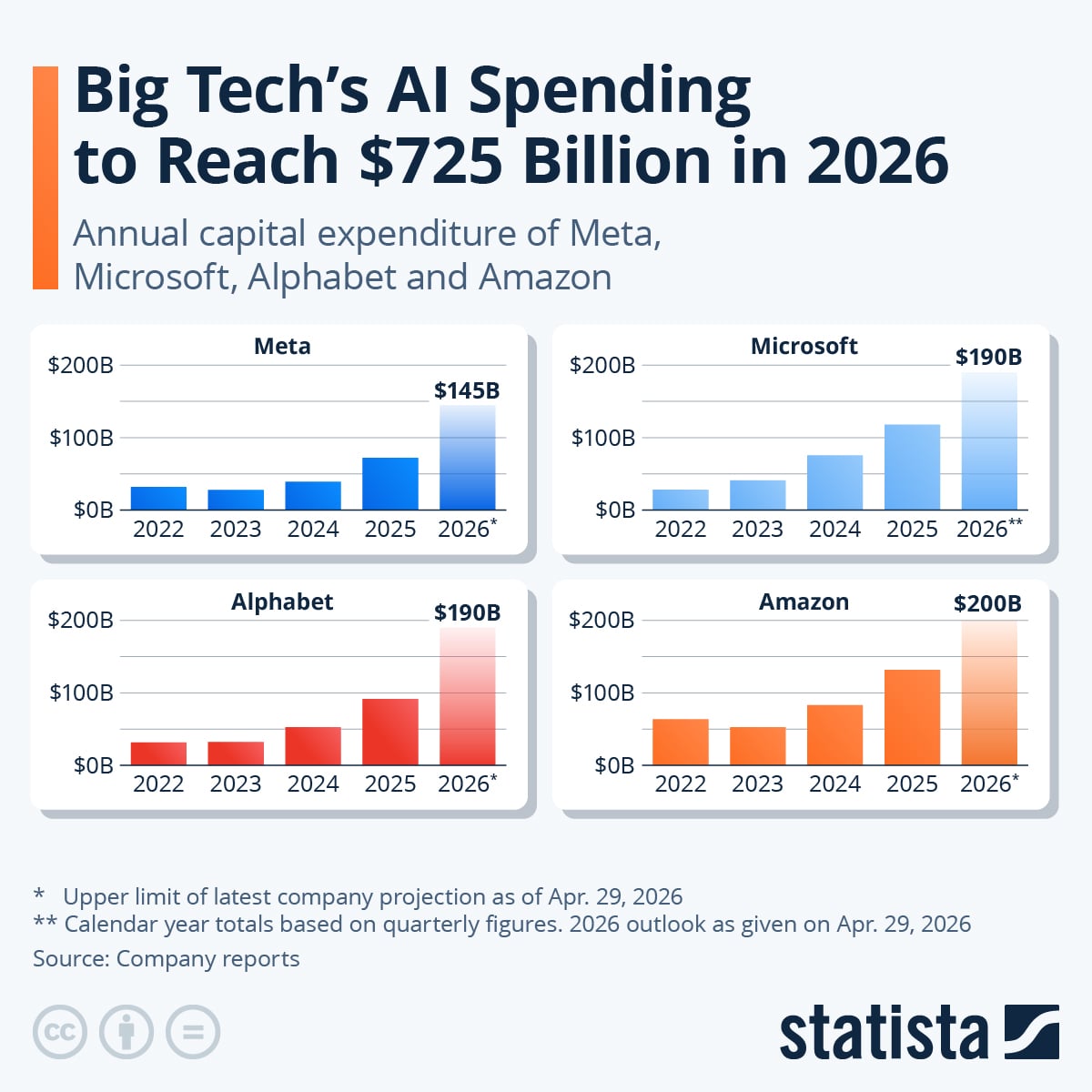
Microsoft expects to spend more than $190 billion on AI-enabled data centers during its 2026 fiscal year. Alphabet also plans about $190 billion in capital spending this year, much of it for AI infrastructure.
Meta has increased its 2026 capital spending forecast to $145 billion. Meanwhile, Amazon plans to spend about $200 billion this year, mainly on AI and cloud services.
Together, these four companies alone could invest well over $725 billion in AI infrastructure during 2026.
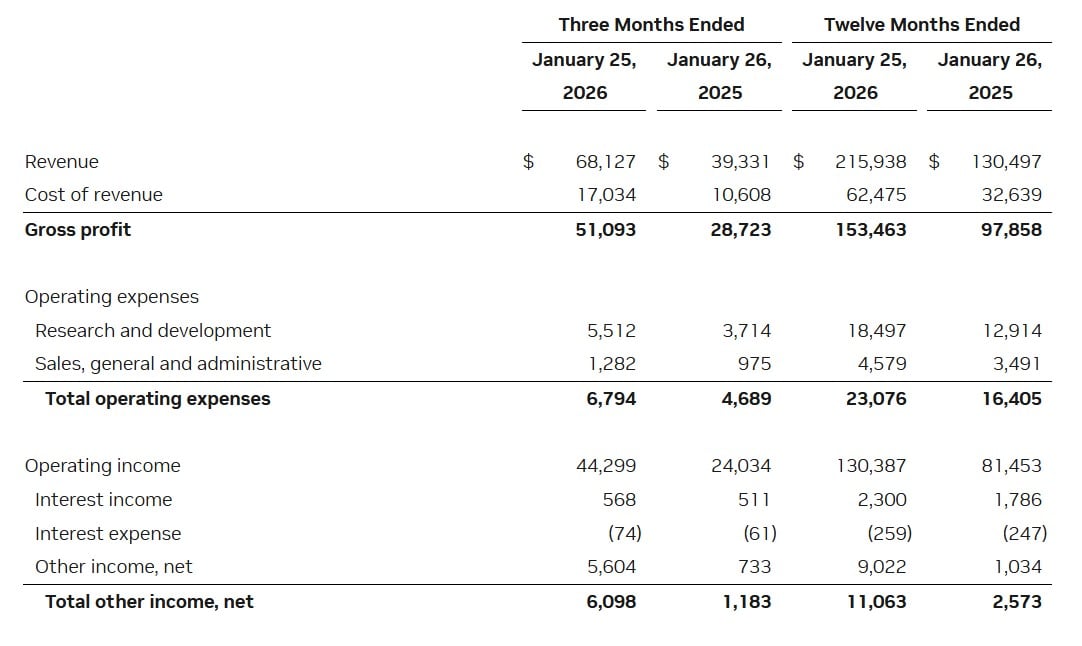
Nvidia remains one of the biggest beneficiaries. For fiscal year 2026, the company reported $215.9 billion in revenue, up 65% from the previous year. Data center revenue reached $193.7 billion, accounting for over 89% of total sales.
The rapid growth reflects soaring demand for Nvidia’s AI chips, especially its latest Blackwell platform. Still, industry forecasts suggest the investment wave is far from over.
The International Data Corporation (IDC) predicts that global spending on AI will top $630 billion by 2028. McKinsey & Company adds that AI-ready data centers may need hundreds of billions in extra investment over the next five years.
These numbers explain why Nvidia is investing across the AI ecosystem instead of simply supplying chips.
The company sees AI becoming one of the world’s largest technology markets. But as investment keeps accelerating, investors are also watching more closely to see whether spending, financing, and future revenues remain in balance.
Nvidia Stock Reflects Both Excitement and Caution
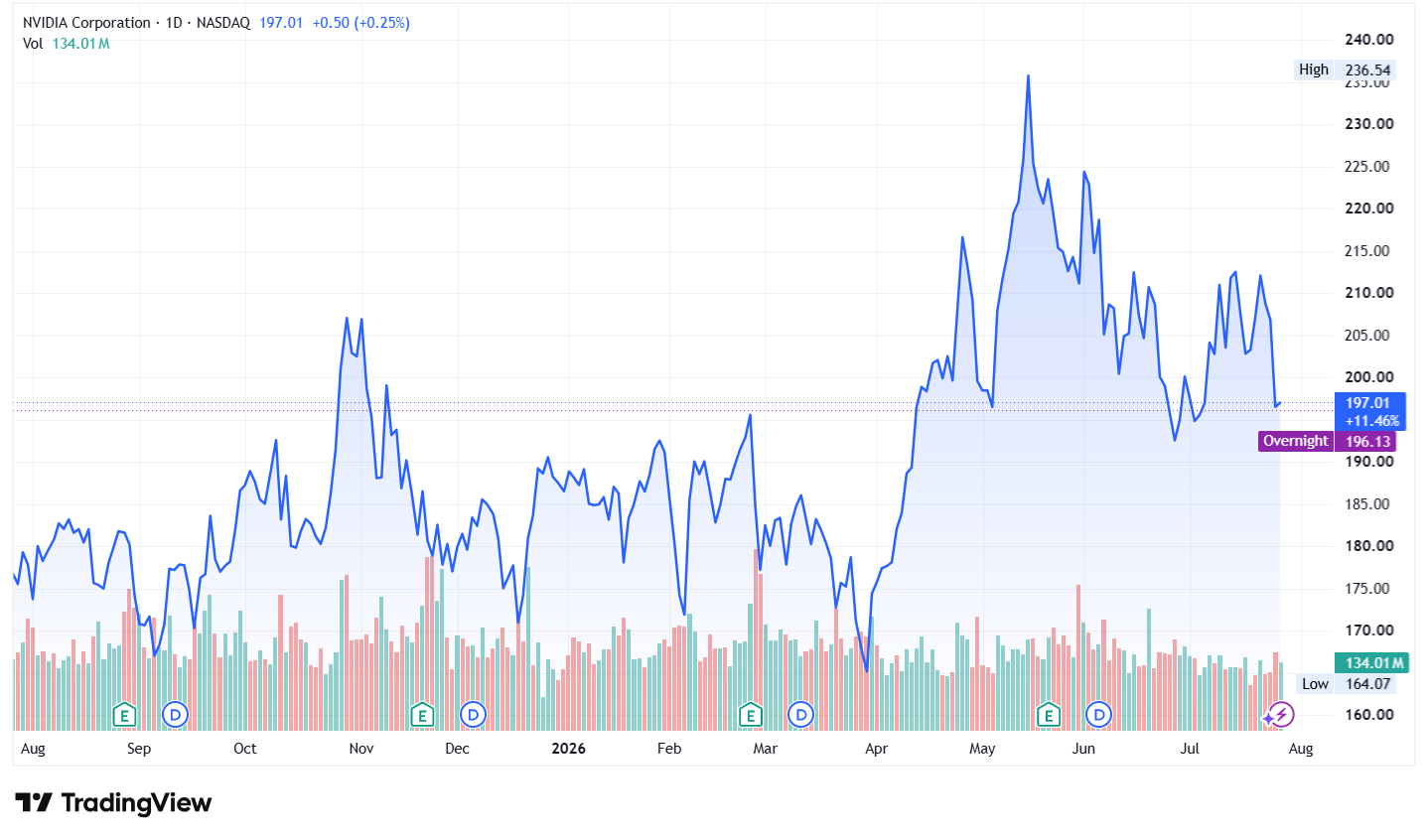
Nvidia’s shares have been highly volatile as investors weigh the huge opportunities in AI against the risks of heavy spending. Following the Bloomberg report on Nvidia’s AI investment network, the stock faced pressure.
Some investors worried that the industry’s fast growth might create too much financial reliance among AI companies. Recent concerns about “circular financing” also contributed to a broader sell-off in AI and semiconductor stocks.
Even so, Nvidia remains one of the market’s biggest AI winners. Even with recent ups and downs, analysts still expect strong growth. Hyperscalers and businesses are investing a lot in AI infrastructure.
AI’s Biggest Challenge May Be Energy, Not Chips
Money is only part of the equation. AI also needs enormous amounts of electricity.
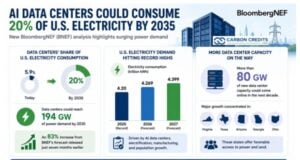
According to BloombergNEF, data centers could account for up to 20% of U.S. electricity consumption by 2035, up from about 4.4% in 2023. Much of that increase will come from AI computing, which requires far more power than traditional cloud services.
The International Energy Agency (IEA) also expects electricity demand from data centers worldwide to more than double by 2030. AI is expected to become the largest driver of that growth.
Meeting this demand will require billions of dollars in new power plants, transmission lines, battery storage, and clean energy projects. Technology companies are signing long-term deals for nuclear power, solar, wind, and battery storage. This helps them secure reliable electricity for future AI data centers.
Can Nvidia Grow AI Without Growing Its Carbon Footprint?
As AI grows, the world’s most valuable company faces increasing pressure to improve its own environmental performance.
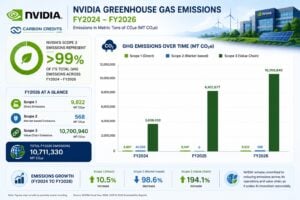
Nvidia’s Fiscal Year 2026 Sustainability Report shows its market-based Scope 2 emissions edged up to 568 metric tons of CO2 equivalent. While this is an increase from the 0 metric tons reported in FY2025, Nvidia continues to keep its direct operational power footprint low by matching 100% of its global electricity use with clean energy sources.
Scope 3 emissions—those from the supply chain and product lifecycle—climbed to 10.7 million metric tons of CO₂ equivalent. This rise shows the fast growth in manufacturing and customer demand.
The company is also improving the efficiency of its products.
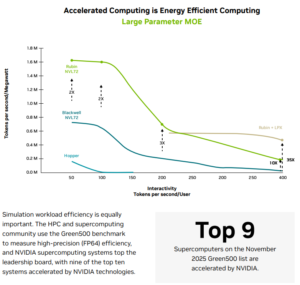
Nvidia claims its new Blackwell AI platform offers much better AI performance. It also uses less energy for each computation compared to earlier versions. Improving energy efficiency is crucial now. Electricity costs are among the largest expenses for AI data centers.
Source: Nvidia
These efforts support Nvidia’s broader sustainability strategy while helping customers lower the energy needed to train and run advanced AI models.
The Next Test for AI Is Long-Term Value
The debate over Nvidia’s investment strategy continues to heat up. Supporters argue that building AI infrastructure now will create the foundation for decades of innovation.
Better AI could improve healthcare, manufacturing, transportation, scientific research, and energy management. Many analysts also believe demand for AI computing will remain strong as businesses continue adopting generative AI.
Critics are asking a different question: Can the industry keep investing at today’s pace without creating too much financial risk?
For Nvidia, the stakes are especially high. The company leads in AI hardware. Now, it also shapes the AI ecosystem through investments and technology.
That strategy could strengthen Nvidia’s leadership for years to come. Yet, it also means the company’s future is tied not only to selling chips, but to the long-term success of the entire AI economy.
Verra, the world’s largest carbon crediting program, has launched a next-generation digital registry in partnership with S&P Global Commodity Insights. The new platform aims to speed up carbon credit transactions and also makes them clearer and easier to manage. This is important as demand for high-quality credits continues to increase.
The upgrade is more than a software refresh. It reflects a broader shift across the voluntary carbon market (VCM), where stronger digital infrastructure is becoming just as important as higher-quality carbon credits.
Governments are tightening climate rules. Companies now face more scrutiny over their net-zero claims. And thus, registries are evolving into a digital backbone. They support trust, transparency, and market growth.
A New, Smarter Platform for a Growing Carbon Market
Every carbon credit has a digital record. Registries track where credits come from, who owns them, when they are traded, and when they are retired to prevent double counting. Without reliable registries, carbon markets cannot function.
Verra’s new registry replaces a platform that has supported the voluntary carbon market for more than a decade. Built with S&P Global Commodity Insights, the upgraded system introduces a modern cloud-based architecture, stronger cybersecurity, and improved data management.
It also provides application programming interfaces (APIs). This lets companies, exchanges, registries, and other market players connect directly. They don’t have to rely on manual processes.
According to Verra, users will benefit from:
Faster account and project management,
Improved transaction processing,
Better data quality and security,
Easier integration with third-party platforms, and
Greater flexibility for future market growth.
Verra President Mandy Rambharos said the registry aims to boost efficiency. It also helps project developers, investors, governments, and businesses join carbon markets more easily. She stated:
“We built this registry with S&P Global Energy as a foundation that we can keep expanding on. Over the next several phases, we will see things like transaction-ready API connectivity and deeper integration with exchanges, brokers, and marketplaces, so credits can move with the same speed and reliability the rest of this market now expects.”
The video below shows the Verra Registry in transition and how one can search for and access project information.
The upgrade comes at a time when carbon markets are becoming larger and more complex. More projects, buyers, brokers, and exchanges are entering the market, increasing the need for secure and reliable digital infrastructure.
The World’s Largest Carbon Registry Gets a Major Upgrade
The registry matters because of Verra’s scale.
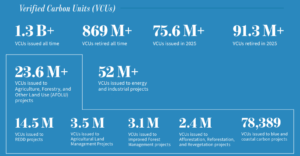
According to Verra, its Verified Carbon Standard (VCS) Program has issued more than 1.3 billion verified carbon credits (VCUs) since it was launched. It has issued more than 75.6 million units and retired over 91.3 million VCUs in 2025.
Source: Verra
The program backs thousands of registered projects in over 130 countries. It covers activities like forest conservation, renewable energy, methane capture, blue carbon, biochar, and engineered carbon removal.
That makes VCS the world’s largest voluntary greenhouse gas crediting program.
Each transaction recorded on the registry represents verified climate action. Credits are issued only after projects complete independent validation and verification. Once a company uses a credit to offset emissions, the registry permanently retires it so it cannot be used again.
Source: Verra
As the market grows, those records become increasingly valuable.
The Integrity Council for the Voluntary Carbon Market (ICVCM) believes demand for high-quality carbon credits will rise sharply in the coming decades. This growth is driven by companies aiming for net-zero targets.
Buyers now want more transparency and better safeguards. This demand comes after years of doubts about credit quality. Registries have become central to meeting these expectations.
Why Digital Registries Are Becoming the New Competitive Edge
Carbon credits are no longer traded only through private contracts. Today’s market includes exchanges, brokers, institutional investors, compliance buyers, and corporate sustainability teams. They all depend on accurate, real-time information.
Modern registries help make that possible.
Digital platforms automate transactions, improve recordkeeping, and cut down on admin tasks. This means no more manual updates or separate databases. They also make it easier for market participants to verify ownership and confirm that credits have not been counted twice.
These improvements are becoming increasingly important as carbon markets continue to mature.
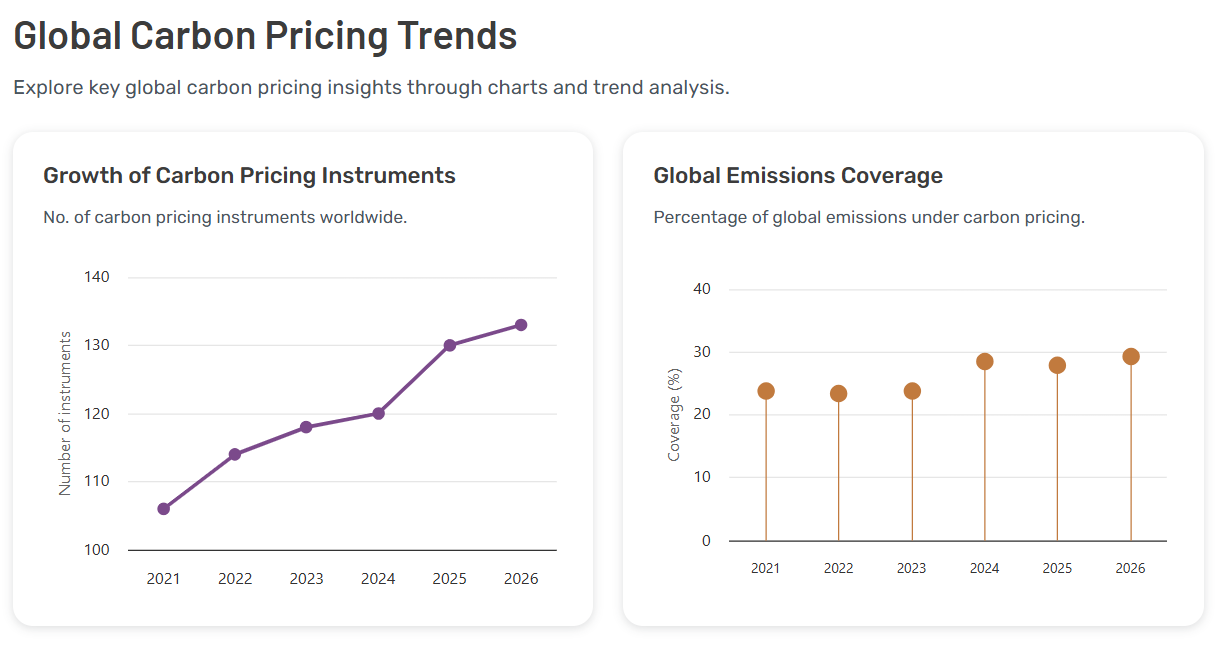
The World Bank’s 2026 report on carbon pricing reveals that there are 87 active carbon pricing tools globally. This total includes emissions trading systems and carbon taxes. Together, they cover about 29% of global greenhouse gas emissions and generated around $107 billion in government revenue in 2025.
While Verra operates in the voluntary market rather than compliance markets, both sectors are moving in the same direction. Buyers now want carbon markets to match the transparency, security, and efficiency of other financial markets.
That shift is turning digital infrastructure into one of the industry’s most important competitive advantages.
Carbon Markets Are Going Digital—and Fast
Verra’s registry upgrade reflects a bigger change happening across the carbon market.
Companies no longer want only high-quality carbon credits; they also want a market that is easy to use, transparent, and secure. That is becoming more important as carbon markets attract more businesses, investors, and governments.
The market itself is also changing.
The ICVCM continues to roll out its Core Carbon Principles (CCPs), which set global standards for high-quality carbon credits. Recent market data show that 13% to 15% of new carbon credit issuances now carry the CCP label.
Since mid-2024, those credits have traded at a 19% price premium over the broader voluntary market, based on the MSCI Global CCP Carbon Credit Price Index.
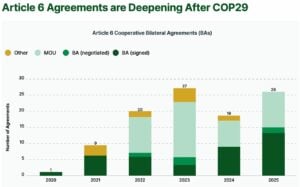
Governments are also creating new opportunities. Article 6 of the Paris Agreement lets countries trade carbon credits worldwide. Meanwhile, many businesses are getting ready for tougher climate disclosure rules. Together, these changes are bringing more participants into carbon markets and increasing the need for reliable digital systems.
Source: AlliedOffsets
Other registries are also modernizing their platforms. Gold Standard, American Carbon Registry (ACR), and Climate Action Reserve (CAR) are working to enhance their digital services and make data more transparent.
Competition is no longer only about developing better carbon credit methodologies, but is also about building better market infrastructure.
Technology Will Help Unlock More Climate Finance
A modern registry can do more than speed up transactions. It can lower costs, reduce paperwork, and make carbon markets easier to access. That is important because the world needs much more private investment to meet climate goals.
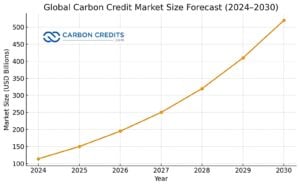
MSCI estimates the global voluntary carbon market, worth about $1.4 billion in 2024, could expand between $7 billion and $35 billion by 2030. The actual value depends on policy support and demand for high-integrity credits. The total market size, both voluntary and compliance, could grow even more.
As trading volumes grow, digital registries and trading platforms will be very important to support faster settlement, transparent ownership records, and secure transactions.
Verra’s new registry is part of that effort.
As carbon markets continue to mature, technology will play a bigger role in building trust and attracting investment. High-quality credits will remain essential, but strong digital infrastructure will also matter. Verra and S&P Global are betting that better technology will help build a larger, more transparent, and more trusted carbon market for the years ahead.
The United States is increasing support for its oil and natural gas industry. The U.S. Department of Energy (DOE) has announced up to $65.5 million in federal funding. This funding aims to improve production, reduce waste, and modernize energy infrastructure.
This investment comes as the U.S. remains the world’s largest producer of oil and liquefied natural gas (LNG).
The U.S. Energy Information Administration (EIA) predicts record power usage by 2026, driven by AI data centers and manufacturing. Natural gas provides about 40% of U.S. electricity, while oil fuels most transportation. To meet growing energy needs, enhancing oil and gas infrastructure is essential for affordable and reliable energy.
DOE Targets Efficiency Across the Oil and Gas Value Chain
This announcement follows a $150 million DOE funding opportunity earlier this year.
That program focused on improving oil recovery from unconventional reservoirs and advancing hydraulic fracturing technologies. Together, these funding programs show ongoing federal support for enhancing domestic fossil fuel production.
DOE Under Secretary Kyle Haustveit noted that this investment reflects the Trump administration’s commitment to strengthening America’s energy sector.
And the new funding will focus on three main areas:
Turning Stranded Resources into Valuable Products
Many wells produce natural gas that can’t be transported because of limited pipeline capacity or impurities. Sometimes, producers flare or vent this gas instead of selling it.
The DOE wants to fund technologies that convert these stranded resources into higher-value products that are easier to market. Projects may include advanced catalysts and improved on-site gas processing technologies.
Projects will develop advanced materials, coatings, and pipelines to reduce failures, prevent losses, and strengthen domestic manufacturing. These improvements can boost safety and lower maintenance costs across facilities.
Using Artificial Intelligence and Digital Technologies
The DOE also seeks to speed up digitalization in the oil and gas sectors.
The agency invites proposals that use artificial intelligence, digital twins, and continuous monitoring systems to optimize production and infrastructure. Field testing will help companies validate new technologies in real conditions before broader use.
U.S. Natural Gas Production Continues to Break Records
The DOE announcement comes as the U.S. remains the world’s largest natural gas producer.
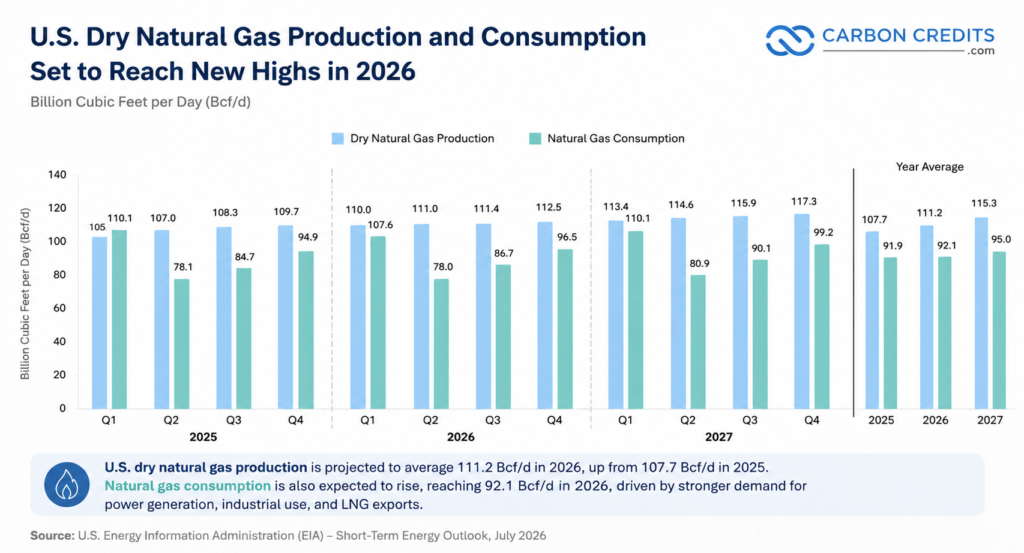
According to the EIA, dry natural gas production is expected to average 111 billion cubic feet per day (Bcf/d) in 2026, surpassing last year’s record.
Domestic consumption is projected to stay high. LNG exports are expected to reach around 17.2 Bcf/d, up from 15.1 Bcf/d in 2025.
Source: EIA
Growing LNG export capacity supports global energy security. In April 2026, the U.S. exported 17.9 Bcf/d of LNG, contributing to total natural gas exports of 807.5 Bcf for the month. Export value is further set to hit 18.6 bcfd in 2027.
However, international markets remain volatile.
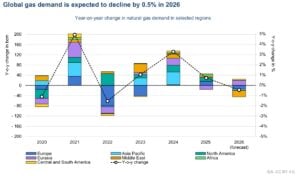
The International Energy Agency (IEA) recently noted that global gas demand might decline slightly in 2026 due to higher prices and supply disruptions. Geopolitical tensions also add uncertainty for LNG markets.
For U.S. producers, these conditions present both challenges and opportunities. Higher exports can boost revenues, but fluctuating global prices make efficiency vital.
Oil Markets Remain Under Pressure
The oil market is also experiencing significant volatility.
According to the IEA’s July Oil Market Report, global oil demand is recovering after a slowdown earlier this year. Demand is expected to strengthen in the second half of 2026 as transportation fuel use improves. Meanwhile, global oil supply has rebounded after earlier disruptions in the Middle East.
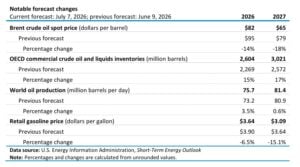
The EIA expects crude oil inventories to gradually build, putting downward pressure on prices. Its latest forecast predicts Brent crude prices averaging around $65 per barrel in 2027.
Source: EIA
The U.S. remains the world’s largest crude oil producer, mainly due to shale production from the Permian Basin. Even with price fluctuations, producers are investing in technologies that improve recovery rates and lower costs.
Why the New Funding Matters?
Rather than just promoting more drilling, the DOE’s new funding focuses on maximizing energy from existing assets.
Recovering stranded natural gas, minimizing equipment failures, and improving efficiency can boost production while lowering costs. Many of these technologies also help reduce emissions by cutting flaring and leaks.
Digital technologies could play a bigger role. AI monitoring systems can detect failures early. Digital twins allow operators to simulate scenarios and optimize performance.
America’s oil and natural gas industry remains vital to the country’s energy system, even with rapid growth in renewables.
The DOE’s $65.5 million funding shows a plan to boost existing infrastructure. This investment will improve operations and technologies. The goal is to get more value from current resources. The department wants to enhance U.S. energy security and support economic growth.
As domestic production reaches new highs and LNG exports rise, innovations that boost efficiency and cut waste may be just as important as finding new oil and gas resources.
BMW is ramping up its electric vehicle (EV) business in the U.S. with a big investment in battery manufacturing. In December 2026, the company will start mass production of high-voltage battery packs for the all-electric BMW iX5 at its new Plant Woodruff in South Carolina. This project supports BMW’s growing EV lineup and strengthens local battery production and supply chains.
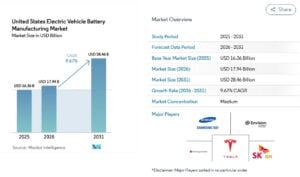
This investment comes as the U.S. battery industry grows, even with slower EV sales. According to Mordor Intelligence, the U.S. electric vehicle battery manufacturing market is valued at $17.94 billion in 2026.
It is set to rise to $28.46 billion by 2031, showing a 9.67% compound annual growth rate (CAGR).
Source: Modor Intelligence
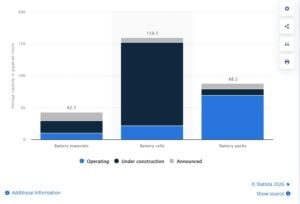
Data highlights the key role of battery production. Statista reports that battery cells and packs represented the largest operating capacity in the U.S. energy storage supply chain as of April 2026.
Battery storage supply chain manufacturing capacity in the United States as of April 2026, by status and component
BMW’s investment shows a trend among automakers to produce batteries close to assembly plants. Local production shortens supply chains, cuts transport costs, boosts efficiency, and supports regional manufacturing.
Plant Woodruff Anchors BMW’s U.S. EV Strategy
Plant Woodruff will make BMW’s sixth-generation (Gen6) high-voltage batteries for the fully electric iX5. Its location near BMW’s Spartanburg plant allows easy transport of battery packs for vehicle assembly.
Raymond Wittman, BMW AG Board Member for Production, said that Plant Woodruff is vital for expanding electromobility in the U.S. He noted that the Gen6 battery is a major technological advancement, using advanced production methods, artificial intelligence, and skilled workers for high-quality manufacturing.
The close link between battery production and vehicle assembly helps BMW improve efficiency and strengthen its presence in South Carolina.
AI Drives Smarter Battery Manufacturing
BMW designed Plant Woodruff as a smart factory. Artificial intelligence monitors production stages in real time, helping engineers maintain quality and boost efficiency.
Over 300 employees work with 250 robots during battery assembly. AI assistants analyze production data, enabling BMW to fix issues quickly and aim for zero-defect manufacturing.
Before production starts, engineers use digital twins to simulate manufacturing lines. This helps optimize layouts and spot potential bottlenecks.
Employees also undergo virtual reality (VR) training, mirroring the production floor. Workers practice procedures and equipment operation in a virtual setting, boosting safety and confidence before they hit the real assembly line.
Rapid Construction Supports Faster EV Growth
The company finished the project in just three years. Construction began in 2023, equipment installation started in 2024, and the plant produced its first test batteries in 2025. Commercial production will begin in December 2026.
Rich Everly, Vice President of Production at Plant Woodruff, said the project shows BMW’s ability to quickly scale new battery technologies by using experienced teams and expertise from its global network.
Gen6 Battery Technology Brings More Recycling and Lower Emissions
BMW is also focused on reducing emissions from battery manufacturing. The Gen6 batteries include significantly more recycled cobalt, lithium, and nickel. The company uses renewable electricity to produce battery cells and materials.
These efforts cut carbon dioxide equivalent (CO₂e) emissions by about 28% per watt-hour compared to BMW’s previous Gen5 battery.
Plant Woodruff further lowers emissions by using hydrogen-powered trucks instead of diesel for material transport.
Beyond South Carolina, the company is building battery plants near vehicle factories in Germany, China, Mexico, and Hungary under its “local for local” strategy. This approach reduces transport needs and strengthens local supply chains.
Why Battery Manufacturing Still Matters for Climate
While EVs lower emissions during use, making lithium-ion batteries poses a significant environmental challenge.
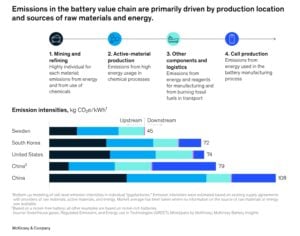
Battery production requires large amounts of lithium, nickel, cobalt, graphite, and other minerals. Mining and processing these materials consume significant energy, mainly from fossil fuels. Battery manufacturing can produce substantial greenhouse gas emissions before an EV hits the road.
Research from MIT shows the scale of this issue. Producing an 80-kWh lithium-ion battery, like the one in a Tesla Model 3, can emit between 2.5 and 16 metric tons of CO₂, depending on the energy source. Making a new EV can generate about 80% more emissions than building a gasoline vehicle.
MIT found that producing battery materials requires temperatures between 800°C and 1,000°C, making it energy-intensive. They concluded that sourcing minerals like lithium and nickel can impact a battery’s carbon footprint even more than where it’s assembled.
The same report also highlighted that EVs still offer significant climate benefits over their lifetime. Cleaner electricity, lower-carbon raw materials, and better battery recycling are key to cutting manufacturing emissions.
McKinsey Highlights the Biggest Source of EV Emissions
A report from McKinsey & Company supports these findings. The firm estimates that lithium-ion batteries account for 40% to 60% of an EV’s total production emissions, making them the largest source of embedded carbon.
McKinsey notes that mining and refining lithium, cobalt, nickel, manganese, and graphite create significant greenhouse gas emissions. Battery chemistry, supplier choices, and transportation also affect the carbon footprint. However, factories that use renewable energy can greatly lower battery-related emissions compared to those that rely on fossil fuels.
However, BMW’s Gen6 battery program reflects these recommendations by increasing recycled materials, using more renewable energy, and cutting fossil fuel use during manufacturing.
The Bottom Line
BMW’s new Plant Woodruff is not just an expansion of battery production. It shows how automakers blend artificial intelligence, advanced manufacturing, and cleaner methods to strengthen domestic EV supply chains.
Research from MIT and McKinsey shows that cutting emissions from battery manufacturing is a big challenge. Cleaner electricity, responsible sourcing of minerals, and better battery recycling are key as the industry grows.
As battery demand increases, investments like BMW’s can help build a stronger U.S. battery industry while supporting the shift to lower-carbon transportation.
Australia is closing one of its best-known carbon offset programs. The federal government has announced that it will shut down Climate Active, the voluntary certification program that allowed businesses, products, buildings, and events to claim they were carbon neutral.
The move follows years of criticism over the program’s credibility. It also comes as governments, investors, and regulators demand stronger proof behind corporate climate claims.
The decision marks a major change for Australia’s voluntary carbon market, but it does not mean carbon offsets are disappearing. Instead, it shows how the market is shifting toward higher standards and greater transparency.
The End of Australia’s Carbon Neutral Label
Climate Active launched in 2019, replacing the National Carbon Offset Standard (NCOS). The Department of Climate Change, Energy, the Environment and Water (DCCEEW) managed the program.
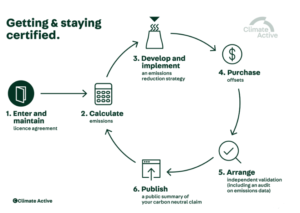
To earn certification, organizations had to measure their greenhouse gas emissions, reduce them where possible, and offset the rest using approved carbon credits. These included Australian Carbon Credit Units (ACCUs) and some international credits.
Over the years, Climate Active certified more than:
620 businesses and organizations,
More than 1,000 products and services,
More than 100 buildings and precincts, and
Dozens of events and public institutions.
The program attracted companies from many industries, including finance, retail, property, tourism, manufacturing, and professional services.
Source: Climate Active
The government has now stopped accepting new applications. Existing certifications will stay in place during a transition period while officials decide what comes next. Climate Active wrote:
“The Australian Government has introduced a comprehensive suite of energy and climate policies that are helping businesses reduce their emissions, guided by a legislated target of net zero emissions by 2050. Climate Active helped fill a gap in the domestic market. But there is now less need for government certification to incentivise voluntary climate action.”
The government hasn’t announced a replacement program yet. However, future policy will focus more on cutting emissions directly and improving climate reporting.
Why the Program Faced Growing Criticism
Climate Active helped many companies begin measuring and managing their emissions. But over time, critics argued that it relied too heavily on carbon offsets.
One of the strongest critics has been the Climate Council, which welcomed the decision to close the program. The group argued that some companies were able to promote themselves as “carbon neutral” even while their operations still produced large amounts of emissions.
Climate Council Senior Advisor Ben McLeod remarked:
“…Climate Active gave the green tick of approval to everything from polluting gas corporations to petrol at the bowser. It was always a distraction from the real job: cutting climate pollution at the source. With Climate Active headed to the scrap heap, it’s time for the Albanese Government to strengthen the Safeguard Mechanism and end the free ride for Australia’s biggest polluters.”
Around the world, regulators are taking a closer look at climate claims. In Australia, both the Australian Securities and Investments Commission (ASIC) and the Australian Competition and Consumer Commission (ACCC) have increased actions against greenwashing.
Companies need to clearly explain how they measure emissions. They should also detail how they use offsets and support their net-zero targets.
The end of Climate Active does not mean Australia’s carbon market is slowing down. Instead, it marks a shift from voluntary carbon-neutral claims to a market driven more by regulation, compliance, and higher-quality carbon credits.
The biggest force behind that change is Australia’s Safeguard Mechanism, the country’s main industrial carbon policy. It covers about 220 of Australia’s largest industrial facilities, including mines, oil and gas operations, manufacturers, and heavy industries. Together, these facilities produce nearly 30% of Australia’s greenhouse gas emissions.
Source: Clean Energy Regulator
Under the policy, emissions limits become stricter each year. Companies that exceed their limits must either reduce emissions or buy Australian Carbon Credit Units to comply.
This has created a much stronger source of demand for carbon credits than voluntary carbon-neutral programs alone.
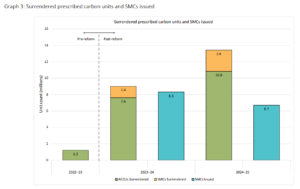
The market’s growth reflects that shift. The Clean Energy Regulator reports that 18.9 million ACCUs were issued in the 2024–25 financial year. This is the highest annual total since the scheme started. More than 41 million ACCUs were traded during the same period, showing strong liquidity and active participation across the market.
Source: Clean Energy Regulator
Australia’s supply pipeline is also expanding. The regulator oversees over 300 carbon projects, including:
Australia’s broader climate policy remains firmly focused on cutting emissions. Under the Climate Change Act, the country aims to reduce greenhouse gas emissions by 43% below 2005 levels by 2030 and reach net zero by 2050.
The Safeguard Mechanism is central to that plan. It sets declining emissions limits for Australia’s largest industrial facilities.
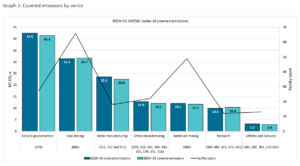
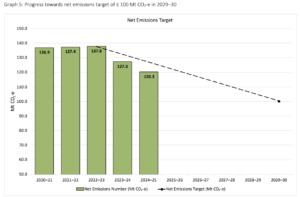
The latest data show the policy is making progress. During 2024–25, net emissions from safeguard facilities fell 5.5% year over year to 120.3 MtCO₂-e, while gross covered emissions declined 2.3% to 132.8 MtCO₂-e.
Source: Clean Energy Regulator
These results suggest Australia’s biggest industrial emitters are beginning to move in line with the country’s long-term climate goals.
Climate Active may be ending, but the market itself continues to grow under a more robust framework.
Higher Standards Are Becoming the New Normal
Australia is not the only country raising the bar for carbon markets. Around the world, governments and businesses are putting more focus on credit quality rather than credit volume.
Global standards are also becoming stricter.
The Science Based Targets initiative (SBTi) says companies should first reduce emissions across their operations and supply chains. Carbon credits should only be used for emissions that cannot yet be avoided.
At the same time, the Integrity Council for the Voluntary Carbon Market (ICVCM) has introduced the Core Carbon Principles (CCPs) to improve credit quality. Recent market data show that 13% to 15% of new carbon credits now have the CCP label. This share is growing as buyers seek higher-quality credits.
Credits that meet high-quality standards are also selling at a premium. According to the MSCI Global CCP Carbon Credit Price Index, CCP-labelled credits have traded at an average 19% price premium over the broader voluntary carbon market since mid-2024.
Together, these changes have raised the bar for corporate climate action. Buying offsets alone is no longer enough. Companies are increasingly expected to cut emissions first and back up any climate claims with clear, transparent reporting.
Trust Will Shape the Next Carbon Market
Climate Active helped introduce many Australian businesses to carbon accounting and carbon offsets. For years, it gave companies a simple way to measure emissions and communicate their climate efforts.
Today, expectations are much higher. And Australia’s carbon market is adapting to that new reality.
The end of Climate Active does not signal the end of carbon offsets. Instead, it reflects a broader shift toward stronger standards, better oversight, and higher-quality credits.
As compliance demand grows and international integrity standards continue to develop, Australia’s carbon market looks set to become more mature, more transparent, and more trusted than before.
Europe reaches a key milestone in carbon removal. Puro.earth has certified the first permanent carbon removal project. This project captures biogenic carbon dioxide (CO₂) from biogas and stores it underground.
Developed by Inherit Carbon Solutions at Norway’s VEAS wastewater treatment plant, this project is the first biogas-based bioenergy with carbon capture and storage (BECCS) to earn CO₂ Removal Certificates (CORCs). It’s also Puro.earth’s first certified BECCS project in Europe.
This achievement highlights how wastewater treatment plants can aid in permanent carbon removal and support Europe’s climate goals.
First Certified BECCS Project for Biogas in Europe
Puro.earth validated the VEAS project after a third-party audit. This certification follows its Geologically Stored Carbon methodology, ensuring that captured carbon is permanently removed from the atmosphere.
In its first four months of operation, from February to May 2026, the project earned over 700 CO₂ Removal Certificates (CORCs). More certificates will follow as monitoring continues.
Unlike traditional carbon capture projects, this one captures biogenic CO₂ released during biogas production. Since this carbon comes from organic waste, storing it creates negative emissions, effectively removing carbon from the natural cycle.
This project is a key example of engineered carbon dioxide removal (CDR), an industry expected to grow for global net-zero targets.
“Inherit’s issuance shows what’s possible when biogas infrastructure and carbon storage infrastructure are combined through one succinct process. Biogenic CO2 that would otherwise have been released is instead captured and permanently stored. This is exactly the kind of innovative approach to BECCS that the Puro Standard and Registry was built for. Inherit is a true pioneer in this field, and we’re proud to certify the world’s first project of its kind. With the scale of biogas production across Norway, the Nordics and more widely across Europe, the potential for BECCS regionally is significant.”
Turning Wastewater Into Permanent Carbon Removal
The project operates at the VEAS wastewater treatment plant in Slemmestad, Norway, serving over 800,000 residents in Oslo, Bærum, and Asker.
As wastewater is processed, organic material breaks down, producing biogas. This process releases biogenic CO₂. Instead of letting that CO₂ escape, project partners capture and permanently store it.
Three companies work together on this project, each handling a different stage:
Inherit Carbon Solutions develops and manages the carbon removal project.
HoopCO2 captures and liquefies biogenic CO₂.
Northern Lights transports and stores the CO₂ beneath the North Sea.
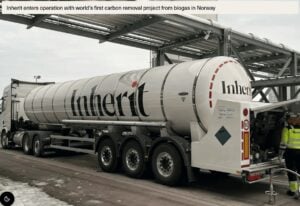
Once captured, the liquefied CO₂ is trucked to Northern Lights’ terminal in Øygarden, west of Bergen. From there, it moves through pipelines to a geological storage site about 2,600 meters below the seabed, where it remains trapped.
Northern Lights began commercial offshore CO₂ storage in 2025, mainly for fossil-based emissions. The VEAS project is its first operation for biogenic CO₂, marking a shift towards permanent carbon removal.
Under the current agreement, Northern Lights will store up to 7,000 metric tons of biogenic CO₂ each year from the VEAS facility.
On this development, Kaja Voss, CEO, Inherit Carbon Solutions, added,
“Working with Puro.earth through this certification has given us a clear and credible pathway to bring these credits to market. This project shows just how much potential there is across the biogas supply chain for capturing and permanently storing biogenic CO2. The collaboration with HoopCO2 and Northern Lights has been strong, and we’re excited about what this pilot means for scaling biogenic CO2 removal from biogas facilities more broadly.”
Source: Inherit
A Model That Can Scale Across the Biogas Industry
This project stands out because it uses existing infrastructure.
Many wastewater treatment plants and biogas facilities produce biogenic CO₂. By adding capture equipment and connecting to transport and storage networks, they can turn routine waste processing into permanent carbon removal.
This approach avoids building new systems from scratch. Instead, it upgrades existing facilities to provide real climate benefits. Since wastewater plants and biogas facilities operate in many countries, this model could spread across Europe and beyond.
Smaller BECCS projects like VEAS also need lower upfront investments and shorter development times than large carbon capture facilities. This allows developers to launch projects faster while proving commercial viability.
For companies buying durable carbon removal credits, projects like VEAS offer verified removals backed by strict monitoring and permanent geological storage.
Bioenergy with carbon capture and storage is vital for Europe’s climate strategy.
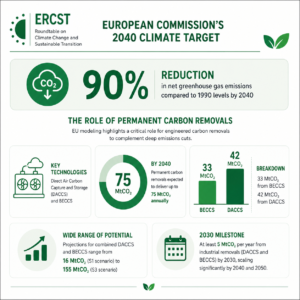
The European Commission’s proposed 2040 climate target aims for a 90% reduction in net greenhouse gas emissions compared to 1990 levels. To reach that goal, emissions cuts alone won’t suffice. Europe expects engineered carbon removal technologies to eliminate millions of tons of CO₂ from the atmosphere each year.
BECCS could remove around 33 million metric tons of CO₂ annually.
Direct Air Carbon Capture and Storage (DACCS) could add another 42 million metric tons.
Together, these technologies could remove up to 75 million metric tons of CO₂ each year.
Some climate scenarios estimate that combined BECCS and DACCS could range from 16 million to 155 million metric tons annually, depending on technology growth and policy support.
The Commission expects industrial carbon removal to reach at least 5 million metric tons per year by 2030, with significant growth in the following decade.
Europe Has Much Greater BECCS Potential
Recent analysis shows Europe could remove even more carbon than current targets require.
As per Bioenergy Europe data, adding carbon capture to 38% of Europe’s biomass facilities could yield about 80 million metric tons of CO₂ removals annually—enough to meet the EU’s projected 2040 needs.
If carbon capture expands to half of existing biomass plants, annual removals could reach about 105 million metric tons.
Europe produces around 220 million metric tons of biogenic CO₂ yearly from bioenergy facilities. Capturing and storing half of that would surpass many climate projections.
The biggest opportunities lie in:
Combined heat and power (CHP) plants
Pulp and paper mills
Waste-to-energy facilities
Biogas production plants
Countries like Sweden, Germany, Finland, and the UK have strong potential due to their large bioenergy sectors. France, Italy, and Austria also have significant untapped opportunities.
Policy Support Will Determine Future Growth
While the technology is available, experts believe that policy support will dictate how quickly BECCS grows in Europe.
Developers are urging stronger demand for durable carbon removals through climate laws, financial incentives, and carbon credit markets. And so investing in CO₂ transport pipelines, shipping terminals, and storage sites will be crucial as more projects begin.
Clear permitting guidelines and stable regulations could lower project risks and attract private investment.
Projects like VEAS show that permanent carbon removal is moving from pilot stages to commercial use. As governments and companies invest in engineered carbon removal, similar BECCS facilities may play a vital role in Europe’s net-zero and net-negative goals. They will also boost the clean energy economy.
The race to build the future of transportation has reached a new city. Tesla and Waymo are both expanding their robotaxi services into Tampa, Florida, bringing two very different self-driving technologies into direct competition.
The move marks another milestone for autonomous vehicles as companies race to make driverless ride-hailing a mainstream business. This expansion comes at a time when interest in robotaxis is growing quickly.
Artificial intelligence (AI) is improving, electric vehicles (EVs) are becoming more common, and cities are looking for cleaner and safer ways to move people. For Tesla and Waymo, Tampa is both a new market and another test of which of them has the stronger path toward large-scale autonomous transportation.
Two Companies, Two Different Roads to Autonomy
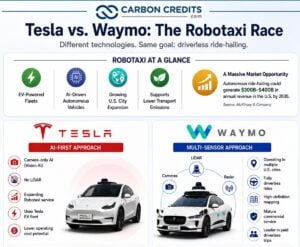
Although Tesla and Waymo share the same goal, they have taken very different approaches.
Waymo, owned by Alphabet, relies on a mix of cameras, radar, and LiDAR sensors. Its robotaxis operate only in carefully mapped areas, known as geofenced service zones. This allows the company to offer fully driverless rides while keeping operations within areas it has already tested extensively.
Tesla has chosen a different strategy. Its Full Self-Driving (FSD) system depends mainly on cameras powered by artificial intelligence. Instead of mapping every street in advance, Tesla trains its AI using data collected from millions of customer vehicles around the world. Chief Executive Elon Musk believes this approach will make it easier and cheaper to expand robotaxi services globally.
The difference also affects costs. Industry analysts estimate that a LiDAR system can add thousands of dollars to the cost of an autonomous vehicle.
Tesla claims its camera-based system can achieve similar results with cheaper hardware. This could make large-scale deployment more affordable if the technology works well.
Source: Tesla; Waymo company reports
Tesla Is Scaling Its AI-First Robotaxi Vision
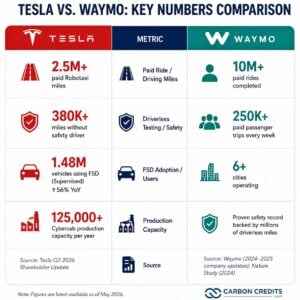
Tesla’s robotaxi business has grown rapidly over the past year. According to the company’s second-quarter 2026 shareholder update, its paid robotaxi service now operates in seven U.S. metro areas. Customers have driven over 2.5 million paid Robotaxi miles.
Tesla’s cars have also recorded more than 380,000 miles without a safety driver during testing and operations.
The EV giant is also expanding the technology behind its robotaxis. The company says 1.48 million vehicles now use its Full Self-Driving (Supervised) software, up 56% from a year earlier. Every mile driven helps train Tesla’s AI system, giving it one of the world’s largest real-world driving datasets.
The company is also preparing for the next stage of growth.
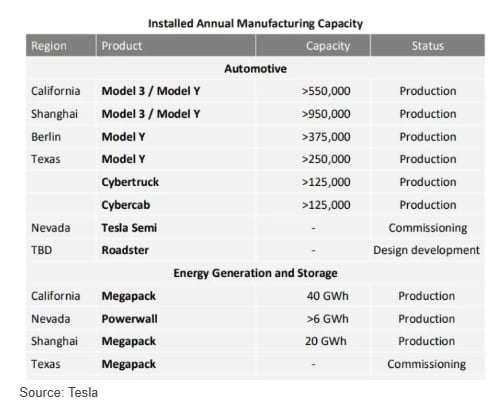
The automaker says its new Cybercab production line is capable of building more than 125,000 vehicles per year. Unlike today’s Model Y robotaxis, Cybercab is designed from the ground up as a fully autonomous vehicle without a steering wheel or pedals.
For Tesla, robotaxis are becoming much more than another vehicle program. They are central to the company’s long-term growth strategy as EV sales slow and competition increases.
Tesla may be expanding quickly, but Waymo remains the industry’s most experienced robotaxi operator. The company now provides more than 250,000 paid passenger trips every week, according to its report.
Since launching commercial service, it has completed over 10 million paid rides, making it the largest fully driverless ride-hailing network in the world.
The company runs robotaxi services in several cities. These include Phoenix, San Francisco, Los Angeles, Austin, Atlanta, and Washington, D.C. Tampa is one of its latest expansion plans.
Waymo’s safety record has also helped build confidence. A study in Nature showed that Waymo’s self-driving cars had far fewer, 68%, injury crashes than human drivers. This was observed over millions of miles. That growing body of real-world evidence has made Waymo the benchmark for commercial robotaxi services today.
Yet, the race is far from over.
Tesla is betting that artificial intelligence and manufacturing scale will allow it to expand much faster than competitors. Waymo, meanwhile, continues to focus on safety, reliability, and steady deployment.
The next few years will show which strategy proves more successful—not only in Tampa, but across the global robotaxi market.
The robotaxi race is about much more than technology. It could also reshape how people travel and how cities cut emissions.
Transportation is the biggest source of greenhouse gas emissions in the U.S. In 2025, it makes up about 28% of all emissions, according to the U.S. Environmental Protection Agency (EPA). Switching from gasoline cars to electric robotaxis can cut emissions. This is true, especially if cleaner electricity is used to charge them.
Robotaxis can also make vehicles more efficient.
Most privately owned cars sit parked for about 95% of the day, according to research from the U.S. Department of Energy. A shared autonomous vehicle can stay on the road much longer, serving multiple passengers instead of remaining idle. Higher vehicle use could reduce the number of cars needed in cities over time while lowering the cost of each trip.
The International Energy Agency (IEA) also sees shared electric mobility as an important tool for reducing oil demand and cutting transport emissions, particularly as electricity grids become cleaner.
A $400 Billion Opportunity Is Fueling the AI Mobility Race
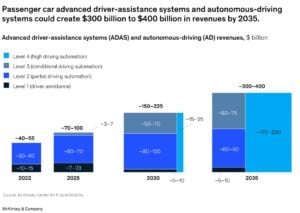
The business opportunity is enormous. According to McKinsey & Company, autonomous ride-hailing services could generate between $300 billion and $400 billion in annual revenue by 2035 in the United States alone.
Lower operating costs, combined with growing demand for convenient transportation, could make robotaxis one of the fastest-growing mobility businesses over the next decade.
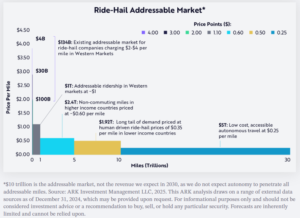
ARK Invest is even more optimistic. It estimates that autonomous ride-hailing could become a multi-trillion-dollar global market in the long term if self-driving technology reaches widespread adoption.
That potential explains why competition is growing. Traditional automakers, technology companies, ride-hailing firms, and semiconductor companies are all investing billions of dollars in autonomous driving.
Source: ARK Invest
The Race Is Bigger Than Tampa
The expansion into Tampa is only the latest chapter in a much larger competition. Tesla brings manufacturing scale, artificial intelligence expertise, and one of the world’s largest connected EV fleets.
Waymo brings years of commercial experience and a proven record of fully driverless operations. Both companies are trying to solve the same challenge, but in different ways.
There may not be a single winner.
Different cities may adopt different technologies, while several companies could succeed by serving different markets. What is already clear, however, is that autonomous electric vehicles are moving from pilot projects to commercial services.
For investors, the robotaxi race could become one of the most important growth stories of the next decade. For consumers, it could change how people think about owning a car. And for the clean energy transition, it shows that the future of transportation will depend not only on electrification, but also on AI and shared mobility working together.
Paid Advertisement – Disseminated on behalf of Alaska Energy Metals Corporation.
Alaska Energy Metals Corporation (AEMC) is moving into a more decisive phase. The company is no longer just an exploration story. Instead, it is building a case around scale, technical validation, and future economics. Yet, despite this progress, its valuation still reflects early-stage risk.
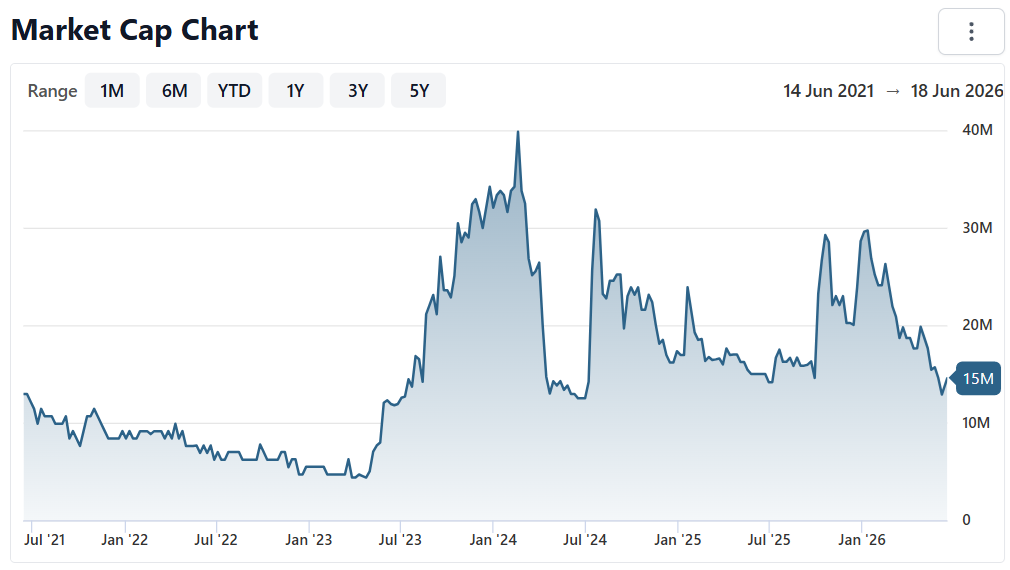
As of June 22, 2026, Alaska Energy Metals holds a market capitalization of CAD 14.56 million, with its shares trading on the TSXV at CAD 0.06. This lean valuation provides a compelling baseline entry point for investors eyeing the critical minerals sector. The current stock consolidation establishes a strong foundation just ahead of key upcoming company catalysts, positioning the company perfectly to leverage the structurally favorable and expanding long-term market for domestic energy metals.
Alaska Energy Metals Market Cap
Source: stockanalysis.com
And this growth story makes it interesting to investors seeking early-stage upside.
Scale First: A Resource That Commands Attention
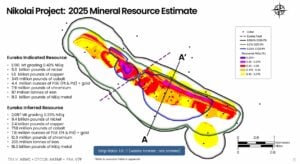
AEMC’s flagship Nikolai project hosts the Eureka deposit, which is already considered one of the largest undeveloped nickel resources in the United States. In a market increasingly shaped by supply security, scale matters more than ever.
The U.S. currently relies heavily on imports for critical minerals like nickel. At the same time, global demand is rising fast due to electric vehicles and energy storage systems. According to industry estimates, nickel demand could double by 2030, driven largely by battery applications.
Against this backdrop, a large domestic resource carries strategic weight. AEMC is not just exploring for metals – it is positioning itself within a supply chain that policymakers now consider critical.
This combination of size and location creates a strong foundation. However, investors will want more than just potential. They need proof that the asset can grow, perform, and eventually generate returns.
Angliers Could Be Alaska Energy Metals’ Next Growth Driver
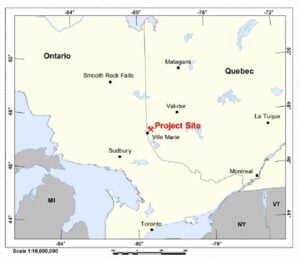
The Angliers Project is a nickel exploration property owned by Alaska Energy Metals in western Quebec, Canada. The project covers more than 26,000 hectares in the Témiscamingue region near the Ontario border. Good road access helps keep exploration costs low.
Location and Access
Source: AEMC
Promising Geology and Nickel Targets
Angliers sits within the Belleterre-Angliers Greenstone Belt, a region known for mineral deposits. The property contains ultramafic rocks, which often host nickel sulfide deposits. Its geology is similar to Australia’s Kambalda district, a major nickel-producing area.
The project targets nickel, copper, cobalt, and platinum-group metals (PGMs), all of which are important for EV batteries and clean energy technologies.
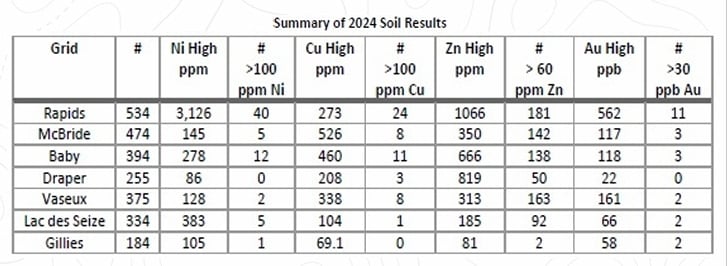
Using machine learning and historical data, the company identified four priority targets. Among them, Area 4 stands out.
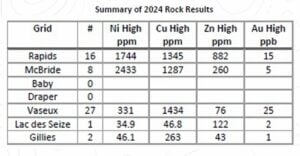
It hosts a six-kilometer nickel trend, and surface samples returned nickel grades of up to 2,290 ppm.
Meanwhile, prior exploration and government surveys have identified nickel-rich rocks and nearby nickel-copper occurrences. Notably, results from the 2024 VTEM survey revealed several undrilled areas with signs that could point to valuable mineral deposits.
Check out below:
Source: AEMC
August Drilling Could Add Value
As per company sources, AEMC plans to begin drilling at Angliers in August. These results could help confirm the project’s mineral potential.
For investors, the drill program will be an important milestone. Strong results can increase confidence in the resource, reduce uncertainty, and support future development studies. As a result, the project could attract greater market attention.
Although Angliers is still in the early exploration stage, it combines strong geology, encouraging early results, and near-term drilling catalysts. If drilling confirms significant nickel mineralization, the project could become an important source of critical minerals for the growing battery and clean energy markets.
Metallurgy: The Hidden Driver of Value
A large deposit only matters if the metal can be extracted efficiently. This is where metallurgical studies come into play.
AEMC is advancing test work to demonstrate that nickel and cobalt can be recovered at commercially viable rates. Early-stage metallurgy often determines whether a project remains theoretical or becomes investable.
If recovery rates are strong and processing methods remain practical, the implications are significant. Better metallurgy improves project economics by increasing output while controlling costs. It also makes the asset more attractive to strategic partners who prioritize operational simplicity.
In many cases, positive metallurgical results act as a turning point. They shift investor perception from “resource potential” to “recoverable value.”
One of the most important upcoming milestones is the company’s internal Preliminary Economic Assessment (PEA). This study will translate years of exploration into a financial framework.
The PEA will outline expected production levels, capital requirements, operating costs, and potential returns. For investors, this is where the story becomes tangible.
Markets tend to respond strongly to credible economic data. A solid PEA can anchor valuation and provide a clearer benchmark for comparison with peers. It also opens the door to financing discussions, offtake agreements, and strategic partnerships.
For AEMC, this step represents a shift from exploration-driven narratives to numbers-driven analysis.
Source: AEMC
Funding and Policy Support Could Accelerate Growth
Funding remains a key challenge for junior mining companies. However, AEMC operates in a sector that is increasingly supported by government policy.
The United States has prioritized domestic critical mineral supply chains. Programs under frameworks like the Defense Production Act, Project Vault, and other federal initiatives aim to reduce reliance on foreign sources.
AEMC has already engaged with these pathways. Its earlier submission for development funding – reportedly around $56 million – received a “Met” determination, indicating eligibility under government criteria. While this does not guarantee funding, it signals alignment with national priorities.
This alignment matters. Government backing, even partial, can significantly reduce financial risk. It also attracts institutional investors and strategic partners who prefer projects with policy support.
If AEMC secures funding or forms partnerships, it could change the company’s trajectory quickly. In many cases, funding announcements serve as major re-rating events.
High-Grade Potential Adds Another Layer of Upside
Beyond scale, AEMC is also targeting higher-grade mineralization within its broader resource.
High-grade zones can improve project economics by increasing the amount of metal produced per tonne of ore. This can lower processing costs and enhance early-stage cash flow.
Even limited success in identifying such zones can reshape mine planning. Companies often prioritize higher-grade areas in initial production phases to improve project returns.
For investors, this creates an additional layer of optionality. The project is not just large—it also has the potential to become more efficient and profitable over time.
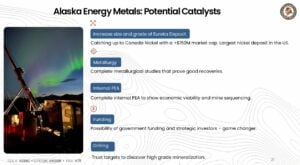
Looking ahead, AEMC’s timeline includes several key inflection points:
Expected drilling results at Angliers may refine scale and confidence this year.
At the same time, the internal PEA will introduce economic clarity. Progress on permitting and infrastructure—such as access routes and site development—will signal movement toward production readiness.
Overlaying all of this is the policy environment. Any announcements related to grants, incentives, or strategic investments could amplify the company’s narrative.
Individually, each catalyst matters. Together, they create a pathway for a broader market re-evaluation.
Source: AEMC
Valuation Gap: The Core Investment Thesis
Perhaps the most compelling part of the story lies in valuation.
Companies like Canada Nickel, which operate in a similar thematic space, command market capitalizations exceeding $150 million. In contrast, AEMC trades at a fraction of that level despite having a large and growing resource base.
This gap reflects risk, but it also highlights opportunity. As AEMC advances through key milestones, that risk profile could change. When it does, the market may begin to close the valuation gap.
Re-ratings in the mining sector often happen in stages. Early gains come from exploration success. Larger moves typically follow economic validation and funding support.
AEMC appears to be approaching this transition point.
Can Nickel Market Rebalancing Boost Alaska Energy Metals’ Growth Story?
The nickel market is finally showing signs of recovery after years of oversupply, creating a more favorable backdrop for companies like Alaska Energy Metals.
AEMC appears to be approaching this transition point.
Shrinking Indonesian Output
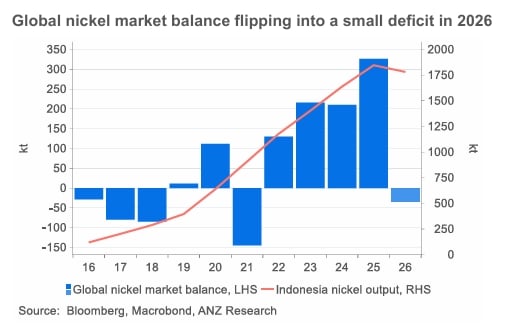
ANZ Research expects the global nickel market to shift from surplus to a small deficit by 2026. This change comes as Indonesia tightens its supply. Indonesia produces 60-70% of the world’s nickel.
They have cut mining quotas, reinstated annual production approvals, and raised costs for producers by changing ore pricing. Disruptions in sulfur and sulfuric acid supplies are also affecting Indonesian processing operations.
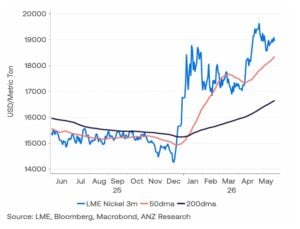
These actions could reduce Indonesia’s nickel output by over 60,000 tonnes this year. This may help rebalance the market and support a price floor above $17,000 per tonne. Nickel prices have already risen above $19,000 per tonne due to supply concerns.
This shift is timely for Alaska Energy Metals. The recent downturn saw abundant Indonesian supply lower nickel prices and dampen investor interest in exploration. A tighter market could change that.
Rising Prices Strengthen the Investment Case
Higher nickel prices often improve project economics. They also increase the value investors place on large undeveloped resources. Concerns about supply concentration in Indonesia point to the need for new nickel sources in North America.
Nickel Prices
As Alaska Energy Metals advances its Angliers Project, better market conditions could attract more interest. Resource growth, technical studies, and development milestones will be key in a market seeking new nickel supplies.
In summary, ANZ’s outlook suggests the nickel sector is entering a healthier phase. If the expected supply deficit happens, companies with large-scale nickel assets outside Indonesia may benefit the most.
AEMC is evolving from a speculative explorer into a company with defined growth drivers. Its large-scale resource, ongoing drilling, advancing metallurgy, and upcoming economic studies create a clear roadmap.
At the same time, its alignment with U.S. critical mineral policy adds a strategic dimension that many junior miners lack.
The opportunity for investors lies in execution. If AEMC delivers consistent drilling results, demonstrates strong metallurgy, and advances its economic case, the current valuation may not hold.
In that scenario, the company could shift from being overlooked to being recognized as a meaningful player in the North American nickel supply chain.
For now, the market is waiting. But with multiple catalysts lined up through 2026 and 2027, that wait may not last long.
Qualified Person. Mr. Gregory Beischer, President & CEO of Alaska Energy Metals Corporation, has reviewed and approved the technical content of this document.
Mr. Beischer is a professional geologist (American Institute of Professional Geologists #10505) and is a qualified person under NI43-101.
DISCLAIMER
New Era Publishing Inc. and/or CarbonCredits.com (“We” or “Us”) are not securities dealers or brokers, investment advisers, or financial advisers, and you should not rely on the information herein as investment advice. Alaska Energy Metals. (“Company”) made a one-time payment of $90,000 to provide marketing services for a term of three months. None of the owners, members, directors, or employees of New Era Publishing Inc. and/or CarbonCredits.com currently hold, or have any beneficial ownership in, any shares, stocks, or options of the companies mentioned.
This article is informational only and is solely for use by prospective investors in determining whether to seek additional information. It does not constitute an offer to sell or a solicitation of an offer to buy any securities. Examples that we provide of share price increases pertaining to a particular issuer from one referenced date to another represent arbitrarily chosen time periods and are no indication whatsoever of future stock prices for that issuer and are of no predictive value.
Our stock profiles are intended to highlight certain companies for your further investigation; they are not stock recommendations or an offer or sale of the referenced securities. The securities issued by the companies we profile should be considered high-risk; if you do invest despite these warnings, you may lose your entire investment. Please do your own research before investing, including reviewing the companies’ SEDAR+ and SEC filings, press releases, and risk disclosures.
It is our policy that information contained in this profile was provided by the company, extracted from SEDAR+ and SEC filings, company websites, and other publicly available sources. We believe the sources and information are accurate and reliable but we cannot guarantee them.
CAUTIONARY STATEMENT AND FORWARD-LOOKING INFORMATION
Certain statements contained in this news release may constitute “forward-looking information” within the meaning of applicable securities laws. Forward-looking information generally can be identified by words such as “anticipate,” “expect,” “estimate,” “forecast,” “plan,” and similar expressions suggesting future outcomes or events. Forward-looking information is based on current expectations of management; however, it is subject to known and unknown risks, uncertainties, and other factors that may cause actual results to differ materially from those anticipated.
These factors include, without limitation, statements relating to the Company’s exploration and development plans, the potential of its mineral projects, financing activities, regulatory approvals, market conditions, and future objectives. Forward-looking information involves numerous risks and uncertainties and actual results might differ materially from results suggested in any forward-looking information. These risks and uncertainties include, among other things, market volatility, the state of financial markets for the Company’s securities, fluctuations in commodity prices, operational challenges, and changes in business plans.
Forward-looking information is based on several key expectations and assumptions, including, without limitation, that the Company will continue with its stated business objectives and will be able to raise additional capital as required. Although management of the Company has attempted to identify important factors that could cause actual results to differ materially, there may be other factors that cause results not to be as anticipated, estimated, or intended.
There can be no assurance that such forward-looking information will prove to be accurate, as actual results and future events could differ materially. Accordingly, readers should not place undue reliance on forward-looking information. Additional information about risks and uncertainties is contained in the Company’s management’s discussion and analysis and annual information form for the year ended December 31, 2025, copies of which are available on SEDAR+ at www.sedarplus.ca.
The forward-looking information contained herein is expressly qualified in its entirety by this cautionary statement. Forward-looking information reflects management’s current beliefs and is based on information currently available to the Company. The forward-looking information is made as of the date of this news release, and the Company assumes no obligation to update or revise such information to reflect new events or circumstances except as may be required by applicable law.
Disclosure: Owners, members, directors, and employees of carboncredits.com have/may have stock or option positions in any of the companies mentioned: None.
Carboncredits.com receives compensation for this publication and has a business relationship with any company whose stock(s) is/are mentioned in this article.
Additional disclosure: This communication serves the sole purpose of adding value to the research process and is for information only. Please do your own due diligence. Every investment in securities mentioned in publications of carboncredits.com involves risks that could lead to a total loss of the invested capital.
To provide the best experiences, we use technologies like cookies to store and/or access device information. Consenting to these technologies will allow us to process data such as browsing behavior or unique IDs on this site. Not consenting or withdrawing consent, may adversely affect certain features and functions.
Functional
Always active
The technical storage or access is strictly necessary for the legitimate purpose of enabling the use of a specific service explicitly requested by the subscriber or user, or for the sole purpose of carrying out the transmission of a communication over an electronic communications network.
Preferences
The technical storage or access is necessary for the legitimate purpose of storing preferences that are not requested by the subscriber or user.
Statistics
The technical storage or access that is used exclusively for statistical purposes.The technical storage or access that is used exclusively for anonymous statistical purposes. Without a subpoena, voluntary compliance on the part of your Internet Service Provider, or additional records from a third party, information stored or retrieved for this purpose alone cannot usually be used to identify you.
Marketing
The technical storage or access is required to create user profiles to send advertising, or to track the user on a website or across several websites for similar marketing purposes.