Nuclear’s Next Chapter: newcleo Raises $88M to Scale SMR Powered by Nuclear Waste

newcleo, a European nuclear technology company, announced that it has raised €75 million (about USD $88 million) in a new funding round. The cash will help the company build and develop advanced small nuclear reactors powered by recycled nuclear waste. The financing is a sign of growing investor interest in clean and low-carbon energy solutions.

Newcleo also said that it has now raised more than $124 million in total for 2025. The company was founded in September 2021 and is based in Paris, France. The nuclear energy developer also operates in Italy, the UK, Belgium, and Slovakia, with roughly 1,000 employees.

What newcleo’s Technology Does: Turning Nuclear Waste into Usable Fuel

newcleo develops a type of advanced nuclear technology known as lead-cooled fast reactors (LFRs). These reactors are a form of small modular reactor (SMR).

Unlike traditional nuclear reactors that use fresh uranium fuel, newcleo’s design aims to use reprocessed nuclear waste as fuel. This means existing waste from older reactors could become a power source.

Using nuclear waste as fuel is intended to have two benefits:

  • It could reduce long-term waste storage needs.
  • It may help lower the carbon footprint of nuclear power.

Lead-cooled fast reactors also use liquid lead to transfer heat out of the core. The liquid lead acts as a coolant and enables the reactor to operate at high temperatures without high pressure.

This reactor type is still under development and not yet in wide commercial operation. But companies like newcleo believe it could play a role in future clean energy systems.

Heavy Industry and Investors Double Down

The €75 million funding round brought in both new and existing investors. New industrial backers included heavy industry groups such as:

  • Danieli & C, a steel mill manufacturer
  • Cementir Holding, a cement and concrete producer
  • Orion Valves, an industrial valve maker
  • NextChem, an energy engineering firm

Existing financial backers also participated. These included Kairos, Indaco Ventures, Azimut Investments, the CERN pension fund, and Walter Tosto (industrial engineering).

The mix of industrial and financial investors shows that newcleo’s technology draws interest from companies looking for reliable, low-carbon power and firms focused on clean energy investments.

Scaling from Design to Deployment

newcleo said the fresh funding will support several key parts of its business. The company highlighted progress in:

  • Licensing and regulatory approval processes
  • Research and development (R&D) of reactors and fuel systems
  • Vertical integration of technology and manufacturing
  • Geographic expansion in key markets like Europe and the United States

This means newcleo is working not just on reactor design, but on building the skills and facilities needed to support production, testing, and commercial deployment. The company also has partnerships and projects in multiple countries, including France, Italy, Slovakia, and the U.S. These collaborations relate to licensing and siting work, research facilities, and future commercial reactor projects.

Closing the Nuclear Fuel Loop

Nuclear power is often seen as a low-carbon energy source because it produces virtually no direct CO₂ emissions during operation. However, it leaves behind radioactive waste that can remain hazardous for thousands of years.

nuclear carbon emission
Carbon Footprint of Various Energy Sources

Traditional reactors use uranium fuel once and store the resulting waste. newcleo’s approach aims to reuse existing waste as reactor fuel. This could potentially reduce the volume and hazard of waste that needs long-term storage.

Lead-cooled fast reactors are one class of Generation IV nuclear technology. These designs are intended to be safer and more efficient than older reactors. They can run on fuels that traditional reactors cannot and may help make nuclear energy more sustainable in the long term.

Using recycled radioactive fuel helps close the nuclear fuel cycle. This means sourcing more energy from mined uranium, which leaves less waste behind.

Building a Cross-Border Nuclear Footprint

newcleo has stated that it plans to roll out its technology in several countries with active regulatory frameworks for advanced nuclear projects. The company has started licensing and planning partnerships in Europe and the U.S. These moves aim to make it a major supplier of advanced nuclear power systems.

In France, newcleo is preparing regulatory filings for both fuel and reactor projects. In Italy, it is building R&D infrastructure and test systems, while in Slovakia, it has formed a joint venture to deploy multiple reactors at a nuclear site. And in the U.S., it is engaging in collaborations to build fuel manufacturing and fabrication capabilities.

The company’s CEO, Stefano Buono, said investors view newcleo’s progress in licensing, R&D, and global expansion as a key advantage. He further added,

“Our ability to deliver impactful low-carbon energy solutions for energy-intensive firms is proving an attractive investment rationale for both industrial and financial investors. Our tangible progress in licensing, R&D, vertical integration, and geographic expansion is seen by investors as a key differentiator in the race to deliver clean, safe, and affordable nuclear energy.”

Small Modular Reactors Gain Global Traction

Interest in small modular reactors is rising as countries look for reliable, low-carbon power. Governments and industry groups also track SMRs more closely than before.

One sign is the growing number of designs in development. The OECD Nuclear Energy Agency (NEA) reported that its latest SMR Dashboard found 98 SMR technologies globally. It detailed 56 of these SMRs in its dashboard set.

A separate NEA summary shows a larger count of designs tracked over editions. This highlights how quickly the pipeline is expanding.

  • Forecasts also show wider deployment in the coming decades. The International Energy Agency (IEA) publishes scenario data on global SMR capacity from 2025 to 2050.

In its analysis, SMR capacity rises from near-zero today to tens of gigawatts by 2050 in its main scenarios (39 GW), and it grows even higher in its “high SMR” case (190 GW). This suggests that SMRs could move from pilot projects to meaningful scale if costs fall and licensing speeds up.

SMR Global Installed Capacity by Scenario and Case, 2025-2050 IEA data
Data from the IEA; STEPS = Stated Policies Scenario; APS = Announced Pledges Scenario; NZE = Net Zero Emissions by 2050 Scenario.

International institutions also expect nuclear growth overall, with SMRs playing a bigger role. In September 2025, the International Atomic Energy Agency (IAEA) said it raised its long-term nuclear outlook again.

In its best-case scenario, the IAEA predicts that global nuclear capacity could grow to 2.6 times the 2024 level by 2050. It also noted that SMRs will be key to this growth.

Policy signals further support this direction. The NEA reports that over 20 countries at COP28 pledged to triple global nuclear energy capacity by 2050.

These forecasts do not guarantee fast deployment. SMRs still face key hurdles such as licensing timelines, supply chains, fuel availability, and first-of-a-kind costs. 

SMRs are increasingly central to global nuclear talks. The NEA tracks more designs, and the IEA outlines new deployment pathways. And interest from investors and policymakers has grown as countries look for reliable low-carbon baseload power.

The €75 million funding round adds to newcleo’s growing capital base. It boosts the company’s ability to advance its technology and work toward deployment. As of early 2026, newcleo has raised more than $124 million over the past year, with total funding since 2021 likely exceeding €645 million.

Private Capital Signals a Nuclear Comeback

The investment in newcleo highlights a broader trend: private capital is moving into advanced nuclear technologies.

Investors in heavy industry and finance are now seeing nuclear power as key to global decarbonization efforts. Some countries have recently updated their policies. This supports nuclear research and licensing. It shows a focus on energy security and climate goals.

Lead-cooled fast reactors and similar designs remain in early stages of testing and regulatory review. Newcleo and similar companies think their technologies can provide clean, reliable power. They also believe these systems create less waste over their life cycles compared to older reactors.

If successful, this approach could expand the role of nuclear power in the energy transition. But much work remains in testing, licensing, manufacturing, and cost reduction before commercial deployment at scale.

TotalEnergies and Google’s 1 GW Solar Deal Signals a New Phase in the Data Center Energy Race

TotalEnergies has signed two long-term power purchase agreements (PPAs) with Google to deliver 1 gigawatt (GW) of solar capacity in Texas. Over 15 years, the projects are expected to generate around 28 terawatt-hours (TWh) of renewable electricity.

The deal reflects a deeper shift in how the tech sector secures power for artificial intelligence, cloud services, and digital infrastructure. As AI workloads surge, electricity has become a strategic resource, and companies like Google are moving early to lock in supply.

The projects will be developed at two TotalEnergies-owned sites—Wichita and Mustang Creek—with construction scheduled to begin in the second quarter of 2026. Once operational, they will directly support Google’s growing data center footprint in Texas.

Texas: A Crucial Hub for Big Tech Power Demand

Texas has emerged as one of the world’s most important regions for data center expansion. Its abundant land, strong solar resources, and deregulated power market make it attractive for hyperscale data centers. However, demand is rising rapidly, and the grid is under pressure from AI-driven electricity loads, industrial expansion, and extreme weather events.

texas data centres
Source: AXIOS

The Wichita solar farm, with a capacity of 805 megawatts (MW), and the Mustang Creek project, with 195 MW, together form one of TotalEnergies’ largest U.S. renewable commitments to a single corporate buyer. These projects will add new generation capacity rather than simply reallocating existing renewable energy credits, which is critical for grid stability.

By building new supply, TotalEnergies and Google are addressing a major challenge facing the power sector: ensuring that clean electricity growth keeps pace with surging demand.

Corporate PPAs Are Now Shaping America’s Power Grid

Power purchase agreements were once seen as a financial tool for companies to claim renewable energy use. Today, they are becoming a core driver of grid expansion. Large corporate buyers are effectively acting as anchor investors for new energy infrastructure.

In this case, the 1 GW of solar PPAs complement another 1.2 GW of agreements recently secured by Clearway, a renewables developer half-owned by TotalEnergies. These deals span multiple U.S. grid regions, including ERCOT in Texas, PJM in the Northeast, and SPP in the Central U.S.

Together, these agreements illustrate how tech firms are diversifying their energy supply across regions to manage risk, hedge against price volatility, and ensure reliability.

Local Economic Impact and Community Benefits

Beyond climate goals, large-scale solar projects bring tangible economic benefits to local communities. The Wichita and Mustang Creek developments are expected to create several hundred construction jobs and generate significant tax revenues over their operating lifetimes.

For rural counties, utility-scale solar projects often become a long-term source of public funding for schools, infrastructure, and emergency services. As data centers expand into smaller communities, energy projects linked to them can transform local economies.

TotalEnergies’ Strategy: Tailored Power for High-Load Customers

TotalEnergies is positioning itself as a key energy partner for industries with massive and growing electricity needs. Its customer portfolio already includes major industrial and technology players such as Amazon, Microsoft, Airbus, Air Liquide, STMicroelectronics, Saint-Gobain, and Sasol.

The company’s approach goes beyond simple renewable supply. It combines solar, wind, battery storage, and flexible gas generation to deliver what it calls “clean firm power.” This hybrid model is increasingly important for data centers, which require 24/7 electricity with minimal interruptions.

Marc-Antoine Pignon, TotalEnergies’ Vice President for Renewables in the U.S., highlighted that the Google deal is the company’s largest renewable PPA volume ever signed in the country. He also pointed to the challenges of land availability and power supply for data centers, noting that large-scale colocation opportunities are becoming essential as AI infrastructure expands.

A Growing U.S. and Global Renewable Portfolio

TotalEnergies has been steadily expanding its renewable footprint. In the United States, it holds around 10 GW of onshore solar, wind, and storage capacity, with roughly 5 GW located in Texas. Globally, the company had more than 32 GW of installed renewable capacity by late 2025 and aims to produce over 100 TWh of net electricity by 2030.

total energies renewable portfolio
Source: TotalEnergies

This growth reflects a broader strategy to transition from a traditional oil and gas company into a diversified energy producer. By investing heavily in renewables and flexible assets, TotalEnergies is positioning itself for a future where electricity plays a central role in the global energy mix.

EARLIER: 

Google’s Aggressive Clean Energy Procurement Drive

Google is one of the world’s largest corporate buyers of renewable energy, and its procurement strategy has accelerated dramatically in recent years. Since 2010, the company has signed more than 170 clean energy agreements totaling over 22 GW of capacity. These deals span North America, Europe, Asia Pacific, and Latin America.

google data centre electricity consumption
Source: Google

In 2024 alone, Google contracted more than 8 GW of additional clean energy—twice the volume of the previous year and the largest annual total in its history. These agreements are designed to stay ahead of the company’s rapid load growth, particularly from AI and cloud services.

google data center emissions
Source: Google

Despite a 27% year-on-year increase in data center electricity consumption in 2024, Google reported a 12% reduction in data center energy emissions.

  • It estimates that its clean energy purchases avoided more than 8.2 million tonnes of CO₂ equivalent in 2024 and over 44 million tonnes cumulatively since 2011.

This shows that large-scale procurement can decouple emissions growth from electricity demand, at least in the near term.

Data Centers Are Reshaping Electricity Demand

The International Energy Agency (IEA )’s latest electricity report has highlighted data centers as a major driver of electricity demand growth in the United States. Electricity consumption rose by 2.8% in 2024 and 2.1% in 2025, with data centers expected to account for nearly half of future growth.

Industrial sectors such as semiconductor manufacturing and battery production will also contribute significantly, but digital infrastructure is among the fastest-growing loads.

AI workloads are particularly energy-intensive. Training large models requires massive, continuously running computing clusters, while inference workloads scale with user demand. This creates a constant, high-load electricity profile that challenges traditional grid planning.

2026 US Renewable Outlook and Policy Headwinds

The IEA also forecasts that nearly 250 GW of renewable energy capacity will be deployed in the U.S. between 2026 and 2030, with utility-scale solar accounting for around 70% of additions. Wind and distributed solar will make up the remainder.

However, recent policy changes and the phase-out of certain tax incentives have led to a downward revision of deployment forecasts. This underscores the growing importance of corporate buyers in sustaining renewable development.

When government support weakens, long-term PPAs from companies like Google provide the financial certainty developers need to build projects. In this sense, tech firms are becoming critical enablers of the energy transition.

iea 2026 us electricty demand

A New Power Paradigm for the Digital Age

The TotalEnergies and Google solar agreement states that electricity is no longer just an operating expense. It is a strategic asset that determines the scalability and sustainability of digital infrastructure.

For TotalEnergies, the deal reinforces its role as a key supplier of tailored renewable power to high-load customers. For Google, it ensures reliable, affordable, and low-carbon electricity for its expanding AI and cloud operations.

More broadly, the partnership reflects a new phase in the global energy transition, where private companies play a central role in financing and building clean power infrastructure. As AI, cloud computing, and digital services continue to expand, similar mega-scale PPAs are likely to become standard practice.

Lastly, but not least, Texas is becoming a global test case for high-growth, low-carbon grids. Its rapid demand growth, combined with large renewable deployment, will offer lessons for other regions facing similar challenges.

Nigeria Aims for 80 Million Clean Cookstoves and a $5 Billion Carbon Credit Revenue

Nigeria is planning a large clean cooking program that aims to distribute 80 million efficient cookstoves to households. Project backers say the rollout could help reduce smoke from cooking, cut pressure on forests, and create a new stream of carbon credits.

Recent reporting in Nigeria says the project is also tied to a revenue target. A senior finance executive at project developer GreenPlinth Africa said the Federal Government could earn up to $5 billion each year from “verified carbon credit revenues” when the program reaches full scale.

Lagos State has also described itself as an early “anchor” for the program. Lagos State Government announced it will lead the way in providing 6 million free cookstoves. Distribution in the state has started in June 2025, beginning in Makoko.

Mr. Tunde Lemo, former Deputy Governor of the Central Bank of Nigeria, commented:

“This is not a pilot. It is not a promise. It is a nationally endorsed, structured, and scalable intervention…This is one of the most ambitious clean cooking and household energy transition programmes ever undertaken globally.”

An 80 Million Stove Rollout With National Ambitions

Lagos State’s climate office describes the initiative as a nationwide effort to deploy 80 million efficient cookstoves free of charge. It says the goal is to sharply reduce traditional firewood use for women and low-income households.

Large stove programs usually try to replace or improve traditional cooking methods that produce heavy smoke indoors. In many households, cooking uses wood, charcoal, or other solid fuels. These fuels can release fine particles and other pollutants, especially in kitchens with poor airflow.

The Clean Cooking Alliance’s Nigeria dashboard uses official sources like the World Bank. It estimates that over 167 million people, or 73.8%, in Nigeria did not have access to clean cooking in 2023.

That gap is wider outside cities. The same dashboard reports that 26.2% of Nigeria’s population had access to clean fuels and technologies for cooking in 2023. It also reports 48.7% access in urban areas versus 9.7% in rural areas in 2023.

Cooking Smoke as a Public Health Crisis

Global health agencies link household smoke from cooking to major health harms. The World Health Organization (WHO) estimates that household air pollution led to around 2.9 million deaths in 2021. This includes more than 309,000 children under age 5.

WHO also estimates that household air pollution caused about 95 million DALYs in 2021. This measure combines years lost to early death and disability. The organization notes that the health burden is tied to diseases such as heart disease, stroke, and lung disease.

Moreover, a WHO technical page shows how household air pollution causes deaths. Here’s the breakdown:

  • Ischaemic heart disease: 32%
  • Stroke: 23%
  • Lower respiratory infections: 21%
  • COPD: 19%
  • Lung cancer: 6%

Global energy data also shows the scale of the challenge. The International Energy Agency (IEA) estimates 2.3 billion people worldwide still cook using open fires or basic stoves that create harmful smoke.

In Nigeria, a large stove program could affect health most in communities that rely heavily on fuelwood or charcoal. It could also change how much time families spend collecting fuel. It could lower daily smoke exposure for cooks and nearby children when stoves are used correctly and consistently.

From Kitchen Emissions to Carbon Markets

The project narrative links emissions cuts from cleaner cooking to carbon markets. Carbon crediting usually relies on measuring and verifying how much a project cuts greenhouse gas emissions compared to a baseline.

International rules also matter if the project aims to generate credits for compliance uses under the Paris Agreement. Under Article 6, countries can cooperate to meet climate targets, including through carbon credits created from verified emission reductions.
Within Article 6, the Article 6.4 mechanism (also called the Paris Agreement Crediting Mechanism) has a UN-backed governance structure. UNFCCC explains that an Article 6.4 Supervisory Body develops and supervises requirements to run the mechanism. This includes approving methodologies, registering activities, accrediting verification bodies, and managing a registry.

This matters because cookstove projects often face scrutiny over real-world use. Carbon credit quality can depend on factors like whether households actually use the new stove, how long they keep using it, and whether old stoves stay in use at the same time. Credible monitoring and verification are central to project integrity under any crediting pathway.

IEA clean cooking projection 2030
Source: IEA

The IEA predicts that clean cooking access will hit around 85% by 2030. This means over 350 million people, mainly in sub-Saharan Africa, will still lack safe cooking options. They will continue to rely on polluting open fires and basic stoves.

To achieve universal access by 2030, there’s a need to connect 160 million people each year. However, funding shortages and infrastructure issues make this unlikely. That requires about $2 billion a year just for Africa to make it happen.

The IEA believes full access by 2040 is more realistic. This will come from increased use of LPG, which will cover about 60% of new connections. It will also involve electric cooking, advanced biomass stoves, and various financing options such as carbon credits. And Nigeria is heading in that direction.

What a $5 Billion Carbon Claim Would Require

Nigeria already has experience with cookstove carbon projects on a smaller scale. The Clean Cooking Alliance’s Nigeria dashboard says the country has 18 registered cookstove projects that have generated 3.4 million carbon credits to date.

The credits from 9 developers are verified by Verra’s VCS and Gold Standard, as seen:

Nigeria cookstove project carbon credit summary
Source: Clean Cooking Alliance

The proposed 80 million-stove rollout is far larger than typical programs. Supporters argue that scale could also mean large volumes of credited emission reductions, especially if adoption remains high over many years.

The $5 billion per year figure has drawn attention because it implies both a large credit volume and a strong credit price. The figure cited in Nigerian reporting was presented as a projection tied to “verified” carbon credit revenues once the project is fully deployed.

Still, projected revenue is not the same as guaranteed income. Real outcomes depend on several conditions, including:

  • The number of stoves actually delivered and used,
  • The verified emissions reductions per household,
  • Approval under the chosen crediting pathway,
  • Market demand, and
  • The price and transaction costs for credits.

Lagos State’s official post highlights a key milestone: 6 million stoves in Lagos. However, it does not confirm future credit volumes or prices.

Delivery, Use, and Verification Will Decide the Outcome

Several signals will help observers judge the program’s progress and credibility.

First is delivery at scale. A plan for 80 million stoves requires large manufacturing or import capacity, distribution logistics, and after-sales support. Maintenance matters because stoves can fail or be abandoned if they do not meet cooking needs.

Second is sustained use. Clean cooking benefits and emissions cuts depend on households consistently using the new stove. Programs often track usage through surveys, sensors, or fuel consumption checks. Strong monitoring also supports more credible carbon claims.

Third is alignment with recognized rules. If the project aims to issue credits under Paris Agreement pathways, it must follow the requirements of Article 6.4 Supervisory Body. This includes using accepted methodologies and verification practices.

Finally, there is the public data baseline. Nigeria’s clean cooking access is still low overall. The Clean Cooking Alliance dashboard, using World Bank data, reported 26.2% access in 2023, with much lower access in rural areas. A well-run program could shift those numbers over time, but it will require steady funding and coordination across states.

For now, the story combines a large public health goal with a climate finance goal, and the scale is ambitious. The key question is whether implementation, monitoring, and market demand can match the size of the revenue promise.

ICVCM Adds New CCP-Approved Carbon Credit Methods for Isometric, Gold Standard and ACR

The Integrity Council for the Voluntary Carbon Market (ICVCM) published new decisions under its Core Carbon Principles (CCP) program. The update covers three carbon credit methodologies, also called “categories” in ICVCM’s system. One methodology received full approval, and two received conditional approval.

ICVCM’s CCP label is meant to help buyers spot carbon credits that meet a clear, minimum integrity bar. ICVCM uses an Assessment Framework to apply its label. This framework checks how programs and methods handle key issues, including quantification, additionality, monitoring, and verification.

According to Annette L. Nazareth, Chair of the Governing Board, ICVCM

“Demand for CCP-labelled credits has grown steadily, commanding price premiums that reflect buyers’ renewed trust. Policymakers, multilateral institutions, and standard-setters have incorporated the CCPs into their own frameworks, recognising the Integrity Council’s role in building coherence across voluntary and compliance markets.”

The three decisions were:

  • Isometric: ISM Reforestation Protocol v1.1 — CCP Approved
  • Gold Standard: Methane emission reduction by adjusted water management practice in rice cultivation v1.0 — CCP Approved (Conditional)
  • American Carbon Registry (ACR): Improved Forest Management (IFM) on Non-Federal US Forestlands v2.0 — CCP Approved (Conditional)

How the CCP Label Works and When Conditions Apply

A CCP-approved method can earn credits for the CCP label. Projects need to follow the method and the program’s usual rules. In this ICVCM update, the Isometric reforestation method was approved without conditions. This means credits issued under it can get CCP labeling immediately.

A CCP-approved but conditional methodology can still earn the label, but only if specific conditions are met. These conditions can apply to how projects prove additionality. They can also apply to how projects account for risks. Finally, they may apply to how projects set baselines and leakage deductions.
ICVCM also published a market-level snapshot with its February 2026 decisions. It approved eight carbon-crediting programs as CCP-Eligible. It also approved 38 methodologies.

However, 22 methodologies did not meet the requirements. About 105 million credits were approved for the CCP label. Of these, 52 million are available, while 53 million have been retired or canceled. Globally, here’s ICVCM’s carbon credit achievement:

ICVCM carbon credit facts global
Source: ICVCM

Isometric Sets a First for Nature-Based CCP Credits

ICVCM granted full CCP approval to Isometric’s ISM Reforestation Protocol v1.1, which Isometric published in October 2025. The protocol outlines rules for measuring carbon removals from reforestation. This refers to restoring forest cover on land that was once forested. ICVCM placed it under the broader Afforestation, Reforestation, and Revegetation (ARR) category.

ICVCM said the assessment found the protocol met all relevant criteria in the CCP Assessment Framework. Because the body approved it with no conditions, it stated that all credits issued under the methodology will be eligible for CCP labels.

The Integrity Council also shared early activity indicators for this protocol. It said no credits had been issued yet, but 20 project developers were already registered under the methodology. The organization added that Isometric expects to issue over 4 million credits annually by 2030 under this protocol.

Isometric announced this week that the approval makes its Reforestation Protocol the first nature-based protocol with the CCP label.

ICVCM core carbon principles
Source: ICVCM

Rice Methane Credits Get a Conditional Green Light

ICVCM gave conditional CCP approval to Gold Standard’s method for cutting methane emissions. This method focuses on adjusting water management in rice cultivation (version 1.0). The Integrity Council announced that it published the methodology in July 2023. It is the first approved method for avoiding methane in rice cultivation.

The basic idea behind adjusted water management is simple. Flooded rice fields can produce methane because organic matter breaks down without oxygen. Changing water levels during the growing season can reduce methane formation.

Gold Standard’s documentation states that methane forms in flooded fields with low oxygen. It also notes that the methodology helps water regime changes that reduce methane emissions.

ICVCM also pointed to recent research on the scale of rice methane. A Nature Research Highlight from May 2025 said that a new inventory found rice paddy methane emissions were over 39 million metric tonnes in 2022.

Why Some Credits Qualify, and Others Don’t

The Integrity Council said the rice methodology qualifies for CCP approval only when specific conditions are met. The conditions show how a project proves additionality in some cases. They also explain a rule update about soil organic carbon loss risk in the methodology.

ICVCM also gave credit volume and pipeline estimates. It said about 50,000 credits had been issued under this methodology so far. However, the body understood that none of those credits complied with the first condition. As a result, the organization said those already-issued credits will not be eligible for the CCP label.

ICVCM noted that Gold Standard plans to issue up to 3.2 million credits in the next five years. This is based on its current project pipeline projections. It also listed the main project locations as India, plus activities in Pakistan, Vietnam, Bangladesh, Cambodia, Ghana, Indonesia, Lao PDR, Nepal, and Thailand.

ACR’s Forest Credits Face Tighter Baseline Tests

Same with Gold Standard, ICVCM also granted conditional CCP approval to ACR’s Improved Forest Management (IFM) on Non-Federal US Forestlands v2.0. IFM projects aim to change forest management practices to increase stored carbon or avoid emissions compared with a baseline scenario.

ICVCM explained that v2.0 is an earlier version of an IFM methodology that its Governing Board had already approved in August 2025 (v2.1). For v2.1, ICVCM had set a condition tied to leakage.

  • A leakage deduction is needed for projects that cut wood product output by less than 5%. This keeps treatment consistent with projects that exceed that threshold.

For v2.0, ICVCM set two additional conditions. The methodology can earn CCP labeling if:

  • A dynamic evaluation of the baseline is verified in line with ACR’s tool for dynamic baseline evaluation (developed with v2.1), and/or
  • Removal credits are generated using a specified equation in the methodology (ICVCM references Equation 30).

ICVCM also quantified the immediate impact. It said 2.7 million credits were expected to be immediately eligible for the CCP label out of 13.3 million issued credits under this methodology.

The Integrity Council also stated that past and future removal credits from this method can get CCP labels. Future emission reduction credits can qualify, too, if they use the dynamic baseline evaluation tool.

ACR said the CCP label will soon activate for 2.7 million eligible IFM 2.0 credits in the ACR registry. They linked eligibility to the same baseline evaluation tool.

What CCP Expansion Means for Buyers and Developers

These ICVCM decisions matter because they expand the set of methodologies that can produce credits with the CCP label. For buyers, the label can act as a quick screen when building procurement rules. CCP decisions can influence method evolution for project developers and standards bodies. Conditional approvals often need updates to methods or stricter project tests.

At the same time, the details show that CCP labeling is not automatic. For example, ICVCM’s conditions for the rice methodology mean that some already-issued credits will not qualify. In the IFM case, ICVCM tied eligibility to specific approaches for baselines and the type of credit (removals versus emission reductions).

The approvals expand high-integrity CCP-labeled credits. They also signal growing supply for buyers while enforcing strict standards on baselines, additionality, and verification—shaping voluntary carbon markets toward greater quality and scale.

CATL & CHANGAN Make History with World’s First Mass-Production Sodium-Ion Passenger EV

China’s CHANGAN Automobile and battery giant CATL have unveiled the world’s first mass-production passenger vehicle powered by sodium-ion batteries. The launch event took place in Yakeshi, Inner Mongolia, and the vehicle is scheduled to reach the market by mid-2026.

The press release explains that this milestone marks a shift from laboratory research and pilot projects to real-world consumer electric vehicles. It also signals the start of a dual-chemistry battery era, where sodium-ion and lithium-ion technologies work together to meet diverse electric mobility needs.

Why Sodium-Ion Batteries Are Gaining Momentum

Lithium-ion batteries have dominated electric vehicles for more than a decade. However, concerns over lithium supply, cost volatility, and environmental impacts have pushed researchers to explore alternatives. Sodium-ion batteries emerged as one of the most promising contenders.

Sodium is abundant, widely distributed, and inexpensive. Unlike lithium, it can be extracted from seawater and common salt deposits, reducing geopolitical risks and environmental strain. This makes sodium-ion batteries attractive for countries seeking greater energy independence.

Cold-weather performance is another major advantage. Lithium-ion batteries lose significant capacity in freezing temperatures, which limits EV adoption in colder regions. Sodium-ion batteries, by contrast, maintain strong performance even in extreme cold, opening new markets for electric mobility.
                          Lithium-ion batteries vs Sodium-ion batteries 

sodium ion

sodium ion battery

Analysts see 2026 as a turning point, when sodium-ion technology begins large-scale commercialization in vehicles and energy storage.

CATL’s Naxtra Sets New Benchmarks for Sodium-Ion Performance

CATL began sodium-ion research in 2016 and invested nearly RMB 10 billion in the program. The company developed close to 300,000 test cells and assembled a dedicated team of more than 300 R&D engineers, including 20 PhDs.

Research focused on fast-ion transport pathways, composite low-temperature electrolytes, and high-safety electrolyte systems. CATL also leveraged its vast battery management data from millions of deployed units to improve range accuracy and reliability.

This long-term investment highlights how major battery breakthroughs require years of sustained research, testing, and industrial scaling.

Under the partnership, CATL will supply its Naxtra sodium-ion batteries across CHANGAN’s full brand lineup, including AVATR, Deepal, Qiyuan, and UNI. The collaboration positions both companies as early leaders in what could become one of the most disruptive battery technologies of the decade.

Urban and Suburban EVs Made Practical

CATL’s Naxtra sodium-ion battery achieves an energy density of up to 175 Wh/kg, which currently sets a benchmark for mass-produced sodium-ion cells. While this is still lower than leading lithium-ion batteries, it is high enough to support practical passenger vehicles.

Combined with CATL’s Cell-to-Pack (CTP) architecture and intelligent battery management system, the technology enables a pure-electric range exceeding 400 kilometers. As the supply chain matures and chemistry improves, CATL expects future sodium-ion EVs to reach 500–600 kilometers per charge. Range-extended and hybrid configurations could achieve 300–400 kilometers on electric power alone.

These figures cover more than half of the typical daily driving needs in the global new energy vehicle market. For many urban and suburban drivers, sodium-ion vehicles could provide sufficient range at a lower cost.

Cold-Climate Performance Could Transform EV Adoption

One of the biggest barriers to EV adoption is winter performance. Lithium-ion batteries often lose capacity and charging speed in cold conditions, which reduces driving range and convenience.

CATL claims:

  • Its sodium-ion battery delivers nearly three times the discharge power of comparable LFP batteries at –30°C.
  • Capacity retention remains above 90% at –40°C, and the system continues to provide stable power at –50°C.

This performance could make sodium-ion batteries particularly attractive in regions such as Northern Europe, Canada, Russia, and northern Japan. In these markets, winter range anxiety has slowed EV adoption despite strong policy support.

If sodium-ion batteries deliver on these claims, they could unlock electric mobility in some of the world’s most challenging climates.

Safety Advantages Strengthen Consumer Confidence

Battery safety remains a top concern for automakers and consumers. CATL subjected its Naxtra cells to extreme tests, including crushing, drilling, and sawing. The batteries reportedly showed no smoke, fire, or explosion and continued delivering power even after physical damage.

These results suggest sodium-ion batteries could offer inherent safety advantages over some lithium-ion chemistries. Reduced thermal runaway risk could lower insurance costs, simplify thermal management systems, and improve consumer confidence.

Safety improvements are also critical for regulatory approval and large-scale adoption, especially in densely populated cities.

CATL
Source: CATL

A Dual-Chemistry Future for Electric Mobility

Both companies emphasized that sodium-ion batteries will not replace lithium-ion batteries. Instead, both chemistries will coexist and complement each other.

Lithium-ion batteries will remain dominant in high-energy applications such as long-range EVs, aviation, and premium vehicles. Sodium-ion batteries are likely to excel in cost-sensitive segments, cold-climate markets, entry-level EVs, and stationary energy storage.

This dual-chemistry ecosystem could accelerate electrification by offering tailored solutions for different use cases. It also diversifies supply chains and reduces reliance on critical minerals.

Choco-Swap Network Could Supercharge Sodium-Ion EV Growth

To support sodium-ion adoption, CATL plans to deploy more than 3,000 Choco-Swap battery swap stations across 140 Chinese cities by 2026. Over 600 of these stations will be located in colder northern regions.

Battery swapping could reduce charging times from hours to minutes, improving convenience for drivers and commercial fleets. It also allows centralized battery management, which can extend battery life and optimize grid integration.

If successful, this infrastructure could give China a major advantage in next-generation EV ecosystems.

Market Outlook: Rapid Growth Across Multiple Sectors

Gao Huan, CTO of CATL’s China E-car Business

“The arrival of sodium-ion technology marks the beginning of a dual-chemistry era.
CHANGAN’s vision shows both its responsibility for energy security and its strategic
foresight. Much as it embraced electric vehicles years ago, CHANGAN is once again
taking the lead with its sodium-ion roadmap. At CATL, we value the opportunity to
work alongside such an industry leader and fully support its strategy, combining our
expertise to bring safe, reliable, and high-performance sodium-ion technology to
market.” 

According to data released by SPIR:

  • Global sodium-ion battery shipments reached 9 GWh in 2025, representing a 150% year-on-year increase.
  • Analysts expect strong growth in energy storage, light-duty vehicles, and passenger EVs starting in 2026.
  • By 2030, sodium-ion batteries could reach 580 GWh in energy storage and over 410 GWh in automotive applications. This would be enough to support around 10 million new energy users.
Energy storage is expected to be the largest early market, followed by entry-level EVs and commercial vehicles. Passenger cars are now entering the commercialization phase, signaling broader industry confidence.

Supply Chain Security and Geopolitical Implications

One of the most strategic benefits of sodium-ion batteries is supply chain resilience. Sodium is around 1,000 times more abundant in the Earth’s crust and roughly 60,000 times more abundant in oceans than lithium.

This abundance reduces the risk of supply shortages, price spikes, and geopolitical conflicts associated with lithium, cobalt, and nickel. Countries without lithium resources could still build domestic battery industries using sodium.

For governments, sodium-ion technology offers a pathway to greater energy independence and localized manufacturing.

Environmental and Lifecycle Benefits

Sodium-ion batteries also offer environmental advantages across their lifecycle. Sodium extraction is less water-intensive than lithium brine mining, which has raised concerns in South America’s lithium triangle. Production often uses less hazardous materials, such as iron and carbon-based cathodes.

Research suggests sodium-ion battery production could reduce carbon emissions by up to 60% per kWh compared with some lithium-ion chemistries. Recycling processes may also be simpler and more energy-efficient.

However, sodium-ion batteries currently require more material per kWh due to lower energy density, which could offset some emissions benefits. Continued improvements in chemistry and manufacturing are expected to close this gap.

China’s Strategic First-Mover Advantage

China is taking a lead in next-generation battery technologies by moving sodium-ion batteries from lab research to large-scale commercialization.

Mordor Intelligence report shows that lithium-ion dominated with a 75.5% share in 2025, while sodium-ion is expected to register the fastest CAGR of 18% between 2026 and 2031. Through advanced R&D, robust manufacturing, and supporting infrastructure, Chinese companies are turning experimental technology into market-ready solutions.

china battery market
Source: Modor Intelligence

The CHANGAN–CATL partnership illustrates this shift. Their sodium-ion passenger car, launching in 2026, marks one of the first instances of mass-produced vehicles powered by this chemistry. The technology promises lower costs, enhanced safety, strong cold-weather performance, and more secure supply chains, making it a practical complement to lithium-ion batteries.

As the dual-chemistry era unfolds, sodium-ion batteries are set to expand the possibilities for electric mobility and energy storage. By combining affordability, reliability, and environmental advantages, they could play a central role in the global transition to clean energy and reshape the future of electric vehicles.

Japan’s GX-ETS Sparks Carbon Credit Surge as Major Polluters Prep for Compliance

Japan’s largest polluters are rushing to buy carbon credits ahead of the launch of the country’s mandatory emissions trading system. Trading activity on the Tokyo Stock Exchange (TSE) has surged as companies prepare for tighter climate rules and try to meet their corporate sustainability targets before the fiscal year ends.

According to Bloomberg, major Japanese companies are already purchasing credits on the TSE’s voluntary market in anticipation of the GX-ETS launch.

This buying spree highlights growing anxiety about future compliance costs. At the same time, it signals that Japan’s carbon market is shifting from a voluntary experiment to a central pillar of its climate strategy.

What Is the GX-ETS and Why Does It Matter

The Green Transformation Emissions Trading System (GX-ETS) is Japan’s national carbon trading program. The government launched it in 2023 under the GX League, a public-private platform designed to accelerate corporate decarbonization.

The GX-ETS mirrors the European Union’s emissions trading system. Companies receive or buy emissions allowances and can trade them. If they emit less than their cap, they can sell extra allowances. If they exceed limits, they must buy more or face penalties.

Timeline and Key Features

Japan is rolling out the GX-ETS in stages:

  • Phase 1 (2023–2025): Voluntary participation and market testing
  • Phase 2 (2026 onward): Mandatory participation for large emitters
  • Future phases: Auctions, price bands, and fuel levies

Japan plans to introduce power sector auctions around 2033 and a fossil fuel importer levy by 2028. Policymakers are also considering price bands of ¥4,000 to ¥6,000 per tonne by 2027, with potential increases by 2030. Significantly, the compliance market will include a price ceiling and phased expansion with additional policy tools.

The system integrates voluntary credits into compliance trading. Companies can trade GX credits via call auctions on the TSE, with unmatched orders carried forward. This design aims to improve liquidity and price discovery.

Japan’s Path to Net-Zero by 2050

Japan made modest progress in reducing emissions in the first half of 2025. The Ministry of the Environment reported a 2.8% decline compared with the same period in 2024. For the full year, emissions are estimated at 1,070 million tonnes of CO₂ equivalent, down from about 1,272 million tonnes in 1990.

Much of this improvement came from energy efficiency gains in the industrial sector. However, Japan still relies heavily on fossil fuels, and transport emissions remain difficult to reduce. Consequently, current policies are projected to cut emissions by 31% to 37% below 2013 levels by 2030, which still falls short of the country’s 46% national climate target, excluding land-use emissions.

Japan emissions
Source: Climate Scorecard

Heavy industries—such as steel, chemicals, cement, and power generation—account for more than 60% of national emissions, making them key GX-ETS targets. Therefore, the GX-ETS is expected to cover roughly 60% of Japan’s greenhouse gas emissions and support the country’s goal of achieving net zero by 2050.

Japan’s carbon tax remains low at about ¥289 per tonne (roughly $2.16), emphasizing the need for stronger market-based mechanisms. As a result, policymakers view the GX-ETS as a critical lever to accelerate emissions reductions and drive the nation toward net-zero.

Who Must Participate in the GX-ETS

Phase 1 of the GX-ETS was voluntary. However, Phase 2 will become mandatory in spring 2026. Companies emitting more than 100,000 tonnes of CO₂ per year must participate.

This rule affects roughly 300 to 400 companies. Together, they account for about 60% of Japan’s total emissions. Key sectors include steel, chemicals, cement, power generation, automotive manufacturing, and aviation.

Under current proposals, companies can use carbon credits to offset up to 10% of regulated emissions. Therefore, credits complement emissions cuts rather than replace them.

Pre-Compliance Buying Surge Among Big Polluters

Large Japanese companies are buying voluntary credits aggressively before the mandatory launch. TSE officials see strong demand driven by companies preparing for GX-ETS and rushing to retire credits before the fiscal year ends.

Reports also reveal that members of the GX League, such as Toshiba, Tokyo Gas, and Isuzu Motors, have already participated in voluntary trading. Analysts expect steelmakers, utilities, and other heavy industries to dominate future purchases.

This early buying strategy helps companies hedge against future allowance shortages. It also reduces the risk of penalties once compliance rules take effect.

Japan’s Carbon Credits: Demand Soars Ahead of Mandatory GX-ETS

Japan’s carbon credit market is expanding fast. It was valued at about $28.2 billion in fiscal 2023 and could reach more than $121 billion by 2031, growing at roughly 20% annually.

Trading on the TSE began in 2023 and focuses on GX credits, including:

  • J-Credits from domestic renewable and efficiency projects
  • JCM credits from international projects under Japan’s Joint Crediting Mechanism

However, demand already exceeds supply. J-Credit issuance averages around 1 million tonnes per year. Analysts expect demand to reach about 3 million tonnes annually once the mandatory phase begins.

Therefore, limited supply could push prices higher and increase compliance costs for heavy emitters.

Carbon Credit Prices and Market Dynamics

Bloomberg also highlighted that carbon credit prices on the TSE have fluctuated as the market matures. Renewable electricity credits peaked at about ¥6,600 per tonne in early 2025. Since then, prices have fallen by nearly 25%.

The Ministry of Economy, Trade and Industry has proposed a price ceiling of ¥4,300 per tonne for the compliance market. Renewable-linked credits still trade above that level, reflecting strong demand and limited supply. And the prices across voluntary credit categories are converging ahead of the mandatory phase. This trend suggests growing liquidity and market confidence.

carbon credit Japan
Source: Bloomberg

Challenges Facing the GX-ETS

Despite strong momentum, several challenges remain. Limited credit supply could push prices higher if demand grows faster than new issuances. Credit quality also poses a risk, as regulators must ensure offsets deliver real and permanent emissions reductions to avoid greenwashing.

At the same time, Japan still depends heavily on coal, gas, and oil, meaning carbon trading alone cannot transform the energy system. Transport emissions also remain a major hurdle, especially in the road and aviation sectors, where decarbonization is progressing slowly.

Past regional trading systems, such as Tokyo’s cap-and-trade program, achieved emissions reductions of around 15% to 27%. However, scaling that success nationwide will require strict enforcement, transparent monitoring, and strong policy support.

Strategic Role of Carbon Credits in Japan’s Transition

For hard-to-abate sectors such as steel and power, carbon credits provide a temporary bridge while low-carbon technologies mature. Companies can offset a small share of emissions while investing in hydrogen, electrification, and carbon capture.

Early purchases also hedge against future price spikes. If allowance supply tightens, companies holding credits will face lower compliance costs.

Globally, Japan wants J-Credits to align with international carbon markets and potential EU carbon border rules. This strategy could strengthen Japan’s role in Article 6 carbon trading frameworks.

In conclusion, the surge in carbon credit buying shows Japanese companies are taking the GX-ETS seriously. The market is transitioning from a voluntary pilot to a compliance-driven system that will shape corporate strategies for decades.

As climate pressures mount, Japan must close the gap between current policies and its 2030 target. The GX-ETS could become one of the country’s most powerful tools to drive emissions cuts, attract investment, and accelerate clean energy deployment.

However, success depends on credit supply, price stability, and strong governance. Industry analysts and experts suggest early credit buying reflects corporate hedging strategies as Japan’s carbon market moves toward full compliance.

If Japan manages these challenges, the GX-ETS could transform its carbon market and set a model for other Asian economies.

Amazon Signs 15-Year Offshore Wind Deal with RWE in Germany as Energy Demand Rises

Amazon has signed a new long-term clean energy purchase agreement with RWE, one of Europe’s largest renewable energy developers. The deal is a Power Purchase Agreement (PPA) for 110 megawatts (MW) of power. This electricity comes from RWE’s Nordseecluster B offshore wind project in the German North Sea.

RWE and Amazon stated that the contracted power would produce enough clean electricity for over 139,000 German households every year.

For Amazon, the deal supports its climate commitment to reach net-zero carbon across its operations by 2040 under The Climate Pledge. For RWE, the contract helps finance a large new offshore wind build-out and adds a stable, long-term buyer for the project’s output.

Rocco Bräuniger, Amazon Country Manager for Germany, Austria, and Switzerland, stated:

“Germany is transitioning toward a modern, carbon-free energy system, and this agreement with RWE helps advance that vision. As Amazon works toward net-zero carbon by 2040, we continue enabling projects that strengthen Germany’s renewable energy capacity for generations to come.”

Nordseecluster: A Two-Phase Offshore Wind Giant in the North Sea

Nordseecluster is a major offshore wind development that RWE is building in two phases. The project sits in the German North Sea. Nordseecluster B is the phase tied to Amazon’s new 110 MW contract.

RWE Nordseecluster
Source: RWE website

According to reporting based on company details, Nordseecluster A has a total capacity of 660 MW and is currently under construction. It is scheduled to begin operations in early 2027. Nordseecluster B adds another 900 MW and is expected to begin commercial operation in 2029.

  • RWE said Nordseecluster is a joint project between RWE (51%) and Norges Bank Investment Management (49%).

The Amazon deal is a corporate PPA. That means the tech giant agrees to buy a defined amount of clean electricity tied to a specific project over a long period. These long-term contracts often help developers secure financing because they reduce revenue uncertainty. RWE’s press statement also framed PPAs as important tools for accelerating decarbonization while supporting supply security.

Ulf Kerstin, CCO at RWE Supply & Trading, noted:

“Power Purchase Agreements like this one with Amazon are crucial for accelerating Germany’s decarbonisation while strengthening long-term security of supply. By enabling large-scale offshore projects such as Nordseecluster, we can bring more reliable, carbon-free electricity onto the grid and support a resilient energy system.”

The image below shows RWE’s offshore wind portfolio in the German territory.

RWE offshore wind portfolio Germany
Source: RWE website

Rising Power Demand Meets Long-Term Clean Energy

Amazon’s electricity needs are rising, especially from logistics and fast-growing data infrastructure. Data centers also require reliable electricity 24 hours a day. That creates demand for large amounts of power, and it increases pressure to source cleaner electricity.

Amazon has made carbon-free energy a key part of its climate strategy. The company’s sustainability site states it plans to use more carbon-free energy. This is part of its goal to achieve net-zero carbon emissions by 2040.

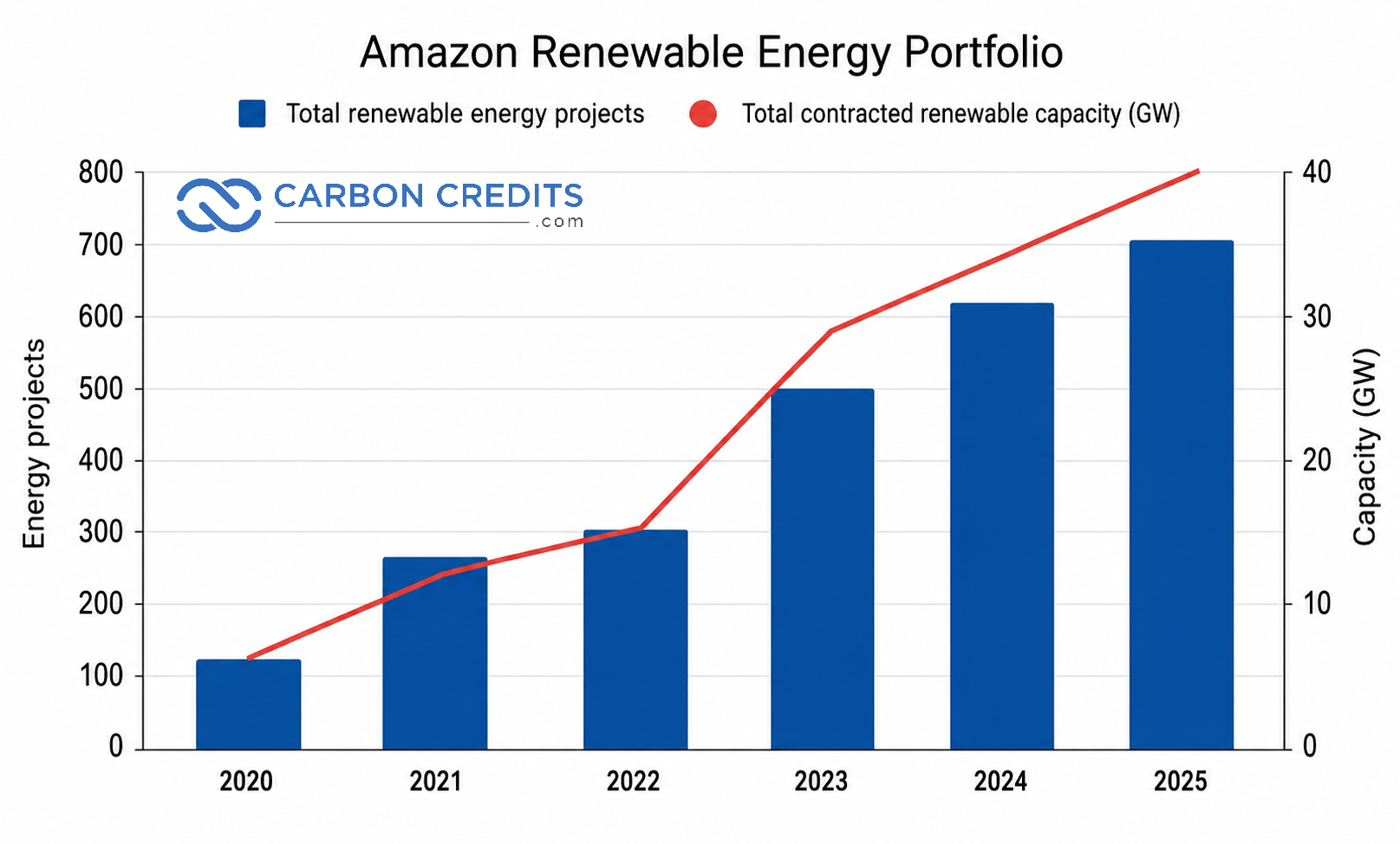
The company has also expanded its renewable energy procurement rapidly. In its 2024 Amazon Sustainability Report, Amazon said that as of January 2025, it had invested in 621 renewable energy projects globally. It said 124 of those projects were added in 2024. Together, these projects represent 34 gigawatts (GW) of carbon-free energy capacity.

Amazon Renewable Energy Portfolio 2024

Amazon reported that for the second year in a row, it matched 100% of the electricity used in its global operations with renewable energy. This was highlighted in its 2024 report and summaries. This does not mean every Amazon site runs on renewables every hour.

The company usually buys enough renewable energy to cover its yearly electricity use. This is done through PPAs and certificates, which vary by region and structure.

In Germany, Amazon has built a growing clean energy portfolio. RWE and Amazon said the Nordseecluster agreement is the tech company’s fourth large-scale offshore wind PPA in Germany.

Amazon also has six on-site solar projects in the country. Together, Amazon’s 10 renewable projects in Germany total more than 790 MW of capacity. When fully operational, they should generate enough renewable electricity to power over 1,000,000 German homes each year.

That “homes powered” figure is an equivalency used to help readers understand scale. It does not mean Amazon supplies those homes directly. It means the wind and solar output from these projects is similar to what many households would use.

Amazon’s Net Zero Goals: Powering Growth While Cutting Carbon

Amazon has pledged to achieve net-zero carbon emissions by 2040. This goal is part of The Climate Pledge, which it helped create in 2019 with Global Optimism. The goal is ten years ahead of the Paris Agreement’s target. More than 500 companies have now signed the pledge.

In its 2024 Sustainability Report, Amazon announced it matched 100% of the electricity used in its global operations with renewable energy. This is the second year in a row it achieved this goal, hitting the target five years early. 

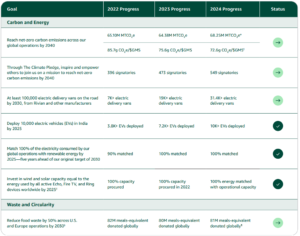
Amazon’s total carbon emissions increased from about 64.4 million tonnes of CO₂e in 2023 to around 68.3 million tonnes of CO₂e in 2024. This rise is partly due to business growth and the expansion of data centers. However, the company reduced its carbon intensity (emissions per dollar of sales), showing improved efficiency.

Amazon net zero 2040 journey
Source: Amazon report

The company is also moving to reduce emissions in other ways. It is growing its electric delivery fleet. It increased from around 19,000 to over 31,000 electric vans in 2024. The goal is to reach at least 100,000 electric delivery vehicles by 2030.

Amazon also works to cut packaging waste, improve energy efficiency, and support suppliers in reducing their emissions. These efforts connect to Amazon’s rising energy demands. This is particularly true as it expands its data centers and logistics sites.

By scaling renewable energy, electrifying transportation, and improving energy efficiency, Amazon aims to balance growth with long-term climate progress.

Corporate PPAs Power the Next Wave of Offshore Wind

Germany continues to expand offshore wind because it can produce large volumes of electricity near major demand centers. Offshore wind also tends to generate more consistently than onshore wind, although it still varies with weather and season.

Germany offshore wind capacity additions 2034

Corporate PPAs have become an important part of this market. They add demand from buyers beyond utilities and heavy industry. They also help fund projects by guaranteeing long-term revenue streams.

The Amazon–RWE deal also connects to a broader partnership between the two companies. The agreement builds on a Strategic Framework Agreement signed in June 2025. RWE backs Amazon’s goal for carbon-free energy. In return, Amazon helps RWE with digital changes using cloud services, AI, and data analytics from Amazon Web Services (AWS).

This pairing is becoming more common in the clean energy market. Utilities need digital tools to manage grids with higher shares of wind and solar. Tech firms need reliable clean energy for data infrastructure and long-term contracts can serve both sides.

What’s Next? Delivery Timelines, Grids, and the Next Energy Mix

The 110 MW deal adds another major offshore wind purchase to Amazon’s Germany portfolio. It also shows that long-term corporate PPAs remain important for financing offshore wind.

Several practical issues will shape the outcome. Nordseecluster B is due to start operating in 2029, but delays could shift when Amazon receives power. Grid integration is another challenge. Offshore wind output varies, and matching electricity use hour by hour is harder as data center demand grows.

Amazon’s broader energy strategy also matters. By January 2025, it had 621 clean energy projects and 34 GW of carbon-free capacity worldwide. The company is expanding beyond wind and solar, including nuclear investments, to support round-the-clock power needs.

Overall, the Amazon–RWE deal signals continued demand for long-term clean electricity as offshore wind expands in Germany’s North Sea and beyond.

Verra Greenlights Record 3 Million Soil Carbon Credits From Mexico Grasslands

Verra, the largest carbon registry and standard body, has approved 3.03 million carbon credits from a large grasslands restoration project in northern Mexico. The approval was announced under Verra’s Verified Carbon Standard (VCS) program.

The credits come from improved land and grazing practices that increase soil carbon storage. Once fully issued, this will be the largest soil carbon credit issuance under the VCS to date. It is also the first soil carbon project in North America approved under Verra’s VM0042 methodology.

Verra said the project shows how grasslands can play a bigger role in climate action. It also highlights how soil carbon projects are becoming more visible in voluntary carbon markets (VCMs).

Mandy Rambharos, Verra CEO, said:

“Projects like this demonstrate how implementing targeted farming practices can deliver measurable climate benefits at scale. Verra’s role is to ensure these outcomes are grounded in rigorous science, conservative accounting, and independent verification, so the land, communities, and the climate all benefit.”

Mexico Grasslands: Restoring Millions of Acres Through Better Grazing

The project is located across large areas of native grasslands in northern Mexico. It spans about 4 million acres. The land sits mainly within the Chihuahuan and Sonoran desert regions.

The project developer is Boomitra. The company works with 158 ranchers across the region. Together, they apply improved grazing practices. These practices aim to restore soil health and increase the amount of carbon stored underground.

The grazing changes include rotating livestock, avoiding overgrazing, and allowing grass to recover. Healthier grass leads to stronger root systems. Those roots help store more carbon in the soil.

Soil carbon matters because grasslands hold a large share of the world’s carbon stored in soils. Scientists estimate that grasslands contain about 20% to 30% of global soil organic carbon. Most of that carbon sits below the surface, which makes it less exposed to fires and storms.

The size of the Mexico project is unusual. At 4 million acres, it is one of the largest grassland soil carbon projects ever registered under Verra. The approved credits reflect verified increases in soil carbon over time.

A Turning Point for Soil Carbon at Scale

The approval comes as the VCM continues to adjust and rebuild trust. Voluntary markets allow companies to buy carbon credits to support climate claims or offset emissions they cannot yet remove.

Nature-based carbon credits are a growing part of this market. These include projects based on forests, wetlands, agriculture, and grasslands. Buyers often value them because they can deliver climate benefits alongside environmental and social benefits.

According to market analysis, the voluntary carbon market was worth about $2.5 billion in 2025. Forecasts suggest it could grow to more than $100-250 billion by 2030. Nature-based credits are expected to play a major role in that growth.

global demand for voluntary carbon credits increase by factor of 15 by 2030 and factor of 100 by 2050

Soil carbon credits are still a smaller share of the market. Forest projects remain more common. But soil and grassland projects are gaining attention because they can scale across large areas and support food systems.

The Mexico grasslands project also stands out because of its methodology. Verra’s VM0042 method focuses on improved agricultural land management. It allows credits to be issued when better land practices increase soil carbon beyond a defined baseline.

This approval sends a clear signal to the market. It shows that large-scale soil carbon projects can meet strict verification rules. It also suggests that supply from grassland projects could grow in the coming years.

From Soil to Credits: How Verra’s Verification Works

Carbon credits under the VCS must meet strict requirements. Verra requires projects to prove that emissions reductions or removals are real, measurable, additional, and lasting.

The VM0042 methodology sets detailed rules for soil carbon projects. Developers must show how land management changes increase soil carbon over time. They must also account for uncertainty and risks, such as reversals.

Projects go through independent third-party audits. Auditors review data, methods, and results before credits are approved. Only verified outcomes can then receive credits.

The Mexico project also uses remote sensing and artificial intelligence to monitor soil carbon changes. This technology allows measurement across large areas without heavy soil sampling. It improves accuracy and lowers costs for ranchers.

The largest carbon credit certifier said the approval followed a full validation and verification process. The credits represent confirmed soil carbon gains from real changes on the ground.

Verra also noted that more than 200 other projects are now using the same VM0042 methodology. Many are still in early stages, which suggests a growing pipeline of future soil and grassland credits.

Why Grasslands Are Back on the Climate Map

Grassland restoration is gaining attention beyond carbon markets. Healthy grasslands support biodiversity, improve water retention, and help prevent land degradation. They also support rural livelihoods.

In carbon markets, buyers are looking more closely at credit quality. That includes how projects measure results and manage long-term risks. Soil carbon projects face added scrutiny because soil carbon can change with weather and land use. And so, transaction volumes and values declined as shown below. 

VCM transaction volume and value 2024 by EM
Source: EM Report

Still, interest is growing. Other grassland projects have recently reached milestones. For example, a grassland restoration project in South Africa issued the world’s first grassland credits with Climate, Community and Biodiversity (CCB) labels under the same methodology.

In Europe, agricultural soil carbon projects have also begun issuing large volumes of verified credits. One recent project issued more than 2.3 million credits after completing Verra verification.

These developments show a broader trend. Voluntary carbon markets are slowly diversifying. Forest projects still dominate, but soil and grassland projects (forestry and land use, and agriculture) are becoming more common. 

market value by project category 2025
Source: Sylvera

For Mexico, the project also has a local impact. Improved grazing can raise productivity and reduce long-term land risks. That can help ranchers adapt to climate stress while contributing to climate goals.

What Happens Next: From Approval to Market Supply

Verra said the full issuance of the 3.03 million credits is expected once final steps are completed. After issuance, the credits can be sold on voluntary carbon markets.

Buyers may include companies seeking nature-based credits to support climate strategies. Some buyers also value projects that deliver co-benefits beyond carbon.

The Mexico grasslands project shows how soil carbon can move from pilot scale to large-scale deployment. It also shows how new tools and methods can help verify results across millions of acres.

As voluntary carbon markets continue to evolve, projects like this may shape future supply. They highlight both the potential and the complexity of using land-based solutions to address climate change.

For now, Verra’s approval marks a clear milestone. It confirms that large grassland projects can meet high verification standards. It also signals that soil carbon is becoming a more visible part of the voluntary carbon market.

Meta and Zelestra Expand Solar Partnership as Data Center Power Demand Surges

Meta has strengthened its clean energy strategy by expanding its partnership with Zelestra, a global renewable energy developer. The move supports Meta’s goal to power its operations with 100% clean electricity and add new generation capacity to the grid.

At the same time, it highlights how hyperscalers are reshaping the U.S. renewable energy market as data center power demand rises sharply.

Phil North, Zelestra’s US CEO, said:

“Our clean energy collaboration with Meta is gathering momentum across the US. We are delighted to welcome full operations at Jasper County and the start of construction at two further major projects, at the same time as closing another major agreement that will enable the construction of Skull Creek in Texas. Thanks to our forward-looking partnership, nearly 1.2 GWdc of new clean solar power will soon be operational in the US.”

Meta Backs New Solar Capacity in Texas

Meta and Zelestra recently signed a power purchase agreement (PPA) for the 176 MWdc Skull Creek Solar Plant in Texas. This project adds to Meta’s growing portfolio of contracted renewable energy and helps the company match its electricity use with clean power.

In total, they now have PPAs for about 1.2 GWdc of solar capacity across seven U.S. projects, all expected to be operational by 2028. Two of these projects began construction in late 2025, while the remaining projects are scheduled to start construction in 2026.

These agreements reflect Meta’s commitment to additionality—supporting projects that would not otherwise be built. By acting as a long-term offtaker, Meta reduces investment risk for developers and accelerates new renewable generation.

Four New Solar Projects Under Environmental Attribute Agreements

In a related announcement, Zelestra revealed that four new solar projects will be developed under Environmental Attribute Purchase Agreements (EAPAs). These projects will deliver electricity into the ERCOT grid in Texas, supporting Meta’s data center operations.

The projects are located in Hopkins, Lamar, Lampasas, and Henderson counties and will add 720 MWdc of solar capacity. Combined with earlier agreements, Meta and Zelestra have closed six EAPAs totaling 800 MWac, including two Indiana solar plants contracted in 2024. Overall, the signed agreements will enable Zelestra to build more than 1 GWdc of solar projects in the United States.

Zelestra is expanding rapidly in the U.S., with 6.6 GWdc of projects under development and a broader global pipeline of around 15 GW. The company is backed by EQT and ranked among the top corporate clean energy sellers by BloombergNEF.

Data Centers Drive Massive Power Demand Growth

The partnership comes as global data center electricity demand rises at an unprecedented pace. Over the next five years, data center power demand could approach 219 GW of new capacity, equivalent to powering around 180 million U.S. homes.

DOE reported that in the United States, data centers could account for 12% of national electricity consumption by 2030. In clean-policy scenarios, renewables such as solar and wind could supply 60–90% of data center power by 2035.

This surge in demand explains why hyperscalers like Meta, Google, and Microsoft are aggressively securing renewable energy through long-term contracts. These deals help stabilize energy costs and support decarbonization goals.

data center

Solar Growth Continues Despite Market Volatility

According to S&P Global Market Intelligence, the U.S. added 2.25 GW of solar capacity in Q3, up 1.5% from Q2 and 15.8% year over year. Solar projects benefit from relatively short development timelines of 18 to 24 months, making them the fastest route to expand utility-scale power generation.

However, solar additions declined sequentially. Q3 capacity additions were 50.7% lower than Q2, and Q2 additions were 21% lower than Q1. Only nine states added solar capacity in Q3, compared with 22 states in Q2 and 29 in Q1.

Texas remains the dominant solar market, with 32.7 GW of installed solar capacity, representing 21.7% of total U.S. solar capacity. The state also led additions in Q3, contributing 965 MW, or 43% of new solar capacity during the quarter.

Despite looming tax credit phase-outs after 2027, falling solar costs have made solar power competitive with other generation sources. However, capture prices in California declined slightly, reflecting increasing supply and market saturation.

SOLAR POWER US

Meta’s Emissions Strategy and Clean Energy Procurement

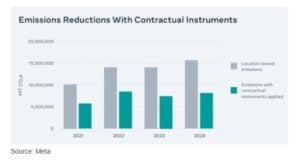
Meta has prioritized renewable energy procurement as a core pillar of its climate strategy. In 2024, Meta reported 8.2 million metric tonnes (MT) of CO₂e emissions after contractual instruments, compared with 15.6 million MT CO₂e on a location-based basis. This represents a 48% reduction due to clean energy purchasing decisions.

  • Since 2020, Meta has matched 100% of its annual electricity use with clean and renewable energy.
  • Over the last decade, the company has contracted more than 15 GW of clean energy worldwide, making it one of the largest corporate buyers globally.

As a result, Meta reduced operational emissions by 6 million MT CO₂e in 2024. The company also uses Energy Attribute Certificates (EACs) to cut Scope 3 emissions linked to fuel use, consumer hardware, and remote work. This approach reduced value chain emissions by 1.4 million MT CO₂e in 2024.

Overall, renewable energy procurement helped Meta cut 23.8 million MT CO₂e emissions since 2021.

META Emissions
Source: Meta

Power Purchase Agreements as a Decarbonization Tool

Meta relies heavily on long-term PPAs to bring new renewable projects online. These agreements provide guaranteed revenue for developers and ensure new projects are built.

The company has supported several major renewable projects worldwide, including a 150 MW floating solar project in Singapore, 190 MW of solar capacity in Ireland, and a 190 MW solar facility paired with a 50 MW battery storage system in New Mexico.

Coming back to the expanded partnership between Meta and Zelestra, it reflects a broader shift in the energy market. Corporate demand is now a key driver of renewable energy development, especially in regions with growing data center clusters.

Texas, with its strong solar resources and competitive power market, has become a focal point for hyperscalers. At the same time, developers like Zelestra are scaling rapidly to meet corporate demand with multi-technology renewable portfolios.

As data center power demand continues to surge, long-term PPAs and attribute agreements will play a crucial role in financing new projects and stabilizing power grids. For Meta, the partnership strengthens its path toward net-zero operations while supporting large-scale renewable expansion across the United States.

Alphabet’s Blockbuster Q4 2025 Signals a New AI Era—But Will It Cloud Its Net-Zero Promise?

Alphabet’s latest quarterly results tell a powerful story. Google is accelerating its artificial intelligence push at historic speed, but that momentum is colliding with the hard physics of energy, emissions, and infrastructure limits. The company is scaling AI faster than any previous technology cycle—yet keeping emissions in check is becoming more complex and uncertain.

This tension between explosive AI growth and ambitious climate goals defines Google’s next decade.

Alphabet’s Blockbuster Quarter Signals a New AI Era

Alphabet closed 2025 with one of its strongest quarters ever. Revenue surged nearly 18% year over year to $113.8 billion, beating analyst expectations. Earnings per share also exceeded forecasts, and net income jumped almost 30%.

Advertising remained the company’s largest revenue driver, while Google Cloud continued its breakout growth. However, YouTube advertising slightly missed expectations, partly due to weaker comparisons against election-driven ad spending in 2024.

The biggest headline, though, came from Alphabet’s spending plans. The company expects $175–$185 billion in capital expenditures in 2026, more than double its recent annual spend. Most of that money will go toward AI infrastructure, cloud capacity, and strategic investments.

This marks one of the largest corporate infrastructure spending waves in tech history.

alphabet google
Source: Alphabet

Gemini and AI Are Reshaping Google’s Core Business

Google’s AI ecosystem is expanding rapidly across products, platforms, and enterprise services.

Gemini now has over 750 million monthly active users, reflecting massive adoption across search, productivity tools, and developer platforms. Google claims it reduced Gemini’s serving costs by 78% in 2025 through optimization and better infrastructure utilization—highlighting how scale economics are starting to kick in.

Search, YouTube, and Cloud are Increasingly AI-driven:

Google’s main businesses performed strongly.

  • Search revenue reached around $63 billion, beating analyst expectations.
  • YouTube ads earned $11.38 billion, up from $10.47 billion a year earlier.
  • Google Cloud stood out with $17.66 billion, growing nearly 48%.
  • Subscriptions, platforms, and devices added another $13.58 billion.

AI is driving much of this growth. Search usage hit record levels as new conversational AI features let people ask longer, more interactive questions. Enterprise adoption of AI is also rising fast. Millions of Gemini Enterprise seats were sold in just a few months, showing strong demand for AI tools across industries.

Waymo Expands Autonomous Ride Services

The earnings report also mentioned that Waymo raised its largest investment to date and continues strong growth, providing over 400,000 rides weekly with safety as a priority.

In December, it surpassed 20 million fully autonomous trips and recently launched service in Miami, with plans to expand across the US, UK, and Japan, including airports and freeways.

Full-Year Context

Annual revenue topped $400 billion for the first time, driven by AI momentum like Gemini processing over 10 billion tokens per minute. Operating income was $35.93 billion for the quarter, with net income at $34.46 billion

The broader strategy is clear: AI is becoming the growth engine across Google’s entire stack, from consumer products to enterprise platforms.

Alphabet
Source: Stock Story

GOOGL Stock Reacts to AI Spending Plans

Alphabet Inc. (GOOGL) shares fell slightly to $331.25, down 0.54% on high trading volume of 87 million shares. The stock moved after Alphabet’s earnings were out. It’s up 18% year over year.

Investors are watching the company’s $175–185 billion AI spending plan for 2026, which is driving short-term volatility. Analysts remain positive, with a price target of $344 and a “Strong Buy” rating.

The Hidden Cost: Exploding Energy Demand

Behind this AI expansion lies a massive infrastructure footprint. Training and running large AI models require enormous computing power, and that translates directly into electricity consumption.

Google openly acknowledges that AI is driving non-linear growth in energy demand. Unlike traditional digital services, AI workloads scale unpredictably, especially with the rise of multimodal models, agentic systems, and real-time inference.

This uncertainty makes forecasting emissions trajectories far more difficult. Even with efficiency gains, absolute electricity demand is rising sharply.

Let’s take a closer look at Google’s sustainability progress and see the full picture behind its climate efforts.

Google’s Sustainability Moonshot Under Pressure

Google’s climate ambition is among the most aggressive in corporate history. The company aims to cut combined Scope 1, 2, and 3 emissions by 50% by 2030 compared with 2019 levels. Its long-term goal remains net zero across operations and value chains.

There has been real progress:

  • Scope 1 emissions declined 8% in 2024.
  • Scope 2 emissions dropped 11% through clean energy procurement.
  • Data center energy emissions fell 12% due to new carbon-free power projects.

These gains are notable because Google’s electricity consumption grew 27% in a single year. Decoupling growth from emissions is one of the hardest challenges in corporate decarbonization, and Google has partially achieved it.

But the bigger problem sits outside operational emissions.

alphabet google emissions
Source: Google

Scope 3 Emissions: The Biggest Hurdle

Google’s total ambition-based emissions reached 11.5 million tCO₂e in 2024, up 11% year over year and 51% above its 2019 baseline. The main driver is supply chain emissions—Scope 3—which rose 22% year over year.

These emissions come from hardware manufacturing, construction materials, logistics, and third-party services. As Google builds more data centers and buys more AI hardware, supply chain emissions rise almost automatically.

This creates a paradox: AI expansion increases Scope 3 emissions faster than operational decarbonization can offset them.

Data Center Construction: A Growing Carbon Challenge

One of the fastest-growing emission sources is data center construction. Embodied carbon from steel, concrete, and heavy machinery is becoming a significant part of Google’s footprint.

In 2024, data center construction emissions reached 1.6 million tCO₂e, accounting for 19% of Google’s ambition-based Scope 3 emissions. That figure is expected to rise as AI-driven data center expansion accelerates.

Google is responding with several strategies:

  • Standardized data center designs to reduce material use
  • Low-carbon concrete and steel to cut embodied emissions by up to 40%
  • Electrified construction equipment powered by clean electricity
  • Improved space efficiency to maximize infrastructure utilization

These measures can reduce carbon intensity, but they cannot fully offset the scale of new construction.

google data center emissions
Source: Google

Policy and Regional Constraints Add Complexity

The company also highlights that policy uncertainty is a major risk. Changes in climate and energy regulations can affect project timelines, costs, and investment decisions.

Regional constraints are equally critical. Many Asia-Pacific markets—key growth regions for Google—lack sufficient carbon-free electricity. Land scarcity, weak renewable resources, and high construction costs make clean energy deployment difficult.

This means AI-driven growth in Asia could significantly increase emissions unless grid decarbonization accelerates.

Google’s Dilemma: AI vs Net-Zero Equation

Alphabet is not an outlier. Every major AI company is facing the same trade-off. AI is becoming core infrastructure for the global economy, but its energy footprint is massive and rising.

Thus, the real question is whether corporate decarbonization can keep pace with AI-driven growth. Three structural tensions stand out:

  1. Infrastructure Scale vs Emissions Targets: AI requires massive data center buildouts, which drive Scope 3 emissions.
  2. Energy Demand vs Clean Power Supply: Electricity consumption is growing faster than carbon-free power deployment.
  3. Corporate Action vs Systemic Constraints: Many challenges, like grid capacity, policy frameworks, and supply chains, are beyond Google’s direct control.

Google’s disclosures offer a rare, transparent look into the carbon cost of the AI revolution. They highlight a broader reality: decarbonizing digital infrastructure is far harder than decarbonizing traditional IT services.

Can it Still Hit Its 2030 Climate Target?

As said before, the tech giant remains committed to cutting emissions by 50% by 2030, and the Science Based Targets initiative has validated its targets. But the path is increasingly narrow.

Operational emissions are trending downward, which is encouraging. The challenge is Scope 3 emissions tied to hardware, construction, and suppliers. Without systemic supply chain decarbonization, absolute emissions could continue rising—even if Google becomes more efficient per unit of compute.

However, its net-zero ambition is still alive, but it now depends as much on global energy systems, policy frameworks, and supply chains as on its own technology and investments.

Google emissions
Source: Google

Aggressive Investment in Carbon-Free Energy

It is investing heavily in clean energy, low-carbon materials, and carbon removal while simultaneously scaling AI faster than any previous technology wave.

Some steps include signing pioneering corporate deals for advanced geothermal and small modular nuclear reactors. The company is also using AI to speed up grid interconnections and optimize power purchasing.

In 2024, Google achieved in nine of its 20 data center grid regions. That’s a significant milestone, but it still falls short of its 24/7 carbon-free energy ambition.

Boosting Carbon Removals 

Google is also expanding its carbon removal portfolio. In 2024, it signed 16 new offtake agreements worth over $100 million, bringing its total removal portfolio to around 782,400 tCO₂e.

That is a 14-fold increase from 2023, but it is still tiny compared to millions of tonnes of annual emissions. Carbon removal is a long-term tool, not a near-term solution.

google net zero
Source: Google

All in all, Alphabet’s Q4 results show a company entering a new phase of AI-driven growth. The planned $185 billion annual infrastructure spend underscores how central AI is to Google’s future.

But the sustainability story is becoming more complex. The next decade will test whether AI can scale sustainably—or whether the world’s most advanced tech companies will struggle to keep their climate promises in the age of artificial intelligence.